×

Jordan🇯🇴 | best landmarksEssential 10 landmarks to Explore in Jordan

Landmarks in Jordan are mostly stone, sand and sun: rose-colored sandstone canyons, Roman columns the color of honey, and Crusader keeps on dry ridgelines. Expect grit underfoot, the smell of dust and cardamom coffee, and light that bleaches by midday. The south (Petra, Wadi Rum) is the headline draw, with the highest fees, tour touts and the heaviest crowds. The north (Jerash, Ajloun) is cheaper, quieter and reachable by public minibus from Amman. The Dead Sea and Jordan Valley sites sit below sea level and bake. Independent backpackers can string these together easily, but distances are long and shade is scarce.

By Johan Kruseman 🇳🇱 | Updated October 19, 2026
Explore the best national parks in Jordan

Why go?What Makes Them Special

Jordan sits where the Nabataean, Roman, Byzantine, Crusader and Ottoman worlds overlapped, along trade routes that carried incense and spices between Arabia and the Mediterranean. Because the country is largely arid, buildings in stone survived instead of rotting or being buried under jungle, so ruins stand tall, often carved straight into cliffs rather than built up from the ground. Many sites are also tied to scripture, so Jordan draws pilgrims as well as hikers.

The country is small and compact, with a good paved road network, which makes it simple to reach several sites quickly. Still, public transport is thin outside Amman, and the best-known places are far from each other and from towns. Taxis, shared vans or a rental car fill the gaps, and prices are not low.

Before choosing Jordan, … read more 👉
Jordan sits where the Nabataean, Roman, Byzantine, Crusader and Ottoman worlds overlapped, along trade routes that carried incense and spices between Arabia and the Mediterranean. Because the country is largely arid, buildings in stone survived instead of rotting or being buried under jungle, so ruins stand tall, often carved straight into cliffs rather than built up from the ground. Many sites are also tied to scripture, so Jordan draws pilgrims as well as hikers.

The country is small and compact, with a good paved road network, which makes it simple to reach several sites quickly. Still, public transport is thin outside Amman, and the best-known places are far from each other and from towns. Taxis, shared vans or a rental car fill the gaps, and prices are not low.

Before choosing Jordan, know that the headline sites are expensive by regional standards, though the Jordan Pass bundles entry fees and waives the visa fee for stays of three nights or more. Shade is rare, so water, a hat and sturdy shoes matter. Dress modestly, since this is a conservative Muslim country, and expect to share paths with tour groups at the famous places while smaller sites feel almost empty.
Why These Made the Cut
The list of best unique sites in Jordan is created based on history or culture, wow factor, atmosphere, quirks, and memorability. If you feel a unique site is missing in this list, please let us know.

When to go?Timing Your Visit for the Best Experience

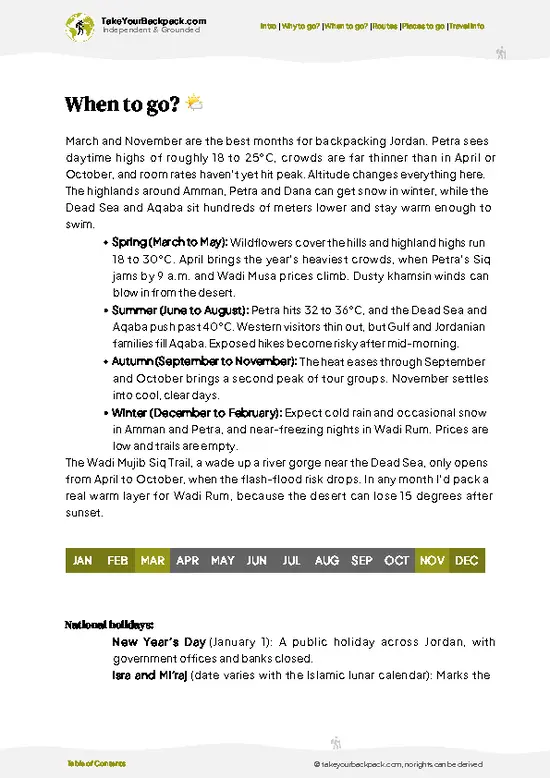
Best months for landmarks: Spring (March to May) and autumn (September to November) are the best months, with daytime highs of roughly 20 to 30°C (68 to 86°F) and cool, clear mornings that make long walks across rock and sand comfortable. Light is soft and golden at dawn, and stone glows warmly rather than glaring.

Shoulder and peak seasons: March to May is the busiest period, and hotel prices and tour rates rise accordingly, often 20 to 40 percent above winter levels at the southern sites. Easter and October draw the largest crowds. Late autumn is calmer, with warm days and cool nights.

Summer: June to August is punishing. In the south and in the Dead Sea and Jordan Valley, temperatures commonly pass 35°C (95°F) and can reach 40°C (104°F) or more. Rock radiates heat, shade disappears and … read more 👉
Best months for landmarks: Spring (March to May) and autumn (September to November) are the best months, with daytime highs of roughly 20 to 30°C (68 to 86°F) and cool, clear mornings that make long walks across rock and sand comfortable. Light is soft and golden at dawn, and stone glows warmly rather than glaring.

Shoulder and peak seasons: March to May is the busiest period, and hotel prices and tour rates rise accordingly, often 20 to 40 percent above winter levels at the southern sites. Easter and October draw the largest crowds. Late autumn is calmer, with warm days and cool nights.

Summer: June to August is punishing. In the south and in the Dead Sea and Jordan Valley, temperatures commonly pass 35°C (95°F) and can reach 40°C (104°F) or more. Rock radiates heat, shade disappears and dehydration comes quickly. Visit at first light or late afternoon, and expect lower prices and thin crowds. The north around Jerash and Ajloun is a few degrees cooler.

Winter: December to February brings cold, with nights near freezing in the desert and highlands, and snow possible in Amman and Petra once or twice a season. Rain falls mostly in this period, about 50 to 200 mm in the highlands, and can cause flash floods in narrow canyons. Prices are lowest, crowds smallest and the air smells of wet stone and woodsmoke.

unique site hoppingPlanning Your Route Efficiently

How many days to allow: A trip combining several landmarks in Jordan needs 6 to 9 days, which leaves room for long transfers and heat-driven early starts.

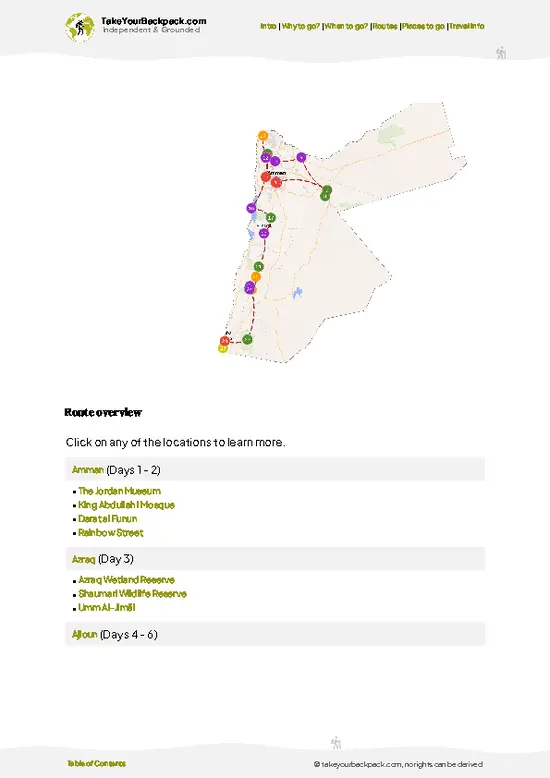
Grouping and direction: Start in Amman, which has the international airport and is the hub for minibuses and buses. The north (Jerash and Ajloun) is a half-day to a full day trip from the capital, 1 to 1.5 hours each way by road. From there, head south along the King’s Highway or the faster Desert Highway toward Petra (about 3 to 3.5 hours from Amman by bus or car) and then Wadi Rum (roughly 1.5 to 2 hours from Petra), finishing at Aqaba on the Red Sea. Going south and ending at the coast avoids backtracking, and Aqaba has flights to Amman. The Dead Sea and Madaba area sits about 45 to 90 minutes from Amman and works as a start or end add-on. … read more 👉
How many days to allow: A trip combining several landmarks in Jordan needs 6 to 9 days, which leaves room for long transfers and heat-driven early starts.

Grouping and direction: Start in Amman, which has the international airport and is the hub for minibuses and buses. The north (Jerash and Ajloun) is a half-day to a full day trip from the capital, 1 to 1.5 hours each way by road. From there, head south along the King’s Highway or the faster Desert Highway toward Petra (about 3 to 3.5 hours from Amman by bus or car) and then Wadi Rum (roughly 1.5 to 2 hours from Petra), finishing at Aqaba on the Red Sea. Going south and ending at the coast avoids backtracking, and Aqaba has flights to Amman. The Dead Sea and Madaba area sits about 45 to 90 minutes from Amman and works as a start or end add-on.

Time per stop: Allow 2 to 3 hours for a smaller ruin, a full day for Jerash-sized sites, and one to two full days for Petra, where trails are steep and uneven. Wadi Rum suits a half day by jeep or an overnight camp.

Planning mistakes: The most common error is cramming too much into one day, so that drives eat into daylight. Another is arriving at midday in summer. Instead, base yourself near the larger sites for two nights and move at dawn. Intercity buses are infrequent, so check departure times the day before and book seats or shared vans early.

The ListMust-Visit landmarks in Jordan

1 Petra

rock-cut monuments, Siq canyon, Treasury facade, Nabataean capital

Enter a labyrinth of sculpted sandstone where tombs, temples, and stairways reveal the ingenuity of a lost desert civilization.

Jordan - Petra

2 Dead Sea

salt lake, buoyant waters, mineral mud, lowest point

Float effortlessly in dense, mineral-rich water and experience a stark landscape where the land drops to the earth’s lowest elevation.

3 Al-Maghtas

baptism site, Jordan River, religious ruins, pilgrimage destination

Walk among archaeological remains and riverside chapels at a site revered for its biblical associations and enduring spiritual significance.

4 Jerash

Roman city, colonnaded streets, ancient theaters, stone plazas

Wander through remarkably preserved ruins where arches, temples, and forums reveal the daily rhythms of a once-bustling provincial capital.

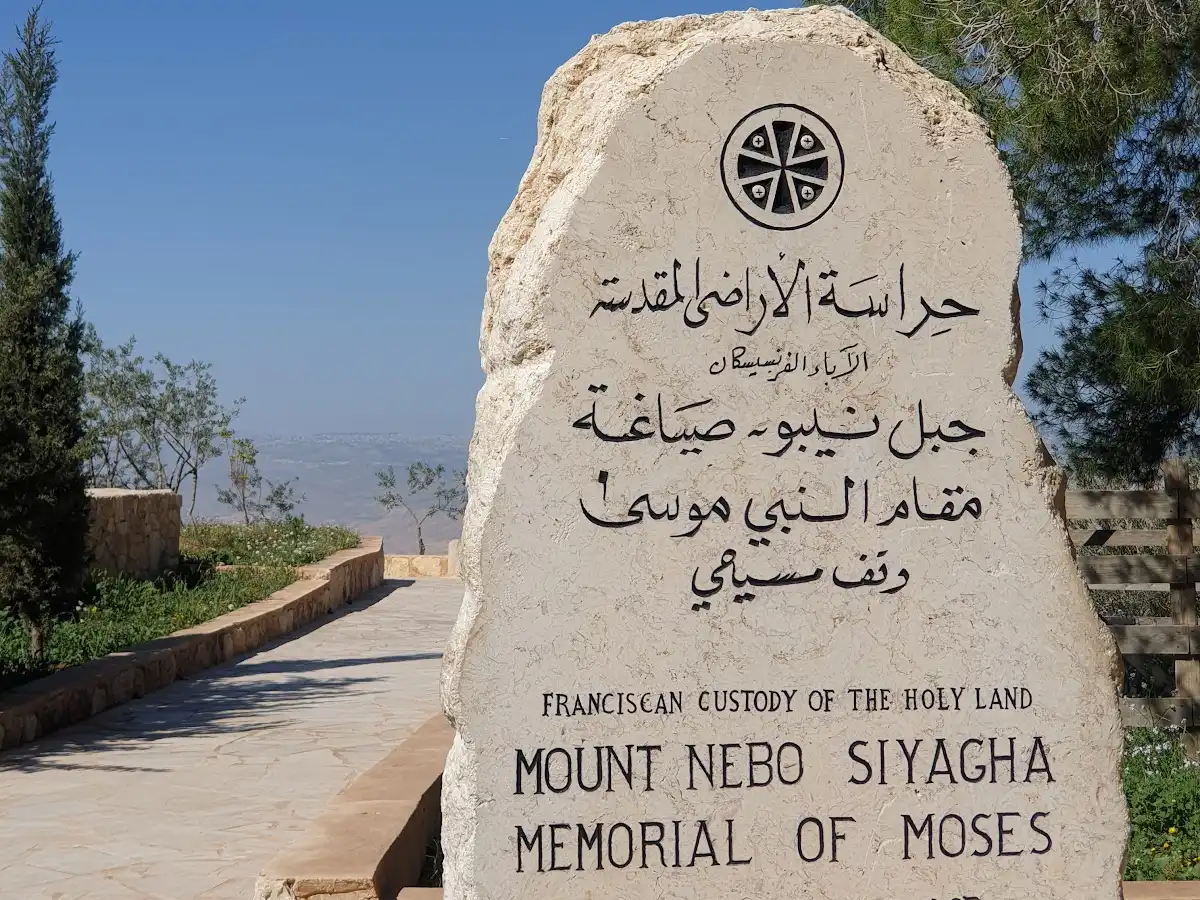
5 Mount Nebo

summit viewpoint, mosaic floors, biblical landscape, pilgrimage stop

Stand atop a windswept ridge overlooking the Jordan Valley, where ancient mosaics and distant horizons evoke centuries of spiritual journeys.

jordan-unique-site-mount-nebo
© Google |

6 Ajloun Castle

hilltop fortress, Crusader-era, panoramic views, olive groves

Climb ancient stone corridors to survey green hills and valleys from a defensive stronghold built to guard against medieval incursions.

7 Karak Castle

Crusader stronghold, labyrinthine tunnels, stone ramparts, arid plateau

Descend into vaulted chambers and climb battlements in a fortress that once controlled vital routes across Jordan’s rugged highlands.

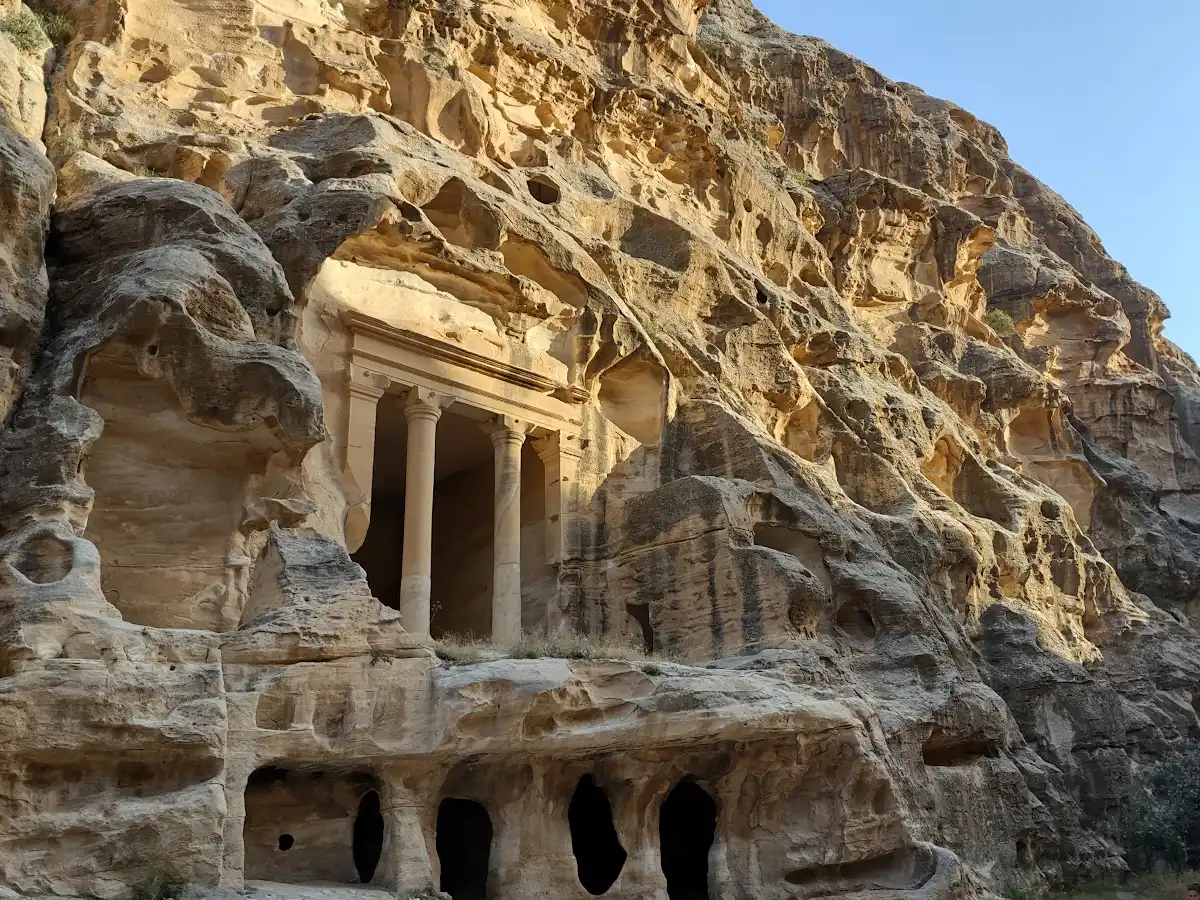
8 Little Petra

rock-cut facades, narrow canyon, Nabataean carvings, secluded site

Venture through a winding gorge to discover carved chambers and frescoed halls that hint at the daily life of ancient traders.

jordan-unique-site-little-petra
© Google |

9 Umm Al-Jimāl

basalt ruins, abandoned town, arched doorways, desert frontier

Roam through a maze of black stone walls and silent streets in a settlement shaped by centuries of shifting desert cultures.

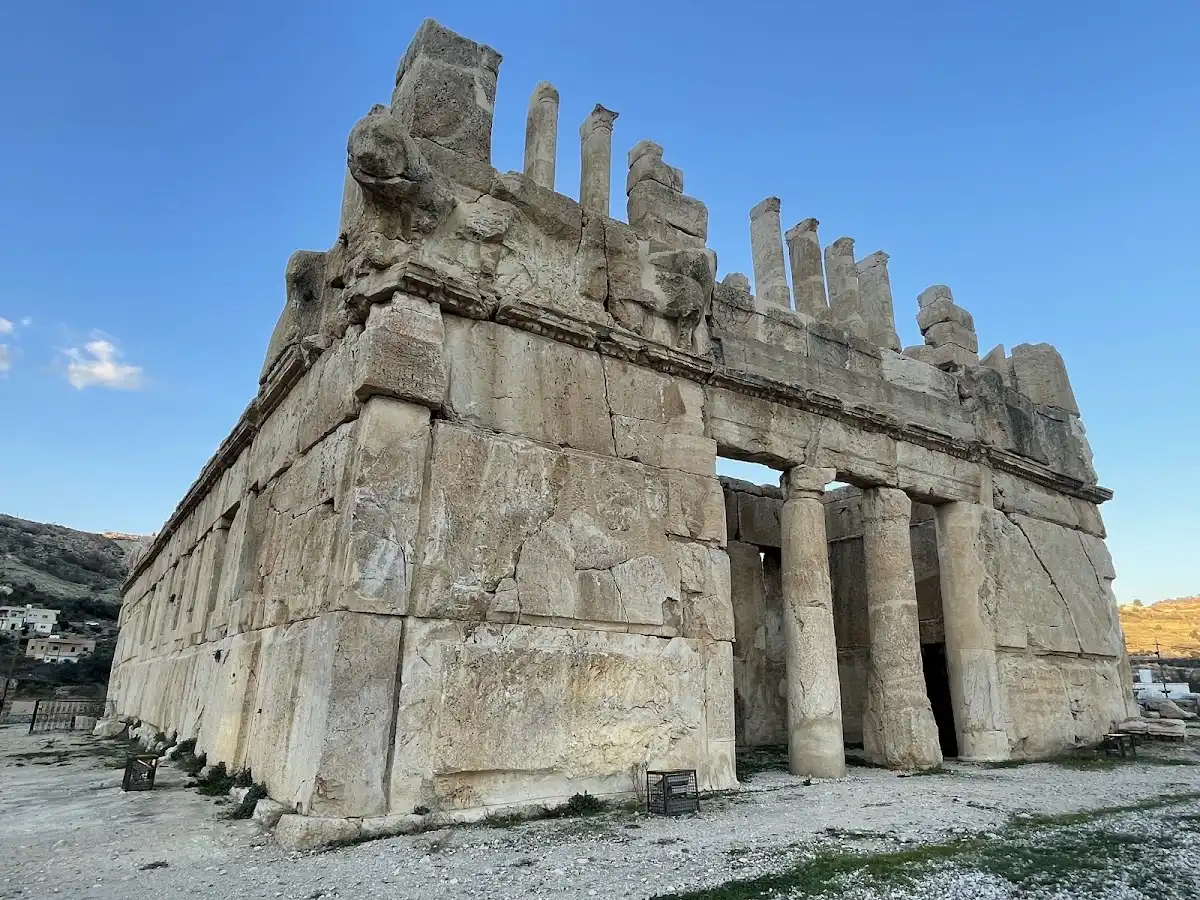
10 Qasr Al-Abd

Hellenistic palace, limestone blocks, carved lions, valley setting

Explore a rare example of ancient luxury, with massive stonework and enigmatic animal carvings set amid fertile countryside.

jordan-unique-site-qasr-al-abd
© Google |
Loading the map 🌍

Expert viewWhat You Should Know

How many landmarks to visit: Five to seven is the range I recommend for a one to two week trip. Fewer than five and you pay long transfer costs for little return. More than seven and the days blur into one stretch of dust, tickets and ruins. The Jordan Pass, priced around JD 70 to 80 (US$100 to 113) depending on the version, covers entry to dozens of sites and waives the tourist visa fee if you stay at least three nights, so it pays for itself quickly if Petra is on your list.

Which kinds to prioritize: Jordan has three main types: desert and rock-cut monuments, Roman and Byzantine ruins, and religious or Crusader sites. If you want the strongest atmosphere and have limited time, the rock-cut and desert places are the most distinctive, though they cost the most in fees, guides and transport. … read more 👉
How many landmarks to visit: Five to seven is the range I recommend for a one to two week trip. Fewer than five and you pay long transfer costs for little return. More than seven and the days blur into one stretch of dust, tickets and ruins. The Jordan Pass, priced around JD 70 to 80 (US$100 to 113) depending on the version, covers entry to dozens of sites and waives the tourist visa fee if you stay at least three nights, so it pays for itself quickly if Petra is on your list.

Which kinds to prioritize: Jordan has three main types: desert and rock-cut monuments, Roman and Byzantine ruins, and religious or Crusader sites. If you want the strongest atmosphere and have limited time, the rock-cut and desert places are the most distinctive, though they cost the most in fees, guides and transport. Roman ruins in the north are cheaper, easier to reach by public transport and far less crowded, so they suit a tight budget. Religious sites and castles suit those with an interest in history, and many cost just JD 1 to 3 (US$1.50 to 4), but they often lie off bus routes and need a taxi, typically JD 15 to 30 (US$21 to 42) for a half-day hire.

What it costs: A budget backpacker can manage on US$40 to 60 a day, including a dorm bed or basic room at US$12 to 25, falafel and hummus meals at US$3 to 6, and public transport. Add US$10 to 20 a day if you take guides, who typically charge JD 50 to 70 (US$70 to 100) for a few hours at the major sites. Jeep tours of the desert run about JD 40 to 80 (US$56 to 113) per vehicle for a few hours, and overnight camps start around US$40 to 70 per person with meals. Shared costs bring this down fast, so team up at your hostel. For comfort, a mid-range room with air conditioning is the best use of extra money in summer, since the heat drains you more than any ticket price.

Safety and culture: Jordan is generally safe for independent travelers, but stay alert to scams, such as inflated horse or camel rides at popular sites and unrequested guides who ask for payment afterward. Agree prices before you move. Wear loose clothing that covers shoulders and knees, particularly at mosques and in small towns, and ask before photographing people. Keep to marked paths on cliffs, where loose stone and drops are common, and avoid narrow canyons if rain is forecast. Carry at least 2 to 3 liters of water per person, and plan around prayer times when some local services pause. Check your government’s travel advice on areas near the Syrian and Iraqi borders before you go.

✈️ The backpacker research shortcutJordan Travel Guide

An offline-friendly backpacking guide with optimized travel routes, ranked highlights, transport advice, and the best areas to stay.
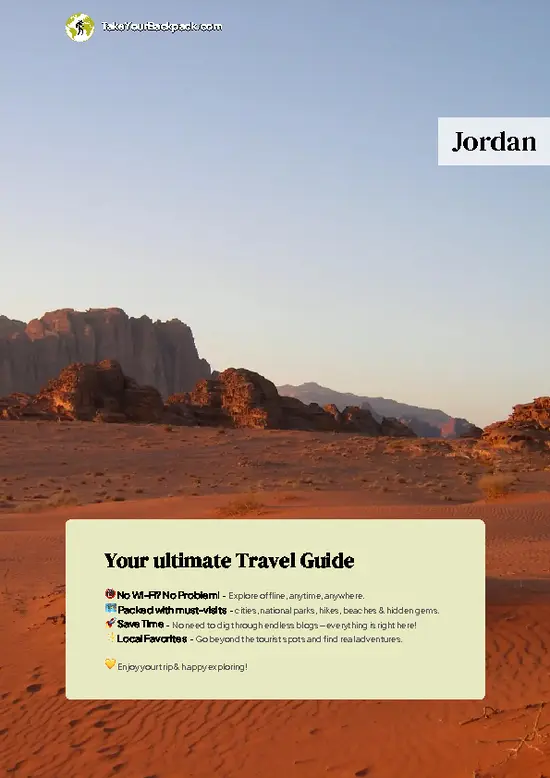
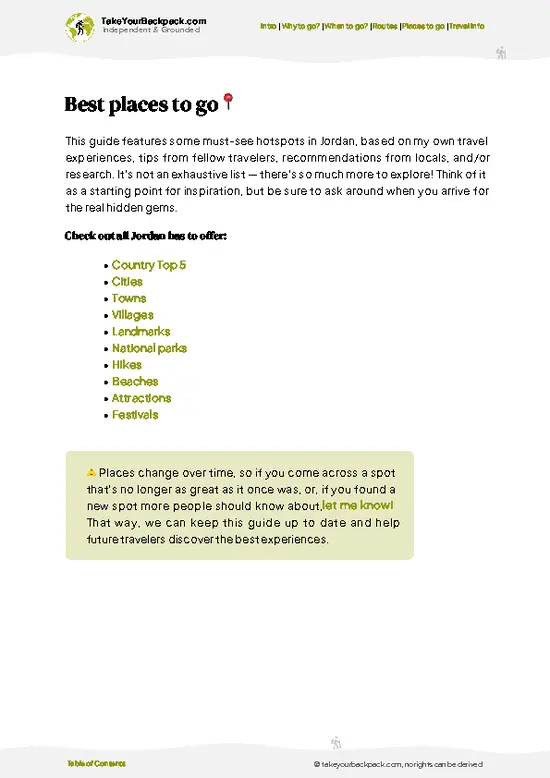
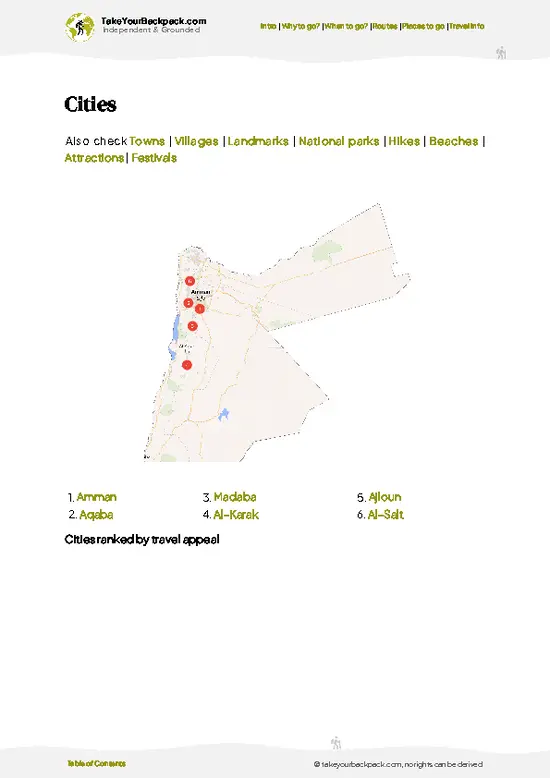
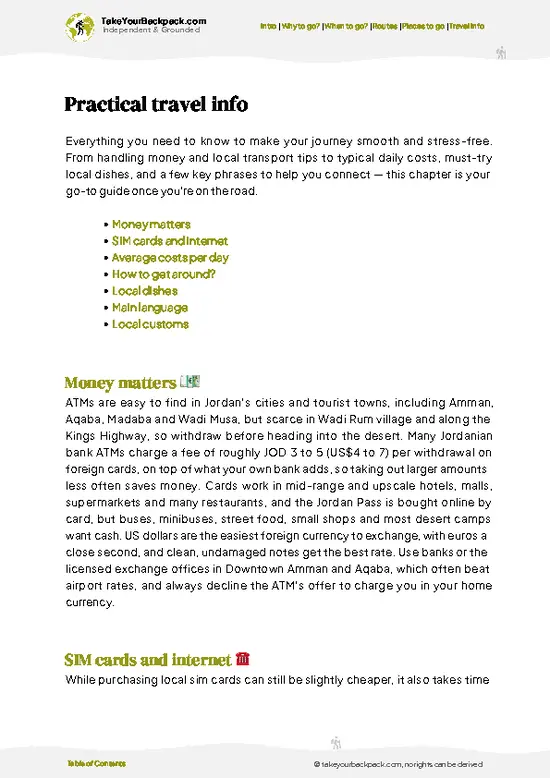
example page 0 from our offline Travel Guide for Jordan
example page 1 from our offline Travel Guide for Jordan
example page 2 from our offline Travel Guide for Jordan
example page 3 from our offline Travel Guide for Jordan
example page 4 from our offline Travel Guide for Jordan
example page 5 from our offline Travel Guide for Jordan
example page 6 from our offline Travel Guide for Jordan
example page 7 from our offline Travel Guide for Jordan
The digital guide (230 pages) contains:
✅ 57 highlights, ranked by travel appeal
✅ Optimized 5, 10 & 15-day travel routes
✅ Cities, national parks, landmarks, beaches
✅ How to get around
✅ Offline-friendly for travel without Wi-Fi
👉 Click to see all 30+ guide features

📅 Plan smarter in minutes, not weeks
✅ Month by month travel advice
✅ Festivals & national holidays
✅ Budget expectations

🗺️ Go to the right places, skip the overrated ones
✅ Honest pros & cons of destinations
✅ Top hikes, parks & viewpoints
✅ Lesser-known places most travelers miss
✅ Clear “worth it vs skip it” guidance

🛏️ Travel smoothly without rookie mistakes
✅ Best areas to stay
✅ Transport systems explained simply
✅ Common scams & safety advice
✅ SIM cards, money & practical tips

🌍 Understand the country, not just visit it
✅ Culture & traditions
✅ 52 Essential phrases & customs
✅ Festivals worth planning around
✅ Traveler-friendly historical context
✅ Insights that make places more meaningful

📱 Built for real travel conditions
✅ Fully downloadable PDF
✅ Works completely offline
✅ Optimized for phone use
✅ Useful in remote areas & buses
✅ Everything in one place
Stop searching, start planning
Get instant access to your full guide. 30‑day money-back guarantee.
+ Add another guide for just

By proceeding you agree to our terms.
Sent to your inbox immediately after payment • 100% Secure Checkout
Best Backpacking Travel Advisor 2025 tourism awardBest Backpacking
Travel Advisor
2025
What others say about Take Your Backpack Guides:
⭐⭐⭐⭐⭐
Fantastic, amazing amount of information!
⭐⭐⭐⭐⭐
My goodness this is amazing, it's what I've been looking for hats off too you!
⭐⭐⭐⭐⭐
I think this is absolutely BRILLIANT
⭐⭐⭐⭐
Very complete and informative. It's still missing places, but I gotta to commend you
⭐⭐⭐⭐⭐
This is truly amazing, thank you, can't wait to explore it with my kids!
⭐⭐⭐⭐⭐
Awesome resource, thank you!
⭐⭐⭐⭐⭐
This is amazing! Can't wait to explore the ones I haven't seen
⭐⭐⭐⭐
I love this! Well done, great idea.
⭐⭐⭐⭐⭐
Thanks for taking the time to make this gem!
⭐⭐⭐⭐⭐
This might be the best website I've ever seen.
⭐⭐⭐⭐⭐
Congratulations, and thank you so much for your work; it's incredibly valuable.
⭐⭐⭐⭐
In all seriousness I think you did a great job pointing out the important spots
⭐⭐⭐⭐⭐
10/10 very good
⭐⭐⭐⭐⭐
As someone who's only just starting to visit regularly this is awesome, thank you.
⭐⭐⭐⭐
Thank you very much! I'm going to visit my dad, it's going to be very useful!
⭐⭐⭐⭐⭐
This is really cool! We'll be travelling for the first time and this definitely come in handy.
⭐⭐⭐⭐⭐
You are now our minister of culture, congratulations 👨‍💼
⭐⭐⭐⭐⭐
Just wanted to tell you that this is a pearl! Going to follow your recommendations.
⭐⭐⭐⭐⭐
This is so cool. I'll definitely be using the resource for my travels soon.
⭐⭐⭐⭐⭐
This is very impressive! Good work.
⭐⭐⭐⭐⭐
This is an amazing and informative site. Very well done!

🛏️ Where to stay?Where to Base Yourself

Jordan has plenty of hostels and budget guesthouses, with dorm beds typically running JD 8 to 15 (US$11 to 21) and simple private rooms from about JD 20 to 35 (US$28 to 50). In Amman, Downtown (Al-Balad) packs in the most cheap options within walking distance of the Citadel and Roman Theater, though it’s noisy with traffic and the call to prayer, while neighboring Jabal Amman around Rainbow Street costs a bit more but gives you leafy, safe streets plus the city’s best cafés and bars. Beyond the capital, Wadi Musa has the budget beds closest to Petra’s gate (quiet after dark), Wadi Rum swaps hostels for Bedouin desert camps, and Aqaba suits divers but has thinner, pricier budget choices.

If you … read more 👉
Jordan has plenty of hostels and budget guesthouses, with dorm beds typically running JD 8 to 15 (US$11 to 21) and simple private rooms from about JD 20 to 35 (US$28 to 50). In Amman, Downtown (Al-Balad) packs in the most cheap options within walking distance of the Citadel and Roman Theater, though it’s noisy with traffic and the call to prayer, while neighboring Jabal Amman around Rainbow Street costs a bit more but gives you leafy, safe streets plus the city’s best cafés and bars. Beyond the capital, Wadi Musa has the budget beds closest to Petra’s gate (quiet after dark), Wadi Rum swaps hostels for Bedouin desert camps, and Aqaba suits divers but has thinner, pricier budget choices.

If you enjoy meeting fellow travelers, consider choosing hostels with high ratings for atmosphere. On the other hand, if you prefer having your own space, a hotel might be a better option.

JordanExpand Your Journey

👋 Meet the founderWho’s Behind Take Your Backpack?

Johan, backpacker and founder of TakeYourBackpackHi, I’m Johan (Netherlands 🇳🇱), the creator of TakeYourBackpack. Over the past 3 decades, I’ve backpacked through 90+ countries across six continents, gaining extensive experience with independent travel, long-term trips, and overland routes.

This site is built on a combination of firsthand travel experience and carefully curated insights from other backpackers. Many guides are based on places I’ve personally visited, while others bring together tips, observations, and practical advice shared by trusted travelers I’ve met along the way.

The goal is to provide realistic, experience-driven guidance — not generic itineraries — so you can explore destinations with better context, clearer expectations, and more confidence.