
×

Kenya🇰🇪 | hikesKarura Foresturban woodland, waterfalls, cycling trails, shaded paths | things to do and best time to go

Explore Loita HillsExplore Hell’s Gate Gorge

Backpacking in Karura Forest
👍 Recommendedhike ranked #7
By Johan Kruseman 🇳🇱 | Updated June 4, 2026

Forget the “urban oasis” clichés—Karura Forest is where Nairobi’s pulse thumps loudest, not quietest. You’ll dodge mountain bikers, joggers, and the occasional colobus monkey, all within city limits. This isn’t a hushed, meditative escape; it’s a living, breathing chunk of wild Kenya, just a cheap matatu ride north of the city center. The main loop runs about 15 kilometers, but you can carve out shorter circuits if your legs (or time) demand mercy. Trails wind through bamboo groves, past waterfalls that actually roar after rain, and under canopies alive with birdsong and the scent of wet earth. It’s flat enough for beginners, but the energy is relentless—think more urban adventure than remote wilderness. Compared to Ngong Hills or Mt. Longonot, Karura is less about altitude and more about immersion: you’re in the thick of Nairobi, but the city feels a world away.

Discover everything you want to know in the 📖 Kenya Travel Guide.
Best time to go: May - March
Duration: 3 to 4 hours
Distance: 11 kilometers
Total ascent: 200 meters


Get your Kenya guide
114 ranked highlights, routes & tips, works offline (429 pages)
Loading the map 🌍
CLICK TO FILTER
cities
towns
landmarks
national parks
hikes
beaches
attractions
festivals
regions
SHOW COUNTRY’S BESTSHOW ALL

✨ Why go?
Ranked #7 hike in Kenya
The unique appeal for travelers

Karura Forest is a backpacker’s haven in Nairobi, blending urban access with a slice of nature. Just a short ride on public transport drops you at the entrance, making it a breeze to fit into your itinerary. The scenery-to-effort ratio is off the charts; you’ll find lush greenery, winding trails, and serene waterfalls without breaking a sweat. Choose your distance—whether you want a quick stroll or a longer trek, it’s all there. Plus, it’s incredibly low-cost, so you can save your cash for that first cold beer afterward. The trails are well-marked, and the atmosphere buzzes with locals and fellow travelers alike. After a day of exploring, the reward is a peaceful escape that feels worlds away from the city’s hustle.
Want to include Karura Forest in your Kenya route?
Create a personalized Kenya itinerary that includes Karura Forest and the places that fit your trip — based on your travel style, budget, and available time. Get your route in seconds.

Generate my trip

💡 HighlightsThe experiences that define the visit

  1. Karura Falls — A series of pleasant cascades tucked into a mossy gorge right inside the forest; great for cooling off, grabbing photos, and enjoying the sound of running water without straying far from Nairobi.
  2. Bamboo Grove — Thick stands of bamboo form shaded tunnels that feel a world away from the city; the light and sound in here are special, and the trunks make surprisingly photogenic frames.
  3. Black-and-white Colobus and other primates — Karura’s habituated troops are often seen leaping between canopy branches, offering reliably good wildlife moments without the long safari drive.
  4. Riverside trails and footbridges — The network of trails following small streams, little waterfalls and rustic bridges feels intimate and varied; ideal for snack stops, birdwatching, and a quiet pace.
  5. Wangari
read more 👉
  1. Karura Falls — A series of pleasant cascades tucked into a mossy gorge right inside the forest; great for cooling off, grabbing photos, and enjoying the sound of running water without straying far from Nairobi.
  2. Bamboo Grove — Thick stands of bamboo form shaded tunnels that feel a world away from the city; the light and sound in here are special, and the trunks make surprisingly photogenic frames.
  3. Black-and-white Colobus and other primates — Karura’s habituated troops are often seen leaping between canopy branches, offering reliably good wildlife moments without the long safari drive.
  4. Riverside trails and footbridges — The network of trails following small streams, little waterfalls and rustic bridges feels intimate and varied; ideal for snack stops, birdwatching, and a quiet pace.
  5. Wangari Maathai legacy and interpretive spots — Trails and plaques tell the story of the forest’s conservation fight and the Greenbelt Movement; it adds a cultural, inspirational layer to the hike you won’t get on most city trails.
Spotted a mistake or missing something? Contact us.

Things to do near Karura Forest

Ratings based on Tripadvisor reviews. When you book through this link, you support our work at no extra cost to you.

🌤️ When to go?Seasonal considerations and timing


  • Weather: The best time to hike Karura Forest is during Kenya’s dry seasons, from June to October and January to February. Expect minimal rain, which means trails stay firm and mud-free, letting you move fast without slipping or slogging.

  • Temperature: Daytime temps hover between 20-26°C (68-79°F), perfect for sweating without overheating. Early mornings and evenings dip to around 14-18°C (57-64°F), so pack a light layer for those cooler moments.

  • Daylight Hours: With roughly 11-12 hours of daylight year-round near the equator, you get plenty of time to explore. Start early to catch the forest waking up and avoid the midday sun’s punch.

  • Crowds: Weekdays and early mornings see fewer visitors, giving you more space to hear the birds and rustle of monkeys. Weekends and holidays bring local
read more 👉

  • Weather: The best time to hike Karura Forest is during Kenya’s dry seasons, from June to October and January to February. Expect minimal rain, which means trails stay firm and mud-free, letting you move fast without slipping or slogging.

  • Temperature: Daytime temps hover between 20-26°C (68-79°F), perfect for sweating without overheating. Early mornings and evenings dip to around 14-18°C (57-64°F), so pack a light layer for those cooler moments.

  • Daylight Hours: With roughly 11-12 hours of daylight year-round near the equator, you get plenty of time to explore. Start early to catch the forest waking up and avoid the midday sun’s punch.

  • Crowds: Weekdays and early mornings see fewer visitors, giving you more space to hear the birds and rustle of monkeys. Weekends and holidays bring local families, which adds energy but can crowd the paths.

  • Seasonal Activities: Dry seasons coincide with bird migrations and active wildlife, turning the forest into a live documentary. Wet seasons bring lush greenery but also slippery trails and fewer animals in sight.

  • Price Fluctuations: Entry fees remain stable year-round, but accommodation and transport prices spike during Kenya’s peak tourist months (July-August), so plan accordingly if you’re staying nearby.


Pro-tip: Hit Karura Forest just after the early rains end—trails firm up, the forest is fresh, and the wildlife buzz is at its peak.


source: climatestotravel.comJANJanuary: excellent for travelingFEBFebruary: excellent for travelingMARMarch: good for travelingAPRApril: fair for travelingMAYMay: good for travelingJUNJune: excellent for travelingJULJuly: highly recommended for travelingAUGAugust: highly recommended for travelingSEPSeptember: excellent for travelingOCTOctober: excellent for travelingNOVNovember: good for travelingDECDecember: good for traveling
kenya-hike-karura-forest
© Google |

✈️ The backpacker research shortcutKenya Travel Guide

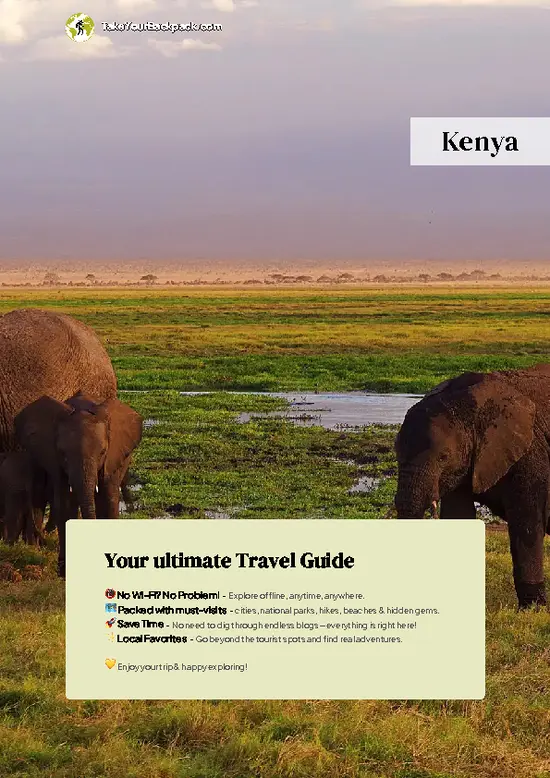
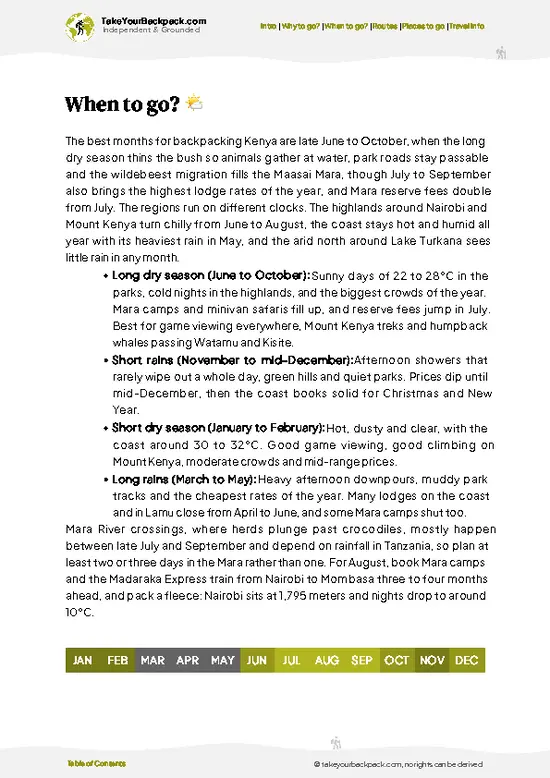
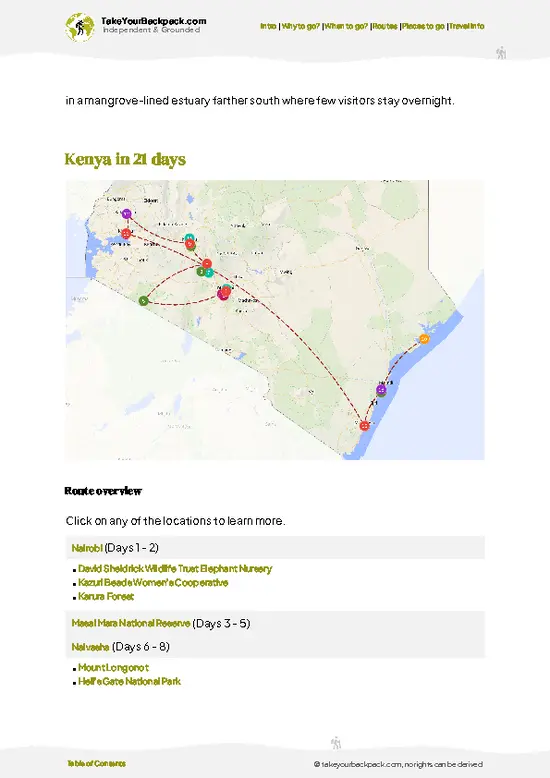
An offline-friendly backpacking guide with optimized travel routes, ranked highlights, transport advice, and the best areas to stay.
example page 0 from our offline Travel Guide for Kenya
example page 1 from our offline Travel Guide for Kenya
example page 2 from our offline Travel Guide for Kenya
example page 3 from our offline Travel Guide for Kenya
example page 4 from our offline Travel Guide for Kenya
example page 5 from our offline Travel Guide for Kenya
example page 6 from our offline Travel Guide for Kenya
example page 7 from our offline Travel Guide for Kenya
The digital guide (429 pages) contains:
114 highlights, ranked by travel appeal
Optimized 7, 14 & 21-day travel routes
Cities, national parks, landmarks, beaches
How to get around
Offline-friendly for travel without Wi-Fi
👉 Click to see all 30+ guide features

📅 Plan smarter in minutes, not weeks
Month by month travel advice
Festivals & national holidays
Budget expectations

🗺️ Go to the right places, skip the overrated ones
Honest pros & cons of destinations
Top hikes, parks & viewpoints
Lesser-known places most travelers miss
Clear “worth it vs skip it” guidance

🛏️ Travel smoothly without rookie mistakes
Best areas to stay
Transport systems explained simply
Common scams & safety advice
SIM cards, money & practical tips

🌍 Understand the country, not just visit it
Culture & traditions
52 Essential phrases & customs
Festivals worth planning around
Traveler-friendly historical context
Insights that make places more meaningful

📱 Built for real travel conditions
Fully downloadable PDF
Works completely offline
Optimized for phone use
Useful in remote areas & buses
Everything in one place
Save weeks of stressful planning
Get instant access to your full guide. 30‑day money-back guarantee.


By proceeding you agree to our terms.
Sent to your inbox immediately after payment • 100% Secure Checkout
Best Backpacking Travel Advisor 2025 tourism awardBest Backpacking
Travel Advisor
2025
What others say about Take Your Backpack Guides:
⭐⭐⭐⭐⭐
Fantastic, amazing amount of information!
⭐⭐⭐⭐⭐
My goodness this is amazing, it's what I've been looking for hats off too you!
⭐⭐⭐⭐⭐
I think this is absolutely BRILLIANT
⭐⭐⭐⭐
Very complete and informative. It's still missing places, but I gotta to commend you
⭐⭐⭐⭐⭐
This is truly amazing, thank you, can't wait to explore it with my kids!
⭐⭐⭐⭐⭐
Awesome resource, thank you!
⭐⭐⭐⭐⭐
This is amazing! Can't wait to explore the ones I haven't seen
⭐⭐⭐⭐
I love this! Well done, great idea.
⭐⭐⭐⭐⭐
Thanks for taking the time to make this gem!
⭐⭐⭐⭐⭐
This might be the best website I've ever seen.
⭐⭐⭐⭐⭐
Congratulations, and thank you so much for your work; it's incredibly valuable.
⭐⭐⭐⭐
In all seriousness I think you did a great job pointing out the important spots
⭐⭐⭐⭐⭐
10/10 very good
⭐⭐⭐⭐⭐
As someone who's only just starting to visit regularly this is awesome, thank you.
⭐⭐⭐⭐
Thank you very much! I'm going to visit my dad, it's going to be very useful!
⭐⭐⭐⭐⭐
This is really cool! We'll be travelling for the first time and this definitely come in handy.
⭐⭐⭐⭐⭐
You are now our minister of culture, congratulations 👨‍💼
⭐⭐⭐⭐⭐
Just wanted to tell you that this is a pearl! Going to follow your recommendations.
⭐⭐⭐⭐⭐
This is so cool. I'll definitely be using the resource for my travels soon.
⭐⭐⭐⭐⭐
This is very impressive! Good work.
⭐⭐⭐⭐⭐
This is an amazing and informative site. Very well done!

🛏️ Where to stay?Best areas and accommodation options

If you enjoy meeting fellow travelers, consider choosing hostels with high ratings for atmosphere. On the other hand, if you prefer having your own space, a hotel might be a better option.

🥾 Hike detailsEverything you need to know before hiking Karura Forest

Total Distance: The Karura Forest trail stretches about 12 kilometers, making it a manageable hike for most people.

Estimated Duration: Expect to spend around 2 to 4 hours on the trail, depending on your pace and how often you stop to take in the views or snap photos.

Difficulty Level: This trail is generally considered easy to moderate. It’s well-marked and suitable for beginners, but there are some uneven sections that might require a bit of attention.

Starting Point: You can start your hike at the main entrance on Limuru Road. To get there by public transport, hop on a matatu heading to … read more 👉
Total Distance: The Karura Forest trail stretches about 12 kilometers, making it a manageable hike for most people.

Estimated Duration: Expect to spend around 2 to 4 hours on the trail, depending on your pace and how often you stop to take in the views or snap photos.

Difficulty Level: This trail is generally considered easy to moderate. It’s well-marked and suitable for beginners, but there are some uneven sections that might require a bit of attention.

Starting Point: You can start your hike at the main entrance on Limuru Road. To get there by public transport, hop on a matatu heading to Karura or a bus that goes to the Westlands area, and then take a short walk to the entrance.

Major Landmarks Along the Route:
  • Waterfalls: There are a couple of charming waterfalls along the trail that are perfect for a quick break.
  • Caves: Keep an eye out for the small caves; they add an interesting twist to the hike.
  • Picnic Areas: There are designated spots where you can relax and enjoy a snack or your packed lunch.

Type of Terrain and Scenery: The trail features a mix of well-maintained paths and some natural, slightly rugged sections. You’ll wander through lush greenery, tall trees, and even some bamboo groves. The scenery is a refreshing escape from the city hustle, with pockets of tranquility throughout.

Typical Vegetation and Wildlife:
  • Vegetation: Expect to see a variety of indigenous trees, shrubs, and flowering plants. The forest is a blend of both natural and planted species.
  • Wildlife: You might spot monkeys swinging through the trees, various bird species flitting about, and if you’re lucky, maybe even a bushbuck or two.

Karura Forest is a great spot for a day hike, offering a mix of nature and a bit of adventure without straying too far from Nairobi. Just pack some water and snacks, and you’re good to go!
⚠️ Hiking info can sometimes be outdated or inaccurate. Before you hit the trail, check the latest conditions with locals. If you do spot anything that's off, I'd love to hear from you, so I can update it for fellow travelers.

🛡️ SafetyScams, Hazards, and Annoyances

Karura Forest is a gem for hikers, offering well-maintained trails that wind through lush greenery. The terrain is mostly flat, with some gentle inclines, making it accessible for all levels. However, watch your footing on the occasional roots and rocks that can trip you up.

Weather can shift quickly, so pack a light rain jacket and stay hydrated. Early mornings are cooler, perfect for a brisk pace, while afternoons can get warm.

Wildlife encounters are rare but delightful; keep your distance from monkeys and avoid feeding them. Respect the trail by sticking to marked paths and leaving no trace. With the right preparation, you’ll savor the tranquility and beauty of this urban oasis.

Other Kenyan hikes near Karura Forest

Explore more nearby:

  • Ngong Hills—windy ridgeline, rolling summits, Nairobi views, open grassland| 28 km away
  • Ol Donyo Sabuk—single peak, montane forest, buffalo herds, distant city views| 49 km away
  • mount Suswa—double crater, lava caves, Maasai lands, panoramic rim| 54 km away

💡 Not sure where to go next?
Create a personalized itinerary for Kenya including Karura Forest and the places that fit your trip.

Generate my itinerary

👉 Discover all hikes

Or checkout all Kenya has to offer (think cities, towns, villages, national parks, hikes, beaches, festivals)
Country photo of Kenya

We 💚 feedbackIs it worth it?

Karura Forest is a breath of fresh air in Nairobi’s hustle. The trails pulse with life—joggers, families, and the occasional curious monkey. Don’t miss the hidden waterfall; it’s a perfect spot to catch your breath and soak in the serenity. Just watch out for the muddy patches after rain. They’ll test your balance, but the reward is worth every slip.

✍️ Help improve this page!
The information on this page is based on in-depth research, insights shared by experienced travelers, and feedback from the local travel community in Kenya. While every effort is made to keep the information accurate and current, conditions can change — so if you spot anything incorrect or outdated, please get in touch.


🙋‍♂️ Give feedback

👋 Meet the founderWho’s Behind Take Your Backpack?

Johan, backpacker and founder of TakeYourBackpackHi, I’m Johan (Netherlands 🇳🇱), the creator of TakeYourBackpack. Over the past decade, I’ve backpacked through 80+ countries across six continents, gaining extensive experience with independent travel, long-term trips, and overland routes.

This site is built on a combination of firsthand travel experience and carefully curated insights from other backpackers. Many guides are based on places I’ve personally visited, while others bring together tips, observations, and practical advice shared by trusted travelers I’ve met along the way.

The goal is to provide realistic, experience-driven guidance — not generic itineraries — so you can explore destinations with better context, clearer expectations, and more confidence.

Get full Kenya guide •
Instant download • 114 highlights • Full Offline guide