


×

Kenya🇰🇪 | citiesKakamegarainforest reserve, Luhya traditions, gold mining history | things to do and best time to go

Explore KitaleExplore Voi

Backpacking in Kakamega
👍 Recommendedcity ranked #13
By Johan Kruseman 🇳🇱 | Updated June 7, 2026

Most travelers only realize after leaving Kakamega that it’s one of the rare places in Kenya where you can walk straight from a lively market into a genuine rainforest without a guide or a hefty park fee. Kakamega sits in western Kenya, north of Kisumu, and feels worlds away from the safari circuit. The town itself is scrappy but friendly, with a real sense of local life—think bustling boda-boda stands, smoky street food, and the occasional colonial relic peeking through. The rainforest is the star, with wild colobus monkeys and birdlife you’ll actually remember. It’s cheap, safe by Kenyan standards, and refreshingly low on touts, but don’t expect a backpacker scene or nightlife—this is Kenya unplugged, not curated.

Discover everything you want to know in the 📖 Kenya Travel Guide.


Get your Kenya guide
114 ranked highlights, routes & tips, works offline (429 pages)
Loading the map 🌍
CLICK TO FILTER
cities
towns
landmarks
national parks
hikes
beaches
attractions
festivals
regions
SHOW COUNTRY’S BESTSHOW ALL

✨ Why go?
Ranked #13 city in Kenya
Reasons people choose to visit here

Kakamega is a strategic stop for backpackers weaving through Kenya. It offers a unique blend of affordability and accessibility. The hostels here are budget-friendly, providing a solid basecamp for day trips to nearby highlights. You’ll find a mix of local eateries serving up delicious, authentic food that won’t break the bank. The city is walkable, making it easy to explore on foot, and the nightlife is lively enough to keep you entertained without feeling overwhelming. Plus, Kakamega is well-connected for easy onward travel to other destinations. If you’re looking for a place that balances comfort and value, while still offering a taste of local life, Kakamega fits the bill perfectly.
Want to include Kakamega in your Kenya route?
Create a personalized Kenya itinerary that includes Kakamega and the places that fit your trip — based on your travel style, budget, and available time. Get your route in seconds.

Generate my trip

💡 HighlightsKey sights and experiences for travelers

  • Kakamega Main Market — The town’s beating heart: a sprawling, colorful market where you’ll find fresh produce (bananas are everywhere), local wares, street food stalls and a real feel for daily life in western Kenya.
  • Kakamega Hospital Clock Tower area — A local landmark and meeting point surrounded by busy streets and small businesses; visiting gives a grounded view of Kakamega’s civic life and neighborhood commerce.
  • Kakamega Municipal Stadium — Catching a local football match here is a cultural experience: passionate fans, lively atmosphere, and a good way to connect with residents and local rhythms.
  • Rondo Retreat & Event Grounds — A well-known local venue for weddings, concerts and cultural events; drop by when something’s on or enjoy the relaxed grounds and occasional live performances.
read more 👉
  • Kakamega Main Market — The town’s beating heart: a sprawling, colorful market where you’ll find fresh produce (bananas are everywhere), local wares, street food stalls and a real feel for daily life in western Kenya.
  • Kakamega Hospital Clock Tower area — A local landmark and meeting point surrounded by busy streets and small businesses; visiting gives a grounded view of Kakamega’s civic life and neighborhood commerce.
  • Kakamega Municipal Stadium — Catching a local football match here is a cultural experience: passionate fans, lively atmosphere, and a good way to connect with residents and local rhythms.
  • Rondo Retreat & Event Grounds — A well-known local venue for weddings, concerts and cultural events; drop by when something’s on or enjoy the relaxed grounds and occasional live performances.
  • Kakamega County Market (Timboroa/Standards area) — A cluster of specialist market stalls and smaller trade hubs where you can shop for textiles, local crafts, household goods and see how trade operates at a grass-roots level.
  • Kakamega Golf Club — A tidy, low-key course popular with locals; good for a relaxed round, meeting people, and seeing a quieter side of town life away from the markets and streets.
A few real, visitable highlights just outside Kakamega that make excellent day trips are Kakamega Forest (famous ancient rainforest and birdlife), the Crying Stone of Ilesi, and the historic town of Mumias with its sugar-mill and cultural sites.
Spotted a mistake or missing something? Contact us.

🏘️ NeighborhoodsNeighborhood guide to Kakamega

Kakamega is a vibrant hub in western Kenya, offering a mix of culture, nature, and local life. Here’s how the neighborhoods stack up for backpackers:

Town Center: This is the heartbeat of Kakamega. It’s bustling, with markets and shops lining the streets. Affordable accommodations are plentiful, making it ideal for budget travelers. Walkability is high, but be prepared for noise. Great for short stays, with easy access to transport.

Shikoti: A quieter residential area, Shikoti offers a more laid-back vibe. It’s less touristy, providing a chance to connect with locals. Accommodations are slightly pricier but still reasonable. Perfect for longer stays if you want a home base away from the hustle.

Muliro Gardens: This green space is perfect for relaxation after a day of exploring. The nearby … read more 👉
Kakamega is a vibrant hub in western Kenya, offering a mix of culture, nature, and local life. Here’s how the neighborhoods stack up for backpackers:

Town Center: This is the heartbeat of Kakamega. It’s bustling, with markets and shops lining the streets. Affordable accommodations are plentiful, making it ideal for budget travelers. Walkability is high, but be prepared for noise. Great for short stays, with easy access to transport.

Shikoti: A quieter residential area, Shikoti offers a more laid-back vibe. It’s less touristy, providing a chance to connect with locals. Accommodations are slightly pricier but still reasonable. Perfect for longer stays if you want a home base away from the hustle.

Muliro Gardens: This green space is perfect for relaxation after a day of exploring. The nearby cafes and eateries cater to all budgets. While nightlife is limited, it’s a peaceful spot for evening strolls. Best for short visits or a day of unwinding.

Butere: A bit further out, Butere is a hidden treasure for those seeking authentic experiences. It’s less accessible but offers stunning landscapes and local culture. Ideal for longer stays if you want to immerse yourself in rural life.

⌛️ 1 daySeeing the highlights in 24 hours

Kakamega, Kenya, is a vibrant hub where the rhythms of daily life pulse through bustling markets and lush landscapes. This city offers a unique blend of culture, nature, and a taste of local life that’s often overlooked by travelers.

Start your morning at the Kakamega Market, where the air is thick with the scent of fresh produce and spices. Engage with local vendors selling everything from ripe avocados to handwoven baskets. Grab a cup of chai from a nearby stall; it’s a perfect way to fuel up for the day.

In the afternoon, head to the Kakamega Forest, a short drive away. This is not just any forest; it’s a remnant of the ancient rainforest that once covered much of East Africa. Take a guided walk to spot unique bird species and perhaps even a rare monkey. The tranquility here is a refreshing … read more 👉
Kakamega, Kenya, is a vibrant hub where the rhythms of daily life pulse through bustling markets and lush landscapes. This city offers a unique blend of culture, nature, and a taste of local life that’s often overlooked by travelers.

Start your morning at the Kakamega Market, where the air is thick with the scent of fresh produce and spices. Engage with local vendors selling everything from ripe avocados to handwoven baskets. Grab a cup of chai from a nearby stall; it’s a perfect way to fuel up for the day.

In the afternoon, head to the Kakamega Forest, a short drive away. This is not just any forest; it’s a remnant of the ancient rainforest that once covered much of East Africa. Take a guided walk to spot unique bird species and perhaps even a rare monkey. The tranquility here is a refreshing contrast to the city’s hustle.

As evening approaches, make your way to the town center and find a local eatery like the popular Mamboz Corner. Savor traditional dishes like ugali and sukuma wiki while mingling with locals. This isn’t just dinner; it’s a chance to connect with the heart of Kakamega.

By the end of the day, you’ll have experienced the soul of this city, balancing time, money, and comfort in a way that leaves you feeling accomplished and enriched.
Turn your Kakamega visit into an Kenya adventure
Build a complete Kenya route with Kakamega, hidden gems, must-see destinations, and realistic travel times included.

Generate my trip

🌤️ When to go?Choosing the right time of year


  • Topic: Weather – Kakamega experiences a tropical rainforest climate. The heaviest rains fall between March and May, making trails slippery and transport slower. The drier months, June to September, offer more reliable hiking conditions.

  • Topic: Temperature – Temperatures hover between 18°C and 28°C (64°F to 82°F) year-round, so heat won’t be your enemy. Nights can be cooler during the dry season, so pack a light jacket.

  • Topic: Daylight Hours – Near the equator, daylight is steady, roughly 12 hours daily. This consistency means you can plan hikes and activities without worrying about early sunsets.

  • Topic: Crowds – Tourist traffic peaks during the dry season, especially July and August, when local holidays boost visitor numbers. Off-peak months offer solitude but risk rain interruptions.
read more 👉

  • Topic: Weather – Kakamega experiences a tropical rainforest climate. The heaviest rains fall between March and May, making trails slippery and transport slower. The drier months, June to September, offer more reliable hiking conditions.

  • Topic: Temperature – Temperatures hover between 18°C and 28°C (64°F to 82°F) year-round, so heat won’t be your enemy. Nights can be cooler during the dry season, so pack a light jacket.

  • Topic: Daylight Hours – Near the equator, daylight is steady, roughly 12 hours daily. This consistency means you can plan hikes and activities without worrying about early sunsets.

  • Topic: Crowds – Tourist traffic peaks during the dry season, especially July and August, when local holidays boost visitor numbers. Off-peak months offer solitude but risk rain interruptions.

  • Topic: Seasonal Activities – Birdwatching thrives in the dry months when species are more visible. The rainy season brings lush greenery but can limit outdoor excursions.

  • Topic: Price Fluctuations – Accommodation and tours spike in the dry season due to demand. Traveling in shoulder months like May or October can save money without sacrificing too much comfort.


Pro-tip: Aim for late June to early July to balance dry weather, manageable crowds, and fair prices—turning timing into your tactical advantage.


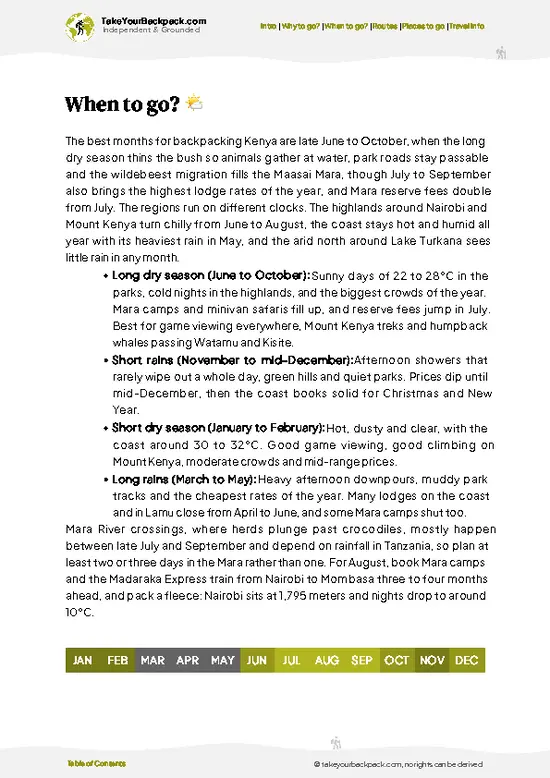
source: climatestotravel.comJANJanuary: good for travelingFEBFebruary: good for travelingMARMarch: fair for travelingAPRApril: below average for travelingMAYMay: good for travelingJUNJune: highly recommended for travelingJULJuly: highly recommended for travelingAUGAugust: highly recommended for travelingSEPSeptember: highly recommended for travelingOCTOctober: good for travelingNOVNovember: good for travelingDECDecember: good for traveling
when-to-go

✈️ The backpacker research shortcutKenya Travel Guide

An offline-friendly backpacking guide with optimized travel routes, ranked highlights, transport advice, and the best areas to stay.
example page 0 from our offline Travel Guide for Kenya
example page 1 from our offline Travel Guide for Kenya
example page 2 from our offline Travel Guide for Kenya
example page 3 from our offline Travel Guide for Kenya
example page 4 from our offline Travel Guide for Kenya
example page 5 from our offline Travel Guide for Kenya
example page 6 from our offline Travel Guide for Kenya
example page 7 from our offline Travel Guide for Kenya
The digital guide (429 pages) contains:
114 highlights, ranked by travel appeal
Optimized 7, 14 & 21-day travel routes
Cities, national parks, landmarks, beaches
How to get around
Offline-friendly for travel without Wi-Fi
👉 Click to see all 30+ guide features

📅 Plan smarter in minutes, not weeks
Month by month travel advice
Festivals & national holidays
Budget expectations

🗺️ Go to the right places, skip the overrated ones
Honest pros & cons of destinations
Top hikes, parks & viewpoints
Lesser-known places most travelers miss
Clear “worth it vs skip it” guidance

🛏️ Travel smoothly without rookie mistakes
Best areas to stay
Transport systems explained simply
Common scams & safety advice
SIM cards, money & practical tips

🌍 Understand the country, not just visit it
Culture & traditions
52 Essential phrases & customs
Festivals worth planning around
Traveler-friendly historical context
Insights that make places more meaningful

📱 Built for real travel conditions
Fully downloadable PDF
Works completely offline
Optimized for phone use
Useful in remote areas & buses
Everything in one place
Save weeks of stressful planning
Get instant access to your full guide. 30‑day money-back guarantee.


By proceeding you agree to our terms.
Sent to your inbox immediately after payment • 100% Secure Checkout
Best Backpacking Travel Advisor 2025 tourism awardBest Backpacking
Travel Advisor
2025
What others say about Take Your Backpack Guides:
⭐⭐⭐⭐⭐
Fantastic, amazing amount of information!
⭐⭐⭐⭐⭐
My goodness this is amazing, it's what I've been looking for hats off too you!
⭐⭐⭐⭐⭐
I think this is absolutely BRILLIANT
⭐⭐⭐⭐
Very complete and informative. It's still missing places, but I gotta to commend you
⭐⭐⭐⭐⭐
This is truly amazing, thank you, can't wait to explore it with my kids!
⭐⭐⭐⭐⭐
Awesome resource, thank you!
⭐⭐⭐⭐⭐
This is amazing! Can't wait to explore the ones I haven't seen
⭐⭐⭐⭐
I love this! Well done, great idea.
⭐⭐⭐⭐⭐
Thanks for taking the time to make this gem!
⭐⭐⭐⭐⭐
This might be the best website I've ever seen.
⭐⭐⭐⭐⭐
Congratulations, and thank you so much for your work; it's incredibly valuable.
⭐⭐⭐⭐
In all seriousness I think you did a great job pointing out the important spots
⭐⭐⭐⭐⭐
10/10 very good
⭐⭐⭐⭐⭐
As someone who's only just starting to visit regularly this is awesome, thank you.
⭐⭐⭐⭐
Thank you very much! I'm going to visit my dad, it's going to be very useful!
⭐⭐⭐⭐⭐
This is really cool! We'll be travelling for the first time and this definitely come in handy.
⭐⭐⭐⭐⭐
You are now our minister of culture, congratulations 👨‍💼
⭐⭐⭐⭐⭐
Just wanted to tell you that this is a pearl! Going to follow your recommendations.
⭐⭐⭐⭐⭐
This is so cool. I'll definitely be using the resource for my travels soon.
⭐⭐⭐⭐⭐
This is very impressive! Good work.
⭐⭐⭐⭐⭐
This is an amazing and informative site. Very well done!

🛏️ Where to stay?How to pick the right area

In Kakamega, the sweet spot for backpackers is the town center and its immediate surroundings. This area strikes a balance between safety and social buzz, making it a natural hub for solo travelers and budget adventurers. You’ll find a handful of hostels and guesthouses clustered here, which means easy access to communal spaces where meeting fellow travelers is almost inevitable. The vibe is straightforward—no frills, just practical comfort and a chance to plug into local rhythms without feeling isolated or overwhelmed.

Venture too far out, and you trade convenience for uncertainty. Neighborhoods … read more 👉
In Kakamega, the sweet spot for backpackers is the town center and its immediate surroundings. This area strikes a balance between safety and social buzz, making it a natural hub for solo travelers and budget adventurers. You’ll find a handful of hostels and guesthouses clustered here, which means easy access to communal spaces where meeting fellow travelers is almost inevitable. The vibe is straightforward—no frills, just practical comfort and a chance to plug into local rhythms without feeling isolated or overwhelmed.

Venture too far out, and you trade convenience for uncertainty. Neighborhoods on the outskirts tend to lack reliable public transport and have fewer budget-friendly options, which can eat into your time and comfort. Staying central means you’re close to markets, eateries, and transport links, cutting down on wasted hours and dodging the hassle of long, unpredictable rides. It’s a classic trade-off: prioritize the core for efficiency and connection, or risk the edges for quiet that might cost you more in time and hassle.

🚌 Getting aroundHow to get from A to B

Kakamega moves at its own rhythm, a blend of laid-back rural pulse and bursts of market-day energy. It’s not a city where you’ll find strict timetables or synchronized transit; instead, expect a dance of informal minibus matatus weaving through the streets, motorbikes darting with a sense of urgency, and locals who know exactly when to wait and when to push forward. Time here isn’t measured by the clock alone but by the flow of people and the shifting light over the forest canopy. Your choices in getting around will reflect this balance—between patience, speed, and the price you’re willing to pay for comfort or convenience.


  • Walking: The most reliable and cost-free way to explore Kakamega’s compact center and nearby attractions. It’s slow but immersive, letting you catch the small details—street
read more 👉
Kakamega moves at its own rhythm, a blend of laid-back rural pulse and bursts of market-day energy. It’s not a city where you’ll find strict timetables or synchronized transit; instead, expect a dance of informal minibus matatus weaving through the streets, motorbikes darting with a sense of urgency, and locals who know exactly when to wait and when to push forward. Time here isn’t measured by the clock alone but by the flow of people and the shifting light over the forest canopy. Your choices in getting around will reflect this balance—between patience, speed, and the price you’re willing to pay for comfort or convenience.


  • Walking: The most reliable and cost-free way to explore Kakamega’s compact center and nearby attractions. It’s slow but immersive, letting you catch the small details—street vendors, local chatter, and the scent of fresh produce. No schedule, no cost, just your own pace.


  • Matatu: The backbone of local transit, these shared minibuses run from dawn until dusk, roughly 6 AM to 7 PM. Fares are dirt cheap, often under 100 KES for short hops, but expect crowding and a stop-anywhere style that slows your journey. Comfort is minimal, but the speed beats walking for longer distances.


  • Boda Boda (Motorcycle Taxi): The fastest way to cut through traffic or reach outlying spots, boda bodas operate 24/7 with prices negotiable but generally affordable for short trips (around 50-150 KES). They offer a thrilling, if somewhat exposed, ride—perfect when time is tight but comfort is sacrificed.


  • Private Taxi: Less common and pricier, private taxis provide door-to-door service with more comfort and reliability. Expect to pay several hundred KES for a short trip, making this a choice when convenience trumps budget and you want to avoid the unpredictability of matatus or bodas.

👛 Costs (as of 11 October 2025)Travel costs and budget guide for Kakamega

Backpacking in Kakamega, Kenya, offers a clear trade-off between cost and comfort, with prices reflecting the local economy and travel infrastructure. Here’s how the daily expenses typically break down for an independent traveler navigating this city.
  • Dorm Accommodation (High Season): Expect to pay around $8 to $12 per night. High season sees a slight bump due to demand, but options remain basic—think simple beds in shared rooms with minimal frills.
  • Dorm Accommodation (Off-Season): Prices drop to about $5 to $8 per night. Fewer tourists mean better bargaining power, and you can snag a spot in a clean, no-nonsense hostel without breaking the bank.
  • Meals: Local eateries serve hearty meals for $2 to $4 each. Street food and small restaurants dominate, offering filling plates of ugali, sukuma
read more 👉
Backpacking in Kakamega, Kenya, offers a clear trade-off between cost and comfort, with prices reflecting the local economy and travel infrastructure. Here’s how the daily expenses typically break down for an independent traveler navigating this city.
  • Dorm Accommodation (High Season): Expect to pay around $8 to $12 per night. High season sees a slight bump due to demand, but options remain basic—think simple beds in shared rooms with minimal frills.
  • Dorm Accommodation (Off-Season): Prices drop to about $5 to $8 per night. Fewer tourists mean better bargaining power, and you can snag a spot in a clean, no-nonsense hostel without breaking the bank.
  • Meals: Local eateries serve hearty meals for $2 to $4 each. Street food and small restaurants dominate, offering filling plates of ugali, sukuma wiki, and grilled meats. Western-style or tourist-targeted meals will push the price higher, around $5 to $7.
  • Local Transport: Matatus and boda-bodas (motorcycle taxis) are the go-to. A typical short ride costs between $0.30 and $1. Longer trips across town might hit $1.50. Negotiation is part of the game, especially on boda-bodas.
  • City Transport Pass: Kakamega doesn’t have a formal city transport pass system. Budget travelers rely on pay-per-ride options, so factor in daily transport costs rather than a pass.
  • Basic Activities/Entry Fees: Visiting Kakamega Forest Reserve, the main draw, costs about $5 to $10 for entry. Guided tours add another $10 to $15 but are worth it for the insight and safety. Other local attractions are generally low-cost or free.
  • Miscellaneous Expenses: This covers essentials like bottled water, snacks, occasional SIM cards or data top-ups, and small tips. Budget around $2 to $4 daily to stay comfortably covered.

Summing it up, a backpacker in Kakamega can expect to spend roughly $15 to $30 per day. The lower end leans on off-season dorm stays, street food, and minimal extras, while the higher end includes guided activities and a bit more comfort. Knowing these trade-offs lets you tailor your trip to what matters most—whether that’s stretching your dollar or diving deeper into the local scene.
⚠️ Prices can change and everyone travels differently, so take this as a rough guide. Hope it helps you plan your adventure!

🚌 Day tripsWhere to go beyond the main area

Kakamega, Kenya, is a fantastic base for day trips that blend adventure and cultural immersion. Here are some standout options.

Kakamega Forest
Just a short 30-minute matatu ride from the city, Kakamega Forest offers a lush escape into one of the last remaining rainforests in Kenya. You can hike through trails filled with unique flora and fauna, including rare birds and monkeys. The entrance fee is around $5, and hiring a local guide for about $10 enhances the experience. The best time to visit is during the dry season from June to September when trails are more accessible. A common mistake? Underestimating the forest’s size; plan for at least a half-day to truly soak it in.
👉 Explore Kakamega Forest

Rondo Retreat
About an hour’s drive from Kakamega, Rondo Retreat is a serene spot … read more 👉
Kakamega, Kenya, is a fantastic base for day trips that blend adventure and cultural immersion. Here are some standout options.

Kakamega Forest
Just a short 30-minute matatu ride from the city, Kakamega Forest offers a lush escape into one of the last remaining rainforests in Kenya. You can hike through trails filled with unique flora and fauna, including rare birds and monkeys. The entrance fee is around $5, and hiring a local guide for about $10 enhances the experience. The best time to visit is during the dry season from June to September when trails are more accessible. A common mistake? Underestimating the forest’s size; plan for at least a half-day to truly soak it in.
👉 Explore Kakamega Forest

Rondo Retreat
About an hour’s drive from Kakamega, Rondo Retreat is a serene spot perfect for a day of relaxation and reflection. The retreat offers beautiful gardens and a peaceful atmosphere, ideal for unwinding after days of travel. Entry is usually free, but a meal will set you back around $10. Visit during the weekdays to avoid crowds. Many first-timers miss the chance to enjoy a guided meditation session—don’t skip it!


Shinyalu Market
Just 20 minutes from Kakamega, Shinyalu Market is a vibrant local experience. Here, you can dive into the hustle and bustle, sampling street food and picking up handmade crafts. Expect to spend around $5 on food and souvenirs. The market is busiest on Saturdays, so plan your visit accordingly. A common oversight is sticking to the main stalls; explore the side alleys for hidden culinary treasures.


Isukha Cultural Center
A 45-minute trip will take you to the Isukha Cultural Center, where you can immerse yourself in the rich traditions of the Luhya people. Engage in local dances, crafts, and storytelling sessions. Entry is about $7, and it’s best to visit during cultural festivals for a full experience. Many travelers overlook the importance of timing; check local calendars to catch special events.
Want to know what more Kenya offers?
The Kenya Travel Guide describes 114 highlights, from cities to national parks, from beaches to hikes

Get the Travel Guide -

🍲 FoodEating & Drinking in Kakamega

In Kakamega, local cuisine is a vibrant tapestry of flavors. Don’t miss ugali, a staple made from maize flour, often served with sukuma wiki (collard greens) or nyama choma (grilled meat). The aroma of street vendors grilling meat wafts through the air, drawing you in.

Markets are buzzing with life, where you can grab a quick samosa or a bowl of kuku kienyeji (free-range chicken) simmered in rich spices. The drinking culture here is equally engaging. Try a local brew like malwa, a fermented drink made from millet, often enjoyed in communal settings.

When dining, expect a relaxed atmosphere. Sharing food is common, so don’t hesitate to join in. Just remember, it’s polite to eat with your right hand. Embrace the social vibe; it’s all about connection and community.

🛡️ SafetyTraveler Safety Guide

Kakamega is generally safe, but awareness is key. Stick to well-lit areas at night, especially if you’re solo. The town has a lively atmosphere, but avoid wandering too far off the beaten path after dark.

Common scams are rare, but be cautious around markets; some vendors may inflate prices for tourists. Always negotiate, and don’t hesitate to walk away if something feels off.

Keep your belongings close, especially in crowded areas. A simple crossbody bag can deter pickpockets. Trust your instincts; if a situation feels uncomfortable, it’s okay to leave. Enjoy the vibrant culture, but stay alert, and you’ll have a smooth experience.

Other Kenyan cities near Kakamega

Explore more nearby:

  • Kisumu—Lake Victoria port, fish markets, Dunga wetlands| 42 km away
  • Siaya—rural landscapes, Luo heritage, Yala Swamp| 57 km away
  • Eldoret—athletics training, wheat fields, Nandi hills| 63 km away

💡 Not sure where to go next?
Create a personalized itinerary for Kenya including Kakamega and the places that fit your trip.

Generate my itinerary

👉 Discover all cities

Or checkout all Kenya has to offer (think cities, towns, villages, national parks, hikes, beaches, festivals)
Country photo of Kenya

We 💚 feedbackFinal thoughts on visiting Kakamega

Kakamega has a laid-back vibe that feels like a breath of fresh air. The best surprise? The local food scene—try the ugali and sukuma wiki at a roadside eatery. Just a heads-up: the humidity can be intense, so stay hydrated and pace yourself. It’s all part of the adventure!

✍️ Help improve this page!
The information on this page is based on in-depth research, insights shared by experienced travelers, and feedback from the local travel community in Kenya. While every effort is made to keep the information accurate and current, conditions can change — so if you spot anything incorrect or outdated, please get in touch.


🙋‍♂️ Give feedback

👋 Meet the founderWho’s Behind Take Your Backpack?

Johan, backpacker and founder of TakeYourBackpackHi, I’m Johan (Netherlands 🇳🇱), the creator of TakeYourBackpack. Over the past decade, I’ve backpacked through 80+ countries across six continents, gaining extensive experience with independent travel, long-term trips, and overland routes.

This site is built on a combination of firsthand travel experience and carefully curated insights from other backpackers. Many guides are based on places I’ve personally visited, while others bring together tips, observations, and practical advice shared by trusted travelers I’ve met along the way.

The goal is to provide realistic, experience-driven guidance — not generic itineraries — so you can explore destinations with better context, clearer expectations, and more confidence.

Get full Kenya guide •
Instant download • 114 highlights • Full Offline guide