×

Kenya🇰🇪 | citiesNakurulakefront city, flamingo gatherings, Rift Valley escarpment | things to do and best time to go

Explore NaivashaExplore Eldoret

Backpacking in Nakuru
🏆 Top pickcity ranked #5
By Johan Kruseman 🇳🇱 | Updated June 11, 2026

Most travelers only realize after leaving Nakuru that it’s the rare Kenyan city where you can walk from a bustling market to a national park gate in under 30 minutes—no haggling with boda-bodas, no marathon matatu rides. Nakuru sits in the heart of the Rift Valley, northwest of Nairobi, and it’s a city that rewards curiosity. For backpackers, it’s a sweet spot: cheaper than Nairobi, safer than Kisumu, and far less chaotic than Mombasa. You get Lake Nakuru National Park’s flamingos and rhinos, colonial-era architecture, and a surprisingly lively bar scene, all without the tourist crush. The city’s compact center makes it easy to meet fellow travelers—hostels and local joints cluster together, so you’re never far from a friendly face or a cold Tusker. Nakuru feels energetic but manageable, with enough grit to keep it interesting and enough comfort to make you linger.

Discover everything you want to know in the 📖 Kenya Travel Guide.


Get your Kenya guide
114 ranked highlights, routes & tips, works offline (429 pages)
Loading the map 🌍
CLICK TO FILTER
cities
towns
landmarks
national parks
hikes
beaches
attractions
festivals
regions
SHOW COUNTRY’S BESTSHOW ALL

✨ Why go?
Ranked #5 city in Kenya
What sets this place apart

Nakuru is a strategic basecamp for backpackers navigating Kenya. It’s not just about the highlights; it’s the value it offers for day trips that makes it a smart choice. You’ll find a range of hostels that cater to different budgets, providing a cozy spot to recharge after a day of exploration. The food scene is diverse, from local street vendors to sit-down restaurants, ensuring you can fuel up without breaking the bank.

The city is walkable, making it easy to explore on foot, which is a bonus for those who prefer to soak in the local vibe. When the sun sets, the nightlife offers a mix of laid-back bars and lively spots, perfect for mingling with fellow travelers. Plus, Nakuru’s transport links make onward travel a breeze, whether you’re heading to the Maasai Mara or back to Nairobi.

In … read more 👉
Nakuru is a strategic basecamp for backpackers navigating Kenya. It’s not just about the highlights; it’s the value it offers for day trips that makes it a smart choice. You’ll find a range of hostels that cater to different budgets, providing a cozy spot to recharge after a day of exploration. The food scene is diverse, from local street vendors to sit-down restaurants, ensuring you can fuel up without breaking the bank.

The city is walkable, making it easy to explore on foot, which is a bonus for those who prefer to soak in the local vibe. When the sun sets, the nightlife offers a mix of laid-back bars and lively spots, perfect for mingling with fellow travelers. Plus, Nakuru’s transport links make onward travel a breeze, whether you’re heading to the Maasai Mara or back to Nairobi.

In short, Nakuru fits seamlessly into a backpacking route, offering enough to keep you engaged without demanding too much of your time or money. If you’re looking for a place to rest and recharge while still having plenty to do, Nakuru is a solid choice.
Want to include Nakuru in your Kenya route?
Create a personalized Kenya itinerary that includes Nakuru and the places that fit your trip — based on your travel style, budget, and available time. Get your route in seconds.

Generate my trip

💡 HighlightsThe experiences that define the visit

  • Lake Nakuru National Park (edge of the city) — Famous for huge flocks of flamingos (seasonal) and a robust population of black and white rhinos; easy game drives and viewpoints just a few minutes from town give real wildlife vibes without a long drive.
  • Baboon Cliff (in Lake Nakuru National Park) — A dramatic viewpoint overlooking Lake Nakuru and the Rift Valley escarpment; great for sunrise/sunset photos and spotting waterbirds and hippo activity in the shallows.
  • Hyrax Hill Prehistoric Site & Museum — Small, well-curated site with stone-age excavations and a compact museum that explains local prehistoric cultures; it’s one of the best ways to connect with the deep human history of the area.
  • Lord Egerton Castle — A quirky, well-preserved colonial-era mansion with gardens and interesting
read more 👉
  • Lake Nakuru National Park (edge of the city) — Famous for huge flocks of flamingos (seasonal) and a robust population of black and white rhinos; easy game drives and viewpoints just a few minutes from town give real wildlife vibes without a long drive.
  • Baboon Cliff (in Lake Nakuru National Park) — A dramatic viewpoint overlooking Lake Nakuru and the Rift Valley escarpment; great for sunrise/sunset photos and spotting waterbirds and hippo activity in the shallows.
  • Hyrax Hill Prehistoric Site & Museum — Small, well-curated site with stone-age excavations and a compact museum that explains local prehistoric cultures; it’s one of the best ways to connect with the deep human history of the area.
  • Lord Egerton Castle — A quirky, well-preserved colonial-era mansion with gardens and interesting backstory; a good half-day stop for architecture, stories, and photos just off Nakuru’s main roads.
  • Nakuru Railway Station — The historic rail terminus and station precinct show the colonial-era railway architecture and remain a working transport hub; walking around the station and its adjacent goods area gives a real sense of Nakuru’s trading history.
  • Nakuru War Cemetery — Quiet, well-kept Commonwealth cemetery commemorating soldiers from WWII; worth a respectful visit for history and reflection within the city.
  • Madaraka (Central) Market — A lively, chaotic market where locals shop for produce, spices, and everyday goods; excellent for sampling street food, watching daily life, and practicing haggling.
  • Nakuru Golf Club — A colonial-era 18-hole course set on shaded grounds inside town that offers a calm green escape and good views of the surrounding ridges; non-golfers can still enjoy a walk or tea at the clubhouse.
A few real, visitable highlights just outside Nakuru that make great day trips are Menengai Crater, Lake Elementaita (birding and flamingos), and Lake Naivasha (boat rides and Hell’s Gate National Park).
Spotted a mistake or missing something? Contact us.

Things to do around Nakuru

Ratings based on Tripadvisor reviews. When you book through this link, you support our work at no extra cost to you.

🏘️ NeighborhoodsHow different areas shape the experience

Nakuru offers a unique blend of urban energy and natural beauty, making it a prime spot for backpackers seeking adventure and culture. Here’s how the neighborhoods stack up:

Central Nakuru: This is the heartbeat of the city. It’s bustling and vibrant, perfect for those who thrive in the thick of things. You’ll find affordable hostels and eateries. Walkability is high, with shops and markets just a stroll away. Nightlife is lively, with bars and music venues. Ideal for short stays, but longer visits can feel a bit chaotic.

Milimani: A quieter, more residential area. It’s a great choice if you prefer a laid-back vibe. The cost of accommodation is slightly higher, but you’ll enjoy spacious guesthouses and a peaceful atmosphere. Walkability is decent, though you might need a taxi for further … read more 👉
Nakuru offers a unique blend of urban energy and natural beauty, making it a prime spot for backpackers seeking adventure and culture. Here’s how the neighborhoods stack up:

Central Nakuru: This is the heartbeat of the city. It’s bustling and vibrant, perfect for those who thrive in the thick of things. You’ll find affordable hostels and eateries. Walkability is high, with shops and markets just a stroll away. Nightlife is lively, with bars and music venues. Ideal for short stays, but longer visits can feel a bit chaotic.

Milimani: A quieter, more residential area. It’s a great choice if you prefer a laid-back vibe. The cost of accommodation is slightly higher, but you’ll enjoy spacious guesthouses and a peaceful atmosphere. Walkability is decent, though you might need a taxi for further excursions. Perfect for longer stays, especially if you want to recharge after a day of exploring.

Lake Nakuru National Park Area: This is where nature takes center stage. While it’s a bit farther from the city center, the experience is worth it. Accommodations range from budget campsites to mid-range lodges. Transport access is good, but you’ll want to plan your trips. Ideal for those looking to immerse themselves in wildlife and scenery, making it better for longer stays.

Bondeni: A vibrant, local neighborhood with a mix of cultures. It’s budget-friendly and offers a taste of everyday life in Nakuru. Walkability is moderate, and you’ll find local eateries and markets. Nightlife is minimal, making it a good choice for those seeking a quieter experience. Suitable for both short and longer stays, especially if you want to connect with locals.

⌛️ 1 daySeeing the highlights in 24 hours

Nakuru, Kenya, is a vibrant city that serves as a gateway to stunning landscapes and rich wildlife. Nestled near Lake Nakuru National Park, it’s a place where urban life meets nature, offering a unique blend of experiences.

Start your day in the charming neighborhood of Milimani, where you can grab a hearty breakfast at a local café. Try some fresh mandazi (fried dough) paired with chai; it’s a delightful way to fuel up. After breakfast, head to Lake Nakuru National Park. Spend the morning exploring its diverse ecosystems. The park is famous for its flamingos, but keep an eye out for rhinos and other wildlife. The early hours are perfect for spotting animals before the heat sets in.

In the afternoon, return to the city and wander through the bustling streets of Nakuru Town. Visit the local … read more 👉
Nakuru, Kenya, is a vibrant city that serves as a gateway to stunning landscapes and rich wildlife. Nestled near Lake Nakuru National Park, it’s a place where urban life meets nature, offering a unique blend of experiences.

Start your day in the charming neighborhood of Milimani, where you can grab a hearty breakfast at a local café. Try some fresh mandazi (fried dough) paired with chai; it’s a delightful way to fuel up. After breakfast, head to Lake Nakuru National Park. Spend the morning exploring its diverse ecosystems. The park is famous for its flamingos, but keep an eye out for rhinos and other wildlife. The early hours are perfect for spotting animals before the heat sets in.

In the afternoon, return to the city and wander through the bustling streets of Nakuru Town. Visit the local markets, where the colors and sounds create an authentic Kenyan atmosphere. Stop by the Nakuru War Memorial, a lesser-known site that offers a glimpse into the city’s history. It’s a peaceful spot to reflect and soak in the local vibe.

As evening approaches, make your way to the scenic viewpoint at Menengai Crater. The panoramic views are breathtaking, especially as the sun sets, casting a warm glow over the landscape. For dinner, head to a local restaurant in the town center. Sample traditional dishes like ugali and sukuma wiki, which will give you a taste of home-cooked Kenyan flavors.

By the end of the day, you’ll have experienced the essence of Nakuru—its wildlife, culture, and community. Each choice you made today balanced time, money, and comfort, allowing you to savor high-value experiences that resonate long after you leave.
Turn your Nakuru visit into an Kenya adventure
Build a complete Kenya route with Nakuru, hidden gems, must-see destinations, and realistic travel times included.

Generate my trip

🌤️ When to go?Seasonal considerations and timing


  • Topic: Weather – Nakuru’s climate swings between wet and dry seasons. The dry months from June to October offer clear skies and minimal rain, ideal for trekking and wildlife spotting. The wet seasons, March to May and November to December, bring heavy rains that can turn trails to mud and disrupt plans.

  • Topic: Temperature – Expect mild temperatures year-round. Daytime highs hover around 20-25°C (68-77°F), cooling to 10-15°C (50-59°F) at night. The dry season is cooler and more comfortable for hiking, while the wet season feels warmer but stickier.

  • Topic: Daylight Hours – Near the equator, Nakuru enjoys roughly 12 hours of daylight year-round. Sunrise around 6:30 AM and sunset near 6:30 PM give you a reliable window for daily adventures without drastic seasonal shifts.

  • Topic: Crowds
read more 👉

  • Topic: Weather – Nakuru’s climate swings between wet and dry seasons. The dry months from June to October offer clear skies and minimal rain, ideal for trekking and wildlife spotting. The wet seasons, March to May and November to December, bring heavy rains that can turn trails to mud and disrupt plans.

  • Topic: Temperature – Expect mild temperatures year-round. Daytime highs hover around 20-25°C (68-77°F), cooling to 10-15°C (50-59°F) at night. The dry season is cooler and more comfortable for hiking, while the wet season feels warmer but stickier.

  • Topic: Daylight Hours – Near the equator, Nakuru enjoys roughly 12 hours of daylight year-round. Sunrise around 6:30 AM and sunset near 6:30 PM give you a reliable window for daily adventures without drastic seasonal shifts.

  • Topic: Crowds – Peak tourist influx aligns with the dry season, especially July and August. Expect busier parks and higher prices. The shoulder months (June, September, October) strike a balance between fewer crowds and good weather.

  • Topic: Seasonal Activities – The dry season is prime for game drives and birdwatching, as animals gather near water sources. Wet months bring lush landscapes and migrating birds but can limit access to some trails.

  • Topic: Price Fluctuations – Accommodation and tours spike in the dry season’s peak months. Traveling in shoulder or wet seasons can save money but demands flexibility with weather and access.


Pro-tip: Target the shoulder dry months—June or September—to maximize comfort, wildlife visibility, and value without the crush of peak-season crowds.


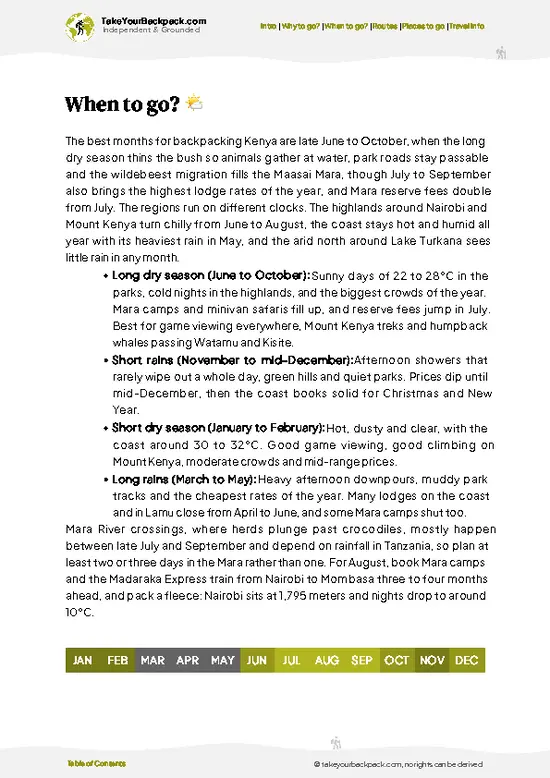
source: climatestotravel.comJANJanuary: fair for travelingFEBFebruary: fair for travelingMARMarch: below average for travelingAPRApril: below average for travelingMAYMay: below average for travelingJUNJune: highly recommended for travelingJULJuly: excellent for travelingAUGAugust: excellent for travelingSEPSeptember: highly recommended for travelingOCTOctober: highly recommended for travelingNOVNovember: below average for travelingDECDecember: below average for traveling
when-to-go

✈️ The backpacker research shortcutKenya Travel Guide

An offline-friendly backpacking guide with optimized travel routes, ranked highlights, transport advice, and the best areas to stay.
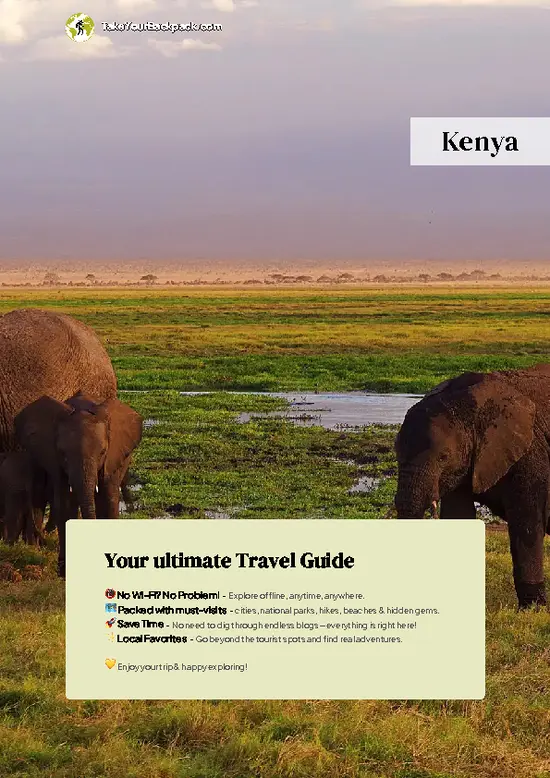
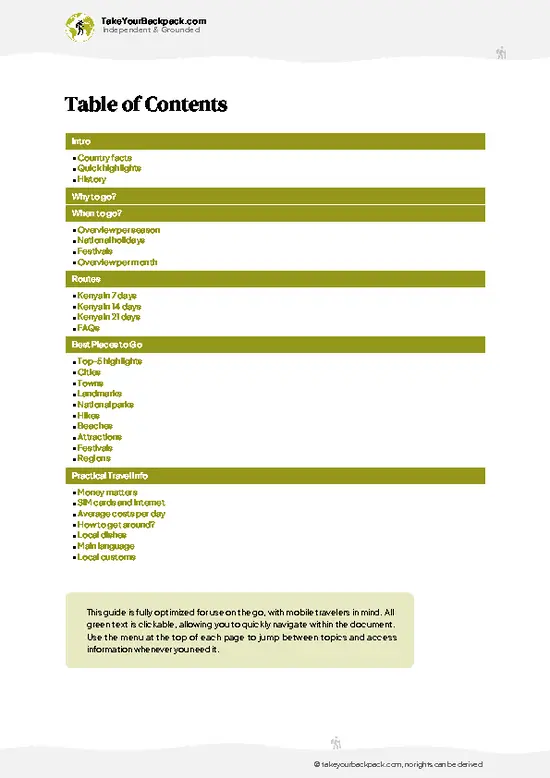
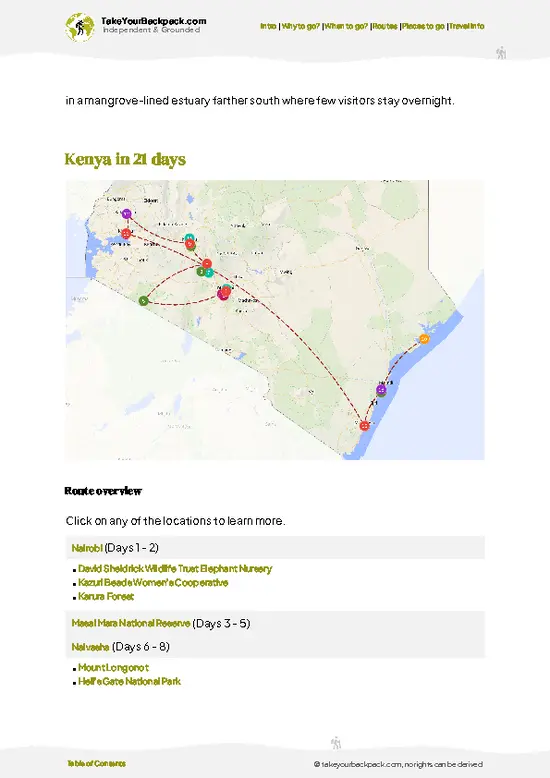
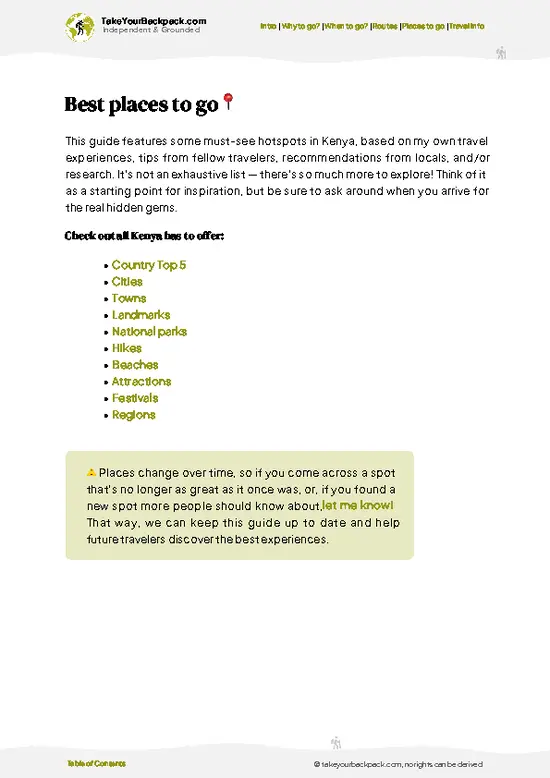
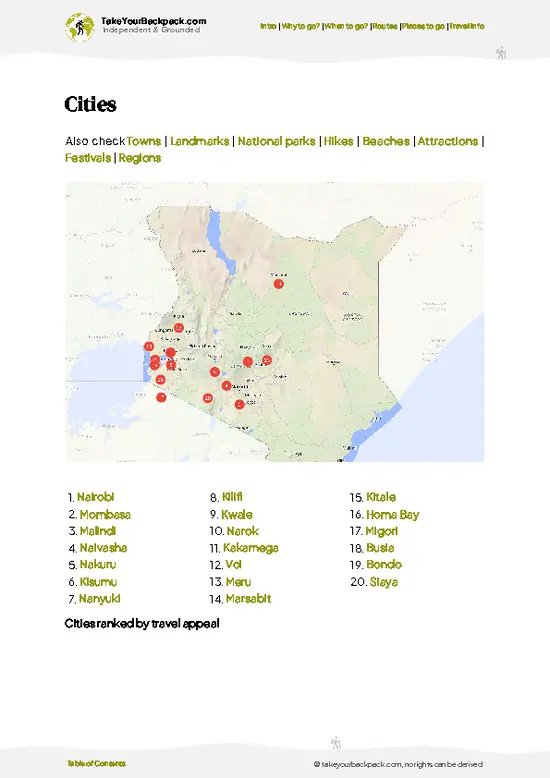
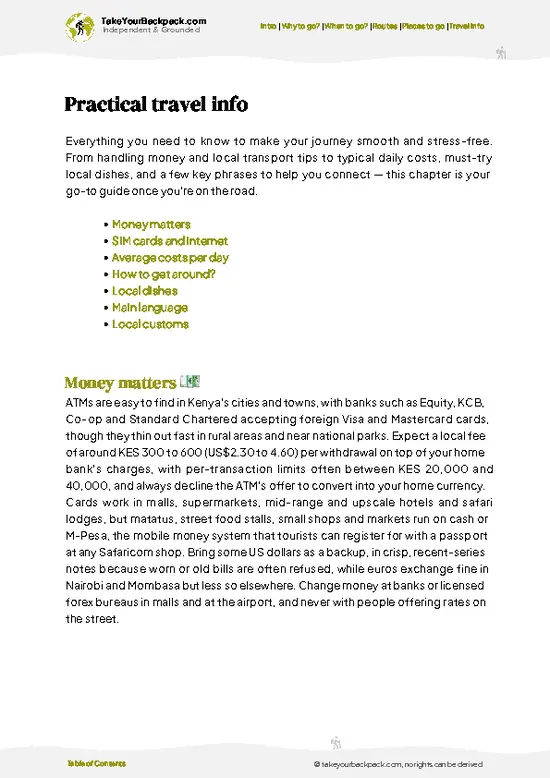
example page 0 from our offline Travel Guide for Kenya
example page 1 from our offline Travel Guide for Kenya
example page 2 from our offline Travel Guide for Kenya
example page 3 from our offline Travel Guide for Kenya
example page 4 from our offline Travel Guide for Kenya
example page 5 from our offline Travel Guide for Kenya
example page 6 from our offline Travel Guide for Kenya
example page 7 from our offline Travel Guide for Kenya
The digital guide (429 pages) contains:
114 highlights, ranked by travel appeal
Optimized 7, 14 & 21-day travel routes
Cities, national parks, landmarks, beaches
How to get around
Offline-friendly for travel without Wi-Fi
👉 Click to see all 30+ guide features

📅 Plan smarter in minutes, not weeks
Month by month travel advice
Festivals & national holidays
Budget expectations

🗺️ Go to the right places, skip the overrated ones
Honest pros & cons of destinations
Top hikes, parks & viewpoints
Lesser-known places most travelers miss
Clear “worth it vs skip it” guidance

🛏️ Travel smoothly without rookie mistakes
Best areas to stay
Transport systems explained simply
Common scams & safety advice
SIM cards, money & practical tips

🌍 Understand the country, not just visit it
Culture & traditions
52 Essential phrases & customs
Festivals worth planning around
Traveler-friendly historical context
Insights that make places more meaningful

📱 Built for real travel conditions
Fully downloadable PDF
Works completely offline
Optimized for phone use
Useful in remote areas & buses
Everything in one place
Save weeks of stressful planning
Get instant access to your full guide. 30‑day money-back guarantee.


By proceeding you agree to our terms.
Sent to your inbox immediately after payment • 100% Secure Checkout
Best Backpacking Travel Advisor 2025 tourism awardBest Backpacking
Travel Advisor
2025
What others say about Take Your Backpack Guides:
⭐⭐⭐⭐⭐
Fantastic, amazing amount of information!
⭐⭐⭐⭐⭐
My goodness this is amazing, it's what I've been looking for hats off too you!
⭐⭐⭐⭐⭐
I think this is absolutely BRILLIANT
⭐⭐⭐⭐
Very complete and informative. It's still missing places, but I gotta to commend you
⭐⭐⭐⭐⭐
This is truly amazing, thank you, can't wait to explore it with my kids!
⭐⭐⭐⭐⭐
Awesome resource, thank you!
⭐⭐⭐⭐⭐
This is amazing! Can't wait to explore the ones I haven't seen
⭐⭐⭐⭐
I love this! Well done, great idea.
⭐⭐⭐⭐⭐
Thanks for taking the time to make this gem!
⭐⭐⭐⭐⭐
This might be the best website I've ever seen.
⭐⭐⭐⭐⭐
Congratulations, and thank you so much for your work; it's incredibly valuable.
⭐⭐⭐⭐
In all seriousness I think you did a great job pointing out the important spots
⭐⭐⭐⭐⭐
10/10 very good
⭐⭐⭐⭐⭐
As someone who's only just starting to visit regularly this is awesome, thank you.
⭐⭐⭐⭐
Thank you very much! I'm going to visit my dad, it's going to be very useful!
⭐⭐⭐⭐⭐
This is really cool! We'll be travelling for the first time and this definitely come in handy.
⭐⭐⭐⭐⭐
You are now our minister of culture, congratulations 👨‍💼
⭐⭐⭐⭐⭐
Just wanted to tell you that this is a pearl! Going to follow your recommendations.
⭐⭐⭐⭐⭐
This is so cool. I'll definitely be using the resource for my travels soon.
⭐⭐⭐⭐⭐
This is very impressive! Good work.
⭐⭐⭐⭐⭐
This is an amazing and informative site. Very well done!

🛏️ Where to stay?Where staying makes the most sense

In Nakuru, the sweet spot for backpackers is the central business district (CBD) and its immediate surroundings. This area strikes a solid balance between safety, social buzz, and budget options. It’s where you’ll find the most hostels catering to solo travelers and small groups, making it easier to connect with others without sacrificing your wallet. The vibe here is practical but lively—street vendors, local eateries, and a steady flow of fellow travelers create a low-key social scene that’s perfect for swapping tips or planning your next move.

Compared to the quieter, more residential neighborhoods … read more 👉
In Nakuru, the sweet spot for backpackers is the central business district (CBD) and its immediate surroundings. This area strikes a solid balance between safety, social buzz, and budget options. It’s where you’ll find the most hostels catering to solo travelers and small groups, making it easier to connect with others without sacrificing your wallet. The vibe here is practical but lively—street vendors, local eateries, and a steady flow of fellow travelers create a low-key social scene that’s perfect for swapping tips or planning your next move.

Compared to the quieter, more residential neighborhoods on the outskirts, the CBD offers better access to transport hubs and markets, which means less time and money spent on getting around. It’s not luxury, but it’s comfortable enough for a good night’s rest and safe enough to walk around during the day. If you stray too far into the industrial zones or less developed suburbs, you’ll lose that social pulse and might face safety concerns, which is a trade-off not worth making when you’re solo and budget-conscious. Stick to the heart of Nakuru for a smart, connected base that maximizes your time and comfort without blowing your budget.

🚌 Getting aroundMoving around without the hassle

Nakuru moves with a pulse that’s part clockwork, part improvisation. The city’s rhythm isn’t dictated by strict timetables but by a blend of local habits and the ebb and flow of daily commerce. You’ll find moments where everything clicks like a well-oiled machine—buses rolling out on the hour, matatus lining up in neat queues—and other times when the streets feel like a live wire of spontaneous decisions, with vehicles darting off whenever they fill up or a new passenger hops on. Understanding this flow is your first win: it’s not about fighting the system but reading its signals and choosing your battles wisely.


  • Walking: The ultimate budget option and the best way to soak in Nakuru’s street-level energy. Most neighborhoods and markets are within a 20- to 30-minute stroll, making it free,
read more 👉
Nakuru moves with a pulse that’s part clockwork, part improvisation. The city’s rhythm isn’t dictated by strict timetables but by a blend of local habits and the ebb and flow of daily commerce. You’ll find moments where everything clicks like a well-oiled machine—buses rolling out on the hour, matatus lining up in neat queues—and other times when the streets feel like a live wire of spontaneous decisions, with vehicles darting off whenever they fill up or a new passenger hops on. Understanding this flow is your first win: it’s not about fighting the system but reading its signals and choosing your battles wisely.


  • Walking: The ultimate budget option and the best way to soak in Nakuru’s street-level energy. Most neighborhoods and markets are within a 20- to 30-minute stroll, making it free, flexible, and surprisingly fast during peak traffic hours.


  • Matatus (Shared Minibuses): The backbone of Nakuru’s transit, these operate from dawn until late evening, roughly 5:30 AM to 9 PM. Fares hover around 50-100 KES depending on distance. They’re cheap and frequent but expect cramped conditions and a stop-anywhere style that can slow your trip. Comfort is minimal; speed varies with traffic and passenger load.


  • Boda Bodas (Motorcycle Taxis): When time is tight and you’re willing to pay a premium, boda bodas are your go-to. They run 24/7, with fares starting at about 100 KES for short hops. They slice through traffic jams like a hot knife through butter but come with a trade-off in safety and comfort—helmet use is spotty, and the ride can be bumpy.


  • City Buses: Larger and more comfortable than matatus, city buses serve main routes with fixed stops. They run from about 6 AM to 8 PM, costing around 100-150 KES. They offer a smoother ride and more legroom but are less flexible and slower during rush hours due to fixed routes and stops.


  • Taxis: Metered taxis exist but are rare and expensive compared to other options, with fares starting around 300 KES. They offer privacy and comfort but at a steep price, making them a poor choice for budget travelers unless you’re splitting costs or need a direct, hassle-free ride.


Mastering Nakuru’s transit means balancing these trade-offs: walk when you want immersion and zero cost; jump on a matatu for the authentic, budget-friendly hustle; grab a boda boda when minutes matter; or opt for a city bus if comfort and predictability trump speed. Each choice chips away at your time, money, or comfort budget—your job is to decide which currency you’re spending to unlock the experience you want.

👛 Costs (as of 13 October 2025)What things cost and how to budget

Backpacking in Nakuru, Kenya, comes with a clear set of trade-offs between time, money, and comfort. Understanding these costs lets you decide where to invest your resources for the best experience.
  • Dorm Accommodation (High Season): Expect to pay around $10 to $15 per night. High season drives prices up due to demand, especially near Lake Nakuru National Park and the town center.
  • Dorm Accommodation (Off-Season): Prices drop to about $7 to $10 per night. Fewer tourists mean better deals, but some places may reduce services or close temporarily.
  • Meals: Street food and local eateries offer meals for $2 to $5. For a mix of local dishes and occasional splurges on more Western-style food, budget around $8 to $12 daily.
  • Local Transport: Matatus (shared minibuses) and boda bodas (motorcycle taxis)
read more 👉
Backpacking in Nakuru, Kenya, comes with a clear set of trade-offs between time, money, and comfort. Understanding these costs lets you decide where to invest your resources for the best experience.
  • Dorm Accommodation (High Season): Expect to pay around $10 to $15 per night. High season drives prices up due to demand, especially near Lake Nakuru National Park and the town center.
  • Dorm Accommodation (Off-Season): Prices drop to about $7 to $10 per night. Fewer tourists mean better deals, but some places may reduce services or close temporarily.
  • Meals: Street food and local eateries offer meals for $2 to $5. For a mix of local dishes and occasional splurges on more Western-style food, budget around $8 to $12 daily.
  • Local Transport: Matatus (shared minibuses) and boda bodas (motorcycle taxis) cost between $0.50 and $1.50 per short trip. Budget $3 to $5 daily if you move around frequently.
  • City Transport Pass: Nakuru doesn’t have a formal city transport pass system. Rely on cash payments for each ride, which means no upfront savings but flexibility in travel.
  • Basic Activities/Entry Fees: Entry to Lake Nakuru National Park is around $20 for foreigners. Other local attractions and museums typically charge $5 to $10. Plan for $10 to $25 daily if you’re active.
  • Miscellaneous Expenses: This covers water, snacks, occasional internet cafes, and small tips. Allocate about $2 to $5 daily.

Total daily costs for backpacking in Nakuru generally range from $25 on a tight budget, focusing on off-season dorms and minimal activities, up to $50 or more if you prioritize comfort, frequent park visits, and a bit of convenience. Knowing these trade-offs lets you tailor your trip to what matters most—whether that’s stretching your dollar or maximizing your experience.
⚠️ Prices can change and everyone travels differently, so take this as a rough guide. Hope it helps you plan your adventure!

🚌 Day tripsExploring the surroundings

Nakuru, Kenya, is a backpacker’s dream base for day trips, offering a blend of wildlife, culture, and stunning landscapes. Here’s how to make the most of your time without breaking the bank.

Lake Nakuru National Park
Just a short 30-minute drive from the city, Lake Nakuru National Park is a must-see. Famous for its flamingos and rhinos, the park offers a chance to spot wildlife in their natural habitat. Entry fees are around $30, and you can easily share a taxi with fellow travelers to keep costs down. The best time to visit is during the dry season, from June to October, when animals are more active. A common mistake? Underestimating the time needed for a game drive; plan for at least half a day to soak it all in.


Hell’s Gate National Park
About an hour from Nakuru, Hell’s Gate is … read more 👉
Nakuru, Kenya, is a backpacker’s dream base for day trips, offering a blend of wildlife, culture, and stunning landscapes. Here’s how to make the most of your time without breaking the bank.

Lake Nakuru National Park
Just a short 30-minute drive from the city, Lake Nakuru National Park is a must-see. Famous for its flamingos and rhinos, the park offers a chance to spot wildlife in their natural habitat. Entry fees are around $30, and you can easily share a taxi with fellow travelers to keep costs down. The best time to visit is during the dry season, from June to October, when animals are more active. A common mistake? Underestimating the time needed for a game drive; plan for at least half a day to soak it all in.


Hell’s Gate National Park
About an hour from Nakuru, Hell’s Gate is perfect for those who want to hike, bike, or rock climb. The park’s dramatic cliffs and geothermal activity create a unique landscape. Entry is about $26, and you can rent bikes for around $10. The best time to visit is early morning to avoid the heat and catch wildlife. Many first-timers miss the chance to hike to the Olkaria Geothermal Spa; don’t skip it!
👉 Explore Hell’s Gate National Park

Elementaita Lake
Just 30 minutes away, Lake Elementaita is a serene escape. Known for its birdwatching, you can spot pelicans and other migratory birds. The entrance is free, making it a budget-friendly option. Bring a picnic and enjoy the tranquil surroundings. The best time to visit is during the wet season, when the lake is full and wildlife is abundant. A common mistake is not checking the weather; it can get chilly, so pack a light jacket.


Kakamega Forest
A bit further afield, Kakamega Forest is about a two-hour drive but worth every minute. This lush rainforest is home to unique flora and fauna. Guided tours cost around $20, and you’ll want to spend a full day exploring the trails. The dry season is ideal for hiking, but be prepared for mud if you go during the rains. First-timers often overlook the importance of a guide; they’ll enhance your experience with local knowledge.
👉 Explore Kakamega Forest
Want to know what more Kenya offers?
The Kenya Travel Guide describes 114 highlights, from cities to national parks, from beaches to hikes

Get the Travel Guide -

🍲 FoodEating & Drinking in Nakuru

In Nakuru, food is a vibrant tapestry of flavors that tells the story of its people. You can’t miss trying ugali, a staple made from maize flour, often served with a rich stew of nyama choma—grilled meat that’s smoky and tender. Pair it with sukuma wiki, a sautéed kale dish that adds a fresh crunch.

Street food is where the magic happens. Vendors line the streets with sizzling grills and colorful stalls. Grab a samosa or mandazi for a quick snack; they’re crispy, flaky, and perfect for munching while you explore. The Nakuru Market is a sensory overload, bursting with spices, fresh produce, and the chatter of locals.

When it comes to drinks, don’t overlook chai—a spiced tea that’s a daily ritual here. You’ll find it served in small cups at roadside stalls, often accompanied by lively conversation. … read more 👉
In Nakuru, food is a vibrant tapestry of flavors that tells the story of its people. You can’t miss trying ugali, a staple made from maize flour, often served with a rich stew of nyama choma—grilled meat that’s smoky and tender. Pair it with sukuma wiki, a sautéed kale dish that adds a fresh crunch.

Street food is where the magic happens. Vendors line the streets with sizzling grills and colorful stalls. Grab a samosa or mandazi for a quick snack; they’re crispy, flaky, and perfect for munching while you explore. The Nakuru Market is a sensory overload, bursting with spices, fresh produce, and the chatter of locals.

When it comes to drinks, don’t overlook chai—a spiced tea that’s a daily ritual here. You’ll find it served in small cups at roadside stalls, often accompanied by lively conversation.

Etiquette is simple: share your food and drink. It’s a sign of friendship. So, dive in, savor the communal spirit, and let the flavors of Nakuru linger long after your visit.

🛡️ SafetyScams, Hazards, and Annoyances

Nakuru is generally safe for backpackers, but a few smart strategies can enhance your experience. Stay alert in crowded areas like the market; pickpockets occasionally lurk where distractions abound. If you’re solo, avoid wandering too far after dark. The city has a lively atmosphere, but some neighborhoods can feel less welcoming at night.

Common scams are minimal, yet it’s wise to be cautious with taxi drivers. Always agree on a fare beforehand or use a trusted ride-hailing app. Annoyances can include persistent street vendors; a polite but firm “no, thank you” usually does the trick.

Carry your belongings close and maintain a confident demeanor. Engaging with locals can be rewarding, but trust your instincts. With these tips, you can navigate Nakuru smoothly, focusing on the vibrant experiences waiting for you.

Other Kenyan cities near Nakuru

Explore more nearby:

  • Naivasha—freshwater lake, geothermal springs, flower farms| 60 km away
  • Narok—Maasai culture, Maasai Mara access, open grasslands| 91 km away
  • Bomet—tea estates, rolling hills, rural trading center| 98 km away

💡 Not sure where to go next?
Create a personalized itinerary for Kenya including Nakuru and the places that fit your trip.

Generate my itinerary

👉 Discover all cities

Or checkout all Kenya has to offer (think cities, towns, villages, national parks, hikes, beaches, festivals)
Country photo of Kenya

We 💚 feedbackIs it worth it?

Nakuru has a pulse that’s hard to ignore. The lake’s flamingos are a spectacle, but the real surprise? The warmth of the locals. Grab a cup of chai from a roadside vendor and soak in the stories. Just a heads-up: the traffic can be a beast, especially during rush hour. Plan your outings wisely. Embrace the chaos; it’s part of the charm. You’ll leave with a piece of Nakuru in your heart.

✍️ Help improve this page!
The information on this page is based on in-depth research, insights shared by experienced travelers, and feedback from the local travel community in Kenya. While every effort is made to keep the information accurate and current, conditions can change — so if you spot anything incorrect or outdated, please get in touch.


🙋‍♂️ Give feedback

👋 Meet the founderWho’s Behind Take Your Backpack?

Johan, backpacker and founder of TakeYourBackpackHi, I’m Johan (Netherlands 🇳🇱), the creator of TakeYourBackpack. Over the past decade, I’ve backpacked through 80+ countries across six continents, gaining extensive experience with independent travel, long-term trips, and overland routes.

This site is built on a combination of firsthand travel experience and carefully curated insights from other backpackers. Many guides are based on places I’ve personally visited, while others bring together tips, observations, and practical advice shared by trusted travelers I’ve met along the way.

The goal is to provide realistic, experience-driven guidance — not generic itineraries — so you can explore destinations with better context, clearer expectations, and more confidence.

Get full Kenya guide •
Instant download • 114 highlights • Full Offline guide