×
Serengeti Migration

Kenya🇰🇪 | landmarksSerengeti MigrationWildebeest herds, river crossings, predator encounters | things to do and best time to go

Explore Mount ElgonExplore David Sheldrick Wildlife Trust Elephant Nursery

Backpacking in Serengeti Migration
🌟 Highlightunique site ranked #1
By Johan Kruseman 🇳🇱 | Updated May 31, 2026

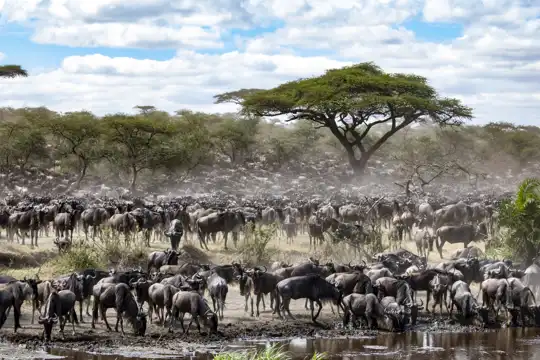
A rumble underfoot, the air thick with dust and adrenaline—then a wall of wildebeest surges past, hooves drumming like a thousand heartbeats. The smell is raw: earth, sweat, and the sharp tang of fear. You’re not watching a documentary; you’re dodging dung and grinning like a lunatic as the migration barrels across the Mara River, just inside Kenya’s Maasai Mara National Reserve, the northern reach of the Serengeti ecosystem.

Let’s drop the Instagram filter: the Serengeti Migration is chaos, not a curated highlight reel. Yes, it’s expensive—park fees, guides, and transport add up fast. You’ll share riverbanks with camera-toting crowds, and the best crossings don’t happen on your schedule. But here’s the real magic: the sheer scale of life on the move, the Maasai herders in bright shúkà watching from the hills, the primal energy that makes you feel small and wildly alive. Photos can’t touch it. If you want a world wonder that earns its hype, this is it—messy, unpredictable, and absolutely worth the pilgrimage.

Discover everything you want to know in the 📖 Kenya Travel Guide.


Get your Kenya guide
114 ranked highlights, routes & tips, works offline (429 pages)
Loading the map 🌍
CLICK TO FILTER
cities
towns
landmarks
national parks
hikes
beaches
attractions
festivals
regions
SHOW COUNTRY’S BESTSHOW ALL

✨ Why go?
Ranked #1 unique site in Kenya
The unique appeal for travelers

The Serengeti Migration isn’t just a pretty picture for your Instagram feed; it’s a raw, chaotic spectacle of nature that demands your attention. Sure, you’ll face crowds—especially during peak migration months—but that’s part of the experience. Watching thousands of wildebeest and zebras thunder across the plains is a visceral reminder of life’s pulse.

Now, let’s talk cost. Yes, a safari can pinch your wallet, but there are budget-friendly options. Consider joining a group tour or camping in designated areas. The reward? You’re not just ticking off a box; you’re witnessing one of the planet’s most incredible natural events.

The uniqueness of the Serengeti lies in its vastness and the sheer scale of the migration. It’s not just about the animals; it’s about the ecosystem, the predators, … read more 👉
The Serengeti Migration isn’t just a pretty picture for your Instagram feed; it’s a raw, chaotic spectacle of nature that demands your attention. Sure, you’ll face crowds—especially during peak migration months—but that’s part of the experience. Watching thousands of wildebeest and zebras thunder across the plains is a visceral reminder of life’s pulse.

Now, let’s talk cost. Yes, a safari can pinch your wallet, but there are budget-friendly options. Consider joining a group tour or camping in designated areas. The reward? You’re not just ticking off a box; you’re witnessing one of the planet’s most incredible natural events.

The uniqueness of the Serengeti lies in its vastness and the sheer scale of the migration. It’s not just about the animals; it’s about the ecosystem, the predators, and the thrill of the chase.

Plus, the Serengeti fits seamlessly into a broader route. Pair it with a visit to Ngorongoro Crater or Lake Victoria. This isn’t just a stop; it’s a pivotal chapter in your African adventure. Make time for it. You won’t regret it.
Want to include Serengeti Migration in your Kenya route?
Create a personalized Kenya itinerary that includes Serengeti Migration and the places that fit your trip — based on your travel style, budget, and available time. Get your route in seconds.

Generate my trip

💡 HighlightsMust-see experiences and standout moments

  • Mara River crossings — The iconic, heart-stopping moments when thousands of wildebeest and zebra attempt to cross the crocodile-filled Mara River; raw, chaotic, and unpredictable, these crossings (peaking July-October in the Maasai Mara) are the single most cinematic part of the migration.
  • Endless rolling herds — Seeing the migration on the plains is like watching a living landscape: a moving sea of animals that reshapes everything around it. The scale and the sound—thousands of hooves and grunts—are what really set this apart from a normal game drive.
  • Predator theatre — Where the herds go, lions, cheetahs, hyenas and jackals follow. Because prey congregates, predator encounters are intense and often teach you more about hunting strategies than a zoo ever will.
  • Seasonality and timing
read more 👉
  • Mara River crossings — The iconic, heart-stopping moments when thousands of wildebeest and zebra attempt to cross the crocodile-filled Mara River; raw, chaotic, and unpredictable, these crossings (peaking July-October in the Maasai Mara) are the single most cinematic part of the migration.
  • Endless rolling herds — Seeing the migration on the plains is like watching a living landscape: a moving sea of animals that reshapes everything around it. The scale and the sound—thousands of hooves and grunts—are what really set this apart from a normal game drive.
  • Predator theatre — Where the herds go, lions, cheetahs, hyenas and jackals follow. Because prey congregates, predator encounters are intense and often teach you more about hunting strategies than a zoo ever will.
  • Seasonality and timing — The migration is a cycle: calving in the southern Serengeti (Tanzania) drives massive movements, and the high-action river crossings happen later in Kenya’s Maasai Mara. Knowing the seasonal pattern is everything if you want the moment rather than a vague hope.
  • Hot-air balloon over the Mara — Floating over herds at sunrise is an unbeatable vantage: you get scale, quiet, and the early light that turns the plains into gold. It’s pricier, sure, but the photos and the memory are worth factoring into the trip if you can swing it.
  • Maasai culture and conservancies — The migration isn’t just animals; it’s a landscape shaped by people. Visiting Maasai communities, learning about pastoral life, and staying in community conservancies supports local livelihoods and gives context to what you’re watching.
  • Mobile camps and riverbank campsites — For a close, immersive experience, mobile tented camps that follow the herds (or rustic riverbank camps) let you fall asleep to the sounds of the plains. They range from budget-friendly to luxe, and choosing the right one can make the whole migration feel personal rather than just a day trip.
Spotted a mistake or missing something? Contact us.

Things to do near Serengeti Migration

Ratings based on Tripadvisor reviews. When you book through this link, you support our work at no extra cost to you.

🌤️ When to go?Weather, crowds, and seasonal trade-offs


  • Weather: The Serengeti Migration is best timed around the dry season, from June to October. Expect clear skies and minimal rain, which means easier game spotting but also dusty trails. The wet season (November to May) brings lush landscapes but mud and fewer visible animals.

  • Temperature: Daytime temps hover between 20-28°C (68-82°F) during the dry months, cooling off sharply at night to 10-15°C (50-59°F). The wet season is warmer and more humid, often hitting 30°C (86°F) or more, which can sap your energy on long treks.

  • Daylight Hours: Roughly 12 hours year-round, but the dry season offers more consistent, bright mornings perfect for early game drives. The wet season’s afternoon storms can cut your daylight short.

  • Crowds: Peak season (July-September) means packed lodges and safari
read more 👉

  • Weather: The Serengeti Migration is best timed around the dry season, from June to October. Expect clear skies and minimal rain, which means easier game spotting but also dusty trails. The wet season (November to May) brings lush landscapes but mud and fewer visible animals.

  • Temperature: Daytime temps hover between 20-28°C (68-82°F) during the dry months, cooling off sharply at night to 10-15°C (50-59°F). The wet season is warmer and more humid, often hitting 30°C (86°F) or more, which can sap your energy on long treks.

  • Daylight Hours: Roughly 12 hours year-round, but the dry season offers more consistent, bright mornings perfect for early game drives. The wet season’s afternoon storms can cut your daylight short.

  • Crowds: Peak season (July-September) means packed lodges and safari vehicles. It’s the classic “Instagram moment” but expect to share the view. Off-peak months offer solitude but risk missing the full migration spectacle.

  • Seasonal Activities: The river crossings, the heart of the migration drama, usually happen July to September. Outside this window, you’ll see smaller herds and fewer predators in action, but the landscape’s quieter rhythms reveal a different kind of magic.

  • Price Fluctuations: Peak season prices can double or triple compared to the low season. Budget backpackers should target shoulder months (June or October) for a balance of experience and cost.


Pro-tip: Aim for early June or late October to dodge the worst crowds and prices while still catching the migration’s pulse—less polished, more raw, and way more real.


source: climatestotravel.comJANJanuary: fair for travelingFEBFebruary: fair for travelingMARMarch: fair for travelingAPRApril: fair for travelingMAYMay: good for travelingJUNJune: highly recommended for travelingJULJuly: excellent for travelingAUGAugust: excellent for travelingSEPSeptember: excellent for travelingOCTOctober: highly recommended for travelingNOVNovember: fair for travelingDECDecember: fair for traveling
Tanzania&Kenya - the Serengeti Migration

✈️ The backpacker research shortcutKenya Travel Guide

An offline-friendly backpacking guide with optimized travel routes, ranked highlights, transport advice, and the best areas to stay.
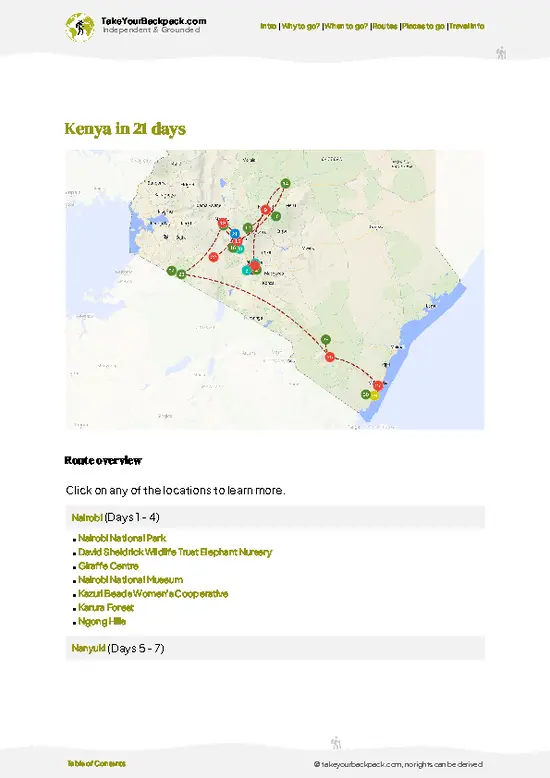
example page 0 from our offline Travel Guide for Kenya
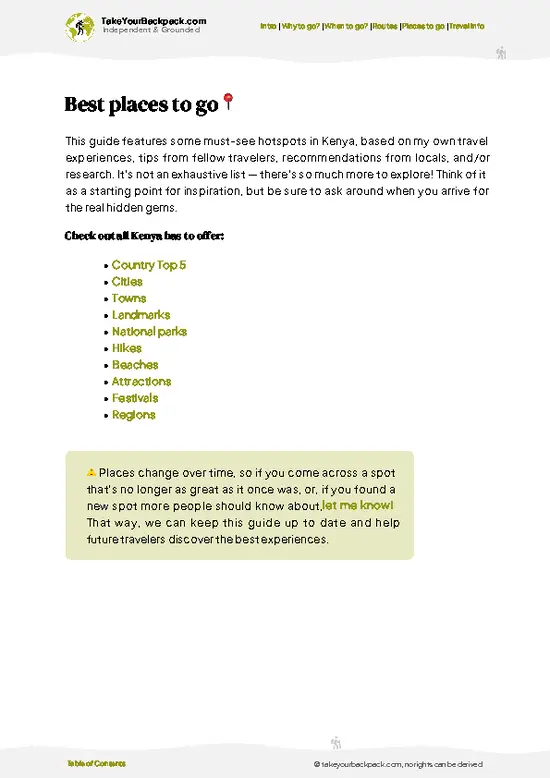
example page 1 from our offline Travel Guide for Kenya
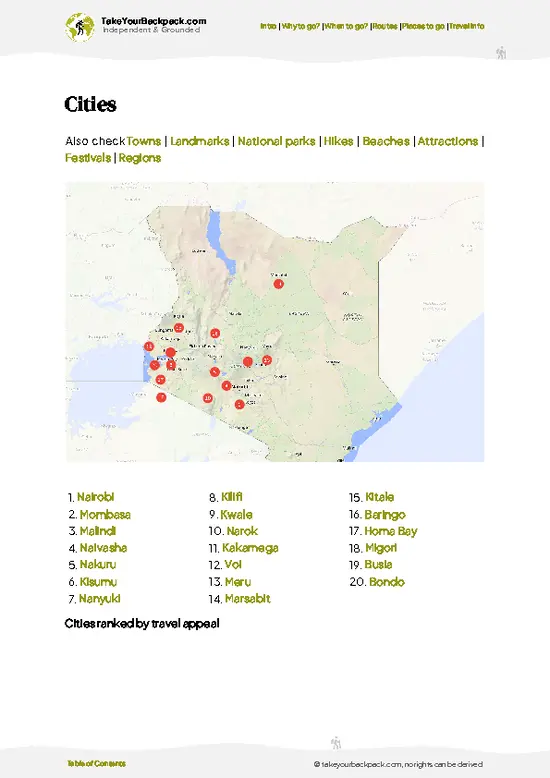
example page 2 from our offline Travel Guide for Kenya
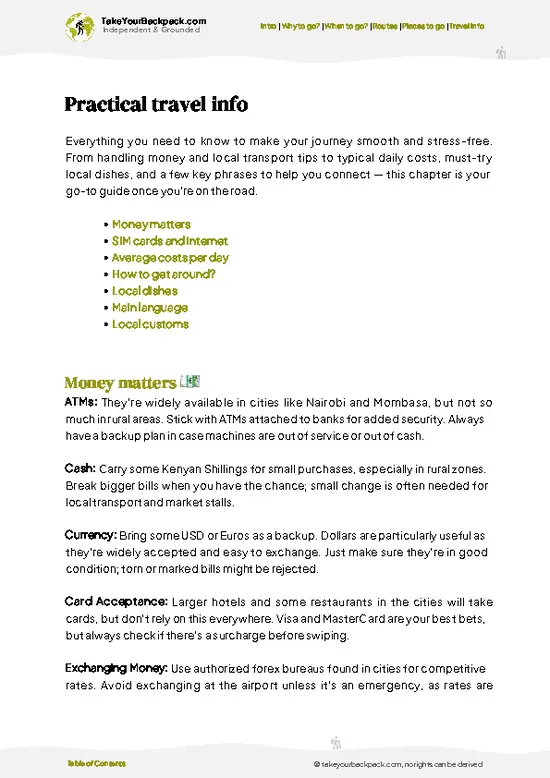
example page 3 from our offline Travel Guide for Kenya
example page 4 from our offline Travel Guide for Kenya
example page 5 from our offline Travel Guide for Kenya
example page 6 from our offline Travel Guide for Kenya
example page 7 from our offline Travel Guide for Kenya
The digital guide (429 pages) contains:
114 highlights, ranked by travel appeal
Optimized 7, 14 & 21-day travel routes
Cities, national parks, landmarks, beaches
How to get around
Offline-friendly for travel without Wi-Fi
👉 Click to see all 30+ guide features

📅 Plan smarter in minutes, not weeks
Month by month travel advice
Festivals & national holidays
Budget expectations

🗺️ Go to the right places, skip the overrated ones
Honest pros & cons of destinations
Top hikes, parks & viewpoints
Lesser-known places most travelers miss
Clear “worth it vs skip it” guidance

🛏️ Travel smoothly without rookie mistakes
Best areas to stay
Transport systems explained simply
Common scams & safety advice
SIM cards, money & practical tips

🌍 Understand the country, not just visit it
Culture & traditions
52 Essential phrases & customs
Festivals worth planning around
Traveler-friendly historical context
Insights that make places more meaningful

📱 Built for real travel conditions
Fully downloadable PDF
Works completely offline
Optimized for phone use
Useful in remote areas & buses
Everything in one place
Save weeks of stressful planning
Get instant access to your full guide. 30‑day money-back guarantee.


By proceeding you agree to our terms.
Sent to your inbox immediately after payment • 100% Secure Checkout
Best Backpacking Travel Advisor 2025 tourism awardBest Backpacking
Travel Advisor
2025
What others say about Take Your Backpack Guides:
⭐⭐⭐⭐⭐
Fantastic, amazing amount of information!
⭐⭐⭐⭐⭐
My goodness this is amazing, it's what I've been looking for hats off too you!
⭐⭐⭐⭐⭐
I think this is absolutely BRILLIANT
⭐⭐⭐⭐
Very complete and informative. It's still missing places, but I gotta to commend you
⭐⭐⭐⭐⭐
This is truly amazing, thank you, can't wait to explore it with my kids!
⭐⭐⭐⭐⭐
Awesome resource, thank you!
⭐⭐⭐⭐⭐
This is amazing! Can't wait to explore the ones I haven't seen
⭐⭐⭐⭐
I love this! Well done, great idea.
⭐⭐⭐⭐⭐
Thanks for taking the time to make this gem!
⭐⭐⭐⭐⭐
This might be the best website I've ever seen.
⭐⭐⭐⭐⭐
Congratulations, and thank you so much for your work; it's incredibly valuable.
⭐⭐⭐⭐
In all seriousness I think you did a great job pointing out the important spots
⭐⭐⭐⭐⭐
10/10 very good
⭐⭐⭐⭐⭐
As someone who's only just starting to visit regularly this is awesome, thank you.
⭐⭐⭐⭐
Thank you very much! I'm going to visit my dad, it's going to be very useful!
⭐⭐⭐⭐⭐
This is really cool! We'll be travelling for the first time and this definitely come in handy.
⭐⭐⭐⭐⭐
You are now our minister of culture, congratulations 👨‍💼
⭐⭐⭐⭐⭐
Just wanted to tell you that this is a pearl! Going to follow your recommendations.
⭐⭐⭐⭐⭐
This is so cool. I'll definitely be using the resource for my travels soon.
⭐⭐⭐⭐⭐
This is very impressive! Good work.
⭐⭐⭐⭐⭐
This is an amazing and informative site. Very well done!

🛏️ Where to stay?Where staying makes the most sense

The Serengeti Migration is a bucket-list experience, but let’s cut through the Instagram haze. Crowds can be overwhelming, and prices can skyrocket during peak season. If you’re a backpacker, you want to find that sweet spot where safety, social vibes, and affordability intersect.

Start with Kogatende. It’s a hotspot for migration viewing, and while it can get busy, the atmosphere is electric. You’ll find fellow travelers eager to share stories over campfires. The community vibe here is palpable, and you can often join group safaris to split costs.

Then there’s Seronera. It’s centrally located, … read more 👉
The Serengeti Migration is a bucket-list experience, but let’s cut through the Instagram haze. Crowds can be overwhelming, and prices can skyrocket during peak season. If you’re a backpacker, you want to find that sweet spot where safety, social vibes, and affordability intersect.

Start with Kogatende. It’s a hotspot for migration viewing, and while it can get busy, the atmosphere is electric. You’ll find fellow travelers eager to share stories over campfires. The community vibe here is palpable, and you can often join group safaris to split costs.

Then there’s Seronera. It’s centrally located, making it a prime base for game drives. Yes, it’s popular, but that means you’ll meet other backpackers and maybe even score a few tips on where to spot the best wildlife. Look for budget-friendly campsites or shared accommodations to keep costs down.

Finally, consider Naabi Hill. It’s a bit off the beaten path but offers stunning views and a quieter experience. You’ll still have access to migration routes without the throngs of tourists. Plus, the local guides here are often more than willing to share their knowledge, giving you a richer experience.

In these areas, you’ll find the real magic of the Serengeti—connections, stories, and unforgettable moments without breaking the bank.

👛 Costs (as of 30 September 2025)Travel costs and budget guide for Serengeti Migration

Visiting the Serengeti Migration is a bucket-list experience, but it comes with its own set of costs that can add up quickly. Here’s a breakdown of what you can expect to spend.
  • Park Entry Fees: Expect to pay around $70 to $100 per day. This fee grants you access to the Serengeti National Park, where the migration unfolds. Keep in mind that fees can vary based on the season and whether you’re a foreigner or a resident.
  • Accommodation: Lodging options range widely. Budget campsites start at about $30 per night, while mid-range lodges can cost between $150 and $300. Luxury lodges can skyrocket to $500 or more. Choose wisely based on your comfort level and budget.
  • Guided Safaris: A guided safari is essential for a good experience. Prices range from $150 to $500 per day, depending on the type of vehicle
read more 👉
Visiting the Serengeti Migration is a bucket-list experience, but it comes with its own set of costs that can add up quickly. Here’s a breakdown of what you can expect to spend.
  • Park Entry Fees: Expect to pay around $70 to $100 per day. This fee grants you access to the Serengeti National Park, where the migration unfolds. Keep in mind that fees can vary based on the season and whether you’re a foreigner or a resident.
  • Accommodation: Lodging options range widely. Budget campsites start at about $30 per night, while mid-range lodges can cost between $150 and $300. Luxury lodges can skyrocket to $500 or more. Choose wisely based on your comfort level and budget.
  • Guided Safaris: A guided safari is essential for a good experience. Prices range from $150 to $500 per day, depending on the type of vehicle and the guide’s expertise. Private tours will cost more, but they offer a personalized experience that can be worth it.
  • Food and Drink: Meals can be surprisingly affordable if you’re eating at budget lodges or camps, around $10 to $20 per meal. However, dining at higher-end lodges can push that to $50 or more per meal. Factor in drinks, especially if you’re enjoying a cold beer after a long day of wildlife watching.
  • Transportation: If you’re flying into the region, expect to pay around $200 to $400 for a round-trip flight from Nairobi to the nearest airstrip. If you’re driving, consider the cost of fuel and vehicle rental, which can add another $100 to $200 per day.

The Serengeti Migration is worth every penny, but being aware of these costs will help you plan a trip that doesn’t break the bank while still delivering that life-changing experience.
⚠️ Prices can change and everyone travels differently, so take this as a rough guide. Hope it helps you plan your adventure!

Other Kenyan landmarks near Serengeti Migration

Explore more nearby:

  • Kakamega Forest—Equatorial rainforest, rare primates, ancient canopy| 197 km away
  • Mount Elgon—Extinct volcano, lava caves, highland moorlands| 278 km away
  • Gedi Ruins—Swahili stonework, forested enclosures, coral architecture| 595 km away

💡 Not sure where to go next?
Create a personalized itinerary for Kenya including Serengeti Migration and the places that fit your trip.

Generate my itinerary

👉 Discover all landmarks

Or checkout all Kenya has to offer (think cities, towns, villages, national parks, hikes, beaches, festivals)
Country photo of Kenya

We 💚 feedbackIs it worth it?

The Serengeti Migration isn’t just a spectacle; it’s a wild symphony of life and death. Expect crowds, especially near the river crossings—it’s a zoo, but the energy is electric. The best surprise? The quiet moments when you stumble upon a lone cheetah or a hidden watering hole. Just know that the costs can skyrocket during peak season. If you can, go in the shoulder months for fewer people and a more intimate experience. Trust me, it’s worth the effort.

✍️ Help improve this page!
The information on this page is based on in-depth research, insights shared by experienced travelers, and feedback from the local travel community in Kenya. While every effort is made to keep the information accurate and current, conditions can change — so if you spot anything incorrect or outdated, please get in touch.


🙋‍♂️ Give feedback

👋 Meet the founderWho’s Behind Take Your Backpack?

Johan, backpacker and founder of TakeYourBackpackHi, I’m Johan (Netherlands 🇳🇱), the creator of TakeYourBackpack. Over the past decade, I’ve backpacked through 80+ countries across six continents, gaining extensive experience with independent travel, long-term trips, and overland routes.

This site is built on a combination of firsthand travel experience and carefully curated insights from other backpackers. Many guides are based on places I’ve personally visited, while others bring together tips, observations, and practical advice shared by trusted travelers I’ve met along the way.

The goal is to provide realistic, experience-driven guidance — not generic itineraries — so you can explore destinations with better context, clearer expectations, and more confidence.

Get full Kenya guide •
Instant download • 114 highlights • Full Offline guide