




×

Kiribati🇰🇮 | best national parksTop-Rated 3 national parks in Kiribati

In Kiribati, national parks are defined by their unique ecosystems and remote beauty, offering a blend of landscapes from coral atolls to lush mangroves. Each park presents distinct opportunities for backpacking and independent travel, influenced by seasonal weather patterns and local wildlife. Choosing the right park affects your vibe, budget, and safety, shaping your pace of exploration and cultural immersion. The diversity across Kiribati’s parks ensures every adventure is tailored to your travel style.

By Johan Kruseman 🇳🇱 | Updated June 9, 2026
Explore the best hikes in Kiribati

Why go?Why These national park Stand Out

The national parks in Kiribati stand out due to their unique geography and biodiversity. Comprising low-lying atolls, these parks offer a rare glimpse into fragile ecosystems shaped by climate change. The marine life is vibrant, with coral reefs teeming with color, but accessing these underwater wonders often requires navigating challenging waters.

Travelers face a trade-off between accessibility and immersive experiences. While some parks are remote, the effort to reach them rewards visitors with unspoiled nature and a sense of solitude. The climatic conditions can be humid and hot, which may deter some, yet this environment fosters lush vegetation and diverse wildlife.

Culturally, Kiribati’s parks reflect the heritage of its people, intertwining nature with local traditions. Understanding … read more 👉
The national parks in Kiribati stand out due to their unique geography and biodiversity. Comprising low-lying atolls, these parks offer a rare glimpse into fragile ecosystems shaped by climate change. The marine life is vibrant, with coral reefs teeming with color, but accessing these underwater wonders often requires navigating challenging waters.

Travelers face a trade-off between accessibility and immersive experiences. While some parks are remote, the effort to reach them rewards visitors with unspoiled nature and a sense of solitude. The climatic conditions can be humid and hot, which may deter some, yet this environment fosters lush vegetation and diverse wildlife.

Culturally, Kiribati’s parks reflect the heritage of its people, intertwining nature with local traditions. Understanding these nuances enhances the experience, making the journey not just about the destination, but also about the rich tapestry of life that thrives within these protected areas.
Behind the Scenes of Selection
The list of best national parks in Kiribati is created based on landscapes, wildlife, adventure opportunities, facilities, and overall experience. If you feel a national park is missing in this list, please let us know.

When to go?Timing Your Visit for the Best Experience

Seasonality plays a crucial role in exploring national parks in Kiribati. The dry season, typically from May to October, offers the best conditions for wildlife visibility and trail accessibility. Expect warm temperatures, with humidity levels manageable, making hikes more enjoyable.

Rainfall peaks from November to April, leading to muddy trails and potential closures. While the lush landscape during this time is visually striking, it can deter some visitors.

Shoulder seasons present a mixed bag. Traveling just before or after the dry season can mean fewer crowds and lower costs, but also unpredictable weather.

Peak periods, particularly around holidays, can lead to crowded trails and diminished solitude, impacting the overall experience. Balancing scenery with crowd levels is essential for a rewarding visit.

national park hoppingOptimizing Your Multi-Stop Itinerary

Combining national parks in Kiribati requires strategic planning and an understanding of the geography. Start by clustering parks regionally. The Line Islands and Gilbert Islands offer distinct experiences, so prioritize based on interests—marine life or cultural heritage.

Travelers should expect to spend at least two to three days in each park to truly absorb the atmosphere and engage with the environment. Rushing through can lead to missed opportunities, like a sunrise over a lagoon or the sound of waves crashing against coral.

Common mistakes include underestimating travel time between parks, which can be longer than anticipated due to limited transport options. Balancing speed with depth is crucial; a quick stop might save time but can diminish the experience.

Flexibility is key.
read more 👉
Combining national parks in Kiribati requires strategic planning and an understanding of the geography. Start by clustering parks regionally. The Line Islands and Gilbert Islands offer distinct experiences, so prioritize based on interests—marine life or cultural heritage.

Travelers should expect to spend at least two to three days in each park to truly absorb the atmosphere and engage with the environment. Rushing through can lead to missed opportunities, like a sunrise over a lagoon or the sound of waves crashing against coral.

Common mistakes include underestimating travel time between parks, which can be longer than anticipated due to limited transport options. Balancing speed with depth is crucial; a quick stop might save time but can diminish the experience.

Flexibility is key. Allow for spontaneous detours or extended stays, as the real rewards often lie in unplanned moments. Plan for comfort but remain open to the rugged charm of Kiribati’s landscapes.

The ListMust-Visit national parks in Kiribati

1 Phoenix Islands Protected Area

coral atolls, pelagic waters, uninhabited islets, marine biodiversity

Dive into a remote expanse of open ocean, where uninhabited islets and coral atolls shelter rare marine life and undisturbed underwater habitats.

2 Kiritimati National Park

saltwater lagoons, seabird nesting sites, coconut groves, remote flats

Watch seabirds gather on isolated sandbars, cross coconut groves, and discover the vast saltwater lagoons that define this remote atoll landscape.

3 Abaiang Atoll National Park

shallow lagoons, mangrove forests, traditional villages, reef flats

Experience tidal rhythms as you move between mangrove stands, shallow reef flats, and villages where daily life adapts to the sea’s cycles.

kiribati-national-park-abaiang-atoll-national-park
© Google | Aleks Brac Guru
Loading the map 🌍

Expert viewInsights from Locals and Experts

Terrain
Kiribati’s national parks are a mix of coral atolls and lush islands, each with its own character. The terrain can be challenging. Expect sandy paths, rocky outcrops, and dense vegetation. Some parks require a bit of a trek to reach the best spots, which can be a sweaty affair under the tropical sun. But the payoff? Pristine beaches and vibrant marine life that make the effort worthwhile.

Park Infrastructure
Infrastructure varies significantly. Some parks have basic facilities, while others are more developed. Expect limited signage and basic trails. This can make navigation tricky, especially in remote areas. Bring a reliable map or download offline resources. The lack of amenities means you should come prepared with water, snacks, and a first-aid kit. The trade-off here is clear: … read more 👉
Terrain
Kiribati’s national parks are a mix of coral atolls and lush islands, each with its own character. The terrain can be challenging. Expect sandy paths, rocky outcrops, and dense vegetation. Some parks require a bit of a trek to reach the best spots, which can be a sweaty affair under the tropical sun. But the payoff? Pristine beaches and vibrant marine life that make the effort worthwhile.

Park Infrastructure
Infrastructure varies significantly. Some parks have basic facilities, while others are more developed. Expect limited signage and basic trails. This can make navigation tricky, especially in remote areas. Bring a reliable map or download offline resources. The lack of amenities means you should come prepared with water, snacks, and a first-aid kit. The trade-off here is clear: the more remote the park, the more authentic the experience, but also the more self-sufficient you need to be.

Wildlife Activity
Wildlife is abundant but varies by park. You might spot sea turtles, various bird species, and colorful fish while snorkeling. Early mornings or late afternoons are prime times for wildlife activity. However, some parks are more active than others, so if you’re keen on wildlife, prioritize those areas. The trade-off is time: you may need to spend a bit longer in certain parks to catch the best sights.

Time and Budget
Visiting two to three parks is realistic for a week-long trip. This allows you to soak in the unique aspects of each without feeling rushed. Budget-wise, expect to spend on transportation between parks, as distances can be deceptive. Factor in costs for gear rentals if you plan on diving or snorkeling. The effort to balance time spent in each park with the desire to explore multiple locations is crucial.

Safety & Cultural Considerations
Safety is generally good, but be aware of the local customs and respect the environment. Engage with local communities when possible; they can offer insights that enhance your experience. The trade-off here is between immersion and convenience. Engaging deeply with local culture often requires more time and effort but can lead to richer experiences.

✈️ The backpacker research shortcutKiribati Travel Guide

An offline-friendly backpacking guide with optimized travel routes, ranked highlights, transport advice, and the best areas to stay.
example page 0 from our offline Travel Guide for Kiribati
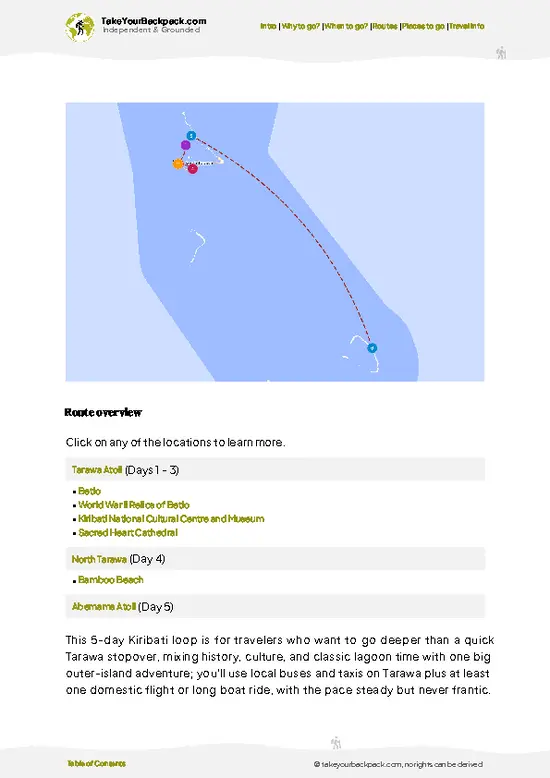
example page 1 from our offline Travel Guide for Kiribati
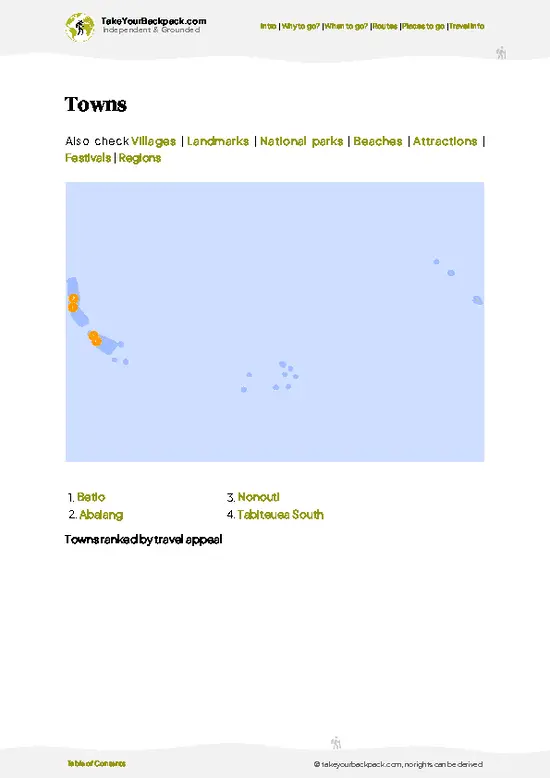
example page 2 from our offline Travel Guide for Kiribati
example page 3 from our offline Travel Guide for Kiribati
example page 4 from our offline Travel Guide for Kiribati
example page 5 from our offline Travel Guide for Kiribati
example page 6 from our offline Travel Guide for Kiribati
example page 7 from our offline Travel Guide for Kiribati
The digital guide (143 pages) contains:
30 highlights, ranked by travel appeal
Optimized 2, 3 & 5-day travel routes
Cities, national parks, landmarks, beaches
How to get around
Offline-friendly for travel without Wi-Fi
👉 Click to see all 30+ guide features

📅 Plan smarter in minutes, not weeks
Month by month travel advice
Festivals & national holidays
Budget expectations

🗺️ Go to the right places, skip the overrated ones
Honest pros & cons of destinations
Top hikes, parks & viewpoints
Lesser-known places most travelers miss
Clear “worth it vs skip it” guidance

🛏️ Travel smoothly without rookie mistakes
Best areas to stay
Transport systems explained simply
Common scams & safety advice
SIM cards, money & practical tips

🌍 Understand the country, not just visit it
Culture & traditions
52 Essential phrases & customs
Festivals worth planning around
Traveler-friendly historical context
Insights that make places more meaningful

📱 Built for real travel conditions
Fully downloadable PDF
Works completely offline
Optimized for phone use
Useful in remote areas & buses
Everything in one place
Save weeks of stressful planning
Get instant access to your full guide. 30‑day money-back guarantee.


By proceeding you agree to our terms.
Sent to your inbox immediately after payment • 100% Secure Checkout
Best Backpacking Travel Advisor 2025 tourism awardBest Backpacking
Travel Advisor
2025
What others say about Take Your Backpack Guides:
⭐⭐⭐⭐⭐
Fantastic, amazing amount of information!
⭐⭐⭐⭐⭐
My goodness this is amazing, it's what I've been looking for hats off too you!
⭐⭐⭐⭐⭐
I think this is absolutely BRILLIANT
⭐⭐⭐⭐
Very complete and informative. It's still missing places, but I gotta to commend you
⭐⭐⭐⭐⭐
This is truly amazing, thank you, can't wait to explore it with my kids!
⭐⭐⭐⭐⭐
Awesome resource, thank you!
⭐⭐⭐⭐⭐
This is amazing! Can't wait to explore the ones I haven't seen
⭐⭐⭐⭐
I love this! Well done, great idea.
⭐⭐⭐⭐⭐
Thanks for taking the time to make this gem!
⭐⭐⭐⭐⭐
This might be the best website I've ever seen.
⭐⭐⭐⭐⭐
Congratulations, and thank you so much for your work; it's incredibly valuable.
⭐⭐⭐⭐
In all seriousness I think you did a great job pointing out the important spots
⭐⭐⭐⭐⭐
10/10 very good
⭐⭐⭐⭐⭐
As someone who's only just starting to visit regularly this is awesome, thank you.
⭐⭐⭐⭐
Thank you very much! I'm going to visit my dad, it's going to be very useful!
⭐⭐⭐⭐⭐
This is really cool! We'll be travelling for the first time and this definitely come in handy.
⭐⭐⭐⭐⭐
You are now our minister of culture, congratulations 👨‍💼
⭐⭐⭐⭐⭐
Just wanted to tell you that this is a pearl! Going to follow your recommendations.
⭐⭐⭐⭐⭐
This is so cool. I'll definitely be using the resource for my travels soon.
⭐⭐⭐⭐⭐
This is very impressive! Good work.
⭐⭐⭐⭐⭐
This is an amazing and informative site. Very well done!

🛏️ Where to stay?Best Places to Stay in Kiribati

Yes — Kiribati has guesthouses, homestays and a few basic hostels concentrated on South Tarawa; options are sparse outside the capital so book ahead, bring cash, mosquito repellent and a torch, and expect simple facilities with intermittent power and limited potable water.
Most budget choices cluster in Teaoraereke (best for shops, transport links and the widest budget selection), Bairiki (quieter, administrative hub with nearby services) and Betio (closest to WWII sites, ferries and the busiest travel links); pros are proximity to transport and essentials, cons are limited nightlife, basic amenities, and minimal medical/tourist infrastructure on outer islands.

If you enjoy meeting fellow travelers, … read more 👉
Yes — Kiribati has guesthouses, homestays and a few basic hostels concentrated on South Tarawa; options are sparse outside the capital so book ahead, bring cash, mosquito repellent and a torch, and expect simple facilities with intermittent power and limited potable water.
Most budget choices cluster in Teaoraereke (best for shops, transport links and the widest budget selection), Bairiki (quieter, administrative hub with nearby services) and Betio (closest to WWII sites, ferries and the busiest travel links); pros are proximity to transport and essentials, cons are limited nightlife, basic amenities, and minimal medical/tourist infrastructure on outer islands.

If you enjoy meeting fellow travelers, consider choosing hostels with high ratings for atmosphere. On the other hand, if you prefer having your own space, a hotel might be a better option.

KiribatiExplore Kiribati

👋 Meet the founderWho’s Behind Take Your Backpack?

Johan, backpacker and founder of TakeYourBackpackHi, I’m Johan (Netherlands 🇳🇱), the creator of TakeYourBackpack. Over the past decade, I’ve backpacked through 80+ countries across six continents, gaining extensive experience with independent travel, long-term trips, and overland routes.

This site is built on a combination of firsthand travel experience and carefully curated insights from other backpackers. Many guides are based on places I’ve personally visited, while others bring together tips, observations, and practical advice shared by trusted travelers I’ve met along the way.

The goal is to provide realistic, experience-driven guidance — not generic itineraries — so you can explore destinations with better context, clearer expectations, and more confidence.

Get full Kiribati guide •
Instant download • 30 highlights • Full Offline guide