×

Kiribati🇰🇮 | national parksPhoenix Islands Protected Areacoral atolls, pelagic waters, uninhabited islets, marine biodiversity | things to do and best time to go

Explore Kiritimati National ParkExplore Abemama Atoll

Backpacking in Phoenix Islands Protected Area
🏆 Top picknational park ranked #1
By Johan Kruseman 🇳🇱 | Updated May 19, 2026

Many travelers assume the Phoenix Islands Protected Area is a casual island-hopping stop from South Tarawa. It isn’t. It’s a remote marine wilderness in central Kiribati, spread around the uninhabited Phoenix Islands between the Gilbert and Line Island groups, far from the country’s usual backpacker circuit.

As a destination, PIPA is more expedition than holiday. There are no marked hiking trails, hostels, or beach campsites; you’re on low coral atolls and reefs, with harsh sun, limited fresh water, and strictly controlled access. The scenery is stark and beautiful in a raw way: empty horizons, bird-covered islets, and some of the Pacific’s healthiest reefs, with sharks, tuna, and big schools of fish. Getting there usually means chartered boats or research trips, with high costs and permits, so this is not a budget-friendly side quest. Compared with easier Kiribati spots like Kiritimati or outer Gilbert atolls, PIPA is wilder, pricier, more regulated, and far less flexible for independent backpackers.

Discover everything you want to know in the 📖 Kiribati Travel Guide.


Get your Kiribati guide
30 ranked highlights, routes & tips, works offline (144 pages)
Loading the map 🌍
CLICK TO FILTER
towns
villages
landmarks
national parks
beaches
attractions
festivals
regions
SHOW COUNTRY’S BESTSHOW ALL

✨ Why go?
Ranked #1 national park in Kiribati
The unique appeal for travelers

The Phoenix Islands Protected Area in Kiribati attracts backpackers for several compelling reasons. First, it offers independent exploration. You can roam freely, diving into the rich marine life or hiking along the untouched shores without the constraints of a tour group. This autonomy is a major draw for those seeking a personal connection with nature.

Budget-conscious travelers appreciate the camping options available nearby. While accommodations can be limited, there are hostels and campsites that cater to the adventurous spirit without breaking the bank. This allows you to stretch your budget further, leaving more for experiences that matter.

The trail variety is another highlight. Whether you’re interested in snorkeling, birdwatching, or simply soaking in the serene landscapes, there’s … read more 👉
The Phoenix Islands Protected Area in Kiribati attracts backpackers for several compelling reasons. First, it offers independent exploration. You can roam freely, diving into the rich marine life or hiking along the untouched shores without the constraints of a tour group. This autonomy is a major draw for those seeking a personal connection with nature.

Budget-conscious travelers appreciate the camping options available nearby. While accommodations can be limited, there are hostels and campsites that cater to the adventurous spirit without breaking the bank. This allows you to stretch your budget further, leaving more for experiences that matter.

The trail variety is another highlight. Whether you’re interested in snorkeling, birdwatching, or simply soaking in the serene landscapes, there’s something for everyone. The park is well-suited for self-guided travelers, as the trails are generally well-marked, and the natural beauty speaks for itself.

However, be prepared for some logistical challenges. Supplies can be scarce, so plan ahead. This isn’t just a destination; it’s an opportunity to immerse yourself in a unique ecosystem while keeping your adventure budget-friendly.
Want to include Phoenix Islands Protected Area in your Kiribati route?
Create a personalized Kiribati itinerary that includes Phoenix Islands Protected Area and the places that fit your trip — based on your travel style, budget, and available time. Get your route in seconds.

Generate my trip

💡 HighlightsThe experiences that define the visit

  1. Pristine coral reefs — Some of the largest intact reef systems left on Earth: high live-coral cover, colorful coral gardens and massively healthy reef structure that make snorkeling and diving feel like visiting an aquarium that forgot it was supposed to decline.
  2. Pelagic encounters — sharks, mantas and big schools — Deep water close to the atolls plus strict protection means frequent sightings of reef and pelagic sharks, manta cleaning stations and huge schools of jacks and tuna. It’s where you go if you want a proper “big water” show, not aquarium-sized fish.
  3. Seabird supercolonies — Remote, predator-free islets host enormous nests of boobies, terns, frigatebirds and other seabirds. The noise, the smell, the sheer numbers — it’s an intense wildlife spectacle and a birdwatcher’s jackpot.
read more 👉
  1. Pristine coral reefs — Some of the largest intact reef systems left on Earth: high live-coral cover, colorful coral gardens and massively healthy reef structure that make snorkeling and diving feel like visiting an aquarium that forgot it was supposed to decline.
  2. Pelagic encounters — sharks, mantas and big schools — Deep water close to the atolls plus strict protection means frequent sightings of reef and pelagic sharks, manta cleaning stations and huge schools of jacks and tuna. It’s where you go if you want a proper “big water” show, not aquarium-sized fish.
  3. Seabird supercolonies — Remote, predator-free islets host enormous nests of boobies, terns, frigatebirds and other seabirds. The noise, the smell, the sheer numbers — it’s an intense wildlife spectacle and a birdwatcher’s jackpot.
  4. Sea turtle nesting beaches — Several species regularly nest on these islands. Because beaches are protected and human impact is low, hatchling success is unusually high compared with many other Pacific islands.
  5. Giant clams and invertebrate diversity — The reefs are famous for healthy giant clam populations, colorful nudibranchs, sponges and unusual reef invertebrates — great for slow, focused snorkeling or macro diving.
  6. Lagoon flats and atoll interiors — Low, sandy cays and wide lagoons create surreal strolls across reef flats at low tide, with tidepools, resting rays and seabirds everywhere. It’s simple, stripped-down island landscape that feels gloriously remote.
  7. Submerged reefs, drop-offs and deepwater life — The protected area includes submerged reefs and steep walls that host different communities from the shallows—think deepwater corals, large pelagics and dramatic dive profiles that show the park’s vertical diversity.
Spotted a mistake or missing something? Contact us.

🌤️ When to go?Best time to explore Phoenix Islands Protected Area


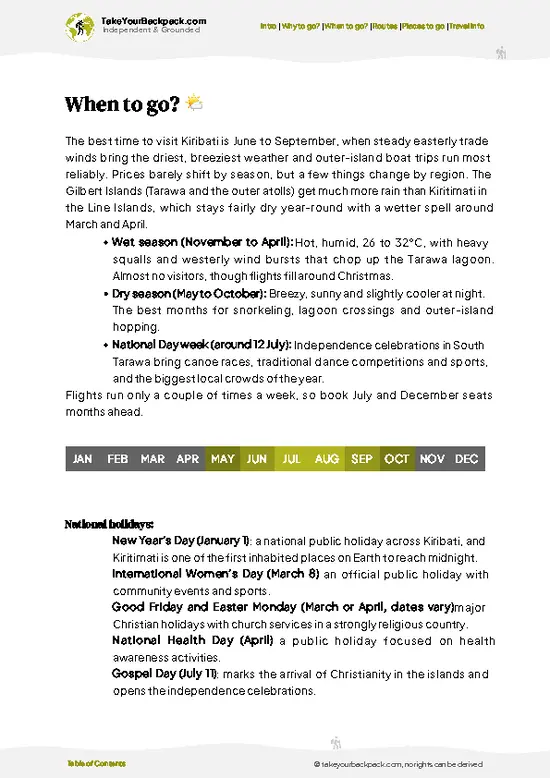
  • Topic: Weather – The Phoenix Islands Protected Area sits near the equator, so expect a tropical climate. The dry season from May to October offers more stable weather with less rain, while November to April brings heavy rains and the risk of cyclones. Rain can turn trails muddy and limit visibility underwater.

  • Topic: Temperature – Temperatures hover between 27°C and 31°C (81°F to 88°F) year-round. Humidity spikes during the wet season, making it feel hotter and stickier. The dry season is more comfortable for hiking and camping.

  • Topic: Daylight Hours – Daylight is consistent, roughly 12 hours daily, with sunrise around 6:00 AM and sunset near 6:00 PM. This steady rhythm means you can plan activities without worrying about drastic changes in daylight.

  • Topic: Crowds – The park is remote
read more 👉

  • Topic: Weather – The Phoenix Islands Protected Area sits near the equator, so expect a tropical climate. The dry season from May to October offers more stable weather with less rain, while November to April brings heavy rains and the risk of cyclones. Rain can turn trails muddy and limit visibility underwater.

  • Topic: Temperature – Temperatures hover between 27°C and 31°C (81°F to 88°F) year-round. Humidity spikes during the wet season, making it feel hotter and stickier. The dry season is more comfortable for hiking and camping.

  • Topic: Daylight Hours – Daylight is consistent, roughly 12 hours daily, with sunrise around 6:00 AM and sunset near 6:00 PM. This steady rhythm means you can plan activities without worrying about drastic changes in daylight.

  • Topic: Crowds – The park is remote and rarely crowded year-round. However, the dry season sees a slight uptick in eco-tourists and researchers, so expect more activity but never overwhelming numbers.

  • Topic: Seasonal Activities – Dry months are best for snorkeling, diving, and birdwatching. Wet months can limit water clarity and accessibility but bring nesting seabirds and hatchlings, a unique wildlife spectacle.

  • Topic: Price Fluctuations – Prices for transport and accommodation remain fairly stable due to the park’s remoteness. However, booking during the dry season can be slightly more expensive because of increased demand.


Pro-tip: Aim for May to October to dodge rain and humidity, preserving your energy for the park’s rare wildlife encounters and crystal-clear waters.


source: climatestotravel.comJANJanuary: fair for travelingFEBFebruary: fair for travelingMARMarch: fair for travelingAPRApril: fair for travelingMAYMay: excellent for travelingJUNJune: excellent for travelingJULJuly: excellent for travelingAUGAugust: excellent for travelingSEPSeptember: excellent for travelingOCTOctober: excellent for travelingNOVNovember: fair for travelingDECDecember: fair for traveling
when-to-go

✈️ The backpacker research shortcutKiribati Travel Guide

An offline-friendly backpacking guide with optimized travel routes, ranked highlights, transport advice, and the best areas to stay.
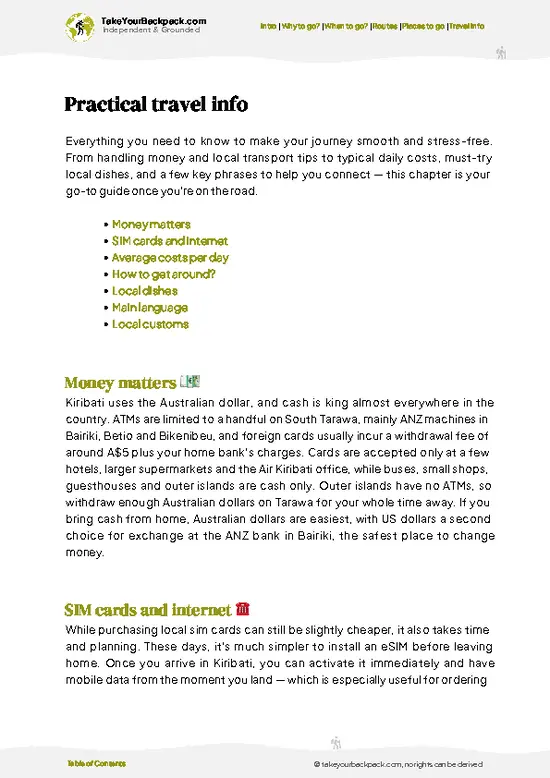
example page 0 from our offline Travel Guide for Kiribati
example page 1 from our offline Travel Guide for Kiribati
example page 2 from our offline Travel Guide for Kiribati
example page 3 from our offline Travel Guide for Kiribati
example page 4 from our offline Travel Guide for Kiribati
example page 5 from our offline Travel Guide for Kiribati
example page 6 from our offline Travel Guide for Kiribati
example page 7 from our offline Travel Guide for Kiribati
The digital guide (144 pages) contains:
30 highlights, ranked by travel appeal
Optimized 2, 3 & 5-day travel routes
Cities, national parks, landmarks, beaches
How to get around
Offline-friendly for travel without Wi-Fi
👉 Click to see all 30+ guide features

📅 Plan smarter in minutes, not weeks
Month by month travel advice
Festivals & national holidays
Budget expectations

🗺️ Go to the right places, skip the overrated ones
Honest pros & cons of destinations
Top hikes, parks & viewpoints
Lesser-known places most travelers miss
Clear “worth it vs skip it” guidance

🛏️ Travel smoothly without rookie mistakes
Best areas to stay
Transport systems explained simply
Common scams & safety advice
SIM cards, money & practical tips

🌍 Understand the country, not just visit it
Culture & traditions
52 Essential phrases & customs
Festivals worth planning around
Traveler-friendly historical context
Insights that make places more meaningful

📱 Built for real travel conditions
Fully downloadable PDF
Works completely offline
Optimized for phone use
Useful in remote areas & buses
Everything in one place
Save weeks of stressful planning
Get instant access to your full guide. 30‑day money-back guarantee.


By proceeding you agree to our terms.
Sent to your inbox immediately after payment • 100% Secure Checkout
Best Backpacking Travel Advisor 2025 tourism awardBest Backpacking
Travel Advisor
2025
What others say about Take Your Backpack Guides:
⭐⭐⭐⭐⭐
Fantastic, amazing amount of information!
⭐⭐⭐⭐⭐
My goodness this is amazing, it's what I've been looking for hats off too you!
⭐⭐⭐⭐⭐
I think this is absolutely BRILLIANT
⭐⭐⭐⭐
Very complete and informative. It's still missing places, but I gotta to commend you
⭐⭐⭐⭐⭐
This is truly amazing, thank you, can't wait to explore it with my kids!
⭐⭐⭐⭐⭐
Awesome resource, thank you!
⭐⭐⭐⭐⭐
This is amazing! Can't wait to explore the ones I haven't seen
⭐⭐⭐⭐
I love this! Well done, great idea.
⭐⭐⭐⭐⭐
Thanks for taking the time to make this gem!
⭐⭐⭐⭐⭐
This might be the best website I've ever seen.
⭐⭐⭐⭐⭐
Congratulations, and thank you so much for your work; it's incredibly valuable.
⭐⭐⭐⭐
In all seriousness I think you did a great job pointing out the important spots
⭐⭐⭐⭐⭐
10/10 very good
⭐⭐⭐⭐⭐
As someone who's only just starting to visit regularly this is awesome, thank you.
⭐⭐⭐⭐
Thank you very much! I'm going to visit my dad, it's going to be very useful!
⭐⭐⭐⭐⭐
This is really cool! We'll be travelling for the first time and this definitely come in handy.
⭐⭐⭐⭐⭐
You are now our minister of culture, congratulations 👨‍💼
⭐⭐⭐⭐⭐
Just wanted to tell you that this is a pearl! Going to follow your recommendations.
⭐⭐⭐⭐⭐
This is so cool. I'll definitely be using the resource for my travels soon.
⭐⭐⭐⭐⭐
This is very impressive! Good work.
⭐⭐⭐⭐⭐
This is an amazing and informative site. Very well done!

🛏️ Where to stay?Where staying makes the most sense

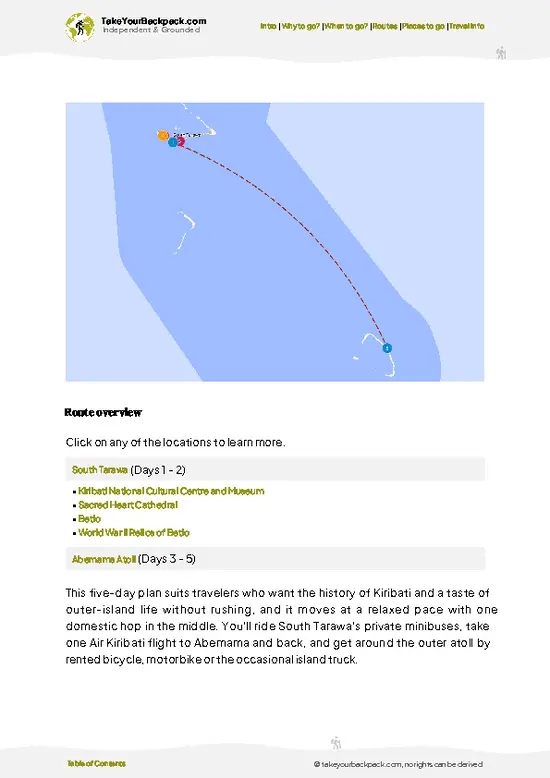
The Phoenix Islands Protected Area in Kiribati is a remote paradise, but finding a place to stay can be tricky. There are no accommodations within the park itself. Instead, your best bet is to base yourself in Tarawa, the capital of Kiribati.

In Tarawa, options range from budget guesthouses to mid-range hotels. Look for places like the Otintaai Hotel or the Lagoon Breeze Lodge. They offer basic amenities and a chance to connect with locals. Prices can vary, so be prepared for some fluctuations depending on the season.

Keep in mind that transportation to the Phoenix Islands is limited. Most … read more 👉
The Phoenix Islands Protected Area in Kiribati is a remote paradise, but finding a place to stay can be tricky. There are no accommodations within the park itself. Instead, your best bet is to base yourself in Tarawa, the capital of Kiribati.

In Tarawa, options range from budget guesthouses to mid-range hotels. Look for places like the Otintaai Hotel or the Lagoon Breeze Lodge. They offer basic amenities and a chance to connect with locals. Prices can vary, so be prepared for some fluctuations depending on the season.

Keep in mind that transportation to the Phoenix Islands is limited. Most visitors join organized tours, which often include boat rides and guided experiences. This means you’ll need to plan ahead and budget for these tours, as they can be a significant expense.

Also, be aware of the local customs and regulations. Respect the environment and the communities you visit. This not only enhances your experience but also helps preserve the beauty of the islands.

In short, stay in Tarawa, plan your tours carefully, and prepare for a unique adventure that’s well worth the effort.

👛 Costs (as of 30 March 2026)Money, prices, and spending tips

Visiting the Phoenix Islands Protected Area in Kiribati is a unique experience, but it comes with specific costs that can catch you off guard if you’re not prepared.

First, the entry fee for the park is around $10 to $20 USD per person. This fee helps with conservation efforts, but it’s essential to have cash on hand, as card payments may not be accepted.

Next, transportation is a significant factor. Getting to the islands typically involves a flight to Tarawa, followed by a charter boat to the park. Flights from major hubs can range from $500 to $1,200 USD, depending on the season and how far in advance you book. The boat charter can add another $200 to $400 USD per person, depending on the size of your group and the duration of your stay.

Accommodations are limited. If you plan to stay … read more 👉
Visiting the Phoenix Islands Protected Area in Kiribati is a unique experience, but it comes with specific costs that can catch you off guard if you’re not prepared.

First, the entry fee for the park is around $10 to $20 USD per person. This fee helps with conservation efforts, but it’s essential to have cash on hand, as card payments may not be accepted.

Next, transportation is a significant factor. Getting to the islands typically involves a flight to Tarawa, followed by a charter boat to the park. Flights from major hubs can range from $500 to $1,200 USD, depending on the season and how far in advance you book. The boat charter can add another $200 to $400 USD per person, depending on the size of your group and the duration of your stay.

Accommodations are limited. If you plan to stay on one of the islands, expect to pay between $50 and $150 USD per night for basic lodging. Some options may include meals, but check ahead to avoid surprises.

Lastly, consider the cost of activities. Snorkeling and diving excursions can range from $50 to $150 USD, depending on the provider and equipment rental.

In summary, budgeting for a trip to the Phoenix Islands Protected Area requires careful planning. Expect to spend at least $1,000 to $2,000 USD for a week-long visit, factoring in flights, accommodations, park fees, and activities. Being aware of these costs will help you focus on the experience rather than financial surprises.


source: kiribatitourism.gov.ki
⚠️ Prices can change and everyone travels differently, so take this as a rough guide. Hope it helps you plan your adventure!

🥾 TrailsScenic routes and wildlife spotting in Phoenix Islands Protected Area

The Phoenix Islands Protected Area in Kiribati isn’t your typical hiking destination—think more remote paradise than well-trodden trails. The area is primarily marine, so hiking isn’t a major activity like in other national parks. However, if you’re up for some exploration, you can wander around the islands themselves. The terrain is mostly sandy beaches, coral reefs, and some dense vegetation, which makes for a unique experience but not exactly a hike in the traditional sense.

Wildlife is a big draw here. You’ll find seabirds galore, and if you’re lucky, maybe even some turtles. The scenery … read more 👉
The Phoenix Islands Protected Area in Kiribati isn’t your typical hiking destination—think more remote paradise than well-trodden trails. The area is primarily marine, so hiking isn’t a major activity like in other national parks. However, if you’re up for some exploration, you can wander around the islands themselves. The terrain is mostly sandy beaches, coral reefs, and some dense vegetation, which makes for a unique experience but not exactly a hike in the traditional sense.

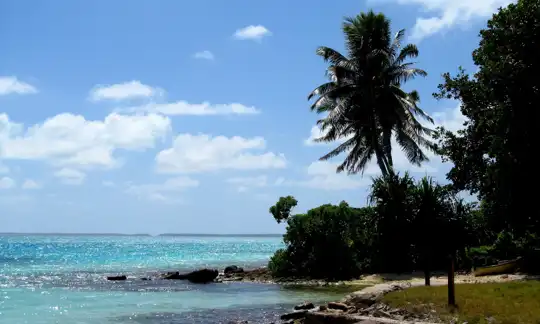
Wildlife is a big draw here. You’ll find seabirds galore, and if you’re lucky, maybe even some turtles. The scenery is stunning—imagine turquoise waters meeting pristine white sand, all framed by lush greenery. Just keep in mind that the difficulty level is high if you’re not used to the heat and humidity.

For any designated trails, there aren’t specific ones like you’d find in other parks, but you can explore the islands at your own pace. If you’re looking for a bit of structure, you might find local guides who can show you around.

As for getting there, public transport is pretty limited. Most visitors arrive via chartered boats or small planes from Tarawa. It’s remote, so expect it to be quiet—crowds are rare, which is a bonus if you’re looking for solitude. There’s no formal entrance fee, but some expenses might pop up depending on how you choose to explore. Just be prepared for an adventure that’s more about soaking in the beauty than hitting the trails.
⚠️ Hiking info can sometimes be outdated or inaccurate. Before you hit the trail, check the latest conditions with locals. If you do spot anything that's off, I'd love to hear from you, so I can update it for fellow travelers.

🛡️ SafetyTraveler Safety Guide

The Phoenix Islands Protected Area is generally straightforward for backpackers, but a few realities can enhance your experience. Weather can shift quickly, so be prepared for sudden rain or sun. Lightweight, breathable gear is essential; pack layers to adapt easily.

The terrain is mostly flat, but some trails can be uneven or muddy, especially after rain. Good footwear is crucial—opt for sturdy, waterproof hiking shoes to maintain grip and comfort. Navigation is usually clear, but a reliable map or GPS device can save you from unnecessary detours.

Wildlife encounters are rare but can include curious seabirds. Respect their space; observe from a distance to avoid stressing them.

One practical gap for first-timers is underestimating the sun. Apply sunscreen regularly and stay hydrated. … read more 👉
The Phoenix Islands Protected Area is generally straightforward for backpackers, but a few realities can enhance your experience. Weather can shift quickly, so be prepared for sudden rain or sun. Lightweight, breathable gear is essential; pack layers to adapt easily.

The terrain is mostly flat, but some trails can be uneven or muddy, especially after rain. Good footwear is crucial—opt for sturdy, waterproof hiking shoes to maintain grip and comfort. Navigation is usually clear, but a reliable map or GPS device can save you from unnecessary detours.

Wildlife encounters are rare but can include curious seabirds. Respect their space; observe from a distance to avoid stressing them.

One practical gap for first-timers is underestimating the sun. Apply sunscreen regularly and stay hydrated. Timing your hikes for early morning or late afternoon can help you avoid the heat and enjoy cooler conditions. With these tips, you’ll preserve your energy and budget for the moments that truly matter.

Other I-Kiribati national parks near Phoenix Islands Protected Area

Explore more nearby:


💡 Not sure where to go next?
Create a personalized itinerary for Kiribati including Phoenix Islands Protected Area and the places that fit your trip.

Generate my itinerary

👉 Discover all national parks

Or checkout all Kiribati has to offer (think cities, towns, villages, national parks, hikes, beaches, festivals)
Country photo of Kiribati

We 💚 feedbackSumming up the experience

The Phoenix Islands Protected Area is a raw slice of paradise, but don’t expect luxury. The vibe is laid-back, with locals who genuinely welcome you. The best surprise? The underwater life—snorkeling here is like stepping into a living aquarium. Just a heads-up: logistics can be tricky. Limited transport options mean planning is crucial. Embrace the simplicity, but don’t underestimate the power of a well-timed boat schedule. It’s all part of the adventure, and those moments of connection are what make it worthwhile.

✍️ Help improve this page!
The information on this page is based on in-depth research, insights shared by experienced travelers, and feedback from the local travel community in Kiribati. While every effort is made to keep the information accurate and current, conditions can change — so if you spot anything incorrect or outdated, please get in touch.


🙋‍♂️ Give feedback

👋 Meet the founderWho’s Behind Take Your Backpack?

Johan, backpacker and founder of TakeYourBackpackHi, I’m Johan (Netherlands 🇳🇱), the creator of TakeYourBackpack. Over the past decade, I’ve backpacked through 80+ countries across six continents, gaining extensive experience with independent travel, long-term trips, and overland routes.

This site is built on a combination of firsthand travel experience and carefully curated insights from other backpackers. Many guides are based on places I’ve personally visited, while others bring together tips, observations, and practical advice shared by trusted travelers I’ve met along the way.

The goal is to provide realistic, experience-driven guidance — not generic itineraries — so you can explore destinations with better context, clearer expectations, and more confidence.

Get full Kiribati guide •
Instant download • 30 highlights • Full Offline guide