×

Kiribati🇰🇮 | regionsKiritimati Island
vast salt flats, bird nesting areas, remote beaches, fly-fishing spots | things to do and best time to go

Explore ButaritariExplore Makin Atoll

Backpacking in Kiritimati Island
🏆 Top pickregion ranked #1
By Johan Kruseman 🇳🇱 | Updated April 26, 2026

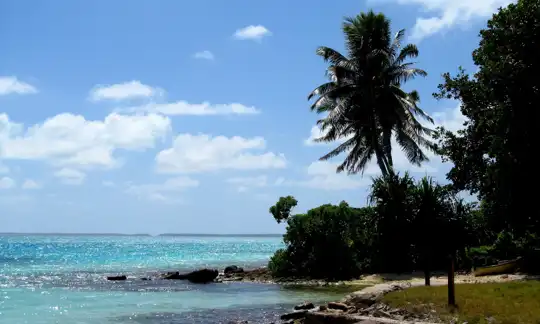
Your feet crunch on coral sand that feels more like crushed porcelain than beach, and the air smells like salt, sunblock, and woodsmoke from someone’s fish grill drifting down the shore. The lagoon is so flat it looks fake, broken only by a skiff engine coughing to life and a kid laughing as he bombs off the pier. This is Kiritimati Island, the big atoll way out in the Line Islands of Kiribati, closer to Hawaii than to the country’s capital.

For backpackers, Kiritimati is the definition of a trade-off. You get raw Pacific emptiness, world-class fishing flats, bird colonies that feel prehistoric, and a slow, church-and-rugby village rhythm in places like London and Tabwakea. You give up easy transport, nightlife, and choice: few guesthouses, pricey flights, imported food that adds up fast. Compared to South Tarawa, Kiritimati is quieter, less crowded, more nature than noise—also more isolating if you crave variety or social buzz.

Discover everything you want to know in the 📖 Kiribati Travel Guide.
Loading the map 🌍
CLICK TO FILTER
town
village
unique site
national park
beach
attraction
festival
region
SHOW COUNTRY‘S BESTSHOW ALL

✨ Why go?
Ranked #1 region in Kiribati
What sets this place apart

Kiritimati Island, or Christmas Island, is a backpacker’s playground where time, money, and comfort intersect beautifully. You’ll find variety of landscapes here that range from pristine beaches to lush lagoons, all without the hassle of constant relocation. Imagine waking up to the sound of waves, then spending your day exploring coral reefs or hiking through dense forests—all within a short bike ride or a leisurely walk.

Transport is a breeze. Rent a bike or hitch a ride with locals; it’s all part of the experience. This flexibility lets you dive deep into both nature and culture. Spend a day fishing with the locals, then the next lounging on a secluded beach. You can savor the slow travel vibe, absorbing the island’s rhythms instead of racing from one tourist spot to another.

The cost? … read more 👉
Kiritimati Island, or Christmas Island, is a backpacker’s playground where time, money, and comfort intersect beautifully. You’ll find variety of landscapes here that range from pristine beaches to lush lagoons, all without the hassle of constant relocation. Imagine waking up to the sound of waves, then spending your day exploring coral reefs or hiking through dense forests—all within a short bike ride or a leisurely walk.

Transport is a breeze. Rent a bike or hitch a ride with locals; it’s all part of the experience. This flexibility lets you dive deep into both nature and culture. Spend a day fishing with the locals, then the next lounging on a secluded beach. You can savor the slow travel vibe, absorbing the island’s rhythms instead of racing from one tourist spot to another.

The cost? It’s surprisingly reasonable. You can enjoy fresh seafood and local dishes without breaking the bank. So, if you’re after a trip that balances adventure and relaxation, Kiritimati Island is your ticket to a high-value experience that feels authentic and rewarding.
Get the complete Travel Guide for Kiribati
Everything organized for offline planning — routes, highlights, costs & tips

See what’s inside 👉

Get the Travel Guide -

💡 HighlightsTop highlights of Kiritimati Island

  1. Kiritimati Lagoon (the central lagoon) — The thing that defines the island: an enormous, shallow coral lagoon you can walk, wade and boat across, studded with tiny motu. Its scale (one of the world’s largest coral atoll lagoons) creates flats, channels and tidal spectacles you won’t find on a pocket atoll — perfect for exploring by skiff and for seeing how island life is built around the water.
  2. Tabwakea village and the morning fish run — The island’s largest village and the most lively local scene: fishermen landing catches, women preparing coconut and pandanus crafts, and informal markets where you can taste fresh grilled fish. It’s the best place to see everyday Kiribati life on Kiritimati rather than an off-the-shelf tourist show. (Hidden gem: turn up early and tag along to the landing
read more 👉
  1. Kiritimati Lagoon (the central lagoon) — The thing that defines the island: an enormous, shallow coral lagoon you can walk, wade and boat across, studded with tiny motu. Its scale (one of the world’s largest coral atoll lagoons) creates flats, channels and tidal spectacles you won’t find on a pocket atoll — perfect for exploring by skiff and for seeing how island life is built around the water.
  2. Tabwakea village and the morning fish run — The island’s largest village and the most lively local scene: fishermen landing catches, women preparing coconut and pandanus crafts, and informal markets where you can taste fresh grilled fish. It’s the best place to see everyday Kiribati life on Kiritimati rather than an off-the-shelf tourist show. (Hidden gem: turn up early and tag along to the landing — that quiet, gritty morning energy is something visitors often miss.)
  3. Bonefishing flats — Kiritimati’s shallow lagoon flats attract huge bonefish and other flats species; anglers come from far away for the size and numbers. Even non-anglers will enjoy guided skiff trips to watch stalks and casts, and the flats themselves are an oddly beautiful landscape of shifting sand and algae you can’t easily find elsewhere.
  4. Seabird rookeries on the outer motus — Offshore motu are home to vast colonies of red-footed boobies, frigatebirds, noddies and terns. Small boat trips to these uninhabited islets let you get close to nesting birds (best with a local guide to avoid disturbing them) — a raw, noisy wildlife spectacle specific to Kiritimati’s scale and relative lack of disturbance.
  5. Snorkel channels and coral gardens — The lagoon’s channels and passes host healthy coral pockets, rays, reef fish and turtles. Snorkeling here feels different from reef dives elsewhere because you’re often in clear, shallow water with dramatic light on sandy bottoms and isolated bommies — great for relaxed, close encounters without deep diving gear.
  6. Banana settlement and the airport flats — Small, lived-in, and right by the airstrip: Banana gives a good feel for everyday island logistics (boats, planes, and fishing) and the adjacent flats are easy to access for casual shore fishing, walking at low tide and dramatic sunsets. It’s low-key and accessible — the sort of place where you’ll end up chatting with locals on a bench.
  7. Village cultural experiences — church, weaving and communal feasts — Join a Sunday service, watch pandanus weaving being taught to kids, or (if invited) a local communal meal. These are simple, real exchanges: proud, social communities that welcome conversation more than commerce. This kind of genuine hospitality is one of the island’s highlights and not something you can replicate in a packaged tour. (Hidden gem: ask to visit a home where pandanus mats are made — you’ll leave with stories and maybe a tiny souvenir.)
  8. Small uninhabited motu picnics and beachcombing — Hire a local boat for a day and pick a tiny motu for yourself: shell hunts, private beaches and very few footprints. The remoteness is the point — clear shallow water, sandbanks at low tide and uninterrupted horizon views. Most visitors stick near villages, so a private motu day still feels like discovering your own island. (Hidden gem: ask a fisherman about his favorite motu — locals know pockets of beauty that don’t make maps.)
  9. Salt pans and shallow brine flats — Scattered shallow pans around the lagoon create strange, reflective landscapes and attract shorebirds. These are quiet, otherworldly spots for photography, bird-watching and late-afternoon walks when the light hits the salt flats; locals use some of these pans seasonally, so they’re small-scale, authentic places most tourists miss.
  10. Dark-sky and sunrise/sunset spots along the lagoon edge — Because Kiritimati is remote and sparsely lit, the night sky is spectacular and the lagoon’s East/West beaches deliver dramatic sunrises and sunsets with tidal flats in silhouette. Bring a torch and a blanket, pick a quiet stretch of beach, and you’ll get the island’s best natural show without crowds — simple but unforgettable.
Spotted a mistake or missing something? Contact us.

⌛️ 5 daysWhat you can realistically do in a week

Day 1: Kiritimati Island

Arrive on Kiritimati Island, and you’ll quickly realize this isn’t your typical tropical paradise. The island’s transport system is limited, so your pace is dictated by the local schedule. Rent a bike at the airport; it’s the best way to get around. The roads are mostly flat, and you’ll want to explore the coastline. Spend the day acclimating, soaking in the laid-back vibe, and enjoying the local cuisine at a nearby eatery.

Day 2: London (the town)

Head to London, the island’s main settlement. It’s a short ride from your base, and you’ll find the local market bustling with fresh fish and tropical fruits. Engage with the locals; they’re friendly and eager to share stories. This is where you’ll get a real taste of island life. Grab a few snacks for your next adventure. … read more 👉
Day 1: Kiritimati Island

Arrive on Kiritimati Island, and you’ll quickly realize this isn’t your typical tropical paradise. The island’s transport system is limited, so your pace is dictated by the local schedule. Rent a bike at the airport; it’s the best way to get around. The roads are mostly flat, and you’ll want to explore the coastline. Spend the day acclimating, soaking in the laid-back vibe, and enjoying the local cuisine at a nearby eatery.

Day 2: London (the town)

Head to London, the island’s main settlement. It’s a short ride from your base, and you’ll find the local market bustling with fresh fish and tropical fruits. Engage with the locals; they’re friendly and eager to share stories. This is where you’ll get a real taste of island life. Grab a few snacks for your next adventure. The transport options here are limited, so plan your next moves carefully.

Day 3: The Northern Beaches

Make your way to the northern beaches. This is where Kiritimati shines. The sand is soft, and the water is crystal clear. Spend the day swimming, snorkeling, or just lounging. The beaches are less crowded, giving you a chance to unwind. If you’re feeling adventurous, try your hand at fishing with a local guide. It’s a great way to connect with the culture and score a fresh dinner.

Day 4: Off-Path Reward – The Bird Sanctuary

Take a detour to the bird sanctuary. It’s a bit off the beaten path, but the experience is worth it. You’ll see unique bird species and get a glimpse of the island’s natural beauty. The sanctuary is a peaceful escape, and you’ll likely have it to yourself. This is a chance to appreciate the untouched side of Kiritimati.

Day 5: The Must-Do Day – The Lagoon

Wrap up your trip with a day at the lagoon. This is the highlight of Kiritimati. The shallow waters are perfect for paddleboarding or kayaking. Rent gear from a local shop and spend hours exploring. The sunsets here are legendary, so stick around for the show. This day encapsulates the essence of Kiritimati, making it the one you can’t miss.
Build the Right Itinerary
Use the Kiribati Travel Guide’s 2, 3 & 5-day routes as a starting point to plan a trip that actually works on the ground.

Get the Travel Guide -

🌤️ When to go?Best time to visit Kiritimati Island


  • Weather: Kiritimati Island basks in a tropical climate, but the sweet spot is the dry season from May to October. Expect less humidity and almost no rain, making your gear lighter and your plans less soggy.

  • Temperature: Daytime temps hover around 28-32°C (82-90°F) year-round, but the dry season feels more comfortable. The wet season’s heat can push humidity into the sticky zone, which can drain your energy fast.

  • Daylight Hours: Near the equator, daylight stays steady—about 12 hours year-round. No need to race the sun; you get a reliable window for exploring or chilling on the beach.

  • Crowds: Kiritimati isn’t exactly a tourist hotspot, but the dry season draws the most visitors, especially birdwatchers and anglers. If you want near solitude, aim for shoulder months like April or November.
read more 👉

  • Weather: Kiritimati Island basks in a tropical climate, but the sweet spot is the dry season from May to October. Expect less humidity and almost no rain, making your gear lighter and your plans less soggy.

  • Temperature: Daytime temps hover around 28-32°C (82-90°F) year-round, but the dry season feels more comfortable. The wet season’s heat can push humidity into the sticky zone, which can drain your energy fast.

  • Daylight Hours: Near the equator, daylight stays steady—about 12 hours year-round. No need to race the sun; you get a reliable window for exploring or chilling on the beach.

  • Crowds: Kiritimati isn’t exactly a tourist hotspot, but the dry season draws the most visitors, especially birdwatchers and anglers. If you want near solitude, aim for shoulder months like April or November.

  • Seasonal Activities: The dry season is prime for fishing, diving, and birdwatching. The wet season can disrupt these, but it’s also turtle nesting time—if you’re into wildlife, that’s a rare treat.

  • Price Fluctuations: Expect higher prices during the dry season when demand peaks. Flights and accommodations loosen up in the wet months, but you’ll trade off comfort and activity options.


Pro-tip: Book your trip for late May or early October to snag the best balance of weather, fewer crowds, and better deals—like a local who knows when to show up and when to slip away.


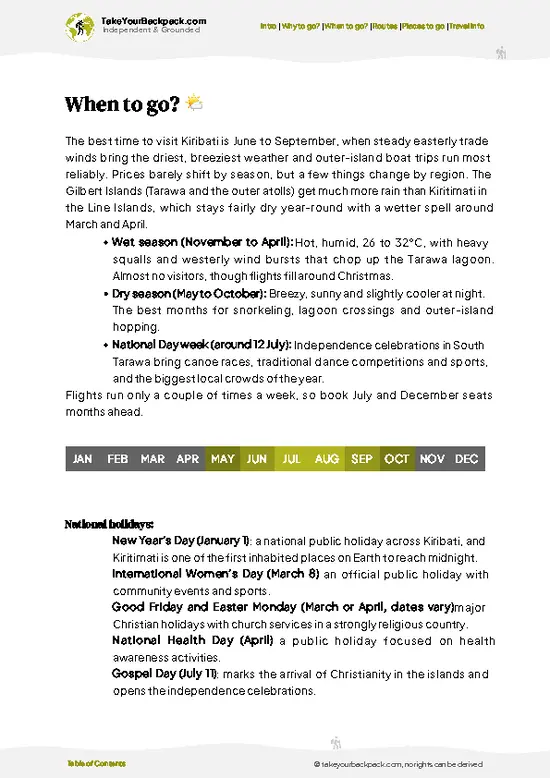
source: climatestotravel.comJANJanuary: fair for travelingFEBFebruary: fair for travelingMARMarch: fair for travelingAPRApril: good for travelingMAYMay: excellent for travelingJUNJune: excellent for travelingJULJuly: excellent for travelingAUGAugust: excellent for travelingSEPSeptember: excellent for travelingOCTOctober: excellent for travelingNOVNovember: good for travelingDECDecember: fair for traveling
when-to-go

✈️ The backpacker research shortcutKiribati Travel Guide

An offline-friendly backpacking guide with optimized travel routes, ranked highlights, transport advice, and the best areas to stay.
example page 0 from our offline Travel Guide for Kiribatiexample page 1 from our offline Travel Guide for Kiribatiexample page 2 from our offline Travel Guide for Kiribatiexample page 3 from our offline Travel Guide for Kiribatiexample page 4 from our offline Travel Guide for Kiribatiexample page 5 from our offline Travel Guide for Kiribati
The digital guide (127 pages) contains:
30 highlights, ranked by travel appeal
Optimized 2, 3 & 5-day travel routes
Best neighborhoods to stay
How to get around
Offline-friendly for travel without Wi-Fi
👉 See all 30+ guide features

📅 Plan smarter in minutes, not weeks
Month by month travel advice
Festivals & national holidays
Budget expectations

🗺️ Go to the right places, skip the overrated ones
Honest pros & cons of destinations
Top hikes, parks & viewpoints
Lesser-known places most travelers miss
Clear “worth it vs skip it” guidance

🛏️ Travel smoothly without rookie mistakes
Best areas to stay
Transport systems explained simply
Common scams & safety advice
SIM cards, money & practical tips

🌍 Understand the country, not just visit it
Culture & traditions
52 Essential phrases & customs
Festivals worth planning around
Traveler-friendly historical context
Insights that make places more meaningful

📱 Built for real travel conditions
Fully downloadable PDF
Works completely offline
Optimized for phone use
Useful in remote areas & buses
Everything in one place
Save weeks of stressful planning
Get instant access to the full guide directly. 30-day money-back guarantee.


Sent to your inbox immediately after payment • 100% Secure Checkout
Best Backpacking Travel Advisor 2025 tourism awardBest Backpacking
Travel Advisor
2025
What others say about Take Your Backpack Guides:
⭐⭐⭐⭐⭐
Fantastic, amazing amount of information!
⭐⭐⭐⭐⭐
My goodness this is amazing, it's what I've been looking for hats off too you!
⭐⭐⭐⭐⭐
I think this is absolutely BRILLIANT
⭐⭐⭐⭐
Very complete and informative. It's still missing places, but I gotta to commend you
⭐⭐⭐⭐⭐
This is truly amazing, thank you, can't wait to explore it with my kids!
⭐⭐⭐⭐⭐
Awesome resource, thank you!
⭐⭐⭐⭐⭐
This is amazing! Can't wait to explore the ones I haven't seen
⭐⭐⭐⭐
I love this! Well done, great idea.
⭐⭐⭐⭐⭐
Thanks for taking the time to make this gem!
⭐⭐⭐⭐⭐
This might be the best website I've ever seen.
⭐⭐⭐⭐⭐
Congratulations, and thank you so much for your work; it's incredibly valuable.
⭐⭐⭐⭐
In all seriousness I think you did a great job pointing out the important spots
⭐⭐⭐⭐⭐
10/10 very good
⭐⭐⭐⭐⭐
As someone who's only just starting to visit regularly this is awesome, thank you.
⭐⭐⭐⭐
Thank you very much! I'm going to visit my dad, it's going to be very useful!
⭐⭐⭐⭐⭐
This is really cool! We'll be travelling for the first time and this definitely come in handy.
⭐⭐⭐⭐⭐
You are now our minister of culture, congratulations 👨‍💼
⭐⭐⭐⭐⭐
Just wanted to tell you that this is a pearl! Going to follow your recommendations.
⭐⭐⭐⭐⭐
This is so cool. I'll definitely be using the resource for my travels soon.
⭐⭐⭐⭐⭐
This is very impressive! Good work.
⭐⭐⭐⭐⭐
This is an amazing and informative site. Very well done!

🛏️ Where to stay?Choosing the right base

Kiritimati Island, or Christmas Island, is a backpacker’s dream, but you’ve got to know where to land for the best experience.

Start in London, the main settlement. It’s where the action is. You’ll find a mix of locals and fellow travelers. The vibe is relaxed, and the beach is just a stroll away. Grab a cold drink at a local spot and swap stories with other backpackers. This is your social hub, and it’s safe enough to wander around at night.

Next, consider Banana. It’s a bit quieter, but that’s part of its charm. You’ll find stunning beaches and a laid-back atmosphere. Perfect for those who … read more 👉
Kiritimati Island, or Christmas Island, is a backpacker’s dream, but you’ve got to know where to land for the best experience.

Start in London, the main settlement. It’s where the action is. You’ll find a mix of locals and fellow travelers. The vibe is relaxed, and the beach is just a stroll away. Grab a cold drink at a local spot and swap stories with other backpackers. This is your social hub, and it’s safe enough to wander around at night.

Next, consider Banana. It’s a bit quieter, but that’s part of its charm. You’ll find stunning beaches and a laid-back atmosphere. Perfect for those who want to chill after a day of exploring. The locals are friendly, and you can often join in on community events.

Don’t overlook Tabuaeran. It’s a smaller village, but it offers a unique glimpse into local life. You’ll feel like you’re part of the community, and the sunsets are worth every minute spent here.

Each area has its own flavor, so think about what you want. More social? Go for London. Craving peace? Banana is your spot. Want to immerse yourself? Tabuaeran is calling. Choose wisely, and you’ll create memories that last long after you leave.

🚌 Getting aroundTransportation options and practical tips

Kiritimati Island, or Christmas Island, is a place where time feels fluid, and schedules are more like suggestions than hard rules. Picture this: you’re on a remote island in the Pacific, where the sun rises and sets with a rhythm all its own. The locals move with a laid-back grace, and you’ll find that getting from point A to point B is often a dance of intuition rather than a strict itinerary. Embrace the chaos, and you’ll discover that the journey is just as rewarding as the destination.

Here’s the lowdown on your transport options, so you can navigate this island like a pro:


  • Bicycles: Renting a bike is a popular choice. Expect to pay around $10 a day. It’s a leisurely way to explore, and you can stop whenever something catches your eye. Just remember, the island is flat, so you can
read more 👉
Kiritimati Island, or Christmas Island, is a place where time feels fluid, and schedules are more like suggestions than hard rules. Picture this: you’re on a remote island in the Pacific, where the sun rises and sets with a rhythm all its own. The locals move with a laid-back grace, and you’ll find that getting from point A to point B is often a dance of intuition rather than a strict itinerary. Embrace the chaos, and you’ll discover that the journey is just as rewarding as the destination.

Here’s the lowdown on your transport options, so you can navigate this island like a pro:


  • Bicycles: Renting a bike is a popular choice. Expect to pay around $10 a day. It’s a leisurely way to explore, and you can stop whenever something catches your eye. Just remember, the island is flat, so you can pedal at your own pace.


  • Motorbikes: For about $20 a day, you can rent a motorbike. This option gives you more speed and flexibility. Just be cautious; the roads can be rough, and the locals drive with a carefree spirit. Fuel is cheap, but keep an eye on your tank.


  • Shared Taxis: These are your go-to for longer distances. Prices vary, but budget around $5-$10 per ride. They operate on a loose schedule, so be prepared to wait a bit. The upside? You’ll meet locals and other travelers, making for a more communal experience.


  • Walking: If you’re feeling adventurous, walking is a great way to soak in the scenery. It’s free, and you’ll get a real sense of the island’s charm. Just be mindful of the heat and stay hydrated.


  • Chartered Boats: For those looking to explore nearby islands, chartering a boat can cost around $50-$100, depending on the destination. It’s a splurge, but the views of the turquoise waters are worth every penny.


Here’s your tactical tip: always ask locals about the best times to travel. They know the rhythms of the island better than any guidebook. If you can, travel early in the morning or late afternoon to avoid the heat and catch the island at its most vibrant. Embrace the flow, and you’ll find that getting around Kiritimati is part of the adventure.

🍲 FoodLocal Flavors for Backpackers

On Kiritimati Island, the food scene is a delightful blend of local flavors and island life. You can’t visit without trying palusami, a dish of taro leaves baked in coconut cream. The rich, creamy texture is a taste of paradise. Pair it with fresh fish, often caught that morning, grilled to perfection and served with a squeeze of lime. The coconut crab is another must-try; its sweet, tender meat is a local delicacy that you’ll find at casual beachside shacks.

For a true local experience, head to the markets. The vibrant stalls are filled with fresh produce, and the air is thick with the scent of grilled meats and sweet tropical fruits. Grab a bowl of poke, a mix of raw fish marinated in soy sauce and served with rice. It’s simple but bursting with flavor.

When it comes to drinks, don’t … read more 👉
On Kiritimati Island, the food scene is a delightful blend of local flavors and island life. You can’t visit without trying palusami, a dish of taro leaves baked in coconut cream. The rich, creamy texture is a taste of paradise. Pair it with fresh fish, often caught that morning, grilled to perfection and served with a squeeze of lime. The coconut crab is another must-try; its sweet, tender meat is a local delicacy that you’ll find at casual beachside shacks.

For a true local experience, head to the markets. The vibrant stalls are filled with fresh produce, and the air is thick with the scent of grilled meats and sweet tropical fruits. Grab a bowl of poke, a mix of raw fish marinated in soy sauce and served with rice. It’s simple but bursting with flavor.

When it comes to drinks, don’t miss out on kava, a traditional beverage made from the root of the kava plant. It’s a social drink, often shared among friends, and has a calming effect that’s perfect for winding down after a day of adventure.

Dining here is laid-back. Expect to eat with your hands, and don’t be surprised if you’re invited to share a meal with locals. It’s all about connection, so embrace the communal vibe and savor every bite.

Other I-Kiribati regions near Kiritimati Island

Explore more nearby:

  • Beru Atoll—saltwater ponds, raised coral, fishing settlements, tidal flats| 2969 km away
  • Abemama Atoll—colonial relics, royal tombs, quiet motu, lagoon crossings| 3193 km away
  • North Tarawa—interconnected islets, footbridges, tidal causeways, rural homesteads| 3290 km away

👉 Discover all regions

Or checkout all Kiribati has to offer (think cities, towns, villages, national parks, hikes, beaches, festivals)
Country photo of Kiribati

We 💚 feedbackParting advice and final tips

Kiritimati Island is a slice of paradise, but it’s not all sun and sand. The vibe is laid-back, almost like time stands still. Don’t miss the sunrise over the lagoon; it’s a showstopper. But here’s the kicker: be ready for limited amenities. Stock up on snacks and essentials before you arrive. The locals are friendly, but English can be hit or miss. Embrace the simplicity, and you’ll find the real treasure here is the connection to nature and the people.

✍️ Help improve this page!
The information on this page is based on in-depth research, insights shared by experienced travelers, and feedback from the local travel community in Kiribati. While every effort is made to keep the information accurate and current, conditions can change — so if you spot anything incorrect or outdated, please get in touch.


🙋‍♂️ Give feedback

👋 Meet the founderWho’s Behind Take Your Backpack?

Johan, backpacker and founder of TakeYourBackpackHi, I’m Johan (Netherlands 🇳🇱), the creator of TakeYourBackpack. Over the past decade, I’ve backpacked through 80+ countries across six continents, gaining extensive experience with independent travel, long-term trips, and overland routes.

This site is built on a combination of firsthand travel experience and carefully curated insights from other backpackers. Many guides are based on places I’ve personally visited, while others bring together tips, observations, and practical advice shared by trusted travelers I’ve met along the way.

The goal is to provide realistic, experience-driven guidance — not generic itineraries — so you can explore destinations with better context, clearer expectations, and more confidence.

Get Full Country Guide |
Instant download • 30 highlights • Full Offline guide