
×

Kiribati🇰🇮 | regionsNorth TarawaLow-tide Abatao crossing, Buariki relics, village guesthouses, reef gleaning | things to do and best time to go

Explore Tarawa AtollExplore Marakei

Backpacking in North Tarawa
👍 Recommendedregion ranked #3
By Johan Kruseman 🇳🇱 | Updated October 15, 2026

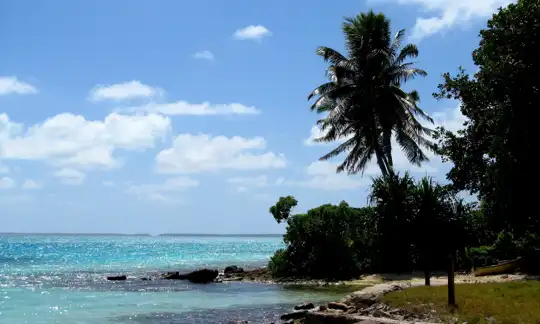
Woodsmoke and low-tide mud hit you first, then the rattle of a pickup truck crossing the causeway with the lagoon glowing milky green on both sides. North Tarawa lies in the north of Kiribati, the long, thin upper arm of Tarawa atoll, beyond the crowded road of the capital. The reward is quiet: thatched maneabas, pigs rooting under pandanus, kids launching themselves off jetties at high tide. The hard parts are part of the deal too. Shops are tiny, cash is scarce, bore water tastes of salt and the heat sits on your shoulders by nine. A day trip costs little but leaves you watching the clock for the last ride back. A night or two in a village guesthouse costs more and means bucket washes and fans that quit at dark, yet it gives a backpacker far more. Tourism barely exists here. By evening, frigatebirds hang motionless over the reef edge.

Discover everything you want to know in the 📖 Kiribati Travel Guide.


example page 0 from our offline Travel Guide for Kiribati
example page 1 from our offline Travel Guide for Kiribati
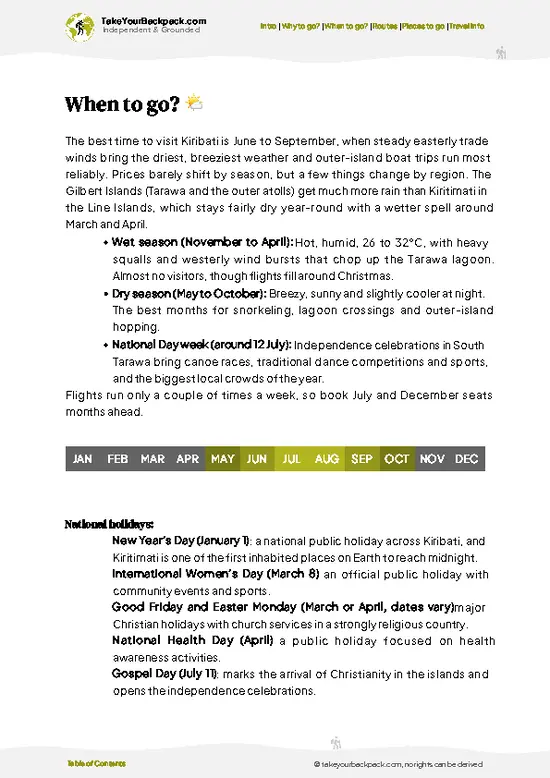
example page 2 from our offline Travel Guide for Kiribati
example page 3 from our offline Travel Guide for Kiribati
example page 4 from our offline Travel Guide for Kiribati
example page 5 from our offline Travel Guide for Kiribati
example page 6 from our offline Travel Guide for Kiribati
example page 7 from our offline Travel Guide for Kiribati
Loading the map 🌍
CLICK TO FILTER
towns
villages
landmarks
national parks
beaches
attractions
festivals
regions
SHOW COUNTRY’S BESTSHOW ALL

✨ Why go?
Ranked #3 region in Kiribati
What makes this region worth visiting

North Tarawa lets you see an I-Kiribati village life that the capital has mostly traded away, and you can reach it without a flight. A single road and a chain of causeways link the islets, so you can drift from one village to the next on foot, by hitched pickup or by a short walk across the tidal flats at low water, without repacking every morning. That flexibility is the real draw.

The culture is the second reason. Families still gather in the village maneaba meeting houses, where visitors are expected to ask permission, sit cross-legged and accept coconut or a drink of fresh toddy. Fishing, weaving and copra cutting happen in front of you as ordinary work, not as a show.

Third is the water. The lagoon side is shallow and warm enough for slow paddling and swimming, while the ocean side has … read more 👉
North Tarawa lets you see an I-Kiribati village life that the capital has mostly traded away, and you can reach it without a flight. A single road and a chain of causeways link the islets, so you can drift from one village to the next on foot, by hitched pickup or by a short walk across the tidal flats at low water, without repacking every morning. That flexibility is the real draw.

The culture is the second reason. Families still gather in the village maneaba meeting houses, where visitors are expected to ask permission, sit cross-legged and accept coconut or a drink of fresh toddy. Fishing, weaving and copra cutting happen in front of you as ordinary work, not as a show.

Third is the water. The lagoon side is shallow and warm enough for slow paddling and swimming, while the ocean side has reef flats that change character with the tide. Combine the Buariki battle sites from 1943 with lagoon time and you get history and nature in one unhurried stay, with very few other foreigners around.

💡 HighlightsMust-see experiences and standout moments

  1. Buota-Abatao Crossing: The road from South Tarawa ends at the channel between Buota and Abatao, which you wade at low tide or cross by boat at high tide. Water pours through on each tide, and locals fish and swim off the edges. It is the place to start getting a feel for the atoll.
  2. Buariki Battle Memorial Sites: The village was the scene of the 1943 fighting after the Tarawa landings. Rusting relics and memorials lie among the houses. Ask a local to walk you around, since little is signposted.
  3. Village Maneabas: These open-sided meeting halls with steep thatched roofs hold community decisions and ceremonies. Visitors are welcome with permission and a respectful manner. Sitting inside, with the breeze coming through, tells you more about Kiribati than any museum.
  4. Abatao Island: A quiet islet with
… read more 👉
  1. Buota-Abatao Crossing: The road from South Tarawa ends at the channel between Buota and Abatao, which you wade at low tide or cross by boat at high tide. Water pours through on each tide, and locals fish and swim off the edges. It is the place to start getting a feel for the atoll.
  2. Buariki Battle Memorial Sites: The village was the scene of the 1943 fighting after the Tarawa landings. Rusting relics and memorials lie among the houses. Ask a local to walk you around, since little is signposted.
  3. Village Maneabas: These open-sided meeting halls with steep thatched roofs hold community decisions and ceremonies. Visitors are welcome with permission and a respectful manner. Sitting inside, with the breeze coming through, tells you more about Kiribati than any museum.
  4. Abatao Island: A quiet islet with a tight village, sandy lanes and lagoon beaches where hardly anyone swims but residents. A lesser-known local favorite.
  5. Abaokoro Island: Known to locals for its sheltered lagoon shore and its simple guesthouse stays. Mornings are for walking the sand at low water.
  6. Toddy Cutting: Men climb coconut palms at dawn and dusk to collect sap from the flower stalks. Arrange to watch or sample the sweet, fresh liquid, called kamaimai when boiled down to syrup.
  7. Lagoon Sailing in a Canoe: The local outrigger sailing canoes are fast and fun. Arrange a ride with a family and feel how the shallow lagoon changes color over the sandbars.
  8. Nabeina and Tabonibara Villages: Rarely visited, these sleepy settlements show everyday life: weaving pandanus mats, drying fish and sharing meals under shaded platforms. Come with a small gift of rice or tobacco for the host family.
  9. Ocean-Side Reef Flats: At low tide, the exposed coral shelf on the Pacific side becomes a walking ground for reef gleaners hunting shellfish. The wind is stronger and the horizon wider than on the lagoon side.
You can see all of it in two to three unhurried days, and a single day only covers the causeway and one or two villages.
Spotted a mistake or missing something? Contact us.

⌛️ 5 daysWhat you can realistically do in a week

Day 1: Buota: Start early at the northern end of the main road, where the pickups head north, because rides thin out by midday and the heat arrives fast. Cross the causeway, get your bearings and settle into a first village stay. Spend the afternoon at the water's edge, when the lagoon is at its warmest and shallowest. The slow, irregular transport sets the pace here, so plan around the tide and the next ride rather than a timetable.

Day 2: Abatao: Move on to a quieter islet where the lanes are sand and nothing is hurried. Ask your host about visiting the maneaba, and arrange a dawn or dusk toddy cutting session. Use the middle of the day for lagoon swimming or a canoe ride, since shade is scarce and the sun is hardest then.

Day 3: Buariki: Go north to the village where the 1943 fighting left … read more 👉
Day 1: Buota: Start early at the northern end of the main road, where the pickups head north, because rides thin out by midday and the heat arrives fast. Cross the causeway, get your bearings and settle into a first village stay. Spend the afternoon at the water's edge, when the lagoon is at its warmest and shallowest. The slow, irregular transport sets the pace here, so plan around the tide and the next ride rather than a timetable.

Day 2: Abatao: Move on to a quieter islet where the lanes are sand and nothing is hurried. Ask your host about visiting the maneaba, and arrange a dawn or dusk toddy cutting session. Use the middle of the day for lagoon swimming or a canoe ride, since shade is scarce and the sun is hardest then.

Day 3: Buariki: Go north to the village where the 1943 fighting left its marks. A local guide, found through your host, makes the visit far more meaningful than wandering alone. Buariki is a long haul from the capital, so staying overnight here keeps the day relaxed.

Day 4: Abaokoro: Detour to this island for a different stay. Its lagoon shore is calm and the guesthouse setting gives you a break from the road. Walk the flats at low tide and help with fishing if invited. The side trip adds a gentle day without adding any complicated logistics.

Day 5: Return South: Head back early, leaving a buffer for the pickups, which fill and depart on their own schedule. Stop at the causeway to watch the tide rush through before reconnecting with the capital.

If you can only keep one day, make it Day 3 at Buariki. Standing in the village among the old war remains, with a local explaining who lived there, is what justifies the whole trip.

🌤️ When to go?Weather, crowds, and seasonal trade-offs

  • Dry Season (May to October): North Tarawa sits just north of the equator, so the trade winds blow steadily and days run 28 to 31°C (82 to 88°F). Seas on the lagoon side are calmer for boat transfers and snorkeling, and the breeze keeps midday heat bearable.
  • Wet Season (November to April): Expect squalls, humid air of 28 to 32°C (82 to 90°F) and sudden downpours that turn sandy tracks to puddles. Rain is usually short and heavy rather than all-day, and tanks and wells fill up.
  • Daylight: Sunrise comes between about 6:10 and 6:40 a.m. and sunset between about 6:15 and 6:45 p.m. all year, so plan walks and boat rides for the morning and be settled before dark, when there is little lighting.
  • Crowds and Prices: Visitors are very few in any month. Rates for village guesthouses and boat hire stay fairly
… read more 👉
  • Dry Season (May to October): North Tarawa sits just north of the equator, so the trade winds blow steadily and days run 28 to 31°C (82 to 88°F). Seas on the lagoon side are calmer for boat transfers and snorkeling, and the breeze keeps midday heat bearable.
  • Wet Season (November to April): Expect squalls, humid air of 28 to 32°C (82 to 90°F) and sudden downpours that turn sandy tracks to puddles. Rain is usually short and heavy rather than all-day, and tanks and wells fill up.
  • Daylight: Sunrise comes between about 6:10 and 6:40 a.m. and sunset between about 6:15 and 6:45 p.m. all year, so plan walks and boat rides for the morning and be settled before dark, when there is little lighting.
  • Crowds and Prices: Visitors are very few in any month. Rates for village guesthouses and boat hire stay fairly flat, though fuel shortages can push transfer costs up.
  • Events: Independence Day celebrations on July 12 bring dancing and feasting around the islands.
Pick the dry months and confirm boat and causeway timing locally before you commit to an island.


source: climatestotravel.comJANJanuary: fair for travelingFEBFebruary: fair for travelingMARMarch: fair for travelingAPRApril: good for travelingMAYMay: excellent for travelingJUNJune: excellent for travelingJULJuly: excellent for travelingAUGAugust: excellent for travelingSEPSeptember: excellent for travelingOCTOctober: excellent for travelingNOVNovember: good for travelingDECDecember: fair for traveling
when-to-go

✈️ The backpacker research shortcutKiribati Travel Guide

An offline-friendly backpacking guide with optimized travel routes, ranked highlights, transport advice, and the best areas to stay.
example page 0 from our offline Travel Guide for Kiribati
example page 1 from our offline Travel Guide for Kiribati
example page 2 from our offline Travel Guide for Kiribati
example page 3 from our offline Travel Guide for Kiribati
example page 4 from our offline Travel Guide for Kiribati
example page 5 from our offline Travel Guide for Kiribati
example page 6 from our offline Travel Guide for Kiribati
example page 7 from our offline Travel Guide for Kiribati
The digital guide (120 pages) contains:
✅ 25 highlights, ranked by travel appeal
✅ Optimized 2, 3 & 5-day travel routes
✅ Cities, national parks, landmarks, beaches
✅ How to get around
✅ Offline-friendly for travel without Wi-Fi
👉 Click to see all 30+ guide features

📅 Plan smarter in minutes, not weeks
✅ Month by month travel advice
✅ Festivals & national holidays
✅ Budget expectations

🗺️ Go to the right places, skip the overrated ones
✅ Honest pros & cons of destinations
✅ Top hikes, parks & viewpoints
✅ Lesser-known places most travelers miss
✅ Clear “worth it vs skip it” guidance

🛏️ Travel smoothly without rookie mistakes
✅ Best areas to stay
✅ Transport systems explained simply
✅ Common scams & safety advice
✅ SIM cards, money & practical tips

🌍 Understand the country, not just visit it
✅ Culture & traditions
✅ 52 Essential phrases & customs
✅ Festivals worth planning around
✅ Traveler-friendly historical context
✅ Insights that make places more meaningful

📱 Built for real travel conditions
✅ Fully downloadable PDF
✅ Works completely offline
✅ Optimized for phone use
✅ Useful in remote areas & buses
✅ Everything in one place
Stop searching, start planning
Get instant access to your full guide. 30‑day money-back guarantee.
+ Add another guide for just

By proceeding you agree to our terms.
Sent to your inbox immediately after payment • 100% Secure Checkout
Best Backpacking Travel Advisor 2025 tourism awardBest Backpacking
Travel Advisor
2025
What others say about Take Your Backpack Guides:
⭐⭐⭐⭐⭐
Fantastic, amazing amount of information!
⭐⭐⭐⭐⭐
My goodness this is amazing, it's what I've been looking for hats off too you!
⭐⭐⭐⭐⭐
I think this is absolutely BRILLIANT
⭐⭐⭐⭐
Very complete and informative. It's still missing places, but I gotta to commend you
⭐⭐⭐⭐⭐
This is truly amazing, thank you, can't wait to explore it with my kids!
⭐⭐⭐⭐⭐
Awesome resource, thank you!
⭐⭐⭐⭐⭐
This is amazing! Can't wait to explore the ones I haven't seen
⭐⭐⭐⭐
I love this! Well done, great idea.
⭐⭐⭐⭐⭐
Thanks for taking the time to make this gem!
⭐⭐⭐⭐⭐
This might be the best website I've ever seen.
⭐⭐⭐⭐⭐
Congratulations, and thank you so much for your work; it's incredibly valuable.
⭐⭐⭐⭐
In all seriousness I think you did a great job pointing out the important spots
⭐⭐⭐⭐⭐
10/10 very good
⭐⭐⭐⭐⭐
As someone who's only just starting to visit regularly this is awesome, thank you.
⭐⭐⭐⭐
Thank you very much! I'm going to visit my dad, it's going to be very useful!
⭐⭐⭐⭐⭐
This is really cool! We'll be travelling for the first time and this definitely come in handy.
⭐⭐⭐⭐⭐
You are now our minister of culture, congratulations 👨‍💼
⭐⭐⭐⭐⭐
Just wanted to tell you that this is a pearl! Going to follow your recommendations.
⭐⭐⭐⭐⭐
This is so cool. I'll definitely be using the resource for my travels soon.
⭐⭐⭐⭐⭐
This is very impressive! Good work.
⭐⭐⭐⭐⭐
This is an amazing and informative site. Very well done!

🛏️ Where to stay?Choosing the right base

The best base for most backpackers is a village homestay or small guesthouse on the main North Tarawa road, in the stretch closest to the causeway. It keeps you within reach of South Tarawa shops and the airport while still giving you lagoon views and quiet nights.

Villages near the causeway end are the easiest option for first-timers. Vans pass often, you can buy basics from small village stores, and families are used to curious visitors. Expect rooms of woven pandanus or simple concrete, shared bathrooms, and rates roughly A$30 to 70 (US$20 to 45) a night, often with meals included.

Further … read more 👉
The best base for most backpackers is a village homestay or small guesthouse on the main North Tarawa road, in the stretch closest to the causeway. It keeps you within reach of South Tarawa shops and the airport while still giving you lagoon views and quiet nights.

Villages near the causeway end are the easiest option for first-timers. Vans pass often, you can buy basics from small village stores, and families are used to curious visitors. Expect rooms of woven pandanus or simple concrete, shared bathrooms, and rates roughly A$30 to 70 (US$20 to 45) a night, often with meals included.

Further north, the villages are quieter and more traditional. They suit solo travelers who want to share the evening meal and talk with hosts, though transport gets thinner and you should arrange rides in advance. Electricity and water can be limited, so bring a power bank and a water bottle.

Social life here means the maneaba, where villagers gather. Ask permission before joining, dress modestly with shoulders and knees covered, and bring a small gift such as rice or tinned fish. Safety is generally good, and the main hazards are strong currents on the ocean side and dogs at night. Stay on the lagoon side for swimming.

🚌 Getting aroundTransportation options and practical tips

The village strips here are short and flat, so you can walk from one hamlet to the next along the sandy lane in 10 to 20 minutes, but walking stops making sense once you want to cross to another islet or cover the whole 30 km (19 mile) chain. Most backpackers take the causeway road from South Tarawa, then use vans, a bike, and the occasional boat. It works, but schedules are loose and everything runs on island time.
  • Minibus and van from Bairiki or Betio: Shared vans run along the main road as far as Buota for roughly A$1 to 3 (about US$0.70 to 2). They are the cheapest option, packed, loud with Pacific pop, and smelling of coconut oil and diesel. They leave when full, so waiting is the cost, but for money and comfort together they win.
  • Private ride or taxi: A negotiated car from South Tarawa
… read more 👉
The village strips here are short and flat, so you can walk from one hamlet to the next along the sandy lane in 10 to 20 minutes, but walking stops making sense once you want to cross to another islet or cover the whole 30 km (19 mile) chain. Most backpackers take the causeway road from South Tarawa, then use vans, a bike, and the occasional boat. It works, but schedules are loose and everything runs on island time.
  • Minibus and van from Bairiki or Betio: Shared vans run along the main road as far as Buota for roughly A$1 to 3 (about US$0.70 to 2). They are the cheapest option, packed, loud with Pacific pop, and smelling of coconut oil and diesel. They leave when full, so waiting is the cost, but for money and comfort together they win.
  • Private ride or taxi: A negotiated car from South Tarawa costs about A$20 to 40 (US$13 to 26) one way. It saves an hour or two of waiting, and the air is hot and dusty with windows down. Worth it for your arrival day with a heavy pack.
  • Bicycle: Hiring or borrowing a bike from a guesthouse is often possible for about A$5 to 10 (US$3 to 7) a day. The road is flat, the sun hard on the neck, and you pedal past pandanus houses and open maniaba meeting halls. Best overall for a backpacker staying put for several days.
  • Motorized canoe or boat: Local boats cross channels between islets for about A$5 to 20 (US$3 to 13) depending on distance and fuel. You feel the spray, smell salt and fish, and sit low on the lagoon. Tides rule departure times, so it is slower but the most memorable.
  • Walking at low tide: Some gaps between islets can be waded when the tide is out, which costs nothing, but the coral is sharp and the sun is relentless, so wear reef shoes.
Ask your host to phone a driver or boatman the evening before, since mornings are when vans fill and tides cooperate.

🍲 FoodWhat to Eat & Drink

Food in North Tarawa is built on the lagoon and the coconut palm. Expect grilled or boiled reef fish, often bonefish or parrotfish, served with rice and a sweet, creamy coconut sauce. Palusami, taro-style leaves baked with coconut cream, is soft, rich and earthy. Breadfruit shows up roasted, with a smoky, potato-like middle, and pandanus cakes are chewy and sweet.

The drink to know is toddy, sap tapped from the coconut flower by climbers at dawn. Fresh, it is lightly sweet and cloudy, and it ferments through the day. Green drinking coconuts are cut open on the spot and cost next to nothing.

There are no markets in the usual sense. Most meals happen in guesthouses and family homes, and small village stores sell instant noodles, tinned fish, biscuits and bread. Fishermen sometimes sell their … read more 👉
Food in North Tarawa is built on the lagoon and the coconut palm. Expect grilled or boiled reef fish, often bonefish or parrotfish, served with rice and a sweet, creamy coconut sauce. Palusami, taro-style leaves baked with coconut cream, is soft, rich and earthy. Breadfruit shows up roasted, with a smoky, potato-like middle, and pandanus cakes are chewy and sweet.

The drink to know is toddy, sap tapped from the coconut flower by climbers at dawn. Fresh, it is lightly sweet and cloudy, and it ferments through the day. Green drinking coconuts are cut open on the spot and cost next to nothing.

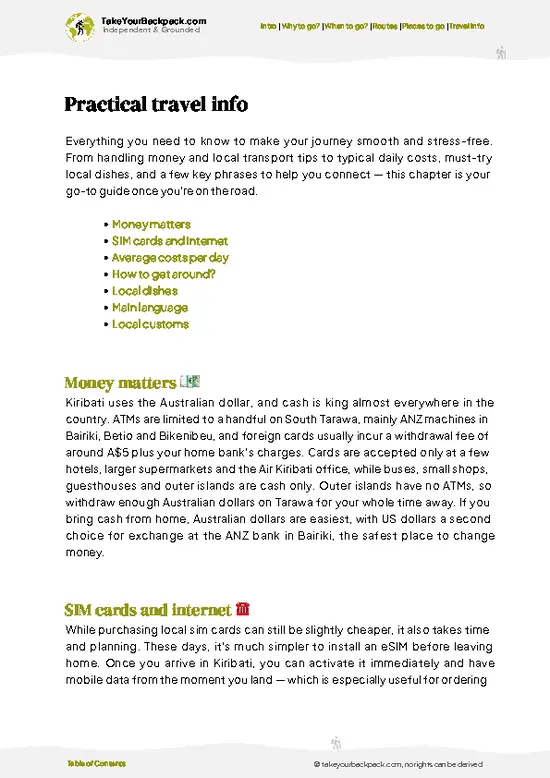
There are no markets in the usual sense. Most meals happen in guesthouses and family homes, and small village stores sell instant noodles, tinned fish, biscuits and bread. Fishermen sometimes sell their catch by the roadside in the morning, so bring cash in small Australian dollar notes.

Customs matter. A meal is often eaten on mats, and guests may be served first. Accept what is offered, take small portions, and wait for the host to start. Alcohol is limited in many villages and should not be brought without asking. Bring a bottle of water or purifying tablets, since tap water is not reliable.

FAQTraveler FAQ

Two to three days is enough for North Tarawa if you stay in a village homestay. That gives you a full day for a bike ride or boat trip along the lagoon, a morning in a maneaba and time to swim at high tide. Add a fourth day if you want to travel further north, where transport is slow and sparse.
Shared minibuses and vans run from Bairiki and Betio to Buota for around A$1 to 3 (US$0.70 to 2), though they leave only when full. Once there, a rented bicycle for about A$5 to 10 (US$3 to 7) a day covers the flat main road well. For island hops, motorized canoes charge roughly A$5 to 20 (US$3 to 13), depending on distance and tide.
North Tarawa is known for quiet lagoon villages, traditional maneaba meeting houses and a slower, more traditional version of i-Kiribati life than crowded South Tarawa. It also holds World War II history linked to the 1943 Battle of Tarawa, with scattered remnants in the wider atoll. Visitors come for homestays, reef fishing, toddy and lagoon swimming, usually in the May to October dry season.
⚠️ Things can change over time, so always validate details locally before you go.

Other I-Kiribati regions near North Tarawa

Explore more nearby:

  • Tarawa Atoll—Betio bunkers, rusted guns, causeway road, maneaba halls, fish stalls| 6 km away
  • South Tarawa—Betio bunkers, Red Beach, minibus rides, Bikenibeu museum| 19 km away
  • Abaiang—Wade-in landings, lagoon sandbars, village homestays, Sunday hymns| 37 km away

💡 Not sure where to go next?
Create a personalized itinerary for Kiribati including North Tarawa and the places that fit your trip.

Generate my itinerary

👉 Discover all regions

Or checkout all Kiribati has to offer (think cities, towns, villages, national parks, hikes, beaches, festivals)
Country photo of Kiribati

We 💚 feedbackFinal thoughts on visiting North Tarawa

North Tarawa suits travelers who like their adventures slow, sandy and a little rough: people happy to sit in a maneaba for an hour and talk to anyone. I would bring cash in small bills, a water filter and a thin sarong, and skip any rigid schedule. Rides are late, plans change, and the best afternoons are usually the unplanned ones.

✍️ Help improve this page!
The information on this page is based on in-depth research, insights shared by experienced travelers, and feedback from the local travel community in Kiribati. While every effort is made to keep the information accurate and current, conditions can change — so if you spot anything incorrect or outdated, please get in touch.


🙋‍♂️ Give feedback

👋 Meet the founderWho’s Behind Take Your Backpack?

Johan, backpacker and founder of TakeYourBackpackHi, I’m Johan (Netherlands 🇳🇱), the creator of TakeYourBackpack. Over the past 3 decades, I’ve backpacked through 90+ countries across six continents, gaining extensive experience with independent travel, long-term trips, and overland routes.

This site is built on a combination of firsthand travel experience and carefully curated insights from other backpackers. Many guides are based on places I’ve personally visited, while others bring together tips, observations, and practical advice shared by trusted travelers I’ve met along the way.

The goal is to provide realistic, experience-driven guidance — not generic itineraries — so you can explore destinations with better context, clearer expectations, and more confidence.