
×

Kiribati🇰🇮 | regionsAbemama Atollcolonial relics, royal tombs, quiet motu, lagoon crossings | things to do and best time to go

Explore Phoenix Islands Protected AreaExplore Beru Atoll

Backpacking in Abemama Atoll
👍 Recommendedregion ranked #5
By Johan Kruseman 🇳🇱 | Updated June 9, 2026

Everyone talks about Abemama Atoll as “that place where a king once ruled his own little kingdom,” but the history trivia is not what will make or break your trip. What matters more is whether you’re ready for a slow, salt-in-your-hair kind of island that trades options and comfort for raw Pacific quiet. Abemama sits in the Gilbert Islands of Kiribati, southeast of Tarawa, and it feels like the capital’s shy, less-developed cousin. For backpackers, that’s both the charm and the catch: gorgeous lagoon, empty beaches, real village life, and almost no tourist infrastructure. You’ll pay more than you expect for basics, move around by boat or truck when they’re available, and forget what “nightlife” means. Compared with South Tarawa’s chaos or more visited atolls like Abaiang, Abemama is cheaper on temptations, pricier on logistics, and richer in unfiltered everyday Kiribati.

Discover everything you want to know in the 📖 Kiribati Travel Guide.


Get your Kiribati guide
30 ranked highlights, routes & tips, works offline (143 pages)
Loading the map 🌍
CLICK TO FILTER
towns
villages
landmarks
national parks
beaches
attractions
festivals
regions
SHOW COUNTRY’S BESTSHOW ALL

✨ Why go?
Ranked #5 region in Kiribati
What makes it a must-see region

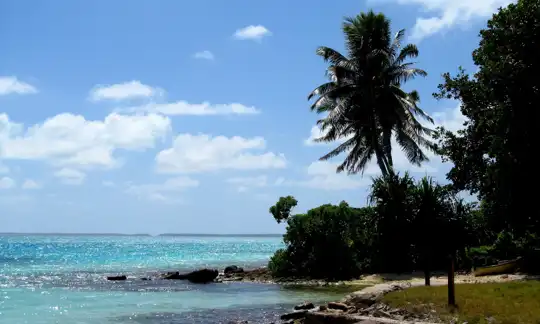
Abemama Atoll in Kiribati is a backpacker’s paradise for a reason. First off, the variety of landscapes is mind-blowing. You’ve got pristine beaches, lush lagoons, and even historical sites that tell the story of the islands. It’s like a mini-world in one spot, so you can soak it all in without the hassle of constant relocation.

Transport here is surprisingly flexible. You can hop on a local boat or bike around, making it easy to explore at your own pace. This means you can dive into the local culture—visit villages, chat with the friendly locals, and maybe even join a traditional feast.

The beauty of slow travel here is that you can truly mix nature and culture. Spend a morning snorkeling in crystal-clear waters, then wander through a village in the afternoon. Each day feels rich and layered, … read more 👉
Abemama Atoll in Kiribati is a backpacker’s paradise for a reason. First off, the variety of landscapes is mind-blowing. You’ve got pristine beaches, lush lagoons, and even historical sites that tell the story of the islands. It’s like a mini-world in one spot, so you can soak it all in without the hassle of constant relocation.

Transport here is surprisingly flexible. You can hop on a local boat or bike around, making it easy to explore at your own pace. This means you can dive into the local culture—visit villages, chat with the friendly locals, and maybe even join a traditional feast.

The beauty of slow travel here is that you can truly mix nature and culture. Spend a morning snorkeling in crystal-clear waters, then wander through a village in the afternoon. Each day feels rich and layered, giving you the chance to connect deeply with the place. It’s all about savoring the experience, not just ticking boxes.
Want to include Abemama Atoll in your Kiribati route?
Create a personalized Kiribati itinerary that includes Abemama Atoll and the places that fit your trip — based on your travel style, budget, and available time. Get your route in seconds.

Generate my trip

💡 HighlightsEssential experiences to have while visiting Abemama Atoll

  • Abemama lagoon and fringing reef — The shallow, clear lagoon is the heartbeat of the atoll: excellent snorkeling over coral bommies, calm paddling, and easy sighting of reef fish and turtles close to shore. Its scale and low profile make swimming and exploring feel intimate in a way big ocean islands don’t.
  • Main village maneaba (traditional meeting house) — Drop into a village maneaba to see community life up close: consensus meetings, song and oratory, and ceremonies. The architecture and social rules here are uniquely Kiribati and visiting one on Abemama gives a real sense of continuity you won’t get in touristy meeting-house shows.
  • Fringe-reef walks at low tide — Walk out across exposed reef flats toward small coral pinnacles and tide pools. You’ll find weird sea life, easy shore-caught
read more 👉
  • Abemama lagoon and fringing reef — The shallow, clear lagoon is the heartbeat of the atoll: excellent snorkeling over coral bommies, calm paddling, and easy sighting of reef fish and turtles close to shore. Its scale and low profile make swimming and exploring feel intimate in a way big ocean islands don’t.
  • Main village maneaba (traditional meeting house) — Drop into a village maneaba to see community life up close: consensus meetings, song and oratory, and ceremonies. The architecture and social rules here are uniquely Kiribati and visiting one on Abemama gives a real sense of continuity you won’t get in touristy meeting-house shows.
  • Fringe-reef walks at low tide — Walk out across exposed reef flats toward small coral pinnacles and tide pools. You’ll find weird sea life, easy shore-caught crustaceans, and excellent shell hunting; it’s a hands-on way to read the edge of the ocean that’s specific to coral atolls like Abemama.
  • Motu sandbanks and deserted islets — Small uninhabited motus rim the atoll; they’re perfect for day trips, picnics and overnight camps under coconut palms. The pure sand, scattered pandanus and total horizon make these spots feel remote even though the village is never far.
  • Traditional canoe (te aba) fishing with locals — Join local fishermen for an early-morning or nighttime trip. The techniques — paddle-launching through the pass, reef-slope fishing and handlining — are highly local and far more authentic (and productive) than a commercial charter.
  • Old mission church and cemetery — A compact, tangible mix of colonial and local history sits in the churchyard: timber-and-coral churchwork, wooden grave markers and family plots. It’s quiet, photogenic and full of local stories if you ask respectfully.
  • Pandanus and coconut-weaving circles (hidden gem) — Women’s weaving sessions are where traditional craft lives on: mats, hats, and ropes dyed and plaited by hand. Visitors are often welcome to sit in, learn a few knots and take a real handmade keepsake — an intimate cultural exchange most travelers miss.
  • Mangrove channels and inner-lagoon creeks (hidden gem) — Small, shaded creeks where mangroves meet the lagoon are great for quiet birdwatching, mud-flat foraging and paddling. They’re easy to miss but showcase atoll ecology and local fishing traps in miniature.
  • Scattered wartime traces and family memorial sites — Abemama has small, physically visitable remnants — wreck timbers, concrete footings or memorial graves — that locals maintain and tell stories about. Nothing on the scale of Tarawa’s battlefields, but these spots offer personal wartime histories you’ll only hear properly from residents.
  • Evening village music, dance and storytelling (hidden gem) — If you time it right, you can sit in on spontaneous song and dance nights at a maneaba: rhythmic songlines, call-and-response singing, and local humor. It’s low-key, immersive and impossible to replicate outside a small atoll community.
Spotted a mistake or missing something? Contact us.

⌛️ 5 daysSeeing the highlights in 5 days

Day 1: Tarawa
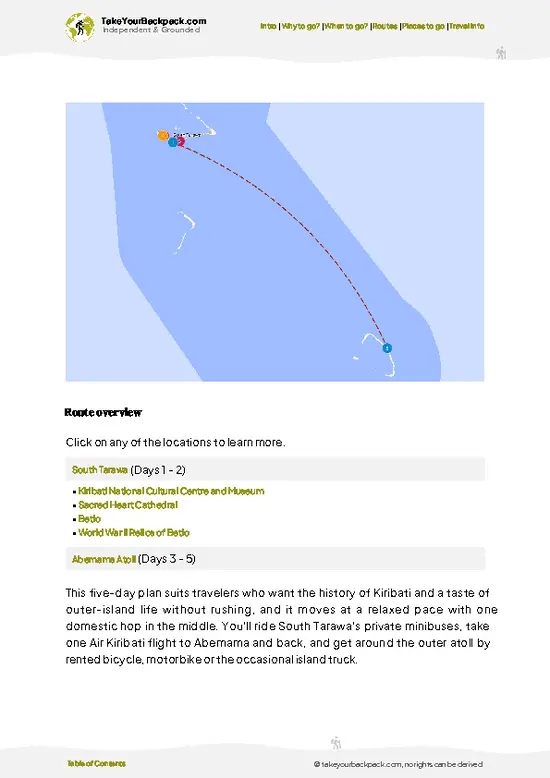
You’ll kick off your adventure in Tarawa, the capital. This is your gateway to Abemama Atoll, so soak in the local vibe. Spend the day exploring the markets and chatting with locals. The transport system here is limited, so you’ll want to catch a flight to Abemama early tomorrow. Use this time to gather intel on the best spots to visit. The slower pace here allows you to acclimate and prepare for the more remote islands.

Day 2: Abemama
Arrive in Abemama and get ready for a different world. The island is small, and the transport options are even smaller—think bicycles and walking. This is where you’ll truly feel the rhythm of island life. Spend your day visiting the historic sites, like the ruins of the old church. The lack of modern distractions means you can really connect … read more 👉
Day 1: Tarawa
You’ll kick off your adventure in Tarawa, the capital. This is your gateway to Abemama Atoll, so soak in the local vibe. Spend the day exploring the markets and chatting with locals. The transport system here is limited, so you’ll want to catch a flight to Abemama early tomorrow. Use this time to gather intel on the best spots to visit. The slower pace here allows you to acclimate and prepare for the more remote islands.

Day 2: Abemama
Arrive in Abemama and get ready for a different world. The island is small, and the transport options are even smaller—think bicycles and walking. This is where you’ll truly feel the rhythm of island life. Spend your day visiting the historic sites, like the ruins of the old church. The lack of modern distractions means you can really connect with the culture.

Day 3: Off-Path Reward: Koinawa
Take a detour to Koinawa, a nearby islet. It’s a short boat ride, but the pristine beaches and untouched nature are worth it. Here, you can snorkel in crystal-clear waters and enjoy a picnic. This is a chance to escape the crowds and experience the tranquility of the Pacific.

Day 4: Return to Abemama
Head back to Abemama for a day of relaxation. This is your chance to recharge. Rent a bike and explore the coastline. The slower pace allows you to appreciate the stunning sunsets and local cuisine.

Day 5: Tarawa
Return to Tarawa for your final day. Use this time to reflect on your journey and pick up any last-minute souvenirs. The flight back home will feel like a bittersweet farewell, but you’ll leave with stories that will last a lifetime.

The must-do day? Day 2 in Abemama. It’s where you’ll truly immerse yourself in the local culture and experience the heart of Kiribati.
Turn your Abemama Atoll visit into an Kiribati adventure
Build a complete Kiribati route with Abemama Atoll, hidden gems, must-see destinations, and realistic travel times included.

Generate my trip

🌤️ When to go?Choosing the right time of year


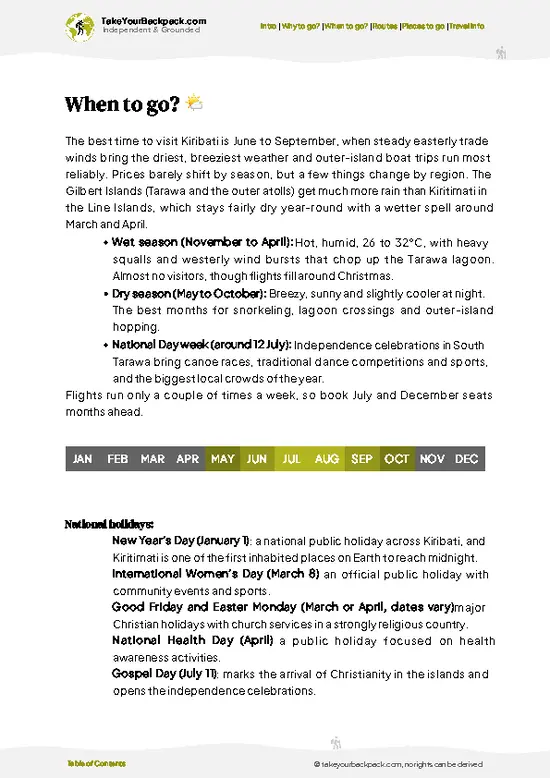
  • Topic: Weather – The sweet spot is May to October, the dry season. Expect less humidity and fewer downpours, making your gear lighter and your mood brighter. Avoid November to April; that’s the wet season, with heavy rains and a higher chance of cyclones.

  • Topic: Temperature – Temperatures hover between 26°C and 31°C (79°F to 88°F) year-round. The dry season feels more comfortable, while the wet season’s heat can feel sticky and relentless.

  • Topic: Daylight Hours – Daylight is pretty consistent, around 12 hours daily. Sunrise near 6 a.m., sunset around 6 p.m., so plan your hikes and beach time accordingly—no need for headlamps unless you’re chasing stars.

  • Topic: Crowds – Kiribati is off the beaten path, so crowds are minimal anytime. But the dry season sees a slight uptick in visitors,
read more 👉

  • Topic: Weather – The sweet spot is May to October, the dry season. Expect less humidity and fewer downpours, making your gear lighter and your mood brighter. Avoid November to April; that’s the wet season, with heavy rains and a higher chance of cyclones.

  • Topic: Temperature – Temperatures hover between 26°C and 31°C (79°F to 88°F) year-round. The dry season feels more comfortable, while the wet season’s heat can feel sticky and relentless.

  • Topic: Daylight Hours – Daylight is pretty consistent, around 12 hours daily. Sunrise near 6 a.m., sunset around 6 p.m., so plan your hikes and beach time accordingly—no need for headlamps unless you’re chasing stars.

  • Topic: Crowds – Kiribati is off the beaten path, so crowds are minimal anytime. But the dry season sees a slight uptick in visitors, mostly locals and a handful of savvy travelers like you.

  • Topic: Seasonal Activities – Dry season is prime for fishing, snorkeling, and cultural festivals. Wet season limits outdoor plans but can offer lush landscapes if you don’t mind the rain.

  • Topic: Price Fluctuations – Expect higher prices during the dry season when demand peaks. Booking early can snag better deals, especially on local transport and accommodation.


Pro-tip: Arrive just as the dry season kicks in—May is your golden ticket. You’ll dodge the crowds, enjoy stable weather, and catch local life waking up after the rains.


source: climatestotravel.comJANJanuary: below average for travelingFEBFebruary: below average for travelingMARMarch: below average for travelingAPRApril: fair for travelingMAYMay: excellent for travelingJUNJune: excellent for travelingJULJuly: excellent for travelingAUGAugust: excellent for travelingSEPSeptember: excellent for travelingOCTOctober: excellent for travelingNOVNovember: fair for travelingDECDecember: fair for traveling
when-to-go

✈️ The backpacker research shortcutKiribati Travel Guide

An offline-friendly backpacking guide with optimized travel routes, ranked highlights, transport advice, and the best areas to stay.
example page 0 from our offline Travel Guide for Kiribati
example page 1 from our offline Travel Guide for Kiribati
example page 2 from our offline Travel Guide for Kiribati
example page 3 from our offline Travel Guide for Kiribati
example page 4 from our offline Travel Guide for Kiribati
example page 5 from our offline Travel Guide for Kiribati
example page 6 from our offline Travel Guide for Kiribati
example page 7 from our offline Travel Guide for Kiribati
The digital guide (143 pages) contains:
30 highlights, ranked by travel appeal
Optimized 2, 3 & 5-day travel routes
Cities, national parks, landmarks, beaches
How to get around
Offline-friendly for travel without Wi-Fi
👉 Click to see all 30+ guide features

📅 Plan smarter in minutes, not weeks
Month by month travel advice
Festivals & national holidays
Budget expectations

🗺️ Go to the right places, skip the overrated ones
Honest pros & cons of destinations
Top hikes, parks & viewpoints
Lesser-known places most travelers miss
Clear “worth it vs skip it” guidance

🛏️ Travel smoothly without rookie mistakes
Best areas to stay
Transport systems explained simply
Common scams & safety advice
SIM cards, money & practical tips

🌍 Understand the country, not just visit it
Culture & traditions
52 Essential phrases & customs
Festivals worth planning around
Traveler-friendly historical context
Insights that make places more meaningful

📱 Built for real travel conditions
Fully downloadable PDF
Works completely offline
Optimized for phone use
Useful in remote areas & buses
Everything in one place
Save weeks of stressful planning
Get instant access to your full guide. 30‑day money-back guarantee.


By proceeding you agree to our terms.
Sent to your inbox immediately after payment • 100% Secure Checkout
Best Backpacking Travel Advisor 2025 tourism awardBest Backpacking
Travel Advisor
2025
What others say about Take Your Backpack Guides:
⭐⭐⭐⭐⭐
Fantastic, amazing amount of information!
⭐⭐⭐⭐⭐
My goodness this is amazing, it's what I've been looking for hats off too you!
⭐⭐⭐⭐⭐
I think this is absolutely BRILLIANT
⭐⭐⭐⭐
Very complete and informative. It's still missing places, but I gotta to commend you
⭐⭐⭐⭐⭐
This is truly amazing, thank you, can't wait to explore it with my kids!
⭐⭐⭐⭐⭐
Awesome resource, thank you!
⭐⭐⭐⭐⭐
This is amazing! Can't wait to explore the ones I haven't seen
⭐⭐⭐⭐
I love this! Well done, great idea.
⭐⭐⭐⭐⭐
Thanks for taking the time to make this gem!
⭐⭐⭐⭐⭐
This might be the best website I've ever seen.
⭐⭐⭐⭐⭐
Congratulations, and thank you so much for your work; it's incredibly valuable.
⭐⭐⭐⭐
In all seriousness I think you did a great job pointing out the important spots
⭐⭐⭐⭐⭐
10/10 very good
⭐⭐⭐⭐⭐
As someone who's only just starting to visit regularly this is awesome, thank you.
⭐⭐⭐⭐
Thank you very much! I'm going to visit my dad, it's going to be very useful!
⭐⭐⭐⭐⭐
This is really cool! We'll be travelling for the first time and this definitely come in handy.
⭐⭐⭐⭐⭐
You are now our minister of culture, congratulations 👨‍💼
⭐⭐⭐⭐⭐
Just wanted to tell you that this is a pearl! Going to follow your recommendations.
⭐⭐⭐⭐⭐
This is so cool. I'll definitely be using the resource for my travels soon.
⭐⭐⭐⭐⭐
This is very impressive! Good work.
⭐⭐⭐⭐⭐
This is an amazing and informative site. Very well done!

🛏️ Where to stay?Choosing the right base

Abemama Atoll is a slice of paradise that’s often overlooked, but it’s a treasure for backpackers. The main village, Tarawa, is where the action is. You’ll find a mix of locals and travelers, making it easy to strike up conversations. The vibe is relaxed, and you can soak in the local culture without feeling overwhelmed.

Head to the southern part of the atoll for a quieter experience. The village of Abemama is perfect for those who want to escape the hustle. Here, you can enjoy pristine beaches and connect with locals who are eager to share their stories. It’s safe, and the community is welcoming, … read more 👉
Abemama Atoll is a slice of paradise that’s often overlooked, but it’s a treasure for backpackers. The main village, Tarawa, is where the action is. You’ll find a mix of locals and travelers, making it easy to strike up conversations. The vibe is relaxed, and you can soak in the local culture without feeling overwhelmed.

Head to the southern part of the atoll for a quieter experience. The village of Abemama is perfect for those who want to escape the hustle. Here, you can enjoy pristine beaches and connect with locals who are eager to share their stories. It’s safe, and the community is welcoming, making it ideal for solo travelers.

Don’t miss the chance to explore the northern villages. They’re less frequented, offering a more authentic experience. You’ll find stunning landscapes and a slower pace of life.

Timing is key. Visit during the dry season for the best weather and social scene. Embrace the simplicity, and you’ll leave with memories that outshine any luxury resort.

🚌 Getting aroundTransportation options and practical tips

Abemama Atoll is a dance of spontaneity and laid-back charm, where time feels more like a suggestion than a rule. You won’t find rigid schedules here; instead, it’s all about riding the waves of local intuition. Boats come and go, often dictated by the tides and the whims of the weather. The vibe is relaxed, and you’ll quickly learn that patience is as essential as sunscreen. Embrace the flow, and you’ll discover the true rhythm of island life.


  • Local Boats: These are your lifeline. Departures are typically early morning, around 7 AM, and the last boat might leave by 4 PM, depending on the day. Expect to pay around $10-15 AUD. They’re not the fastest option, but the experience is worth it—breeze in your hair, salt on your skin, and the chance to chat with locals.


  • Chartered Boats: If you’re
read more 👉
Abemama Atoll is a dance of spontaneity and laid-back charm, where time feels more like a suggestion than a rule. You won’t find rigid schedules here; instead, it’s all about riding the waves of local intuition. Boats come and go, often dictated by the tides and the whims of the weather. The vibe is relaxed, and you’ll quickly learn that patience is as essential as sunscreen. Embrace the flow, and you’ll discover the true rhythm of island life.


  • Local Boats: These are your lifeline. Departures are typically early morning, around 7 AM, and the last boat might leave by 4 PM, depending on the day. Expect to pay around $10-15 AUD. They’re not the fastest option, but the experience is worth it—breeze in your hair, salt on your skin, and the chance to chat with locals.


  • Chartered Boats: If you’re in a hurry or traveling with a group, chartering a boat can be a game-changer. Prices vary widely, starting at about $100 AUD for a private trip. You can set your own schedule, but be prepared for a bit of negotiation. Comfort levels are decent, and you’ll have the freedom to explore at your own pace.


  • Bicycles: Renting a bike is a fantastic way to soak in the scenery. Rentals are around $5 AUD per day. You can pedal around the atoll at your leisure, stopping wherever catches your eye. Just be mindful of the heat; early mornings or late afternoons are best for a ride.


  • Walking: This is the ultimate way to connect with the island. It’s free, and you can take your time. The paths are well-trodden, and you’ll discover hidden spots that boats can’t reach. Just remember to bring plenty of water and wear good shoes.


For a tactical tip: coordinate your boat trips with local fishermen or farmers. They often have the best insights on timing and can help you hitch a ride. This not only saves you time but also immerses you in the local culture. Embrace the unpredictability, and you’ll navigate Abemama like a local.

🍲 FoodWhat to Eat & Drink

In Abemama Atoll, food is a celebration of the ocean and the land. Dive into fresh fish like tuna and marlin, often grilled over open flames. The locals love their palusami, a creamy dish made from taro leaves and coconut milk, wrapped and baked to perfection. Don’t miss out on breadfruit—it’s a staple here, often roasted or mashed, with a texture that’s both hearty and comforting.

For a true taste of local life, head to the markets. Vendors sell everything from coconuts to tropical fruits. The air is thick with the scent of grilled fish and sweet pastries. Street food is where the magic happens; grab a fish taco or a handful of pork skewers from a roadside stall.

Dining is casual and communal. Expect to share meals, and don’t hesitate to join in the laughter and stories. A simple nod of … read more 👉
In Abemama Atoll, food is a celebration of the ocean and the land. Dive into fresh fish like tuna and marlin, often grilled over open flames. The locals love their palusami, a creamy dish made from taro leaves and coconut milk, wrapped and baked to perfection. Don’t miss out on breadfruit—it’s a staple here, often roasted or mashed, with a texture that’s both hearty and comforting.

For a true taste of local life, head to the markets. Vendors sell everything from coconuts to tropical fruits. The air is thick with the scent of grilled fish and sweet pastries. Street food is where the magic happens; grab a fish taco or a handful of pork skewers from a roadside stall.

Dining is casual and communal. Expect to share meals, and don’t hesitate to join in the laughter and stories. A simple nod of thanks is appreciated, but locals love it when you try a few words in Gilbertese. It’s all about connection here, so embrace the flavors and the warmth of the people.

Other I-Kiribati regions near Abemama Atoll

Explore more nearby:

  • North Tarawa—interconnected islets, footbridges, tidal causeways, rural homesteads| 156 km away
  • Beru Atoll—saltwater ponds, raised coral, fishing settlements, tidal flats| 254 km away
  • Marakei—circular lagoon, traditional villages, sacred shrines, coconut groves| 289 km away

💡 Not sure where to go next?
Create a personalized itinerary for Kiribati including Abemama Atoll and the places that fit your trip.

Generate my itinerary

👉 Discover all regions

Or checkout all Kiribati has to offer (think cities, towns, villages, national parks, hikes, beaches, festivals)
Country photo of Kiribati

We 💚 feedbackIs it worth it?

Abemama Atoll is like stepping into a postcard, but don’t expect luxury. The vibe is laid-back, with locals who genuinely want to share their world. The best surprise? The night sky—it’s a stargazer’s paradise, with constellations you won’t see elsewhere. Just a heads-up: the infrastructure is basic, so pack snacks and be ready for a slower pace. Embrace it. That’s where the magic lies. You’ll leave with stories, not just photos.

✍️ Help improve this page!
The information on this page is based on in-depth research, insights shared by experienced travelers, and feedback from the local travel community in Kiribati. While every effort is made to keep the information accurate and current, conditions can change — so if you spot anything incorrect or outdated, please get in touch.


🙋‍♂️ Give feedback

👋 Meet the founderWho’s Behind Take Your Backpack?

Johan, backpacker and founder of TakeYourBackpackHi, I’m Johan (Netherlands 🇳🇱), the creator of TakeYourBackpack. Over the past decade, I’ve backpacked through 80+ countries across six continents, gaining extensive experience with independent travel, long-term trips, and overland routes.

This site is built on a combination of firsthand travel experience and carefully curated insights from other backpackers. Many guides are based on places I’ve personally visited, while others bring together tips, observations, and practical advice shared by trusted travelers I’ve met along the way.

The goal is to provide realistic, experience-driven guidance — not generic itineraries — so you can explore destinations with better context, clearer expectations, and more confidence.

Get full Kiribati guide •
Instant download • 30 highlights • Full Offline guide