
×

Kiribati🇰🇮 | regionsTabiteuea SouthLong southern atoll, single sandy road, clan-split villages, pandanus weaving | things to do and best time to go

Explore OnotoaExplore Tamana Island

Backpacking in Tabiteuea South
👌 Worth visitingregion ranked #4
By Johan Kruseman 🇳🇱 | Updated October 15, 2026

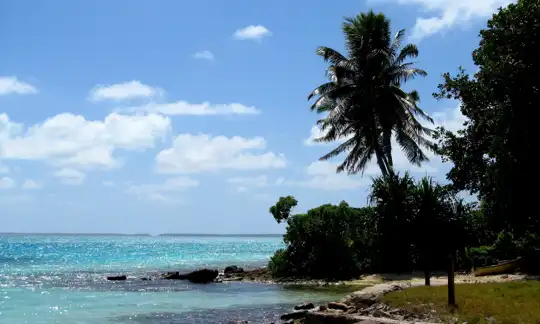
Tabiteuea South shares an island with its northern twin, and the two halves have long kept their own councils, with a history of conflict between them. It sits in the southern Gilbert Islands of Kiribati, a thin ribbon of coral just south of the equator on Tabiteuea atoll. On the ground it is a single sandy road under coconut palms, the lagoon flat and milky on one side, the surf thudding on the other. Pandanus-thatch maneaba meeting houses shade the afternoons, and breadfruit and grilled fish smell of woodsmoke by dusk. There are no hostels, no cafés, no nightlife, and few other travelers, so evenings mean sitting with a host family and stars thick overhead. Reaching it takes a domestic flight or a slow boat, and both run irregularly. Arrange a homestay through a local contact before you go, because nothing can be booked on arrival.

Discover everything you want to know in the 📖 Kiribati Travel Guide.


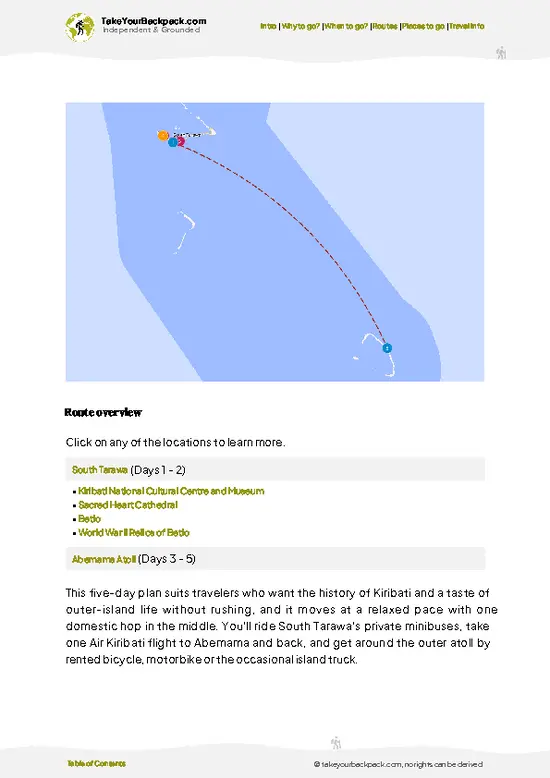
example page 0 from our offline Travel Guide for Kiribati
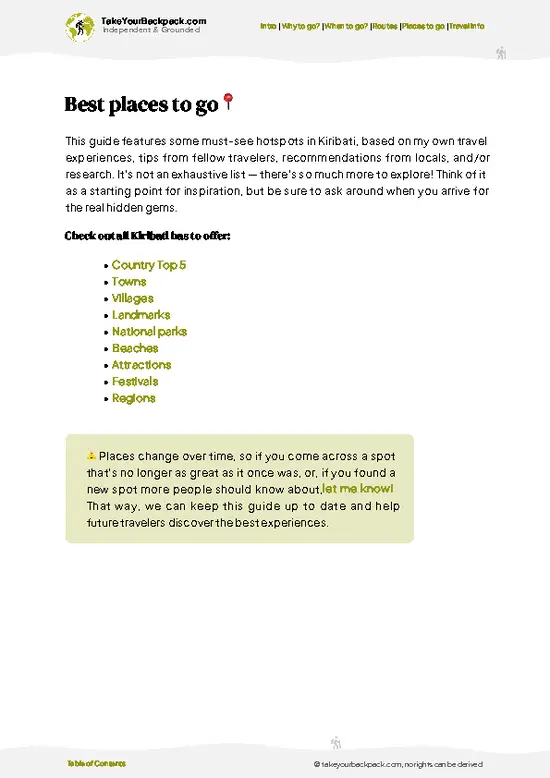
example page 1 from our offline Travel Guide for Kiribati
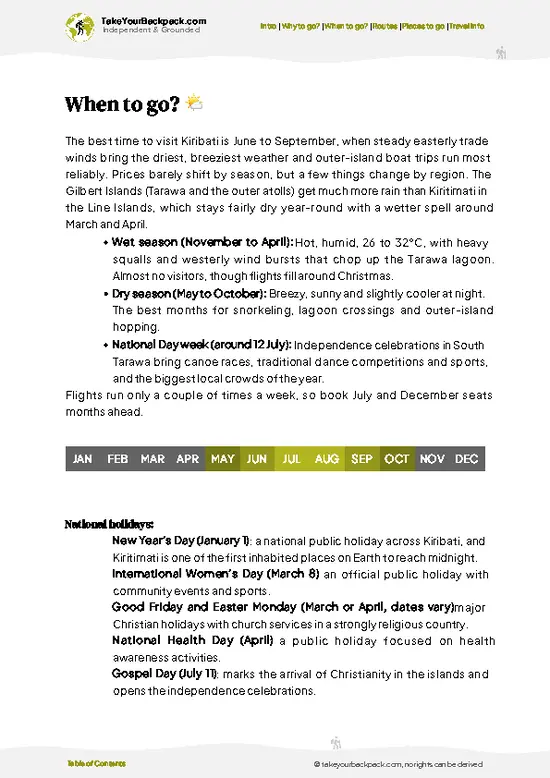
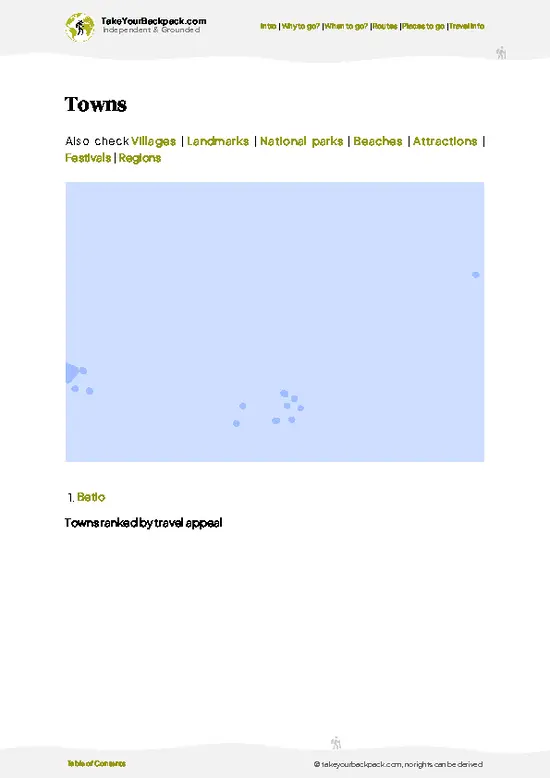
example page 2 from our offline Travel Guide for Kiribati
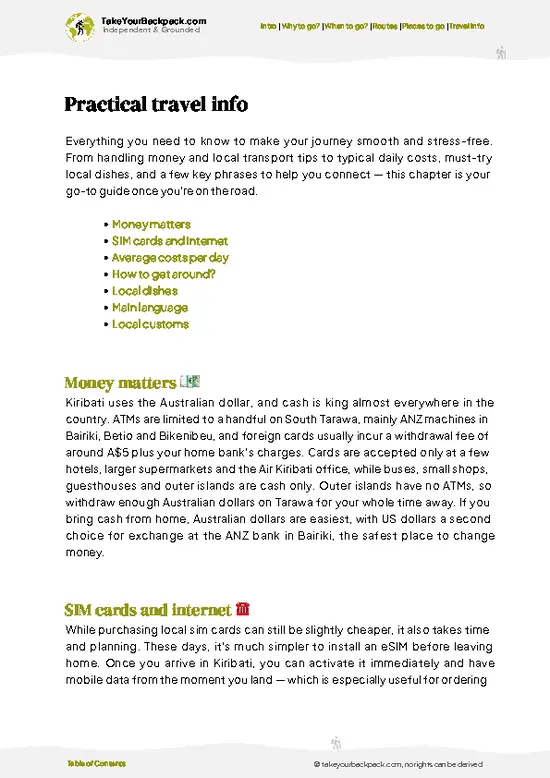
example page 3 from our offline Travel Guide for Kiribati
example page 4 from our offline Travel Guide for Kiribati
example page 5 from our offline Travel Guide for Kiribati
example page 6 from our offline Travel Guide for Kiribati
example page 7 from our offline Travel Guide for Kiribati
Loading the map 🌍
CLICK TO FILTER
towns
villages
landmarks
national parks
beaches
attractions
festivals
regions
SHOW COUNTRY’S BESTSHOW ALL

✨ Why go?
Ranked #4 region in Kiribati
Why Tabiteuea South should be on your travel list

Tabiteuea South suits the slow traveler who wants a village homestay rather than a checklist. You come for the daily rhythm: toddy cutters climbing palms at dawn, women weaving pandanus mats under the shade, children racing along the coral causeway road on bicycles. The island is long and narrow, so walking or hitching on a pickup truck gets you between settlements, and every maneaba visit usually ends in an invitation to eat. Swimming and snorkeling in the lagoon are easy, and fishing with locals is possible if you ask politely. This is not a place for a quick stop. Give it several days to settle into the pace, because the first day will mostly be spent being introduced to everyone. Solo travelers, cultural-minded slow travelers, and anyone comfortable with no menus, no ATMs, and patchy electricity … read more 👉
Tabiteuea South suits the slow traveler who wants a village homestay rather than a checklist. You come for the daily rhythm: toddy cutters climbing palms at dawn, women weaving pandanus mats under the shade, children racing along the coral causeway road on bicycles. The island is long and narrow, so walking or hitching on a pickup truck gets you between settlements, and every maneaba visit usually ends in an invitation to eat. Swimming and snorkeling in the lagoon are easy, and fishing with locals is possible if you ask politely. This is not a place for a quick stop. Give it several days to settle into the pace, because the first day will mostly be spent being introduced to everyone. Solo travelers, cultural-minded slow travelers, and anyone comfortable with no menus, no ATMs, and patchy electricity will do well. If you need Wi-Fi, nightlife or a fixed itinerary, skip it. The real draw is the unhurried hospitality of one of the least visited corners of the Pacific.

💡 HighlightsEssential experiences to have while visiting Tabiteuea South

  1. Village maneaba: The traditional open-sided meeting house is the heart of every settlement, with a steep thatched roof and carved coconut-wood beams. Ask permission before entering, sit cross-legged, and expect conversation. Late afternoon is best when villagers gather. Free, though a small gift of tobacco or store goods is appreciated. Allow 1 to 2 hours.
  2. Lagoon snorkeling: The sheltered lagoon side has calm, clear water over coral patches and small reef fish. Go at high tide in the morning for the best visibility and depth. Free if you bring your own mask, and 1 to 2 hours is plenty.
  3. Toddy cutting at dawn: Villagers climb coconut palms before sunrise to collect sweet sap, the staple drink of the islands. Join a host family early, around 5:30 to 6:30 AM, and watch the practiced climb. Usually
… read more 👉
  1. Village maneaba: The traditional open-sided meeting house is the heart of every settlement, with a steep thatched roof and carved coconut-wood beams. Ask permission before entering, sit cross-legged, and expect conversation. Late afternoon is best when villagers gather. Free, though a small gift of tobacco or store goods is appreciated. Allow 1 to 2 hours.
  2. Lagoon snorkeling: The sheltered lagoon side has calm, clear water over coral patches and small reef fish. Go at high tide in the morning for the best visibility and depth. Free if you bring your own mask, and 1 to 2 hours is plenty.
  3. Toddy cutting at dawn: Villagers climb coconut palms before sunrise to collect sweet sap, the staple drink of the islands. Join a host family early, around 5:30 to 6:30 AM, and watch the practiced climb. Usually free with a homestay. About an hour.
  4. Ocean-side reef walk: At low tide the outer reef flat exposes tide pools, shells and crabs while surf breaks on the edge. Go with a local who knows the channels, since the coral is sharp. Free, 1 to 2 hours, best at low tide in the morning.
  5. Mat and handicraft weaving: Women weave pandanus mats, fans and baskets, and visitors can watch or try. Ask your host to introduce you to a weaver. Small pieces cost roughly A$5 to 20, and a session takes 1 to 2 hours.
The village maneaba is the best first stop, because the welcome there opens every other door on the island. Beyond this island, other atolls in the southern Gilberts such as Nonouti and Beru can be reached by occasional inter-island boats or flights as longer side trips.
Spotted a mistake or missing something? Contact us.

🏘️ NeighborhoodsUnderstanding the local layout

Tabiteuea South is a string of villages along a long, narrow atoll, so you explore by following one road and one lagoon edge rather than by hopping between districts.
  • Buariki and the main settlement area: The administrative heart, with the council offices, a few small stores selling rice, tinned fish and flour, and the airstrip nearby. Roosters, motorbike engines and church singing fill the mornings. It is flat and easy on foot, and you leave with a sense of how the island runs.
  • Village stretches along the lagoon road: Thatched-roof maneaba meeting houses sit beside pandanus and coconut groves, and the smell of wood smoke and fish drying on racks drifts across the sand. Walking takes time in the heat, so go early. Say hello to everyone, and you will often be handed a coconut to drink.
  • Lagoon
… read more 👉
Tabiteuea South is a string of villages along a long, narrow atoll, so you explore by following one road and one lagoon edge rather than by hopping between districts.
  • Buariki and the main settlement area: The administrative heart, with the council offices, a few small stores selling rice, tinned fish and flour, and the airstrip nearby. Roosters, motorbike engines and church singing fill the mornings. It is flat and easy on foot, and you leave with a sense of how the island runs.
  • Village stretches along the lagoon road: Thatched-roof maneaba meeting houses sit beside pandanus and coconut groves, and the smell of wood smoke and fish drying on racks drifts across the sand. Walking takes time in the heat, so go early. Say hello to everyone, and you will often be handed a coconut to drink.
  • Lagoon shore: Shallow, warm water the color of weak tea near the shore and clear turquoise farther out. Fishermen wade at low tide with nets. Nightlife is absent, but the sunsets over flat water are free.
  • Ocean side: Rougher, with surf pounding the reef edge and coral rubble underfoot. Wear sturdy sandals. You come away with big horizons and almost nobody else in sight.

⌛️ 5 daysA smart one-week plan

A slow village day, built around sunrise and the tides, and it starts early.
5:30 AM: Toddy cutting Walk with your host to the palms and watch the cutter collect sap in the first gray light. Taste the fresh, mildly sweet drink, then walk back for breakfast of fish and breadfruit.
8:30 AM: Village maneaba Stroll the sandy road to the main meeting house. Sit, introduce yourself, and listen. The conversation is the point, and you will leave knowing who is related to whom.
11:00 AM: Lagoon snorkeling Walk to the lagoon shore at higher tide and swim over the coral patches. Rest under the palms afterwards, since midday heat is hard.
1:00 PM: Lunch with a host family Share a meal of grilled fish, rice and coconut. Ask about weaving, and join a session if offered.
3:30 PM: Weaving session Learn the basics … read more 👉
A slow village day, built around sunrise and the tides, and it starts early.
5:30 AM: Toddy cutting Walk with your host to the palms and watch the cutter collect sap in the first gray light. Taste the fresh, mildly sweet drink, then walk back for breakfast of fish and breadfruit.
8:30 AM: Village maneaba Stroll the sandy road to the main meeting house. Sit, introduce yourself, and listen. The conversation is the point, and you will leave knowing who is related to whom.
11:00 AM: Lagoon snorkeling Walk to the lagoon shore at higher tide and swim over the coral patches. Rest under the palms afterwards, since midday heat is hard.
1:00 PM: Lunch with a host family Share a meal of grilled fish, rice and coconut. Ask about weaving, and join a session if offered.
3:30 PM: Weaving session Learn the basics of pandanus mats from a local weaver. It is slow, and your first attempt will be crooked, which everyone enjoys.
5:00 PM: Ocean-side reef flat Away from the standard visits, walk the outer reef with a guide at low tide to see tide pools and breaking surf. Stay on marked paths because the coral is sharp.
7:00 PM: Evening at the homestay Eat by lamplight, then lie back under a very dark sky and listen to the surf.

🌤️ When to go?Weather, crowds, and seasonal trade-offs

  • Drier months (roughly May to October): Sea breezes keep highs around 29 to 31°C (84 to 88°F) and nights near 26°C (79°F). Fewer squalls make boat trips and walking easier. Flights are scarce all year, so book early.
  • Wetter months (roughly November to April): Heavier showers roll in, humidity sticks to your skin, and occasional storms can cancel flights and boats. Temperatures hold in the same range, with the sun feeling harsher between showers.
  • Daylight: Sunrise and sunset shift by only a few minutes through the year, with about 12 hours of light and darkness falling by 6:30 pm.
  • Crowds and prices: There is no tourist season here. Costs follow ship and flight schedules, and goods can run short when supply boats are late.
  • Events: Village celebrations and church feasts are most common around Christmas
… read more 👉
  • Drier months (roughly May to October): Sea breezes keep highs around 29 to 31°C (84 to 88°F) and nights near 26°C (79°F). Fewer squalls make boat trips and walking easier. Flights are scarce all year, so book early.
  • Wetter months (roughly November to April): Heavier showers roll in, humidity sticks to your skin, and occasional storms can cancel flights and boats. Temperatures hold in the same range, with the sun feeling harsher between showers.
  • Daylight: Sunrise and sunset shift by only a few minutes through the year, with about 12 hours of light and darkness falling by 6:30 pm.
  • Crowds and prices: There is no tourist season here. Costs follow ship and flight schedules, and goods can run short when supply boats are late.
  • Events: Village celebrations and church feasts are most common around Christmas and New Year, when families gather and visitors are often welcomed.
Choose your dates around the flight schedule first, and leave a spare day or two at the end.


source: climatestotravel.comJANJanuary: fair for travelingFEBFebruary: fair for travelingMARMarch: fair for travelingAPRApril: fair for travelingMAYMay: highly recommended for travelingJUNJune: excellent for travelingJULJuly: highly recommended for travelingAUGAugust: highly recommended for travelingSEPSeptember: highly recommended for travelingOCTOctober: highly recommended for travelingNOVNovember: fair for travelingDECDecember: fair for traveling
when-to-go

✈️ The backpacker research shortcutKiribati Travel Guide

An offline-friendly backpacking guide with optimized travel routes, ranked highlights, transport advice, and the best areas to stay.
example page 0 from our offline Travel Guide for Kiribati
example page 1 from our offline Travel Guide for Kiribati
example page 2 from our offline Travel Guide for Kiribati
example page 3 from our offline Travel Guide for Kiribati
example page 4 from our offline Travel Guide for Kiribati
example page 5 from our offline Travel Guide for Kiribati
example page 6 from our offline Travel Guide for Kiribati
example page 7 from our offline Travel Guide for Kiribati
The digital guide (120 pages) contains:
✅ 25 highlights, ranked by travel appeal
✅ Optimized 2, 3 & 5-day travel routes
✅ Cities, national parks, landmarks, beaches
✅ How to get around
✅ Offline-friendly for travel without Wi-Fi
👉 Click to see all 30+ guide features

📅 Plan smarter in minutes, not weeks
✅ Month by month travel advice
✅ Festivals & national holidays
✅ Budget expectations

🗺️ Go to the right places, skip the overrated ones
✅ Honest pros & cons of destinations
✅ Top hikes, parks & viewpoints
✅ Lesser-known places most travelers miss
✅ Clear “worth it vs skip it” guidance

🛏️ Travel smoothly without rookie mistakes
✅ Best areas to stay
✅ Transport systems explained simply
✅ Common scams & safety advice
✅ SIM cards, money & practical tips

🌍 Understand the country, not just visit it
✅ Culture & traditions
✅ 52 Essential phrases & customs
✅ Festivals worth planning around
✅ Traveler-friendly historical context
✅ Insights that make places more meaningful

📱 Built for real travel conditions
✅ Fully downloadable PDF
✅ Works completely offline
✅ Optimized for phone use
✅ Useful in remote areas & buses
✅ Everything in one place
Stop searching, start planning
Get instant access to your full guide. 30‑day money-back guarantee.
+ Add another guide for just

By proceeding you agree to our terms.
Sent to your inbox immediately after payment • 100% Secure Checkout
Best Backpacking Travel Advisor 2025 tourism awardBest Backpacking
Travel Advisor
2025
What others say about Take Your Backpack Guides:
⭐⭐⭐⭐⭐
Fantastic, amazing amount of information!
⭐⭐⭐⭐⭐
My goodness this is amazing, it's what I've been looking for hats off too you!
⭐⭐⭐⭐⭐
I think this is absolutely BRILLIANT
⭐⭐⭐⭐
Very complete and informative. It's still missing places, but I gotta to commend you
⭐⭐⭐⭐⭐
This is truly amazing, thank you, can't wait to explore it with my kids!
⭐⭐⭐⭐⭐
Awesome resource, thank you!
⭐⭐⭐⭐⭐
This is amazing! Can't wait to explore the ones I haven't seen
⭐⭐⭐⭐
I love this! Well done, great idea.
⭐⭐⭐⭐⭐
Thanks for taking the time to make this gem!
⭐⭐⭐⭐⭐
This might be the best website I've ever seen.
⭐⭐⭐⭐⭐
Congratulations, and thank you so much for your work; it's incredibly valuable.
⭐⭐⭐⭐
In all seriousness I think you did a great job pointing out the important spots
⭐⭐⭐⭐⭐
10/10 very good
⭐⭐⭐⭐⭐
As someone who's only just starting to visit regularly this is awesome, thank you.
⭐⭐⭐⭐
Thank you very much! I'm going to visit my dad, it's going to be very useful!
⭐⭐⭐⭐⭐
This is really cool! We'll be travelling for the first time and this definitely come in handy.
⭐⭐⭐⭐⭐
You are now our minister of culture, congratulations 👨‍💼
⭐⭐⭐⭐⭐
Just wanted to tell you that this is a pearl! Going to follow your recommendations.
⭐⭐⭐⭐⭐
This is so cool. I'll definitely be using the resource for my travels soon.
⭐⭐⭐⭐⭐
This is very impressive! Good work.
⭐⭐⭐⭐⭐
This is an amazing and informative site. Very well done!

🛏️ Where to stay?Where staying makes the most sense

Stay in or near Buariki, the main settlement, because it holds the airstrip, the shops and the people who can arrange rides. There are no hostels on Tabiteuea South, so budget beds mean a basic guesthouse room or a homestay arranged through the council or a local contact, usually A$25 to 60 a night with meals often added. Book ahead by phone or through the island council, since rooms are few.
Night safety is a non-issue in terms of crime, and the noise is roosters, dogs and the occasional church service or village gathering. Bring earplugs, a mosquito net or repellent, and a flashlight, as power … read more 👉
Stay in or near Buariki, the main settlement, because it holds the airstrip, the shops and the people who can arrange rides. There are no hostels on Tabiteuea South, so budget beds mean a basic guesthouse room or a homestay arranged through the council or a local contact, usually A$25 to 60 a night with meals often added. Book ahead by phone or through the island council, since rooms are few.
Night safety is a non-issue in terms of crime, and the noise is roosters, dogs and the occasional church service or village gathering. Bring earplugs, a mosquito net or repellent, and a flashlight, as power can be patchy.
A second option is a family homestay in a village farther along the lagoon road. It gives you a quiet setting and home-cooked fish, rice and breadfruit, but you depend on your host for rides back to the airstrip, so allow extra time. Rooms are simple, mats and shared washing are common, and a gift of rice or sugar is appreciated.

🚌 Getting aroundGetting around like a local

Assuming you can just show up at the airstrip and get a seat out is the error that costs the most, because flights from Tarawa run only a few times a week, fill with locals and cargo, and get bumped or canceled without much notice. Book through Air Kiribati well ahead, confirm again on arrival, and pad your itinerary. Once here, the atoll is long and thin, with one main road, hot sun and almost no formal public transport. Expect a slow, quiet pace, with the rhythm of the tides and the day.
  • Walking: Free and the best way to see villages. Start before 8 am, carry at least 1.5 liters of water and wear a hat. The road is sand and crushed coral, and you get shade under breadfruit and coconut trees plus plenty of greetings.
  • Bicycle: Rare, but some families will lend one for a small gift or about A$5
… read more 👉
Assuming you can just show up at the airstrip and get a seat out is the error that costs the most, because flights from Tarawa run only a few times a week, fill with locals and cargo, and get bumped or canceled without much notice. Book through Air Kiribati well ahead, confirm again on arrival, and pad your itinerary. Once here, the atoll is long and thin, with one main road, hot sun and almost no formal public transport. Expect a slow, quiet pace, with the rhythm of the tides and the day.
  • Walking: Free and the best way to see villages. Start before 8 am, carry at least 1.5 liters of water and wear a hat. The road is sand and crushed coral, and you get shade under breadfruit and coconut trees plus plenty of greetings.
  • Bicycle: Rare, but some families will lend one for a small gift or about A$5 to 10 a day. The flat road is fun, with the lagoon flashing through the trees. Tires suffer on coral.
  • Pickup trucks and shared rides: Locals run informal rides along the main road, usually A$2 to 10 depending on distance. There is no timetable, so ask in the village the evening before. You ride in the open back with copra sacks, fish and neighbors.
  • Motorbike or private ride: Possible through your host or the council, typically A$10 to 30 for a half day including the driver. This is the quickest way to reach far villages, with warm wind in your face.
  • Boat across the lagoon: Small outboards run when the tide allows, about A$10 to 40 depending on distance and fuel. Agree the price before leaving and bring a dry bag. You get bright water and a different view of the shoreline.

👛 Costs (as of 15 October 2026)How expensive it really is

Plan on about US$55 a day in Tabiteuea South, and most of that goes on a bed and imported food, since there is no hostel scene and almost nothing is sold on a tourist basis.
CategoryBudget RangeLocal Reality
Dorm accommodationUS$25 to 40 (high season: US$35)No dorms exist. Expect a basic guesthouse room or a homestay with a family, usually with shared bathroom and bucket washing.
MealsUS$10 to 20 (US$12)Fish, rice, breadfruit, coconut and taro are staples. Many hosts include meals in the rate. Shop stores stock tinned fish, noodles and flour.
Local transportUS$2 to 8 (US$4)Shared pickup trucks and minibuses run the causeway and island road. Fares are low, but schedules depend on fuel and the day.
Basic activities/entry feesUS$0 to 10 (US$2)Lagoon swimming, reef walks, village strolls and the meeting
… read more 👉
Plan on about US$55 a day in Tabiteuea South, and most of that goes on a bed and imported food, since there is no hostel scene and almost nothing is sold on a tourist basis.
CategoryBudget RangeLocal Reality
Dorm accommodationUS$25 to 40 (high season: US$35)No dorms exist. Expect a basic guesthouse room or a homestay with a family, usually with shared bathroom and bucket washing.
MealsUS$10 to 20 (US$12)Fish, rice, breadfruit, coconut and taro are staples. Many hosts include meals in the rate. Shop stores stock tinned fish, noodles and flour.
Local transportUS$2 to 8 (US$4)Shared pickup trucks and minibuses run the causeway and island road. Fares are low, but schedules depend on fuel and the day.
Basic activities/entry feesUS$0 to 10 (US$2)Lagoon swimming, reef walks, village strolls and the meeting houses cost nothing. A guide or boat ride costs extra.
Miscellaneous expensesUS$2 to 6 (US$2)Phone credit, snacks, sunscreen and small gifts for your hosts. No ATMs are on the island, so you carry cash.
Total Daily BudgetUS$39 to 84About US$55 using the high season bed figure.
Bring all the cash you need from Tarawa, because banking on the island is limited. To save money, take a homestay with meals included and buy fish straight from fishermen on the shore rather than relying on store food, which is shipped in and pricey.
⚠️ Prices can change and everyone travels differently, so take this as a rough guide. Hope it helps you plan your adventure!

🚌 Day tripsExploring the surroundings

Tabiteuea South works as a base for walking and boat outings that start and end the same day, but there are no tour operators, so you arrange everything through your host.
Lagoon Fishing Outing:
Head out with local fishermen on a small boat for a few hours of line fishing or net work. It costs roughly A$15 to 40 for fuel and a thank-you, and you usually go at dawn when the water is calm. Arrange it the night before, as tides decide timing, and bring sun protection because there is no shade at sea.

Neighboring Villages Walk:
Walking the main road to villages down the atoll takes four to six hours round trip, or less with a lift on a truck. It is free, and you see meeting houses, taro pits and seaweed drying. Go in the cooler morning, and first-timers often underestimate the heat and carry too … read more 👉
Tabiteuea South works as a base for walking and boat outings that start and end the same day, but there are no tour operators, so you arrange everything through your host.
Lagoon Fishing Outing:
Head out with local fishermen on a small boat for a few hours of line fishing or net work. It costs roughly A$15 to 40 for fuel and a thank-you, and you usually go at dawn when the water is calm. Arrange it the night before, as tides decide timing, and bring sun protection because there is no shade at sea.

Neighboring Villages Walk:
Walking the main road to villages down the atoll takes four to six hours round trip, or less with a lift on a truck. It is free, and you see meeting houses, taro pits and seaweed drying. Go in the cooler morning, and first-timers often underestimate the heat and carry too little water.

Ocean Reef Side Walk:
Cross to the ocean side with a local guide, about 30 to 60 minutes on foot, and watch waves break on the reef edge. A small gift for the guide is plenty. Low tide gives the safest footing, while visiting at high tide with big swell is the common mistake, as spray and surge make the rocks slick.

🍲 FoodLocal Flavors for Backpackers

Food in Tabiteuea South comes from two places: the reef and the coconut palm. Expect fresh reef fish grilled over coconut-husk coals or boiled in a clear broth, plus rock lobster and crab when the men have been out. The staple is rice, usually imported, with tinned fish or corned beef on the side. Local cooking is richer. Try breadfruit, pandanus preserves and coconut cream poured over sweet or starchy dishes. Cooked sweet toddy syrup (kamaimai) is dark, sticky and faintly caramel.

There are no restaurants to speak of in the Buariki area. You eat with a host family, at a small village store that sells noodles, biscuits and tinned goods, or at a feast in the maneaba. Bring snacks and a few staples from Tarawa, since stock runs thin.

The drink to know is fresh green coconut, opened with a … read more 👉
Food in Tabiteuea South comes from two places: the reef and the coconut palm. Expect fresh reef fish grilled over coconut-husk coals or boiled in a clear broth, plus rock lobster and crab when the men have been out. The staple is rice, usually imported, with tinned fish or corned beef on the side. Local cooking is richer. Try breadfruit, pandanus preserves and coconut cream poured over sweet or starchy dishes. Cooked sweet toddy syrup (kamaimai) is dark, sticky and faintly caramel.

There are no restaurants to speak of in the Buariki area. You eat with a host family, at a small village store that sells noodles, biscuits and tinned goods, or at a feast in the maneaba. Bring snacks and a few staples from Tarawa, since stock runs thin.

The drink to know is fresh green coconut, opened with a bush knife and sweeter than anything canned. Toddy, the sap from cut flower stalks, is drunk fresh in the morning and turns sour by afternoon. Tap water is not safe, so ask for boiled or rainwater.

Guests are often served first and eat before the family. Accept a little of everything, and do not leave food in the open.

🛡️ SafetySafety Tips and Common Scams in Tabiteuea South

Tabiteuea South is very safe, with low crime and a close community where everyone knows who has arrived. The main hazards are natural. Sun and heat catch people out, so carry water, wear a hat and cover up between 10 am and 3 pm. Reef edges have strong currents and sharp coral, so swim only in the shallow lagoon, ask locals about tides, and wear sandals in the water. Walking at night is generally fine along the road, but use a flashlight because there are few lights and dogs roam. Solo travelers, including women, are usually treated with curiosity and kindness, though dressing modestly (shoulders and knees covered) respects local custom. Ask before photographing people or entering a maneaba. There are no real scams, though prices for rides and boats are sometimes vague, so agree the amount … read more 👉
Tabiteuea South is very safe, with low crime and a close community where everyone knows who has arrived. The main hazards are natural. Sun and heat catch people out, so carry water, wear a hat and cover up between 10 am and 3 pm. Reef edges have strong currents and sharp coral, so swim only in the shallow lagoon, ask locals about tides, and wear sandals in the water. Walking at night is generally fine along the road, but use a flashlight because there are few lights and dogs roam. Solo travelers, including women, are usually treated with curiosity and kindness, though dressing modestly (shoulders and knees covered) respects local custom. Ask before photographing people or entering a maneaba. There are no real scams, though prices for rides and boats are sometimes vague, so agree the amount first. Medical care is basic, so bring your own supplies and any prescriptions.

FAQTraveler FAQ

Tabiteuea South is worth visiting if you want quiet lagoon villages and a look at everyday life in outer-island Kiribati, but it is a long way from a conventional stopover. Expect thatched maneabas, fishing at dawn and almost no other visitors. Flights from Tarawa are limited and services are basic, so plan carefully.
Three to five days works well. That gives you time for a village walk, a lagoon fishing outing and a visit to the ocean side, plus a buffer for flight changes. Add another day or two if your return flight is on an irregular schedule.
A day trip from Tarawa is not realistic, because flights run only a few times a week and the schedule rarely allows a same-day return. Plan to stay at least two or three nights. Boat journeys between islands take far longer and depend on supply ships, so flying is the practical option.
⚠️ Things can change over time, so always validate details locally before you go.

Other I-Kiribati regions near Tabiteuea South

Explore more nearby:

  • Onotoa—Long lagoon, sandbar wading, rim-walking between villages, toddy tappers| 67 km away
  • Beru Atoll—Single-road villages, babai pits, ocean reef walks, maneaba meals| 103 km away
  • Nonouti—Low-tide sandflats, toddy at dawn, quiet lagoon, no traffic| 105 km away

💡 Not sure where to go next?
Create a personalized itinerary for Kiribati including Tabiteuea South and the places that fit your trip.

Generate my itinerary

👉 Discover all regions

Or checkout all Kiribati has to offer (think cities, towns, villages, national parks, hikes, beaches, festivals)
Country photo of Kiribati

We 💚 feedbackParting advice and final tips

Pair Tabiteuea South with a few days on Tarawa, using it as the quiet counterweight to the capital’s traffic and noise. Bring cash in small bills, sunscreen, and gifts for your host family, and leave your schedule at the airstrip. I would plan an extra day or two, since flights and boats do not run on anyone’s timetable.

✍️ Help improve this page!
The information on this page is based on in-depth research, insights shared by experienced travelers, and feedback from the local travel community in Kiribati. While every effort is made to keep the information accurate and current, conditions can change — so if you spot anything incorrect or outdated, please get in touch.


🙋‍♂️ Give feedback

👋 Meet the founderWho’s Behind Take Your Backpack?

Johan, backpacker and founder of TakeYourBackpackHi, I’m Johan (Netherlands 🇳🇱), the creator of TakeYourBackpack. Over the past 3 decades, I’ve backpacked through 90+ countries across six continents, gaining extensive experience with independent travel, long-term trips, and overland routes.

This site is built on a combination of firsthand travel experience and carefully curated insights from other backpackers. Many guides are based on places I’ve personally visited, while others bring together tips, observations, and practical advice shared by trusted travelers I’ve met along the way.

The goal is to provide realistic, experience-driven guidance — not generic itineraries — so you can explore destinations with better context, clearer expectations, and more confidence.