v2.webp)
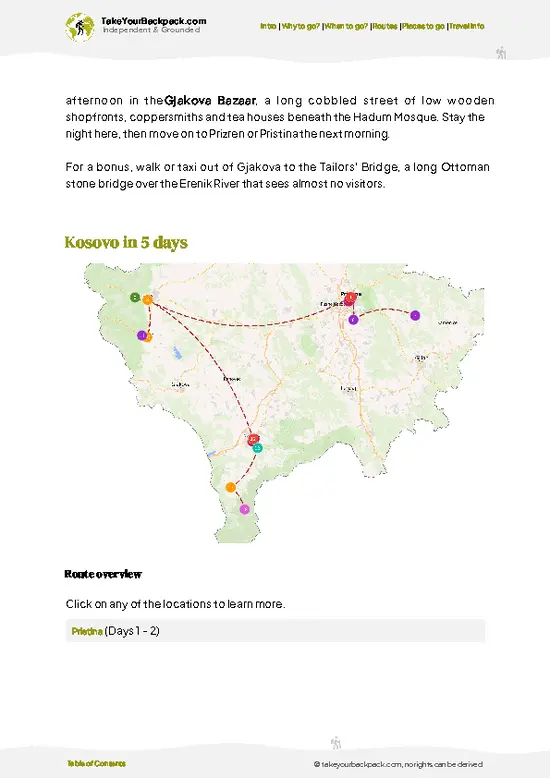
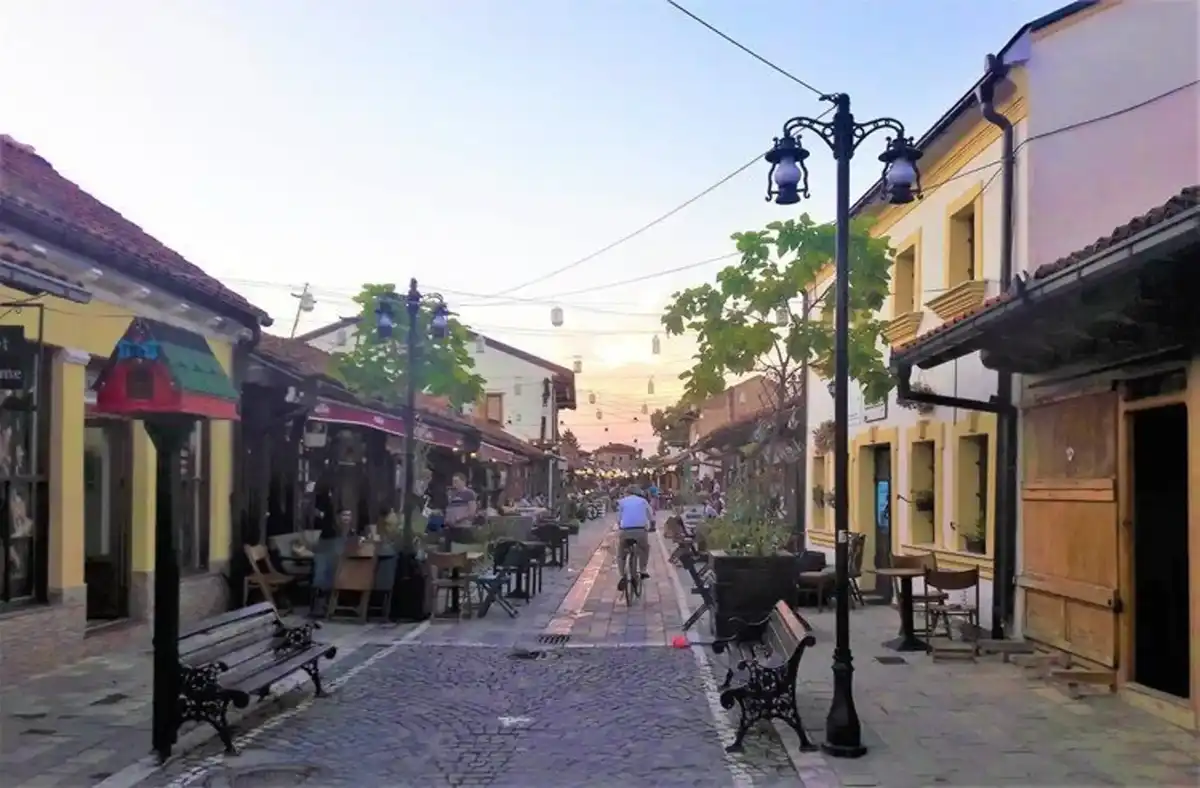
- Çarshia e Madhe (Old Bazaar) — The living heart of Gjakova: narrow cobbled lanes, tiny shops, and a real sense of Ottoman-era market life. Great for wandering, bargain-hunting, and watching craftsmen at work.
- Hadum Mosque (Xhamia e Hadumit) — The mosque that anchors the bazaar: notable Ottoman architecture and carved wooden details. It’s central to the city’s history and quiet moments inside feel genuinely atmospheric.
- Sahat Kulla (Clock Tower) — The old clock tower beside the bazaar and mosque is an unmistakable photo spot and local meeting point; even if you can’t climb it, the view around it captures the old town layout.
- The Ottoman Hamam (Old Turkish Bath) — A restored public bath building that shows Ottoman public-architecture and tiled interiors; often used for small exhibitions
- Çarshia e Madhe (Old Bazaar) — The living heart of Gjakova: narrow cobbled lanes, tiny shops, and a real sense of Ottoman-era market life. Great for wandering, bargain-hunting, and watching craftsmen at work.
- Hadum Mosque (Xhamia e Hadumit) — The mosque that anchors the bazaar: notable Ottoman architecture and carved wooden details. It’s central to the city’s history and quiet moments inside feel genuinely atmospheric.
- Sahat Kulla (Clock Tower) — The old clock tower beside the bazaar and mosque is an unmistakable photo spot and local meeting point; even if you can’t climb it, the view around it captures the old town layout.
- The Ottoman Hamam (Old Turkish Bath) — A restored public bath building that shows Ottoman public-architecture and tiled interiors; often used for small exhibitions or cultural events, so you get architecture plus a slice of local culture.
- Gjakova Ethnographic / City Museum — Small but full of useful context: traditional costumes, household items, and stories about local life. Perfect when you want historical background after strolling the bazaar.
- Clusters of traditional “kulla” tower-houses — Scattered through the old quarters, these stone tower-houses are tangible evidence of how families lived centuries ago. Walking between them feels like stepping into a different pace of life.
- Artisan workshops and metal-smith alley — The bazaar still houses working craft shops (coppersmiths, leatherworkers, tailors). Watching artisans and buying something made on the spot gives a better, more authentic souvenir than a tourist shop.
- Pazari i Gjakovës (the fresh market) — A noisy, colorful daily market where locals buy fruit, cheese, cured meats and spices. Cheap, lively, and a great place to try byrek, fresh bread, or a quick local coffee while people-watching.
- Shtëpia e Kulturës / local cultural center — The city’s cultural hub for concerts, plays, and exhibitions (look for programming under local names or posters in the bazaar). Catching a small show is a cheap way to see contemporary local culture.
- City Park and pedestrian promenades — Simple, pleasant spaces where locals meet, stroll, and eat ice cream. Good for slowing down after the bazaar and for spotting everyday life — kids playing, old men chatting, impromptu musicians.
Spotted a mistake or missing something? Contact us.

Discover Peja and Rugova Half-Day Tour

Peja Tour, Rugova Gorge and Drini waterfalls (combined)

Discover Highlights of Kosovo in 4 days tour!

Private Prizren Walking Tour with Local Guide – History & Culture

Prizren & Prishtina Private Tour – Culture, Views & History

Day tour of Prizren from Pristina; Semi - Private

Kosovo Tour One Day - combined

Transfer Prishtina Airport to Prishtina City

Pristina Airport Transfer

 Best Backpacking
.jpg) Hi, I’m Johan (Netherlands 🇳🇱), the creator of TakeYourBackpack. Over the past 3 decades, I’ve backpacked through 90+ countries across six continents, gaining extensive experience with independent travel, long-term trips, and overland routes.
Hi, I’m Johan (Netherlands 🇳🇱), the creator of TakeYourBackpack. Over the past 3 decades, I’ve backpacked through 90+ countries across six continents, gaining extensive experience with independent travel, long-term trips, and overland routes.