×

Kyrgyzstan🇰🇬 | hikesAla-Kul LakeTurquoise lake, 3,860 m pass, scree climb, Karakol start | things to do and best time to go

Explore Altyn-Kazyk FestivalExplore Arslanbob Walnut Forest

Backpacking in Ala-Kul Lake
🏆 Top pickhike ranked #1
By Johan Kruseman 🇳🇱 | Updated October 15, 2026

Wind slaps your jacket flat the moment you crest the last moraine, and there it is: a lake the color of mouthwash, ringed by gray scree and hanging glaciers. I stood there with numb fingers around a tin cup of instant coffee, grinning like an idiot. Ala-Kul sits in the Terskey Ala-Too range above the Karakol valley, in Kyrgyzstan’s Issyk-Kul region, and you can push on to the 3,860-meter pass the same day. The upside is huge: alpine scenery packed into 2 to 3 days, a hot-spring finish, and a trailhead about 20 to 30 minutes from Karakol town by taxi or minibus. The downside is the pass, a loose, steep scramble that punishes tired legs and bad weather days. Compared with the gentler Altyn-Arashan day hike nearby, this is the real mountain. It is also far easier to reach than the Song-Kul or Tash Rabat treks. Go early, carry layers, and keep climbing.

Discover everything you want to know in the 📖 Kyrgyzstan Travel Guide.
Best time to go: June - September
Duration: 2 days
Distance: 20 kilometers
Total ascent: 1100 meters


example page 0 from our offline Travel Guide for Kyrgyzstan
example page 1 from our offline Travel Guide for Kyrgyzstan
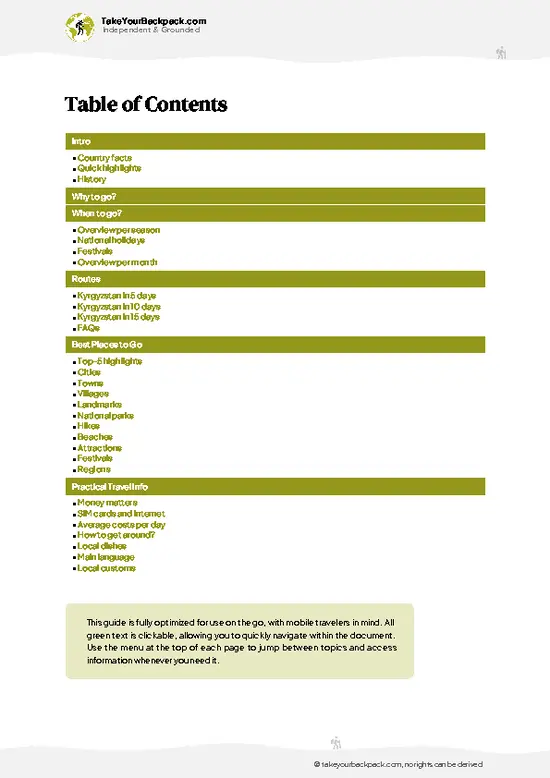
example page 2 from our offline Travel Guide for Kyrgyzstan
example page 3 from our offline Travel Guide for Kyrgyzstan
example page 4 from our offline Travel Guide for Kyrgyzstan
example page 5 from our offline Travel Guide for Kyrgyzstan
example page 6 from our offline Travel Guide for Kyrgyzstan
example page 7 from our offline Travel Guide for Kyrgyzstan
Loading the map 🌍
CLICK TO FILTER
cities
towns
villages
landmarks
national parks
hikes
beaches
attractions
festivals
regions
SHOW COUNTRY’S BESTSHOW ALL

✨ Why go?
Ranked #1 hike in Kyrgyzstan
Why visitors keep coming back

Backpackers chase Ala-Kul because it hands you high-alpine drama without a week of logistics. The trailhead is a short taxi or minibus ride from Karakol, so there is no multi-day transfer before you even start walking. Costs stay low: a park entry fee, some supplies from the Karakol bazaar, and either a tent or a basic bed at a yurt camp or guesthouse keep the whole trip well under a typical European trek budget. The distances are flexible. You can walk in to the base camp and back in a day, camp below the lake, or commit to the full pass crossing and descend to Altyn-Arashan. That last option ends at natural hot springs, which your legs will thank you for. The route also fits smoothly into a longer Kyrgyz loop: arrive from Bishkek or Cholpon-Ata, hike for 2 to 3 days, then move on to the … read more 👉
Backpackers chase Ala-Kul because it hands you high-alpine drama without a week of logistics. The trailhead is a short taxi or minibus ride from Karakol, so there is no multi-day transfer before you even start walking. Costs stay low: a park entry fee, some supplies from the Karakol bazaar, and either a tent or a basic bed at a yurt camp or guesthouse keep the whole trip well under a typical European trek budget. The distances are flexible. You can walk in to the base camp and back in a day, camp below the lake, or commit to the full pass crossing and descend to Altyn-Arashan. That last option ends at natural hot springs, which your legs will thank you for. The route also fits smoothly into a longer Kyrgyz loop: arrive from Bishkek or Cholpon-Ata, hike for 2 to 3 days, then move on to the Issyk-Kul shoreline, Jeti-Oguz, or the Karkyra and Naryn routes. Few treks pack this much scenery per day walked.

💡 HighlightsTop highlights of Ala-Kul Lake

  1. Karakol Gorge forest and river: The first hours climb through dark Schrenk spruce with the glacial Karakol River roaring beside you. The air smells of resin, and the trail is shaded and easy, a good warm-up before the steep ground starts.
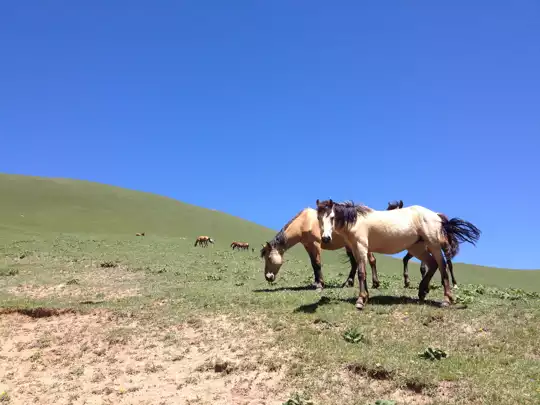
  2. Ala-Kul base camp meadows: Around 3,000 m, the forest drops away and open alpine meadows appear, with horses grazing and tents scattered below the ridge. On a clear evening the light turns the rock walls orange, and it is the best place to sleep before the big day.
  3. Ala-Kul Lake: The main event sits at roughly 3,500 m, fed by glacial melt that gives the water its milky turquoise color. Gray scree and snow slopes frame it on all sides. Wind ripples the surface, and you will want every layer you packed if you stop for lunch.
  4. Ala-Kul Pass: At 3,860 m, the pass is
… read more 👉
  1. Karakol Gorge forest and river: The first hours climb through dark Schrenk spruce with the glacial Karakol River roaring beside you. The air smells of resin, and the trail is shaded and easy, a good warm-up before the steep ground starts.
  2. Ala-Kul base camp meadows: Around 3,000 m, the forest drops away and open alpine meadows appear, with horses grazing and tents scattered below the ridge. On a clear evening the light turns the rock walls orange, and it is the best place to sleep before the big day.
  3. Ala-Kul Lake: The main event sits at roughly 3,500 m, fed by glacial melt that gives the water its milky turquoise color. Gray scree and snow slopes frame it on all sides. Wind ripples the surface, and you will want every layer you packed if you stop for lunch.
  4. Ala-Kul Pass: At 3,860 m, the pass is the high point of the trek. The final climb is loose and steep, but from the top you look back at the lake and ahead into the next valley, with glaciers on both sides. It is a hard hour that pays back immediately.
  5. Altyn-Arashan valley and hot springs: The descent from the pass finishes in a green valley of wooden guesthouses and sulfur-scented thermal baths. Soaking in one after a long scree descent is the best reward of the route.
Start with the lake itself. Everything else on the route builds toward that first view of the turquoise water, and reaching it after the long forest climb makes it hit harder than any photo prepares you for. If you only have one day, aim for it and turn around happy.
Spotted a mistake or missing something? Contact us.

Things to do near Ala-Kul Lake

Ratings based on Tripadvisor reviews. When you book through this link, you support our work at no extra cost to you.

🌤️ When to go?When to go for the best experience

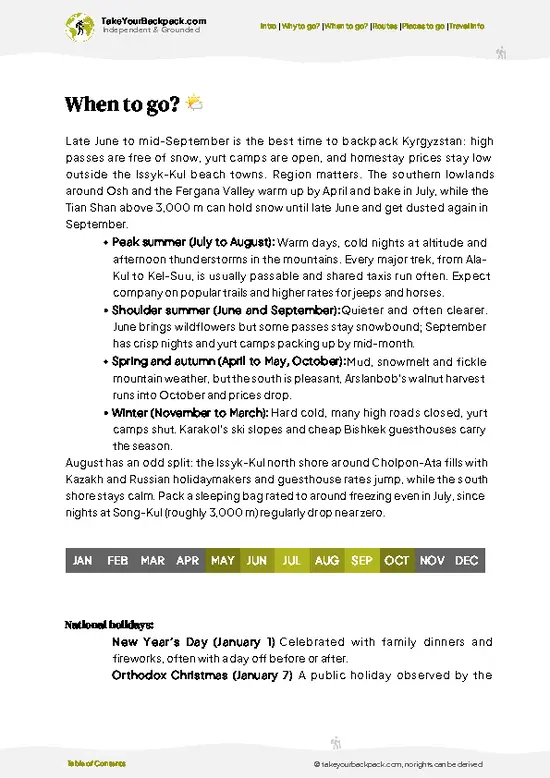
The best window for Ala-Kul Lake is mid-July to early September, when the pass is usually snow-free and the trail is dry enough to climb safely.
  • Late June to early July: Snow often still lies on the upper switchbacks and the pass itself. Daytime temperatures in Karakol valley run 15 to 22°C (59 to 72°F), and nights at camp near freezing. Fewer trekkers, and lower prices.
  • Mid-July to August: Peak season. Expect 18 to 25°C (64 to 77°F) in the valley and 0 to 5°C (32 to 41°F) at night near the lake at about 3,500 m. Daylight lasts roughly 14 hours. Guesthouse and guide prices peak, and Altyn Arashan camps fill up.
  • September: Crisp, clear days of 10 to 18°C (50 to 64°F), nights of -5 to 0°C (23 to 32°F), and thinner crowds. Early snowfall on the pass becomes possible by late month, and daylight shrinks
… read more 👉
The best window for Ala-Kul Lake is mid-July to early September, when the pass is usually snow-free and the trail is dry enough to climb safely.
  • Late June to early July: Snow often still lies on the upper switchbacks and the pass itself. Daytime temperatures in Karakol valley run 15 to 22°C (59 to 72°F), and nights at camp near freezing. Fewer trekkers, and lower prices.
  • Mid-July to August: Peak season. Expect 18 to 25°C (64 to 77°F) in the valley and 0 to 5°C (32 to 41°F) at night near the lake at about 3,500 m. Daylight lasts roughly 14 hours. Guesthouse and guide prices peak, and Altyn Arashan camps fill up.
  • September: Crisp, clear days of 10 to 18°C (50 to 64°F), nights of -5 to 0°C (23 to 32°F), and thinner crowds. Early snowfall on the pass becomes possible by late month, and daylight shrinks to around 12 hours.
  • October to May: Snow buries the pass and the route is for mountaineers only. Hot spring cabins in Altyn Arashan close for the season.
Start before 7 a.m. on pass day, because afternoon clouds and wind often build over the lake.


source: climatestotravel.comJANJanuary: below average for travelingFEBFebruary: below average for travelingMARMarch: below average for travelingAPRApril: fair for travelingMAYMay: fair for travelingJUNJune: highly recommended for travelingJULJuly: excellent for travelingAUGAugust: excellent for travelingSEPSeptember: good for travelingOCTOctober: fair for travelingNOVNovember: below average for travelingDECDecember: below average for traveling
kyrgyzstan-hike-ala-kul-lake
© Google |

✈️ The backpacker research shortcutKyrgyzstan Travel Guide

An offline-friendly backpacking guide with optimized travel routes, ranked highlights, transport advice, and the best areas to stay.
example page 0 from our offline Travel Guide for Kyrgyzstan
example page 1 from our offline Travel Guide for Kyrgyzstan
example page 2 from our offline Travel Guide for Kyrgyzstan
example page 3 from our offline Travel Guide for Kyrgyzstan
example page 4 from our offline Travel Guide for Kyrgyzstan
example page 5 from our offline Travel Guide for Kyrgyzstan
example page 6 from our offline Travel Guide for Kyrgyzstan
example page 7 from our offline Travel Guide for Kyrgyzstan
The digital guide (242 pages) contains:
✅ 73 highlights, ranked by travel appeal
✅ Optimized 5, 10 & 15-day travel routes
✅ Cities, national parks, landmarks, beaches
✅ How to get around
✅ Offline-friendly for travel without Wi-Fi
👉 Click to see all 30+ guide features

📅 Plan smarter in minutes, not weeks
✅ Month by month travel advice
✅ Festivals & national holidays
✅ Budget expectations

🗺️ Go to the right places, skip the overrated ones
✅ Honest pros & cons of destinations
✅ Top hikes, parks & viewpoints
✅ Lesser-known places most travelers miss
✅ Clear “worth it vs skip it” guidance

🛏️ Travel smoothly without rookie mistakes
✅ Best areas to stay
✅ Transport systems explained simply
✅ Common scams & safety advice
✅ SIM cards, money & practical tips

🌍 Understand the country, not just visit it
✅ Culture & traditions
✅ 52 Essential phrases & customs
✅ Festivals worth planning around
✅ Traveler-friendly historical context
✅ Insights that make places more meaningful

📱 Built for real travel conditions
✅ Fully downloadable PDF
✅ Works completely offline
✅ Optimized for phone use
✅ Useful in remote areas & buses
✅ Everything in one place
Stop searching, start planning
Get instant access to your full guide. 30‑day money-back guarantee.
+ Add another guide for just

By proceeding you agree to our terms.
Sent to your inbox immediately after payment • 100% Secure Checkout
Best Backpacking Travel Advisor 2025 tourism awardBest Backpacking
Travel Advisor
2025
What others say about Take Your Backpack Guides:
⭐⭐⭐⭐⭐
Fantastic, amazing amount of information!
⭐⭐⭐⭐⭐
My goodness this is amazing, it's what I've been looking for hats off too you!
⭐⭐⭐⭐⭐
I think this is absolutely BRILLIANT
⭐⭐⭐⭐
Very complete and informative. It's still missing places, but I gotta to commend you
⭐⭐⭐⭐⭐
This is truly amazing, thank you, can't wait to explore it with my kids!
⭐⭐⭐⭐⭐
Awesome resource, thank you!
⭐⭐⭐⭐⭐
This is amazing! Can't wait to explore the ones I haven't seen
⭐⭐⭐⭐
I love this! Well done, great idea.
⭐⭐⭐⭐⭐
Thanks for taking the time to make this gem!
⭐⭐⭐⭐⭐
This might be the best website I've ever seen.
⭐⭐⭐⭐⭐
Congratulations, and thank you so much for your work; it's incredibly valuable.
⭐⭐⭐⭐
In all seriousness I think you did a great job pointing out the important spots
⭐⭐⭐⭐⭐
10/10 very good
⭐⭐⭐⭐⭐
As someone who's only just starting to visit regularly this is awesome, thank you.
⭐⭐⭐⭐
Thank you very much! I'm going to visit my dad, it's going to be very useful!
⭐⭐⭐⭐⭐
This is really cool! We'll be travelling for the first time and this definitely come in handy.
⭐⭐⭐⭐⭐
You are now our minister of culture, congratulations 👨‍💼
⭐⭐⭐⭐⭐
Just wanted to tell you that this is a pearl! Going to follow your recommendations.
⭐⭐⭐⭐⭐
This is so cool. I'll definitely be using the resource for my travels soon.
⭐⭐⭐⭐⭐
This is very impressive! Good work.
⭐⭐⭐⭐⭐
This is an amazing and informative site. Very well done!

🛏️ Where to stay?Best areas to stay in Kyrgyzstan

If you enjoy meeting fellow travelers, consider choosing hostels with high ratings for atmosphere. On the other hand, if you prefer having your own space, a hotel might be a better option.

🥾 Hike detailsRoute, distance, and difficulty explained

Total Distance: Roughly 30 to 40 km for the classic Karakol to Ala-Kul to Altyn-Arashan crossing, depending on where you start and finish. A day trip to the lake and back covers about 25 km round trip.
Estimated Duration: 2 to 3 days for the full crossing. Strong hikers do the lake as a long day trip of 9 to 11 hours.
Difficulty: Moderate to demanding. The pass is steep, loose scree at high altitude, and weather turns quickly. Basic fitness and acclimatization help a lot.
Starting Point: Karakol Gorge trailhead, a short ride from Karakol town. Marshrutkas and taxis run from Karakol; a taxi usually
… read more 👉
Total Distance: Roughly 30 to 40 km for the classic Karakol to Ala-Kul to Altyn-Arashan crossing, depending on where you start and finish. A day trip to the lake and back covers about 25 km round trip.
Estimated Duration: 2 to 3 days for the full crossing. Strong hikers do the lake as a long day trip of 9 to 11 hours.
Difficulty: Moderate to demanding. The pass is steep, loose scree at high altitude, and weather turns quickly. Basic fitness and acclimatization help a lot.
Starting Point: Karakol Gorge trailhead, a short ride from Karakol town. Marshrutkas and taxis run from Karakol; a taxi usually costs a few hundred som one way. The route finishes in Altyn-Arashan, from where 4x4 vehicles return to Karakol.
Major Landmarks:
  • Karakol Gorge: Forest and river section at the start, with a park entry point.
  • Ala-Kul base camp: Meadow camp at about 3,000 m where most hikers sleep.
  • Ala-Kul Lake: Glacial lake at roughly 3,500 m, below the pass.
  • Ala-Kul Pass: High point at 3,860 m, with views of glaciers on both sides.
  • Altyn-Arashan: Valley with guesthouses and hot springs at the end.
Terrain and Scenery: Forest path, then rocky meadows, then moraine and a steep scree ascent. The descent on the far side is also loose and hard on knees. Peaks, hanging glaciers, and the lake’s turquoise surface dominate the views.
Vegetation: Dense spruce forest in the lower gorge, giving way to juniper shrub, alpine meadows, and bare rock above the tree line. Wildflowers appear in the meadows in July and August.
Wildlife: Marmots are common near the meadows, and you may spot ibex on high slopes. Horses and cattle graze near base camp and Altyn-Arashan. Eagles circle above the passes. Bears and wolves exist in the region but are rarely seen.
Best Season: July to September. Snow often covers the pass in June and from October.
⚠️ Hiking info can sometimes be outdated or inaccurate. Before you hit the trail, check the latest conditions with locals. If you do spot anything that's off, I'd love to hear from you, so I can update it for fellow travelers.

🛡️ SafetyScams, Hazards, and Annoyances

The biggest safety issue on the Ala-Kul trek is the climb to the 3,860-meter pass, where altitude, steep scree and fast-changing weather combine. Most hikers reach the lake from Karakol valley in a long day or split it over two, and sleeping at Ala-Kul Lake (about 3,500 meters) without a rest day lower down brings headaches and poor sleep. Go slowly, drink steadily, and camp lower if symptoms worsen.

Start the pass early. Afternoon storms bring cold rain, hail and sometimes snow, and the final stretch is loose, steep rock where you want dry boots and trekking poles. The descent toward Altyn-Arashan is knee-punishing and slippery after snow. Pack a windproof shell, warm layers, gloves and a hat even in July. Stream crossings run higher by late afternoon. Download an offline map, since cairns … read more 👉
The biggest safety issue on the Ala-Kul trek is the climb to the 3,860-meter pass, where altitude, steep scree and fast-changing weather combine. Most hikers reach the lake from Karakol valley in a long day or split it over two, and sleeping at Ala-Kul Lake (about 3,500 meters) without a rest day lower down brings headaches and poor sleep. Go slowly, drink steadily, and camp lower if symptoms worsen.

Start the pass early. Afternoon storms bring cold rain, hail and sometimes snow, and the final stretch is loose, steep rock where you want dry boots and trekking poles. The descent toward Altyn-Arashan is knee-punishing and slippery after snow. Pack a windproof shell, warm layers, gloves and a hat even in July. Stream crossings run higher by late afternoon. Download an offline map, since cairns and paths fade in cloud. Herders’ dogs may bark near yurts, so walk calmly around them. Register with the national park and carry a headlamp.

FAQCommon questions from travelers

The full Ala-Kul crossing takes 2 to 3 days, usually from Karakol Gorge over the 3,860-meter pass to Altyn-Arashan. Day one is about 5 to 6 hours to base camp, and the pass day runs 7 to 9 hours. A fit hiker can reach the lake and return in one 9 to 11 hour day.
The hike is moderate to demanding, mainly because of the steep, loose scree on both sides of the 3,860-meter Ala-Kul Pass. Most of the route below the lake is straightforward forest and meadow path. Expect about 1,500 meters of climbing to the pass from the trailhead, and take layers because wind and cold at the top are strong.
No guide is needed for the standard route, which is well marked and busy from July to September, though local guides in Karakol cost roughly US$50 to 100 a day. You pay a Karakol National Park entry fee at the gate, typically a few hundred som. The Ala-Kul route does not require a special border-zone permit, but bring your passport for any checks.
⚠️ Things can change over time, so always validate details locally before you go.

Other Kyrgyz hikes near Ala-Kul Lake

Explore more nearby:

  • Altyn Arashan—Hot springs, spruce gorge, wooden huts, Karakol approach| 9 km away
  • Ak Kayyn—Valley trail, river crossings, quiet side route, flexible length| 140 km away
  • Köl-Suu Lake—Border permit, granite walls, 3,500 m shoreline, horse approach| 257 km away

💡 Not sure where to go next?
Create a personalized itinerary for Kyrgyzstan including Ala-Kul Lake and the places that fit your trip.

Generate my itinerary

👉 Discover all hikes

Or checkout all Kyrgyzstan has to offer (think cities, towns, villages, national parks, hikes, beaches, festivals)
Country photo of Kyrgyzstan

We 💚 feedbackSumming up the experience

Ala-Kul gave me a lake that looks edited and a pass that earned every step, plus a hot soak at the end. The catch is the climb. The scree is steep and loose, the altitude is real, and bad weather can make the crossing miserable. If heights or knees bother you, do the lake as an out-and-back day trip instead.

✈️ When did I visit Kyrgyzstan?
I started my 1.5 year travel around the world trip in June 2015 in Kyrgyzstan.

✍️ Help improve this page!
The information on this page is based on my own backpacking experience in Kyrgyzstan, supplemented with up-to-date research and feedback from other travelers. Travel details can change, so if you notice anything outdated or incomplete, feel free to let me know.


🙋‍♂️ Give feedback

👋 Meet the founderWho’s Behind Take Your Backpack?

Johan, backpacker and founder of TakeYourBackpackHi, I’m Johan (Netherlands 🇳🇱), the creator of TakeYourBackpack. Over the past 3 decades, I’ve backpacked through 90+ countries across six continents, gaining extensive experience with independent travel, long-term trips, and overland routes.

This site is built on a combination of firsthand travel experience and carefully curated insights from other backpackers. Many guides are based on places I’ve personally visited, while others bring together tips, observations, and practical advice shared by trusted travelers I’ve met along the way.

The goal is to provide realistic, experience-driven guidance — not generic itineraries — so you can explore destinations with better context, clearer expectations, and more confidence.