×

Laos🇱🇦 | villagesBan Nahinkarst cliffs, cave access, rural crossroads | things to do and best time to go

Explore Nong KhiawExplore Ban Khoun Kham

Backpacking in Ban Nahin
🌟 Highlightvillage ranked #10
By Johan Kruseman 🇳🇱 | Updated June 12, 2026

Ban Nahin is not for anyone chasing rooftop bars, boutique cafés, or a packed nightlife calendar. It’s for when you’re willing to trade all that for misty limestone cliffs, the smell of woodsmoke at dusk, and a village that goes quiet by 9 p.m. This small town in central Laos sits on Route 8, east of Lak Sao and roughly between Vientiane and the Vietnam border, and it works best as a practical base for Kong Lor Cave and the surrounding karst countryside rather than a destination in itself. Buses drop you on the main road; from there it’s walkable, with songthaews and tuk-tuks filling the gaps. Guesthouses are simple, cheap, and usually friendly, but the scene is low-key: a couple of noodle shops, a market, maybe a beer with other travelers who are also just passing through. Compared with Thakhek or Vang Vieng, Ban Nahin feels more rural and less polished, but that’s the point—you come here to reset, not to be entertained. Costs are low, safety is generally solid, and the reward for the long, dusty ride is waking up to roosters, fog in the valley, and the sense that you’re on a real overland route, not a curated loop.

Discover everything you want to know in the 📖 Laos Travel Guide.


Get your Laos guide
80 ranked highlights, routes & tips, works offline (313 pages)
Loading the map 🌍
CLICK TO FILTER
cities
towns
villages
landmarks
national parks
hikes
beaches
attractions
festivals
regions
SHOW COUNTRY’S BESTSHOW ALL

✨ Why go?
Ranked #10 village in Laos
Reasons people choose to visit here

In the heart of Laos, Ban Nahin serves as a strategic pit stop for backpackers. Its walkable streets make it easy to explore local eateries where the scent of grilled meats and fresh herbs fills the air. This town is a launchpad for nearby hikes and cultural sites, perfect for those who crave adventure but also want to soak in the local vibe. Accommodations range from small-scale hostels to cozy guesthouses, fostering a friendly social atmosphere. Travelers often linger a few days, especially slow travelers and solo adventurers, drawn by the chance to connect with others over shared experiences. It’s a place where the journey feels as rewarding as the destination.
Want to include Ban Nahin in your Laos route?
Create a personalized Laos itinerary that includes Ban Nahin and the places that fit your trip — based on your travel style, budget, and available time. Get your route in seconds.

Generate my trip

💡 HighlightsMust-see experiences and standout moments

  1. Wat Ban Nahin (the village temple) — The spiritual and social heart of the village where you can see daily alms, simple lacquered Buddha images, ochre-robed monks, and traditional temple life up close.
  2. Cluster of traditional stilt houses — A compact area of raised wooden homes showing Lao vernacular architecture, household shrines, and everyday life — great for wandering lanes and photographing authentic village scenes.
  3. Morning market — A small, local market where villagers buy and sell fresh produce, dried fish, and household goods; ideal for sampling street food, watching bargaining in Lao, and seeing regional ingredients in use.
  4. Rice-paddy walks and irrigation channels — Flat, walkable paths through working paddies that demonstrate the seasonal rhythms of planting and harvest and offer
read more 👉
  1. Wat Ban Nahin (the village temple) — The spiritual and social heart of the village where you can see daily alms, simple lacquered Buddha images, ochre-robed monks, and traditional temple life up close.
  2. Cluster of traditional stilt houses — A compact area of raised wooden homes showing Lao vernacular architecture, household shrines, and everyday life — great for wandering lanes and photographing authentic village scenes.
  3. Morning market — A small, local market where villagers buy and sell fresh produce, dried fish, and household goods; ideal for sampling street food, watching bargaining in Lao, and seeing regional ingredients in use.
  4. Rice-paddy walks and irrigation channels — Flat, walkable paths through working paddies that demonstrate the seasonal rhythms of planting and harvest and offer close contact with farmers and oxen-plowed fields.
  5. Community homestay households — Family-run homestays that let you sleep under the eaves, eat home-cooked Lao meals, and take part in cooking or rice-processing chores for a hands-on cultural night.
  6. Local craft/basketry workshop — Small, visitable homes or micro-workshops where villagers weave baskets, mats, or simple tools from bamboo and reed; you can watch skills handed down generations and buy affordable souvenirs.
A few real, visitable highlights just outside the village that make perfect day trips are Luang Prabang town (temples and night market), Kuang Si Falls, and the Pak Ou caves.
Spotted a mistake or missing something? Contact us.

⌛️ 1 dayHow to make the most of one day

Ban Nahin, a quaint town in Laos, offers a glimpse into rural life, where the air is thick with the scent of fresh herbs and the sound of laughter echoes from local markets. It’s a place where time feels slower, and every corner has a story waiting to be uncovered.

Start your morning with a stroll through the vibrant morning market. The stalls burst with colorful produce, and the aroma of grilled meats fills the air. Grab a bowl of khao piak sen, a comforting noodle soup, from a local vendor. This dish is not just breakfast; it’s a warm embrace that sets the tone for the day.

In the afternoon, head to the nearby Nam Theun River. Rent a kayak and paddle along the tranquil waters, surrounded by lush greenery. This isn’t just a fun activity; it’s a chance to connect with the landscape and spot … read more 👉
Ban Nahin, a quaint town in Laos, offers a glimpse into rural life, where the air is thick with the scent of fresh herbs and the sound of laughter echoes from local markets. It’s a place where time feels slower, and every corner has a story waiting to be uncovered.

Start your morning with a stroll through the vibrant morning market. The stalls burst with colorful produce, and the aroma of grilled meats fills the air. Grab a bowl of khao piak sen, a comforting noodle soup, from a local vendor. This dish is not just breakfast; it’s a warm embrace that sets the tone for the day.

In the afternoon, head to the nearby Nam Theun River. Rent a kayak and paddle along the tranquil waters, surrounded by lush greenery. This isn’t just a fun activity; it’s a chance to connect with the landscape and spot local wildlife. Afterward, explore the less-traveled path to the nearby village of Ban Phon, where you can witness traditional weaving techniques and perhaps even join in.

As evening falls, return to town and find a spot at a local eatery. Savor a plate of larb, a spicy minced meat salad, while the sun sets, casting a golden hue over the rice paddies. This day in Ban Nahin isn’t just about sights; it’s about immersing yourself in the rhythm of life here, making every moment feel like a well-earned reward.
Turn your Ban Nahin visit into an Laos adventure
Build a complete Laos route with Ban Nahin, hidden gems, must-see destinations, and realistic travel times included.

Generate my trip

🌤️ When to go?Choosing the right time of year


  • Topic: Weather Ban Nahin’s dry season from November to February offers crisp, clear skies and minimal rain, making trails less slippery and the air fresh with the scent of dry earth. The wet season, May to October, brings heavy downpours that can turn paths into mud traps and obscure views behind thick mist.

  • Topic: Temperature During the dry season, daytime highs hover around 25-30°C (77-86°F), perfect for trekking without overheating. Nights dip to 10-15°C (50-59°F), so pack layers. The wet season heats up to 30-35°C (86-95°F) with humidity that can sap your energy fast.

  • Topic: Daylight Hours From November to February, you get about 11-12 hours of daylight, enough for long hikes and late sunsets that paint the limestone cliffs golden. The wet season shortens daylight slightly and clouds
read more 👉

  • Topic: Weather Ban Nahin’s dry season from November to February offers crisp, clear skies and minimal rain, making trails less slippery and the air fresh with the scent of dry earth. The wet season, May to October, brings heavy downpours that can turn paths into mud traps and obscure views behind thick mist.

  • Topic: Temperature During the dry season, daytime highs hover around 25-30°C (77-86°F), perfect for trekking without overheating. Nights dip to 10-15°C (50-59°F), so pack layers. The wet season heats up to 30-35°C (86-95°F) with humidity that can sap your energy fast.

  • Topic: Daylight Hours From November to February, you get about 11-12 hours of daylight, enough for long hikes and late sunsets that paint the limestone cliffs golden. The wet season shortens daylight slightly and clouds dull the light, making early starts essential.

  • Topic: Crowds Peak backpacker season aligns with the dry months, so expect more fellow travelers and busier guesthouses. The off-season is quieter, offering a more solitary experience but with the trade-off of unpredictable weather.

  • Topic: Seasonal Activities The dry season is prime for exploring caves, river trekking, and village visits when paths are accessible and rivers calm. The wet season swells rivers, opening up kayaking but closing some trails.

  • Topic: Price Fluctuations Accommodation and transport costs rise during the dry season due to demand. In the wet season, prices drop, but some services may reduce frequency or close, so plan accordingly.


Pro-tip: Aim for late November or early December to catch the sweet spot of dry weather, manageable crowds, and vibrant daylight—Ban Nahin’s landscape feels alive and accessible, rewarding your timing with every step.


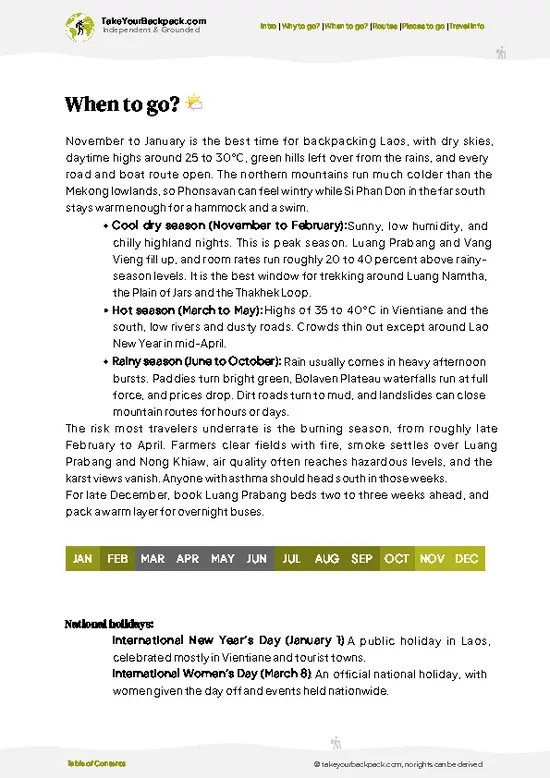
source: climatestotravel.comJANJanuary: excellent for travelingFEBFebruary: excellent for travelingMARMarch: good for travelingAPRApril: good for travelingMAYMay: fair for travelingJUNJune: fair for travelingJULJuly: fair for travelingAUGAugust: fair for travelingSEPSeptember: fair for travelingOCTOctober: fair for travelingNOVNovember: excellent for travelingDECDecember: excellent for traveling
when-to-go

✈️ The backpacker research shortcutLaos Travel Guide

An offline-friendly backpacking guide with optimized travel routes, ranked highlights, transport advice, and the best areas to stay.
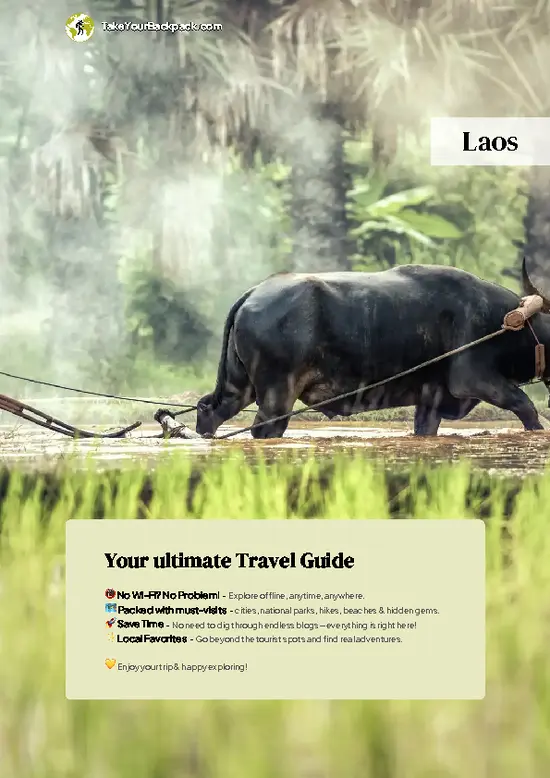
example page 0 from our offline Travel Guide for Laos
example page 1 from our offline Travel Guide for Laos
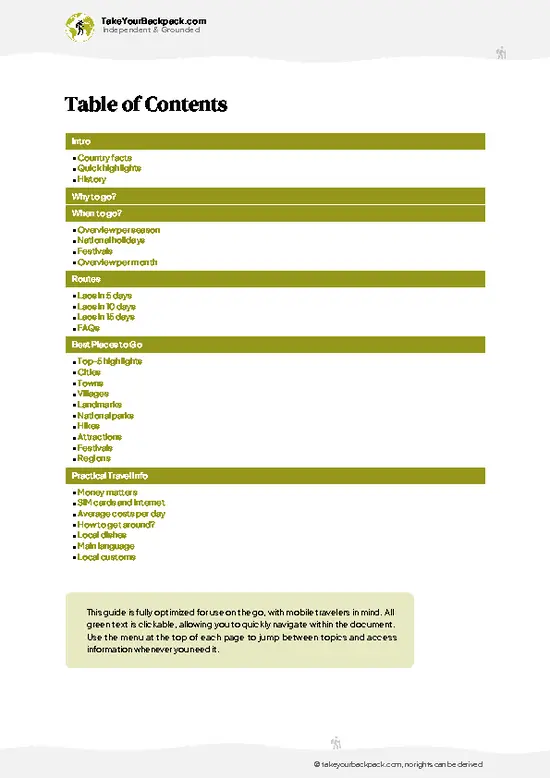
example page 2 from our offline Travel Guide for Laos
example page 3 from our offline Travel Guide for Laos
example page 4 from our offline Travel Guide for Laos
example page 5 from our offline Travel Guide for Laos
example page 6 from our offline Travel Guide for Laos
example page 7 from our offline Travel Guide for Laos
The digital guide (313 pages) contains:
80 highlights, ranked by travel appeal
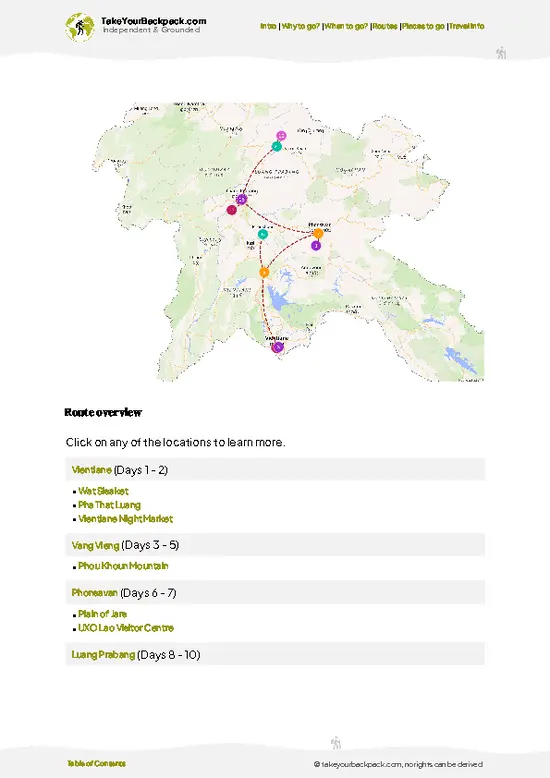
Optimized 5, 10 & 15-day travel routes
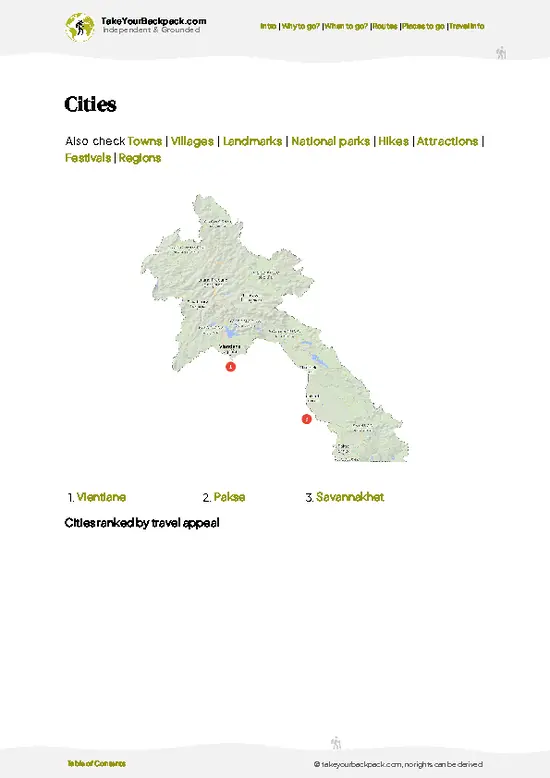
Cities, national parks, landmarks, beaches
How to get around
Offline-friendly for travel without Wi-Fi
👉 Click to see all 30+ guide features

📅 Plan smarter in minutes, not weeks
Month by month travel advice
Festivals & national holidays
Budget expectations

🗺️ Go to the right places, skip the overrated ones
Honest pros & cons of destinations
Top hikes, parks & viewpoints
Lesser-known places most travelers miss
Clear “worth it vs skip it” guidance

🛏️ Travel smoothly without rookie mistakes
Best areas to stay
Transport systems explained simply
Common scams & safety advice
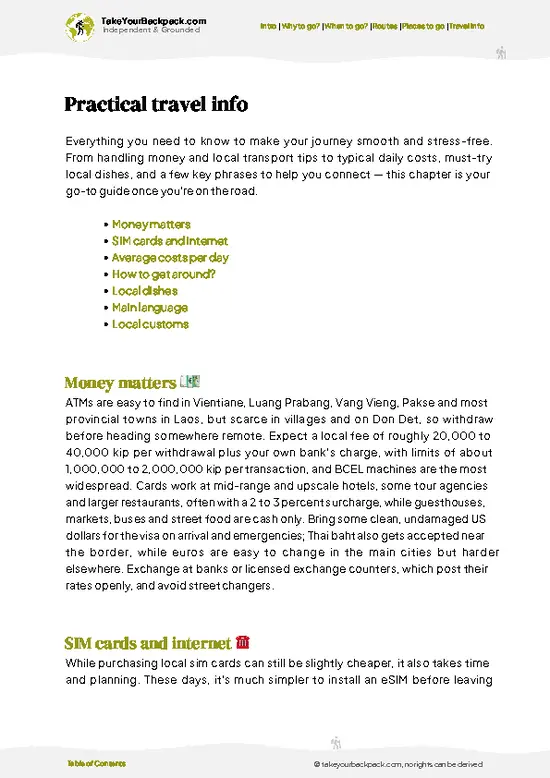
SIM cards, money & practical tips

🌍 Understand the country, not just visit it
Culture & traditions
52 Essential phrases & customs
Festivals worth planning around
Traveler-friendly historical context
Insights that make places more meaningful

📱 Built for real travel conditions
Fully downloadable PDF
Works completely offline
Optimized for phone use
Useful in remote areas & buses
Everything in one place
Save weeks of stressful planning
Get instant access to your full guide. 30‑day money-back guarantee.


By proceeding you agree to our terms.
Sent to your inbox immediately after payment • 100% Secure Checkout
Best Backpacking Travel Advisor 2025 tourism awardBest Backpacking
Travel Advisor
2025
What others say about Take Your Backpack Guides:
⭐⭐⭐⭐⭐
Fantastic, amazing amount of information!
⭐⭐⭐⭐⭐
My goodness this is amazing, it's what I've been looking for hats off too you!
⭐⭐⭐⭐⭐
I think this is absolutely BRILLIANT
⭐⭐⭐⭐
Very complete and informative. It's still missing places, but I gotta to commend you
⭐⭐⭐⭐⭐
This is truly amazing, thank you, can't wait to explore it with my kids!
⭐⭐⭐⭐⭐
Awesome resource, thank you!
⭐⭐⭐⭐⭐
This is amazing! Can't wait to explore the ones I haven't seen
⭐⭐⭐⭐
I love this! Well done, great idea.
⭐⭐⭐⭐⭐
Thanks for taking the time to make this gem!
⭐⭐⭐⭐⭐
This might be the best website I've ever seen.
⭐⭐⭐⭐⭐
Congratulations, and thank you so much for your work; it's incredibly valuable.
⭐⭐⭐⭐
In all seriousness I think you did a great job pointing out the important spots
⭐⭐⭐⭐⭐
10/10 very good
⭐⭐⭐⭐⭐
As someone who's only just starting to visit regularly this is awesome, thank you.
⭐⭐⭐⭐
Thank you very much! I'm going to visit my dad, it's going to be very useful!
⭐⭐⭐⭐⭐
This is really cool! We'll be travelling for the first time and this definitely come in handy.
⭐⭐⭐⭐⭐
You are now our minister of culture, congratulations 👨‍💼
⭐⭐⭐⭐⭐
Just wanted to tell you that this is a pearl! Going to follow your recommendations.
⭐⭐⭐⭐⭐
This is so cool. I'll definitely be using the resource for my travels soon.
⭐⭐⭐⭐⭐
This is very impressive! Good work.
⭐⭐⭐⭐⭐
This is an amazing and informative site. Very well done!

🛏️ Where to stay?Where staying makes the most sense

Ban Nahin’s backpacker sweet spot is the area around the central market and the riverside stretch just a few blocks away. This zone hums with life from dawn till dusk—vendors setting up stalls, the scent of grilled fish mingling with fresh herbs, and locals chatting over sticky rice. It’s safe, well-trodden by travelers, and offers a social pulse that’s hard to find elsewhere in town.

Why settle here? Because it’s where you’ll bump into other backpackers without trying. Hostels cluster near the market, offering dorms and shared spaces that encourage easy mingling. The vibe is relaxed but lively, … read more 👉
Ban Nahin’s backpacker sweet spot is the area around the central market and the riverside stretch just a few blocks away. This zone hums with life from dawn till dusk—vendors setting up stalls, the scent of grilled fish mingling with fresh herbs, and locals chatting over sticky rice. It’s safe, well-trodden by travelers, and offers a social pulse that’s hard to find elsewhere in town.

Why settle here? Because it’s where you’ll bump into other backpackers without trying. Hostels cluster near the market, offering dorms and shared spaces that encourage easy mingling. The vibe is relaxed but lively, with enough street food stalls and cafés to keep you fueled without breaking the bank. Compared to quieter residential pockets or the more isolated outskirts, this neighborhood delivers connection and convenience—two essentials for solo travelers craving both comfort and camaraderie.

Staying here means you’re steps from the pulse of Ban Nahin’s daily rhythm, making every moment outside your room feel like part of the adventure.

🚌 Getting aroundHow to get around Ban Nahin

Ban Nahin moves at its own pace—think less clockwork precision, more a rhythm shaped by the sun’s arc and the slow hum of daily life. The air carries a mix of earth and wood smoke, and the streets pulse with a casual flow where plans bend to the moment. This isn’t a place where you’ll find rigid timetables posted on every corner; instead, you’ll learn to read the cues in the chatter of locals and the occasional honk of a passing motorbike. The charm here is in syncing with that flow—arriving early means soaking in the quiet before the town wakes fully, while late afternoons bring a golden haze and a gentle rush as everyone wraps up their day.


  • Walking: The heart of Ban Nahin is best explored on foot. Streets are compact and mostly flat, making walking not just free but an immersive way
read more 👉
Ban Nahin moves at its own pace—think less clockwork precision, more a rhythm shaped by the sun’s arc and the slow hum of daily life. The air carries a mix of earth and wood smoke, and the streets pulse with a casual flow where plans bend to the moment. This isn’t a place where you’ll find rigid timetables posted on every corner; instead, you’ll learn to read the cues in the chatter of locals and the occasional honk of a passing motorbike. The charm here is in syncing with that flow—arriving early means soaking in the quiet before the town wakes fully, while late afternoons bring a golden haze and a gentle rush as everyone wraps up their day.


  • Walking: The heart of Ban Nahin is best explored on foot. Streets are compact and mostly flat, making walking not just free but an immersive way to catch the scent of fresh market spices and overheard conversations. Expect to cover the main village in under an hour, but allow extra time to wander down side alleys where the real life happens.


  • Songthaew (Shared Pickup Truck): These are the unofficial lifelines connecting Ban Nahin to nearby towns. They don’t run on a strict schedule—departures happen when the truck fills up, usually between 6:30 AM and 6 PM. The fare is dirt cheap, around 20-40 THB, but be ready for a bumpy ride and a few stops to pick up locals along the way.


  • Motorbike Taxi: For quick hops within the village or to nearby spots, motorbike taxis are your best bet. They’re available from dawn till dusk, and fares start at about 30 THB for short trips. It’s fast and flexible, but always negotiate the price upfront to avoid surprises.


  • Bicycle Rental: Renting a bike is a sweet middle ground between walking and motorized transport. Prices hover around 100-150 THB per day. The roads are mostly quiet, but watch for loose gravel and occasional livestock crossing. Early morning rides offer cool air and soft light, perfect for exploring the outskirts.


  • Local Minivan: For longer journeys, the minivan service to the provincial capital is a solid option. It usually leaves mid-morning and mid-afternoon, costs about 80-120 THB, and takes roughly 1.5 hours. It’s more comfortable than the songthaew but less flexible—arrive early to secure a seat.

👛 Costs (as of 20 April 2026)Typical daily expenses

Backpacking in Ban Nahin, Laos, offers a raw, authentic slice of rural life where costs stay low but the experience feels rich and real.
  • Dorm Accommodation: Expect simple guesthouses with basic dorm beds priced around $5 to $8 per night. These places often have minimal amenities—think a fan, shared bathroom, and a mosquito net—but the quiet village atmosphere more than compensates.
  • Meals: Street food and local eateries dominate here. A hearty Lao meal—sticky rice, grilled fish, or papaya salad—runs about $1.50 to $3. Breakfast might be a bowl of noodle soup for under $1.50. Fresh fruit and snacks from markets are even cheaper, perfect for keeping energy up on the trail.
  • Local Transport: Ban Nahin is small, so most exploring happens on foot or by bicycle rental, which costs roughly $2 to
read more 👉
Backpacking in Ban Nahin, Laos, offers a raw, authentic slice of rural life where costs stay low but the experience feels rich and real.
  • Dorm Accommodation: Expect simple guesthouses with basic dorm beds priced around $5 to $8 per night. These places often have minimal amenities—think a fan, shared bathroom, and a mosquito net—but the quiet village atmosphere more than compensates.
  • Meals: Street food and local eateries dominate here. A hearty Lao meal—sticky rice, grilled fish, or papaya salad—runs about $1.50 to $3. Breakfast might be a bowl of noodle soup for under $1.50. Fresh fruit and snacks from markets are even cheaper, perfect for keeping energy up on the trail.
  • Local Transport: Ban Nahin is small, so most exploring happens on foot or by bicycle rental, which costs roughly $2 to $4 per day. If you need a tuk-tuk for a short trip, budget around $3 to $5. Public transport options are limited, so plan accordingly.
  • Basic Activities/Entry Fees: Many natural and cultural sites around Ban Nahin are free or ask for a small donation, typically under $2. If you hire a local guide for trekking or village tours, expect to pay $10 to $15 for a half-day, which supports the community directly.
  • Miscellaneous Expenses: Bottled water, snacks, and occasional treats like coffee or beer add up to about $1 to $3 daily. Internet access is patchy and usually found in cafes, costing around $1 for an hour.

Ban Nahin’s daily budget for an independent backpacker comfortably sits between $12 and $25. This range covers the essentials without cutting corners, letting you soak in the slow rhythm of village life while staying flexible and self-reliant.


source: tourismlaos.org
⚠️ Prices can change and everyone travels differently, so take this as a rough guide. Hope it helps you plan your adventure!

🚌 Day tripsExploring the surroundings

Ban Nahin is a backpacker’s dream base, offering easy access to stunning landscapes and cultural experiences. Here are some day trips that will elevate your adventure.

Tham Phu Kham Cave
A short ride from Ban Nahin, this cave is famous for its turquoise lagoon and impressive stalactites. The hike to the cave is a gentle climb, rewarding you with breathtaking views of the surrounding karst mountains. Expect to spend about two hours exploring the cave and swimming in the lagoon. Bring a picnic; the atmosphere is serene, and the water is refreshing. Budget around $5 for transportation and entry fees. The dry season, from November to February, is ideal for this trip, as the trails are less muddy. A common mistake? Forgetting to bring a flashlight; the cave can get dark quickly.


Kuang Si read more 👉
Ban Nahin is a backpacker’s dream base, offering easy access to stunning landscapes and cultural experiences. Here are some day trips that will elevate your adventure.

Tham Phu Kham Cave
A short ride from Ban Nahin, this cave is famous for its turquoise lagoon and impressive stalactites. The hike to the cave is a gentle climb, rewarding you with breathtaking views of the surrounding karst mountains. Expect to spend about two hours exploring the cave and swimming in the lagoon. Bring a picnic; the atmosphere is serene, and the water is refreshing. Budget around $5 for transportation and entry fees. The dry season, from November to February, is ideal for this trip, as the trails are less muddy. A common mistake? Forgetting to bring a flashlight; the cave can get dark quickly.


Kuang Si Waterfall
This iconic waterfall is about a two-hour drive from Ban Nahin, but it’s worth every minute. The cascading turquoise waters create natural pools perfect for a dip. Arrive early to beat the crowds and enjoy the tranquility. The entrance fee is around $2, and transportation will set you back about $10. The best time to visit is during the dry season when the water flow is just right. Many first-timers underestimate the hike to the top; it’s steep but offers stunning views.
👉 Explore Kuang Si Waterfall

Plain of Jars
A bit further afield, this archaeological site is a must-see for history buffs. It takes about three hours to reach, but the mysterious stone jars scattered across the landscape are captivating. Expect to pay around $15 for transportation and entry. The dry season is best for clear skies and easy walking. A common rookie mistake is not bringing enough water; the site is expansive, and you’ll want to stay hydrated.
👉 Explore Plain of Jars

Nam Et-Phou Louey National Park
For those seeking a bit of adventure, this national park offers guided treks through lush forests and wildlife spotting opportunities. The park is about an hour away, and a day trip typically costs around $25, including a guide. The best time to go is during the cooler months, from November to February. Many newcomers overlook the importance of booking a guide; they enhance the experience with local knowledge and keep you safe.
Want to know what more Laos offers?
The Laos Travel Guide describes 80 highlights, from cities to national parks, from beaches to hikes

Get the Travel Guide -

🛡️ SafetyStaying Safe: What Travelers Should Know

Ban Nahin is generally safe, but a few practical tips can enhance your experience. Stay aware in crowded markets; pickpockets can be sneaky. If you’re solo, avoid wandering too far after dark—stick to well-lit areas and main streets.

Watch for common scams, like inflated prices for transportation; always negotiate before hopping on a tuk-tuk. The local food scene is vibrant, but street vendors can sometimes serve up surprises—trust your gut and choose busy stalls for fresher options. Carry yourself with confidence, and you’ll blend in seamlessly, enjoying the town’s charm without unnecessary hassle.

Other Laotian villages near Ban Nahin

Explore more nearby:

  • Ban Sop Houn—Nam Ou riverbank, stilt houses, boat landing| 208 km away
  • Ban Xieng Mene—Mekong ferry point, temple ruins, riverside hamlet| 229 km away
  • Ban Xieng Lom—forest edge, eco-lodges, elephant camp| 275 km away

💡 Not sure where to go next?
Create a personalized itinerary for Laos including Ban Nahin and the places that fit your trip.

Generate my itinerary

👉 Discover all villages

Or checkout all Laos has to offer (think cities, towns, villages, national parks, hikes, beaches, festivals)
Country photo of Laos

We 💚 feedbackParting advice and final tips

Ban Nahin has a laid-back vibe that feels like a warm hug after a long trek. The best surprise? The local food—try the sticky rice with grilled fish; it’s a flavor explosion. Just a heads-up: the roads can be rough, so pack patience. Embrace the journey; it’s all part of the experience.

✍️ Help improve this page!
The information on this page is based on in-depth research, insights shared by experienced travelers, and feedback from the local travel community in Laos. While every effort is made to keep the information accurate and current, conditions can change — so if you spot anything incorrect or outdated, please get in touch.


🙋‍♂️ Give feedback

👋 Meet the founderWho’s Behind Take Your Backpack?

Johan, backpacker and founder of TakeYourBackpackHi, I’m Johan (Netherlands 🇳🇱), the creator of TakeYourBackpack. Over the past decade, I’ve backpacked through 80+ countries across six continents, gaining extensive experience with independent travel, long-term trips, and overland routes.

This site is built on a combination of firsthand travel experience and carefully curated insights from other backpackers. Many guides are based on places I’ve personally visited, while others bring together tips, observations, and practical advice shared by trusted travelers I’ve met along the way.

The goal is to provide realistic, experience-driven guidance — not generic itineraries — so you can explore destinations with better context, clearer expectations, and more confidence.

Get full Laos guide •
Instant download • 80 highlights • Full Offline guide