×

Laos🇱🇦 | attractionsTraditional Arts and Ethnology Centreethnic textiles, cultural exhibits, minority groups | things to do and best time to go

Explore Royal Palace MuseumExplore Wat Xieng Thong

Backpacking in Traditional Arts and Ethnology Centre
👌 Worth visitingattraction ranked #10
By Johan Kruseman 🇳🇱 | Updated May 12, 2026

Forget the idea that the Traditional Arts and Ethnology Centre is just another dusty museum for rainy days in Luang Prabang. It’s not a tourist trap with staged “tribal” photo ops or endless souvenir stalls. Tucked into the heart of Luang Prabang, this place is small, yes, but it packs a punch. You won’t find crowds jostling for selfies—most backpackers skip it, chasing waterfalls or temples instead. That’s their loss. The Centre’s exhibits are sharp, honest, and sometimes uncomfortably real about Laos’ ethnic diversity and the pressures facing its minority groups. Admission isn’t dirt cheap, but it’s fair, and the vibe is refreshingly calm compared to the city’s big-ticket sites. If you want a hit of real context—beyond the Instagram filter—this is where you get it.

Discover everything you want to know in the 📖 Laos Travel Guide.


Get your Laos guide
80 ranked highlights, routes & tips, works offline (313 pages)
Loading the map 🌍
CLICK TO FILTER
cities
towns
villages
landmarks
national parks
hikes
beaches
attractions
festivals
regions
SHOW COUNTRY’S BESTSHOW ALL

✨ Why go?
Ranked #10 attraction in Laos
The unique appeal for travelers

The Traditional Arts and Ethnology Centre in Laos isn’t just another museum to tick off your list—it’s a deep dive into the country’s soul. Sure, it’s no secret spot; backpackers flock here because it’s one of the few places where you can see authentic, living traditions rather than sanitized tourist versions. The exhibits don’t just display artifacts; they tell stories of Laos’ diverse ethnic groups with raw honesty and respect. Yes, it’s modest in size and can get busy, but the payoff is huge: you walk away with a nuanced understanding of the country’s cultural fabric that no Instagram post can capture. It’s a milestone on the Laos route because it grounds you—reminding you why you’re here beyond the waterfalls and temples. The effort to get here, often tucked away in Luang Prabang’s quieter … read more 👉
The Traditional Arts and Ethnology Centre in Laos isn’t just another museum to tick off your list—it’s a deep dive into the country’s soul. Sure, it’s no secret spot; backpackers flock here because it’s one of the few places where you can see authentic, living traditions rather than sanitized tourist versions. The exhibits don’t just display artifacts; they tell stories of Laos’ diverse ethnic groups with raw honesty and respect. Yes, it’s modest in size and can get busy, but the payoff is huge: you walk away with a nuanced understanding of the country’s cultural fabric that no Instagram post can capture. It’s a milestone on the Laos route because it grounds you—reminding you why you’re here beyond the waterfalls and temples. The effort to get here, often tucked away in Luang Prabang’s quieter streets, rewards you with a perspective that’s rare, real, and worth every minute.
Want to include Traditional Arts and Ethnology Centre in your Laos route?
Create a personalized Laos itinerary that includes Traditional Arts and Ethnology Centre and the places that fit your trip — based on your travel style, budget, and available time. Get your route in seconds.

Generate my trip

💡 HighlightsWhat this place is best known for

1. Hmong Embroidery and Textiles
Forget the generic “tribal crafts” label. Here, you get face-to-face with the needlework that’s been a living language for Hmong women for centuries. The patterns aren’t just pretty—they’re code for clan, status, and stories. You’ll see pieces that took months to finish, with stitches so tiny you’ll wonder if someone snuck in a sewing machine. This is the antidote to mass-produced “ethnic” souvenirs: real, tactile history in your hands.


2. Audio Stories from the Source
Most museums hand you a pamphlet and call it a day. Not here. Plug into the audio guide and you’ll hear Akha, Tai Lue, and Khmu voices telling their own stories—no filter, no tourist spin. It’s raw, sometimes funny, sometimes blunt. You’ll walk away knowing what it actually means to grow up … read more 👉
1. Hmong Embroidery and Textiles
Forget the generic “tribal crafts” label. Here, you get face-to-face with the needlework that’s been a living language for Hmong women for centuries. The patterns aren’t just pretty—they’re code for clan, status, and stories. You’ll see pieces that took months to finish, with stitches so tiny you’ll wonder if someone snuck in a sewing machine. This is the antidote to mass-produced “ethnic” souvenirs: real, tactile history in your hands.


2. Audio Stories from the Source
Most museums hand you a pamphlet and call it a day. Not here. Plug into the audio guide and you’ll hear Akha, Tai Lue, and Khmu voices telling their own stories—no filter, no tourist spin. It’s raw, sometimes funny, sometimes blunt. You’ll walk away knowing what it actually means to grow up in a stilt house or why a certain hat is worn only once a year. It’s the closest you’ll get to a fireside chat without crashing someone’s family reunion.


3. Rotating Special Exhibitions
The permanent collection is solid, but the rotating exhibits are where the curators flex their muscles. One month it’s shamanic ritual objects, the next it’s contemporary Hmong fashion. These aren’t dusty relics—they’re living traditions, sometimes controversial, always thought-provoking. If you want to see how tradition collides with TikTok-era Laos, this is your front-row seat.


4. The Gift Shop (Yes, Really)
Skip the guilt-trip trinkets on the main street. The TAEC shop is a direct pipeline to village artisans, with fair prices and zero tourist markup. Every piece comes with a tag telling you who made it and where. You’re not just buying a scarf—you’re voting for the survival of a craft. It’s the rare shop where you’ll want to linger, not just because of what’s on the shelves, but because you can feel the difference in your wallet and your conscience.


5. Hands-On Workshops
If you’re the type who needs to do, not just see, this is your jam. Try your hand at batik, bamboo weaving, or even pounding rice the old-school way. It’s messy, it’s humbling, and it’s a thousand times more memorable than snapping another photo of yourself “discovering” Laos. You’ll leave with ink under your nails and a story that’s yours alone.
Spotted a mistake or missing something? Contact us.

Things to do around Traditional Arts and Ethnology Centre

Ratings based on Tripadvisor reviews. When you book through this link, you support our work at no extra cost to you.

🌤️ When to go?When to go for the best experience


  • Topic: Weather – The best time to visit the Traditional Arts and Ethnology Centre is during the dry season, from November to February. Expect clear skies and low humidity, making it comfortable to explore. Avoid the monsoon months of May to October when heavy rains can disrupt travel plans and dampen the experience.

  • Topic: Temperature – From November to February, temperatures hover between 15°C to 25°C (59°F to 77°F), perfect for wandering without overheating. The hot season, March to April, can push temps above 35°C (95°F), which is brutal if you’re trying to absorb culture rather than just survive the heat.

  • Topic: Daylight Hours – Daylight is fairly consistent year-round, roughly 11 to 12 hours daily. However, the dry season’s clearer skies mean you get more usable daylight without
read more 👉

  • Topic: Weather – The best time to visit the Traditional Arts and Ethnology Centre is during the dry season, from November to February. Expect clear skies and low humidity, making it comfortable to explore. Avoid the monsoon months of May to October when heavy rains can disrupt travel plans and dampen the experience.

  • Topic: Temperature – From November to February, temperatures hover between 15°C to 25°C (59°F to 77°F), perfect for wandering without overheating. The hot season, March to April, can push temps above 35°C (95°F), which is brutal if you’re trying to absorb culture rather than just survive the heat.

  • Topic: Daylight Hours – Daylight is fairly consistent year-round, roughly 11 to 12 hours daily. However, the dry season’s clearer skies mean you get more usable daylight without the threat of sudden downpours cutting your visit short.

  • Topic: Crowds – Tourist numbers peak in December and January, especially around the holidays. If you want to dodge the selfie sticks and get a more intimate look at the exhibits, aim for November or February when it’s quieter but still pleasant.

  • Topic: Seasonal Activities – November to February aligns with local festivals and traditional events, offering a richer cultural context to the exhibits. The Centre’s outdoor demonstrations and workshops are more likely to be active during this period.

  • Topic: Price Fluctuations – Accommodation and flights spike in the peak dry season, especially December. Visiting in November or February can save you some cash while still enjoying ideal conditions.


Pro-tip: Plan your visit for November or February to balance great weather, fewer crowds, and better prices—giving you the space to truly connect with Laos’ living traditions without the tourist circus.


source: climatestotravel.comJANJanuary: highly recommended for travelingFEBFebruary: excellent for travelingMARMarch: fair for travelingAPRApril: fair for travelingMAYMay: below average for travelingJUNJune: below average for travelingJULJuly: below average for travelingAUGAugust: below average for travelingSEPSeptember: below average for travelingOCTOctober: below average for travelingNOVNovember: excellent for travelingDECDecember: highly recommended for traveling
when-to-go

✈️ The backpacker research shortcutLaos Travel Guide

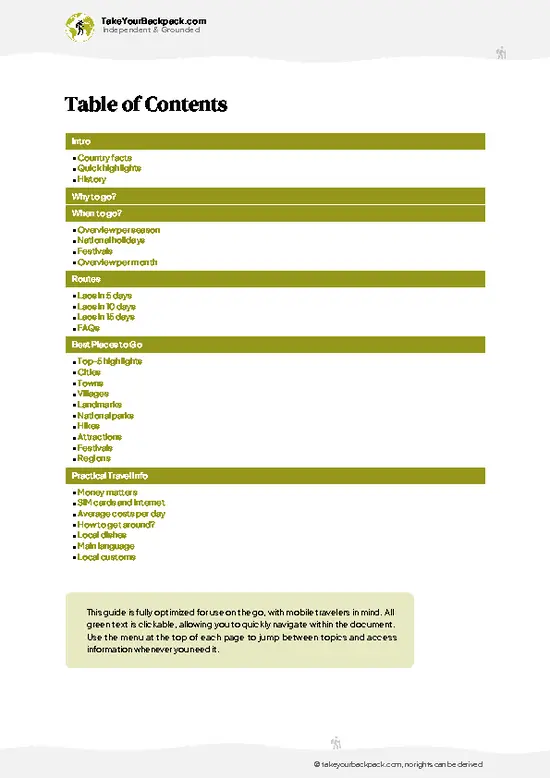
An offline-friendly backpacking guide with optimized travel routes, ranked highlights, transport advice, and the best areas to stay.
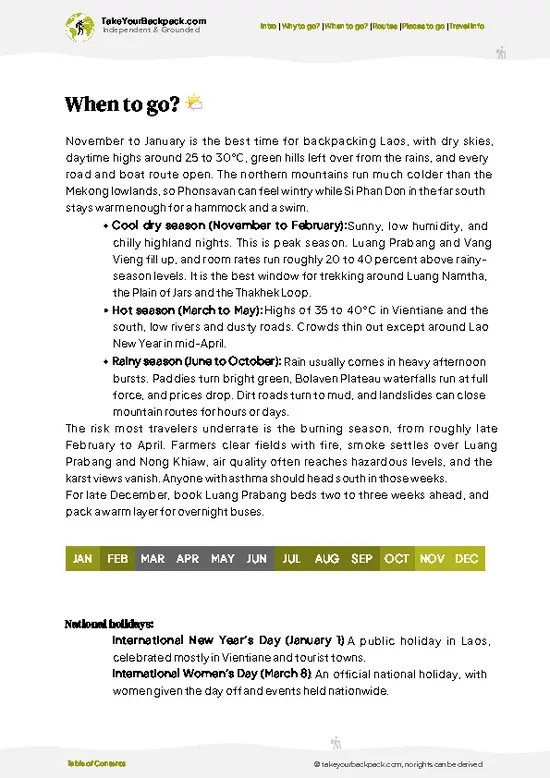
example page 0 from our offline Travel Guide for Laos
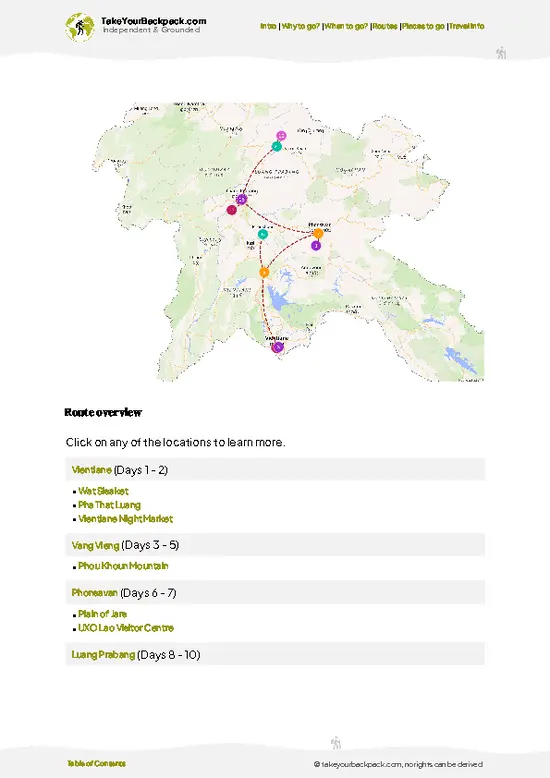
example page 1 from our offline Travel Guide for Laos
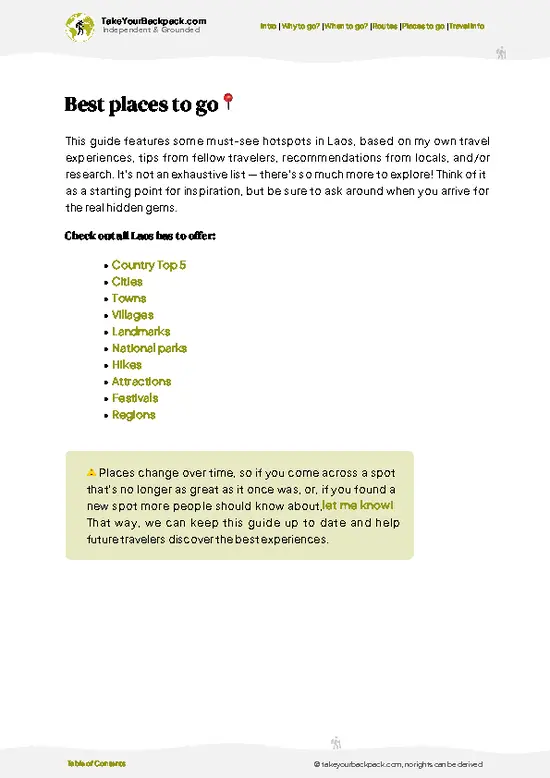
example page 2 from our offline Travel Guide for Laos
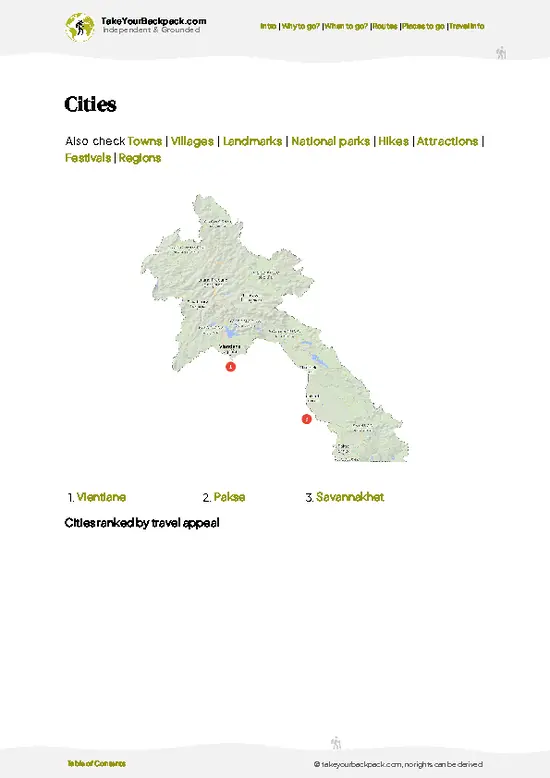
example page 3 from our offline Travel Guide for Laos
example page 4 from our offline Travel Guide for Laos
example page 5 from our offline Travel Guide for Laos
example page 6 from our offline Travel Guide for Laos
example page 7 from our offline Travel Guide for Laos
The digital guide (313 pages) contains:
80 highlights, ranked by travel appeal
Optimized 5, 10 & 15-day travel routes
Cities, national parks, landmarks, beaches
How to get around
Offline-friendly for travel without Wi-Fi
👉 Click to see all 30+ guide features

📅 Plan smarter in minutes, not weeks
Month by month travel advice
Festivals & national holidays
Budget expectations

🗺️ Go to the right places, skip the overrated ones
Honest pros & cons of destinations
Top hikes, parks & viewpoints
Lesser-known places most travelers miss
Clear “worth it vs skip it” guidance

🛏️ Travel smoothly without rookie mistakes
Best areas to stay
Transport systems explained simply
Common scams & safety advice
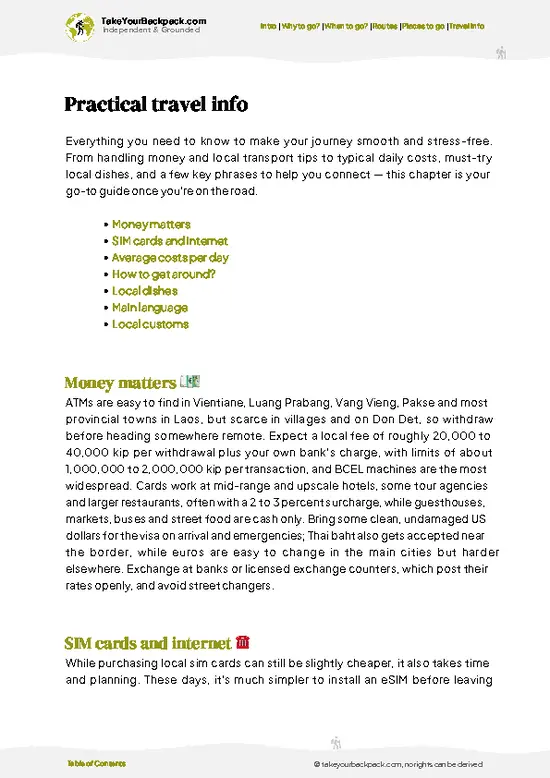
SIM cards, money & practical tips

🌍 Understand the country, not just visit it
Culture & traditions
52 Essential phrases & customs
Festivals worth planning around
Traveler-friendly historical context
Insights that make places more meaningful

📱 Built for real travel conditions
Fully downloadable PDF
Works completely offline
Optimized for phone use
Useful in remote areas & buses
Everything in one place
Save weeks of stressful planning
Get instant access to your full guide. 30‑day money-back guarantee.


By proceeding you agree to our terms.
Sent to your inbox immediately after payment • 100% Secure Checkout
Best Backpacking Travel Advisor 2025 tourism awardBest Backpacking
Travel Advisor
2025
What others say about Take Your Backpack Guides:
⭐⭐⭐⭐⭐
Fantastic, amazing amount of information!
⭐⭐⭐⭐⭐
My goodness this is amazing, it's what I've been looking for hats off too you!
⭐⭐⭐⭐⭐
I think this is absolutely BRILLIANT
⭐⭐⭐⭐
Very complete and informative. It's still missing places, but I gotta to commend you
⭐⭐⭐⭐⭐
This is truly amazing, thank you, can't wait to explore it with my kids!
⭐⭐⭐⭐⭐
Awesome resource, thank you!
⭐⭐⭐⭐⭐
This is amazing! Can't wait to explore the ones I haven't seen
⭐⭐⭐⭐
I love this! Well done, great idea.
⭐⭐⭐⭐⭐
Thanks for taking the time to make this gem!
⭐⭐⭐⭐⭐
This might be the best website I've ever seen.
⭐⭐⭐⭐⭐
Congratulations, and thank you so much for your work; it's incredibly valuable.
⭐⭐⭐⭐
In all seriousness I think you did a great job pointing out the important spots
⭐⭐⭐⭐⭐
10/10 very good
⭐⭐⭐⭐⭐
As someone who's only just starting to visit regularly this is awesome, thank you.
⭐⭐⭐⭐
Thank you very much! I'm going to visit my dad, it's going to be very useful!
⭐⭐⭐⭐⭐
This is really cool! We'll be travelling for the first time and this definitely come in handy.
⭐⭐⭐⭐⭐
You are now our minister of culture, congratulations 👨‍💼
⭐⭐⭐⭐⭐
Just wanted to tell you that this is a pearl! Going to follow your recommendations.
⭐⭐⭐⭐⭐
This is so cool. I'll definitely be using the resource for my travels soon.
⭐⭐⭐⭐⭐
This is very impressive! Good work.
⭐⭐⭐⭐⭐
This is an amazing and informative site. Very well done!

🛏️ Where to stay?Choosing the right base

The Traditional Arts and Ethnology Centre (TAEC) sits in Luang Prabang’s quieter side, but don’t be fooled—this isn’t the part of town where you’ll find the party scene or endless backpacker bars. For those who want to soak in the culture without sacrificing safety or social vibes, the best spots to crash are within walking distance of the Old Quarter, especially near the Nam Khan River. This area strikes a rare balance: it’s close enough to the TAEC to pop in early before the crowds arrive, yet lively enough to meet fellow travelers over cheap beer or street food after a day of cultural deep-dives. … read more 👉
The Traditional Arts and Ethnology Centre (TAEC) sits in Luang Prabang’s quieter side, but don’t be fooled—this isn’t the part of town where you’ll find the party scene or endless backpacker bars. For those who want to soak in the culture without sacrificing safety or social vibes, the best spots to crash are within walking distance of the Old Quarter, especially near the Nam Khan River. This area strikes a rare balance: it’s close enough to the TAEC to pop in early before the crowds arrive, yet lively enough to meet fellow travelers over cheap beer or street food after a day of cultural deep-dives.

The Old Quarter’s streets are safe, well-trodden, and peppered with guesthouses and small hostels that attract solo backpackers and budget travelers who want to connect without the chaos of the main tourist drag. You won’t find the Instagram-perfect luxury here, but you will find the pulse of real Luang Prabang—authentic, approachable, and surprisingly affordable. This is where the magic of the TAEC experience extends beyond the museum walls into genuine human connection.

👛 Costs (as of 23 March 2026)How expensive it really is

As of the most recent estimates, the entrance fee to the Traditional Arts and Ethnology Centre in Luang Prabang, Laos, is 25,000 Lao Kip per person, approximately €3. Children under 12 years old receive free admission. Additional costs may include guided tours, workshops, and special events, which vary in price. For example, a private guided tour is available for $25 per group (up to 12 people), excluding admission. Workshops, such as Hmong Embroidery or Bamboo Weaving, are priced at $20 per person, with an optional ethnic lunch for $13 per person. Please note that exchange rates fluctuate, so it's advisable to check the current rates before your visit. ([taeclaos.org](https://www.taeclaos.org/visit/tours-workshops/?utm_source=openai))
⚠️ Prices can change and everyone travels differently, so take this as a rough guide. Hope it helps you plan your adventure!

Other Laotian attractions near Traditional Arts and Ethnology Centre

Explore more nearby:


💡 Not sure where to go next?
Create a personalized itinerary for Laos including Traditional Arts and Ethnology Centre and the places that fit your trip.

Generate my itinerary

👉 Discover all attractions

Or checkout all Laos has to offer (think cities, towns, villages, national parks, hikes, beaches, festivals)
Country photo of Laos

We 💚 feedbackSumming up the experience

The Traditional Arts and Ethnology Centre isn’t some polished, crowd-pleaser museum. It’s a bit rough around the edges, which is exactly why it’s worth your time. The real magic is in the quiet moments—watching artisans work, hearing stories that don’t make the tourist brochures. Just know it’s not flashy, but it’s honest, deep, and somehow quietly powerful.

✍️ Help improve this page!
The information on this page is based on in-depth research, insights shared by experienced travelers, and feedback from the local travel community in Laos. While every effort is made to keep the information accurate and current, conditions can change — so if you spot anything incorrect or outdated, please get in touch.


🙋‍♂️ Give feedback

👋 Meet the founderWho’s Behind Take Your Backpack?

Johan, backpacker and founder of TakeYourBackpackHi, I’m Johan (Netherlands 🇳🇱), the creator of TakeYourBackpack. Over the past decade, I’ve backpacked through 80+ countries across six continents, gaining extensive experience with independent travel, long-term trips, and overland routes.

This site is built on a combination of firsthand travel experience and carefully curated insights from other backpackers. Many guides are based on places I’ve personally visited, while others bring together tips, observations, and practical advice shared by trusted travelers I’ve met along the way.

The goal is to provide realistic, experience-driven guidance — not generic itineraries — so you can explore destinations with better context, clearer expectations, and more confidence.

Get full Laos guide •
Instant download • 80 highlights • Full Offline guide