×

Laos🇱🇦 | best attractionsDiscover the 10 Best attractions Across Laos

Laos offers a distinct blend of attractions shaped by its rugged landscapes, slow pace, and deep-rooted traditions. The country’s appeal lies in its contrasts—from the misty highlands of Luang Prabang to the laid-back riverbanks of the Mekong in the south. For backpackers and independent travelers, choosing the right destination means balancing factors like seasonal weather, which can turn dusty trails into slippery challenges, and regional infrastructure that ranges from well-trodden paths to remote, off-grid villages. These choices directly affect your experience of local culture, safety, budget, and the ease of moving between sites. Understanding these nuances is key to unlocking Laos’s authentic rhythm and rewards.

By Johan Kruseman 🇳🇱 | Updated June 13, 2026
Explore the best festivals in Laos

Why go?Why These attraction Stand Out

Why These Attractions Matter

Laos stands apart in Southeast Asia for travelers seeking a blend of raw nature and deep-rooted culture, but it demands patience and a willingness to embrace slower rhythms. Unlike its more developed neighbors, Laos offers an unhurried pace where the journey itself—often over rough roads or winding river routes—becomes part of the experience. This trade-off between accessibility and immersion means visitors often spend more time reaching attractions, but gain a richer connection to the landscape and local life. The country’s mountainous terrain and dense forests shape its attractions, rewarding those who endure physical challenges with views and encounters that feel untouched by mass tourism.

Historically, Laos’s relative isolation has preserved traditions and a … read more 👉
Why These Attractions Matter

Laos stands apart in Southeast Asia for travelers seeking a blend of raw nature and deep-rooted culture, but it demands patience and a willingness to embrace slower rhythms. Unlike its more developed neighbors, Laos offers an unhurried pace where the journey itself—often over rough roads or winding river routes—becomes part of the experience. This trade-off between accessibility and immersion means visitors often spend more time reaching attractions, but gain a richer connection to the landscape and local life. The country’s mountainous terrain and dense forests shape its attractions, rewarding those who endure physical challenges with views and encounters that feel untouched by mass tourism.

Historically, Laos’s relative isolation has preserved traditions and a sense of authenticity that can feel rare in a globalized world. However, this also means infrastructure is limited; expect basic facilities and slower services, which can frustrate those used to convenience. The tropical monsoon climate further complicates travel timing, with heavy rains making some routes impassable and transforming the environment dramatically between seasons.

Ultimately, attractions in Laos matter because they offer a chance to engage with a landscape and culture that resist easy consumption. The effort required to reach and appreciate these places is part of their value, rewarding travelers who prioritize depth over speed and authenticity over polish.
How the List Was Created
The list of best attractions in Laos is created based on cultural significance or entertainment value. If you feel a attraction is missing in this list, please let us know.

When to go?Optimal Periods for Travel

Seasonal Rhythms Shape Every Step

Laos wears its seasons like a well-worn jacket—each one marked by distinct weather that shapes how you experience its attractions. The dry season, stretching roughly from late fall through early spring, offers the clearest skies and firm trails. This is when the air feels crisp in the morning, and the sun’s warmth settles in without the oppressive humidity. It’s the time when rivers run lower, revealing rocky banks and ancient riverbeds that invite exploration without the risk of sudden floods.

Balancing Crowds and Climate

The dry months also draw the most visitors, so expect popular spots to hum with activity. Prices for accommodations and tours tend to climb, reflecting demand. If you prefer fewer people and don’t mind a bit of unpredictability, the shoulder … read more 👉

Seasonal Rhythms Shape Every Step

Laos wears its seasons like a well-worn jacket—each one marked by distinct weather that shapes how you experience its attractions. The dry season, stretching roughly from late fall through early spring, offers the clearest skies and firm trails. This is when the air feels crisp in the morning, and the sun’s warmth settles in without the oppressive humidity. It’s the time when rivers run lower, revealing rocky banks and ancient riverbeds that invite exploration without the risk of sudden floods.

Balancing Crowds and Climate

The dry months also draw the most visitors, so expect popular spots to hum with activity. Prices for accommodations and tours tend to climb, reflecting demand. If you prefer fewer people and don’t mind a bit of unpredictability, the shoulder seasons—just before the rains or as they taper off—offer a quieter, more intimate experience. Trails might be softer underfoot, and the landscape shifts from dusty browns to fresh greens, but occasional showers can interrupt plans.

The Wet Season’s Double-Edged Sword

The monsoon months bring heavy rain, often in intense bursts that transform dirt paths into slippery challenges. Many attractions become harder to reach, and some roads may be impassable. Yet, this is when the countryside bursts into lushness, waterfalls swell, and the air smells of wet earth and growing things. If you’re prepared for mud and sudden weather shifts, the wet season reveals a side of Laos that’s raw and deeply alive, rewarding those who embrace its rhythm with a quieter, greener world.

attraction hoppingSuggested Travel Strategies

Mapping Laos’ Attractions into a Cohesive Journey

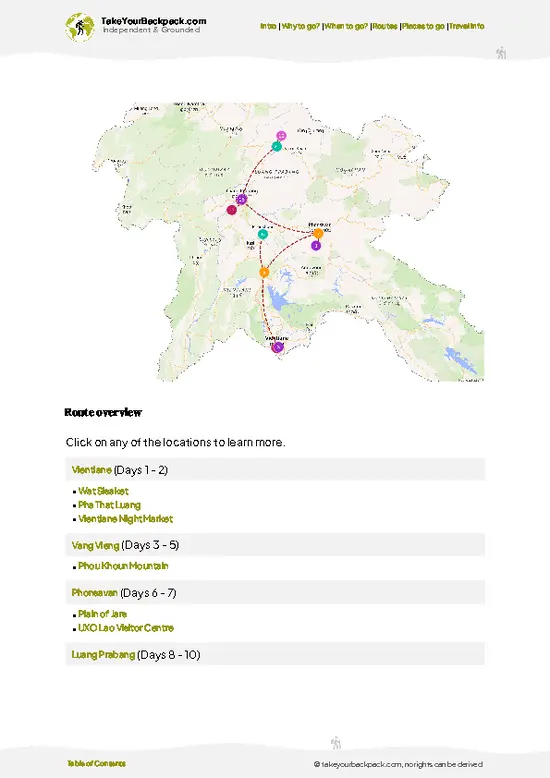
Laos’ attractions naturally cluster into distinct regions—north, central, and south—each with its own rhythm and character. Efficient travel flows along a logical path, typically starting in the north where mountain trails and ethnic villages demand slower pacing, then moving southward toward river towns and cultural hubs that reward a more relaxed tempo. This north-to-south progression minimizes backtracking and maximizes immersion.

Balancing Time and Experience

Expect to spend at least two full days in major hubs to absorb their layered atmospheres—one day barely scratches the surface. Nature-heavy stops, like trekking or waterfall visits, require half to a full day to appreciate the terrain and the quiet moments between exertion. Rushing … read more 👉

Mapping Laos’ Attractions into a Cohesive Journey

Laos’ attractions naturally cluster into distinct regions—north, central, and south—each with its own rhythm and character. Efficient travel flows along a logical path, typically starting in the north where mountain trails and ethnic villages demand slower pacing, then moving southward toward river towns and cultural hubs that reward a more relaxed tempo. This north-to-south progression minimizes backtracking and maximizes immersion.

Balancing Time and Experience

Expect to spend at least two full days in major hubs to absorb their layered atmospheres—one day barely scratches the surface. Nature-heavy stops, like trekking or waterfall visits, require half to a full day to appreciate the terrain and the quiet moments between exertion. Rushing through these spots sacrifices the sensory payoff: the cool mist on your skin, the crunch of leaves underfoot, the sudden burst of a panoramic view after a tough climb.

Common Pitfalls and Trade-offs

A frequent mistake is cramming too many stops into a short window, chasing quantity over quality. This leads to fatigue and superficial encounters. Another is underestimating travel times on Laos’ winding roads, which can turn a planned half-day transfer into a full-day ordeal. Budget travelers often face the choice between slower, cheaper buses and pricier flights or private transfers that save time but cut into funds for local experiences.

Strategic Flexibility

Allow breathing room in your schedule to linger where the vibe clicks or to recover from unexpected delays. Prioritize depth over speed—sometimes the reward isn’t just the destination but the unhurried moments along the way, like a quiet sunset over the Mekong or the scent of fresh coffee in a mountain village. This approach turns logistical challenges into part of the trip’s texture, making the journey itself a layered experience rather than a checklist.

The ListMust-Visit attractions in Laos

1 Kuang Si Falls Bear Rescue Centre

sun bear enclosures, forest habitat, wildlife conservation

Observe rescued bears in a naturalistic setting while understanding the challenges of wildlife protection near Kuang Si’s forested waterfalls.

2 Wat Xieng Thong

ornate mosaics, sweeping rooflines, royal temple

Admire intricate glass mosaics and distinctive architecture at a temple central to Luang Prabang’s ceremonial life.

3 Pha That Luang Stupa

golden stupa, Buddhist pilgrimage, national symbol

Walk around Laos’s most important religious monument, where annual festivals and daily rituals reflect deep spiritual traditions.

4 Royal Palace Museum

colonial architecture, royal artifacts, throne hall

Step through preserved halls displaying royal regalia and personal items from the country’s last monarchy.

5 Wat Sisaket

thousand Buddha images, cloistered courtyard, mural paintings

Wander among rows of Buddha statues and faded murals in Vientiane’s oldest surviving temple compound.

6 Patuxai Victory Monument

concrete arch, panoramic city views, war memorial

Climb the stairs inside this monument for a broad perspective over Vientiane and insight into Laos’s modern history.

7 Luang Prabang Night Market

handmade textiles, street food stalls, evening atmosphere

Browse local crafts and sample regional snacks as the main street transforms into a lively marketplace after sunset.

8 COPE Visitor Centre

prosthetics, rehabilitation, Laos war legacy

Learn how unexploded ordnance continues to affect daily life in Laos and see firsthand the impact of rehabilitation efforts.

9 Ock Pop Tok Living Crafts Centre

silk weaving, artisan workshops, Mekong riverside

Watch skilled weavers at work and learn about traditional Lao textile techniques in a riverside setting.

10 Traditional Arts and Ethnology Centre

ethnic textiles, cultural exhibits, minority groups

Discover the diversity of Laos’s ethnic communities through displays of traditional clothing, tools, and everyday objects.

11 UXO Lao Visitor Centre

de-mining equipment, field operations, awareness campaigns

See the tools and methods used to clear landmines and learn about the daily work of clearance teams in Laos.

12 UXO Information Centre

cluster munitions, survivor stories, educational displays

Gain a clear understanding of the ongoing risks from unexploded ordnance and the realities faced by affected communities.

13 Vientiane Night Market

riverfront stalls, local snacks, evening shopping

Stroll along the Mekong as vendors set up nightly, offering affordable goods and a relaxed place to unwind after dark.

14 Wat Phu Champasak Museum

Khmer relics, temple artifacts, ancient sculpture

View carved stonework and religious objects that reveal the history of the Wat Phu temple complex and its regional influence.

Think you know Laos?

Prove you’re a true local — uncover 4 lesser-known attractions in Laos that locals tend to keep to themselves.
Loading the map 🌍

Expert viewExpert Commentary on attractions

Expert Commentary


Laos demands a certain rhythm from you—a slow burn rather than a sprint. The country’s attractions aren’t about ticking boxes but about savoring moments that unfold with patience. You’ll want to aim for a handful of key experiences, maybe three to five, depending on your pace and appetite for travel grit. Trying to cram more risks turning the trip into a checklist, which misses the point entirely. Laos rewards those who linger, who let the dust settle on their boots before moving on.

Time is your first currency here. The roads are often rough, the distances deceptive. What looks like a short hop on the map can stretch into a half-day affair, especially if you’re relying on local transport. Factor in this slower pace when planning your visit to multiple attractions. Budget-wise, … read more 👉

Expert Commentary


Laos demands a certain rhythm from you—a slow burn rather than a sprint. The country’s attractions aren’t about ticking boxes but about savoring moments that unfold with patience. You’ll want to aim for a handful of key experiences, maybe three to five, depending on your pace and appetite for travel grit. Trying to cram more risks turning the trip into a checklist, which misses the point entirely. Laos rewards those who linger, who let the dust settle on their boots before moving on.

Time is your first currency here. The roads are often rough, the distances deceptive. What looks like a short hop on the map can stretch into a half-day affair, especially if you’re relying on local transport. Factor in this slower pace when planning your visit to multiple attractions. Budget-wise, Laos is generally kind to the wallet, but the trade-off is often comfort and convenience. Guesthouses are basic but clean, and meals are fresh and flavorful, yet don’t expect the polished infrastructure of more developed neighbors. This is part of the charm but also a constraint—pack patience and a flexible schedule.

Prioritizing attractions means tuning into what moves you most—whether it’s the raw pulse of nature, the quiet dignity of ancient temples, or the hum of local markets. Laos’s cultural fabric is woven tightly with tradition and spirituality, so respect is non-negotiable. Dress modestly when visiting religious sites, and be mindful of local customs. The people are warm but reserved; a genuine smile and a quiet approach go a long way. Safety-wise, Laos is generally low-risk, but the uneven terrain and limited medical facilities in remote areas mean you should travel with a basic first aid kit and a cautious mindset.

The sensory payoff is worth every bump and detour. Imagine the scent of damp earth after a sudden rain, the sharp tang of lemongrass in a roadside meal, or the golden light filtering through dense jungle canopy. These are not postcard moments but lived experiences that stay with you. The reward often comes in the form of a quiet vista after a sweaty climb or the cool relief of a local beer shared with new friends under a starlit sky. These moments feel earned because the journey to them is real and unvarnished.

Regional variation is significant. Northern Laos tends to be cooler, with rugged hills and ethnic minority villages that offer a glimpse into ways of life largely untouched by time. The south is more tropical, with lush river valleys and slower rhythms. Infrastructure improves closer to major towns but expect rougher conditions as you move off the beaten path. This means your choice of attractions will also depend on your tolerance for travel discomfort and your desire for authenticity. If you want ease and comfort, stick closer to well-trodden areas. For raw, unfiltered Laos, prepare for some rough roads and basic facilities.

One of the biggest trade-offs is balancing ambition with reality. Laos’s beauty is often found in its quiet corners, but reaching those corners can be physically demanding and time-consuming. If you’re chasing a packed itinerary, you’ll miss the subtle textures of daily life that make Laos unique. Instead, choose fewer attractions and dive deeper. This approach lets you absorb the atmosphere, engage with locals, and appreciate the slow unfolding of the landscape.

In short, Laos isn’t a place to rush. It’s a place to feel under your skin—the sticky heat, the dusty trails, the unexpected kindness of a stranger. The best attractions here don’t just show you something new; they invite you to slow down and see the world through a different lens. That’s the real reward, and it’s worth every bit of effort it takes to get there.

✈️ The backpacker research shortcutLaos Travel Guide

An offline-friendly backpacking guide with optimized travel routes, ranked highlights, transport advice, and the best areas to stay.
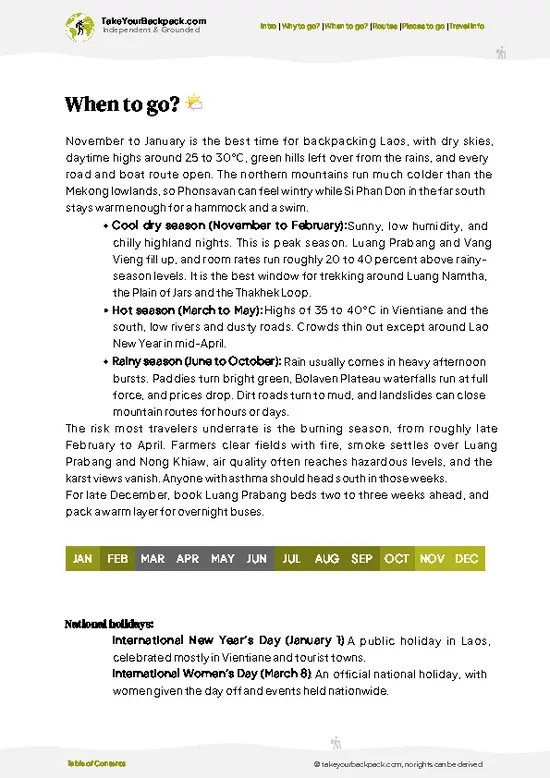
example page 0 from our offline Travel Guide for Laos
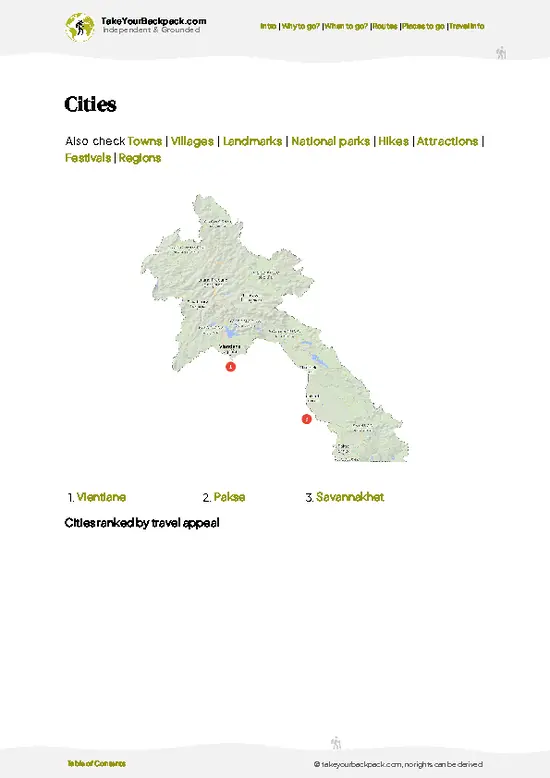
example page 1 from our offline Travel Guide for Laos
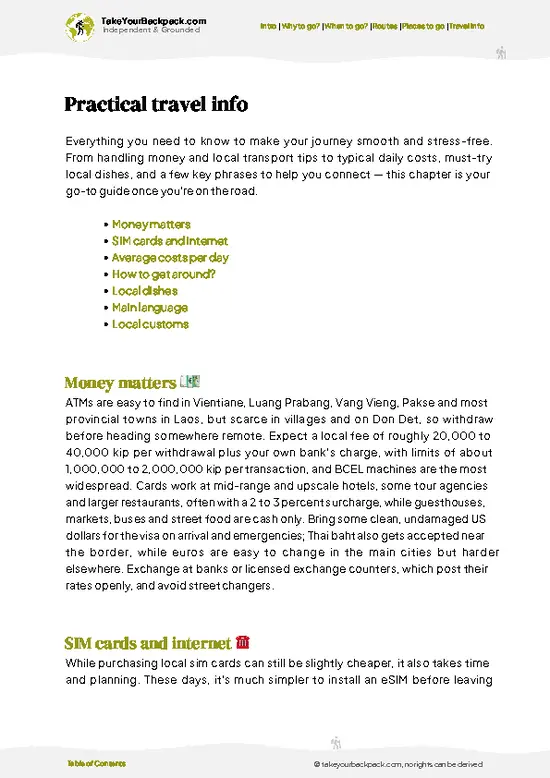
example page 2 from our offline Travel Guide for Laos
example page 3 from our offline Travel Guide for Laos
example page 4 from our offline Travel Guide for Laos
example page 5 from our offline Travel Guide for Laos
example page 6 from our offline Travel Guide for Laos
example page 7 from our offline Travel Guide for Laos
The digital guide (313 pages) contains:
80 highlights, ranked by travel appeal
Optimized 5, 10 & 15-day travel routes
Cities, national parks, landmarks, beaches
How to get around
Offline-friendly for travel without Wi-Fi
👉 Click to see all 30+ guide features

📅 Plan smarter in minutes, not weeks
Month by month travel advice
Festivals & national holidays
Budget expectations

🗺️ Go to the right places, skip the overrated ones
Honest pros & cons of destinations
Top hikes, parks & viewpoints
Lesser-known places most travelers miss
Clear “worth it vs skip it” guidance

🛏️ Travel smoothly without rookie mistakes
Best areas to stay
Transport systems explained simply
Common scams & safety advice
SIM cards, money & practical tips

🌍 Understand the country, not just visit it
Culture & traditions
52 Essential phrases & customs
Festivals worth planning around
Traveler-friendly historical context
Insights that make places more meaningful

📱 Built for real travel conditions
Fully downloadable PDF
Works completely offline
Optimized for phone use
Useful in remote areas & buses
Everything in one place
Save weeks of stressful planning
Get instant access to your full guide. 30‑day money-back guarantee.


By proceeding you agree to our terms.
Sent to your inbox immediately after payment • 100% Secure Checkout
Best Backpacking Travel Advisor 2025 tourism awardBest Backpacking
Travel Advisor
2025
What others say about Take Your Backpack Guides:
⭐⭐⭐⭐⭐
Fantastic, amazing amount of information!
⭐⭐⭐⭐⭐
My goodness this is amazing, it's what I've been looking for hats off too you!
⭐⭐⭐⭐⭐
I think this is absolutely BRILLIANT
⭐⭐⭐⭐
Very complete and informative. It's still missing places, but I gotta to commend you
⭐⭐⭐⭐⭐
This is truly amazing, thank you, can't wait to explore it with my kids!
⭐⭐⭐⭐⭐
Awesome resource, thank you!
⭐⭐⭐⭐⭐
This is amazing! Can't wait to explore the ones I haven't seen
⭐⭐⭐⭐
I love this! Well done, great idea.
⭐⭐⭐⭐⭐
Thanks for taking the time to make this gem!
⭐⭐⭐⭐⭐
This might be the best website I've ever seen.
⭐⭐⭐⭐⭐
Congratulations, and thank you so much for your work; it's incredibly valuable.
⭐⭐⭐⭐
In all seriousness I think you did a great job pointing out the important spots
⭐⭐⭐⭐⭐
10/10 very good
⭐⭐⭐⭐⭐
As someone who's only just starting to visit regularly this is awesome, thank you.
⭐⭐⭐⭐
Thank you very much! I'm going to visit my dad, it's going to be very useful!
⭐⭐⭐⭐⭐
This is really cool! We'll be travelling for the first time and this definitely come in handy.
⭐⭐⭐⭐⭐
You are now our minister of culture, congratulations 👨‍💼
⭐⭐⭐⭐⭐
Just wanted to tell you that this is a pearl! Going to follow your recommendations.
⭐⭐⭐⭐⭐
This is so cool. I'll definitely be using the resource for my travels soon.
⭐⭐⭐⭐⭐
This is very impressive! Good work.
⭐⭐⭐⭐⭐
This is an amazing and informative site. Very well done!

🛏️ Where to stay?Where to Base Yourself

Yes — Laos has plenty of hostels and budget accommodation concentrated in Luang Prabang (Old Quarter/riverside), Vang Vieng (riverfront/main strip), Vientiane (city centre/riverside), Pakse (central/market area) and the 4000 Islands (Don Det/Don Khone).
Choose Luang Prabang for the best selection of guesthouses, direct access to temples and a safe, quiet night scene though prices can be higher; pick Vang Vieng for outdoor activities and a lively riverside strip but expect noisy, party-oriented hostels; use Vientiane as a calm transport hub with basic-budget options near the Mekong; opt for Pakse when you need a base for the Bolaven Plateau and onward buses despite fewer choices; and head to … read more 👉
Yes — Laos has plenty of hostels and budget accommodation concentrated in Luang Prabang (Old Quarter/riverside), Vang Vieng (riverfront/main strip), Vientiane (city centre/riverside), Pakse (central/market area) and the 4000 Islands (Don Det/Don Khone).
Choose Luang Prabang for the best selection of guesthouses, direct access to temples and a safe, quiet night scene though prices can be higher; pick Vang Vieng for outdoor activities and a lively riverside strip but expect noisy, party-oriented hostels; use Vientiane as a calm transport hub with basic-budget options near the Mekong; opt for Pakse when you need a base for the Bolaven Plateau and onward buses despite fewer choices; and head to Don Det/Don Khone for the cheapest bungalows, very slow island life and limited facilities or transport.
Book ahead for Luang Prabang in high season and plan extra time for transfers to and from the islands or Pakse because schedules and amenities are often basic.

If you enjoy meeting fellow travelers, consider choosing hostels with high ratings for atmosphere. On the other hand, if you prefer having your own space, a hotel might be a better option.

LaosExpand Your Journey

👋 Meet the founderWho’s Behind Take Your Backpack?

Johan, backpacker and founder of TakeYourBackpackHi, I’m Johan (Netherlands 🇳🇱), the creator of TakeYourBackpack. Over the past decade, I’ve backpacked through 80+ countries across six continents, gaining extensive experience with independent travel, long-term trips, and overland routes.

This site is built on a combination of firsthand travel experience and carefully curated insights from other backpackers. Many guides are based on places I’ve personally visited, while others bring together tips, observations, and practical advice shared by trusted travelers I’ve met along the way.

The goal is to provide realistic, experience-driven guidance — not generic itineraries — so you can explore destinations with better context, clearer expectations, and more confidence.

Get full Laos guide •
Instant download • 80 highlights • Full Offline guide