×

Laos🇱🇦 | citiesVientianeLaotian temples, riverside sunset, diplomatic quarter | things to do and best time to go

Explore SavannakhetExplore Boun Bang Fai

Backpacking in Vientiane
🏆 Top pickcity ranked #1
By Johan Kruseman 🇳🇱 | Updated June 14, 2026

Ten years ago Vientiane felt like a sleepy river town with a capital city costume: dusty streets, a few French-era facades, and the Mekong as the main event. Today it’s still laid-back, but there’s more traffic, more cafés, more air-con malls, and a clearer sense that Laos is plugging into the regional grid. You’re in the country’s southwest, right on the Thai border, a night bus from Luang Prabang and a hop from Bangkok or Udon Thani. For backpackers, Vientiane is a strategic stop, not a showstopper: cheap guesthouses, easy visas, decent street food, and simple navigation, but fewer “wow” sights than Luang Prabang or Vang Vieng. Pha That Luang, Patuxai, COPE Visitor Centre, and riverside sunsets are the main hits; nightlife is modest and scattered. It’s safe, mellow, and slightly bureaucratic-feeling—a place to reset, extend visas, and watch Laos change in slow motion.

Discover everything you want to know in the 📖 Laos Travel Guide.


Get your Laos guide
80 ranked highlights, routes & tips, works offline (313 pages)
Loading the map 🌍
CLICK TO FILTER
cities
towns
villages
landmarks
national parks
hikes
beaches
attractions
festivals
regions
SHOW COUNTRY’S BESTSHOW ALL

✨ Why go?
Ranked #1 city in Laos
Why visitors keep coming back

Vientiane is a strategic pit stop for backpackers weaving through Southeast Asia. It’s not just a city; it’s a basecamp that offers a blend of affordability and comfort. Hostels here are plentiful, providing a great mix of social vibes and quiet corners for downtime. You can grab a hearty meal for just a couple of bucks, making it easy to fuel up without breaking the bank.

The city is walkable, allowing you to soak in the local atmosphere without the hassle of transport. You’ll find charming cafes and street vendors lining the streets, perfect for a quick snack or a leisurely coffee.

While Vientiane may not boast the same number of highlights as other capitals, it serves as a launchpad for day trips to stunning nearby sites. The nightlife is laid-back yet lively, with bars that cater to … read more 👉
Vientiane is a strategic pit stop for backpackers weaving through Southeast Asia. It’s not just a city; it’s a basecamp that offers a blend of affordability and comfort. Hostels here are plentiful, providing a great mix of social vibes and quiet corners for downtime. You can grab a hearty meal for just a couple of bucks, making it easy to fuel up without breaking the bank.

The city is walkable, allowing you to soak in the local atmosphere without the hassle of transport. You’ll find charming cafes and street vendors lining the streets, perfect for a quick snack or a leisurely coffee.

While Vientiane may not boast the same number of highlights as other capitals, it serves as a launchpad for day trips to stunning nearby sites. The nightlife is laid-back yet lively, with bars that cater to both early birds and night owls.

If you’re on a longer journey, Vientiane offers easy onward travel options to neighboring countries. It’s a place to recharge, plan your next move, and enjoy the simple pleasures of life in Laos. If you’re seeking a deeper experience, this city is worth more than just a fleeting visit.
Want to include Vientiane in your Laos route?
Create a personalized Laos itinerary that includes Vientiane and the places that fit your trip — based on your travel style, budget, and available time. Get your route in seconds.

Generate my trip

💡 HighlightsDon't-miss highlights and experiences

  1. Pha That Luang — Laos’s national symbol: a massive gilded stupa with strong religious and historical importance. Visiting at dawn or late afternoon gives the best light and a real sense of how central Buddhism and national identity are to the city.
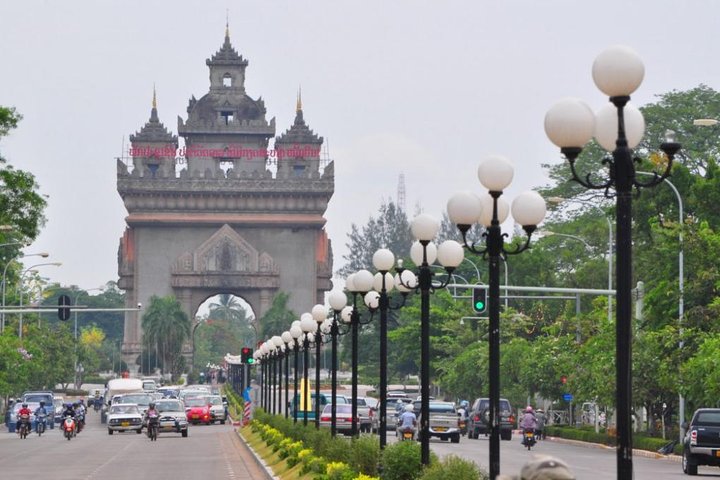
  2. Patuxai (Victory Gate) — Vientiane’s quirky Arc de Triomphe-style monument offering rooftop views across the city and quirky WWII-era murals inside. Climb up for sunset to see the river, the French-era grid, and the stupa skyline all at once.
  3. Wat Si Saket — The city’s oldest surviving temple with long cloisters lined by thousands of tiny Buddha statues and lacquered murals. It’s quiet, atmospheric, and a great place to study Lao temple architecture without the tourist crush.
  4. Haw Phra Kaew (Hor Phra Keo) — Once home to the Emerald Buddha, now
read more 👉
  1. Pha That Luang — Laos’s national symbol: a massive gilded stupa with strong religious and historical importance. Visiting at dawn or late afternoon gives the best light and a real sense of how central Buddhism and national identity are to the city.
  2. Patuxai (Victory Gate) — Vientiane’s quirky Arc de Triomphe-style monument offering rooftop views across the city and quirky WWII-era murals inside. Climb up for sunset to see the river, the French-era grid, and the stupa skyline all at once.
  3. Wat Si Saket — The city’s oldest surviving temple with long cloisters lined by thousands of tiny Buddha statues and lacquered murals. It’s quiet, atmospheric, and a great place to study Lao temple architecture without the tourist crush.
  4. Haw Phra Kaew (Hor Phra Keo) — Once home to the Emerald Buddha, now a museum of religious art and elegant teak architecture. Small but rich in carved Buddha images, royal regalia and the story of Lao royal life.
  5. That Dam (Black Stupa) — A squat, mossy stupa in the city center shrouded in naga legends; locals still come to leave offerings. It’s a compact, atmospheric spot that contrasts with the gilded glory of That Luang and tells a different side of local belief.
  6. COPE Visitor Centre — A short, highly impactful stop where you can learn about UXO (unexploded ordnance) issues and the prosthetic work that helps survivors. Honest, interactive exhibits and a small shop where purchases support the program—visit with time to listen and reflect.
  7. Wat Si Muang — A living city shrine where locals come for blessings, spirit-calling and everyday rituals; expect incense, crowds of devotees and a lively, authentic religious atmosphere. It’s one of the best places to see how contemporary faith is practiced in Vientiane.
  8. Wat Ong Teu Mahawihan — Famous for its big bronze Buddha and traditional wooden architecture, this monastery is an active center for meditation and monastic learning. Friendly monks often welcome visitors and it’s quieter than the more tourist-trodden temples.
  9. Lao National Museum (Haw Kham / Royal Palace Museum) — Housed in an elegant colonial/royal building, the museum covers Lao history from prehistory to the modern era with royal artifacts, costumes and historical exhibits. Good context if you want the backstory after seeing the city’s monuments.
  10. Mekong Riverside Promenade & Night Market — The riverfront is where Vientiane breathes: sunset walks, street food stalls, local families, and a compact night market selling crafts and snacks. Great for people-watching, cheap eats, and catching the relaxed pace that sets Vientiane apart.
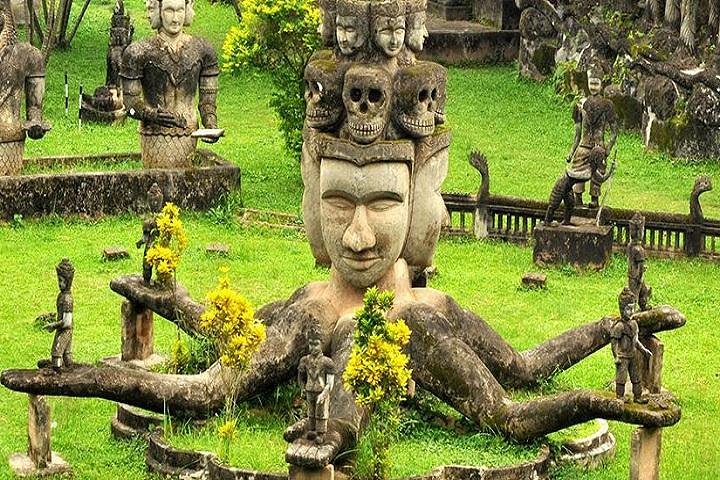
For easy day trips from Vientiane, consider Buddha Park (Xieng Khuan) to see its giant concrete sculptures, Nam Ngum Reservoir for village life and boat rides, or Phou Khao Khouay National Park for waterfalls and short hikes.
Spotted a mistake or missing something? Contact us.

Things to do in Vientiane

Ratings based on Tripadvisor reviews. When you book through this link, you support our work at no extra cost to you.

🏘️ NeighborhoodsKey areas and districts to know

Vientiane, the capital of Laos, offers a unique blend of laid-back charm and vibrant culture. Here’s how to navigate its neighborhoods for the best backpacking experience.

Champs-Élysées: This area is the heart of Vientiane’s backpacker scene. Expect a lively vibe with plenty of budget hostels and guesthouses. The streets are walkable, making it easy to explore local eateries and markets. Nightlife is buzzing here, with bars and live music, but you can still find quiet corners. It’s ideal for short stays, as everything is within reach.

That Luang: Home to the iconic Pha That Luang stupa, this neighborhood is more tranquil. It’s less touristy, offering a glimpse into local life. Accommodation is slightly pricier but still reasonable. Walkability is decent, though you might want to rent a … read more 👉
Vientiane, the capital of Laos, offers a unique blend of laid-back charm and vibrant culture. Here’s how to navigate its neighborhoods for the best backpacking experience.

Champs-Élysées: This area is the heart of Vientiane’s backpacker scene. Expect a lively vibe with plenty of budget hostels and guesthouses. The streets are walkable, making it easy to explore local eateries and markets. Nightlife is buzzing here, with bars and live music, but you can still find quiet corners. It’s ideal for short stays, as everything is within reach.

That Luang: Home to the iconic Pha That Luang stupa, this neighborhood is more tranquil. It’s less touristy, offering a glimpse into local life. Accommodation is slightly pricier but still reasonable. Walkability is decent, though you might want to rent a bike for longer distances. Perfect for those seeking a peaceful retreat while still being close to cultural sites.

Talat Sao: This bustling market area is a must-visit for food lovers. It’s a bit chaotic, but that’s part of its charm. Budget options abound, and the street food is some of the best in the city. The area is walkable, but be prepared for crowds. Great for short visits, especially if you want to dive into local flavors.

Nam Phu: This neighborhood is quieter, with a more residential feel. It’s a good spot for longer stays, offering a mix of guesthouses and apartments. While nightlife is minimal, you’ll find cozy cafes and parks. Walkability is good, and it’s a short ride to the city center, making it a solid choice for those wanting a slower pace.

⌛️ 1 dayA smart one-day plan

Vientiane, the capital of Laos, is a city where the pace is slow, and the charm is palpable. It’s a blend of French colonial architecture, Buddhist temples, and a riverside vibe that invites you to linger. You can easily spend a day here soaking in the culture and flavors without feeling rushed.

Start your morning at the morning market, Talat Sao. It’s a sensory overload of colors and sounds. Grab a bowl of khao piak sen, a comforting noodle soup that will fuel your day. As you wander through the market, take in the local produce and handmade crafts. This is where you’ll find the heart of Vientiane, away from the tourist traps.

After breakfast, head to the iconic Patuxai, a triumphal arch reminiscent of Paris’s Arc de Triomphe. Climb to the top for a panoramic view of the city. The surrounding … read more 👉
Vientiane, the capital of Laos, is a city where the pace is slow, and the charm is palpable. It’s a blend of French colonial architecture, Buddhist temples, and a riverside vibe that invites you to linger. You can easily spend a day here soaking in the culture and flavors without feeling rushed.

Start your morning at the morning market, Talat Sao. It’s a sensory overload of colors and sounds. Grab a bowl of khao piak sen, a comforting noodle soup that will fuel your day. As you wander through the market, take in the local produce and handmade crafts. This is where you’ll find the heart of Vientiane, away from the tourist traps.

After breakfast, head to the iconic Patuxai, a triumphal arch reminiscent of Paris’s Arc de Triomphe. Climb to the top for a panoramic view of the city. The surrounding park is perfect for a leisurely stroll, dotted with locals enjoying their morning routines.

In the afternoon, make your way to the serene That Luang, the national symbol of Laos. This golden stupa is a sight to behold, especially in the afternoon light. Spend some time reflecting in the peaceful atmosphere. For a unique twist, venture to the nearby neighborhood of Ban Anou, where you can find lesser-known temples and local cafes. This area is often overlooked by tourists, but it offers a genuine glimpse into daily life in Vientiane.

As evening approaches, head to the Mekong Riverfront. Grab a seat at one of the many riverside restaurants. Enjoy a plate of grilled fish while watching the sunset paint the sky. The night market here is also worth a stroll; it’s a great place to pick up handmade souvenirs and sample street food.

In just one day, you’ve tasted the essence of Vientiane, balancing comfort and exploration without sacrificing the local experience. Each choice you made—whether to linger at a market or climb a stupa—was a step toward a richer understanding of this charming city.
Turn your Vientiane visit into an Laos adventure
Build a complete Laos route with Vientiane, hidden gems, must-see destinations, and realistic travel times included.

Generate my trip

🌤️ When to go?Seasonal considerations and timing


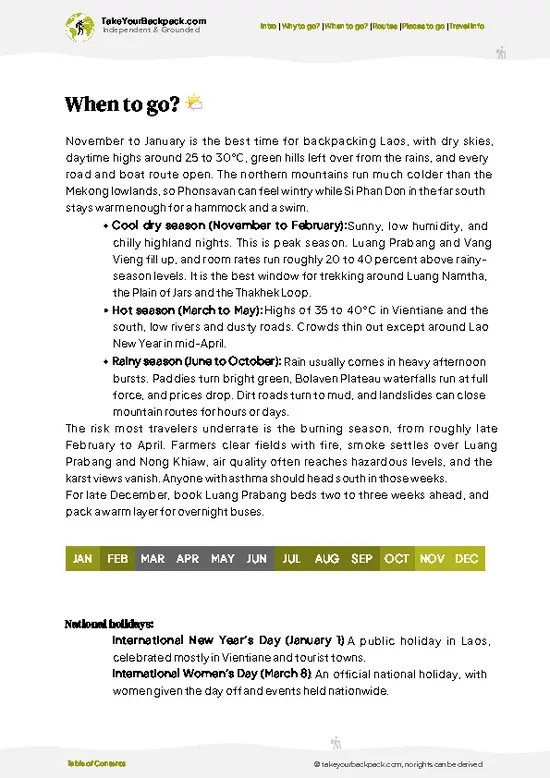
  • Topic: Weather and Temperature – Vientiane’s dry season from November to February offers the most comfortable backpacking conditions, with daytime highs around 25-30°C (77-86°F) and cooler nights dipping to 15-20°C (59-68°F). The wet season (May to October) brings heavy rains and humidity, pushing temperatures higher but often making outdoor plans unpredictable.

  • Topic: Daylight Hours – Daylight remains fairly consistent year-round, roughly 11 to 12 hours daily. However, during the dry season, clearer skies mean more reliable sunlight for early starts and late afternoons, perfect for exploring without rushing.

  • Topic: Crowds – Peak tourist flow aligns with the dry season, especially December and January, when regional travelers flock to Vientiane. This means busier guesthouses and popular
read more 👉

  • Topic: Weather and Temperature – Vientiane’s dry season from November to February offers the most comfortable backpacking conditions, with daytime highs around 25-30°C (77-86°F) and cooler nights dipping to 15-20°C (59-68°F). The wet season (May to October) brings heavy rains and humidity, pushing temperatures higher but often making outdoor plans unpredictable.

  • Topic: Daylight Hours – Daylight remains fairly consistent year-round, roughly 11 to 12 hours daily. However, during the dry season, clearer skies mean more reliable sunlight for early starts and late afternoons, perfect for exploring without rushing.

  • Topic: Crowds – Peak tourist flow aligns with the dry season, especially December and January, when regional travelers flock to Vientiane. This means busier guesthouses and popular spots but also a livelier atmosphere. The wet season sees fewer tourists, offering more solitude but less social buzz.

  • Topic: Seasonal Activities – The dry season hosts key events like the That Luang Festival in November, a cultural highlight with parades and ceremonies. The wet season’s lush landscapes are ideal for nature hikes, but some trails may be slippery or inaccessible.

  • Topic: Price Fluctuations – Accommodation and flights spike during the dry season due to demand. Booking ahead is smart. The wet season offers lower prices and potential bargains, but you trade off comfort and activity options.


Pro-tip: Aim for the shoulder months of November or February to balance pleasant weather, manageable crowds, and better prices—maximizing your backpacking value in Vientiane.


source: climatestotravel.comJANJanuary: highly recommended for travelingFEBFebruary: excellent for travelingMARMarch: good for travelingAPRApril: fair for travelingMAYMay: fair for travelingJUNJune: fair for travelingJULJuly: fair for travelingAUGAugust: fair for travelingSEPSeptember: fair for travelingOCTOctober: good for travelingNOVNovember: excellent for travelingDECDecember: highly recommended for traveling
when-to-go

✈️ The backpacker research shortcutLaos Travel Guide

An offline-friendly backpacking guide with optimized travel routes, ranked highlights, transport advice, and the best areas to stay.
example page 0 from our offline Travel Guide for Laos
example page 1 from our offline Travel Guide for Laos
example page 2 from our offline Travel Guide for Laos
example page 3 from our offline Travel Guide for Laos
example page 4 from our offline Travel Guide for Laos
example page 5 from our offline Travel Guide for Laos
example page 6 from our offline Travel Guide for Laos
example page 7 from our offline Travel Guide for Laos
The digital guide (313 pages) contains:
80 highlights, ranked by travel appeal
Optimized 5, 10 & 15-day travel routes
Cities, national parks, landmarks, beaches
How to get around
Offline-friendly for travel without Wi-Fi
👉 Click to see all 30+ guide features

📅 Plan smarter in minutes, not weeks
Month by month travel advice
Festivals & national holidays
Budget expectations

🗺️ Go to the right places, skip the overrated ones
Honest pros & cons of destinations
Top hikes, parks & viewpoints
Lesser-known places most travelers miss
Clear “worth it vs skip it” guidance

🛏️ Travel smoothly without rookie mistakes
Best areas to stay
Transport systems explained simply
Common scams & safety advice
SIM cards, money & practical tips

🌍 Understand the country, not just visit it
Culture & traditions
52 Essential phrases & customs
Festivals worth planning around
Traveler-friendly historical context
Insights that make places more meaningful

📱 Built for real travel conditions
Fully downloadable PDF
Works completely offline
Optimized for phone use
Useful in remote areas & buses
Everything in one place
Save weeks of stressful planning
Get instant access to your full guide. 30‑day money-back guarantee.


By proceeding you agree to our terms.
Sent to your inbox immediately after payment • 100% Secure Checkout
Best Backpacking Travel Advisor 2025 tourism awardBest Backpacking
Travel Advisor
2025
What others say about Take Your Backpack Guides:
⭐⭐⭐⭐⭐
Fantastic, amazing amount of information!
⭐⭐⭐⭐⭐
My goodness this is amazing, it's what I've been looking for hats off too you!
⭐⭐⭐⭐⭐
I think this is absolutely BRILLIANT
⭐⭐⭐⭐
Very complete and informative. It's still missing places, but I gotta to commend you
⭐⭐⭐⭐⭐
This is truly amazing, thank you, can't wait to explore it with my kids!
⭐⭐⭐⭐⭐
Awesome resource, thank you!
⭐⭐⭐⭐⭐
This is amazing! Can't wait to explore the ones I haven't seen
⭐⭐⭐⭐
I love this! Well done, great idea.
⭐⭐⭐⭐⭐
Thanks for taking the time to make this gem!
⭐⭐⭐⭐⭐
This might be the best website I've ever seen.
⭐⭐⭐⭐⭐
Congratulations, and thank you so much for your work; it's incredibly valuable.
⭐⭐⭐⭐
In all seriousness I think you did a great job pointing out the important spots
⭐⭐⭐⭐⭐
10/10 very good
⭐⭐⭐⭐⭐
As someone who's only just starting to visit regularly this is awesome, thank you.
⭐⭐⭐⭐
Thank you very much! I'm going to visit my dad, it's going to be very useful!
⭐⭐⭐⭐⭐
This is really cool! We'll be travelling for the first time and this definitely come in handy.
⭐⭐⭐⭐⭐
You are now our minister of culture, congratulations 👨‍💼
⭐⭐⭐⭐⭐
Just wanted to tell you that this is a pearl! Going to follow your recommendations.
⭐⭐⭐⭐⭐
This is so cool. I'll definitely be using the resource for my travels soon.
⭐⭐⭐⭐⭐
This is very impressive! Good work.
⭐⭐⭐⭐⭐
This is an amazing and informative site. Very well done!

🛏️ Where to stay?Best areas and accommodation options

In Vientiane, the backpacker sweet spot is the area around the Mekong River near the city center, especially close to the Night Market and the stretch along Samsenthai Road. This zone nails the balance between safety, social buzz, and budget-friendly options. It’s where you’ll find a cluster of hostels packed with solo travelers and small groups, making it easy to plug into the scene without feeling like you’re in a tourist bubble. The vibe here is relaxed but lively—think street food stalls, casual bars, and easy access to cultural spots like temples and museums, all within walking distance.
read more 👉
In Vientiane, the backpacker sweet spot is the area around the Mekong River near the city center, especially close to the Night Market and the stretch along Samsenthai Road. This zone nails the balance between safety, social buzz, and budget-friendly options. It’s where you’ll find a cluster of hostels packed with solo travelers and small groups, making it easy to plug into the scene without feeling like you’re in a tourist bubble. The vibe here is relaxed but lively—think street food stalls, casual bars, and easy access to cultural spots like temples and museums, all within walking distance.

Compared to the quieter, more residential neighborhoods farther from the river, this area trades a bit of calm for convenience and connection. You’re sacrificing some peace and quiet, but gaining instant access to the pulse of the city and a built-in social network. On the other hand, the more upscale districts near the airport or business centers offer comfort but at a cost that’s out of sync with backpacker budgets and social needs.

Hostel availability is solid here, with a range of dorms and private rooms that cater to the budget-conscious without skimping on atmosphere. Staying in this central corridor means you’re not just saving money—you’re investing in the kind of spontaneous encounters and easy logistics that turn a trip into a story worth telling.

🚌 Getting aroundMoving around without the hassle

Vientiane moves at its own pace—neither frantic nor sluggish, but a curious blend of laid-back rhythms and bursts of activity. The city’s pulse isn’t dictated by strict timetables but by a mix of local intuition and practical necessity. You won’t find a metro map or a regimented bus schedule here. Instead, transport flows like a river, sometimes predictable, often improvisational. Understanding this flow is your secret weapon. It’s about reading the cues, spotting the right ride, and knowing when to walk to soak in the city’s subtle shifts. This is where your time, money, and comfort trade-offs come alive, and mastering them means you’re not just moving—you’re winning.


  • Walking: The ultimate budget option and the best way to absorb Vientiane’s quiet charm. Most central attractions are within
read more 👉
Vientiane moves at its own pace—neither frantic nor sluggish, but a curious blend of laid-back rhythms and bursts of activity. The city’s pulse isn’t dictated by strict timetables but by a mix of local intuition and practical necessity. You won’t find a metro map or a regimented bus schedule here. Instead, transport flows like a river, sometimes predictable, often improvisational. Understanding this flow is your secret weapon. It’s about reading the cues, spotting the right ride, and knowing when to walk to soak in the city’s subtle shifts. This is where your time, money, and comfort trade-offs come alive, and mastering them means you’re not just moving—you’re winning.


  • Walking: The ultimate budget option and the best way to absorb Vientiane’s quiet charm. Most central attractions are within a 20-30 minute stroll. Zero cost, full control over your pace, and the chance to discover street vendors and local life up close. Comfort depends on weather—hot, humid days demand early starts or late strolls.


  • Songthaews (Shared Pickup Trucks): These are the city’s informal buses, cheap and flexible. Fares hover around 5,000-10,000 LAK (less than $1.20). No fixed schedules—vehicles leave when full, so expect some waiting. Speed varies with traffic, but they cover most routes within 15-30 minutes. Comfort is basic: open-air seating, no air conditioning, and a bumpy ride. Perfect if you want to save money and don’t mind a bit of unpredictability.


  • Tuk-Tuks: The classic Southeast Asian choice for short hops. Prices start at about 20,000 LAK ($2.20) for a quick trip. Faster than songthaews since they don’t wait to fill up, but you pay for that speed. Negotiation is key—always agree on a fare before hopping in. Comfort is decent, with a roof and some protection from the elements, but expect noise and exhaust fumes.


  • Motorbike Rentals: If you’re comfortable on two wheels, renting a motorbike offers unmatched freedom. Daily rates start around 70,000 LAK ($7.50). You control your schedule entirely, can reach outskirts or hidden spots, and avoid waiting. The trade-off is safety—traffic can be chaotic, and roads vary in quality. Helmets are a must, and insurance is rare, so caution is your best friend.


  • City Buses: Limited but growing, city buses run on a few main routes with fares around 5,000 LAK. They operate roughly from 6 AM to 6 PM. Slower than tuk-tuks or motorbikes due to multiple stops and less frequent service. Comfort is basic, but air-conditioned buses are rare. Best for travelers prioritizing cost over speed and willing to navigate less predictable schedules.


Mastering Vientiane’s transport means balancing these options like a chess game. Walk when the city’s heartbeat invites you to slow down. Jump on a songthaew or bus when your budget demands it, but time is flexible. Call a tuk-tuk if you need to save minutes and don’t mind spending a bit more. Rent a motorbike if freedom and exploration top your list, accepting the risk that comes with it. Each choice is a trade-off, and knowing exactly what you’re giving up—minutes, comfort, or cash—turns your trip into a strategic win.

👛 Costs (as of 20 April 2026)Travel costs and budget guide for Vientiane

Backpacking in Vientiane, Laos, offers a clear trade-off map between time, money, and comfort, with costs that reflect its laid-back pace and affordability.
  • Dorm Accommodation (High Season): Expect to pay around $6 to $10 per night. High season drives prices up slightly due to demand, but dorms remain basic and clean, often with shared bathrooms and simple amenities.
  • Dorm Accommodation (Off-Season): Prices drop to about $4 to $7 per night. Fewer tourists mean better bargaining power and sometimes upgrades for the same price, but the vibe can be quieter.
  • Meals: Street food and local eateries dominate the scene. A typical meal costs between $1.50 and $3.50. Western-style cafes or restaurants push that to $5-$8, but sticking to local fare keeps your budget lean and your experience authentic.
read more 👉
Backpacking in Vientiane, Laos, offers a clear trade-off map between time, money, and comfort, with costs that reflect its laid-back pace and affordability.
  • Dorm Accommodation (High Season): Expect to pay around $6 to $10 per night. High season drives prices up slightly due to demand, but dorms remain basic and clean, often with shared bathrooms and simple amenities.
  • Dorm Accommodation (Off-Season): Prices drop to about $4 to $7 per night. Fewer tourists mean better bargaining power and sometimes upgrades for the same price, but the vibe can be quieter.
  • Meals: Street food and local eateries dominate the scene. A typical meal costs between $1.50 and $3.50. Western-style cafes or restaurants push that to $5-$8, but sticking to local fare keeps your budget lean and your experience authentic.
  • Local Transport: Tuk-tuks and motorbike taxis are the go-to options. Short rides usually cost $1 to $2. Negotiation is expected, and rides longer than 3 km might push closer to $3 or $4.
  • City Transport Pass: Vientiane lacks a formal city transport pass system, so budgeting for daily tuk-tuk rides or occasional motorbike rentals is more practical than a fixed pass.
  • Basic Activities/Entry Fees: Temples and museums typically charge between $1 and $3. More specialized tours or cultural shows can range from $5 to $15, depending on the experience’s depth and exclusivity.
  • Miscellaneous Expenses: This covers bottled water, snacks, SIM cards, and occasional small purchases. Budget around $2 to $5 daily to cover these essentials without surprises.

In total, a backpacker in Vientiane can expect to spend roughly $15 to $30 per day. This range balances the essentials with a bit of comfort and flexibility, letting you decide where to tighten or loosen the purse strings based on your priorities.


source: tourismlaos.org
⚠️ Prices can change and everyone travels differently, so take this as a rough guide. Hope it helps you plan your adventure!

🚌 Day tripsWhere to go beyond the main area

Vientiane is a fantastic launchpad for day trips that pack a punch without draining your wallet or time. Here’s how to maximize your experience while keeping the logistics smooth.

**Buddha Park**
Just a short 30-minute drive from Vientiane, Buddha Park is a surreal collection of over 200 concrete sculptures, blending Hindu and Buddhist iconography. The park’s whimsical atmosphere invites you to wander and snap photos, making it a perfect spot for a leisurely afternoon. Entry is usually around 5,000 LAK, and you can easily grab a tuk-tuk for about 50,000 LAK round trip. Aim for early morning or late afternoon to avoid the heat and crowds. A common mistake? Skipping the chance to explore the nearby Mekong River for a sunset view afterward.


**Vang Vieng**
About a three-hour bus ride … read more 👉
Vientiane is a fantastic launchpad for day trips that pack a punch without draining your wallet or time. Here’s how to maximize your experience while keeping the logistics smooth.

**Buddha Park**
Just a short 30-minute drive from Vientiane, Buddha Park is a surreal collection of over 200 concrete sculptures, blending Hindu and Buddhist iconography. The park’s whimsical atmosphere invites you to wander and snap photos, making it a perfect spot for a leisurely afternoon. Entry is usually around 5,000 LAK, and you can easily grab a tuk-tuk for about 50,000 LAK round trip. Aim for early morning or late afternoon to avoid the heat and crowds. A common mistake? Skipping the chance to explore the nearby Mekong River for a sunset view afterward.


**Vang Vieng**
About a three-hour bus ride from Vientiane, Vang Vieng is known for its stunning limestone karsts and outdoor adventures. You can kayak down the Nam Song River or hike to the Blue Lagoon for a refreshing dip. Expect to spend around 100,000 LAK on transport and another 50,000 LAK for activities. The best time to visit is during the dry season, from November to April, when the weather is ideal for outdoor fun. Many first-timers underestimate the bus schedule, so check the times in advance to avoid long waits.
👉 Explore Vang Vieng

**Kuang Si Waterfalls**
While technically a bit farther away, a day trip to Kuang Si Waterfalls is absolutely worth it. Roughly four hours from Vientiane, the turquoise pools and cascading falls are a sight to behold. You can swim, hike, and even visit the bear sanctuary nearby. Total costs will be around 150,000 LAK for transport and entry fees. The best time to go is early in the day to beat the crowds and enjoy the serene beauty. A common misstep? Not bringing water shoes for the slippery rocks.


**That Luang Stupa**
Just a 15-minute ride from the city center, That Luang is the national symbol of Laos and a must-see. The golden stupa is stunning, especially in the morning light. Entry is free, and you can easily explore the surrounding area. Plan your visit in the early hours to soak in the peaceful atmosphere. First-timers often miss the small market nearby, where you can grab local snacks and souvenirs.


**Nam Ngum Lake**
About an hour from Vientiane, Nam Ngum Lake offers a tranquil escape with opportunities for boating and picnicking. The lake is surrounded by lush hills, making it a perfect spot for a day of relaxation. Expect to spend around 70,000 LAK for transport and a small fee for boat rentals. The best time to visit is during the cooler months, from November to February. Many backpackers overlook this serene spot, opting instead for more popular destinations.
Want to know what more Laos offers?
The Laos Travel Guide describes 80 highlights, from cities to national parks, from beaches to hikes

Get the Travel Guide -

🍲 FoodLocal Cuisine & Drinks

In Vientiane, **food** is a vibrant tapestry of flavors that tells the story of Laos. Start with **larb**, a zesty minced meat salad, often made with chicken or beef, seasoned with lime, fish sauce, and fresh herbs. It’s a dish that dances on your palate, balancing heat and freshness. Don’t miss **khao niaw**, sticky rice that’s a staple here; it’s not just food, it’s a way of life. You’ll find locals using their hands to mold it into little balls, perfect for scooping up dishes.

Street food stalls are where the magic happens. The **night market** is a bustling hub where you can sample everything from grilled skewers to crispy spring rolls. The aroma of sizzling meats and fresh herbs fills the air, inviting you to dive in. Casual eateries dot the streets, serving up hearty bowls of **khao … read more 👉
In Vientiane, **food** is a vibrant tapestry of flavors that tells the story of Laos. Start with **larb**, a zesty minced meat salad, often made with chicken or beef, seasoned with lime, fish sauce, and fresh herbs. It’s a dish that dances on your palate, balancing heat and freshness. Don’t miss **khao niaw**, sticky rice that’s a staple here; it’s not just food, it’s a way of life. You’ll find locals using their hands to mold it into little balls, perfect for scooping up dishes.

Street food stalls are where the magic happens. The **night market** is a bustling hub where you can sample everything from grilled skewers to crispy spring rolls. The aroma of sizzling meats and fresh herbs fills the air, inviting you to dive in. Casual eateries dot the streets, serving up hearty bowls of **khao soi**, a coconut curry noodle soup that warms the soul.

When it comes to drinks, try a **Beerlao**, the local brew that’s as refreshing as the Mekong breeze. Sip it while lounging at a riverside café, watching the sunset paint the sky.

Etiquette is simple: share food and enjoy the communal vibe. Eating together is a cherished custom, so don’t hesitate to join in. This is where the heart of Vientiane truly beats.

🛡️ SafetyScams, Hazards, and Annoyances

Vientiane is generally a safe city for backpackers, but like anywhere, a little awareness goes a long way. Stick to well-lit areas at night, especially if you’re wandering solo. The riverside promenade is lively and feels secure, but stray too far into quieter streets, and you might find yourself in less welcoming territory.

Common scams are minimal, but be cautious of overly friendly locals offering to guide you. They may expect a tip that feels more like a demand. Always agree on a price beforehand if you decide to take up any offers.

Watch out for the occasional tuk-tuk driver who might inflate fares. Use ride-hailing apps when possible; they provide a clear price and reduce the chance of haggling.

Annoyances can include persistent street vendors, but a polite “no, thank you” usually … read more 👉
Vientiane is generally a safe city for backpackers, but like anywhere, a little awareness goes a long way. Stick to well-lit areas at night, especially if you’re wandering solo. The riverside promenade is lively and feels secure, but stray too far into quieter streets, and you might find yourself in less welcoming territory.

Common scams are minimal, but be cautious of overly friendly locals offering to guide you. They may expect a tip that feels more like a demand. Always agree on a price beforehand if you decide to take up any offers.

Watch out for the occasional tuk-tuk driver who might inflate fares. Use ride-hailing apps when possible; they provide a clear price and reduce the chance of haggling.

Annoyances can include persistent street vendors, but a polite “no, thank you” usually does the trick. Carry yourself confidently, stay aware of your surroundings, and you’ll navigate Vientiane with ease.

Other Laotian cities near Vientiane

Explore more nearby:

  • Savannakhet—French-era architecture, dinosaur museum, riverside promenade| 275 km away
  • Pakse—Mekong confluence, market bustle, Bolaven Plateau gateway| 465 km away
  • Champasak—Wat Phou ruins, Mekong views, colonial villas| 485 km away

💡 Not sure where to go next?
Create a personalized itinerary for Laos including Vientiane and the places that fit your trip.

Generate my itinerary

👉 Discover all cities

Or checkout all Laos has to offer (think cities, towns, villages, national parks, hikes, beaches, festivals)
Country photo of Laos

We 💚 feedbackWhat to keep in mind

Vientiane has a laid-back charm that feels like a secret waiting to be discovered. The best surprise? The food scene—don’t miss the night market for fresh, flavorful dishes. Grab a bowl of khao soi and soak in the atmosphere. Just a heads-up: the city can be quiet, especially after dark, so plan your evenings accordingly. Embrace the slower pace; it’s a refreshing change from the chaos of other capitals. You’ll leave feeling more connected to the heart of Laos.

✍️ Help improve this page!
The information on this page is based on in-depth research, insights shared by experienced travelers, and feedback from the local travel community in Laos. While every effort is made to keep the information accurate and current, conditions can change — so if you spot anything incorrect or outdated, please get in touch.


🙋‍♂️ Give feedback

👋 Meet the founderWho’s Behind Take Your Backpack?

Johan, backpacker and founder of TakeYourBackpackHi, I’m Johan (Netherlands 🇳🇱), the creator of TakeYourBackpack. Over the past decade, I’ve backpacked through 80+ countries across six continents, gaining extensive experience with independent travel, long-term trips, and overland routes.

This site is built on a combination of firsthand travel experience and carefully curated insights from other backpackers. Many guides are based on places I’ve personally visited, while others bring together tips, observations, and practical advice shared by trusted travelers I’ve met along the way.

The goal is to provide realistic, experience-driven guidance — not generic itineraries — so you can explore destinations with better context, clearer expectations, and more confidence.

Get full Laos guide •
Instant download • 80 highlights • Full Offline guide