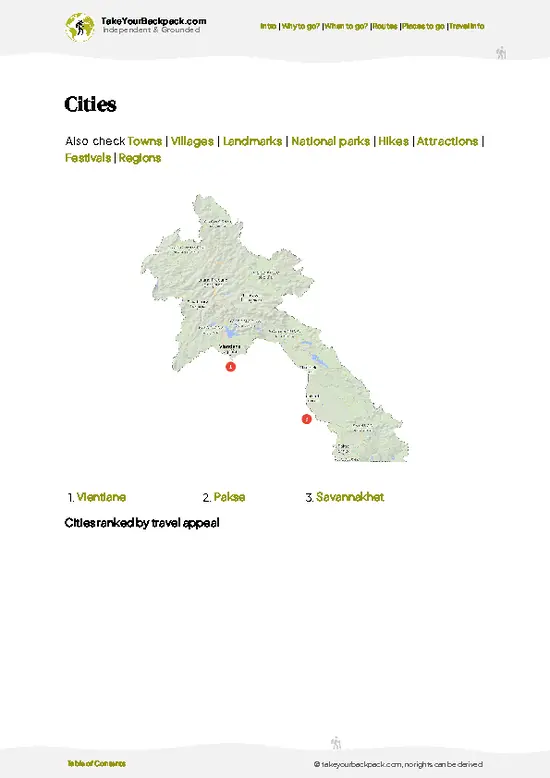
How many cities to visit: I advise
three to five cities in Laos on one trip. Roads are slow and bumpy, and every transfer swallows half a day of dust, curves and roadside stalls selling grilled bananas. Fewer stops mean you actually sit by the river with a Beerlao at dusk instead of staring through a bus window. Rushing means you collect names and miss the quiet.
Choosing between kinds of cities: If you like
culture, temples and markets, favor the old royal and colonial towns of the north and center, where dawn alms and French bakeries set the mood. If you want
adventure and nature, pick river or karst towns with kayaking, caves and waterfalls. If you want
quiet and low cost, head south, where life drifts at the pace of the Mekong and there are few other travelers. Social travelers do best …
read more 👉 How many cities to visit: I advise
three to five cities in Laos on one trip. Roads are slow and bumpy, and every transfer swallows half a day of dust, curves and roadside stalls selling grilled bananas. Fewer stops mean you actually sit by the river with a Beerlao at dusk instead of staring through a bus window. Rushing means you collect names and miss the quiet.
Choosing between kinds of cities: If you like
culture, temples and markets, favor the old royal and colonial towns of the north and center, where dawn alms and French bakeries set the mood. If you want
adventure and nature, pick river or karst towns with kayaking, caves and waterfalls. If you want
quiet and low cost, head south, where life drifts at the pace of the Mekong and there are few other travelers. Social travelers do best in the north, where hostels cluster and meeting people is easy.
What it costs: Budget
US$25 to 40 a day for a comfortable backpacker trip: dorm or basic room US$6 to 15, street meals US$2 to 5, a beer around US$1 to 1.50. Entry fees to temples and museums typically run US$1 to 5 each, and day tours with a guide US$20 to 45. Bus rides cost US$8 to 25 per leg, with the train at the higher end. Carry kip in cash, since many ATMs have withdrawal limits (often around 1,500,000 kip, roughly US$70) plus fees. You end up with enough left for a long riverside dinner.
Safety and cultural considerations: Cities in Laos are
generally calm, but bag snatching from motorbikes and theft in dorms occur, so lock your pack.
Scooter accidents are the biggest danger, because roads are potholed and wet in rainy season, so rent only with proper insurance and a helmet. Tap water is not safe to drink; buy sealed bottles or use a filter. Cover shoulders and knees at temples, take shoes off at doorways, and never touch a monk or point your feet at a Buddha image. Dress modestly in town too, as swimwear away from the water draws disapproval. Politics and the government are not topics for casual conversation, and drone use needs permission. In rural outskirts,
unexploded ordnance remains from the war, so stay on marked paths. Respect these rules and locals reply with warm, unhurried smiles.
v2.webp)

 Best Backpacking
.jpg) Hi, I’m Johan (Netherlands 🇳🇱), the creator of TakeYourBackpack. Over the past 3 decades, I’ve backpacked through 90+ countries across six continents, gaining extensive experience with independent travel, long-term trips, and overland routes.
Hi, I’m Johan (Netherlands 🇳🇱), the creator of TakeYourBackpack. Over the past 3 decades, I’ve backpacked through 90+ countries across six continents, gaining extensive experience with independent travel, long-term trips, and overland routes.