v2.webp)
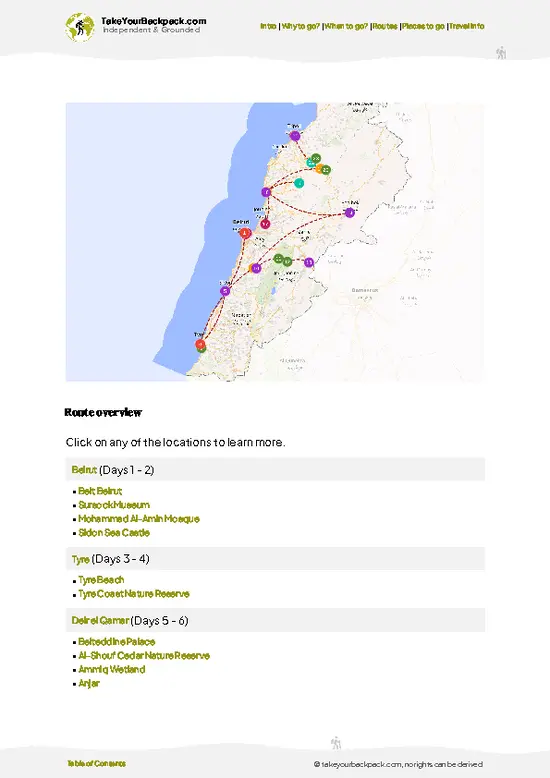
- Byblos Archaeological Site (Tell) — The reason people come: layers of human history stacked on a single hill. Walk stone streets that Phoenicians, Romans and Crusaders once used, see the Temple of the Obelisks and Phoenician royal tombs up close.
- Byblos Castle (Qalaat Jbeil) — A compact Crusader fortress built with reused Phoenician and Roman blocks. Climb the battlements for sea views, wander the internal rooms and imagine medieval life while gulls wheel overhead.
- Roman Theatre — Built into the archaeological complex but worth calling out: a small semicircular theatre still used for summer concerts and the Byblos International Festival. Great spot to appreciate Roman urban design and catch live performances if the timing’s right.
- Byblos Archaeological Museum — Tucked beside the castle,
- Byblos Archaeological Site (Tell) — The reason people come: layers of human history stacked on a single hill. Walk stone streets that Phoenicians, Romans and Crusaders once used, see the Temple of the Obelisks and Phoenician royal tombs up close.
- Byblos Castle (Qalaat Jbeil) — A compact Crusader fortress built with reused Phoenician and Roman blocks. Climb the battlements for sea views, wander the internal rooms and imagine medieval life while gulls wheel overhead.
- Roman Theatre — Built into the archaeological complex but worth calling out: a small semicircular theatre still used for summer concerts and the Byblos International Festival. Great spot to appreciate Roman urban design and catch live performances if the timing’s right.
- Byblos Archaeological Museum — Tucked beside the castle, this neat museum displays local finds: Phoenician inscriptions, sculptures and grave goods that give context to the ruins you just walked through.
- Old Souk (Historic Market) — Narrow alleys lined with wood-fronted shops, handicraft stalls, spices and small cafés. It’s the social heart of old Byblos — good for bargain hunting, people-watching and sampling street food.
- Old Port / Harbour & Corniche — Fishermen, wooden boats and fragments of ancient columns clustered along a photogenic shoreline. The corniche is perfect for a slow walk and some of the town’s best sunset views and seafood restaurants.
- St. John the Baptist Church — A modest medieval church near the castle with layers of Christian history, pretty icons and a peaceful courtyard. It’s a quiet counterpoint to the busier ruins around it.
- Byblos Wax & Fossil Museum — A small, quirky private museum in the old town with wax dioramas depicting local history and an interesting fossil collection. Not a blockbuster, but a hands-on, offbeat stop that fills in cultural details you won’t always get on the ruins trail.
- Phoenician Columns and Sea-wall Ruins — Scattered stone columns and fragments along the shoreline and near the harbour that testify to Byblos’s role as a maritime Phoenician city. They’re atmospheric, easy to walk to and great for photos or imagining ancient trade routes.
- Old Town Alleys, Ottoman Houses & Small Galleries — Wanderable streets of restored stone houses, boutique guesthouses, galleries and tiny cafés. This is where the town’s living culture sits — craftsmen, artists and everyday life interwoven with the ruins.
Spotted a mistake or missing something? Contact us.

Guided Small-Group Tour to Jeita, Harissa, Byblos with Lunch

Jeita Grotto,Harissa&Byblos Full-Day PRIVATE-CAR Trip from Beirut

Jeita Grotto, Harisa & Byblos: Small Group Tour with Hotel pickup

Byblos, Jeita Grotto & Harissa Day Trip -With Lunch

Jeita Grotto, Harissa & Byblos Small-Group Tour | Lunch Included

New Guided Semi-Private Tour to Jeita Grotto, Harissa & Byblos

Private Guided Jeita, Harissa & Byblos Tour | From Beirut

Best Tours in Lebanon, 3-days-with Pick-up & Drop-off

New Small-Group Tour Semi-Private to Jeita,Harissa&Byblos


 Best Backpacking
.jpg) Hi, I’m Johan (Netherlands 🇳🇱), the creator of TakeYourBackpack. Over the past 3 decades, I’ve backpacked through 90+ countries across six continents, gaining extensive experience with independent travel, long-term trips, and overland routes.
Hi, I’m Johan (Netherlands 🇳🇱), the creator of TakeYourBackpack. Over the past 3 decades, I’ve backpacked through 90+ countries across six continents, gaining extensive experience with independent travel, long-term trips, and overland routes.