×

Lesotho🇱🇸 | hikesSehlabathebe Plateausandstone outcrops, alpine grasslands, remote wilderness | things to do and best time to go

Explore Sani PassExplore Ts’ehlanyane River Trail

Backpacking in Sehlabathebe Plateau
By Johan Kruseman 🇳🇱 | Updated October 15, 2026

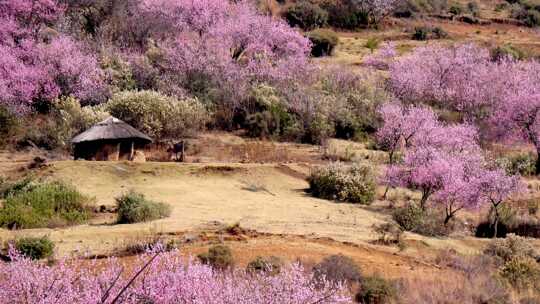
Most guides gloss over this, but here’s the kicker: Sehlabathebe Plateau isn’t just a remote patch of Lesotho wilderness—it’s a place where you’ll likely hike for hours without seeing another soul, not even a shepherd. That’s rare in Lesotho, where trails usually double as village highways. Tucked in the far southeast, inside Sehlabathebe National Park, the plateau sprawls at the edge of the Drakensberg, where Lesotho’s sky feels close enough to touch. The hike itself is a test of lungs and legs—long, exposed, and often muddy, with the wind snapping at your jacket and the grasslands rolling on forever. Scenery? Think wildflower meadows, sandstone arches, and pools so clear they look fake. Getting to the trailhead by public transport is a logistical headache—expect a patchwork of minibus rides and a final, bumpy stretch best tackled on foot or with a hired 4x4. Compared to the busier Maloti or Thaba-Bosiu routes, Sehlabathebe is raw, wild, and rewards every blister with a view that feels entirely yours.

Discover everything you want to know in the 📖 Lesotho Travel Guide.
Best time to go: September - May
Duration: 3 days
Distance: 30 kilometers
Total ascent: 1,200 meters


example page 0 from our offline Travel Guide for Lesotho
example page 1 from our offline Travel Guide for Lesotho
example page 2 from our offline Travel Guide for Lesotho
example page 3 from our offline Travel Guide for Lesotho
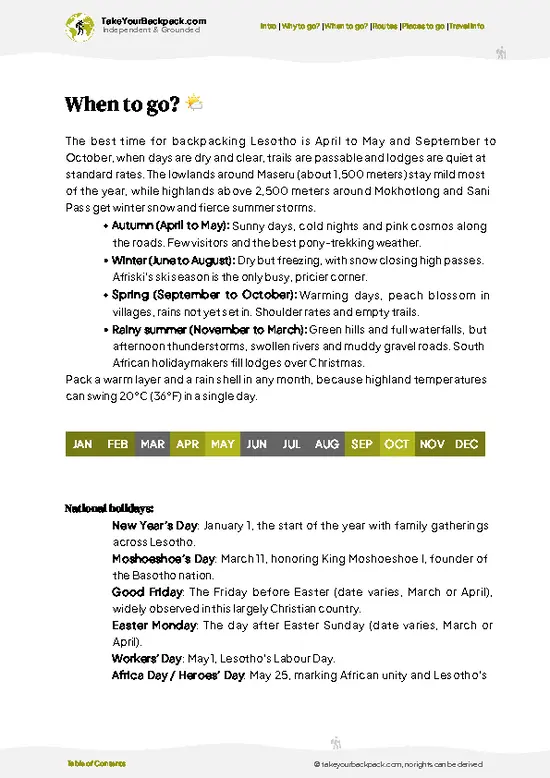
example page 4 from our offline Travel Guide for Lesotho
example page 5 from our offline Travel Guide for Lesotho
example page 6 from our offline Travel Guide for Lesotho
example page 7 from our offline Travel Guide for Lesotho
Loading the map 🌍
CLICK TO FILTER
cities
towns
villages
landmarks
national parks
hikes
attractions
festivals
regions
SHOW COUNTRY’S BESTSHOW ALL

✨ Why go?
Ranked #99 hike in Lesotho
What sets this place apart

The Sehlabathebe Plateau in Lesotho is a magnet for backpackers craving a mix of challenge and reward. The scenery-to-effort ratio here is off the charts. You’ll trek through rolling hills, vibrant grasslands, and rugged cliffs, all while soaking in views that feel like they belong in a postcard.

Getting there is a breeze. Public transport options are available, making it easy to hop on a bus and dive into the adventure without breaking the bank. The low cost of the hike means you can splurge on a local meal afterward without guilt.

What’s fantastic is the flexible distances. Whether you want a quick day hike or a multi-day trek, you can tailor your experience. This adaptability makes it a perfect fit for a longer backpacking route through Lesotho, allowing you to seamlessly connect with … read more 👉
The Sehlabathebe Plateau in Lesotho is a magnet for backpackers craving a mix of challenge and reward. The scenery-to-effort ratio here is off the charts. You’ll trek through rolling hills, vibrant grasslands, and rugged cliffs, all while soaking in views that feel like they belong in a postcard.

Getting there is a breeze. Public transport options are available, making it easy to hop on a bus and dive into the adventure without breaking the bank. The low cost of the hike means you can splurge on a local meal afterward without guilt.

What’s fantastic is the flexible distances. Whether you want a quick day hike or a multi-day trek, you can tailor your experience. This adaptability makes it a perfect fit for a longer backpacking route through Lesotho, allowing you to seamlessly connect with other stunning spots.

After a day of pushing your limits, the burn in your legs transforms into the sweet satisfaction of a cold beer at a local tavern, where stories of the trail flow as freely as the drinks.

💡 HighlightsPlaces and moments you shouldn't skip

  1. Big, empty plateau panoramas — Wide, high-altitude views that feel more like standing on a natural rooftop than a trail. The horizon drops off into gorges and distant peaks; sunrise and late-afternoon light turn the sandstone and grasslands into sharp, cinematic layers. Hikers get a real sense of space and isolation you don’t find on tighter forested routes.
  2. Weird sandstone towers and cliffs — Eroded rock pillars, honeycombed faces and sheer escarpments make for dramatic scenery and easy scrambling spots. The sculpted sandstone is photogenic and tactile—good for exploring nooks and getting closer to the geology that gives the plateau its character.
  3. Hidden San rock-art panels — Small, well-preserved paintings tucked into overhangs and caves. They’re intimate and evocative, showing people
… read more 👉
  1. Big, empty plateau panoramas — Wide, high-altitude views that feel more like standing on a natural rooftop than a trail. The horizon drops off into gorges and distant peaks; sunrise and late-afternoon light turn the sandstone and grasslands into sharp, cinematic layers. Hikers get a real sense of space and isolation you don’t find on tighter forested routes.
  2. Weird sandstone towers and cliffs — Eroded rock pillars, honeycombed faces and sheer escarpments make for dramatic scenery and easy scrambling spots. The sculpted sandstone is photogenic and tactile—good for exploring nooks and getting closer to the geology that gives the plateau its character.
  3. Hidden San rock-art panels — Small, well-preserved paintings tucked into overhangs and caves. They’re intimate and evocative, showing people and animals from a long time ago. Finding one feels like a private museum visit—just remember to look don’t touch, and keep respectful distance.
  4. Alpine wetlands, waterfalls and clear pools — Sehlabathebe’s blanket bogs, seepages and rivers create unexpected green pockets and clean plunge pools. In summer you’ll find carpets of flowers, tumbling cascades and perfect spots to cool off. These fragile wetlands also support rare plants and insects you won’t see on lower trails.
  5. Basotho shepherding life and local wildlife — You’ll often pass stone shelters, grazing flocks, Basotho ponies and shepherds in traditional dress. It’s a living cultural layer on the landscape. Keep an eye out for dassies (rock hyraxes), cliff-dwelling birds and, if you’re lucky, large raptors riding the thermals—wildlife encounters here feel uncrowded and authentic.
Spotted a mistake or missing something? Contact us.

Things to do near Sehlabathebe Plateau

Ratings based on Tripadvisor reviews. When you book through this link, you support our work at no extra cost to you.

🌤️ When to go?Choosing the right time of year

  • Weather: The plateau’s weather swings hard. Late spring through early autumn (October to April) offers the best shot at dry trails and clear skies. Winter months plunge temperatures below freezing, often blanketing the area in snow, which can stall your trek unless you’re geared for ice and cold.
  • Temperature: Daytime highs in summer hover around 20-25°C (68-77°F), perfect for long hikes without overheating. Nights can dip to 5°C (41°F), so pack layers. Winter days barely break 5°C (41°F), with nights dropping to -10°C (14°F) or colder—brutal if unprepared.
  • Daylight Hours: Summer stretches daylight to about 12-14 hours, giving you ample time to push through rugged terrain. Winter cuts this down to 9-10 hours, forcing earlier starts and quicker finishes.
  • Crowds: The plateau remains a quiet
… read more 👉
  • Weather: The plateau’s weather swings hard. Late spring through early autumn (October to April) offers the best shot at dry trails and clear skies. Winter months plunge temperatures below freezing, often blanketing the area in snow, which can stall your trek unless you’re geared for ice and cold.
  • Temperature: Daytime highs in summer hover around 20-25°C (68-77°F), perfect for long hikes without overheating. Nights can dip to 5°C (41°F), so pack layers. Winter days barely break 5°C (41°F), with nights dropping to -10°C (14°F) or colder—brutal if unprepared.
  • Daylight Hours: Summer stretches daylight to about 12-14 hours, giving you ample time to push through rugged terrain. Winter cuts this down to 9-10 hours, forcing earlier starts and quicker finishes.
  • Crowds: The plateau remains a quiet haunt year-round, but the shoulder seasons (spring and autumn) see fewer visitors, letting you own the trails without the rare tourist buzz.
  • Seasonal Activities: Spring blooms bring wildflowers and birdlife to life, while autumn’s crisp air sharpens views across the highlands. Winter’s snow transforms the landscape into a stark, silent wilderness—spectacular but demanding.
  • Price Fluctuations: Peak season (summer) nudges prices up for local guides and accommodations. Off-season, expect better deals but fewer services and tougher conditions.
Pro-tip: Aim for late spring or early autumn to balance weather, daylight, and solitude—when the plateau’s raw beauty hits hardest without the freeze or the crowds.


source: climatestotravel.comJANJanuary: excellent for travelingFEBFebruary: excellent for travelingMARMarch: excellent for travelingAPRApril: highly recommended for travelingMAYMay: good for travelingJUNJune: below average for travelingJULJuly: below average for travelingAUGAugust: fair for travelingSEPSeptember: good for travelingOCTOctober: highly recommended for travelingNOVNovember: excellent for travelingDECDecember: excellent for traveling
lesotho-hike-sehlabathebe-plateau v1
© Google |

✈️ The backpacker research shortcutLesotho Travel Guide

An offline-friendly backpacking guide with optimized travel routes, ranked highlights, transport advice, and the best areas to stay.
example page 0 from our offline Travel Guide for Lesotho
example page 1 from our offline Travel Guide for Lesotho
example page 2 from our offline Travel Guide for Lesotho
example page 3 from our offline Travel Guide for Lesotho
example page 4 from our offline Travel Guide for Lesotho
example page 5 from our offline Travel Guide for Lesotho
example page 6 from our offline Travel Guide for Lesotho
example page 7 from our offline Travel Guide for Lesotho
The digital guide (154 pages) contains:
✅ 35 highlights, ranked by travel appeal
✅ Optimized 2, 3 & 5-day travel routes
✅ Cities, national parks, landmarks, beaches
✅ How to get around
✅ Offline-friendly for travel without Wi-Fi
👉 Click to see all 30+ guide features

📅 Plan smarter in minutes, not weeks
✅ Month by month travel advice
✅ Festivals & national holidays
✅ Budget expectations

🗺️ Go to the right places, skip the overrated ones
✅ Honest pros & cons of destinations
✅ Top hikes, parks & viewpoints
✅ Lesser-known places most travelers miss
✅ Clear “worth it vs skip it” guidance

🛏️ Travel smoothly without rookie mistakes
✅ Best areas to stay
✅ Transport systems explained simply
✅ Common scams & safety advice
✅ SIM cards, money & practical tips

🌍 Understand the country, not just visit it
✅ Culture & traditions
✅ 52 Essential phrases & customs
✅ Festivals worth planning around
✅ Traveler-friendly historical context
✅ Insights that make places more meaningful

📱 Built for real travel conditions
✅ Fully downloadable PDF
✅ Works completely offline
✅ Optimized for phone use
✅ Useful in remote areas & buses
✅ Everything in one place
Stop searching, start planning
Get instant access to your full guide. 30‑day money-back guarantee.
+ Add another guide for just

By proceeding you agree to our terms.
Sent to your inbox immediately after payment • 100% Secure Checkout
Best Backpacking Travel Advisor 2025 tourism awardBest Backpacking
Travel Advisor
2025
What others say about Take Your Backpack Guides:
⭐⭐⭐⭐⭐
Fantastic, amazing amount of information!
⭐⭐⭐⭐⭐
My goodness this is amazing, it's what I've been looking for hats off too you!
⭐⭐⭐⭐⭐
I think this is absolutely BRILLIANT
⭐⭐⭐⭐
Very complete and informative. It's still missing places, but I gotta to commend you
⭐⭐⭐⭐⭐
This is truly amazing, thank you, can't wait to explore it with my kids!
⭐⭐⭐⭐⭐
Awesome resource, thank you!
⭐⭐⭐⭐⭐
This is amazing! Can't wait to explore the ones I haven't seen
⭐⭐⭐⭐
I love this! Well done, great idea.
⭐⭐⭐⭐⭐
Thanks for taking the time to make this gem!
⭐⭐⭐⭐⭐
This might be the best website I've ever seen.
⭐⭐⭐⭐⭐
Congratulations, and thank you so much for your work; it's incredibly valuable.
⭐⭐⭐⭐
In all seriousness I think you did a great job pointing out the important spots
⭐⭐⭐⭐⭐
10/10 very good
⭐⭐⭐⭐⭐
As someone who's only just starting to visit regularly this is awesome, thank you.
⭐⭐⭐⭐
Thank you very much! I'm going to visit my dad, it's going to be very useful!
⭐⭐⭐⭐⭐
This is really cool! We'll be travelling for the first time and this definitely come in handy.
⭐⭐⭐⭐⭐
You are now our minister of culture, congratulations 👨‍💼
⭐⭐⭐⭐⭐
Just wanted to tell you that this is a pearl! Going to follow your recommendations.
⭐⭐⭐⭐⭐
This is so cool. I'll definitely be using the resource for my travels soon.
⭐⭐⭐⭐⭐
This is very impressive! Good work.
⭐⭐⭐⭐⭐
This is an amazing and informative site. Very well done!

🛏️ Where to stay?How to pick the right area

If you enjoy meeting fellow travelers, consider choosing hostels with high ratings for atmosphere. On the other hand, if you prefer having your own space, a hotel might be a better option.

🥾 Hike detailsHike details: route, duration, and difficulty of Sehlabathebe Plateau

Total Distance: The Sehlabathebe Plateau trail spans approximately 16 kilometers (10 miles) round trip, making it a solid day hike for those ready to tackle some elevation.

Estimated Duration: Expect to spend about 5 to 7 hours on the trail, depending on your pace and how often you stop to soak in the views or catch your breath.

Difficulty Level: This trail is generally rated as moderate to difficult. You’ll encounter some steep sections and rocky terrain, so a decent level of fitness is recommended.

Starting Point: You can kick off your adventure from the Sehlabathebe National Park entrance. … read more 👉
Total Distance: The Sehlabathebe Plateau trail spans approximately 16 kilometers (10 miles) round trip, making it a solid day hike for those ready to tackle some elevation.

Estimated Duration: Expect to spend about 5 to 7 hours on the trail, depending on your pace and how often you stop to soak in the views or catch your breath.

Difficulty Level: This trail is generally rated as moderate to difficult. You’ll encounter some steep sections and rocky terrain, so a decent level of fitness is recommended.

Starting Point: You can kick off your adventure from the Sehlabathebe National Park entrance. To get there by public transport, catch a minibus taxi from Maseru to Mokhotlong. Once in Mokhotlong, look for a local taxi or arrange a ride to the park entrance—it’s about a 30-minute drive.

Major Landmarks Along the Route:
  • Sehlabathebe River: This river runs alongside part of the trail, providing a refreshing backdrop.
  • Sehlabathebe Falls: A stunning waterfall that’s a perfect spot for a break and some photos.
  • Rock Art Sites: Keep an eye out for ancient rock paintings that hint at the area’s rich history.

Type of Terrain and Scenery: The trail features a mix of rocky paths, grassy plateaus, and some steep ascents. The scenery is breathtaking, with dramatic cliffs and rolling hills. You’ll also get sweeping views of the surrounding mountains—definitely a feast for the eyes.

Typical Vegetation and Wildlife:
  • Vegetation: Expect to see a mix of alpine grasslands and scattered shrubs. The flora can be quite diverse, especially in spring.
  • Wildlife: Keep your eyes peeled for birds like the Bearded Vulture and occasional antelope. If you’re lucky, you might even spot some small mammals like rock hyrax.

This trail is a gem for independent hikers, so pack some snacks, bring plenty of water, and enjoy the adventure!
⚠️ Hiking info can sometimes be outdated or inaccurate. Before you hit the trail, check the latest conditions with locals. If you do spot anything that's off, I'd love to hear from you, so I can update it for fellow travelers.

🛡️ SafetyTraveler Safety Guide

The Sehlabathebe Plateau offers a thrilling mix of rugged beauty and manageable challenges. Weather can shift quickly; sunny skies can morph into sudden rain, so pack a reliable waterproof jacket. The altitude isn’t extreme, but you’ll feel the burn if you push too hard too fast—take your time and hydrate.

The terrain is a mix of well-trodden paths and rocky sections. Watch your footing, especially on steep inclines and during river crossings. Navigation is straightforward, but keep a map handy; it’s easy to lose track in the vastness.

Wildlife encounters are rare but possible. If you spot a Basotho pony or a curious bird, enjoy the moment without approaching too closely. Respect their space.

Preparation is key. First-timers often underestimate the chill at night; a warm sleeping bag is … read more 👉
The Sehlabathebe Plateau offers a thrilling mix of rugged beauty and manageable challenges. Weather can shift quickly; sunny skies can morph into sudden rain, so pack a reliable waterproof jacket. The altitude isn’t extreme, but you’ll feel the burn if you push too hard too fast—take your time and hydrate.

The terrain is a mix of well-trodden paths and rocky sections. Watch your footing, especially on steep inclines and during river crossings. Navigation is straightforward, but keep a map handy; it’s easy to lose track in the vastness.

Wildlife encounters are rare but possible. If you spot a Basotho pony or a curious bird, enjoy the moment without approaching too closely. Respect their space.

Preparation is key. First-timers often underestimate the chill at night; a warm sleeping bag is a must. Embrace the journey, and the plateau will reward you with breathtaking views and a sense of accomplishment that’s hard to beat.

FAQFrequently asked questions about Sehlabathebe Plateau

The Sehlabathebe Plateau hike typically takes 2 to 3 days to complete, covering around 40 kilometers depending on the route chosen. Most hikers plan for overnight camping on the plateau to fully explore the area.
The hike is moderately difficult due to high altitude and rugged terrain, with elevations around 3,000 meters. It requires good fitness and some experience with mountain hiking, but no technical climbing skills are needed.
Yes, a guide is recommended for safety and navigation, especially for first-time visitors. A permit is required to enter Sehlabathebe National Park, which can be obtained from the park authorities or local tourism offices.
⚠️ Things can change over time, so always validate details locally before you go.

Other Basotho hikes near Sehlabathebe Plateau

Explore more nearby:


💡 Not sure where to go next?
Create a personalized itinerary for Lesotho including Sehlabathebe Plateau and the places that fit your trip.

Generate my itinerary

👉 Discover all hikes

Or checkout all Lesotho has to offer (think cities, towns, villages, national parks, hikes, beaches, festivals)
Country photo of Lesotho

We 💚 feedbackSumming up the experience

The Sehlabathebe Plateau is raw and real. You’ll feel the altitude in your lungs as you trek, but that first glimpse of the sweeping valleys? Worth every breath. The locals are warm, sharing stories that make you feel like family. Watch for sudden weather changes; a sunny morning can turn into a chilly downpour. Pack a rain jacket and embrace the unpredictability. When you finally crack open that cold beer at the end of the day, you’ll know you’ve earned it.

✍️ Help improve this page!
The information on this page is based on in-depth research, insights shared by experienced travelers, and feedback from the local travel community in Lesotho. While every effort is made to keep the information accurate and current, conditions can change — so if you spot anything incorrect or outdated, please get in touch.


🙋‍♂️ Give feedback

👋 Meet the founderWho’s Behind Take Your Backpack?

Johan, backpacker and founder of TakeYourBackpackHi, I’m Johan (Netherlands 🇳🇱), the creator of TakeYourBackpack. Over the past 3 decades, I’ve backpacked through 90+ countries across six continents, gaining extensive experience with independent travel, long-term trips, and overland routes.

This site is built on a combination of firsthand travel experience and carefully curated insights from other backpackers. Many guides are based on places I’ve personally visited, while others bring together tips, observations, and practical advice shared by trusted travelers I’ve met along the way.

The goal is to provide realistic, experience-driven guidance — not generic itineraries — so you can explore destinations with better context, clearer expectations, and more confidence.