×

Lesotho🇱🇸 | townsQacha’s Neksouthern gateway, border post, rolling hills | things to do and best time to go

Explore Thaba-TsekaExplore Peka

Backpacking in Qacha’s Nek
👍 Recommendedtown ranked #6
By Johan Kruseman 🇳🇱 | Updated September 3, 2026

Everyone talks about Qacha’s Nek as the gateway border post—another stamp in the passport, a notch on the overland belt. But if you’re only chasing the crossing, you’ll miss the real pulse of this place. Qacha’s Nek sits in Lesotho’s southeast, where the Drakensberg’s green shoulders drop into valleys that smell of woodsmoke and rain. The town itself is small, honest, and a little rough around the edges—don’t expect a backpacker scene or a parade of cafés. Instead, you get a practical launchpad for exploring the wild, less-trodden side of Lesotho: think misty hikes to Letloepe Hill, or market mornings where you’re the only foreigner. It’s quieter than Mohale’s Hoek, less polished than Maseru, but that’s the draw—fewer touts, more real life. Buses are infrequent but reliable; you’ll walk most places, and evenings are slow, sometimes lonely, but safe. Costs are low, and the payoff is a sense of being somewhere most travelers only glimpse from a bus window.

Discover everything you want to know in the 📖 Lesotho Travel Guide.


Get your Lesotho guide
42 ranked highlights, routes & tips, works offline (178 pages)
Loading the map 🌍
CLICK TO FILTER
cities
towns
villages
landmarks
national parks
hikes
attractions
festivals
regions
SHOW COUNTRY’S BESTSHOW ALL

✨ Why go?
Ranked #6 town in Lesotho
What makes it a must-see town

Backpackers flock to Qacha’s Nek for its role as a gateway to Lesotho’s rugged beauty. The town is a convenient base for nearby hikes, like the stunning trails of the Maloti Mountains, where the air is crisp and the views stretch endlessly. You’ll find small-scale hostels and guesthouses that offer a cozy atmosphere, perfect for solo travelers or small groups looking to connect. The walkable streets invite you to explore local markets, where the scent of traditional food wafts through the air, making every meal an experience.

While many pass through quickly, some linger for a few days, soaking in the friendly social vibe. It’s not a party town, but the warmth of the locals and fellow travelers creates a sense of community. This place is ideal for slow travelers and hikers who appreciate … read more 👉
Backpackers flock to Qacha’s Nek for its role as a gateway to Lesotho’s rugged beauty. The town is a convenient base for nearby hikes, like the stunning trails of the Maloti Mountains, where the air is crisp and the views stretch endlessly. You’ll find small-scale hostels and guesthouses that offer a cozy atmosphere, perfect for solo travelers or small groups looking to connect. The walkable streets invite you to explore local markets, where the scent of traditional food wafts through the air, making every meal an experience.

While many pass through quickly, some linger for a few days, soaking in the friendly social vibe. It’s not a party town, but the warmth of the locals and fellow travelers creates a sense of community. This place is ideal for slow travelers and hikers who appreciate the balance of adventure and relaxation. If you’re seeking a genuine taste of Lesotho, Qacha’s Nek is a stop that feels both practical and enriching.
Want to include Qacha’s Nek in your Lesotho route?
Create a personalized Lesotho itinerary that includes Qacha’s Nek and the places that fit your trip — based on your travel style, budget, and available time. Get your route in seconds.

Generate my trip

💡 HighlightsPlaces and moments you shouldn't skip

  • Qacha’s Nek Main Market — The pulse of the town: an open-air market where Basotho farmers and traders sell fresh produce, wool blankets, homemade cheeses and simple crafts. Visiting early morning gives a real feel for local rhythms, bargaining, and street food like roasted maize.
  • Town Centre / Main Road — Walkable, low-key streets with small shops, cafes and government offices that make for the best people-watching and informal cultural contact. The compact centre is where you’ll see daily life, hear Sesotho, and pick up basics or a ride out to nearby villages.
  • Qacha’s Nek Border Crossing (to Sterkspruit, South Africa) — The border area is a practical stop and a slice of cross-border life: traders, transport links and a chance to compare South African and Basotho markets in a single day.
read more 👉
  • Qacha’s Nek Main Market — The pulse of the town: an open-air market where Basotho farmers and traders sell fresh produce, wool blankets, homemade cheeses and simple crafts. Visiting early morning gives a real feel for local rhythms, bargaining, and street food like roasted maize.
  • Town Centre / Main Road — Walkable, low-key streets with small shops, cafes and government offices that make for the best people-watching and informal cultural contact. The compact centre is where you’ll see daily life, hear Sesotho, and pick up basics or a ride out to nearby villages.
  • Qacha’s Nek Border Crossing (to Sterkspruit, South Africa) — The border area is a practical stop and a slice of cross-border life: traders, transport links and a chance to compare South African and Basotho markets in a single day. It’s useful and interesting for understanding the region’s commerce and movement.
  • Local Highland Viewpoints — Short walks from town lead to sharp, accessible viewpoints over the surrounding valleys and ridges. The views put Qacha’s Nek’s altitude and landscape into context and are perfect at sunrise or late afternoon for photography and quiet contemplation.
  • Community Craft Stalls and Small Workshops — Scattered around the town are family-run stalls and workshops where local artisans repair blankets, weave simple items, or sell hand-made goods. These small encounters offer authentic, affordable souvenirs and direct support to makers.
A few real, visitable highlights just outside Qacha’s Nek worth day-tripping to are Sehlabathebe National Park (rock art, highland plateaus and waterfalls), the scenic villages and shepherding landscapes around the district, and the South African market town of Sterkspruit across the border.
Spotted a mistake or missing something? Contact us.

Things to do near Qacha’s Nek

Ratings based on Tripadvisor reviews. When you book through this link, you support our work at no extra cost to you.

🏘️ NeighborhoodsKey areas and districts to know

Qacha’s Nek is a vibrant hub in Lesotho, offering a unique blend of culture and adventure. Here’s how to navigate its neighborhoods like a pro:

Central Qacha’s Nek: This is the heartbeat of the town. You’ll find bustling markets and local eateries serving up hearty meals. The vibe is lively, especially during the day. Walkability is high; you can easily explore on foot. Accommodations range from budget hostels to mid-range guesthouses, making it suitable for both short and longer stays. Nightlife is minimal, but you can enjoy a quiet evening at a local bar.

Ha Makoa: A bit quieter, this area is perfect for those seeking a more laid-back experience. It’s a short walk from the center, so you can still access the action. The atmosphere is friendly, with locals often greeting you. Guesthouses … read more 👉
Qacha’s Nek is a vibrant hub in Lesotho, offering a unique blend of culture and adventure. Here’s how to navigate its neighborhoods like a pro:

Central Qacha’s Nek: This is the heartbeat of the town. You’ll find bustling markets and local eateries serving up hearty meals. The vibe is lively, especially during the day. Walkability is high; you can easily explore on foot. Accommodations range from budget hostels to mid-range guesthouses, making it suitable for both short and longer stays. Nightlife is minimal, but you can enjoy a quiet evening at a local bar.

Ha Makoa: A bit quieter, this area is perfect for those seeking a more laid-back experience. It’s a short walk from the center, so you can still access the action. The atmosphere is friendly, with locals often greeting you. Guesthouses here are affordable, and the area is ideal for longer stays if you want to immerse yourself in local life.

Ha Khotso: Known for its scenic views, this neighborhood is a bit further out but worth the trek. It’s less walkable, so consider a taxi for transport. The vibe is tranquil, making it great for relaxation after a day of hiking. Accommodations are limited but cozy, perfect for a peaceful retreat.

⌛️ 1 day1-day itinerary for Qacha’s Nek

Qacha’s Nek, a charming town in the heart of Lesotho, offers a glimpse into the vibrant tapestry of Basotho culture. The crisp mountain air carries the scent of earth and grass, while the rugged landscape invites exploration. This is a place where tradition meets the everyday, and spending a day here can be both enriching and exhilarating.

Start your morning at the local market, where stalls burst with fresh produce and handmade crafts. The chatter of vendors fills the air, and the colors of fruits and textiles are a feast for the eyes. Grab a warm, flaky ‘pancake’ from a street vendor—it’s a simple pleasure that sets the tone for the day. Afterward, stroll through the nearby neighborhoods, like Ha Tsolo, where you can see traditional Basotho homes and perhaps catch a glimpse of daily life. … read more 👉
Qacha’s Nek, a charming town in the heart of Lesotho, offers a glimpse into the vibrant tapestry of Basotho culture. The crisp mountain air carries the scent of earth and grass, while the rugged landscape invites exploration. This is a place where tradition meets the everyday, and spending a day here can be both enriching and exhilarating.

Start your morning at the local market, where stalls burst with fresh produce and handmade crafts. The chatter of vendors fills the air, and the colors of fruits and textiles are a feast for the eyes. Grab a warm, flaky ‘pancake’ from a street vendor—it’s a simple pleasure that sets the tone for the day. Afterward, stroll through the nearby neighborhoods, like Ha Tsolo, where you can see traditional Basotho homes and perhaps catch a glimpse of daily life.

In the afternoon, head to the nearby Qacha’s Nek Museum. This spot is often overlooked by tourists but offers a deep dive into the region’s history and culture. The exhibits are intimate, showcasing artifacts that tell stories of resilience and pride. After soaking in the history, take a short hike to the nearby hills. The panoramic views of the surrounding mountains are breathtaking, and the quietude is a perfect backdrop for reflection.

As evening approaches, return to town and find a local eatery. Try the ‘pap’ served with a rich meat stew; the flavors are hearty and authentic. The atmosphere is warm, filled with laughter and the sounds of conversation. End your day by watching the sunset paint the sky in hues of orange and purple, a fitting close to a day well spent in Qacha’s Nek.
Turn your Qacha’s Nek visit into an Lesotho adventure
Build a complete Lesotho route with Qacha’s Nek, hidden gems, must-see destinations, and realistic travel times included.

Generate my trip

🌤️ When to go?Choosing the right time of year


  • Weather: Qacha’s Nek sits high—around 1,980 meters (6,500 feet)—so expect cool, crisp air most of the year. Summers (Nov-Mar) bring afternoon showers and temps around 20-25°C (68-77°F), which can refresh but also muddy trails. Winters (Jun-Aug) are dry and cold, often dipping below freezing at night, perfect for clear skies but demanding warm gear.

  • Temperature: Daytime highs in summer hover near 25°C (77°F), comfortable for hiking but pack layers for chilly mornings and evenings. Winter days can reach 10°C (50°F), but nights plunge to -5°C (23°F) or lower, so frostbite is a real risk without proper insulation.

  • Daylight Hours: Summer offers long days—up to 13-14 hours—ideal for extended treks. Winter days shrink to about 10 hours, so plan hikes carefully to avoid being caught out after
read more 👉

  • Weather: Qacha’s Nek sits high—around 1,980 meters (6,500 feet)—so expect cool, crisp air most of the year. Summers (Nov-Mar) bring afternoon showers and temps around 20-25°C (68-77°F), which can refresh but also muddy trails. Winters (Jun-Aug) are dry and cold, often dipping below freezing at night, perfect for clear skies but demanding warm gear.

  • Temperature: Daytime highs in summer hover near 25°C (77°F), comfortable for hiking but pack layers for chilly mornings and evenings. Winter days can reach 10°C (50°F), but nights plunge to -5°C (23°F) or lower, so frostbite is a real risk without proper insulation.

  • Daylight Hours: Summer offers long days—up to 13-14 hours—ideal for extended treks. Winter days shrink to about 10 hours, so plan hikes carefully to avoid being caught out after dark.

  • Crowds: Qacha’s Nek is off the beaten path, so crowds are minimal year-round. However, local festivals in summer can bring a lively buzz, adding cultural flavor without overwhelming the trails.

  • Seasonal Activities: Summer’s green hills invite wildflower spotting and river crossings, while winter’s dry trails favor mountain biking and clear-sky stargazing. Snow is rare but possible, turning the landscape into a quiet, frosted wonderland.

  • Price Fluctuations: Accommodation and transport costs stay fairly stable due to low tourist volume. Slight upticks occur during summer festivals, but overall, Qacha’s Nek remains a budget-friendly destination year-round.


Pro-tip: Aim for late spring (October-November) to catch warming days, blooming landscapes, and fewer bugs—this sweet spot balances comfort and adventure without the summer downpours or winter freeze.


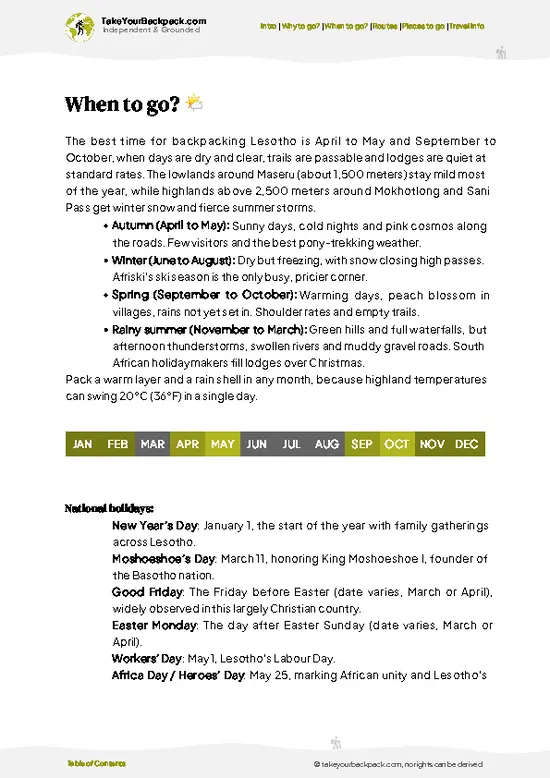
source: climatestotravel.comJANJanuary: good for travelingFEBFebruary: good for travelingMARMarch: good for travelingAPRApril: highly recommended for travelingMAYMay: highly recommended for travelingJUNJune: fair for travelingJULJuly: fair for travelingAUGAugust: fair for travelingSEPSeptember: highly recommended for travelingOCTOctober: excellent for travelingNOVNovember: excellent for travelingDECDecember: good for traveling
when-to-go

✈️ The backpacker research shortcutLesotho Travel Guide

An offline-friendly backpacking guide with optimized travel routes, ranked highlights, transport advice, and the best areas to stay.
example page 0 from our offline Travel Guide for Lesotho
example page 1 from our offline Travel Guide for Lesotho
example page 2 from our offline Travel Guide for Lesotho
example page 3 from our offline Travel Guide for Lesotho
example page 4 from our offline Travel Guide for Lesotho
example page 5 from our offline Travel Guide for Lesotho
example page 6 from our offline Travel Guide for Lesotho
example page 7 from our offline Travel Guide for Lesotho
The digital guide (178 pages) contains:
42 highlights, ranked by travel appeal
Optimized 2, 3 & 5-day travel routes
Cities, national parks, landmarks, beaches
How to get around
Offline-friendly for travel without Wi-Fi
👉 Click to see all 30+ guide features

📅 Plan smarter in minutes, not weeks
Month by month travel advice
Festivals & national holidays
Budget expectations

🗺️ Go to the right places, skip the overrated ones
Honest pros & cons of destinations
Top hikes, parks & viewpoints
Lesser-known places most travelers miss
Clear “worth it vs skip it” guidance

🛏️ Travel smoothly without rookie mistakes
Best areas to stay
Transport systems explained simply
Common scams & safety advice
SIM cards, money & practical tips

🌍 Understand the country, not just visit it
Culture & traditions
52 Essential phrases & customs
Festivals worth planning around
Traveler-friendly historical context
Insights that make places more meaningful

📱 Built for real travel conditions
Fully downloadable PDF
Works completely offline
Optimized for phone use
Useful in remote areas & buses
Everything in one place
Save weeks of stressful planning
Get instant access to your full guide. 30‑day money-back guarantee.
+ Add another guide for just €6.50

By proceeding you agree to our terms.
Sent to your inbox immediately after payment • 100% Secure Checkout
Best Backpacking Travel Advisor 2025 tourism awardBest Backpacking
Travel Advisor
2025
What others say about Take Your Backpack Guides:
⭐⭐⭐⭐⭐
Fantastic, amazing amount of information!
⭐⭐⭐⭐⭐
My goodness this is amazing, it's what I've been looking for hats off too you!
⭐⭐⭐⭐⭐
I think this is absolutely BRILLIANT
⭐⭐⭐⭐
Very complete and informative. It's still missing places, but I gotta to commend you
⭐⭐⭐⭐⭐
This is truly amazing, thank you, can't wait to explore it with my kids!
⭐⭐⭐⭐⭐
Awesome resource, thank you!
⭐⭐⭐⭐⭐
This is amazing! Can't wait to explore the ones I haven't seen
⭐⭐⭐⭐
I love this! Well done, great idea.
⭐⭐⭐⭐⭐
Thanks for taking the time to make this gem!
⭐⭐⭐⭐⭐
This might be the best website I've ever seen.
⭐⭐⭐⭐⭐
Congratulations, and thank you so much for your work; it's incredibly valuable.
⭐⭐⭐⭐
In all seriousness I think you did a great job pointing out the important spots
⭐⭐⭐⭐⭐
10/10 very good
⭐⭐⭐⭐⭐
As someone who's only just starting to visit regularly this is awesome, thank you.
⭐⭐⭐⭐
Thank you very much! I'm going to visit my dad, it's going to be very useful!
⭐⭐⭐⭐⭐
This is really cool! We'll be travelling for the first time and this definitely come in handy.
⭐⭐⭐⭐⭐
You are now our minister of culture, congratulations 👨‍💼
⭐⭐⭐⭐⭐
Just wanted to tell you that this is a pearl! Going to follow your recommendations.
⭐⭐⭐⭐⭐
This is so cool. I'll definitely be using the resource for my travels soon.
⭐⭐⭐⭐⭐
This is very impressive! Good work.
⭐⭐⭐⭐⭐
This is an amazing and informative site. Very well done!

🛏️ Where to stay?Best areas to stay in Lesotho

In Qacha’s Nek, the heart of backpacker life pulses strongest near the town center, where the streets hum with local chatter and the scent of wood smoke drifts through crisp mountain air. This area is your best bet—not just for safety, but for the kind of social vibe that turns solo travel into instant camaraderie. Here, budget accommodations cluster close enough to each other that you can hop between hostel common rooms without losing the rhythm of the day. The light in this part of town softens in the late afternoon, casting long shadows over stone walls and inviting you to linger over a cup … read more 👉
In Qacha’s Nek, the heart of backpacker life pulses strongest near the town center, where the streets hum with local chatter and the scent of wood smoke drifts through crisp mountain air. This area is your best bet—not just for safety, but for the kind of social vibe that turns solo travel into instant camaraderie. Here, budget accommodations cluster close enough to each other that you can hop between hostel common rooms without losing the rhythm of the day. The light in this part of town softens in the late afternoon, casting long shadows over stone walls and inviting you to linger over a cup of tea with fellow travelers swapping stories.

Venture too far out, and the quiet turns into isolation, which might sound peaceful but can leave you feeling cut off after dark. The town’s edges lack the same buzz and practical amenities, making the center not just a safer choice but a smarter one. Staying here means you’re plugged into the local pulse—easy access to markets, shared meals, and the chance to catch a ride with locals heading into the hills. It’s where the real Qacha’s Nek experience begins.

🚌 Getting aroundMoving around without the hassle

Qacha’s Nek moves at its own pace—neither frantic nor frozen. The town’s rhythm is shaped by the rugged mountain air, where mornings start with a crisp chill that lingers until the sun climbs high enough to warm the stone streets. Here, time feels elastic: buses don’t run like clockwork, but the locals’ intuition fills the gaps. You’ll find that patience isn’t just a virtue; it’s part of the experience. The scent of wood smoke and fresh earth drifts through the air, blending with the occasional honk of a minibus navigating narrow lanes. This isn’t a place to rush; it’s a place to sync with the flow, where the journey itself is part of the story.


  • Walking: The heart of Qacha’s Nek is compact enough to explore on foot. Strolling through the town lets you soak in the cool mountain breeze and
read more 👉
Qacha’s Nek moves at its own pace—neither frantic nor frozen. The town’s rhythm is shaped by the rugged mountain air, where mornings start with a crisp chill that lingers until the sun climbs high enough to warm the stone streets. Here, time feels elastic: buses don’t run like clockwork, but the locals’ intuition fills the gaps. You’ll find that patience isn’t just a virtue; it’s part of the experience. The scent of wood smoke and fresh earth drifts through the air, blending with the occasional honk of a minibus navigating narrow lanes. This isn’t a place to rush; it’s a place to sync with the flow, where the journey itself is part of the story.


  • Walking: The heart of Qacha’s Nek is compact enough to explore on foot. Strolling through the town lets you soak in the cool mountain breeze and catch the subtle shifts in light as the sun arcs over the hills. Walking is free, flexible, and the best way to discover tucked-away markets and local chatter.


  • Local Minibus Taxis: These are the lifeblood of local transit, running irregularly from dawn until early evening. Expect to pay around 5-10 Maloti for short hops. They’re cramped but fast, darting through narrow streets and up steep inclines—perfect if you want to cover ground without losing the town’s pulse.


  • Shared Taxis: For trips outside town, shared taxis gather at designated spots, leaving once full. Prices vary but usually hover around 20-30 Maloti for destinations within 50 km. They’re a bit pricier but offer a more direct, comfortable ride than minibuses, especially if you’re carrying gear.


  • Motorbike Rentals: If you’re after freedom and speed, renting a motorbike is a solid option. Rates start at about 150 Maloti per day. The roads can be rough, so this suits confident riders ready to handle gravel and sudden weather shifts. The wind, the open road, and the scent of pine make this a memorable way to explore beyond town.


  • Hitchhiking: Not officially organized, but common and generally safe here. Locals often stop for travelers, especially during daylight. It’s free and flexible but requires a good sense of timing and a friendly smile. The trade-off is unpredictability, but the stories you’ll collect are worth it.

👛 Costs (as of 3 September 2026)How expensive it really is

Backpacking in Qacha’s Nek, Lesotho, means embracing a rugged, authentic mountain town where every expense reflects the simplicity and remoteness of the place.
  • Dorm Accommodation: Expect to pay around $10 to $15 per night for a basic dorm bed. Options are limited and often rustic, with shared facilities that match the town’s straightforward vibe. Booking ahead isn’t always necessary but can save you from scrambling for a spot after dark.
  • Meals: Local eateries serve hearty, no-frills meals for about $3 to $6 each. Think maize porridge, stews, and fresh bread. Western-style or imported foods are rare and pricier, so sticking to local fare keeps costs low and the experience genuine.
  • Local Transport: Minibus taxis are the go-to, costing roughly $1 to $2 for short trips within town or nearby
read more 👉
Backpacking in Qacha’s Nek, Lesotho, means embracing a rugged, authentic mountain town where every expense reflects the simplicity and remoteness of the place.
  • Dorm Accommodation: Expect to pay around $10 to $15 per night for a basic dorm bed. Options are limited and often rustic, with shared facilities that match the town’s straightforward vibe. Booking ahead isn’t always necessary but can save you from scrambling for a spot after dark.
  • Meals: Local eateries serve hearty, no-frills meals for about $3 to $6 each. Think maize porridge, stews, and fresh bread. Western-style or imported foods are rare and pricier, so sticking to local fare keeps costs low and the experience genuine.
  • Local Transport: Minibus taxis are the go-to, costing roughly $1 to $2 for short trips within town or nearby villages. They run on flexible schedules, so timing can be unpredictable, but the fares are unbeatable for getting around.
  • Basic Activities/Entry Fees: Most natural attractions and cultural sites have minimal or no entry fees, often under $2. Guided hikes or community tours might run $10 to $20, which supports local guides and adds depth to your visit.
  • Miscellaneous Expenses: Budget around $2 to $5 daily for essentials like bottled water, snacks, or small souvenirs. Internet access is spotty and usually costs extra at guesthouses or local cafes.

Altogether, a realistic daily budget for backpacking in Qacha’s Nek falls between $20 and $40. This range covers the basics without cutting corners, letting you soak in the raw mountain atmosphere without the stress of overspending.
⚠️ Prices can change and everyone travels differently, so take this as a rough guide. Hope it helps you plan your adventure!

🚌 Day tripsWhere to go beyond the main area

Qacha’s Nek is a backpacker’s dream base, offering a gateway to Lesotho’s rugged beauty and rich culture. With its friendly locals and vibrant markets, you’ll find the perfect blend of adventure and authenticity. Here are some day trips that will elevate your experience.

Katse Dam
A visit to Katse Dam is a must. This engineering marvel is not just about the views; it’s about understanding the heart of Lesotho’s water supply. The drive takes about an hour, winding through breathtaking landscapes. Bring a packed lunch to enjoy by the water, and don’t forget your camera for the stunning vistas. Expect to spend around $10 for transport and entry fees. The best time to go is during the dry season, from May to September, when the skies are clear. First-timers often underestimate the chill at … read more 👉
Qacha’s Nek is a backpacker’s dream base, offering a gateway to Lesotho’s rugged beauty and rich culture. With its friendly locals and vibrant markets, you’ll find the perfect blend of adventure and authenticity. Here are some day trips that will elevate your experience.

Katse Dam
A visit to Katse Dam is a must. This engineering marvel is not just about the views; it’s about understanding the heart of Lesotho’s water supply. The drive takes about an hour, winding through breathtaking landscapes. Bring a packed lunch to enjoy by the water, and don’t forget your camera for the stunning vistas. Expect to spend around $10 for transport and entry fees. The best time to go is during the dry season, from May to September, when the skies are clear. First-timers often underestimate the chill at the dam; pack a light jacket.
👉 Explore Katse Dam

Ramabanta
Just a short 30-minute ride from Qacha’s Nek, Ramabanta is a cultural treasure. Here, you can explore ancient rock art and engage with local artisans. The hike to the rock paintings is moderate, taking about two hours round trip. Budget around $5 for transport and a small fee for a guide. The vibrant colors of the landscape are best seen in spring, when wildflowers bloom. A common mistake is to rush through; take your time to soak in the stories behind the art.


Thaba-Bosiu
This iconic mountain, about an hour’s drive away, is steeped in history. It’s the site of the Basotho nation’s founding and offers a fascinating glimpse into the past. The hike to the summit is rewarding, taking about two hours, and the panoramic views are worth every step. Expect to spend around $8 for transport and entry. The dry months are ideal for hiking, as the trails can get muddy in the rainy season. Many newcomers overlook the importance of a local guide; they’ll enrich your experience with stories that bring the place to life.


Sehlabathebe National Park
For those craving nature, Sehlabathebe is a two-hour drive filled with stunning scenery. This park is a haven for birdwatchers and hikers alike. The trails vary in difficulty, so you can choose your adventure. Budget about $15 for transport and park fees. The best time to visit is during the summer months, when the flora is in full bloom. A common pitfall is not bringing enough water; the high altitude can be deceiving.
👉 Explore Sehlabathebe National Park
Want to know what more Lesotho offers?
The Lesotho Travel Guide describes 42 highlights, from cities to national parks, from beaches to hikes

Get the Travel Guide -

🛡️ SafetySafety Tips and Common Scams in Qacha’s Nek

Qacha’s Nek is generally safe, but a few practical tips can enhance your experience. Stay aware in crowded markets; pickpockets can lurk where excitement brews. When wandering solo, especially after dark, stick to well-lit areas and avoid empty streets. The local vibe is friendly, but it’s wise to keep your belongings close and your phone out of sight.

Scams are rare, but be cautious of overly eager guides offering unsolicited help. Politely decline if you’re not interested; a firm but friendly demeanor goes a long way. Everyday annoyances might include the occasional unpaved road or a lack of reliable public transport, so plan your routes ahead. Embrace the slower pace; it’s part of the charm. With a little awareness, you’ll navigate Qacha’s Nek like a pro.

FAQCommon questions from travelers

Qacha’s Nek is worth visiting for its unique mountainous scenery and cultural experiences, not just a stopover. It offers access to the Sehlabathebe National Park, which is a highlight for nature lovers and hikers. The town provides a genuine glimpse into rural Basotho life.
You need about 2 to 3 days in Qacha’s Nek to explore the national park, enjoy local culture, and relax in the town. This allows time for hiking, visiting local markets, and possibly a guided tour of nearby attractions. Longer stays are recommended if you want to do extensive trekking.
Qacha’s Nek is not ideal for a day trip from nearby cities due to its remote location and travel time. It is approximately 200 kilometers from Maseru, the capital, with mountainous roads that require several hours of driving. Overnight stays are recommended to fully experience the area.
⚠️ Things can change over time, so always validate details locally before you go.

Other Basotho towns near Qacha’s Nek

Explore more nearby:

  • Thaba-Tseka—remote plateau, mountain roads, district hub| 67 km away
  • Semonkong—Maletsunyane Falls, highland village, pony trekking| 68 km away
  • Ha Ramabanta—mountain lodge, river crossing, adventure base| 99 km away

💡 Not sure where to go next?
Create a personalized itinerary for Lesotho including Qacha’s Nek and the places that fit your trip.

Generate my itinerary

👉 Discover all towns

Or checkout all Lesotho has to offer (think cities, towns, villages, national parks, hikes, beaches, festivals)
Country photo of Lesotho

We 💚 feedbackFinal thoughts on visiting Qacha’s Nek

Qacha’s Nek has a raw, unfiltered vibe that feels like stepping into a living postcard. The crisp mountain air carries the scent of wild sage, and the locals’ warmth is palpable. Don’t miss the vibrant market—it’s a sensory overload of colors and sounds. Just a heads-up: the roads can be tricky, so take your time. Embrace the bumps; they lead to the best views. This place rewards patience with breathtaking landscapes and genuine connections.

✍️ Help improve this page!
The information on this page is based on in-depth research, insights shared by experienced travelers, and feedback from the local travel community in Lesotho. While every effort is made to keep the information accurate and current, conditions can change — so if you spot anything incorrect or outdated, please get in touch.


🙋‍♂️ Give feedback

👋 Meet the founderWho’s Behind Take Your Backpack?

Johan, backpacker and founder of TakeYourBackpackHi, I’m Johan (Netherlands 🇳🇱), the creator of TakeYourBackpack. Over the past decade, I’ve backpacked through 80+ countries across six continents, gaining extensive experience with independent travel, long-term trips, and overland routes.

This site is built on a combination of firsthand travel experience and carefully curated insights from other backpackers. Many guides are based on places I’ve personally visited, while others bring together tips, observations, and practical advice shared by trusted travelers I’ve met along the way.

The goal is to provide realistic, experience-driven guidance — not generic itineraries — so you can explore destinations with better context, clearer expectations, and more confidence.

Get full Lesotho guide •
Instant download • 42 highlights • Full Offline guide