×

Lesotho🇱🇸 | townsThaba-Tsekaremote plateau, mountain roads, district hub | things to do and best time to go

Explore Butha-ButheExplore Qacha’s Nek

Backpacking in Thaba-Tseka
🌟 Highlighttown ranked #3
By Johan Kruseman 🇳🇱 | Updated September 3, 2026

The first real decision in Thaba-Tseka is whether to linger or just pass through. That choice shapes your whole Lesotho experience. Thaba-Tseka sits deep in the highlands, northeast of Maseru, surrounded by mountains that look like they’ve shrugged off roads and schedules. The town itself is functional, not pretty—dusty streets, a handful of shops, the scent of woodsmoke in the morning. For backpackers, Thaba-Tseka is less a destination and more a launchpad: it’s the last real supply stop before you vanish into the wilds of Katse Dam or the Sehlabathebe plateau. There’s no old center to wander, but the market is lively and the air is sharp with altitude. Getting here means a long, winding minibus ride—bumpy, slow, but unforgettable for the views. It’s not a social hub; you’ll find more herders than hostels, and evenings are quiet. Costs are low, but so is comfort. Compared to Mokhotlong or Maseru, Thaba-Tseka is rougher, more remote, and far less touristic—perfect if you want to feel like you’ve earned your mountain sunrise.

Discover everything you want to know in the 📖 Lesotho Travel Guide.


Get your Lesotho guide
42 ranked highlights, routes & tips, works offline (178 pages)
Loading the map 🌍
CLICK TO FILTER
cities
towns
villages
landmarks
national parks
hikes
attractions
festivals
regions
SHOW COUNTRY’S BESTSHOW ALL

✨ Why go?
Ranked #3 town in Lesotho
What makes this town worth visiting

Thaba-Tseka is a backpacker’s waypoint in Lesotho, perfectly positioned for those seeking a blend of adventure and culture. It’s not just a stopover; it’s a launchpad for stunning hikes in the surrounding mountains. The air is crisp, filled with the scent of wild sage, and the streets are walkable, inviting you to explore local shops and friendly eateries.

You’ll find small-scale hostels and guesthouses that foster a communal vibe, making it easy to connect with fellow travelers. This town attracts slow travelers and hikers who appreciate a slower pace, often lingering for a few days to soak in the atmosphere and share stories over a hearty meal.

While it’s not a nightlife hub, the evenings can be lively with shared laughter and tales around a fire. The cultural experiences here are genuine, … read more 👉
Thaba-Tseka is a backpacker’s waypoint in Lesotho, perfectly positioned for those seeking a blend of adventure and culture. It’s not just a stopover; it’s a launchpad for stunning hikes in the surrounding mountains. The air is crisp, filled with the scent of wild sage, and the streets are walkable, inviting you to explore local shops and friendly eateries.

You’ll find small-scale hostels and guesthouses that foster a communal vibe, making it easy to connect with fellow travelers. This town attracts slow travelers and hikers who appreciate a slower pace, often lingering for a few days to soak in the atmosphere and share stories over a hearty meal.

While it’s not a nightlife hub, the evenings can be lively with shared laughter and tales around a fire. The cultural experiences here are genuine, offering a glimpse into Basotho life that’s often missed in more touristy spots. If you’re looking for a place to recharge before tackling the next leg of your journey, Thaba-Tseka is a solid choice.
Want to include Thaba-Tseka in your Lesotho route?
Create a personalized Lesotho itinerary that includes Thaba-Tseka and the places that fit your trip — based on your travel style, budget, and available time. Get your route in seconds.

Generate my trip

💡 HighlightsEssential experiences to have while visiting Thaba-Tseka

  • Thaba-Tseka Central Market — The busiest, most authentic slice of town life where women sell woven blankets, handcrafted beadwork, fresh produce and smoked meats; great for photography, bargaining for souvenirs and tasting local snacks while watching Basotho daily routines.
  • Transport hub / taxi rank — Not just a place to catch a ride: it’s the social and logistical heart of Thaba-Tseka where minibuses and hired 4x4s meet, offering a lively people-watching scene, easy access to surrounding villages, and a real feel for how locals travel the highlands.
  • District administration / town hall precinct — The administrative center where you’ll see Lesotho’s local government in action, pick up community notices, and meet officials and residents; visiting gives concrete insight into governance and
read more 👉
  • Thaba-Tseka Central Market — The busiest, most authentic slice of town life where women sell woven blankets, handcrafted beadwork, fresh produce and smoked meats; great for photography, bargaining for souvenirs and tasting local snacks while watching Basotho daily routines.
  • Transport hub / taxi rank — Not just a place to catch a ride: it’s the social and logistical heart of Thaba-Tseka where minibuses and hired 4x4s meet, offering a lively people-watching scene, easy access to surrounding villages, and a real feel for how locals travel the highlands.
  • District administration / town hall precinct — The administrative center where you’ll see Lesotho’s local government in action, pick up community notices, and meet officials and residents; visiting gives concrete insight into governance and everyday civic life in the district.
  • Town craft stalls and blanket sellers (central streets) — Scattered around the main streets rather than all in one building, these small stalls showcase Basotho blankets, practical wool goods and locally-made crafts you won’t find in larger tourist centers.
  • Local churches and community meeting places — Active, welcoming spaces that reflect Basotho social rhythms: Sunday services and community gatherings here are culturally rich, with music and local hospitality that make them worthwhile to observe respectfully.
  • Riverside edge / small stream crossings in town — Simple, easily visitable spots where local children fish, laundry is done, and you can watch everyday rural-urban interactions against a highland backdrop—quiet but authentic.
  • Main street food stalls — Small, family-run food stands serving toasted maize, fried snacks and tea; essential for sampling cheap, honest local flavors and practicing a few Basotho phrases with vendors.
  • Weekly livestock trading area (market outskirts) — When trading is on, this is where farmers bring sheep and goats; it’s noisy, tactile, and a solid window into agricultural life and livestock culture in the district.
  • Community schoolyard and youth sports grounds — Visiting a match or a school event gives an immediate, human connection to local life—students in traditional blankets, energetic football games and community spirit on full display.
  • Local craft co-op / small artisan workshops — Small-scale workshops where you can watch blanket finishing, simple weaving or beadwork being made and buy directly from makers, keeping money in the community.
Nearby day trips easily reached from Thaba-Tseka include the dramatic Maletsunyane Falls at Semonkong, the Katse Dam in the Lesotho Highlands and several highland hiking trails and village visits for half-day or full-day outings.
Spotted a mistake or missing something? Contact us.

Things to do near Thaba-Tseka

Ratings based on Tripadvisor reviews. When you book through this link, you support our work at no extra cost to you.

🏘️ NeighborhoodsKey areas and districts to know

Thaba-Tseka is a vibrant hub in the heart of Lesotho, where the mountains meet the spirit of the Basotho people. Each neighborhood offers a unique flavor for backpackers.

Central Thaba-Tseka
This area is the pulse of the town. You’ll find local markets buzzing with life, where the scent of roasted maize fills the air. It’s walkable, with most amenities within easy reach. Budget-friendly guesthouses line the streets, making it ideal for both short and longer stays. The nightlife is low-key, with a few bars where locals gather, perfect for mingling over a beer.

Thaba-Tseka Heights
For those seeking a quieter vibe, this elevated neighborhood offers stunning views of the surrounding mountains. It’s a bit farther from the town center, so expect a longer walk or a short taxi ride. Accommodations … read more 👉
Thaba-Tseka is a vibrant hub in the heart of Lesotho, where the mountains meet the spirit of the Basotho people. Each neighborhood offers a unique flavor for backpackers.

Central Thaba-Tseka
This area is the pulse of the town. You’ll find local markets buzzing with life, where the scent of roasted maize fills the air. It’s walkable, with most amenities within easy reach. Budget-friendly guesthouses line the streets, making it ideal for both short and longer stays. The nightlife is low-key, with a few bars where locals gather, perfect for mingling over a beer.

Thaba-Tseka Heights
For those seeking a quieter vibe, this elevated neighborhood offers stunning views of the surrounding mountains. It’s a bit farther from the town center, so expect a longer walk or a short taxi ride. Accommodations here are slightly pricier, but the tranquility is worth it. This area is great for longer stays, especially if you want to soak in the scenery and enjoy peaceful evenings.

Lower Thaba-Tseka
This area is more residential, giving you a taste of everyday life in Lesotho. The atmosphere is relaxed, and you’ll find fewer tourists here. It’s less walkable, but the local transport options are reliable. Ideal for those looking to immerse themselves in the culture, it’s perfect for longer stays where you can build connections with the community.

Each neighborhood in Thaba-Tseka offers its own charm, making it easy to find your perfect base.

⌛️ 1 dayA smart one-day plan

Thaba-Tseka, a small town in the heart of Lesotho, offers a raw glimpse into Basotho culture and stunning landscapes. It’s not on the typical tourist radar, which is precisely what makes it special. You’ll find a blend of vibrant local life and breathtaking mountain views that feel like a well-kept secret.

Start your day early at the bustling Thaba-Tseka Market. The air is thick with the scent of fresh produce and the chatter of locals. Grab a warm, flaky “pita” bread from a vendor, and pair it with some local cheese. This breakfast isn’t just food; it’s a taste of the community. As you wander through the stalls, take in the colorful textiles and handmade crafts. This is where you’ll find the heart of the town.

After fueling up, head to the nearby Maletsunyane Falls, about a 30-minute drive … read more 👉
Thaba-Tseka, a small town in the heart of Lesotho, offers a raw glimpse into Basotho culture and stunning landscapes. It’s not on the typical tourist radar, which is precisely what makes it special. You’ll find a blend of vibrant local life and breathtaking mountain views that feel like a well-kept secret.

Start your day early at the bustling Thaba-Tseka Market. The air is thick with the scent of fresh produce and the chatter of locals. Grab a warm, flaky “pita” bread from a vendor, and pair it with some local cheese. This breakfast isn’t just food; it’s a taste of the community. As you wander through the stalls, take in the colorful textiles and handmade crafts. This is where you’ll find the heart of the town.

After fueling up, head to the nearby Maletsunyane Falls, about a 30-minute drive away. The trail leading to the falls is rugged but rewarding. The sound of rushing water fills the air, and the mist from the falls cools your skin. Spend some time here soaking in the view; it’s a perfect spot for photos that capture the essence of Lesotho’s natural beauty.

In the afternoon, return to Thaba-Tseka and explore the lesser-known neighborhood of Ha Khotso. Here, you can visit a local pottery workshop. Watch artisans shape clay into beautiful pots, and maybe even try your hand at it. This hands-on experience connects you to the culture in a way that mere sightseeing never could.

As evening approaches, find a cozy spot at a local eatery like the Basotho Cultural Village. Enjoy a traditional meal of “pap” and “samp” while chatting with locals. The warmth of the food mirrors the hospitality you’ll feel throughout the day.

Thaba-Tseka isn’t just a stop; it’s a journey into the soul of Lesotho, where every moment is a chance to connect, learn, and savor the beauty around you.
Turn your Thaba-Tseka visit into an Lesotho adventure
Build a complete Lesotho route with Thaba-Tseka, hidden gems, must-see destinations, and realistic travel times included.

Generate my trip

🌤️ When to go?Best time to visit Thaba-Tseka


  • Topic: Weather — Thaba-Tseka’s highland climate means cold winters with temperatures often dipping below freezing (0°C/32°F), while summers are mild and pleasant, hovering around 20-25°C (68-77°F). Rain is mostly in summer, so expect wet trails but lush landscapes.

  • Topic: Temperature — Daytime warmth in summer invites long hikes without overheating, but nights can still be chilly. Winter demands serious layering; frost is common, and snow can blanket the peaks, turning trails into a different beast.

  • Topic: Daylight Hours — Longer days from October to March give you more daylight for exploring, with sunsets stretching past 7 pm. Winter days shrink to about 10 hours, so plan your treks accordingly to avoid hiking in the dark.

  • Topic: Crowds — Thaba-Tseka is off the beaten path, so crowds
read more 👉

  • Topic: Weather — Thaba-Tseka’s highland climate means cold winters with temperatures often dipping below freezing (0°C/32°F), while summers are mild and pleasant, hovering around 20-25°C (68-77°F). Rain is mostly in summer, so expect wet trails but lush landscapes.

  • Topic: Temperature — Daytime warmth in summer invites long hikes without overheating, but nights can still be chilly. Winter demands serious layering; frost is common, and snow can blanket the peaks, turning trails into a different beast.

  • Topic: Daylight Hours — Longer days from October to March give you more daylight for exploring, with sunsets stretching past 7 pm. Winter days shrink to about 10 hours, so plan your treks accordingly to avoid hiking in the dark.

  • Topic: Crowds — Thaba-Tseka is off the beaten path, so crowds are minimal year-round. However, local festivals in summer bring a burst of energy and cultural immersion, perfect if you want to blend trekking with community vibes.

  • Topic: Seasonal Activities — Summer’s green hills are ideal for hiking and horseback riding, while winter offers a chance to witness snow-capped landscapes and try more rugged, off-trail adventures if you’re prepared.

  • Topic: Price Fluctuations — Accommodation and transport costs rise slightly during the summer festival season and holidays. Off-season winter rates can be lower but factor in extra gear costs and potential travel delays.


Pro-tip: Aim for late spring or early autumn to catch crisp, clear days with fewer bugs and manageable temperatures—perfect for soaking in the raw, rugged beauty without the extremes.


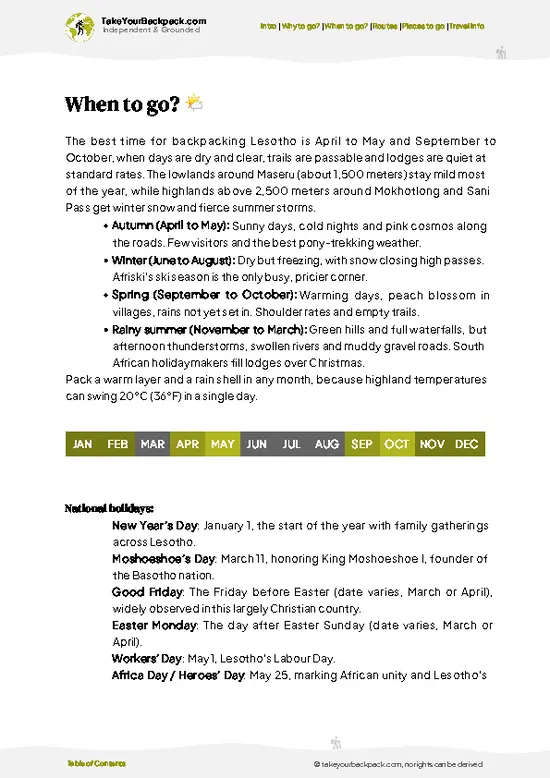
source: climatestotravel.comJANJanuary: highly recommended for travelingFEBFebruary: highly recommended for travelingMARMarch: highly recommended for travelingAPRApril: excellent for travelingMAYMay: excellent for travelingJUNJune: good for travelingJULJuly: fair for travelingAUGAugust: fair for travelingSEPSeptember: good for travelingOCTOctober: excellent for travelingNOVNovember: highly recommended for travelingDECDecember: highly recommended for traveling
lesotho-city-thaba-tseka v1
© Google |

✈️ The backpacker research shortcutLesotho Travel Guide

An offline-friendly backpacking guide with optimized travel routes, ranked highlights, transport advice, and the best areas to stay.
example page 0 from our offline Travel Guide for Lesotho
example page 1 from our offline Travel Guide for Lesotho
example page 2 from our offline Travel Guide for Lesotho
example page 3 from our offline Travel Guide for Lesotho
example page 4 from our offline Travel Guide for Lesotho
example page 5 from our offline Travel Guide for Lesotho
example page 6 from our offline Travel Guide for Lesotho
example page 7 from our offline Travel Guide for Lesotho
The digital guide (178 pages) contains:
42 highlights, ranked by travel appeal
Optimized 2, 3 & 5-day travel routes
Cities, national parks, landmarks, beaches
How to get around
Offline-friendly for travel without Wi-Fi
👉 Click to see all 30+ guide features

📅 Plan smarter in minutes, not weeks
Month by month travel advice
Festivals & national holidays
Budget expectations

🗺️ Go to the right places, skip the overrated ones
Honest pros & cons of destinations
Top hikes, parks & viewpoints
Lesser-known places most travelers miss
Clear “worth it vs skip it” guidance

🛏️ Travel smoothly without rookie mistakes
Best areas to stay
Transport systems explained simply
Common scams & safety advice
SIM cards, money & practical tips

🌍 Understand the country, not just visit it
Culture & traditions
52 Essential phrases & customs
Festivals worth planning around
Traveler-friendly historical context
Insights that make places more meaningful

📱 Built for real travel conditions
Fully downloadable PDF
Works completely offline
Optimized for phone use
Useful in remote areas & buses
Everything in one place
Save weeks of stressful planning
Get instant access to your full guide. 30‑day money-back guarantee.
+ Add another guide for just US$7.80

By proceeding you agree to our terms.
Sent to your inbox immediately after payment • 100% Secure Checkout
Best Backpacking Travel Advisor 2025 tourism awardBest Backpacking
Travel Advisor
2025
What others say about Take Your Backpack Guides:
⭐⭐⭐⭐⭐
Fantastic, amazing amount of information!
⭐⭐⭐⭐⭐
My goodness this is amazing, it's what I've been looking for hats off too you!
⭐⭐⭐⭐⭐
I think this is absolutely BRILLIANT
⭐⭐⭐⭐
Very complete and informative. It's still missing places, but I gotta to commend you
⭐⭐⭐⭐⭐
This is truly amazing, thank you, can't wait to explore it with my kids!
⭐⭐⭐⭐⭐
Awesome resource, thank you!
⭐⭐⭐⭐⭐
This is amazing! Can't wait to explore the ones I haven't seen
⭐⭐⭐⭐
I love this! Well done, great idea.
⭐⭐⭐⭐⭐
Thanks for taking the time to make this gem!
⭐⭐⭐⭐⭐
This might be the best website I've ever seen.
⭐⭐⭐⭐⭐
Congratulations, and thank you so much for your work; it's incredibly valuable.
⭐⭐⭐⭐
In all seriousness I think you did a great job pointing out the important spots
⭐⭐⭐⭐⭐
10/10 very good
⭐⭐⭐⭐⭐
As someone who's only just starting to visit regularly this is awesome, thank you.
⭐⭐⭐⭐
Thank you very much! I'm going to visit my dad, it's going to be very useful!
⭐⭐⭐⭐⭐
This is really cool! We'll be travelling for the first time and this definitely come in handy.
⭐⭐⭐⭐⭐
You are now our minister of culture, congratulations 👨‍💼
⭐⭐⭐⭐⭐
Just wanted to tell you that this is a pearl! Going to follow your recommendations.
⭐⭐⭐⭐⭐
This is so cool. I'll definitely be using the resource for my travels soon.
⭐⭐⭐⭐⭐
This is very impressive! Good work.
⭐⭐⭐⭐⭐
This is an amazing and informative site. Very well done!

🛏️ Where to stay?Best areas to stay in Lesotho

In Thaba-Tseka, the heart of backpacker life pulses strongest around the town center and the nearby market district. This area is your best bet for safety and social energy. The streets here hum with local vendors, the scent of fresh maize porridge mingling with wood smoke, and the chatter of Basotho in their colorful blankets. It’s where you’ll find the handful of budget hostels that cater to solo travelers and small groups, offering a chance to swap stories over a shared fire or a simple meal.

Staying here means you’re never far from the pulse of daily life—shops, informal eateries, and the … read more 👉
In Thaba-Tseka, the heart of backpacker life pulses strongest around the town center and the nearby market district. This area is your best bet for safety and social energy. The streets here hum with local vendors, the scent of fresh maize porridge mingling with wood smoke, and the chatter of Basotho in their colorful blankets. It’s where you’ll find the handful of budget hostels that cater to solo travelers and small groups, offering a chance to swap stories over a shared fire or a simple meal.

Staying here means you’re never far from the pulse of daily life—shops, informal eateries, and the occasional impromptu music session. Compared to the quieter, more residential outskirts, this zone feels alive without being overwhelming. It’s a practical choice: you can walk everywhere, from the local bus stops to the small clinics, and the vibe encourages connection without sacrificing your sense of security.

Avoid the more isolated neighborhoods; they lack the social infrastructure and can feel stark after dark. In the center, you get the best mix of accessibility, community, and that raw, unfiltered slice of Lesotho life that makes backpacking here worth every step.

🚌 Getting aroundHow to get from A to B

Thaba-Tseka moves at the pace of the mountains surrounding it—steady, deliberate, and shaped by the rhythms of daily life rather than strict timetables. The air carries a faint scent of wood smoke and earth, a reminder that this is a place where nature and community still dictate the flow. You won’t find a clock controlling the town’s pulse; instead, it’s a blend of local intuition and practical necessity. This means your best bet is to embrace flexibility and read the cues around you—like the gathering of locals at a junction or the sudden arrival of a minibus. The payoff is a raw, authentic experience where every step feels earned, and every ride is a story in motion.


  • Walking: The most reliable way to navigate Thaba-Tseka’s compact center. Streets are unpaved but manageable, with the
read more 👉
Thaba-Tseka moves at the pace of the mountains surrounding it—steady, deliberate, and shaped by the rhythms of daily life rather than strict timetables. The air carries a faint scent of wood smoke and earth, a reminder that this is a place where nature and community still dictate the flow. You won’t find a clock controlling the town’s pulse; instead, it’s a blend of local intuition and practical necessity. This means your best bet is to embrace flexibility and read the cues around you—like the gathering of locals at a junction or the sudden arrival of a minibus. The payoff is a raw, authentic experience where every step feels earned, and every ride is a story in motion.


  • Walking: The most reliable way to navigate Thaba-Tseka’s compact center. Streets are unpaved but manageable, with the scent of damp earth after rain and the occasional burst of wildflowers. Walking lets you absorb the town’s textures and rhythms without the rush or cost of transport.


  • Shared Minibus Taxis: These are the lifeblood of local transit, running from early morning around 6:30 AM until dusk, roughly 6 PM. Fares hover around a few Maloti, making them budget-friendly but expect cramped seating and a stop-anywhere style that slows the trip. They’re not about comfort but about connection—each ride a chance to chat with locals or catch a glimpse of daily life.


  • Motorcycle Taxis (Piki-Pikis): Faster and more flexible than minibuses, these dart through narrow paths and rough terrain. Prices vary but are generally affordable for short hops. Helmets aren’t always guaranteed, so buckle up mentally for a bumpy, wind-in-your-face ride that’s as much about adrenaline as getting from A to B.


  • Private Car Hire: If your budget allows, renting a 4x4 with a local driver is the smoothest way to explore beyond town limits. Roads can be unpredictable—muddy and rocky—so this option saves time and spares you the jostle. It’s pricier but worth it for comfort and access to remote spots.


  • Bicycle Rentals: Less common but available through some guesthouses, bikes offer a middle ground between walking and motorized transport. The terrain is challenging, with steep climbs and loose gravel, so bring stamina and a sense of adventure. The reward is a quiet, immersive way to see the town’s outskirts at your own pace.

👛 Costs (as of 3 September 2026)Travel costs and budget guide for Thaba-Tseka

Backpacking through Thaba-Tseka, Lesotho, means embracing a rugged, highland vibe where costs stay modest but the experience feels rich and raw.
  • Dorm Accommodation: Expect to pay around €10 to €15 per night for a bed in a basic guesthouse or hostel dorm. Options are limited and often simple, with shared bathrooms and minimal heating, so pack a warm sleeping bag for chilly nights.
  • Meals: Local eateries serve hearty, no-frills meals for about €3 to €6. Think maize porridge, stews, and fresh bread. Western-style or imported foods push prices higher, so sticking to local fare keeps your budget lean and your taste buds grounded in the region.
  • Local Transport: Minibus taxis and shared rides between villages cost roughly €1 to €3 per trip. Roads are often unpaved and bumpy, so travel times stretch
read more 👉
Backpacking through Thaba-Tseka, Lesotho, means embracing a rugged, highland vibe where costs stay modest but the experience feels rich and raw.
  • Dorm Accommodation: Expect to pay around €10 to €15 per night for a bed in a basic guesthouse or hostel dorm. Options are limited and often simple, with shared bathrooms and minimal heating, so pack a warm sleeping bag for chilly nights.
  • Meals: Local eateries serve hearty, no-frills meals for about €3 to €6. Think maize porridge, stews, and fresh bread. Western-style or imported foods push prices higher, so sticking to local fare keeps your budget lean and your taste buds grounded in the region.
  • Local Transport: Minibus taxis and shared rides between villages cost roughly €1 to €3 per trip. Roads are often unpaved and bumpy, so travel times stretch out, but the slow pace lets you soak in the mountain air and village scenes.
  • Basic Activities/Entry Fees: Most natural attractions like hiking trails or cultural sites have minimal or no entry fees, usually under €2. Guided tours, if available, might run €10 to €20, but independent trekking is the real draw here.
  • Miscellaneous Expenses: Budget around €2 to €5 daily for essentials like bottled water, snacks, or small souvenirs. Internet access is patchy and often paid by the hour in local cafes, so plan accordingly.

Altogether, a realistic daily budget for backpacking in Thaba-Tseka hovers between €18 and €30. This range covers the essentials without gloss, letting you dive into the highland atmosphere without breaking the bank.
⚠️ Prices can change and everyone travels differently, so take this as a rough guide. Hope it helps you plan your adventure!

🚌 Day tripsExploring the surroundings

Thaba-Tseka is a backpacker’s dream base, offering a gateway to stunning landscapes and rich culture. The town itself buzzes with life, from the scent of freshly baked bread wafting through the market to the vibrant chatter of locals. Here are some day trips that make the effort worthwhile.

1. Sani Pass Adventure
This iconic route is a must-do. The winding roads lead you through breathtaking mountain scenery, with hairpin turns that reveal valleys below. It takes about two hours to reach the top, where you can sip a cold beer at the highest pub in Africa. Expect to pay around $30 for transport and entry. The best time to go is during the dry season, from May to September, when the skies are clear. A common mistake? Underestimating the chill at the summit—bring a warm jacket.
👉 Explore read more 👉
Thaba-Tseka is a backpacker’s dream base, offering a gateway to stunning landscapes and rich culture. The town itself buzzes with life, from the scent of freshly baked bread wafting through the market to the vibrant chatter of locals. Here are some day trips that make the effort worthwhile.

1. Sani Pass Adventure
This iconic route is a must-do. The winding roads lead you through breathtaking mountain scenery, with hairpin turns that reveal valleys below. It takes about two hours to reach the top, where you can sip a cold beer at the highest pub in Africa. Expect to pay around $30 for transport and entry. The best time to go is during the dry season, from May to September, when the skies are clear. A common mistake? Underestimating the chill at the summit—bring a warm jacket.
👉 Explore Sani Pass

2. Katse Dam Exploration
Just over an hour from Thaba-Tseka, the Katse Dam is a marvel of engineering surrounded by dramatic cliffs. You can take a guided tour for about $10, which includes insights into the dam’s construction and its impact on the region. The views are stunning, especially at sunrise when the mist rises off the water. Late spring is ideal, as the wildflowers bloom, adding color to the landscape. Many first-timers miss the chance to walk along the dam wall—don’t skip it!
👉 Explore Katse Dam

3. Mohale Dam and Hiking Trails
A little over an hour’s drive, Mohale Dam offers serene hiking trails that wind through lush vegetation. The trails vary in difficulty, so you can choose a leisurely stroll or a more challenging hike. Expect to spend around $15 for transport and snacks. The best time to visit is during the cooler months, from April to August. A common pitfall is not bringing enough water—stay hydrated to enjoy the stunning views.


4. Local Village Experience
Immerse yourself in Basotho culture by visiting a nearby village, just a short drive away. Engage with locals, learn about traditional crafts, and taste local dishes. This trip is often free or costs around $5 for transport. Anytime is good, but visiting during a festival adds a special touch. Many travelers overlook the chance to interact with the community—don’t just snap photos; share stories.


Each of these trips offers a unique slice of Lesotho, making your stay in Thaba-Tseka not just a stopover, but a rich experience.
Want to know what more Lesotho offers?
The Lesotho Travel Guide describes 42 highlights, from cities to national parks, from beaches to hikes

Get the Travel Guide -

🛡️ SafetyStaying Safe: What Travelers Should Know

Thaba-Tseka is generally safe, but a few practical tips can enhance your experience. The town’s vibe is laid-back, yet awareness is key, especially in busy markets where distractions can lead to minor thefts. Keep your belongings close and avoid flashy displays of wealth.

If you’re traveling solo, stick to well-lit areas after dark. The streets can feel quiet, so a little caution goes a long way. Engage with locals; they’re friendly and can offer insights on safe routes or places to avoid.

Scams are rare, but be wary of overly eager guides offering tours at inflated prices. Always negotiate and confirm details upfront.

Annoyances can include occasional power outages, so keep a flashlight handy. Embrace the unpredictability; it’s part of the charm. By staying aware and connecting with … read more 👉
Thaba-Tseka is generally safe, but a few practical tips can enhance your experience. The town’s vibe is laid-back, yet awareness is key, especially in busy markets where distractions can lead to minor thefts. Keep your belongings close and avoid flashy displays of wealth.

If you’re traveling solo, stick to well-lit areas after dark. The streets can feel quiet, so a little caution goes a long way. Engage with locals; they’re friendly and can offer insights on safe routes or places to avoid.

Scams are rare, but be wary of overly eager guides offering tours at inflated prices. Always negotiate and confirm details upfront.

Annoyances can include occasional power outages, so keep a flashlight handy. Embrace the unpredictability; it’s part of the charm. By staying aware and connecting with the community, you’ll unlock the true essence of Thaba-Tseka.

FAQFrequently asked questions about Thaba-Tseka

Thaba-Tseka is worth visiting for travelers interested in authentic Basotho culture and mountain scenery, not just a stopover. It offers access to nearby natural attractions like the Maluti Mountains and local markets. The town provides a genuine rural experience distinct from more touristy areas.
Two to three days are sufficient to explore Thaba-Tseka and its surroundings. This allows time for hiking, visiting local villages, and experiencing cultural sites without rushing. Staying longer is only necessary if you plan extensive trekking or want to explore remote areas.
No, Thaba-Tseka is not practical as a day trip from nearby cities due to its remote location and travel time. It is about 180 kilometers from Maseru, with rough mountain roads making the journey take around 4 to 5 hours one way. Overnight stays are recommended to fully experience the area.
⚠️ Things can change over time, so always validate details locally before you go.

Other Basotho towns near Thaba-Tseka

Explore more nearby:

  • Semonkong—Maletsunyane Falls, highland village, pony trekking| 65 km away
  • Qacha’s Nek—southern gateway, border post, rolling hills| 67 km away
  • Ha Kome—cave dwellings, cultural site, hillside settlement| 78 km away

💡 Not sure where to go next?
Create a personalized itinerary for Lesotho including Thaba-Tseka and the places that fit your trip.

Generate my itinerary

👉 Discover all towns

Or checkout all Lesotho has to offer (think cities, towns, villages, national parks, hikes, beaches, festivals)
Country photo of Lesotho

We 💚 feedbackParting advice and final tips

Thaba-Tseka has a raw, unfiltered vibe that feels like stepping into a living postcard. The crisp mountain air carries the scent of wild sage, and the locals’ warmth is as inviting as the sun dipping behind the peaks. Expect surprises, like stumbling upon a traditional Basotho feast—just be ready for the altitude; it can sneak up on you. Embrace the ruggedness; it’s part of the charm. This place rewards those who venture beyond the ordinary.

✍️ Help improve this page!
The information on this page is based on in-depth research, insights shared by experienced travelers, and feedback from the local travel community in Lesotho. While every effort is made to keep the information accurate and current, conditions can change — so if you spot anything incorrect or outdated, please get in touch.


🙋‍♂️ Give feedback

👋 Meet the founderWho’s Behind Take Your Backpack?

Johan, backpacker and founder of TakeYourBackpackHi, I’m Johan (Netherlands 🇳🇱), the creator of TakeYourBackpack. Over the past decade, I’ve backpacked through 80+ countries across six continents, gaining extensive experience with independent travel, long-term trips, and overland routes.

This site is built on a combination of firsthand travel experience and carefully curated insights from other backpackers. Many guides are based on places I’ve personally visited, while others bring together tips, observations, and practical advice shared by trusted travelers I’ve met along the way.

The goal is to provide realistic, experience-driven guidance — not generic itineraries — so you can explore destinations with better context, clearer expectations, and more confidence.

Get full Lesotho guide •
Instant download • 42 highlights • Full Offline guide