×

Lesotho🇱🇸 | landmarksThaba Bosiuflat-topped mountain, national monument, Basotho stronghold | things to do and best time to go

Explore Liphofung CavesExplore Senqu river source

Backpacking in Thaba Bosiu
🏆 Top pickunique site ranked #1
By Johan Kruseman 🇳🇱 | Updated July 30, 2026

Forget the Instagram fantasy of Thaba Bosiu as some untouched, mist-wrapped plateau where you’ll have the ruins to yourself at sunrise. The reality? Thaba Bosiu sits just outside Maseru, Lesotho’s capital, and yes, you’ll share the site with local school groups, guides, and the occasional minibus full of day-trippers. But here’s the real magic: this flat-topped mountain is the birthplace of the Basotho nation, and you can feel that weight in the air—especially when the wind picks up and the basalt cliffs glow in the late afternoon. The hike up isn’t hard, but it’s not a casual stroll either; expect to sweat, and don’t expect polished tourist infrastructure or slick signage. Entry is cheap, the crowds are manageable (especially compared to Africa’s headline sites), and the views over the Maloti Mountains are the kind that make you stop talking. Thaba Bosiu isn’t about perfect photos; it’s about standing where history actually happened, in a place that still matters to the people who live here.

Discover everything you want to know in the 📖 Lesotho Travel Guide.


Get your Lesotho guide
42 ranked highlights, routes & tips, works offline (178 pages)
Loading the map 🌍
CLICK TO FILTER
cities
towns
villages
landmarks
national parks
hikes
attractions
festivals
regions
SHOW COUNTRY’S BESTSHOW ALL

✨ Why go?
Ranked #1 unique site in Lesotho
What sets this place apart

Thaba Bosiu isn’t just another stop on your Lesotho itinerary; it’s a historical powerhouse that packs a punch. This flat-topped mountain is steeped in the legacy of the Basotho people and their king, Moshoeshoe I. Sure, the crowds can be a bit much, especially during peak tourist season, but don’t let that deter you. The cost is minimal—entry is often just a few bucks, making it a steal for what you get.

What sets Thaba Bosiu apart is its authenticity. You’re not just checking off a box; you’re walking in the footsteps of a nation’s history. The views from the summit are breathtaking, offering a panoramic glimpse of the surrounding landscape that no Instagram filter can replicate.

It fits seamlessly into a broader route through Lesotho, making it easy to combine with other sites like the … read more 👉
Thaba Bosiu isn’t just another stop on your Lesotho itinerary; it’s a historical powerhouse that packs a punch. This flat-topped mountain is steeped in the legacy of the Basotho people and their king, Moshoeshoe I. Sure, the crowds can be a bit much, especially during peak tourist season, but don’t let that deter you. The cost is minimal—entry is often just a few bucks, making it a steal for what you get.

What sets Thaba Bosiu apart is its authenticity. You’re not just checking off a box; you’re walking in the footsteps of a nation’s history. The views from the summit are breathtaking, offering a panoramic glimpse of the surrounding landscape that no Instagram filter can replicate.

It fits seamlessly into a broader route through Lesotho, making it easy to combine with other sites like the Maletsunyane Falls or Sani Pass. This isn’t just a landmark; it’s a cultural experience that enriches your journey. So, take the time to soak it all in. You’ll leave with more than just photos; you’ll carry a piece of Lesotho’s soul with you.
Want to include Thaba Bosiu in your Lesotho route?
Create a personalized Lesotho itinerary that includes Thaba Bosiu and the places that fit your trip — based on your travel style, budget, and available time. Get your route in seconds.

Generate my trip

💡 HighlightsMust-see experiences and standout moments

  • The plateau itself (the “flat mountain”) — A broad sandstone mesa that rises abruptly from the plains, Thaba Bosiu’s flat top is what made it defensible and visually dramatic; walking the rim gives you a strong sense of why people chose to live and fight up here, and the landscape is unlike the rolling lowlands below.
  • Birthplace of the Basotho nation — This is where King Moshoeshoe I gathered refugees in the early 1800s and forged the Basotho identity; the site’s political and symbolic importance is huge — you’re standing where a nation coalesced under enormous pressure.
  • Moshoeshoe I’s grave and royal burial area — The simple graves and memorials up top are powerful and respectfully kept; visiting them connects you directly to the people and stories that shaped Lesotho, and locals treat
read more 👉
  • The plateau itself (the “flat mountain”) — A broad sandstone mesa that rises abruptly from the plains, Thaba Bosiu’s flat top is what made it defensible and visually dramatic; walking the rim gives you a strong sense of why people chose to live and fight up here, and the landscape is unlike the rolling lowlands below.
  • Birthplace of the Basotho nation — This is where King Moshoeshoe I gathered refugees in the early 1800s and forged the Basotho identity; the site’s political and symbolic importance is huge — you’re standing where a nation coalesced under enormous pressure.
  • Moshoeshoe I’s grave and royal burial area — The simple graves and memorials up top are powerful and respectfully kept; visiting them connects you directly to the people and stories that shaped Lesotho, and locals treat the spot as spiritually important.
  • Defensive earthworks, stone walls and terraces — Scattered remains of ramparts, terraces and enclosure walls show the clever, low-tech military engineering used to turn a rock into a fortress; it’s a quiet archaeology lesson in how landscape and human construction combined for survival.
  • Caves and rock shelters — Small caves around the plateau were used as storage, hideouts and living spaces during sieges; crawling into them gives a real, tactile sense of life under siege and how people adapted to the site’s geology.
  • Guided oral-history tours and local culture — Local guides — often older Basotho with family connections to the place — share first-hand stories, songs and explanations that a plaque can’t convey; these personal accounts are the best way to understand the cultural layers of Thaba Bosiu.
  • Panoramic views, sunsets and highland nature — The plateau’s edges deliver sweeping views of the surrounding hills and farmland that are spectacular at sunrise/sunset; it’s also a quiet spot for highland birds and landscape photography — bring a windproof layer and your camera.
Spotted a mistake or missing something? Contact us.

Things to do near Thaba Bosiu

Ratings based on Tripadvisor reviews. When you book through this link, you support our work at no extra cost to you.

🌤️ When to go?Weather, crowds, and seasonal trade-offs


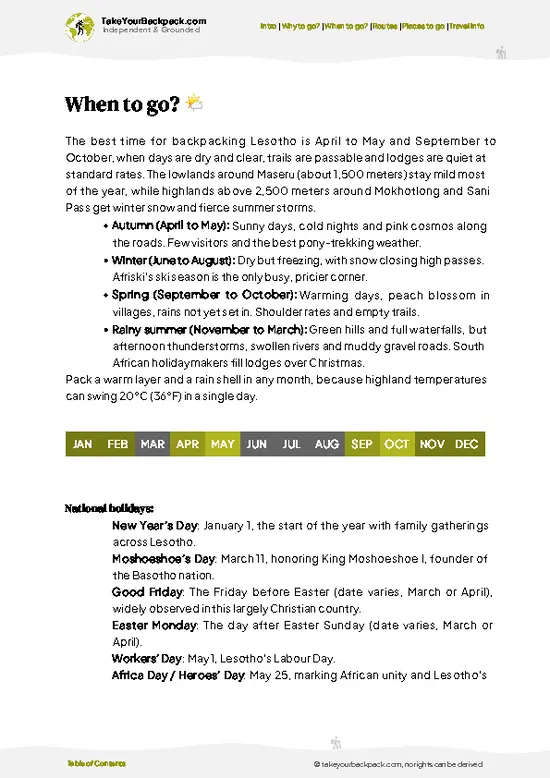
  • Weather: Lesotho’s high-altitude climate means Thaba Bosiu swings between crisp winters and mild summers. From June to August, expect chilly days around 5°C (41°F) and nights that can dip below freezing. Summers, December to February, warm up to 25°C (77°F) but bring occasional afternoon thunderstorms.

  • Temperature: Spring (September-November) and autumn (March-May) offer the best balance—daytime temps hover between 15-20°C (59-68°F), perfect for hiking without sweating buckets or freezing your toes off.

  • Daylight Hours: Summer days stretch long, with up to 13 hours of light, giving you more time to explore. Winter cuts that down to about 10 hours, so plan your hikes accordingly to avoid being caught out after dark.

  • Crowds: Thaba Bosiu isn’t a tourist magnet, but weekends and local holidays
read more 👉

  • Weather: Lesotho’s high-altitude climate means Thaba Bosiu swings between crisp winters and mild summers. From June to August, expect chilly days around 5°C (41°F) and nights that can dip below freezing. Summers, December to February, warm up to 25°C (77°F) but bring occasional afternoon thunderstorms.

  • Temperature: Spring (September-November) and autumn (March-May) offer the best balance—daytime temps hover between 15-20°C (59-68°F), perfect for hiking without sweating buckets or freezing your toes off.

  • Daylight Hours: Summer days stretch long, with up to 13 hours of light, giving you more time to explore. Winter cuts that down to about 10 hours, so plan your hikes accordingly to avoid being caught out after dark.

  • Crowds: Thaba Bosiu isn’t a tourist magnet, but weekends and local holidays see a spike in visitors. For a quieter experience, aim for weekdays during shoulder seasons—spring and autumn.

  • Seasonal Activities: Spring brings wildflowers and birdwatching, while autumn offers clear skies and stunning sunsets. Winter’s harshness limits activity but rewards you with stark, dramatic landscapes.

  • Price Fluctuations: Accommodation and guide fees stay fairly steady year-round, but expect slight hikes during local festivals or peak summer months when domestic tourists visit.


Pro-tip: Visit Thaba Bosiu in spring or autumn on a weekday morning to dodge crowds, enjoy mild weather, and catch the site’s raw, unfiltered beauty without the Instagram gloss.


source: climatestotravel.comJANJanuary: highly recommended for travelingFEBFebruary: highly recommended for travelingMARMarch: highly recommended for travelingAPRApril: highly recommended for travelingMAYMay: highly recommended for travelingJUNJune: good for travelingJULJuly: good for travelingAUGAugust: good for travelingSEPSeptember: excellent for travelingOCTOctober: excellent for travelingNOVNovember: excellent for travelingDECDecember: highly recommended for traveling
lesotho-unique-site-thaba-bosiu
© Google |

✈️ The backpacker research shortcutLesotho Travel Guide

An offline-friendly backpacking guide with optimized travel routes, ranked highlights, transport advice, and the best areas to stay.
example page 0 from our offline Travel Guide for Lesotho
example page 1 from our offline Travel Guide for Lesotho
example page 2 from our offline Travel Guide for Lesotho
example page 3 from our offline Travel Guide for Lesotho
example page 4 from our offline Travel Guide for Lesotho
example page 5 from our offline Travel Guide for Lesotho
example page 6 from our offline Travel Guide for Lesotho
example page 7 from our offline Travel Guide for Lesotho
The digital guide (178 pages) contains:
42 highlights, ranked by travel appeal
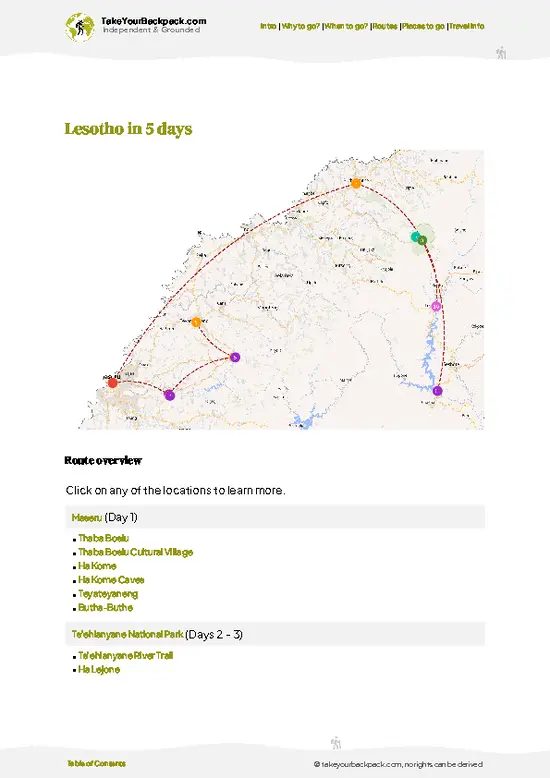
Optimized 2, 3 & 5-day travel routes
Cities, national parks, landmarks, beaches
How to get around
Offline-friendly for travel without Wi-Fi
👉 Click to see all 30+ guide features

📅 Plan smarter in minutes, not weeks
Month by month travel advice
Festivals & national holidays
Budget expectations

🗺️ Go to the right places, skip the overrated ones
Honest pros & cons of destinations
Top hikes, parks & viewpoints
Lesser-known places most travelers miss
Clear “worth it vs skip it” guidance

🛏️ Travel smoothly without rookie mistakes
Best areas to stay
Transport systems explained simply
Common scams & safety advice
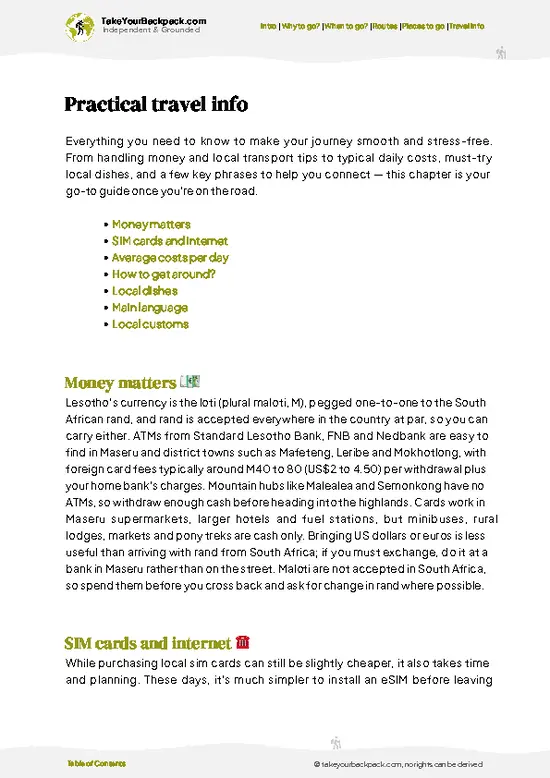
SIM cards, money & practical tips

🌍 Understand the country, not just visit it
Culture & traditions
52 Essential phrases & customs
Festivals worth planning around
Traveler-friendly historical context
Insights that make places more meaningful

📱 Built for real travel conditions
Fully downloadable PDF
Works completely offline
Optimized for phone use
Useful in remote areas & buses
Everything in one place
Save weeks of stressful planning
Get instant access to your full guide. 30‑day money-back guarantee.


By proceeding you agree to our terms.
Sent to your inbox immediately after payment • 100% Secure Checkout
Best Backpacking Travel Advisor 2025 tourism awardBest Backpacking
Travel Advisor
2025
What others say about Take Your Backpack Guides:
⭐⭐⭐⭐⭐
Fantastic, amazing amount of information!
⭐⭐⭐⭐⭐
My goodness this is amazing, it's what I've been looking for hats off too you!
⭐⭐⭐⭐⭐
I think this is absolutely BRILLIANT
⭐⭐⭐⭐
Very complete and informative. It's still missing places, but I gotta to commend you
⭐⭐⭐⭐⭐
This is truly amazing, thank you, can't wait to explore it with my kids!
⭐⭐⭐⭐⭐
Awesome resource, thank you!
⭐⭐⭐⭐⭐
This is amazing! Can't wait to explore the ones I haven't seen
⭐⭐⭐⭐
I love this! Well done, great idea.
⭐⭐⭐⭐⭐
Thanks for taking the time to make this gem!
⭐⭐⭐⭐⭐
This might be the best website I've ever seen.
⭐⭐⭐⭐⭐
Congratulations, and thank you so much for your work; it's incredibly valuable.
⭐⭐⭐⭐
In all seriousness I think you did a great job pointing out the important spots
⭐⭐⭐⭐⭐
10/10 very good
⭐⭐⭐⭐⭐
As someone who's only just starting to visit regularly this is awesome, thank you.
⭐⭐⭐⭐
Thank you very much! I'm going to visit my dad, it's going to be very useful!
⭐⭐⭐⭐⭐
This is really cool! We'll be travelling for the first time and this definitely come in handy.
⭐⭐⭐⭐⭐
You are now our minister of culture, congratulations 👨‍💼
⭐⭐⭐⭐⭐
Just wanted to tell you that this is a pearl! Going to follow your recommendations.
⭐⭐⭐⭐⭐
This is so cool. I'll definitely be using the resource for my travels soon.
⭐⭐⭐⭐⭐
This is very impressive! Good work.
⭐⭐⭐⭐⭐
This is an amazing and informative site. Very well done!

🛏️ Where to stay?Choosing the right base

Thaba Bosiu is a cultural treasure, but let’s cut through the fluff: it’s not just about the stunning views or the historical significance. It’s about the experience you have while you’re there.

Stay in Maseru, the capital, where you’ll find a mix of budget-friendly guesthouses and hostels. It’s a lively spot, perfect for solo travelers looking to connect. The vibe is relaxed, and you’ll meet fellow backpackers who are just as eager to explore. Plus, it’s only a short drive to Thaba Bosiu, making it easy to get there early and beat the crowds.

Another option is to look for accommodations in … read more 👉
Thaba Bosiu is a cultural treasure, but let’s cut through the fluff: it’s not just about the stunning views or the historical significance. It’s about the experience you have while you’re there.

Stay in Maseru, the capital, where you’ll find a mix of budget-friendly guesthouses and hostels. It’s a lively spot, perfect for solo travelers looking to connect. The vibe is relaxed, and you’ll meet fellow backpackers who are just as eager to explore. Plus, it’s only a short drive to Thaba Bosiu, making it easy to get there early and beat the crowds.

Another option is to look for accommodations in the nearby village of Thaba Bosiu itself. This area offers a more authentic experience, with local guesthouses that give you a taste of Basotho culture. You’ll find warm hospitality and maybe even a home-cooked meal. Just be aware that options can be limited, so plan ahead.

Safety is generally good, but like anywhere, keep your wits about you. The real magic lies in the stories you’ll hear from locals and the connections you’ll make. That’s what makes the journey worthwhile.

👛 Costs (as of 30 July 2026)Typical daily expenses

Visiting Thaba Bosiu in Lesotho is a journey into history and culture, but it comes with its own set of costs. Here’s a breakdown to help you plan.
  • Entrance Fee: Expect to pay around $5 to $10 USD. This fee grants you access to the site and its rich history. It’s a small price for a glimpse into the birthplace of the Basotho nation.
  • Guided Tours: If you want to dive deeper, guided tours range from $15 to $30 USD. A knowledgeable guide can provide insights that make the experience much richer. It’s worth the investment if you’re keen on understanding the significance of the site.
  • Transportation: Getting to Thaba Bosiu can vary. If you’re taking a taxi from Maseru, budget around $20 to $40 USD each way. Public transport is cheaper but can be less convenient. Renting a car is another option, costing
read more 👉
Visiting Thaba Bosiu in Lesotho is a journey into history and culture, but it comes with its own set of costs. Here’s a breakdown to help you plan.
  • Entrance Fee: Expect to pay around $5 to $10 USD. This fee grants you access to the site and its rich history. It’s a small price for a glimpse into the birthplace of the Basotho nation.
  • Guided Tours: If you want to dive deeper, guided tours range from $15 to $30 USD. A knowledgeable guide can provide insights that make the experience much richer. It’s worth the investment if you’re keen on understanding the significance of the site.
  • Transportation: Getting to Thaba Bosiu can vary. If you’re taking a taxi from Maseru, budget around $20 to $40 USD each way. Public transport is cheaper but can be less convenient. Renting a car is another option, costing about $30 to $50 USD per day, plus fuel.
  • Food and Drink: There are limited options nearby, so plan for around $5 to $15 USD for a meal. Local eateries offer traditional dishes that are both affordable and delicious. Bring snacks if you want to save a bit.
  • Accommodation: If you’re staying overnight, expect to pay between $30 to $100 USD for a hotel or guesthouse. Prices vary based on comfort and amenities. Booking in advance can help you snag better deals.

Be prepared for crowds, especially during peak tourist seasons. The experience can feel commercialized, but the history and culture are what truly make Thaba Bosiu special.
⚠️ Prices can change and everyone travels differently, so take this as a rough guide. Hope it helps you plan your adventure!

Other Basotho landmarks near Thaba Bosiu

Explore more nearby:

  • Ha Kome Caves—cliffside dwellings, mud-plastered walls, living heritage| 23 km away
  • Katse Dam—engineering landmark, reservoir views, mountain water project| 81 km away
  • Liphofung Caves—rock art, sandstone shelter, archaeological site| 104 km away

💡 Not sure where to go next?
Create a personalized itinerary for Lesotho including Thaba Bosiu and the places that fit your trip.

Generate my itinerary

👉 Discover all landmarks

Or checkout all Lesotho has to offer (think cities, towns, villages, national parks, hikes, beaches, festivals)
Country photo of Lesotho

We 💚 feedbackKey takeaways before you go

Thaba Bosiu is a mixed bag of crowds and costs, but don’t let that scare you off. The vibe is electric, steeped in history, and the views? They’ll knock your socks off. The best surprise? The local guides—genuine storytellers who’ll share tales that make the rock face feel alive. Just a heads-up: visit early to dodge the tourist rush. Trust me, standing on that plateau with the sunrise is a moment you won’t forget. It’s raw, it’s real, and it’s worth every step.

✍️ Help improve this page!
The information on this page is based on in-depth research, insights shared by experienced travelers, and feedback from the local travel community in Lesotho. While every effort is made to keep the information accurate and current, conditions can change — so if you spot anything incorrect or outdated, please get in touch.


🙋‍♂️ Give feedback

👋 Meet the founderWho’s Behind Take Your Backpack?

Johan, backpacker and founder of TakeYourBackpackHi, I’m Johan (Netherlands 🇳🇱), the creator of TakeYourBackpack. Over the past decade, I’ve backpacked through 80+ countries across six continents, gaining extensive experience with independent travel, long-term trips, and overland routes.

This site is built on a combination of firsthand travel experience and carefully curated insights from other backpackers. Many guides are based on places I’ve personally visited, while others bring together tips, observations, and practical advice shared by trusted travelers I’ve met along the way.

The goal is to provide realistic, experience-driven guidance — not generic itineraries — so you can explore destinations with better context, clearer expectations, and more confidence.

Get full Lesotho guide •
Instant download • 42 highlights • Full Offline guide