×

Lesotho🇱🇸 | landmarksKatse Damengineering landmark, reservoir views, mountain water project | things to do and best time to go

Explore Ha Kome CavesExplore Liphofung Caves

Backpacking in Katse Dam
🌟 Highlightunique site ranked #2
By Johan Kruseman 🇳🇱 | Updated September 3, 2026

Here’s what nobody tells you until you’re standing there: Katse Dam is one of the rare mega-projects in Africa where you can actually walk right up to the edge, peer down, and feel your stomach drop—no velvet ropes, no selfie-stick mobs, just you and the wind. Smack in the mountainous heart of Lesotho’s Thaba-Tseka District, Katse isn’t just a dam; it’s the backbone of the Lesotho Highlands Water Project and a feat of engineering that feels almost out of place in such wild, high-altitude country. The scale is jaw-dropping, but don’t expect a polished visitor experience or a parade of food trucks. You’ll pay a bit to get there—both in transport costs and the effort of winding mountain roads—but you won’t be elbowing for space. The crowds are thin, the air is sharp, and the photo ops are as raw as the landscape itself. This is not a tourist trap; it’s a place where you feel the pulse of a nation’s ambition and the silence of real remoteness, all in one shot.

Discover everything you want to know in the 📖 Lesotho Travel Guide.


Get your Lesotho guide
42 ranked highlights, routes & tips, works offline (178 pages)
Loading the map 🌍
CLICK TO FILTER
cities
towns
villages
landmarks
national parks
hikes
attractions
festivals
regions
SHOW COUNTRY’S BESTSHOW ALL

✨ Why go?
Ranked #2 unique site in Lesotho
What makes it a must-see unique site

The Katse Dam in Lesotho isn’t just another pretty picture for your Instagram feed. Yes, it’s massive and impressive, but let’s get real: the crowds can be overwhelming, and the entry fees might sting a bit. However, the real magic lies in what you can’t capture in a snapshot.

This engineering marvel is a feat of human ingenuity, sitting at a staggering altitude. The views? They’ll make you feel like you’re on top of the world, literally. But what sets Katse apart is its cultural significance. Engage with locals who share stories of resilience and innovation.

Accessibility is a breeze if you’re already trekking through Lesotho. It fits seamlessly into a broader route, making it a natural stop between Sani Pass and Thaba Bosiu. Plus, the cost is reasonable compared to other global landmarks. … read more 👉
The Katse Dam in Lesotho isn’t just another pretty picture for your Instagram feed. Yes, it’s massive and impressive, but let’s get real: the crowds can be overwhelming, and the entry fees might sting a bit. However, the real magic lies in what you can’t capture in a snapshot.

This engineering marvel is a feat of human ingenuity, sitting at a staggering altitude. The views? They’ll make you feel like you’re on top of the world, literally. But what sets Katse apart is its cultural significance. Engage with locals who share stories of resilience and innovation.

Accessibility is a breeze if you’re already trekking through Lesotho. It fits seamlessly into a broader route, making it a natural stop between Sani Pass and Thaba Bosiu. Plus, the cost is reasonable compared to other global landmarks.

So, while the crowds might be a turn-off, the authentic experiences and breathtaking scenery make it worth your time. Embrace the journey, soak in the atmosphere, and you’ll leave with more than just photos; you’ll carry stories that resonate long after you’ve left.
Want to include Katse Dam in your Lesotho route?
Create a personalized Lesotho itinerary that includes Katse Dam and the places that fit your trip — based on your travel style, budget, and available time. Get your route in seconds.

Generate my trip

💡 HighlightsKey sights and experiences for travelers

  • The Dam Wall (the concrete arch) — A proper “wow” moment: the sweeping concrete arch and steep face of Katse feel almost sculptural against the highland sky. It’s the visual and technical heart of the site, great for photos and to appreciate the scale of modern engineering set in a rugged landscape.
  • Part of the Lesotho Highlands Water Project (LHWP) — Katse isn’t just a pretty reservoir: it’s a key piece in a transnational water system that supplies South Africa and generates power for Lesotho. That political, economic and engineering backstory makes the place more than a scenic stop — it’s a living infrastructure story.
  • Tunnels and transfer infrastructure — Massive tunnels and underground plumbing snake through the mountains here. On organized/interpretive visits you get a feel for the
read more 👉
  • The Dam Wall (the concrete arch) — A proper “wow” moment: the sweeping concrete arch and steep face of Katse feel almost sculptural against the highland sky. It’s the visual and technical heart of the site, great for photos and to appreciate the scale of modern engineering set in a rugged landscape.
  • Part of the Lesotho Highlands Water Project (LHWP) — Katse isn’t just a pretty reservoir: it’s a key piece in a transnational water system that supplies South Africa and generates power for Lesotho. That political, economic and engineering backstory makes the place more than a scenic stop — it’s a living infrastructure story.
  • Tunnels and transfer infrastructure — Massive tunnels and underground plumbing snake through the mountains here. On organized/interpretive visits you get a feel for the hidden side of the dam — the pipes, portals and rock-cut tunnels that actually move the water. Seeing those makes the project feel real, not just photogenic.
  • Katse Reservoir and highland panoramas — The reservoir’s cold-blue water set against broad, grass-covered plateaus and jagged ridgelines is unique in southern Africa. Wind-swept reflections, low clouds hugging the peaks and sudden, wide-open views are what people remember most.
  • Hiking and viewpoint circuits — Short walks and longer day-hikes around the dam lead to superb vantage points that change with the light: sunrise mists, late-afternoon glow on the wall, and stormy skies. Trails are simple but the terrain feels remote — bring layers and good boots.
  • Birdlife and highland ecology — The altitude and the mix of water and grassland attract alpine and water-adapted species you won’t see on the lowlands. Expect waterbirds, raptors cruising the thermals and small, hardy plants clinging to rocks — a nice contrast to the hard engineering.
  • Visitor centre, craft stalls and Basotho culture — The on-site info centre explains the dam’s history and impacts, and nearby community craft stalls and village visits let you meet Basotho locals, see traditional blankets and buy hand-made goods. It’s where the technical story meets real people and daily life.
Spotted a mistake or missing something? Contact us.

Things to do near Katse Dam

Ratings based on Tripadvisor reviews. When you book through this link, you support our work at no extra cost to you.

🌤️ When to go?Seasonal considerations and timing


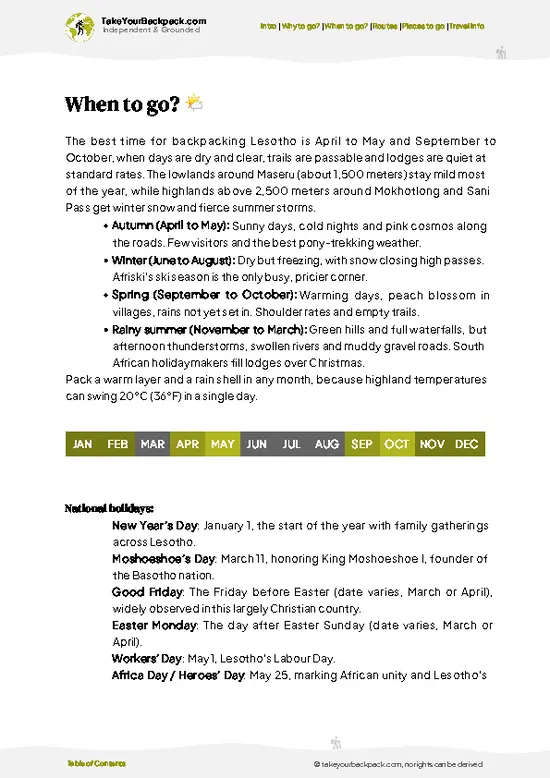
  • Weather: The best window is between October and April when Lesotho’s highland climate softens. Winter months (May to September) bring biting cold, often below freezing at night, with snow that can block access. Summer rains can be heavy but usually brief, refreshing the landscape.

  • Temperature: Expect daytime highs around 20-25°C (68-77°F) in summer, dropping sharply after sunset. Winter days hover near 5-10°C (41-50°F), plunging below 0°C (32°F) at night. Dress in layers; the dam sits at 2,000+ meters elevation, so altitude chills bite.

  • Daylight Hours: Summer offers long days, up to 12-14 hours of light, perfect for extended hikes or photography. Winter days shrink to 9-10 hours, limiting exploration time and making early starts essential.

  • Crowds: Katse Dam isn’t a tourist magnet,
read more 👉

  • Weather: The best window is between October and April when Lesotho’s highland climate softens. Winter months (May to September) bring biting cold, often below freezing at night, with snow that can block access. Summer rains can be heavy but usually brief, refreshing the landscape.

  • Temperature: Expect daytime highs around 20-25°C (68-77°F) in summer, dropping sharply after sunset. Winter days hover near 5-10°C (41-50°F), plunging below 0°C (32°F) at night. Dress in layers; the dam sits at 2,000+ meters elevation, so altitude chills bite.

  • Daylight Hours: Summer offers long days, up to 12-14 hours of light, perfect for extended hikes or photography. Winter days shrink to 9-10 hours, limiting exploration time and making early starts essential.

  • Crowds: Katse Dam isn’t a tourist magnet, but weekends and local holidays see a spike in visitors. Visiting midweek during shoulder seasons means fewer people and a more personal experience.

  • Seasonal Activities: Summer’s green hills invite hiking and birdwatching; winter’s snow transforms the area into a quiet, stark landscape—great for solitude but less accessible. Fishing and boat tours run mainly in warmer months.

  • Price Fluctuations: Accommodation and tours peak in summer and around local holidays, with prices rising 20-30%. Off-season offers better deals but fewer services, so balance cost with convenience.


Pro-tip: Aim for late spring or early autumn—when the weather is stable, crowds thin, and prices stay reasonable—to catch Katse Dam’s raw beauty without the hassle.


source: climatestotravel.comJANJanuary: excellent for travelingFEBFebruary: excellent for travelingMARMarch: excellent for travelingAPRApril: highly recommended for travelingMAYMay: fair for travelingJUNJune: below average for travelingJULJuly: below average for travelingAUGAugust: fair for travelingSEPSeptember: good for travelingOCTOctober: highly recommended for travelingNOVNovember: excellent for travelingDECDecember: excellent for traveling
when-to-go

✈️ The backpacker research shortcutLesotho Travel Guide

An offline-friendly backpacking guide with optimized travel routes, ranked highlights, transport advice, and the best areas to stay.
example page 0 from our offline Travel Guide for Lesotho
example page 1 from our offline Travel Guide for Lesotho
example page 2 from our offline Travel Guide for Lesotho
example page 3 from our offline Travel Guide for Lesotho
example page 4 from our offline Travel Guide for Lesotho
example page 5 from our offline Travel Guide for Lesotho
example page 6 from our offline Travel Guide for Lesotho
example page 7 from our offline Travel Guide for Lesotho
The digital guide (178 pages) contains:
42 highlights, ranked by travel appeal
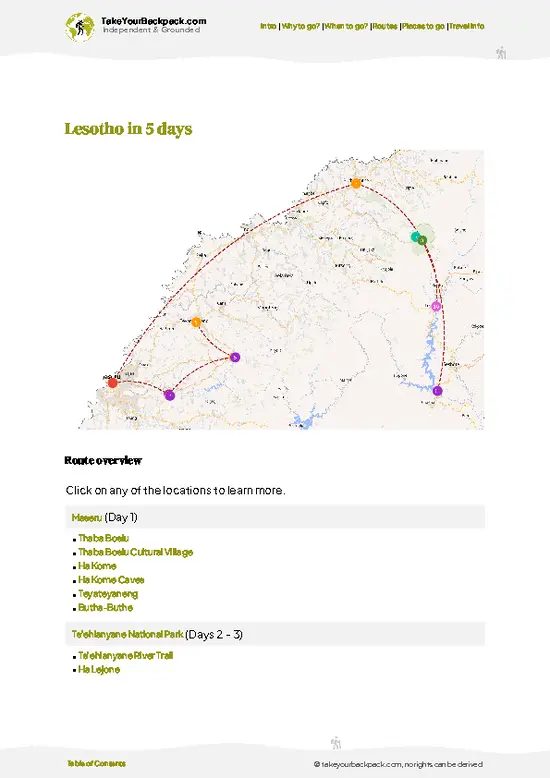
Optimized 2, 3 & 5-day travel routes
Cities, national parks, landmarks, beaches
How to get around
Offline-friendly for travel without Wi-Fi
👉 Click to see all 30+ guide features

📅 Plan smarter in minutes, not weeks
Month by month travel advice
Festivals & national holidays
Budget expectations

🗺️ Go to the right places, skip the overrated ones
Honest pros & cons of destinations
Top hikes, parks & viewpoints
Lesser-known places most travelers miss
Clear “worth it vs skip it” guidance

🛏️ Travel smoothly without rookie mistakes
Best areas to stay
Transport systems explained simply
Common scams & safety advice
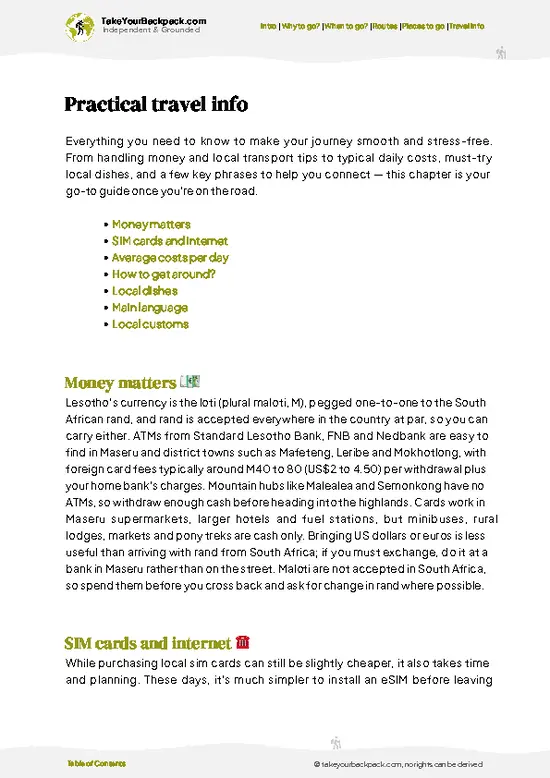
SIM cards, money & practical tips

🌍 Understand the country, not just visit it
Culture & traditions
52 Essential phrases & customs
Festivals worth planning around
Traveler-friendly historical context
Insights that make places more meaningful

📱 Built for real travel conditions
Fully downloadable PDF
Works completely offline
Optimized for phone use
Useful in remote areas & buses
Everything in one place
Save weeks of stressful planning
Get instant access to your full guide. 30‑day money-back guarantee.
+ Add another guide for just €6.50

By proceeding you agree to our terms.
Sent to your inbox immediately after payment • 100% Secure Checkout
Best Backpacking Travel Advisor 2025 tourism awardBest Backpacking
Travel Advisor
2025
What others say about Take Your Backpack Guides:
⭐⭐⭐⭐⭐
Fantastic, amazing amount of information!
⭐⭐⭐⭐⭐
My goodness this is amazing, it's what I've been looking for hats off too you!
⭐⭐⭐⭐⭐
I think this is absolutely BRILLIANT
⭐⭐⭐⭐
Very complete and informative. It's still missing places, but I gotta to commend you
⭐⭐⭐⭐⭐
This is truly amazing, thank you, can't wait to explore it with my kids!
⭐⭐⭐⭐⭐
Awesome resource, thank you!
⭐⭐⭐⭐⭐
This is amazing! Can't wait to explore the ones I haven't seen
⭐⭐⭐⭐
I love this! Well done, great idea.
⭐⭐⭐⭐⭐
Thanks for taking the time to make this gem!
⭐⭐⭐⭐⭐
This might be the best website I've ever seen.
⭐⭐⭐⭐⭐
Congratulations, and thank you so much for your work; it's incredibly valuable.
⭐⭐⭐⭐
In all seriousness I think you did a great job pointing out the important spots
⭐⭐⭐⭐⭐
10/10 very good
⭐⭐⭐⭐⭐
As someone who's only just starting to visit regularly this is awesome, thank you.
⭐⭐⭐⭐
Thank you very much! I'm going to visit my dad, it's going to be very useful!
⭐⭐⭐⭐⭐
This is really cool! We'll be travelling for the first time and this definitely come in handy.
⭐⭐⭐⭐⭐
You are now our minister of culture, congratulations 👨‍💼
⭐⭐⭐⭐⭐
Just wanted to tell you that this is a pearl! Going to follow your recommendations.
⭐⭐⭐⭐⭐
This is so cool. I'll definitely be using the resource for my travels soon.
⭐⭐⭐⭐⭐
This is very impressive! Good work.
⭐⭐⭐⭐⭐
This is an amazing and informative site. Very well done!

🛏️ Where to stay?How to pick the right area

Staying near Katse Dam in Lesotho is about more than just a roof over your head; it’s about immersing yourself in the raw beauty of the region.

First up, consider the village of Katse itself. It’s not just a pit stop; it’s where you’ll find a community that thrives on the dam’s presence. You’ll meet locals who are eager to share stories and insights. The vibe here is laid-back, perfect for solo travelers looking to connect.

Then there’s the area around the dam. While it can get crowded with day-trippers, the evenings are serene. Look for spots that cater to backpackers. You’ll find shared … read more 👉
Staying near Katse Dam in Lesotho is about more than just a roof over your head; it’s about immersing yourself in the raw beauty of the region.

First up, consider the village of Katse itself. It’s not just a pit stop; it’s where you’ll find a community that thrives on the dam’s presence. You’ll meet locals who are eager to share stories and insights. The vibe here is laid-back, perfect for solo travelers looking to connect.

Then there’s the area around the dam. While it can get crowded with day-trippers, the evenings are serene. Look for spots that cater to backpackers. You’ll find shared spaces that encourage mingling, making it easy to swap tales over a cup of local tea.

Don’t overlook the nearby town of Mokhotlong. It’s a bit further but offers a more authentic experience. The locals are friendly, and the scenery is breathtaking. Plus, you’ll find budget-friendly options that won’t break the bank.

Safety is generally good, but always trust your instincts. The real magic lies in the connections you make and the stories you gather. Embrace the experience, and you’ll leave with more than just photos.

👛 Costs (as of 3 September 2026)How expensive it really is

Visiting Katse Dam in Lesotho can be a rewarding experience, but it’s essential to know what you’re getting into financially. Here’s a breakdown of typical costs you might encounter:
  • Entrance Fee: Expect to pay around €5 to €10 ($5 to $12) for entry. This fee grants you access to the dam and its visitor center, where you can learn about its engineering marvel and significance.
  • Guided Tours: If you want a deeper understanding, guided tours range from €15 to €30 ($18 to $35). These tours often include insights from knowledgeable locals who can share stories and details that you won’t find in brochures.
  • Accommodation: Options vary widely. Budget lodges start at about €20 ($24) per night, while mid-range hotels can go up to €70 ($85) or more. If you’re looking for something unique, consider staying
read more 👉
Visiting Katse Dam in Lesotho can be a rewarding experience, but it’s essential to know what you’re getting into financially. Here’s a breakdown of typical costs you might encounter:
  • Entrance Fee: Expect to pay around €5 to €10 ($5 to $12) for entry. This fee grants you access to the dam and its visitor center, where you can learn about its engineering marvel and significance.
  • Guided Tours: If you want a deeper understanding, guided tours range from €15 to €30 ($18 to $35). These tours often include insights from knowledgeable locals who can share stories and details that you won’t find in brochures.
  • Accommodation: Options vary widely. Budget lodges start at about €20 ($24) per night, while mid-range hotels can go up to €70 ($85) or more. If you’re looking for something unique, consider staying in a guesthouse for a more local experience.
  • Food and Drink: Meals can be quite affordable. Street food or local eateries might cost you around €3 to €7 ($4 to $8) per meal. If you opt for a sit-down restaurant, expect to pay between €10 to €20 ($12 to $24) for a full meal.
  • Transport: Getting to Katse Dam can be tricky. If you’re renting a car, budget for about €30 to €50 ($35 to $60) per day. Alternatively, local taxis or shuttles can cost around €10 to €20 ($12 to $24) for a one-way trip from nearby towns.

Understanding these costs helps you prepare for a visit that’s not just about the dam itself, but the entire experience surrounding it.
⚠️ Prices can change and everyone travels differently, so take this as a rough guide. Hope it helps you plan your adventure!

FAQTraveler FAQ

Katse Dam is the largest dam in Lesotho and a key part of the Lesotho Highlands Water Project, supplying water to South Africa and generating hydroelectric power. It is located in the Maluti Mountains at an altitude of about 2,000 meters. The dam reservoir stretches over 70 kilometers in length.
Visiting Katse Dam typically requires half a day to a full day, depending on your interest in guided tours and hiking around the area. The visitor center offers tours that last around 2 to 3 hours, including a walk on the dam wall and a museum visit.
To get to Katse Dam, you usually travel from Maseru, the capital of Lesotho, by road. The drive is about 3 to 4 hours over mountainous terrain, and a 4x4 vehicle is recommended due to rough and sometimes unpaved roads.
⚠️ Things can change over time, so always validate details locally before you go.

Other Basotho landmarks near Katse Dam

Explore more nearby:

  • Senqu river source—mountain springs, high-altitude plateau, river origins| 47 km away
  • Ha Kome Caves—cliffside dwellings, mud-plastered walls, living heritage| 63 km away
  • Liphofung Caves—rock art, sandstone shelter, archaeological site| 65 km away

💡 Not sure where to go next?
Create a personalized itinerary for Lesotho including Katse Dam and the places that fit your trip.

Generate my itinerary

👉 Discover all landmarks

Or checkout all Lesotho has to offer (think cities, towns, villages, national parks, hikes, beaches, festivals)
Country photo of Lesotho

We 💚 feedbackKey takeaways before you go

The Katse Dam is a mixed bag. Yes, it’s popular, and yes, the crowds can be a buzzkill. But here’s the kicker: the views from the dam are jaw-dropping, especially at sunrise when the mist dances over the water. Don’t miss the local villages nearby; they offer a slice of real life that’s often overlooked. Just be prepared for the chilly winds—bring layers. If you’re after authenticity, skip the touristy spots and chat with the locals. That’s where the real magic happens.

✍️ Help improve this page!
The information on this page is based on in-depth research, insights shared by experienced travelers, and feedback from the local travel community in Lesotho. While every effort is made to keep the information accurate and current, conditions can change — so if you spot anything incorrect or outdated, please get in touch.


🙋‍♂️ Give feedback

👋 Meet the founderWho’s Behind Take Your Backpack?

Johan, backpacker and founder of TakeYourBackpackHi, I’m Johan (Netherlands 🇳🇱), the creator of TakeYourBackpack. Over the past decade, I’ve backpacked through 80+ countries across six continents, gaining extensive experience with independent travel, long-term trips, and overland routes.

This site is built on a combination of firsthand travel experience and carefully curated insights from other backpackers. Many guides are based on places I’ve personally visited, while others bring together tips, observations, and practical advice shared by trusted travelers I’ve met along the way.

The goal is to provide realistic, experience-driven guidance — not generic itineraries — so you can explore destinations with better context, clearer expectations, and more confidence.

Get full Lesotho guide •
Instant download • 42 highlights • Full Offline guide