×

Liberia🇱🇷 | townsGbarngaUniversity town, administrative hub, central crossroads | things to do and best time to go

Explore GantaExplore Kakata

Backpacking in Gbarnga
🏆 Top picktown ranked #6
By Johan Kruseman 🇳🇱 | Updated June 9, 2026

The first real fork in the road for travelers eyeing Gbarnga is whether to treat it as a destination or just a pit stop. That choice matters—because Gbarnga, tucked in central Liberia’s rolling green heart, is less about bucket-list sights and more about the rhythm of local life. The town itself is a crossroads, both literally and figuratively, for anyone weaving between Monrovia and the Guinean border. You’ll find a dusty, energetic market, the scent of smoked fish curling through the air, and a handful of simple guesthouses. Don’t expect a polished old town or nightlife—this is a place where evenings are slow, and the best conversation might happen over a plate of palm butter stew. Gbarnga is practical: buses and shared taxis connect you to Sanniquellie or Ganta, but you’ll need patience for the journey and a willingness to walk or hop on a moto once you arrive. It’s more relaxed and less touristic than coastal Buchanan, but less scenic than the forested hills further east. Costs are low, safety is reasonable if you keep your wits, and you’ll likely be the only foreigner in sight—so bring your own company, or be ready to make friends with locals rather than fellow backpackers.

Discover everything you want to know in the 📖 Liberia Travel Guide.


Get your Liberia guide
61 ranked highlights, routes & tips, works offline (260 pages)
Loading the map 🌍
CLICK TO FILTER
cities
towns
landmarks
national parks
hikes
beaches
attractions
festivals
regions
SHOW COUNTRY’S BESTSHOW ALL

✨ Why go?
Ranked #6 town in Liberia
Why Gbarnga should be on your travel list

Gbarnga serves as a gateway for backpackers exploring Liberia’s rugged beauty. Its walkable streets invite you to wander, with small-scale hostels and guesthouses offering a cozy base. The town’s friendly atmosphere makes it easy to connect with fellow travelers, whether you’re a solo adventurer or part of a small group.

Nearby, you can access stunning hikes and cultural sites that reveal the heart of Liberia. Many backpackers linger a few days, soaking in local food experiences that burst with flavor and authenticity. While Gbarnga isn’t a nightlife hub, its charm lies in the slow pace, perfect for those looking to recharge before heading to the coast or deeper into the countryside. Here, the journey feels just as rewarding as the destination.
Want to include Gbarnga in your Liberia route?
Create a personalized Liberia itinerary that includes Gbarnga and the places that fit your trip — based on your travel style, budget, and available time. Get your route in seconds.

Generate my trip

💡 HighlightsDon't-miss highlights and experiences

  1. Gbarnga Central Market — The town’s beating heart: a chaotic, colorful cluster of stalls selling fresh produce, smoked fish, spices, phone credit and clothes. Best place to watch daily life, haggle for supplies, and try Liberian street food like cassava dumplings and pepper soup.
  2. Bong County Administration Compound (County Hall) — The civic center where county business happens. It’s useful to visit for a sense of local governance, to see notice boards full of local announcements, and to observe the informal meeting spots where elders and officials trade news.
  3. Gbarnga Bus Park / Transport Hub — Not glamorous, but essential: the arrival/departure point for minibuses and shared taxis. Great for photographing people-in-motion, arranging onward travel, and sampling roadside snacks while you
read more 👉
  1. Gbarnga Central Market — The town’s beating heart: a chaotic, colorful cluster of stalls selling fresh produce, smoked fish, spices, phone credit and clothes. Best place to watch daily life, haggle for supplies, and try Liberian street food like cassava dumplings and pepper soup.
  2. Bong County Administration Compound (County Hall) — The civic center where county business happens. It’s useful to visit for a sense of local governance, to see notice boards full of local announcements, and to observe the informal meeting spots where elders and officials trade news.
  3. Gbarnga Bus Park / Transport Hub — Not glamorous, but essential: the arrival/departure point for minibuses and shared taxis. Great for photographing people-in-motion, arranging onward travel, and sampling roadside snacks while you wait for a ride.
  4. Main Market Road / Commercial Spine — The stretch of shops, tailor stalls and small eateries that runs through town. Walk it slowly to find affordable tailors, phone repairers, and lively street vendors — the best place to get practical services and a feel for local entrepreneurship.
  5. Local Community Radio Studio — Small-town radio matters in Liberia. If the presenters are around they’ll usually welcome visitors; sit in on a live show or pick up local music, news and language programs that you won’t hear elsewhere.
  6. Gbarnga Central Mosque — An active place of worship that reflects the town’s Muslim community. Visiting (respectfully and outside prayer if you are unsure) gives insight into daily religious life, architecture, and community rhythms.
  7. Prominent Local Church (Main Parish) — The large Christian parish in town hosts services and community events that are central to Gbarnga’s social life. Attend a service or a choir practice to experience local worship and music traditions.
  8. Municipal Football Field / Stadium — Where local matches and community gatherings happen. Catching a weekend game is one of the best ways to meet locals, enjoy spirited football, and watch how sports tie the town together.
  9. Craft & Tailor Quarter — A cluster of workshops where tailors, shoe-repairers and small artisans work from open-fronted shops. Good for picking up custom clothing, local textile work, or simple handmade souvenirs while seeing craftsmen at work.
  10. Everyday Eateries & Palm-Wine Spots — The small, informal restaurants and bars that line side streets: places to try home-style Liberian dishes, share a bowl of stew with locals, and sample palm wine. They’re where the town’s social life happens after market hours.
A few real, visitable highlights just outside Gbarnga that make easy day trips: Cuttington University (in nearby Suacoco), Phebe Hospital/mission area, and the old Bong Mines area — all reachable from town for a fuller sense of the county.
Spotted a mistake or missing something? Contact us.
🏘️ NeighborhoodsHow different areas shape the experience

Gbarnga is a vibrant hub in Liberia, rich in culture and community spirit. Here’s how to navigate its neighborhoods for an authentic experience.

Central Gbarnga: This is the heartbeat of the town. Bustling markets and local eateries fill the streets with the aroma of jollof rice and grilled fish. It’s walkable, making it easy to explore. Nightlife is low-key, with a few bars where you can mingle with locals. Perfect for short stays, but longer visits can feel repetitive.

New Gbarnga: A bit quieter, this area offers a more laid-back vibe. It’s ideal for those seeking peace after a day of exploration. Guesthouses here are affordable, and you can find some hidden cafes. Transport options are decent, but you might need to rely on motorbike taxis. Great for longer stays if you want to immerse … read more 👉
Gbarnga is a vibrant hub in Liberia, rich in culture and community spirit. Here’s how to navigate its neighborhoods for an authentic experience.

Central Gbarnga: This is the heartbeat of the town. Bustling markets and local eateries fill the streets with the aroma of jollof rice and grilled fish. It’s walkable, making it easy to explore. Nightlife is low-key, with a few bars where you can mingle with locals. Perfect for short stays, but longer visits can feel repetitive.

New Gbarnga: A bit quieter, this area offers a more laid-back vibe. It’s ideal for those seeking peace after a day of exploration. Guesthouses here are affordable, and you can find some hidden cafes. Transport options are decent, but you might need to rely on motorbike taxis. Great for longer stays if you want to immerse yourself in local life.

Old Gbarnga: Rich in history, this neighborhood is where you’ll find remnants of colonial architecture. It’s less touristy, giving you a genuine feel of the town. Walkability is moderate; some spots are a bit spread out. Perfect for history buffs and those looking to stay longer while soaking in the local culture.

⌛️ 1 dayHow to make the most of one day

Gbarnga, Liberia, pulses with a unique blend of history and community spirit. Once a hub during the civil war, it now thrives with vibrant markets and warm locals eager to share their stories.

Start your day at the bustling Gbarnga Market. The air is thick with the scent of fresh produce and spices. Engage with vendors selling everything from cassava to colorful fabrics. Grab a local breakfast of rice and beans, a hearty way to fuel your adventures.

Afterward, stroll through the nearby neighborhoods, like the lively Bopolu Street, where you can admire the simple yet charming architecture. Make your way to the Gbarnga Baptist Church, a striking structure that stands as a testament to the town’s resilience. The stained glass filters sunlight into a kaleidoscope of colors, creating a serene … read more 👉
Gbarnga, Liberia, pulses with a unique blend of history and community spirit. Once a hub during the civil war, it now thrives with vibrant markets and warm locals eager to share their stories.

Start your day at the bustling Gbarnga Market. The air is thick with the scent of fresh produce and spices. Engage with vendors selling everything from cassava to colorful fabrics. Grab a local breakfast of rice and beans, a hearty way to fuel your adventures.

Afterward, stroll through the nearby neighborhoods, like the lively Bopolu Street, where you can admire the simple yet charming architecture. Make your way to the Gbarnga Baptist Church, a striking structure that stands as a testament to the town’s resilience. The stained glass filters sunlight into a kaleidoscope of colors, creating a serene atmosphere perfect for reflection.

In the afternoon, head to the nearby Kpatawee Waterfall. It’s a bit off the beaten path, but the journey is worth it. The sound of cascading water and the lush greenery surrounding you create a refreshing escape. Bring a picnic to enjoy by the water’s edge, soaking in the tranquility.

As evening approaches, return to town and find a local eatery. Try some jollof rice paired with grilled chicken, a dish bursting with flavor. The night wraps up with laughter and stories shared with new friends, leaving you with a deeper connection to this resilient town.
Turn your Gbarnga visit into an Liberia adventure
Build a complete Liberia route with Gbarnga, hidden gems, must-see destinations, and realistic travel times included.

Generate my trip

🌤️ When to go?When to go for the best experience


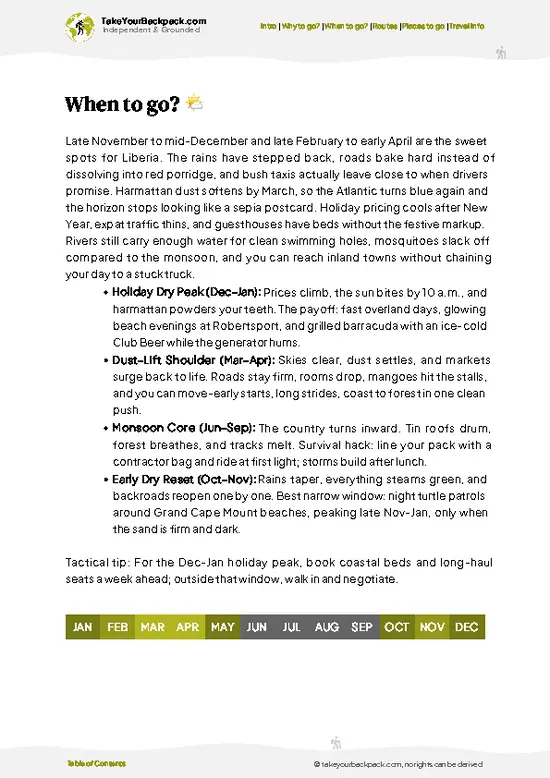
  • Weather: Gbarnga’s rainy season runs from May to October, with heavy downpours that can turn dirt roads into mud traps. The dry season, November to April, offers clearer skies and easier trekking conditions, making it the practical choice for backpackers.

  • Temperature: Expect daily highs around 30-33°C (86-91°F) year-round, but humidity spikes during the rainy months, making it feel hotter and stickier. Dry season mornings and evenings cool down to a comfortable 22-24°C (72-75°F), perfect for early hikes or evening strolls.

  • Daylight Hours: Near the equator, daylight is steady—about 12 hours year-round. Sunrise around 6:00 AM and sunset near 6:00 PM means you get consistent light to plan your days without surprises.

  • Crowds: Gbarnga isn’t a tourist hotspot, so crowds are minimal anytime.
read more 👉

  • Weather: Gbarnga’s rainy season runs from May to October, with heavy downpours that can turn dirt roads into mud traps. The dry season, November to April, offers clearer skies and easier trekking conditions, making it the practical choice for backpackers.

  • Temperature: Expect daily highs around 30-33°C (86-91°F) year-round, but humidity spikes during the rainy months, making it feel hotter and stickier. Dry season mornings and evenings cool down to a comfortable 22-24°C (72-75°F), perfect for early hikes or evening strolls.

  • Daylight Hours: Near the equator, daylight is steady—about 12 hours year-round. Sunrise around 6:00 AM and sunset near 6:00 PM means you get consistent light to plan your days without surprises.

  • Crowds: Gbarnga isn’t a tourist hotspot, so crowds are minimal anytime. However, local festivals in the dry season can bring a lively buzz, offering a chance to experience authentic Liberian culture without overwhelming tourist traffic.

  • Seasonal Activities: Dry months are best for exploring nearby nature reserves and markets, as trails are accessible and vendors are fully stocked. Rainy season limits outdoor options but brings lush greenery and fewer travelers, if you don’t mind the wet.

  • Price Fluctuations: Accommodation and transport costs dip slightly during the rainy season due to lower demand, but the trade-off is dealing with unpredictable weather and travel delays.


Pro-tip: Aim for late dry season (February to April) when the air is fresh, the landscape is still green, and you’ll enjoy smooth travel with fewer bugs and better local vibes.


source: climatestotravel.comJANJanuary: highly recommended for travelingFEBFebruary: excellent for travelingMARMarch: excellent for travelingAPRApril: excellent for travelingMAYMay: fair for travelingJUNJune: fair for travelingJULJuly: fair for travelingAUGAugust: fair for travelingSEPSeptember: fair for travelingOCTOctober: fair for travelingNOVNovember: highly recommended for travelingDECDecember: highly recommended for traveling
when-to-go

✈️ The backpacker research shortcutLiberia Travel Guide

An offline-friendly backpacking guide with optimized travel routes, ranked highlights, transport advice, and the best areas to stay.
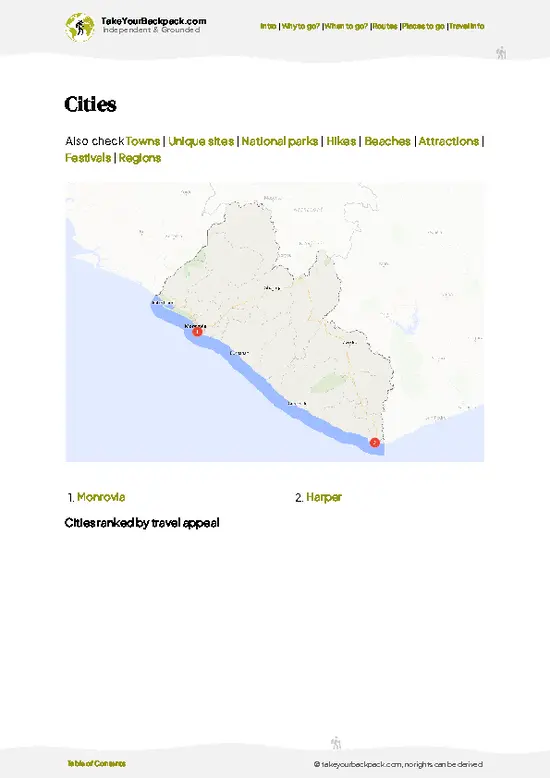
example page 0 from our offline Travel Guide for Liberia
example page 1 from our offline Travel Guide for Liberia
example page 2 from our offline Travel Guide for Liberia
example page 3 from our offline Travel Guide for Liberia
example page 4 from our offline Travel Guide for Liberia
example page 5 from our offline Travel Guide for Liberia
example page 6 from our offline Travel Guide for Liberia
example page 7 from our offline Travel Guide for Liberia
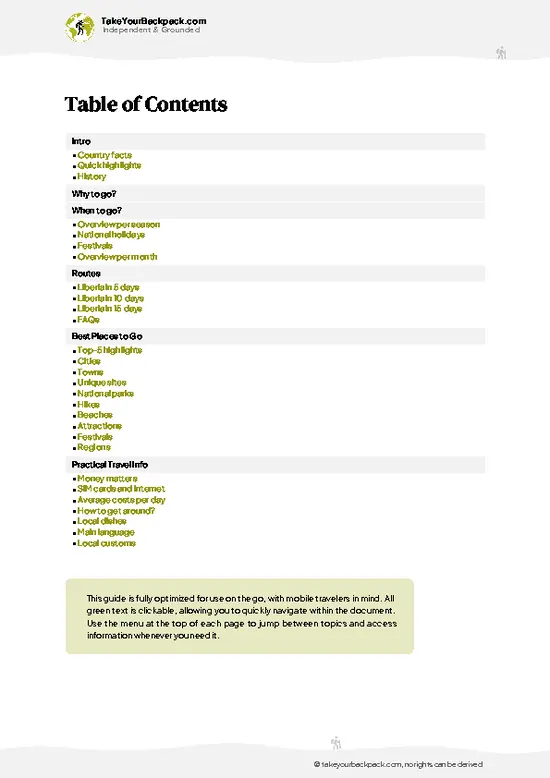
The digital guide (260 pages) contains:
61 highlights, ranked by travel appeal
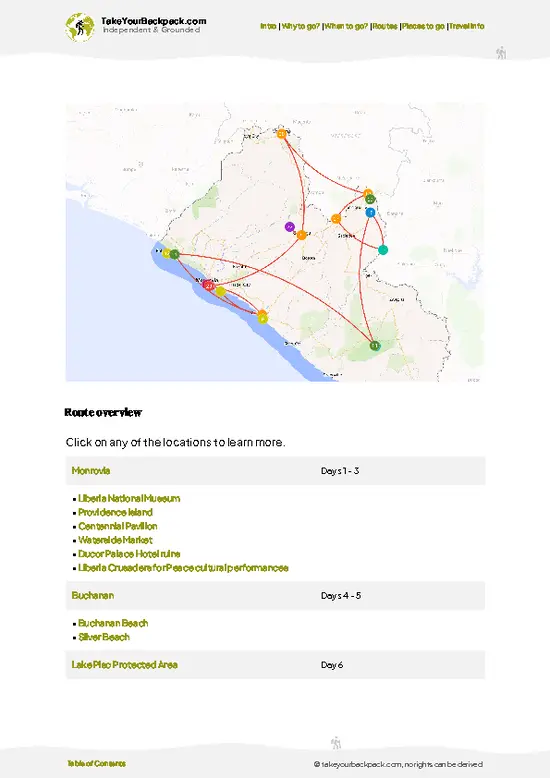
Optimized 5, 10 & 15-day travel routes
Cities, national parks, landmarks, beaches
How to get around
Offline-friendly for travel without Wi-Fi
👉 Click to see all 30+ guide features

📅 Plan smarter in minutes, not weeks
Month by month travel advice
Festivals & national holidays
Budget expectations

🗺️ Go to the right places, skip the overrated ones
Honest pros & cons of destinations
Top hikes, parks & viewpoints
Lesser-known places most travelers miss
Clear “worth it vs skip it” guidance

🛏️ Travel smoothly without rookie mistakes
Best areas to stay
Transport systems explained simply
Common scams & safety advice
SIM cards, money & practical tips

🌍 Understand the country, not just visit it
Culture & traditions
Local customs
Festivals worth planning around
Traveler-friendly historical context
Insights that make places more meaningful

📱 Built for real travel conditions
Fully downloadable PDF
Works completely offline
Optimized for phone use
Useful in remote areas & buses
Everything in one place
Save weeks of stressful planning
Get instant access to your full guide. 30‑day money-back guarantee.


By proceeding you agree to our terms.
Sent to your inbox immediately after payment • 100% Secure Checkout
Best Backpacking Travel Advisor 2025 tourism awardBest Backpacking
Travel Advisor
2025
What others say about Take Your Backpack Guides:
⭐⭐⭐⭐⭐
Fantastic, amazing amount of information!
⭐⭐⭐⭐⭐
My goodness this is amazing, it's what I've been looking for hats off too you!
⭐⭐⭐⭐⭐
I think this is absolutely BRILLIANT
⭐⭐⭐⭐
Very complete and informative. It's still missing places, but I gotta to commend you
⭐⭐⭐⭐⭐
This is truly amazing, thank you, can't wait to explore it with my kids!
⭐⭐⭐⭐⭐
Awesome resource, thank you!
⭐⭐⭐⭐⭐
This is amazing! Can't wait to explore the ones I haven't seen
⭐⭐⭐⭐
I love this! Well done, great idea.
⭐⭐⭐⭐⭐
Thanks for taking the time to make this gem!
⭐⭐⭐⭐⭐
This might be the best website I've ever seen.
⭐⭐⭐⭐⭐
Congratulations, and thank you so much for your work; it's incredibly valuable.
⭐⭐⭐⭐
In all seriousness I think you did a great job pointing out the important spots
⭐⭐⭐⭐⭐
10/10 very good
⭐⭐⭐⭐⭐
As someone who's only just starting to visit regularly this is awesome, thank you.
⭐⭐⭐⭐
Thank you very much! I'm going to visit my dad, it's going to be very useful!
⭐⭐⭐⭐⭐
This is really cool! We'll be travelling for the first time and this definitely come in handy.
⭐⭐⭐⭐⭐
You are now our minister of culture, congratulations 👨‍💼
⭐⭐⭐⭐⭐
Just wanted to tell you that this is a pearl! Going to follow your recommendations.
⭐⭐⭐⭐⭐
This is so cool. I'll definitely be using the resource for my travels soon.
⭐⭐⭐⭐⭐
This is very impressive! Good work.
⭐⭐⭐⭐⭐
This is an amazing and informative site. Very well done!

🛏️ Where to stay?How to pick the right area

In Gbarnga, the heartbeat for backpackers pulses strongest around the central market district and the adjacent residential blocks to the south. This area isn’t just a place to crash—it’s where the city’s rhythm is most accessible. Streets here hum with vendors selling fresh produce, the scent of grilled fish mingling with earth and dust, and the chatter of locals bartering in a mix of English and Kpelle. It’s safe enough for solo travelers who keep their wits, with a visible but low-key police presence that adds a layer of calm without feeling oppressive.

Hostels and budget guesthouses cluster … read more 👉
In Gbarnga, the heartbeat for backpackers pulses strongest around the central market district and the adjacent residential blocks to the south. This area isn’t just a place to crash—it’s where the city’s rhythm is most accessible. Streets here hum with vendors selling fresh produce, the scent of grilled fish mingling with earth and dust, and the chatter of locals bartering in a mix of English and Kpelle. It’s safe enough for solo travelers who keep their wits, with a visible but low-key police presence that adds a layer of calm without feeling oppressive.

Hostels and budget guesthouses cluster near the market, offering simple, clean rooms where you can meet other travelers swapping stories over shared meals or evening drinks. The vibe is social but unforced—people here aren’t just passing through; they’re part of the city’s pulse. Compared to the quieter, more residential northern neighborhoods, this southern-central zone keeps you close to transport hubs and eateries, cutting down on taxi costs and giving you a real taste of daily life. Staying here means you’re not just observing Gbarnga—you’re stepping into its flow.

🚌 Getting aroundMoving around without the hassle

Gbarnga moves at its own rhythm—neither frantic nor sluggish, but a steady pulse shaped by the sun’s arc and the hum of daily life. The air carries a mix of earth and smoke from cooking fires, punctuated by the chatter of market vendors and the occasional honk of a shared taxi. Here, time is flexible but not careless; schedules exist but bend to the flow of people and purpose. You won’t find strict timetables posted everywhere, but you’ll learn to read the cues: when the streets fill with traders, that’s your signal to catch a ride or start walking. The town’s layout encourages a blend of walking and hopping on local transport, making it a playground for budget travelers who want to feel the pulse without paying a premium.

Walking: The heart of Gbarnga is compact enough to explore on foot. … read more 👉
Gbarnga moves at its own rhythm—neither frantic nor sluggish, but a steady pulse shaped by the sun’s arc and the hum of daily life. The air carries a mix of earth and smoke from cooking fires, punctuated by the chatter of market vendors and the occasional honk of a shared taxi. Here, time is flexible but not careless; schedules exist but bend to the flow of people and purpose. You won’t find strict timetables posted everywhere, but you’ll learn to read the cues: when the streets fill with traders, that’s your signal to catch a ride or start walking. The town’s layout encourages a blend of walking and hopping on local transport, making it a playground for budget travelers who want to feel the pulse without paying a premium.

Walking: The heart of Gbarnga is compact enough to explore on foot. Walking lets you soak in the smells of fresh cassava and roasted peanuts, the vibrant colors of fabric stalls, and the rhythm of daily life. It’s free, flexible, and the best way to discover tucked-away corners. Expect dusty roads and uneven sidewalks, so sturdy shoes are a must.

Shared Taxis (Motorcycle Taxis or “Okadas”): These are the lifeblood of quick, affordable transit. They dart through traffic with agility, weaving between pedestrians and cars. Fares usually range from 50 to 150 Liberian dollars depending on distance. They run from dawn until dusk, but after dark, availability drops sharply. Negotiating the fare upfront is essential—no meter, just local know-how.

Minibus Taxis: For longer hops within and just outside Gbarnga, minibuses are your go-to. They follow semi-fixed routes but won’t leave until full, so timing can be unpredictable. Fares hover around 100 to 200 Liberian dollars. The ride is bumpy, windows open to the dusty air, and the driver’s playlist is whatever local radio station is loudest. It’s a social experience—expect stops for passengers and goods along the way.

Bicycle Rentals: If you want to cover more ground without losing the intimacy of street-level travel, renting a bicycle is a solid option. Rentals cost about 500 Liberian dollars per day. The roads can be rough, so a sturdy bike is non-negotiable. Early morning rides offer cooler air and softer light, perfect for exploring outskirts or heading to nearby villages.

Walking + Shared Taxi Combo: The smartest move for budget travelers is to combine walking with short shared taxi rides. Walk through the market and neighborhoods to absorb the atmosphere, then hop on an okada for longer stretches or when the sun is high and the heat is relentless. This mix keeps costs low and your experience authentic, while saving energy for the parts of town that demand a faster pace.

Mastering Gbarnga’s transit means embracing its flexible tempo. The payoff is a richer, more tactile connection to the town’s daily rhythm—where every step and ride reveals a layer of life you’d miss from a car window alone.

👛 Costs (as of 2 June 2025)What things cost and how to budget

Backpacking in Gbarnga, Liberia, means navigating a town where simplicity meets the raw pulse of everyday life, and your budget reflects that straightforward vibe.
  • Dorm Accommodation: Expect basic guesthouses rather than formal hostels. Dorm-style rooms or shared accommodations typically run between $5 and $10 per night. These places often have minimal amenities but offer a clean bed and a chance to mingle with locals or fellow travelers.
  • Meals: Street food and small local eateries dominate the scene. A hearty meal of rice, beans, and grilled fish or chicken will cost around $2 to $4. Western-style or more tourist-oriented meals can push up to $6 or $7, but sticking to local joints keeps your wallet happy and your taste buds grounded in authentic flavors.
  • Local Transport: Transport is mostly
read more 👉
Backpacking in Gbarnga, Liberia, means navigating a town where simplicity meets the raw pulse of everyday life, and your budget reflects that straightforward vibe.
  • Dorm Accommodation: Expect basic guesthouses rather than formal hostels. Dorm-style rooms or shared accommodations typically run between $5 and $10 per night. These places often have minimal amenities but offer a clean bed and a chance to mingle with locals or fellow travelers.
  • Meals: Street food and small local eateries dominate the scene. A hearty meal of rice, beans, and grilled fish or chicken will cost around $2 to $4. Western-style or more tourist-oriented meals can push up to $6 or $7, but sticking to local joints keeps your wallet happy and your taste buds grounded in authentic flavors.
  • Local Transport: Transport is mostly informal—shared taxis or motorbike taxis (okadas). Short rides within town typically cost between $0.50 and $1.50. For longer trips or private hires, budget up to $5. Walking is often the best way to soak in the atmosphere and save cash.
  • Basic Activities/Entry Fees: Gbarnga isn’t packed with pricey tourist attractions. Entry fees for local cultural sites or community events usually hover around $1 to $3. The real draw is exploring markets, chatting with locals, and experiencing daily life, which costs nothing but your curiosity.
  • Miscellaneous Expenses: This covers essentials like bottled water, snacks, or phone credit. Plan for about $1 to $3 daily. Water quality can be iffy, so bottled water is a must, and phone credit is cheap but essential for navigation and communication.

All told, you’re looking at roughly $10 to $25 a day to cover the basics in Gbarnga. It’s a modest sum that opens the door to an unvarnished, genuine slice of Liberian life—where every dollar spent feels like a step deeper into the local rhythm.
⚠️ Prices can change and everyone travels differently, so take this as a rough guide. Hope it helps you plan your adventure!

🚌 Day tripsExploring the surroundings

Gbarnga, Liberia, is a backpacker’s dream base for day trips, offering a blend of culture, nature, and adventure. The town itself buzzes with life, from the aroma of street food to the vibrant chatter of locals. Here are some must-do day trips that will enrich your experience.

Lake Piso
Just a couple of hours from Gbarnga, Lake Piso is a serene escape. The drive winds through lush landscapes, with the scent of wet earth and wildflowers filling the air. Once there, you can swim, kayak, or simply lounge on the shore. The best time to visit is during the dry season, from November to April, when the weather is perfect for outdoor activities. Budget around $10 for transport and a small fee for kayaking. A common mistake? Many travelers underestimate the time it takes to get there; leave early … read more 👉
Gbarnga, Liberia, is a backpacker’s dream base for day trips, offering a blend of culture, nature, and adventure. The town itself buzzes with life, from the aroma of street food to the vibrant chatter of locals. Here are some must-do day trips that will enrich your experience.

Lake Piso
Just a couple of hours from Gbarnga, Lake Piso is a serene escape. The drive winds through lush landscapes, with the scent of wet earth and wildflowers filling the air. Once there, you can swim, kayak, or simply lounge on the shore. The best time to visit is during the dry season, from November to April, when the weather is perfect for outdoor activities. Budget around $10 for transport and a small fee for kayaking. A common mistake? Many travelers underestimate the time it takes to get there; leave early to soak it all in.


Mount Nimba
For the adventurous, Mount Nimba offers a rewarding hike with stunning views. It’s about a three-hour drive, but the journey is half the fun, with winding roads and glimpses of local life. The hike itself can be challenging, so bring plenty of water and snacks. Aim for the dry season for clearer skies and better visibility. Expect to spend around $15 for transport and park fees. First-timers often forget to check local guides; hiring one can enhance your experience and keep you safe.
👉 Explore Mount Nimba

Gbarnga Market
Staying local, the Gbarnga Market is a vibrant tapestry of colors and sounds. Spend a morning wandering through stalls filled with fresh produce, textiles, and handmade crafts. It’s a great way to connect with locals and sample traditional foods. The market is open daily, but visiting on Saturdays offers the most activity. You won’t spend much—maybe $5 for snacks and souvenirs. A common oversight is rushing through; take your time to chat and learn about the culture.


Wologizi Mountain
Wologizi Mountain is a hidden treasure for those seeking solitude and breathtaking views. About an hour’s drive from Gbarnga, the trail is less traveled, making it perfect for a peaceful hike. The best time to go is early morning to catch the sunrise. Budget around $10 for transport. Many first-timers miss the chance to explore the surrounding area; pack a picnic and enjoy the scenery.
👉 Explore Wologizi Mountain
Want to know what more Liberia offers?
The Liberia Travel Guide describes 61 highlights, from cities to national parks, from beaches to hikes

Get the Travel Guide -

🛡️ SafetyTraveler Safety Guide

Gbarnga is generally safe, but staying aware can enhance your experience. Stick to well-lit areas at night; the streets can be quiet, and a little caution goes a long way. If you’re solo, engage with locals—they’re friendly and can offer valuable insights.

Watch for common scams, like inflated taxi fares; always agree on a price beforehand. Street vendors can be persistent, but a polite “no, thank you” usually suffices.

Keep your belongings close, especially in crowded markets. The atmosphere is vibrant, but a little vigilance helps you soak in the culture without distraction. Enjoy the rhythm of Gbarnga, and let the warmth of its people guide you.

Other Liberian towns near Gbarnga

Explore more nearby:

  • Totota—Highway junction, lorry park, roadside food stalls| 55 km away
  • Ganta—Commercial center, border trade, busy roundabout| 60 km away
  • Salala—Transit stop, roadside market, rubber processing| 75 km away

💡 Not sure where to go next?
Create a personalized itinerary for Liberia including Gbarnga and the places that fit your trip.

Generate my itinerary

👉 Discover all towns

Or checkout all Liberia has to offer (think cities, towns, villages, national parks, hikes, beaches, festivals)
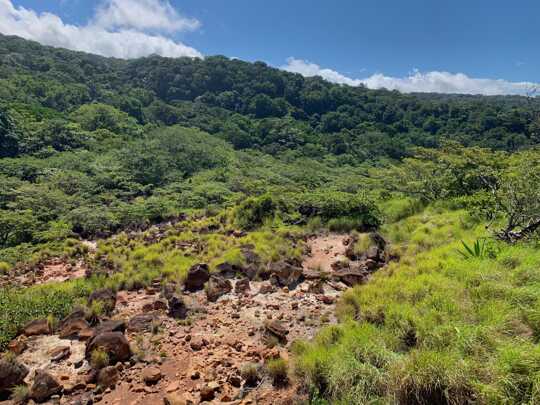
Country photo of Liberia

We 💚 feedbackSumming up the experience

Gbarnga has a raw, unfiltered vibe that pulses with life. The best surprise? The warmth of the locals; they’ll invite you into their world with open arms. Just be ready for the roads—some are rough, but that’s part of the adventure. Embrace the chaos; it leads to genuine connections and unforgettable moments.

✍️ Help improve this page!
The information on this page is based on in-depth research, insights shared by experienced travelers, and feedback from the local travel community in Liberia. While every effort is made to keep the information accurate and current, conditions can change — so if you spot anything incorrect or outdated, please get in touch.


🙋‍♂️ Give feedback

👋 Meet the founderWho’s Behind Take Your Backpack?

Johan, backpacker and founder of TakeYourBackpackHi, I’m Johan (Netherlands 🇳🇱), the creator of TakeYourBackpack. Over the past decade, I’ve backpacked through 80+ countries across six continents, gaining extensive experience with independent travel, long-term trips, and overland routes.

This site is built on a combination of firsthand travel experience and carefully curated insights from other backpackers. Many guides are based on places I’ve personally visited, while others bring together tips, observations, and practical advice shared by trusted travelers I’ve met along the way.

The goal is to provide realistic, experience-driven guidance — not generic itineraries — so you can explore destinations with better context, clearer expectations, and more confidence.

Get full Liberia guide •
Instant download • 61 highlights • Full Offline guide