×

Liberia🇱🇷 | regionsMount Nimbacloud forests, rare wildlife, steep escarpments | things to do and best time to go

Explore Lofa RiverExplore St. John River

Backpacking in Mount Nimba
🏆 Top pickregion ranked #1
By Johan Kruseman 🇳🇱 | Updated June 9, 2026

Forget the idea that Mount Nimba is just a single, photogenic peak you can bag in a day—this isn’t Kilimanjaro Lite. Mount Nimba is a wild, sprawling massif straddling the borderlands of Liberia, Guinea, and Côte d’Ivoire, with Liberia’s slice tucked into the far northeast, near Yekepa. This region is raw, lush, and about as far from the Instagram crowds as you can get in West Africa. The payoff? Ridiculously biodiverse rainforests, rare wildlife (hello, pygmy hippos), and a sense of discovery that’s hard to fake. But here’s the trade: getting here is a mission—think battered bush taxis, unpredictable roads, and a total lack of tourist infrastructure. Costs are low once you arrive, but you’ll spend time and patience getting between towns. Yekepa is the main launchpad, more mining outpost than backpacker hub, but the authenticity is off the charts. Compared to the more accessible beaches around Robertsport or the cultural buzz of Monrovia, Mount Nimba is for those who want their adventure unfiltered, with every muddy bootprint earned.

Discover everything you want to know in the 📖 Liberia Travel Guide.


Get your Liberia guide
61 ranked highlights, routes & tips, works offline (260 pages)
Loading the map 🌍
CLICK TO FILTER
cities
towns
landmarks
national parks
hikes
beaches
attractions
festivals
regions
SHOW COUNTRY’S BESTSHOW ALL

✨ Why go?
Ranked #1 region in Liberia
What makes it a must-see region

Backpackers flock to Mount Nimba in Liberia for a cocktail of adventure and culture that’s hard to beat. First off, the variety of landscapes is jaw-dropping. You can hike through lush rainforests, explore rocky outcrops, and even catch glimpses of unique wildlife—all without the hassle of constant relocation. This means you can really immerse yourself in the experience.

Transport here is surprisingly flexible. Local taxis and shared minibuses make it easy to hop between towns and trails, giving you the freedom to explore at your own pace. You’re not just a tourist; you’re a part of the rhythm of local life.

What’s more, Mount Nimba allows you to blend nature and culture seamlessly. Spend your mornings trekking up the mountain, then head into nearby villages in the afternoon to connect … read more 👉
Backpackers flock to Mount Nimba in Liberia for a cocktail of adventure and culture that’s hard to beat. First off, the variety of landscapes is jaw-dropping. You can hike through lush rainforests, explore rocky outcrops, and even catch glimpses of unique wildlife—all without the hassle of constant relocation. This means you can really immerse yourself in the experience.

Transport here is surprisingly flexible. Local taxis and shared minibuses make it easy to hop between towns and trails, giving you the freedom to explore at your own pace. You’re not just a tourist; you’re a part of the rhythm of local life.

What’s more, Mount Nimba allows you to blend nature and culture seamlessly. Spend your mornings trekking up the mountain, then head into nearby villages in the afternoon to connect with locals. This slow travel approach lets you soak in the essence of Liberia, making each moment feel rich and rewarding.

So, if you’re looking for a place where you can savor both the wild and the warm-hearted, Mount Nimba is your ticket.
Want to include Mount Nimba in your Liberia route?
Create a personalized Liberia itinerary that includes Mount Nimba and the places that fit your trip — based on your travel style, budget, and available time. Get your route in seconds.

Generate my trip

💡 HighlightsDon't-miss highlights and experiences

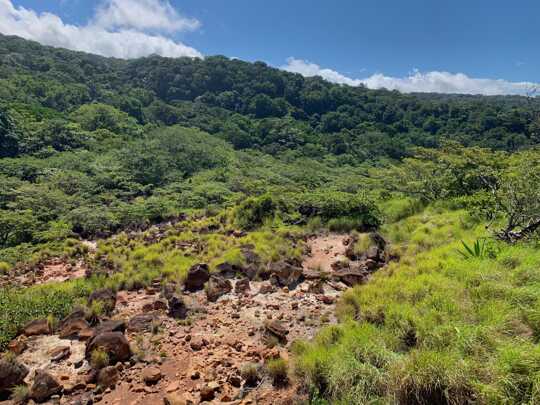
  1. Liberian slopes of Mount Nimba — High, weather-beaten ridgelines and montane forest that continue from the better-known Nimba massif across the border; unique microhabitats here shelter endemic plants and the same rugged, iron-rich geology that gives the range its dramatic cliffs and misty valleys. Trekking the Liberian-side slopes delivers panoramic views, cool mountain air and a real sense of wild West African highlands you won’t find on the coast.
  2. Yekepa iron-ore town and Lamco ruins — The abandoned company town, processing yards and open pits from the Lamco-era iron-ore industry make for a surreal industrial-forest landscape: rusted infrastructure half-swallowed by jungle, quiet railway corridors and stories of the region’s mining boom. Photogenic, historically rich and locally guided
read more 👉
  1. Liberian slopes of Mount Nimba — High, weather-beaten ridgelines and montane forest that continue from the better-known Nimba massif across the border; unique microhabitats here shelter endemic plants and the same rugged, iron-rich geology that gives the range its dramatic cliffs and misty valleys. Trekking the Liberian-side slopes delivers panoramic views, cool mountain air and a real sense of wild West African highlands you won’t find on the coast.
  2. Yekepa iron-ore town and Lamco ruins — The abandoned company town, processing yards and open pits from the Lamco-era iron-ore industry make for a surreal industrial-forest landscape: rusted infrastructure half-swallowed by jungle, quiet railway corridors and stories of the region’s mining boom. Photogenic, historically rich and locally guided visits give insight into Nimba’s economic past and present.
  3. Ganta market and border trading quarter — Nimba’s busiest commercial hub where Liberian, Guinean and regional traders meet; expect a chaotic, colorful market full of produce, imported goods, motorbike trade and bustling small eateries. It’s the best place to feel everyday life in the region, sample local foods, and watch cross-border commerce in action.
  4. Saclepea weekly market (hidden gem) — A genuinely local market town atmosphere most tourists miss: a large periodic market where villagers bring kola, cassava, handmade goods and live animals from surrounding villages. The scale and intimacy are perfect for practicing local languages, finding unique handcrafts and seeing rural Nimba commerce away from main roads.
  5. Tappita river trails and village stays (hidden gem) — Quiet forested trails dropping to creeks and small waterfalls around Tappita where local families welcome overnight visitors; swimming holes, simple riverside cooking and low-impact walks show off the region’s everyday natural beauty without the crowds. A good place to slow down and experience village life on the Nimba foothills.
  6. Community treks into Nimba foothill settlements — Short guided walks from towns like Yekepa and Saclepea into nearby villages let you see traditional farming, rice terraces and foraging practices that are particular to Nimba’s soils and climate; conversations with farmers explain how the mountain shapes local livelihoods. These are cultural-natural mixes you won’t replicate in lowland Liberia.
Spotted a mistake or missing something? Contact us.

⌛️ 5 daysSeeing the highlights in 5 days

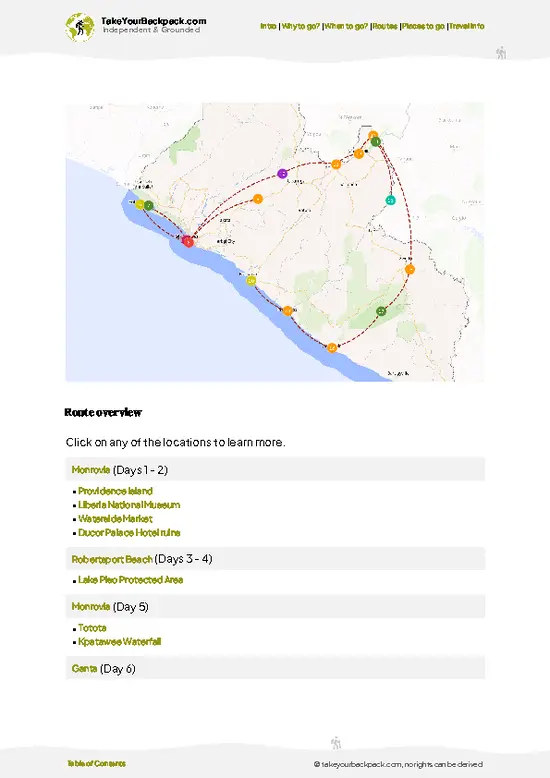
Day 1: Monrovia
You’ll kick off your adventure in Monrovia, the bustling capital. The transport system here is a mix of shared taxis and motorbikes, which can be chaotic but efficient. Spend the day acclimating and gathering supplies. Stock up on local snacks and water; you’ll need them. The vibe is electric, and you’ll want to soak in the street life before heading to the more remote areas.

Day 2: Monrovia to Nimba County
Early morning, hop on a shared taxi to Nimba County. This ride can take around 5-7 hours, depending on road conditions. The journey is part of the experience; you’ll see the landscape shift from urban sprawl to lush greenery. Arrive in Sanniquellie, the county capital, and settle in. Grab dinner at a local spot; the jollof rice is a must-try.

Day 3: Nimba County … read more 👉
Day 1: Monrovia
You’ll kick off your adventure in Monrovia, the bustling capital. The transport system here is a mix of shared taxis and motorbikes, which can be chaotic but efficient. Spend the day acclimating and gathering supplies. Stock up on local snacks and water; you’ll need them. The vibe is electric, and you’ll want to soak in the street life before heading to the more remote areas.

Day 2: Monrovia to Nimba County
Early morning, hop on a shared taxi to Nimba County. This ride can take around 5-7 hours, depending on road conditions. The journey is part of the experience; you’ll see the landscape shift from urban sprawl to lush greenery. Arrive in Sanniquellie, the county capital, and settle in. Grab dinner at a local spot; the jollof rice is a must-try.

Day 3: Nimba County to Mount Nimba
Today’s the day you head toward Mount Nimba. Arrange for a local guide; this is crucial for navigating the trails and understanding the area’s biodiversity. The trek can be challenging, but the payoff is immense. You’ll encounter stunning views and unique flora and fauna. This is where the magic happens.

Day 4: Exploring Mount Nimba
Spend the day hiking and exploring. The trails can be steep, but the sense of accomplishment is worth it. Take your time; this is where you’ll find the heart of the region. An off-path reward is a visit to a nearby waterfall. It’s a bit of a detour, but the cool water and serene atmosphere are rejuvenating.

Day 5: Return to Monrovia
Head back to Monrovia, reflecting on your journey. The return trip can take the same 5-7 hours, so plan accordingly. Use this time to chat with locals; their stories will enrich your experience.

The must-do day? Day 3, the trek to Mount Nimba. It’s the essence of the trip, blending adventure with the region’s natural beauty. You’ll leave with stories and memories that linger long after you’ve returned home.
Turn your Mount Nimba visit into an Liberia adventure
Build a complete Liberia route with Mount Nimba, hidden gems, must-see destinations, and realistic travel times included.

Generate my trip

🌤️ When to go?Seasonal considerations and timing


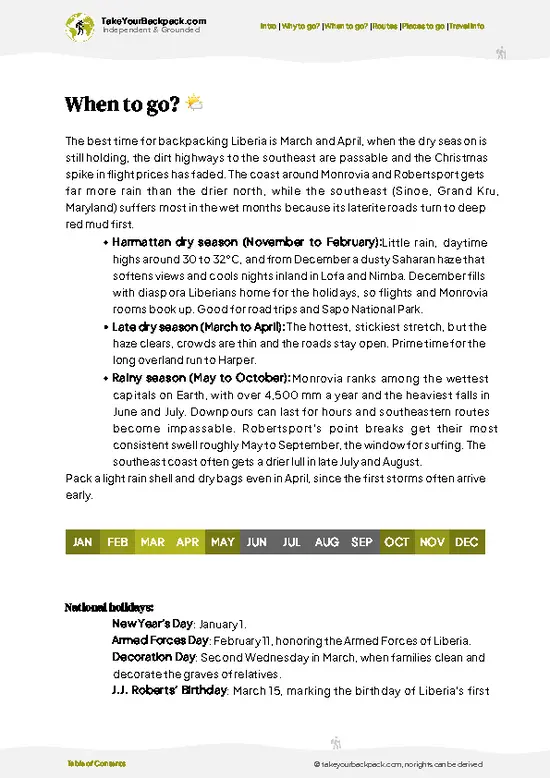
  • Topic: Weather – The dry season from November to April is your golden window. Expect clear skies and trails that don’t turn into mud baths. The rainy season, May to October, brings heavy downpours that can wash out paths and make camping miserable.

  • Topic: Temperature – Daytime temps hover around 24-30°C (75-86°F) in the dry season, perfect for hiking without overheating. Nights can dip to 18°C (64°F), so pack a light jacket. The wet season is warmer but stickier, with humidity cranking up the discomfort.

  • Topic: Daylight Hours – Liberia sits near the equator, so daylight is steady year-round, roughly 12 hours. That means no drastic shifts in your hiking schedule—sunrise around 6:30 AM, sunset near 6:30 PM.

  • Topic: Crowds – Mount Nimba isn’t exactly a tourist hotspot, but the dry season
read more 👉

  • Topic: Weather – The dry season from November to April is your golden window. Expect clear skies and trails that don’t turn into mud baths. The rainy season, May to October, brings heavy downpours that can wash out paths and make camping miserable.

  • Topic: Temperature – Daytime temps hover around 24-30°C (75-86°F) in the dry season, perfect for hiking without overheating. Nights can dip to 18°C (64°F), so pack a light jacket. The wet season is warmer but stickier, with humidity cranking up the discomfort.

  • Topic: Daylight Hours – Liberia sits near the equator, so daylight is steady year-round, roughly 12 hours. That means no drastic shifts in your hiking schedule—sunrise around 6:30 AM, sunset near 6:30 PM.

  • Topic: Crowds – Mount Nimba isn’t exactly a tourist hotspot, but the dry season draws local trekkers and researchers. If you want near solitude, aim for the shoulder months of November or April, when the weather’s good but the crowds thin.

  • Topic: Seasonal Activities – Dry months are prime for wildlife spotting and summit attempts. The wet season is better for botanists chasing rare orchids and amphibians, but be ready for slippery trails and leeches.

  • Topic: Price Fluctuations – Expect higher prices for guides and lodging during the dry season when demand peaks. Booking early can lock in better rates; off-season might save cash but at the cost of comfort and accessibility.


Pro-tip: Arrive just as the rains end in November—trails are fresh, crowds are low, and prices haven’t spiked yet. It’s the sweet spot where you get the best of all worlds.


source: climatestotravel.comJANJanuary: excellent for travelingFEBFebruary: excellent for travelingMARMarch: excellent for travelingAPRApril: highly recommended for travelingMAYMay: fair for travelingJUNJune: fair for travelingJULJuly: below average for travelingAUGAugust: below average for travelingSEPSeptember: fair for travelingOCTOctober: fair for travelingNOVNovember: highly recommended for travelingDECDecember: excellent for traveling
when-to-go

✈️ The backpacker research shortcutLiberia Travel Guide

An offline-friendly backpacking guide with optimized travel routes, ranked highlights, transport advice, and the best areas to stay.
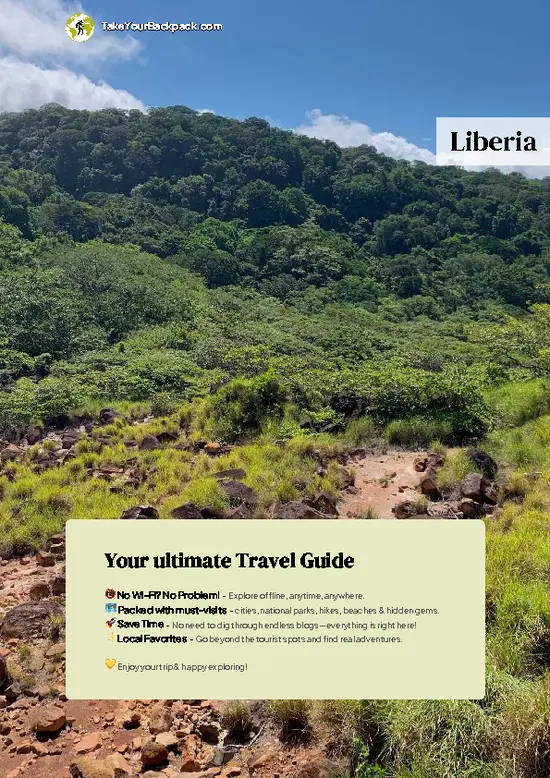
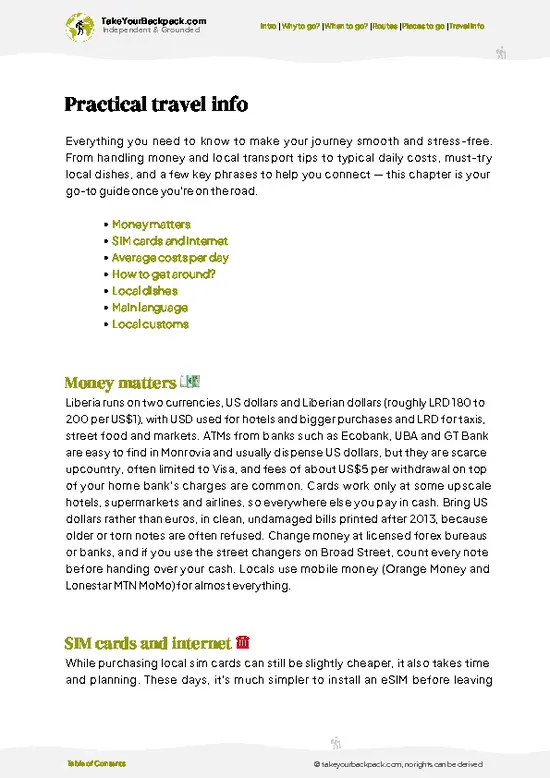
example page 0 from our offline Travel Guide for Liberia
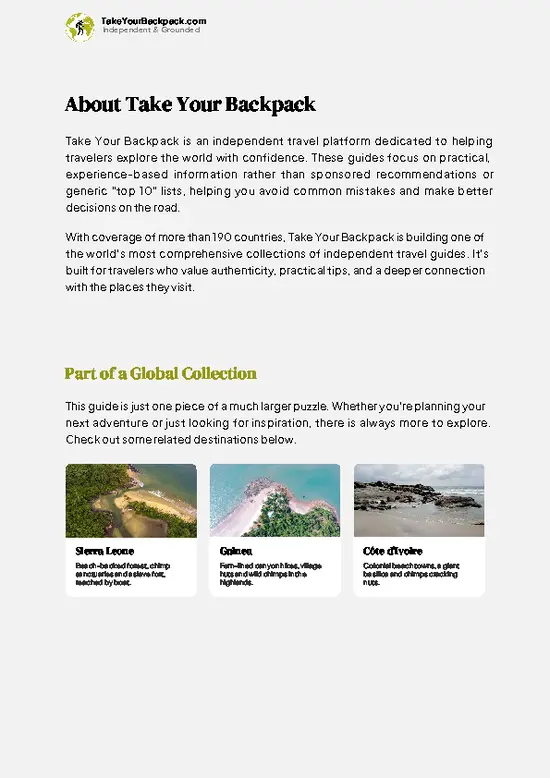
example page 1 from our offline Travel Guide for Liberia
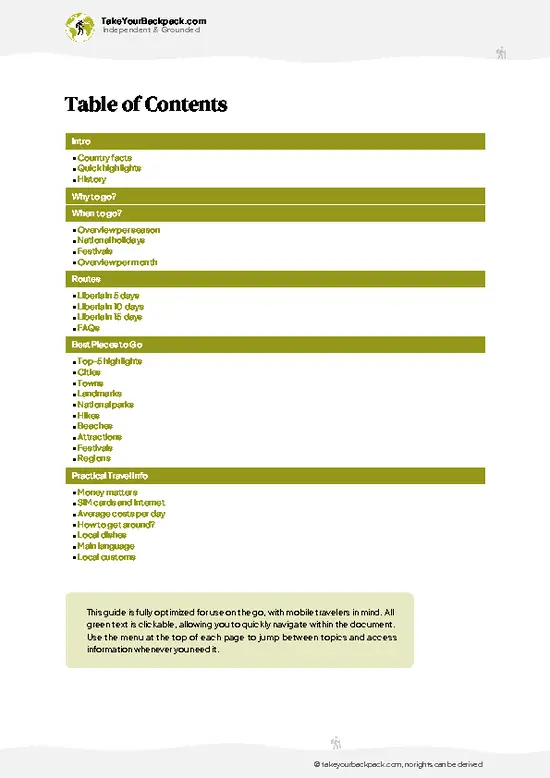
example page 2 from our offline Travel Guide for Liberia
example page 3 from our offline Travel Guide for Liberia
example page 4 from our offline Travel Guide for Liberia
example page 5 from our offline Travel Guide for Liberia
example page 6 from our offline Travel Guide for Liberia
example page 7 from our offline Travel Guide for Liberia
The digital guide (260 pages) contains:
61 highlights, ranked by travel appeal
Optimized 5, 10 & 15-day travel routes
Cities, national parks, landmarks, beaches
How to get around
Offline-friendly for travel without Wi-Fi
👉 Click to see all 30+ guide features

📅 Plan smarter in minutes, not weeks
Month by month travel advice
Festivals & national holidays
Budget expectations

🗺️ Go to the right places, skip the overrated ones
Honest pros & cons of destinations
Top hikes, parks & viewpoints
Lesser-known places most travelers miss
Clear “worth it vs skip it” guidance

🛏️ Travel smoothly without rookie mistakes
Best areas to stay
Transport systems explained simply
Common scams & safety advice
SIM cards, money & practical tips

🌍 Understand the country, not just visit it
Culture & traditions
Local customs
Festivals worth planning around
Traveler-friendly historical context
Insights that make places more meaningful

📱 Built for real travel conditions
Fully downloadable PDF
Works completely offline
Optimized for phone use
Useful in remote areas & buses
Everything in one place
Save weeks of stressful planning
Get instant access to your full guide. 30‑day money-back guarantee.


By proceeding you agree to our terms.
Sent to your inbox immediately after payment • 100% Secure Checkout
Best Backpacking Travel Advisor 2025 tourism awardBest Backpacking
Travel Advisor
2025
What others say about Take Your Backpack Guides:
⭐⭐⭐⭐⭐
Fantastic, amazing amount of information!
⭐⭐⭐⭐⭐
My goodness this is amazing, it's what I've been looking for hats off too you!
⭐⭐⭐⭐⭐
I think this is absolutely BRILLIANT
⭐⭐⭐⭐
Very complete and informative. It's still missing places, but I gotta to commend you
⭐⭐⭐⭐⭐
This is truly amazing, thank you, can't wait to explore it with my kids!
⭐⭐⭐⭐⭐
Awesome resource, thank you!
⭐⭐⭐⭐⭐
This is amazing! Can't wait to explore the ones I haven't seen
⭐⭐⭐⭐
I love this! Well done, great idea.
⭐⭐⭐⭐⭐
Thanks for taking the time to make this gem!
⭐⭐⭐⭐⭐
This might be the best website I've ever seen.
⭐⭐⭐⭐⭐
Congratulations, and thank you so much for your work; it's incredibly valuable.
⭐⭐⭐⭐
In all seriousness I think you did a great job pointing out the important spots
⭐⭐⭐⭐⭐
10/10 very good
⭐⭐⭐⭐⭐
As someone who's only just starting to visit regularly this is awesome, thank you.
⭐⭐⭐⭐
Thank you very much! I'm going to visit my dad, it's going to be very useful!
⭐⭐⭐⭐⭐
This is really cool! We'll be travelling for the first time and this definitely come in handy.
⭐⭐⭐⭐⭐
You are now our minister of culture, congratulations 👨‍💼
⭐⭐⭐⭐⭐
Just wanted to tell you that this is a pearl! Going to follow your recommendations.
⭐⭐⭐⭐⭐
This is so cool. I'll definitely be using the resource for my travels soon.
⭐⭐⭐⭐⭐
This is very impressive! Good work.
⭐⭐⭐⭐⭐
This is an amazing and informative site. Very well done!

🛏️ Where to stay?Best areas and accommodation options

When you’re eyeing Mount Nimba, the surrounding towns and villages offer a mix of safety, social vibes, and budget-friendly options that make your trip feel like a local adventure.

Start with Sanniquellie. It’s a hub for backpackers, buzzing with energy. You’ll find friendly locals eager to share stories. The market scene is alive, and you can grab a bite of local fare without breaking the bank. Plus, it’s a solid base for day trips into the Nimba range.

Next up is Zwedru. This town has a laid-back charm, perfect for solo travelers. The community is tight-knit, and you’ll feel welcomed. It’s … read more 👉
When you’re eyeing Mount Nimba, the surrounding towns and villages offer a mix of safety, social vibes, and budget-friendly options that make your trip feel like a local adventure.

Start with Sanniquellie. It’s a hub for backpackers, buzzing with energy. You’ll find friendly locals eager to share stories. The market scene is alive, and you can grab a bite of local fare without breaking the bank. Plus, it’s a solid base for day trips into the Nimba range.

Next up is Zwedru. This town has a laid-back charm, perfect for solo travelers. The community is tight-knit, and you’ll feel welcomed. It’s a great spot to meet fellow adventurers while enjoying the lush surroundings. The nearby trails are less crowded, giving you a chance to soak in nature without the tourist rush.

Don’t overlook Ganta. It’s a bit more developed, with a mix of local and expat life. You’ll find cafes and markets that cater to budget travelers. The social scene here is vibrant, making it easy to connect with others.

Each of these spots offers a unique slice of life near Mount Nimba. Choose wisely based on what you value most: community, adventure, or a bit of both.

🚌 Getting aroundHow to get from A to B

In the shadow of Mount Nimba, the pulse of transportation is a wild dance between chaos and spontaneity. Schedules? Forget them. Here, the rhythm is dictated by the whims of the weather and the mood of the drivers. You’ll find yourself in a world where a shared taxi might leave when it’s full, or a motorbike will whisk you away at a moment’s notice. This isn’t just travel; it’s an adventure where every ride is a chance to connect with the land and its people. Embrace the unpredictability, and you’ll discover the true essence of this rugged region.


  • Shared Taxis: These are your best bet for budget travel. They typically run from early morning until late afternoon, with prices around $5-$10 depending on the distance. Expect a cramped ride, but you’ll meet locals and fellow travelers, adding
read more 👉
In the shadow of Mount Nimba, the pulse of transportation is a wild dance between chaos and spontaneity. Schedules? Forget them. Here, the rhythm is dictated by the whims of the weather and the mood of the drivers. You’ll find yourself in a world where a shared taxi might leave when it’s full, or a motorbike will whisk you away at a moment’s notice. This isn’t just travel; it’s an adventure where every ride is a chance to connect with the land and its people. Embrace the unpredictability, and you’ll discover the true essence of this rugged region.


  • Shared Taxis: These are your best bet for budget travel. They typically run from early morning until late afternoon, with prices around $5-$10 depending on the distance. Expect a cramped ride, but you’ll meet locals and fellow travelers, adding character to your journey.


  • Motorbike Taxis: For those who crave speed, motorbike taxis are the way to go. They zip through traffic and can be found almost anywhere. Prices range from $2-$5 for short distances. Just hold on tight; it’s a thrilling way to navigate the winding roads.


  • Private Car Rentals: If you’re feeling a bit more flush, consider renting a car. Prices hover around $50-$80 per day, depending on the vehicle. This option gives you the freedom to explore at your own pace, but be prepared for bumpy roads and the occasional detour.


  • Local Buses: These are the slowest option, but they’re also the cheapest, usually costing less than $2 for a ride. They operate on a loose schedule, often leaving when they’re full. It’s a great way to soak in the local culture, but don’t expect luxury.


  • Walking: Don’t underestimate the power of your own two feet. Many trails around Mount Nimba are accessible by foot, allowing you to experience the landscape intimately. It’s free, and you’ll stumble upon sights that no vehicle can reach.


For a smooth journey, always ask locals about the best times to travel. Early mornings often yield the most options and the least hassle. Embrace the flow, and you’ll navigate Mount Nimba like a local, not a tourist.

🍲 FoodLocal Cuisine & Drinks

In the shadow of Mount Nimba, the culinary scene is a vibrant tapestry of flavors that beckons the adventurous palate. Start with jollof rice, a staple that’s a party on your plate, bursting with spices and often served with fried plantains. Pair it with grilled tilapia, seasoned to perfection and kissed by the smoky heat of open flames. Don’t miss fufu, a starchy delight made from cassava or plantains, perfect for scooping up rich stews.

For a true local experience, hit the markets. The air is thick with the aroma of spices and grilled meats. Vendors serve up street food like baked cassava and pepper soup that warms you from the inside out. Grab a cold Star Beer or try the local palm wine, a sweet, fermented treat that’s best enjoyed fresh from the source.

Dining here is communal. Expect … read more 👉
In the shadow of Mount Nimba, the culinary scene is a vibrant tapestry of flavors that beckons the adventurous palate. Start with jollof rice, a staple that’s a party on your plate, bursting with spices and often served with fried plantains. Pair it with grilled tilapia, seasoned to perfection and kissed by the smoky heat of open flames. Don’t miss fufu, a starchy delight made from cassava or plantains, perfect for scooping up rich stews.

For a true local experience, hit the markets. The air is thick with the aroma of spices and grilled meats. Vendors serve up street food like baked cassava and pepper soup that warms you from the inside out. Grab a cold Star Beer or try the local palm wine, a sweet, fermented treat that’s best enjoyed fresh from the source.

Dining here is communal. Expect to share dishes, and don’t be surprised if you’re invited to join a table. It’s all about connection. When you eat, use your right hand—it’s a sign of respect.

So, dive in and savor the experience. Each bite tells a story, and every meal is a chance to connect with the heart of Liberia.

Other Liberian regions near Mount Nimba

Explore more nearby:

  • St. John River—meandering waterways, fishing villages, mangrove swamps| 107 km away
  • Lofa River—broad riverbanks, rice paddies, remote crossings| 210 km away
  • Wologizi Mountain—rocky summits, grassy slopes, isolated trails| 226 km away

💡 Not sure where to go next?
Create a personalized itinerary for Liberia including Mount Nimba and the places that fit your trip.

Generate my itinerary

👉 Discover all regions

Or checkout all Liberia has to offer (think cities, towns, villages, national parks, hikes, beaches, festivals)
Country photo of Liberia

We 💚 feedbackParting advice and final tips

Mount Nimba is a wild card. The vibe? Raw and untamed, like nature’s own secret club. You’ll find locals who are genuinely curious about you, and that’s a refreshing change. The best surprise? The biodiversity—think rare birds and lush flora that’ll make your jaw drop. Just a heads-up: the trails can be tricky, so don’t underestimate the weather. Pack smart, and you’ll walk away with stories that’ll make your friends green with envy. Trust me, this place gets under your skin in the best way.

✍️ Help improve this page!
The information on this page is based on in-depth research, insights shared by experienced travelers, and feedback from the local travel community in Liberia. While every effort is made to keep the information accurate and current, conditions can change — so if you spot anything incorrect or outdated, please get in touch.


🙋‍♂️ Give feedback

👋 Meet the founderWho’s Behind Take Your Backpack?

Johan, backpacker and founder of TakeYourBackpackHi, I’m Johan (Netherlands 🇳🇱), the creator of TakeYourBackpack. Over the past decade, I’ve backpacked through 80+ countries across six continents, gaining extensive experience with independent travel, long-term trips, and overland routes.

This site is built on a combination of firsthand travel experience and carefully curated insights from other backpackers. Many guides are based on places I’ve personally visited, while others bring together tips, observations, and practical advice shared by trusted travelers I’ve met along the way.

The goal is to provide realistic, experience-driven guidance — not generic itineraries — so you can explore destinations with better context, clearer expectations, and more confidence.

Get full Liberia guide •
Instant download • 61 highlights • Full Offline guide