×

Liberia🇱🇷 | attractionsLiberian National Cultural CenterKendeja dance arena, stilt walkers, carvers and weavers, replica huts | things to do and best time to go

Explore Sacred Heart CathedralExplore Waterside Market

Backpacking in Liberian National Cultural Center
👍 Recommendedattraction ranked #5
By Johan Kruseman 🇳🇱 | Updated October 22, 2026

Most people come for the Kpelle, Bassa, Gola and Mano performances: drummers, masked dancers and stilt walkers working a dirt arena. Just as useful is the craft work. Carvers, weavers and basket makers sell straight from their stalls, so you can watch a piece being made before you pay. The Liberian National Cultural Center sits in Kendeja, on the coast road southwest of central Monrovia, in Liberia. Expect red laterite dust, thatched roofs, the thump of goatskin drums and woodsmoke. Performances are not on a fixed daily schedule, so a call ahead saves a wasted trip, and a quiet day can feel empty. Prices are fair if you bargain gently. For a first day, arrive mid-morning, walk the huts, talk to a carver, then stay for any afternoon show.

Discover everything you want to know in the 📖 Liberia Travel Guide.


example page 0 from our offline Travel Guide for Liberia
example page 1 from our offline Travel Guide for Liberia
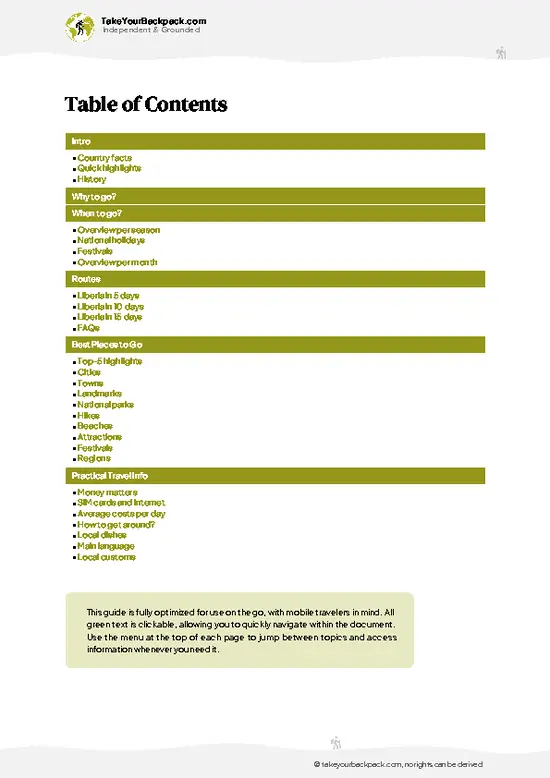
example page 2 from our offline Travel Guide for Liberia
example page 3 from our offline Travel Guide for Liberia
example page 4 from our offline Travel Guide for Liberia
example page 5 from our offline Travel Guide for Liberia
example page 6 from our offline Travel Guide for Liberia
example page 7 from our offline Travel Guide for Liberia
Loading the map 🌍
CLICK TO FILTER
cities
towns
landmarks
national parks
hikes
beaches
attractions
festivals
regions
SHOW COUNTRY’S BESTSHOW ALL

✨ Why go?
Ranked #5 attraction in Liberia
What makes it a must-see attraction

Liberian National Cultural Center puts the country's ethnic groups in one compound, which saves weeks of overland hunting for ceremonies you might never catch. If you are crossing Liberia by shared taxi, this is where the Kpelle, Bassa, Gola and Mano traditions stop being names in a guidebook and become sound, costume and movement. The replica village huts show how the regions build differently, from round mud-walled homes to thatch styles you will later spot along rural roads. It is also a practical place to buy. Mask makers, wood carvers and weavers work on site, so you can ask about meaning and technique before choosing something. Prices are lower than at the souvenir tables near hotels, and your money goes to the maker. As a first or last stop in Monrovia, it gives context for everything … read more 👉
Liberian National Cultural Center puts the country's ethnic groups in one compound, which saves weeks of overland hunting for ceremonies you might never catch. If you are crossing Liberia by shared taxi, this is where the Kpelle, Bassa, Gola and Mano traditions stop being names in a guidebook and become sound, costume and movement. The replica village huts show how the regions build differently, from round mud-walled homes to thatch styles you will later spot along rural roads. It is also a practical place to buy. Mask makers, wood carvers and weavers work on site, so you can ask about meaning and technique before choosing something. Prices are lower than at the souvenir tables near hotels, and your money goes to the maker. As a first or last stop in Monrovia, it gives context for everything you see afterward, including Poro and Sande society imagery.

💡 HighlightsDon't-miss highlights and experiences

  1. Traditional dance performances: Drummers and dancers perform on the central ground, with fast footwork and call-and-response singing. This is the main reason to come.
  2. Masked figures: Costumed performers in carved masks and raffia skirts appear in ceremonial displays. The stilt walkers tower over the crowd.
  3. Replica village huts: Traditional houses from different regions stand side by side, so you can compare building styles and ask guides about their use.
  4. Wood carving stalls: Carvers shape masks, figures and bowls from local wood, and you can watch the work in progress.
  5. Weaving and basketry: Cloth strips, mats and baskets are made by hand with patterns tied to particular groups.
  6. Drum workshops: Goatskin drums are made and tuned here, and you can hear the differences between them.
  7. Craft market: Jewelry,
… read more 👉
  1. Traditional dance performances: Drummers and dancers perform on the central ground, with fast footwork and call-and-response singing. This is the main reason to come.
  2. Masked figures: Costumed performers in carved masks and raffia skirts appear in ceremonial displays. The stilt walkers tower over the crowd.
  3. Replica village huts: Traditional houses from different regions stand side by side, so you can compare building styles and ask guides about their use.
  4. Wood carving stalls: Carvers shape masks, figures and bowls from local wood, and you can watch the work in progress.
  5. Weaving and basketry: Cloth strips, mats and baskets are made by hand with patterns tied to particular groups.
  6. Drum workshops: Goatskin drums are made and tuned here, and you can hear the differences between them.
  7. Craft market: Jewelry, masks, fabrics and small carvings are sold at negotiable prices, often with the maker beside the stall.
  8. Cultural storytelling: Guides explain the meaning of proverbs, costumes and ceremonies, which turns a quick look into a real lesson.
Liberian National Cultural Center works best when you pair the dance performances with the craft market, watching the show first and then buying from the makers.
Spotted a mistake or missing something? Contact us.

🌤️ When to go?Best time to visit Liberian National Cultural Center

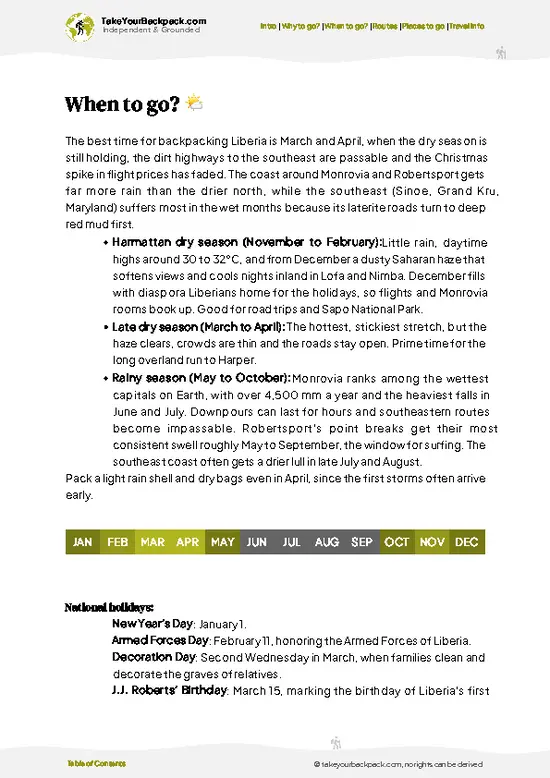
  • Dry Season (November to April): Roads around Kakata Road and the Margibi County turnoff stay passable, and days run 28 to 33°C (82 to 91°F) with low rain. Harmattan haze in December and January softens the light and cools mornings to about 22°C (72°F). Cultural events and craft sales cluster here, so crowds and guesthouse rates peak.
  • Early Rains (May to June): Showers build to 26 to 30°C (79 to 86°F). Craft demonstrations still run, and prices ease a little.
  • Peak Rains (July to September): Rain is near daily, with some of the heaviest totals on the continent. Dirt tracks turn to mud, and the grounds are quiet and green. Expect the lowest rates and few other visitors.
  • Late Rains (October): Storms fade and humidity stays high, around 25 to 30°C (77 to 86°F).
Go on a weekday morning, before afternoon … read more 👉
  • Dry Season (November to April): Roads around Kakata Road and the Margibi County turnoff stay passable, and days run 28 to 33°C (82 to 91°F) with low rain. Harmattan haze in December and January softens the light and cools mornings to about 22°C (72°F). Cultural events and craft sales cluster here, so crowds and guesthouse rates peak.
  • Early Rains (May to June): Showers build to 26 to 30°C (79 to 86°F). Craft demonstrations still run, and prices ease a little.
  • Peak Rains (July to September): Rain is near daily, with some of the heaviest totals on the continent. Dirt tracks turn to mud, and the grounds are quiet and green. Expect the lowest rates and few other visitors.
  • Late Rains (October): Storms fade and humidity stays high, around 25 to 30°C (77 to 86°F).
Go on a weekday morning, before afternoon downpours and heat make the open grounds tiring.


source: climatestotravel.comJANJanuary: highly recommended for travelingFEBFebruary: highly recommended for travelingMARMarch: highly recommended for travelingAPRApril: highly recommended for travelingMAYMay: fair for travelingJUNJune: fair for travelingJULJuly: fair for travelingAUGAugust: fair for travelingSEPSeptember: fair for travelingOCTOctober: fair for travelingNOVNovember: highly recommended for travelingDECDecember: highly recommended for traveling
liberia-attraction-liberian-national-cultural-center v1
© Google |

✈️ The backpacker research shortcutLiberia Travel Guide

An offline-friendly backpacking guide with optimized travel routes, ranked highlights, transport advice, and the best areas to stay.
example page 0 from our offline Travel Guide for Liberia
example page 1 from our offline Travel Guide for Liberia
example page 2 from our offline Travel Guide for Liberia
example page 3 from our offline Travel Guide for Liberia
example page 4 from our offline Travel Guide for Liberia
example page 5 from our offline Travel Guide for Liberia
example page 6 from our offline Travel Guide for Liberia
example page 7 from our offline Travel Guide for Liberia
The digital guide (211 pages) contains:
✅ 49 highlights, ranked by travel appeal
✅ Optimized 5, 10 & 15-day travel routes
✅ Cities, national parks, landmarks, beaches
✅ How to get around
✅ Offline-friendly for travel without Wi-Fi
👉 Click to see all 30+ guide features

📅 Plan smarter in minutes, not weeks
✅ Month by month travel advice
✅ Festivals & national holidays
✅ Budget expectations

🗺️ Go to the right places, skip the overrated ones
✅ Honest pros & cons of destinations
✅ Top hikes, parks & viewpoints
✅ Lesser-known places most travelers miss
✅ Clear “worth it vs skip it” guidance

🛏️ Travel smoothly without rookie mistakes
✅ Best areas to stay
✅ Transport systems explained simply
✅ Common scams & safety advice
✅ SIM cards, money & practical tips

🌍 Understand the country, not just visit it
✅ Culture & traditions
✅ Local customs
✅ Festivals worth planning around
✅ Traveler-friendly historical context
✅ Insights that make places more meaningful

📱 Built for real travel conditions
✅ Fully downloadable PDF
✅ Works completely offline
✅ Optimized for phone use
✅ Useful in remote areas & buses
✅ Everything in one place
Stop searching, start planning
Get instant access to your full guide. 30‑day money-back guarantee.
+ Add another guide for just

By proceeding you agree to our terms.
Sent to your inbox immediately after payment • 100% Secure Checkout
Best Backpacking Travel Advisor 2025 tourism awardBest Backpacking
Travel Advisor
2025
What others say about Take Your Backpack Guides:
⭐⭐⭐⭐⭐
Fantastic, amazing amount of information!
⭐⭐⭐⭐⭐
My goodness this is amazing, it's what I've been looking for hats off too you!
⭐⭐⭐⭐⭐
I think this is absolutely BRILLIANT
⭐⭐⭐⭐
Very complete and informative. It's still missing places, but I gotta to commend you
⭐⭐⭐⭐⭐
This is truly amazing, thank you, can't wait to explore it with my kids!
⭐⭐⭐⭐⭐
Awesome resource, thank you!
⭐⭐⭐⭐⭐
This is amazing! Can't wait to explore the ones I haven't seen
⭐⭐⭐⭐
I love this! Well done, great idea.
⭐⭐⭐⭐⭐
Thanks for taking the time to make this gem!
⭐⭐⭐⭐⭐
This might be the best website I've ever seen.
⭐⭐⭐⭐⭐
Congratulations, and thank you so much for your work; it's incredibly valuable.
⭐⭐⭐⭐
In all seriousness I think you did a great job pointing out the important spots
⭐⭐⭐⭐⭐
10/10 very good
⭐⭐⭐⭐⭐
As someone who's only just starting to visit regularly this is awesome, thank you.
⭐⭐⭐⭐
Thank you very much! I'm going to visit my dad, it's going to be very useful!
⭐⭐⭐⭐⭐
This is really cool! We'll be travelling for the first time and this definitely come in handy.
⭐⭐⭐⭐⭐
You are now our minister of culture, congratulations 👨‍💼
⭐⭐⭐⭐⭐
Just wanted to tell you that this is a pearl! Going to follow your recommendations.
⭐⭐⭐⭐⭐
This is so cool. I'll definitely be using the resource for my travels soon.
⭐⭐⭐⭐⭐
This is very impressive! Good work.
⭐⭐⭐⭐⭐
This is an amazing and informative site. Very well done!

🛏️ Where to stay?Best areas to stay in Liberia

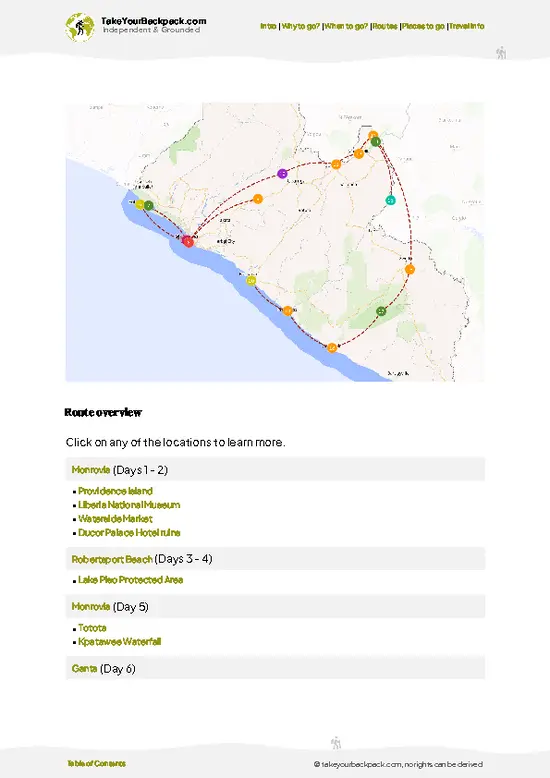
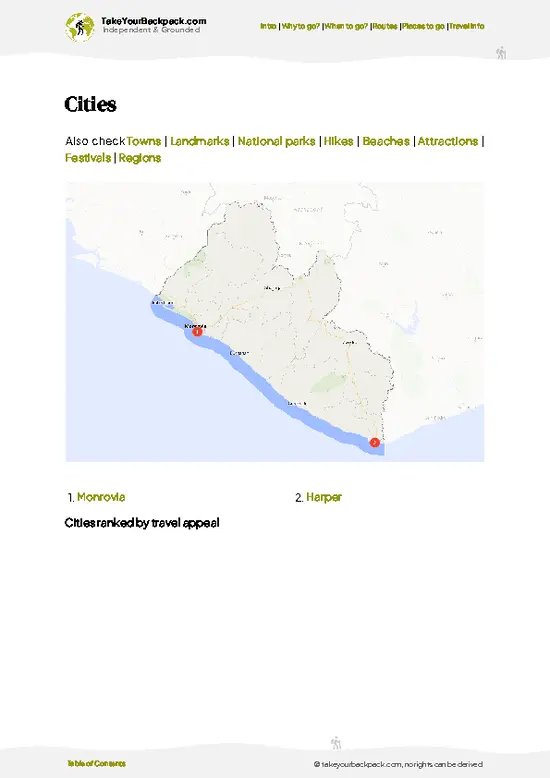
Monrovia is the practical place to sleep, since the Cultural Center sits in Margibi County, roughly 45 to 60 minutes outside the capital by car on a good day, and nothing in the surrounding villages caters to backpackers.

Within Monrovia, Sinkor is the area to choose. It has the densest mix of budget guesthouses, small hostel-style rooms, cafes, and bars along its main avenues, and you will meet other travelers, NGO workers, and returning Liberians there. Streets are lit and busy into the evening, and taxis are easy to flag for the trip out. Expect dorm beds or basic rooms from about US$15 to … read more 👉
Monrovia is the practical place to sleep, since the Cultural Center sits in Margibi County, roughly 45 to 60 minutes outside the capital by car on a good day, and nothing in the surrounding villages caters to backpackers.

Within Monrovia, Sinkor is the area to choose. It has the densest mix of budget guesthouses, small hostel-style rooms, cafes, and bars along its main avenues, and you will meet other travelers, NGO workers, and returning Liberians there. Streets are lit and busy into the evening, and taxis are easy to flag for the trip out. Expect dorm beds or basic rooms from about US$15 to 40.

Congo Town and the Mamba Point area suit travelers who want a quieter base. Mamba Point has embassies, better security, and restaurants, but prices run higher, often US$50 and up. Both areas keep you close to the main road toward the Center.

People staying longer sometimes use Kakata, the nearest town to the Center. It is cheaper and calmer, but the options are thin and mostly basic, with little social scene.

Whichever you choose, book ahead in the dry season and arrange a driver the evening before.

👛 Costs (as of 22 October 2026)What things cost and how to budget

Budget about US$48 to 70 a day for a visit to the Liberian National Cultural Center, with a mid-range total near US$58.
CategoryBudget RangeLocal Reality
Entrance and ToursUS$2 to 5Small fee for the grounds and replica village. A guide may expect a tip of a few dollars.
Accommodation (low season)US$15 to 30Basic guesthouse in Sinkor, Monrovia.
Accommodation (high season)US$25 to 40Rates rise November to April.
TransportUS$8 to 15Shared taxi and bus legs toward Kakata Road, then a short hop. A private round trip costs more, roughly US$40 to 70.
FoodUS$5 to 10Rice dishes, cassava leaf, and grilled fish at local cookshops. Pay in cash.
Crafts and ExtrasUS$3 to 10Woven baskets, carvings, and cloth sold by artisans on site. Bargain gently.
Total Daily BudgetUS$48 to 70Around US$58 with high-season accommodation.


source: thingstodoinmonrovia.com
⚠️ Prices can change and everyone travels differently, so take this as a rough guide. Hope it helps you plan your adventure!

FAQTraveler FAQ

Plan on half a day at the Liberian National Cultural Center, about 2 to 3 hours on the grounds. Add roughly 1 to 2 hours each way from Monrovia by road, so leave by 8 am. A full day suits you if you want craft demonstrations and a slow lunch.
The Liberian National Cultural Center is worth the small fee of roughly US$2 to 5 if you want to see traditional architecture, masks, and crafts from Liberia’s ethnic groups in one place. It is modest and parts show wear, so keep expectations realistic. Pairing it with a stop in Kakata makes the trip more rewarding.
Reach the Liberian National Cultural Center from Monrovia by heading out on the road toward Kakata in Margibi County, about 45 to 60 minutes by car in good traffic. A hired driver costs roughly US$40 to 70 round trip, while shared taxis to Kakata run about US$3 to 6 each way. Ask your driver to wait, as onward rides can be scarce.
⚠️ Things can change over time, so always validate details locally before you go.

Other Liberian attractions near Liberian National Cultural Center

Explore more nearby:


💡 Not sure where to go next?
Create a personalized itinerary for Liberia including Liberian National Cultural Center and the places that fit your trip.

Generate my itinerary

👉 Discover all attractions

Or checkout all Liberia has to offer (think cities, towns, villages, national parks, hikes, beaches, festivals)
Country photo of Liberia

We 💚 feedbackParting advice and final tips

Liberian National Cultural Center is easy to treat as a quick souvenir stop, but the best part is the conversations at the carving benches. I would bring small bills, ask makers what a mask is used for, and buy there rather than from roadside sellers.

✍️ Help improve this page!
The information on this page is based on in-depth research, insights shared by experienced travelers, and feedback from the local travel community in Liberia. While every effort is made to keep the information accurate and current, conditions can change — so if you spot anything incorrect or outdated, please get in touch.


🙋‍♂️ Give feedback

👋 Meet the founderWho’s Behind Take Your Backpack?

Johan, backpacker and founder of TakeYourBackpackHi, I’m Johan (Netherlands 🇳🇱), the creator of TakeYourBackpack. Over the past 3 decades, I’ve backpacked through 90+ countries across six continents, gaining extensive experience with independent travel, long-term trips, and overland routes.

This site is built on a combination of firsthand travel experience and carefully curated insights from other backpackers. Many guides are based on places I’ve personally visited, while others bring together tips, observations, and practical advice shared by trusted travelers I’ve met along the way.

The goal is to provide realistic, experience-driven guidance — not generic itineraries — so you can explore destinations with better context, clearer expectations, and more confidence.