×

Liberia🇱🇷 | townsPleeboRubber estates, roadside stalls, southeast junction | things to do and best time to go

Explore FoyaExplore Barclayville

Backpacking in Pleebo
👍 Recommendedtown ranked #13
By Johan Kruseman 🇳🇱 | Updated June 10, 2026

The first real choice you face in Pleebo is whether to linger or just pass through. That’s not a throwaway decision—Pleebo sits in Liberia’s far southeast, just above the border with Ivory Coast, and it’s the last real town before the wilds of Maryland County swallow the road. The air here is thick with woodsmoke and the tang of red earth after rain. For backpackers, Pleebo is more crossroads than destination: a practical stopover if you’re headed to Harper’s faded colonial relics or the raw Atlantic beaches beyond. The market’s lively but rough-edged, and you won’t find hostels or a café scene—just basic guesthouses and street food that’s more sustenance than spectacle. It’s cheaper than Monrovia, safer than border hamlets, but less social than Harper. You’ll need patience for bush taxis and a taste for slow, real travel. Pleebo isn’t pretty, but it’s honest—and if you want to see the real southeast, it’s the price of admission.

Discover everything you want to know in the 📖 Liberia Travel Guide.


Get your Liberia guide
61 ranked highlights, routes & tips, works offline (260 pages)
Loading the map 🌍
CLICK TO FILTER
cities
towns
landmarks
national parks
hikes
beaches
attractions
festivals
regions
SHOW COUNTRY’S BESTSHOW ALL

✨ Why go?
Ranked #13 town in Liberia
What makes it a must-see town

Backpackers flock to Pleebo for its strategic location along the route to stunning hikes and beaches. The walkable streets invite exploration, where you can stumble upon local food stalls serving up rich, spicy dishes that linger in the air. Small-scale hostels and guesthouses create a cozy atmosphere, perfect for solo travelers or small groups looking to connect. Most visitors stay a few days, soaking in the friendly vibe and sharing stories over a meal. It’s not a party town, but the social energy is palpable, making it ideal for those who appreciate a slower pace and genuine interactions.
Want to include Pleebo in your Liberia route?
Create a personalized Liberia itinerary that includes Pleebo and the places that fit your trip — based on your travel style, budget, and available time. Get your route in seconds.

Generate my trip

💡 HighlightsTop highlights of Pleebo

  • Pleebo Central Market — The town’s beating heart: a chaotic, colorful market where you’ll find fresh fish, cassava, palm oil, and locally made goods. Best visited early in the morning for the full trading atmosphere and good photo ops of everyday life.
  • Pleebo Town Center / Main Street — Small but lively: government offices, shops, and street vendors. Walking Main Street gives a real feel for Pleebo’s rhythm, local businesses, and informal food stalls serving Liberian comfort food.
  • Pleebo Riverside / Pirogue Landing — Where local boats load and unload. It’s low-key but rewarding: watch fishermen, see traditional pirogues, and use the spot as a launch point for short river rides or to observe riverside life.
  • Traditional Chief’s Compound (Palava Hut Area) — Visiting the chief’s compound
read more 👉
  • Pleebo Central Market — The town’s beating heart: a chaotic, colorful market where you’ll find fresh fish, cassava, palm oil, and locally made goods. Best visited early in the morning for the full trading atmosphere and good photo ops of everyday life.
  • Pleebo Town Center / Main Street — Small but lively: government offices, shops, and street vendors. Walking Main Street gives a real feel for Pleebo’s rhythm, local businesses, and informal food stalls serving Liberian comfort food.
  • Pleebo Riverside / Pirogue Landing — Where local boats load and unload. It’s low-key but rewarding: watch fishermen, see traditional pirogues, and use the spot as a launch point for short river rides or to observe riverside life.
  • Traditional Chief’s Compound (Palava Hut Area) — Visiting the chief’s compound (with permission) offers a window into local governance, dispute-resolution customs, and community ceremonies—one of the most culturally authentic experiences in town.
  • Main Churches and Mosque — The town’s religious buildings are social anchors. Pop in respectfully to see community mosaics, architecture, and to observe Sunday services or Friday prayers for a sense of Pleebo’s communal life.
  • Pleebo Women’s Market & Craft Stalls — Smaller than the central market but rich in handcrafts, woven mats, and household goods. A great place to meet artisans and buy authentic souvenirs while supporting local entrepreneurs.
  • Palm-Oil / Small-Scale Processing Yard — A working glimpse into one of the area’s main livelihoods. Watching local processing (often on a backyard or village scale) explains a lot about regional diets and economy—ask before photographing.
  • Pleebo Football Pitch — Saturday or Sunday matches attract most of the town. Local football is social glue here; catching a game is an easy way to meet people and feel the town’s energy.
  • Rice-Farming Outskirts & Walking Routes — Short guided walks into the nearby fields show traditional rice cultivation, seasonal work rhythms, and rural life just beyond the township—excellent for low-effort day walks and photography.
  • Pleebo Border Trade Zone / Local Cross-Border Market — Close to the immigration/transport nodes, this area hums with cross-border trade, secondhand goods, and vendors. It’s noisy, informal, and revealing about regional commerce and daily migration.
A few worthwhile day trips from Pleebo: Harper (Cape Palmas) for beaches and historic coastal sites, the Cavalla River mouth and border area for river scenery and cross-border markets, and nearby rural villages for longer cultural walks and farm visits.
Spotted a mistake or missing something? Contact us.

🏘️ NeighborhoodsKey areas and districts to know

Pleebo offers a unique blend of local culture and practical amenities for backpackers. Here’s how to navigate its neighborhoods:

Central Pleebo: This is the heart of the town, buzzing with local markets and street vendors. The vibe is lively, perfect for those who thrive on energy. It’s walkable, with affordable food options. Nightlife is low-key, mostly local bars. Ideal for short stays to soak in the atmosphere.

New Pleebo: A bit quieter, this area is more residential. It’s great for longer stays, offering a glimpse into daily life. The streets are less crowded, making it easy to explore on foot. Transport options are available, but you might need to negotiate a bit.

Old Pleebo: This neighborhood has a rustic charm, with traditional homes and friendly locals. It’s less touristy, providing … read more 👉
Pleebo offers a unique blend of local culture and practical amenities for backpackers. Here’s how to navigate its neighborhoods:

Central Pleebo: This is the heart of the town, buzzing with local markets and street vendors. The vibe is lively, perfect for those who thrive on energy. It’s walkable, with affordable food options. Nightlife is low-key, mostly local bars. Ideal for short stays to soak in the atmosphere.

New Pleebo: A bit quieter, this area is more residential. It’s great for longer stays, offering a glimpse into daily life. The streets are less crowded, making it easy to explore on foot. Transport options are available, but you might need to negotiate a bit.

Old Pleebo: This neighborhood has a rustic charm, with traditional homes and friendly locals. It’s less touristy, providing a genuine experience. While nightlife is minimal, the peacefulness is perfect for unwinding after a day of exploration.

⌛️ 1 dayWhat you can realistically do in a day

Pleebo, Liberia, is a vibrant town where the pulse of daily life beats strong. It’s a place where you can feel the warmth of the community and the rich tapestry of culture. Start your morning at the bustling Pleebo Market. The air is thick with the scent of fresh produce and spices, and the chatter of vendors fills your ears. Grab a local breakfast of cassava porridge from a friendly vendor; it’s hearty and energizing.

In the afternoon, wander through the nearby neighborhoods, like the lively Kpelleh Town. Here, you’ll find colorful murals that tell stories of resilience and hope. Don’t miss the chance to visit the local school, where you might catch a glimpse of children learning and laughing—an authentic slice of life that often goes unnoticed by tourists.

As evening falls, head to the … read more 👉
Pleebo, Liberia, is a vibrant town where the pulse of daily life beats strong. It’s a place where you can feel the warmth of the community and the rich tapestry of culture. Start your morning at the bustling Pleebo Market. The air is thick with the scent of fresh produce and spices, and the chatter of vendors fills your ears. Grab a local breakfast of cassava porridge from a friendly vendor; it’s hearty and energizing.

In the afternoon, wander through the nearby neighborhoods, like the lively Kpelleh Town. Here, you’ll find colorful murals that tell stories of resilience and hope. Don’t miss the chance to visit the local school, where you might catch a glimpse of children learning and laughing—an authentic slice of life that often goes unnoticed by tourists.

As evening falls, head to the waterfront. The sunset casts a golden glow over the water, creating a perfect backdrop for reflection. Enjoy a simple dinner at a local eatery, savoring grilled fish seasoned with spices that dance on your palate. This day in Pleebo isn’t just about sights; it’s about connecting with the heart of Liberia.
Turn your Pleebo visit into an Liberia adventure
Build a complete Liberia route with Pleebo, hidden gems, must-see destinations, and realistic travel times included.

Generate my trip

🌤️ When to go?Seasonal considerations and timing


  • Topic: Weather and Temperature — Pleebo’s tropical climate means heavy rains from May to October, with daily highs around 28-32°C (82-90°F). The dry season, November to April, offers clearer skies and slightly cooler temps, hovering between 24-29°C (75-85°F), making hiking and exploring far more comfortable.

  • Topic: Daylight Hours — Near the equator, Pleebo enjoys consistent daylight year-round, roughly 12 hours a day. This steady rhythm means you can plan early starts or late finishes without worrying about drastic seasonal shifts in light.

  • Topic: Crowds — Tourism here is low-key, but the dry season sees a modest uptick as travelers avoid the mud and mosquitoes. Expect quieter trails and more local interaction during the rainy months, which can feel like having the place to yourself.
read more 👉

  • Topic: Weather and Temperature — Pleebo’s tropical climate means heavy rains from May to October, with daily highs around 28-32°C (82-90°F). The dry season, November to April, offers clearer skies and slightly cooler temps, hovering between 24-29°C (75-85°F), making hiking and exploring far more comfortable.

  • Topic: Daylight Hours — Near the equator, Pleebo enjoys consistent daylight year-round, roughly 12 hours a day. This steady rhythm means you can plan early starts or late finishes without worrying about drastic seasonal shifts in light.

  • Topic: Crowds — Tourism here is low-key, but the dry season sees a modest uptick as travelers avoid the mud and mosquitoes. Expect quieter trails and more local interaction during the rainy months, which can feel like having the place to yourself.

  • Topic: Seasonal Activities — Dry months are prime for river trips and coastal walks, while the rainy season brings lush greenery and vibrant birdlife, rewarding those willing to brave the wet with richer nature encounters.

  • Topic: Price Fluctuations — Accommodation and transport costs dip during the rainy season due to fewer visitors, but some services may be limited or less reliable, so weigh savings against convenience.


Pro-tip: Aim for late dry season—March to April—when the weather is still stable, crowds are manageable, and the landscape starts to green up, offering the best balance of comfort and natural beauty.


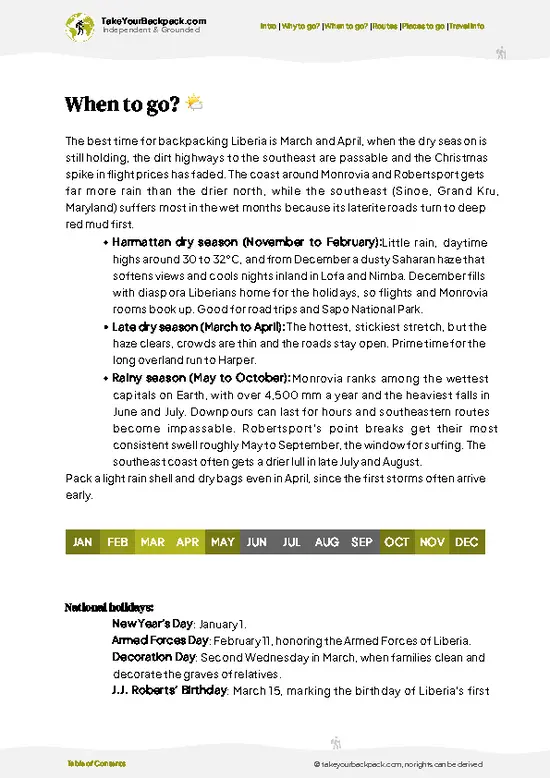
source: climatestotravel.comJANJanuary: highly recommended for travelingFEBFebruary: highly recommended for travelingMARMarch: excellent for travelingAPRApril: excellent for travelingMAYMay: good for travelingJUNJune: fair for travelingJULJuly: fair for travelingAUGAugust: fair for travelingSEPSeptember: fair for travelingOCTOctober: good for travelingNOVNovember: highly recommended for travelingDECDecember: highly recommended for traveling
when-to-go

✈️ The backpacker research shortcutLiberia Travel Guide

An offline-friendly backpacking guide with optimized travel routes, ranked highlights, transport advice, and the best areas to stay.
example page 0 from our offline Travel Guide for Liberia
example page 1 from our offline Travel Guide for Liberia
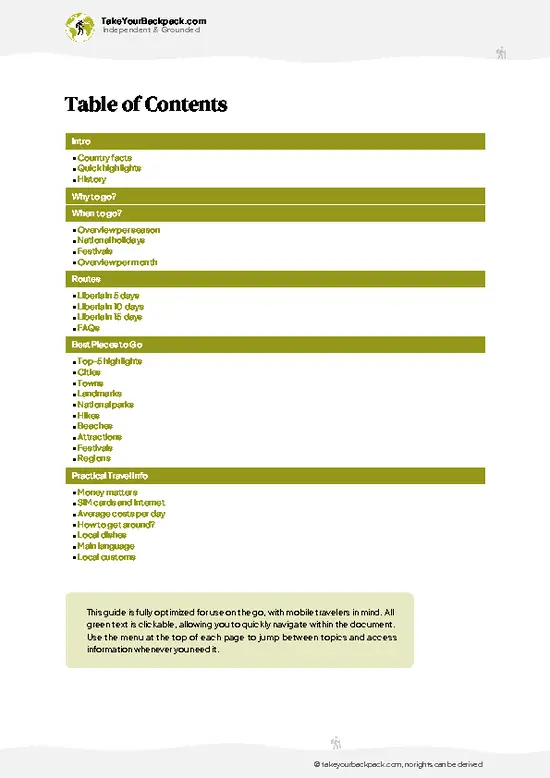
example page 2 from our offline Travel Guide for Liberia
example page 3 from our offline Travel Guide for Liberia
example page 4 from our offline Travel Guide for Liberia
example page 5 from our offline Travel Guide for Liberia
example page 6 from our offline Travel Guide for Liberia
example page 7 from our offline Travel Guide for Liberia
The digital guide (260 pages) contains:
61 highlights, ranked by travel appeal
Optimized 5, 10 & 15-day travel routes
Cities, national parks, landmarks, beaches
How to get around
Offline-friendly for travel without Wi-Fi
👉 Click to see all 30+ guide features

📅 Plan smarter in minutes, not weeks
Month by month travel advice
Festivals & national holidays
Budget expectations

🗺️ Go to the right places, skip the overrated ones
Honest pros & cons of destinations
Top hikes, parks & viewpoints
Lesser-known places most travelers miss
Clear “worth it vs skip it” guidance

🛏️ Travel smoothly without rookie mistakes
Best areas to stay
Transport systems explained simply
Common scams & safety advice
SIM cards, money & practical tips

🌍 Understand the country, not just visit it
Culture & traditions
Local customs
Festivals worth planning around
Traveler-friendly historical context
Insights that make places more meaningful

📱 Built for real travel conditions
Fully downloadable PDF
Works completely offline
Optimized for phone use
Useful in remote areas & buses
Everything in one place
Save weeks of stressful planning
Get instant access to your full guide. 30‑day money-back guarantee.


By proceeding you agree to our terms.
Sent to your inbox immediately after payment • 100% Secure Checkout
Best Backpacking Travel Advisor 2025 tourism awardBest Backpacking
Travel Advisor
2025
What others say about Take Your Backpack Guides:
⭐⭐⭐⭐⭐
Fantastic, amazing amount of information!
⭐⭐⭐⭐⭐
My goodness this is amazing, it's what I've been looking for hats off too you!
⭐⭐⭐⭐⭐
I think this is absolutely BRILLIANT
⭐⭐⭐⭐
Very complete and informative. It's still missing places, but I gotta to commend you
⭐⭐⭐⭐⭐
This is truly amazing, thank you, can't wait to explore it with my kids!
⭐⭐⭐⭐⭐
Awesome resource, thank you!
⭐⭐⭐⭐⭐
This is amazing! Can't wait to explore the ones I haven't seen
⭐⭐⭐⭐
I love this! Well done, great idea.
⭐⭐⭐⭐⭐
Thanks for taking the time to make this gem!
⭐⭐⭐⭐⭐
This might be the best website I've ever seen.
⭐⭐⭐⭐⭐
Congratulations, and thank you so much for your work; it's incredibly valuable.
⭐⭐⭐⭐
In all seriousness I think you did a great job pointing out the important spots
⭐⭐⭐⭐⭐
10/10 very good
⭐⭐⭐⭐⭐
As someone who's only just starting to visit regularly this is awesome, thank you.
⭐⭐⭐⭐
Thank you very much! I'm going to visit my dad, it's going to be very useful!
⭐⭐⭐⭐⭐
This is really cool! We'll be travelling for the first time and this definitely come in handy.
⭐⭐⭐⭐⭐
You are now our minister of culture, congratulations 👨‍💼
⭐⭐⭐⭐⭐
Just wanted to tell you that this is a pearl! Going to follow your recommendations.
⭐⭐⭐⭐⭐
This is so cool. I'll definitely be using the resource for my travels soon.
⭐⭐⭐⭐⭐
This is very impressive! Good work.
⭐⭐⭐⭐⭐
This is an amazing and informative site. Very well done!

🛏️ Where to stay?Best areas to stay in Liberia

In Pleebo, the heartbeat for backpackers pulses strongest in the central district near the market and main road. This area hums with life from dawn till dusk—vendors shouting, the scent of grilled fish mingling with fresh cassava, and locals weaving through narrow streets. It’s where you’ll find the most budget-friendly guesthouses and a handful of hostels that cater to solo travelers looking to swap stories over a shared meal or a cold drink. Staying here means you’re plugged into the city’s rhythm, with easy access to transport and local eateries that won’t drain your wallet.

Venture outside … read more 👉
In Pleebo, the heartbeat for backpackers pulses strongest in the central district near the market and main road. This area hums with life from dawn till dusk—vendors shouting, the scent of grilled fish mingling with fresh cassava, and locals weaving through narrow streets. It’s where you’ll find the most budget-friendly guesthouses and a handful of hostels that cater to solo travelers looking to swap stories over a shared meal or a cold drink. Staying here means you’re plugged into the city’s rhythm, with easy access to transport and local eateries that won’t drain your wallet.

Venture outside this core, and the vibe shifts. Residential neighborhoods to the east offer quiet but lack the social buzz and practical amenities backpackers crave. Meanwhile, the outskirts can feel isolated and less secure after dark. So, for a mix of safety, social energy, and wallet-friendly options, the central market area is your best bet—where the city’s pulse is palpable and every corner invites connection.

🚌 Getting aroundTransportation options and practical tips

Pleebo moves at its own rhythm—less a clockwork town and more a place where the sun’s angle and the scent of wet earth after a sudden rain set the pace. The streets pulse with a mix of purposeful strides and spontaneous stops, where vendors call out in a cadence that feels improvised but somehow reliable. You won’t find rigid timetables here; instead, the flow is a dance of intuition and local knowledge. To navigate Pleebo like a pro, you need to tune into that rhythm, knowing when to wait and when to move fast, and which transit mode will get you there without draining your wallet or your patience.


  • Walking: The heart of Pleebo is compact and best explored on foot. Streets are uneven but shaded by tall trees, and walking lets you catch the smells of fresh cassava and hear the chatter of
read more 👉
Pleebo moves at its own rhythm—less a clockwork town and more a place where the sun’s angle and the scent of wet earth after a sudden rain set the pace. The streets pulse with a mix of purposeful strides and spontaneous stops, where vendors call out in a cadence that feels improvised but somehow reliable. You won’t find rigid timetables here; instead, the flow is a dance of intuition and local knowledge. To navigate Pleebo like a pro, you need to tune into that rhythm, knowing when to wait and when to move fast, and which transit mode will get you there without draining your wallet or your patience.


  • Walking: The heart of Pleebo is compact and best explored on foot. Streets are uneven but shaded by tall trees, and walking lets you catch the smells of fresh cassava and hear the chatter of market haggling up close. It’s free, flexible, and the best way to absorb the town’s pulse.

  • Shared Motorbike Taxis (Okadas): These dart through traffic with a reckless grace, offering quick rides for about $0.50–$1. They run from dawn until dusk but expect a bumpy, noisy ride. Perfect when you’re short on time but want to feel the wind and street buzz.

  • Minibus Taxis: These are the budget backbone for longer trips out of town. They leave when full, so timing is unpredictable, but fares are low—around $1.50 to $2. The ride is crowded and slow, but it’s a chance to share stories with locals and see the landscape shift beyond Pleebo’s edges.

  • Private Car Hire: For those who want comfort and control, private cars can be arranged through guesthouses. Prices vary but expect to pay a premium. This option is best for early starts or late returns when other options dry up.

👛 Costs (as of 3 June 2025)Money, prices, and spending tips

Backpacking in Pleebo, Liberia, means embracing a raw, unpolished atmosphere where every dollar counts and the rhythm of daily life sets your pace.
  • Dorm Accommodation: Expect basic guesthouses rather than formal hostels. Dorm-style rooms or shared spaces typically run between $5 and $10 per night. These places often have simple mosquito nets and fan ventilation, so bring your own comfort gear if you’re sensitive to heat or bugs.
  • Meals: Street food and local eateries dominate. A hearty plate of rice, beans, and grilled fish or chicken will cost around $1 to $3. Western-style meals or imported goods are rare and pricier, so sticking to local fare is both authentic and budget-friendly.
  • Local Transport: Motorbike taxis (okadas) are the go-to option for getting around town, with rides typically
read more 👉
Backpacking in Pleebo, Liberia, means embracing a raw, unpolished atmosphere where every dollar counts and the rhythm of daily life sets your pace.
  • Dorm Accommodation: Expect basic guesthouses rather than formal hostels. Dorm-style rooms or shared spaces typically run between $5 and $10 per night. These places often have simple mosquito nets and fan ventilation, so bring your own comfort gear if you’re sensitive to heat or bugs.
  • Meals: Street food and local eateries dominate. A hearty plate of rice, beans, and grilled fish or chicken will cost around $1 to $3. Western-style meals or imported goods are rare and pricier, so sticking to local fare is both authentic and budget-friendly.
  • Local Transport: Motorbike taxis (okadas) are the go-to option for getting around town, with rides typically costing $0.50 to $1 depending on distance. Walking is often the best way to soak in the town’s atmosphere, but for longer hauls, budget accordingly.
  • Basic Activities/Entry Fees: Pleebo isn’t a tourist hotspot, so organized activities and entry fees are minimal. Visiting local markets or cultural spots is usually free or costs less than $1. If you want guided experiences, expect to pay $5 to $10 for a half-day.
  • Miscellaneous Expenses: Bottled water is essential and costs about $0.50 per bottle. Phone credit and internet access are affordable, around $1 to $2 for a day’s worth of basic connectivity. Small tips or purchases of snacks and sundries add up but stay under $2 daily.

All told, you’re looking at roughly $8 to $18 per day to cover the essentials in Pleebo. It’s a place where simplicity rules and every expense feels tied to a tangible slice of local life, making the modest budget a gateway to an unfiltered experience.
⚠️ Prices can change and everyone travels differently, so take this as a rough guide. Hope it helps you plan your adventure!

🚌 Day tripsShort trips worth adding

Pleebo is a vibrant hub for backpackers eager to explore Liberia’s rich culture and stunning landscapes. With its strategic location, you can easily embark on several rewarding day trips that showcase the heart of this beautiful country.

1. Harper Town
Just a two-hour ride from Pleebo, Harper Town offers a glimpse into Liberia’s coastal charm. The journey is filled with lush scenery, and once you arrive, the soft sound of waves crashing against the shore welcomes you. Stroll along the beach, savor fresh seafood from local vendors, and soak in the laid-back atmosphere. Budget around $10 for transport and a few dollars for food. Aim for the dry season, from November to April, to enjoy the best weather. A common mistake? Underestimating the time it takes to find good food; don’t rush your … read more 👉
Pleebo is a vibrant hub for backpackers eager to explore Liberia’s rich culture and stunning landscapes. With its strategic location, you can easily embark on several rewarding day trips that showcase the heart of this beautiful country.

1. Harper Town
Just a two-hour ride from Pleebo, Harper Town offers a glimpse into Liberia’s coastal charm. The journey is filled with lush scenery, and once you arrive, the soft sound of waves crashing against the shore welcomes you. Stroll along the beach, savor fresh seafood from local vendors, and soak in the laid-back atmosphere. Budget around $10 for transport and a few dollars for food. Aim for the dry season, from November to April, to enjoy the best weather. A common mistake? Underestimating the time it takes to find good food; don’t rush your meal.


2. Kpatawee Waterfall
A bit more adventurous, Kpatawee Waterfall is about a three-hour trek from Pleebo. The path winds through dense forests, where the scent of damp earth and wildflowers fills the air. When you finally reach the waterfall, the sight of cascading water is worth every step. Bring a packed lunch and enjoy it by the water’s edge. Expect to spend around $15 for transport. The rainy season can make the trails tricky, so plan your visit during the dry months. Many first-timers miss the turnoff; keep your eyes peeled for local signs.
👉 Explore Kpatawee Waterfall

3. Sapo National Park
For wildlife enthusiasts, Sapo National Park is a must-see, about an hour and a half from Pleebo. The park is home to diverse flora and fauna, and the air is thick with the sounds of chirping birds and rustling leaves. Guided tours are available, costing around $20, which includes transport. Visit during the early morning for the best chance to spot wildlife. A common pitfall is not bringing enough water; the heat can be intense, so hydrate well.
👉 Explore Sapo National Park

4. Zwedru
Zwedru, roughly two hours away, is a cultural experience waiting to happen. The town is known for its vibrant markets and friendly locals. Spend your day exploring the bustling streets, sampling local dishes, and picking up handmade crafts. Budget about $10 for transport and a few more for food. The best time to visit is during market days, typically on Wednesdays and Saturdays. Many travelers overlook the market’s timing; plan accordingly to catch the full experience.
👉 Explore Zwedru
Want to know what more Liberia offers?
The Liberia Travel Guide describes 61 highlights, from cities to national parks, from beaches to hikes

Get the Travel Guide -

🛡️ SafetyScams, Hazards, and Annoyances

Pleebo is generally safe, but awareness is key. Stick to well-lit areas after dark, especially if you’re solo. The local vibe is friendly, but keep your belongings close—pickpocketing can happen in crowded spots.

Be cautious with offers from strangers; some may try to sell you overpriced goods or services. Trust your instincts; if something feels off, it probably is. Engage with locals, but maintain a sense of boundaries. This approach not only keeps you safe but also enriches your experience.

Other Liberian towns near Pleebo

Explore more nearby:

  • Barclayville—River crossings, administrative center, forested hills| 63 km away
  • Fish Town—River Gee, administrative hub, forest edge| 72 km away
  • Greenville—Sinoe River mouth, timber port, rainforest edge| 158 km away

💡 Not sure where to go next?
Create a personalized itinerary for Liberia including Pleebo and the places that fit your trip.

Generate my itinerary

👉 Discover all towns

Or checkout all Liberia has to offer (think cities, towns, villages, national parks, hikes, beaches, festivals)
Country photo of Liberia

We 💚 feedbackWhat to keep in mind

Pleebo pulses with life, where the air is thick with the scent of palm oil and laughter. Don’t miss the local market; it’s a sensory feast. Just be ready for the heat—it’s relentless. Embrace it, and you’ll find the warmth of the people matches the sun.

✍️ Help improve this page!
The information on this page is based on in-depth research, insights shared by experienced travelers, and feedback from the local travel community in Liberia. While every effort is made to keep the information accurate and current, conditions can change — so if you spot anything incorrect or outdated, please get in touch.


🙋‍♂️ Give feedback

👋 Meet the founderWho’s Behind Take Your Backpack?

Johan, backpacker and founder of TakeYourBackpackHi, I’m Johan (Netherlands 🇳🇱), the creator of TakeYourBackpack. Over the past decade, I’ve backpacked through 80+ countries across six continents, gaining extensive experience with independent travel, long-term trips, and overland routes.

This site is built on a combination of firsthand travel experience and carefully curated insights from other backpackers. Many guides are based on places I’ve personally visited, while others bring together tips, observations, and practical advice shared by trusted travelers I’ve met along the way.

The goal is to provide realistic, experience-driven guidance — not generic itineraries — so you can explore destinations with better context, clearer expectations, and more confidence.

Get full Liberia guide •
Instant download • 61 highlights • Full Offline guide