×

Libya🇱🇾 | citiesMisrata2011 siege sites, war museums, port city, Tripoli Street | things to do and best time to go

Explore Al KhumsExplore Zliten

Backpacking in Misrata
👍 Recommendedcity ranked #6
By Johan Kruseman 🇳🇱 | Updated October 22, 2026

Misrata suits travelers who like working cities with real history and little tourist polish: history nerds, people tracing the 2011 war, and anyone curious about Libya beyond Tripoli. If you want hostels, nightlife or a backpacker scene, skip it, because none of that exists here. Misrata sits in the north of Libya, on the Mediterranean coast east of Tripoli, and its port and industry give it a brisk, commercial feel. The museums and Roman remains nearby repay a day or two; the sprawling suburbs and traffic do not, so don’t waste an afternoon wandering them. Paying for a local driver costs more than shared taxis but saves hours and a lot of confusion. Compared with Tripoli, Misrata is calmer, tidier and far more organized, though it has much less old-city atmosphere.

Discover everything you want to know in the 📖 Libya Travel Guide.
Safety warning

The current risk level for Libya is high. Check the advice before going.


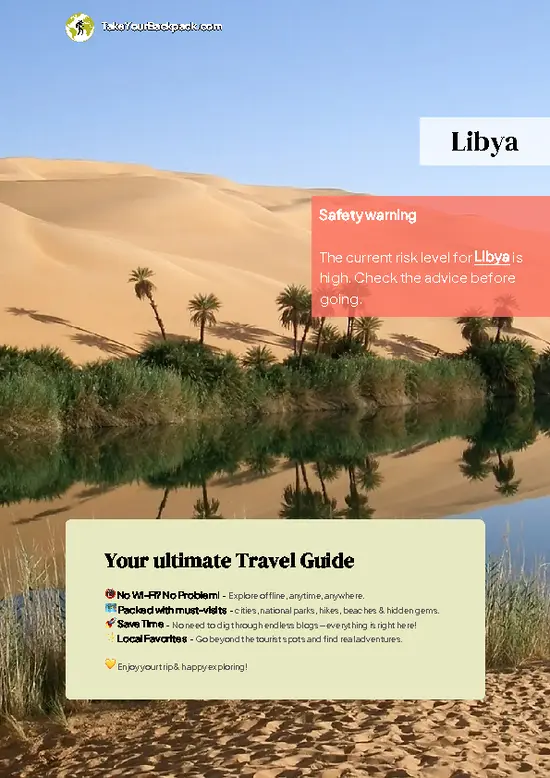
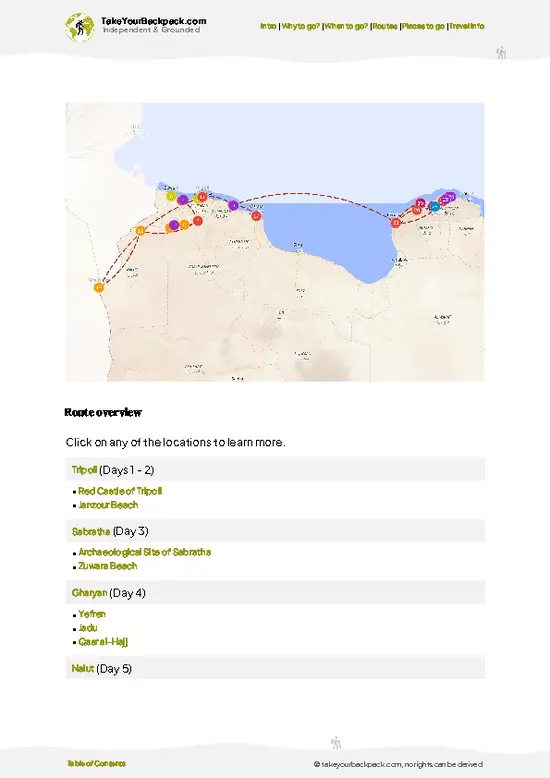
example page 0 from our offline Travel Guide for Libya
example page 1 from our offline Travel Guide for Libya
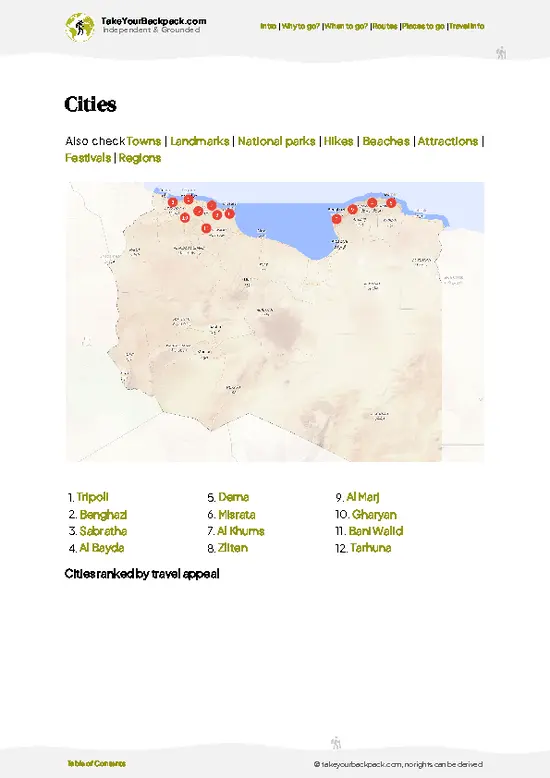
example page 2 from our offline Travel Guide for Libya
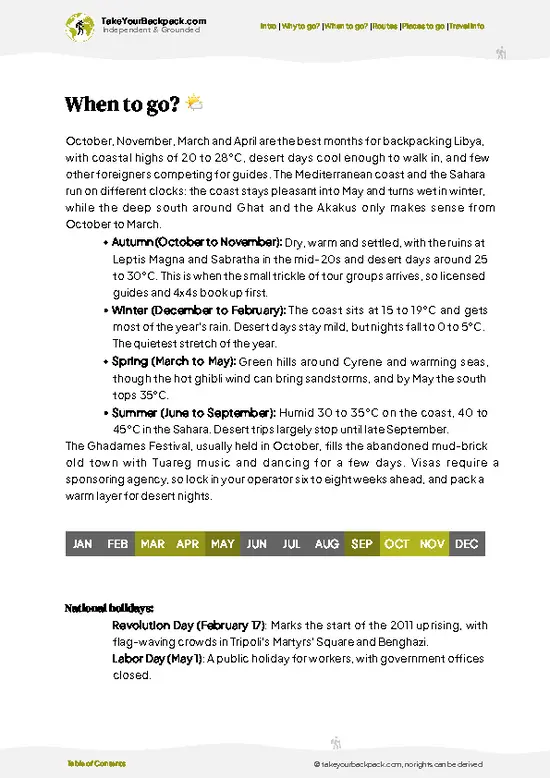
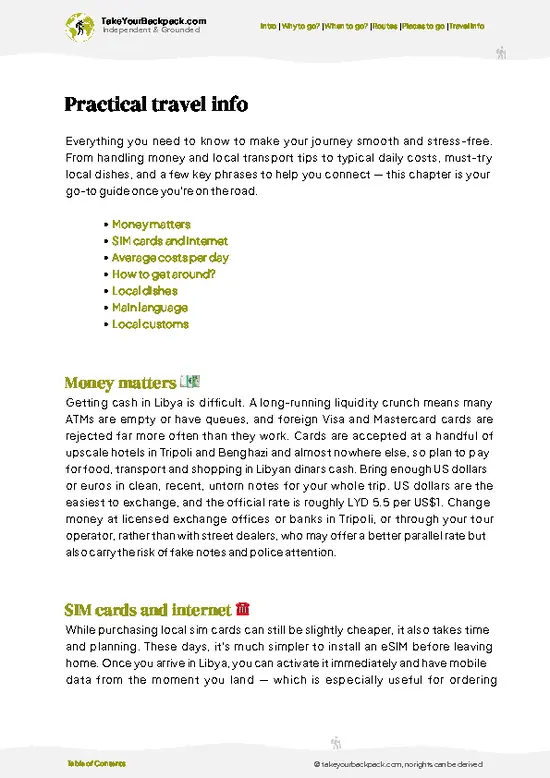
example page 3 from our offline Travel Guide for Libya
example page 4 from our offline Travel Guide for Libya
example page 5 from our offline Travel Guide for Libya
example page 6 from our offline Travel Guide for Libya
example page 7 from our offline Travel Guide for Libya
Loading the map 🌍
CLICK TO FILTER
cities
towns
landmarks
national parks
hikes
beaches
attractions
festivals
regions
SHOW COUNTRY’S BESTSHOW ALL

✨ Why go?
Ranked #6 city in Libya
What sets this place apart

Misrata earns a place on a Libya route because it packs the country’s recent history into one compact stretch, with a war-scarred main street, a strong military museum and a long Mediterranean beach front that locals actually use. It is a city of merchants and shipping, so it feels busier and more orderly than most Libyan towns. Many people come to understand the 2011 siege through places they can walk, and the Tripoli Street ruins still make that case plainly. It also works as a base for Roman and coastal sites within easy reach of the center, and the road west to the capital and east toward Sirte keeps onward travel simple. Food is straightforward: grilled fish, pasta and sweet pastries in small local cafés. Expect a short, focused stop rather than a long stay, since nightlife is nonexistent and tourist services are thin.

💡 HighlightsTop highlights of Misrata

  1. Tripoli Street: the main avenue where the fiercest urban fighting of 2011 took place, still lined with shell-pocked buildings. Walk it in the morning when traffic is light. Free, about 1 hour.
  2. Misrata Military Museum: a hall of captured tanks, artillery and the improvised armored vehicles built during the siege, plus photos of the fighting. Go in the morning. Around US$1 to 3, 1 to 2 hours.
  3. Misrata Museum of Martyrs and War: an exhibition of personal belongings, photographs and documents tied to the 2011 conflict. Quieter and more personal than the military collection. Free or a small donation, about 1 hour.
  4. Old Town (Medina): the small central area of older Ottoman and Italian-era buildings, with lanes of shops selling textiles, gold and household goods. Late afternoon is livelier. Free, 1 to
… read more 👉
  1. Tripoli Street: the main avenue where the fiercest urban fighting of 2011 took place, still lined with shell-pocked buildings. Walk it in the morning when traffic is light. Free, about 1 hour.
  2. Misrata Military Museum: a hall of captured tanks, artillery and the improvised armored vehicles built during the siege, plus photos of the fighting. Go in the morning. Around US$1 to 3, 1 to 2 hours.
  3. Misrata Museum of Martyrs and War: an exhibition of personal belongings, photographs and documents tied to the 2011 conflict. Quieter and more personal than the military collection. Free or a small donation, about 1 hour.
  4. Old Town (Medina): the small central area of older Ottoman and Italian-era buildings, with lanes of shops selling textiles, gold and household goods. Late afternoon is livelier. Free, 1 to 2 hours.
  5. Karamanli-era Mosque Quarter: the older mosques around the center show Ottoman influence in their domes and minarets. Visit outside prayer times and dress modestly. Free, 30 minutes.
  6. Misrata Waterfront and Corniche: a long Mediterranean promenade where families gather at dusk for tea and walks. Best in the evening. Free, 1 hour.
  7. Misrata Port Area: the commercial harbor that drives the city’s economy, viewed from the road and nearby cafés. Early morning is best. Free, 30 minutes.
Misrata’s Tripoli Street, the corniche and the Old Town cost nothing, so only the museums need small change. Roman Leptis Magna to the west and the coastal ruins around Zliten are the best day trips from the city.
Spotted a mistake or missing something? Contact us.

🏘️ NeighborhoodsNeighborhood guide to Misrata

Misrata is a spread-out coastal city, and the areas worth your time sit in a loose arc between the old center and the sea.
  • Downtown and Souq area: The old commercial core around the main market streets is the best use of a morning. Stalls sell spices, dates, gold and clothes, and small cafés serve strong tea and espresso. It is walkable, cheap and the most local-feeling part of town, so start here.
  • Tripoli Street: The long commercial avenue was heavily damaged in the 2011 fighting, and some ruined buildings remain as a stark record of it. Walk a stretch for context, then move on. A taxi back costs little, so you do not need to cover all of it.
  • Qasr Ahmad and the coast: The seafront near Qasr Ahmad has beaches, fish grills and families strolling in the evening. Distances are long, so take a taxi
… read more 👉
Misrata is a spread-out coastal city, and the areas worth your time sit in a loose arc between the old center and the sea.
  • Downtown and Souq area: The old commercial core around the main market streets is the best use of a morning. Stalls sell spices, dates, gold and clothes, and small cafés serve strong tea and espresso. It is walkable, cheap and the most local-feeling part of town, so start here.
  • Tripoli Street: The long commercial avenue was heavily damaged in the 2011 fighting, and some ruined buildings remain as a stark record of it. Walk a stretch for context, then move on. A taxi back costs little, so you do not need to cover all of it.
  • Qasr Ahmad and the coast: The seafront near Qasr Ahmad has beaches, fish grills and families strolling in the evening. Distances are long, so take a taxi out and walk once you arrive. It is the best sunset-hour choice for the money.
  • Misrata Free Zone and port: Industrial and spread out, with little to see. Skip it unless you have business there.
  • Zawiyat al-Mahjub: Residential and quiet, with local bakeries and small restaurants. Worth a short detour only if you want a cheap, unhurried meal away from the center.

⌛️ 1 daySeeing the highlights in 24 hours

A war-history morning that eases into a seaside evening.
9:00 AM: Tripoli Street Start on foot along the shattered avenue while the light is soft and traffic is thin. The pocked buildings explain the siege better than any plaque. Allow an hour, then take a short taxi to the museums.
10:30 AM: Misrata Military Museum Walk among captured tanks and homemade armored trucks. It is open-air in places, so go before the heat builds. Plan about 90 minutes.
12:30 PM: Lunch in the center Find a local café for grilled fish or pasta with a simple salad. Locals eat early, so arrive before the rush.
2:00 PM: Martyrs and War Exhibition A smaller, more personal look at the conflict through photographs and belongings. It gives the weapons you saw earlier a human face.
4:00 PM: Old Town and markets Wander the narrow … read more 👉
A war-history morning that eases into a seaside evening.
9:00 AM: Tripoli Street Start on foot along the shattered avenue while the light is soft and traffic is thin. The pocked buildings explain the siege better than any plaque. Allow an hour, then take a short taxi to the museums.
10:30 AM: Misrata Military Museum Walk among captured tanks and homemade armored trucks. It is open-air in places, so go before the heat builds. Plan about 90 minutes.
12:30 PM: Lunch in the center Find a local café for grilled fish or pasta with a simple salad. Locals eat early, so arrive before the rush.
2:00 PM: Martyrs and War Exhibition A smaller, more personal look at the conflict through photographs and belongings. It gives the weapons you saw earlier a human face.
4:00 PM: Old Town and markets Wander the narrow shopping lanes, where gold, textiles and sweets fill the stalls. Pick up local pastries and watch the trading, which is the city’s oldest habit.
5:30 PM: Port-side back lanes Off the standard route, drive or walk toward the harbor edge to see the working side of Misrata, with cranes, fishing boats and roadside tea stalls.
7:00 PM: Corniche Finish on the seafront as families arrive for evening walks. Sit with tea and let the day settle.

🌤️ When to go?Weather, crowds, and seasonal trade-offs

Late March to May and October to November give Misrata its most comfortable weather, with daytime highs of 20 to 28°C (68 to 82°F) and little rain.
  • Spring (March to May): Mild, sunny and green, with occasional hot, dusty ghibli winds in late spring. Prices stay steady and crowds are almost nonexistent.
  • Summer (June to September): Hot and humid on the coast, with highs of 30 to 36°C (86 to 97°F). Beaches are busiest with Libyan families, and daylight lasts about 14 hours. Midday sightseeing is miserable.
  • Autumn (October to November): Warm seas and highs of 22 to 29°C (72 to 84°F). This is the easiest season for walking.
  • Winter (December to February): Cool and wet, with highs of 14 to 19°C (57 to 66°F) and lows near 8°C (46°F). Most rain falls now, and daylight is short, about 10 hours.
Plan around … read more 👉
Late March to May and October to November give Misrata its most comfortable weather, with daytime highs of 20 to 28°C (68 to 82°F) and little rain.
  • Spring (March to May): Mild, sunny and green, with occasional hot, dusty ghibli winds in late spring. Prices stay steady and crowds are almost nonexistent.
  • Summer (June to September): Hot and humid on the coast, with highs of 30 to 36°C (86 to 97°F). Beaches are busiest with Libyan families, and daylight lasts about 14 hours. Midday sightseeing is miserable.
  • Autumn (October to November): Warm seas and highs of 22 to 29°C (72 to 84°F). This is the easiest season for walking.
  • Winter (December to February): Cool and wet, with highs of 14 to 19°C (57 to 66°F) and lows near 8°C (46°F). Most rain falls now, and daylight is short, about 10 hours.
Plan around Ramadan, when daytime restaurants close and opening hours shift.


source: climatestotravel.comJANJanuary: fair for travelingFEBFebruary: fair for travelingMARMarch: excellent for travelingAPRApril: excellent for travelingMAYMay: excellent for travelingJUNJune: good for travelingJULJuly: below average for travelingAUGAugust: below average for travelingSEPSeptember: good for travelingOCTOctober: highly recommended for travelingNOVNovember: good for travelingDECDecember: fair for traveling
when-to-go

✈️ The backpacker research shortcutLibya Travel Guide

An offline-friendly backpacking guide with optimized travel routes, ranked highlights, transport advice, and the best areas to stay.
example page 0 from our offline Travel Guide for Libya
example page 1 from our offline Travel Guide for Libya
example page 2 from our offline Travel Guide for Libya
example page 3 from our offline Travel Guide for Libya
example page 4 from our offline Travel Guide for Libya
example page 5 from our offline Travel Guide for Libya
example page 6 from our offline Travel Guide for Libya
example page 7 from our offline Travel Guide for Libya
The digital guide (205 pages) contains:
✅ 45 highlights, ranked by travel appeal
✅ Optimized 5, 10 & 15-day travel routes
✅ Cities, national parks, landmarks, beaches
✅ How to get around
✅ Offline-friendly for travel without Wi-Fi
👉 Click to see all 30+ guide features

📅 Plan smarter in minutes, not weeks
✅ Month by month travel advice
✅ Festivals & national holidays
✅ Budget expectations

🗺️ Go to the right places, skip the overrated ones
✅ Honest pros & cons of destinations
✅ Top hikes, parks & viewpoints
✅ Lesser-known places most travelers miss
✅ Clear “worth it vs skip it” guidance

🛏️ Travel smoothly without rookie mistakes
✅ Best areas to stay
✅ Transport systems explained simply
✅ Common scams & safety advice
✅ SIM cards, money & practical tips

🌍 Understand the country, not just visit it
✅ Culture & traditions
✅ 52 Essential phrases & customs
✅ Festivals worth planning around
✅ Traveler-friendly historical context
✅ Insights that make places more meaningful

📱 Built for real travel conditions
✅ Fully downloadable PDF
✅ Works completely offline
✅ Optimized for phone use
✅ Useful in remote areas & buses
✅ Everything in one place
Stop searching, start planning
Get instant access to your full guide. 30‑day money-back guarantee.
+ Add another guide for just

By proceeding you agree to our terms.
Sent to your inbox immediately after payment • 100% Secure Checkout
Best Backpacking Travel Advisor 2025 tourism awardBest Backpacking
Travel Advisor
2025
What others say about Take Your Backpack Guides:
⭐⭐⭐⭐⭐
Fantastic, amazing amount of information!
⭐⭐⭐⭐⭐
My goodness this is amazing, it's what I've been looking for hats off too you!
⭐⭐⭐⭐⭐
I think this is absolutely BRILLIANT
⭐⭐⭐⭐
Very complete and informative. It's still missing places, but I gotta to commend you
⭐⭐⭐⭐⭐
This is truly amazing, thank you, can't wait to explore it with my kids!
⭐⭐⭐⭐⭐
Awesome resource, thank you!
⭐⭐⭐⭐⭐
This is amazing! Can't wait to explore the ones I haven't seen
⭐⭐⭐⭐
I love this! Well done, great idea.
⭐⭐⭐⭐⭐
Thanks for taking the time to make this gem!
⭐⭐⭐⭐⭐
This might be the best website I've ever seen.
⭐⭐⭐⭐⭐
Congratulations, and thank you so much for your work; it's incredibly valuable.
⭐⭐⭐⭐
In all seriousness I think you did a great job pointing out the important spots
⭐⭐⭐⭐⭐
10/10 very good
⭐⭐⭐⭐⭐
As someone who's only just starting to visit regularly this is awesome, thank you.
⭐⭐⭐⭐
Thank you very much! I'm going to visit my dad, it's going to be very useful!
⭐⭐⭐⭐⭐
This is really cool! We'll be travelling for the first time and this definitely come in handy.
⭐⭐⭐⭐⭐
You are now our minister of culture, congratulations 👨‍💼
⭐⭐⭐⭐⭐
Just wanted to tell you that this is a pearl! Going to follow your recommendations.
⭐⭐⭐⭐⭐
This is so cool. I'll definitely be using the resource for my travels soon.
⭐⭐⭐⭐⭐
This is very impressive! Good work.
⭐⭐⭐⭐⭐
This is an amazing and informative site. Very well done!

🛏️ Where to stay?Choosing the right base

The downtown core near the main market is the best area for a budget stay in Misrata, since small hotels and guesthouses cluster there and food, cafés and taxis are a few steps away. Dedicated backpacker hostels are essentially absent, so expect simple private rooms rather than dorm beds, usually US$20 to 40 a night. The center is lively until late evening, with shop noise and traffic starting early, so bring earplugs if you sleep lightly. After dark the streets here feel calmer than outer districts, and taxis remain easy to find.

The second option is the coastal strip toward Qasr Ahmad. Rooms … read more 👉
The downtown core near the main market is the best area for a budget stay in Misrata, since small hotels and guesthouses cluster there and food, cafés and taxis are a few steps away. Dedicated backpacker hostels are essentially absent, so expect simple private rooms rather than dorm beds, usually US$20 to 40 a night. The center is lively until late evening, with shop noise and traffic starting early, so bring earplugs if you sleep lightly. After dark the streets here feel calmer than outer districts, and taxis remain easy to find.

The second option is the coastal strip toward Qasr Ahmad. Rooms and beach-area guesthouses can cost a bit more, but they give sea air, quieter nights and easy access to the shore. The trade-off is distance, because you will rely on taxis for almost every trip into town, adding US$3 to 6 each way. Book ahead where possible and confirm the price on arrival, as options are limited and availability can change quickly, especially in summer.

🚌 Getting aroundTransportation options and practical tips

A shared or private taxi ride within Misrata usually costs US$1 to 3, paid in cash in Libyan dinars, so carry small notes. The city is wide and car-oriented, with heavy traffic at midday and in the evening, and no dependable public bus network for visitors. Most backpackers walk the center and take taxis for everything else.
  • Walking: Good for the souq and downtown, where everything sits within a 15-minute radius. It is free and the best way to see daily life, but it is poor beyond that, because distances to the coast and outer districts are long and sidewalks are patchy.
  • Taxis: The most useful option. Agree the fare before you get in, since meters are rare. Short hops cost US$1 to 3 and a trip to the seaside or Qasr Ahmad US$3 to 6. Taxis are comfortable enough and quick, and they give you the
… read more 👉
A shared or private taxi ride within Misrata usually costs US$1 to 3, paid in cash in Libyan dinars, so carry small notes. The city is wide and car-oriented, with heavy traffic at midday and in the evening, and no dependable public bus network for visitors. Most backpackers walk the center and take taxis for everything else.
  • Walking: Good for the souq and downtown, where everything sits within a 15-minute radius. It is free and the best way to see daily life, but it is poor beyond that, because distances to the coast and outer districts are long and sidewalks are patchy.
  • Taxis: The most useful option. Agree the fare before you get in, since meters are rare. Short hops cost US$1 to 3 and a trip to the seaside or Qasr Ahmad US$3 to 6. Taxis are comfortable enough and quick, and they give you the most for your money.
  • Ride-hailing apps and hotel drivers: Local taxi-booking apps and drivers arranged through your accommodation give fixed prices. A day of hiring a driver runs US$30 to 50. It is worth it for scattered sites such as Roman Leptis Magna, but not for the center.
  • Shared minibuses and intercity vans: Vans to Tripoli, Zliten and Khoms leave from the main station when full. Tripoli takes about 2.5 to 3 hours and costs roughly US$5 to 8. They are cheap but have no timetable, so go in the morning, since services thin out by late afternoon.

👛 Costs (as of 22 October 2026)What things cost and how to budget

Misrata costs a backpacker roughly US$60 to 75 a day, driven mostly by the lack of hostels and the need for taxis. Prices are in Libyan dinars in cash, and the table uses US dollar equivalents.
CategoryBudget RangeLocal Reality
Dorm accommodation (high season)US$25 to 40No true dorms, so a basic private room is the norm.
Dorm accommodation (off-season)US$18 to 30Winter rooms drop in price, and negotiating helps.
MealsUS$8 to 15Sandwiches, grilled fish and pastries in local spots.
Local transportUS$6 to 12Several short taxi rides a day.
City transport passNot availableNo pass exists, so pay per ride in cash.
Basic activities/entry feesUS$2 to 8Museums and sites charge small fees.
MiscellaneousUS$4 to 8SIM data, drinks and small purchases.
Total Daily BudgetUS$60 to 75Per person for one day.
Agree taxi … read more 👉
Misrata costs a backpacker roughly US$60 to 75 a day, driven mostly by the lack of hostels and the need for taxis. Prices are in Libyan dinars in cash, and the table uses US dollar equivalents.
CategoryBudget RangeLocal Reality
Dorm accommodation (high season)US$25 to 40No true dorms, so a basic private room is the norm.
Dorm accommodation (off-season)US$18 to 30Winter rooms drop in price, and negotiating helps.
MealsUS$8 to 15Sandwiches, grilled fish and pastries in local spots.
Local transportUS$6 to 12Several short taxi rides a day.
City transport passNot availableNo pass exists, so pay per ride in cash.
Basic activities/entry feesUS$2 to 8Museums and sites charge small fees.
MiscellaneousUS$4 to 8SIM data, drinks and small purchases.
Total Daily BudgetUS$60 to 75Per person for one day.
Agree taxi prices before you get in, and share rides with locals going your way to cut transport costs.
⚠️ Prices can change and everyone travels differently, so take this as a rough guide. Hope it helps you plan your adventure!

🚌 Day tripsExploring the surroundings

Misrata sits on the coastal road between Tripoli and Sirte, so day trips are easy by shared taxi or a hired driver.
Leptis Magna: Libya’s finest Roman site, with a basilica, theater and a long colonnaded street beside the sea, lies about 1.5 to 2 hours west by road. A hired car with a driver costs around US$50 to 80 for the day, and entry is a few dollars. Go in the cooler months and arrive early, because shade is scarce and first-timers often underestimate how much ground the ruins cover.
👉 Explore Leptis Magna
Zliten: This coastal town is about 45 minutes west and is known for the Asmariya mosque and shrine of Sidi Abdussalam al-Asmar. Shared taxis cost roughly US$2 to 4 each way, so it is a cheap half-day. Visit outside prayer times to enter respectfully.
👉 Explore Zliten
Tawergha and the Dafniya … read more 👉
Misrata sits on the coastal road between Tripoli and Sirte, so day trips are easy by shared taxi or a hired driver.
Leptis Magna: Libya’s finest Roman site, with a basilica, theater and a long colonnaded street beside the sea, lies about 1.5 to 2 hours west by road. A hired car with a driver costs around US$50 to 80 for the day, and entry is a few dollars. Go in the cooler months and arrive early, because shade is scarce and first-timers often underestimate how much ground the ruins cover.
👉 Explore Leptis Magna
Zliten: This coastal town is about 45 minutes west and is known for the Asmariya mosque and shrine of Sidi Abdussalam al-Asmar. Shared taxis cost roughly US$2 to 4 each way, so it is a cheap half-day. Visit outside prayer times to enter respectfully.
👉 Explore Zliten
Tawergha and the Dafniya coast: The beaches east and west of Misrata, such as the coast near Dafniya, are a short ride of 20 to 40 minutes. Taxis cost US$5 to 10 return, and summer is the best time to swim. Many people arrive without a return ride arranged, so ask your driver to wait.

Khoms: Beyond Zliten, Khoms has a fishing harbor and the Roman port town of Leptis nearby. Allow about 1.5 hours each way by minibus for US$4 to 7. Go in the morning for fresh fish at the harbor.

🍲 FoodWhat to Eat & Drink

Misrata is known across Libya for its dates and the sweet pastries that go with them, and its seafood is fresher than inland cities can offer. Grilled fish with lemon, spicy fish stews and fried calamari appear in small coastal restaurants, usually priced at US$5 to 12. Bakeries sell flaky bsisa and honey sweets, and a coffee or sweet tea with dates is the standard welcome in many shops.

For casual eating, the souq district has sandwich stalls, grilled meats and cheap lunch spots where a filling meal costs US$2 to 5. Seafront cafés near Qasr Ahmad fill with families at dusk and are the best place for a long evening over juice or espresso. Alcohol is banned, so drinks mean fresh juice, strong tea and coffee. Many restaurants close midafternoon and reopen after sunset, and during Ramadan most open only after the evening fast breaks.

🛡️ SafetyStaying Safe: What Travelers Should Know

Misrata is one of the calmer cities in Libya, but conditions can change, so check current government advisories before you go and ask your host about local conditions. Most trouble for visitors is practical rather than criminal. Check the news and avoid military or checkpoint areas on the outskirts, and carry your passport copy and visa documents for checkpoint stops. Stay out of any area where armed groups gather, and do not photograph security sites. Solo travelers, especially women, draw attention, so dress modestly and keep to well-lit central streets after dark. Take taxis at night rather than walking long distances. Agree fares before getting in, since overcharging foreigners is the usual annoyance. Cash is king, so carry small notes and keep them hidden.

FAQFrequently asked questions about Misrata

Two full days cover Misrata’s souq, the seafront near Qasr Ahmad and the war-damaged Tripoli Street. Add a third day if you want Leptis Magna, about 1.5 to 2 hours west by road, or Zliten, around 45 minutes away. Most visitors use Misrata as a base for these trips rather than staying longer.
Misrata is considered one of the calmer cities in Libya, but conditions change, so check current advisories and local advice before traveling. Take taxis after dark, carry document copies for checkpoints and dress modestly, especially if you are a woman. Fixing taxi fares before you ride, usually US$1 to 3 in town, avoids the main everyday annoyance.
Misrata is known for its commercial strength, its port and its role in the 2011 uprising, with the damaged Tripoli Street still visible. It also has a busy souq, local dates and fresh seafood. Roman Leptis Magna lies roughly 1.5 to 2 hours west, which makes the city a practical base for history.
⚠️ Things can change over time, so always validate details locally before you go.

Other Libyan cities near Misrata

Explore more nearby:

  • Zliten—Sufi shrines, olive groves, Friday market| 55 km away
  • Al Khums—Leptis Magna ruins, Mediterranean coastline, local souks| 86 km away
  • Bani Walid—Wadi valleys, tribal gathering sites, olive groves| 120 km away

💡 Not sure where to go next?
Create a personalized itinerary for Libya including Misrata and the places that fit your trip.

Generate my itinerary

👉 Discover all cities

Or checkout all Libya has to offer (think cities, towns, villages, national parks, hikes, beaches, festivals)
Country photo of Libya

We 💚 feedbackIs it worth it?

Misrata deserves one full day, two if you want a slow museum pace and a trip to Roman sites nearby. Anything longer feels empty unless you have business here. I would start early, bring small cash for museum entry, and take time to talk with locals, who are proud, direct and often eager to explain what happened.

✍️ Help improve this page!
The information on this page is based on in-depth research, insights shared by experienced travelers, and feedback from the local travel community in Libya. While every effort is made to keep the information accurate and current, conditions can change — so if you spot anything incorrect or outdated, please get in touch.


🙋‍♂️ Give feedback

👋 Meet the founderWho’s Behind Take Your Backpack?

Johan, backpacker and founder of TakeYourBackpackHi, I’m Johan (Netherlands 🇳🇱), the creator of TakeYourBackpack. Over the past 3 decades, I’ve backpacked through 90+ countries across six continents, gaining extensive experience with independent travel, long-term trips, and overland routes.

This site is built on a combination of firsthand travel experience and carefully curated insights from other backpackers. Many guides are based on places I’ve personally visited, while others bring together tips, observations, and practical advice shared by trusted travelers I’ve met along the way.

The goal is to provide realistic, experience-driven guidance — not generic itineraries — so you can explore destinations with better context, clearer expectations, and more confidence.