×

Libya🇱🇾 | citiesAl KhumsLeptis Magna gateway, fish harbor, quiet corniche, empty beaches | things to do and best time to go

Explore TripoliExplore Misrata

Backpacking in Al Khums
👍 Recommendedcity ranked #7
By Johan Kruseman 🇳🇱 | Updated October 22, 2026

Al Khums was once a sleepy fishing and farming town that foreign visitors reached almost only as a stop on the way to Leptis Magna. Today it is a working Mediterranean port city on the north coast of Libya, east of Tripoli, with a growing local seaside scene and very few backpackers. It suits patient travelers who like unpolished places and want Roman ruins without tour groups. It does not suit anyone after hostels, nightlife or polished tourism. The beach corniche and the cafés are pleasant but ordinary, so spend your time at the ancient site next door and the old harbor. Hotels and tourist services are limited, so arrange your accommodation and local contacts before you arrive.

Discover everything you want to know in the 📖 Libya Travel Guide.
Safety warning

The current risk level for Libya is high. Check the advice before going.


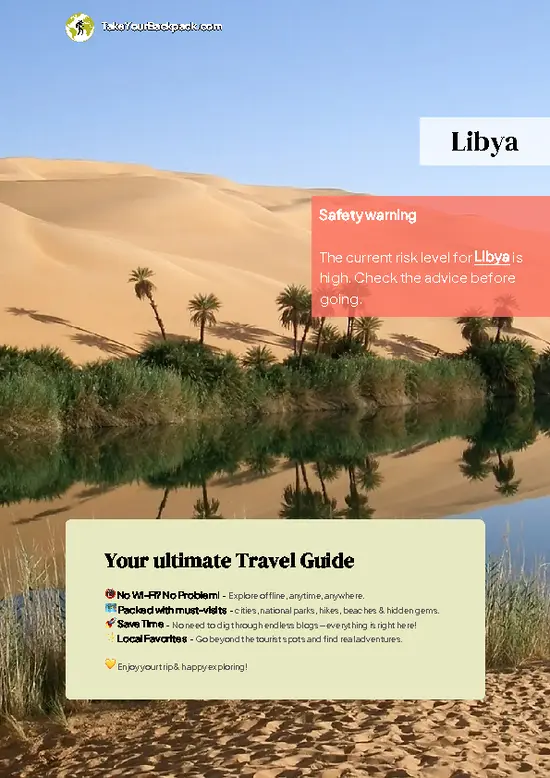
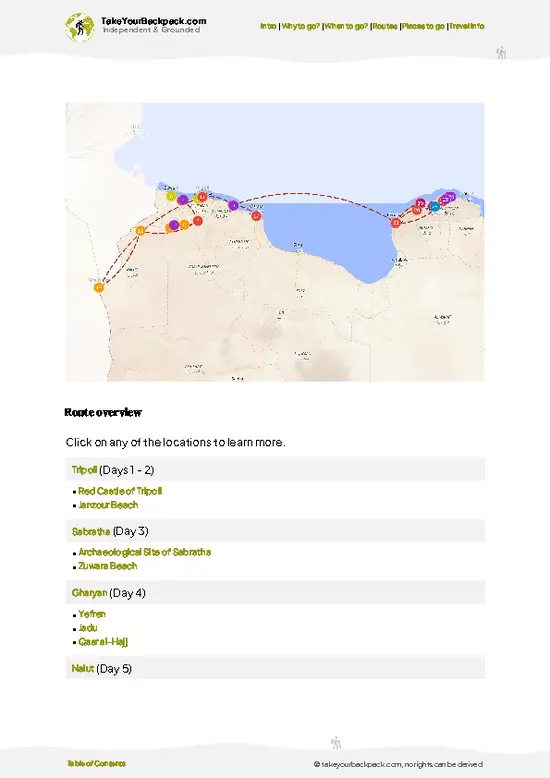
example page 0 from our offline Travel Guide for Libya
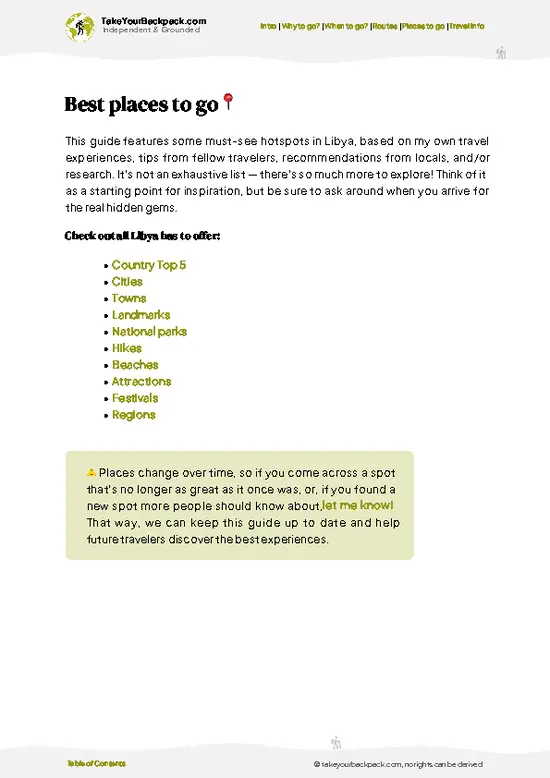
example page 1 from our offline Travel Guide for Libya
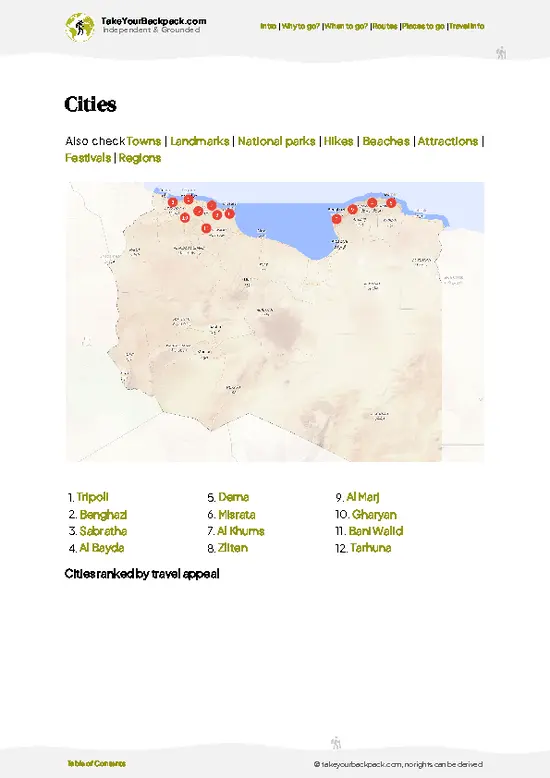
example page 2 from our offline Travel Guide for Libya
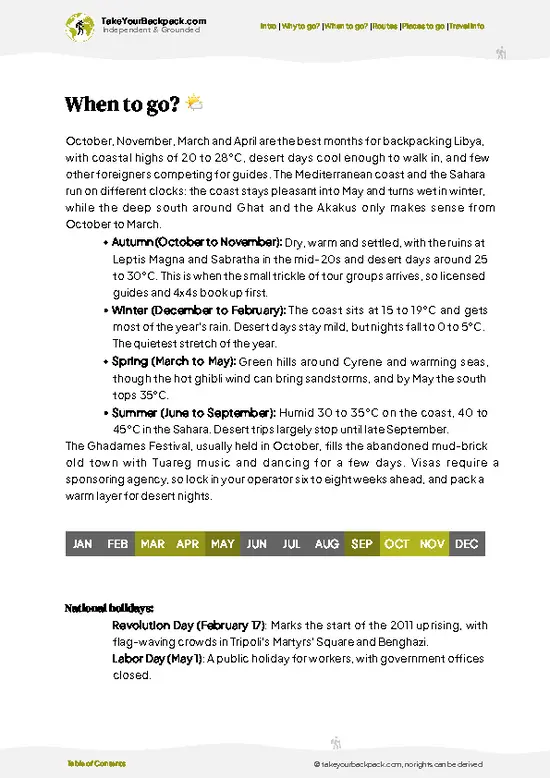
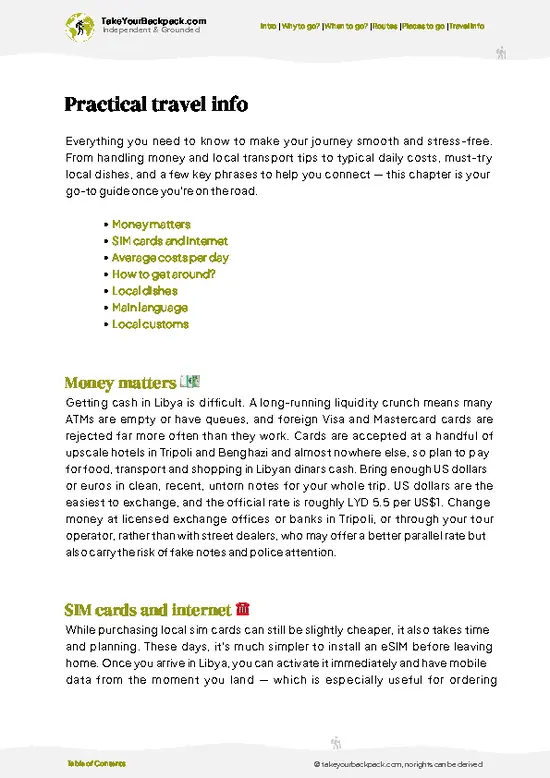
example page 3 from our offline Travel Guide for Libya
example page 4 from our offline Travel Guide for Libya
example page 5 from our offline Travel Guide for Libya
example page 6 from our offline Travel Guide for Libya
example page 7 from our offline Travel Guide for Libya
Loading the map 🌍
CLICK TO FILTER
cities
towns
landmarks
national parks
hikes
beaches
attractions
festivals
regions
SHOW COUNTRY’S BESTSHOW ALL

✨ Why go?
Ranked #7 city in Libya
What makes it a must-see city

Al Khums works as a base because it sits beside Leptis Magna, one of the best-preserved Roman cities on the Mediterranean, and lodging here means you can reach the ruins early, before the heat and before anyone else. The town is small and flat, so you can cover the center, the fish market and the waterfront by foot in an afternoon, and eating is simple and local, built around grilled fish, couscous and strong sweet tea. You will not find a backpacker scene, and that is part of the appeal: people are curious and often keen to talk. The coastal highway links the town with Tripoli and Misrata, so it fits a route along the Libyan coast. Treat it as a two-night stop for the ruins, not a place to linger.

💡 HighlightsWhat this place is best known for

  1. Leptis Magna: The headline sight, a Roman port city founded by Phoenicians and later the home of Emperor Septimius Severus. Walk the Severan Forum, the basilica, the theater facing the sea and the long colonnaded street. Go at opening time or late afternoon for cooler light. Entry is roughly US$4 to 8, and you need 3 to 4 hours.
  2. Leptis Magna Museum: Beside the ruins, it holds statues, mosaics and portrait busts from the city and gives context to what you just walked through. Expect about 1 hour and a small fee of US$1 to 3.
  3. Leptis Magna Hunting Baths: Among the best-preserved structures on the site, with vaulted roofs that survived because they were buried in sand for centuries. Quiet in the morning. Included in the site ticket, about 30 minutes.
  4. Al Khums Fish Harbor: A working harbor where small
… read more 👉
  1. Leptis Magna: The headline sight, a Roman port city founded by Phoenicians and later the home of Emperor Septimius Severus. Walk the Severan Forum, the basilica, the theater facing the sea and the long colonnaded street. Go at opening time or late afternoon for cooler light. Entry is roughly US$4 to 8, and you need 3 to 4 hours.
  2. Leptis Magna Museum: Beside the ruins, it holds statues, mosaics and portrait busts from the city and gives context to what you just walked through. Expect about 1 hour and a small fee of US$1 to 3.
  3. Leptis Magna Hunting Baths: Among the best-preserved structures on the site, with vaulted roofs that survived because they were buried in sand for centuries. Quiet in the morning. Included in the site ticket, about 30 minutes.
  4. Al Khums Fish Harbor: A working harbor where small boats unload in the early morning. Watch the catch being sorted and sold, and chat with fishermen. Free, 45 minutes to 1 hour.
  5. Al Khums Corniche: The seafront promenade where families gather in the evening. It is a simple, low-key stroll with sea breezes and tea stalls. Best after the heat fades. Free, 1 hour.
  6. Old Town Market: Central lanes selling dates, spices, olives and household goods. Come mid-morning for the most activity. Browsing costs nothing, and 1 hour is plenty.
  7. Beaches near Al Khums: Long sandy stretches with clear water and little development, best from late spring to early autumn. Free and 1 to 2 hours.
Al Khums also gives access to Tripoli’s old medina and the Roman ruins of Sabratha as day trips. The fish harbor, the corniche, the market and the beaches cost nothing, so the harbor is the best free start.
Spotted a mistake or missing something? Contact us.

🏘️ NeighborhoodsKey areas and districts to know

Al Khums is a coastal town where the useful parts sit within a few kilometers of each other, so you can sort them quickly.
  • Old town and the central market streets: This is where you should spend your time. Low whitewashed buildings, small bakeries, tea counters and shops selling dates, spices and olive oil crowd the lanes, and everything is walkable in an hour or two. Mornings are best, before shops close for the midday lull.
  • Waterfront and Corniche: Worth an evening stroll for the sea air and families out after dark. Cafés here serve strong coffee and sweet tea. There is little to do beyond sitting and watching, so give it an hour or two.
  • Port area: The fishing harbor is good for a quick look when boats come in and the catch is sorted. Skip the industrial zone around the commercial port, which
… read more 👉
Al Khums is a coastal town where the useful parts sit within a few kilometers of each other, so you can sort them quickly.
  • Old town and the central market streets: This is where you should spend your time. Low whitewashed buildings, small bakeries, tea counters and shops selling dates, spices and olive oil crowd the lanes, and everything is walkable in an hour or two. Mornings are best, before shops close for the midday lull.
  • Waterfront and Corniche: Worth an evening stroll for the sea air and families out after dark. Cafés here serve strong coffee and sweet tea. There is little to do beyond sitting and watching, so give it an hour or two.
  • Port area: The fishing harbor is good for a quick look when boats come in and the catch is sorted. Skip the industrial zone around the commercial port, which has nothing for a visitor.
  • Leptis Magna side (east, about 3 km out): The ruins are the real reason most people come, and they deserve a full half day. The modern settlement nearby is quiet and has few places to eat.
  • Outer residential districts: Sprawling, car-dependent and short on sights. Skip them unless a local invites you for a meal.

⌛️ 1 day1-day itinerary for Al Khums

8:00 AM: Leptis Magna entrance. Start here because the ruins are quietest and coolest in the morning, and the sea light flatters the stone. Walk the Severan Forum, the basilica and the colonnaded street, then continue to the theater.
10:30 AM: Hunting Baths. Walk the short path from the main site to the vaulted baths, among the best-preserved buildings in the complex, and spend a half hour reading the layout.
11:30 AM: Leptis Magna Museum. Step inside for statues and mosaics that put faces and stories to the ruins. It also offers shade before midday heat.
1:00 PM: Lunch in the center of Al Khums. Take a taxi back to town and find a simple local restaurant for grilled fish or a plate of couscous.
3:00 PM: Old Town Market. Wander the lanes for dates, spices and olives, and talk with vendors. It … read more 👉
8:00 AM: Leptis Magna entrance. Start here because the ruins are quietest and coolest in the morning, and the sea light flatters the stone. Walk the Severan Forum, the basilica and the colonnaded street, then continue to the theater.
10:30 AM: Hunting Baths. Walk the short path from the main site to the vaulted baths, among the best-preserved buildings in the complex, and spend a half hour reading the layout.
11:30 AM: Leptis Magna Museum. Step inside for statues and mosaics that put faces and stories to the ruins. It also offers shade before midday heat.
1:00 PM: Lunch in the center of Al Khums. Take a taxi back to town and find a simple local restaurant for grilled fish or a plate of couscous.
3:00 PM: Old Town Market. Wander the lanes for dates, spices and olives, and talk with vendors. It is not on any standard route, which makes it more interesting.
4:30 PM: Fish Harbor. Walk to the water where boats sit at anchor and nets are mended. It is calm and genuinely local.
6:00 PM: Corniche. End with a slow walk along the seafront as families arrive, and finish with tea at a roadside stall.

🌤️ When to go?Seasonal considerations and timing

Late spring and autumn are the easiest windows for Al Khums, with warm, dry days and calm sea.
  • Spring (March to May): Days run 18 to 27°C (64 to 81°F), wildflowers dot the countryside around the ruins, and crowds stay thin. Occasional hot, dusty ghibli winds can blow in.
  • Summer (June to September): Highs of 30 to 35°C (86 to 95°F) with humidity off the Mediterranean. Visit the ruins early, then swim. Daylight lasts about 14 hours.
  • Autumn (October to November): Highs of 22 to 28°C (72 to 82°F) and the sea is still warm. This is my favorite stretch.
  • Winter (December to February): 8 to 18°C (46 to 64°F), with rain and wind. Daylight drops to about 10 hours, but sites are nearly empty.
Aim for October and plan outdoor sightseeing for mornings.

source: climatestotravel.comJANJanuary: good for travelingFEBFebruary: good for travelingMARMarch: excellent for travelingAPRApril: excellent for travelingMAYMay: excellent for travelingJUNJune: good for travelingJULJuly: fair for travelingAUGAugust: fair for travelingSEPSeptember: excellent for travelingOCTOctober: excellent for travelingNOVNovember: excellent for travelingDECDecember: good for traveling
when-to-go

✈️ The backpacker research shortcutLibya Travel Guide

An offline-friendly backpacking guide with optimized travel routes, ranked highlights, transport advice, and the best areas to stay.
example page 0 from our offline Travel Guide for Libya
example page 1 from our offline Travel Guide for Libya
example page 2 from our offline Travel Guide for Libya
example page 3 from our offline Travel Guide for Libya
example page 4 from our offline Travel Guide for Libya
example page 5 from our offline Travel Guide for Libya
example page 6 from our offline Travel Guide for Libya
example page 7 from our offline Travel Guide for Libya
The digital guide (205 pages) contains:
✅ 45 highlights, ranked by travel appeal
✅ Optimized 5, 10 & 15-day travel routes
✅ Cities, national parks, landmarks, beaches
✅ How to get around
✅ Offline-friendly for travel without Wi-Fi
👉 Click to see all 30+ guide features

📅 Plan smarter in minutes, not weeks
✅ Month by month travel advice
✅ Festivals & national holidays
✅ Budget expectations

🗺️ Go to the right places, skip the overrated ones
✅ Honest pros & cons of destinations
✅ Top hikes, parks & viewpoints
✅ Lesser-known places most travelers miss
✅ Clear “worth it vs skip it” guidance

🛏️ Travel smoothly without rookie mistakes
✅ Best areas to stay
✅ Transport systems explained simply
✅ Common scams & safety advice
✅ SIM cards, money & practical tips

🌍 Understand the country, not just visit it
✅ Culture & traditions
✅ 52 Essential phrases & customs
✅ Festivals worth planning around
✅ Traveler-friendly historical context
✅ Insights that make places more meaningful

📱 Built for real travel conditions
✅ Fully downloadable PDF
✅ Works completely offline
✅ Optimized for phone use
✅ Useful in remote areas & buses
✅ Everything in one place
Stop searching, start planning
Get instant access to your full guide. 30‑day money-back guarantee.
+ Add another guide for just

By proceeding you agree to our terms.
Sent to your inbox immediately after payment • 100% Secure Checkout
Best Backpacking Travel Advisor 2025 tourism awardBest Backpacking
Travel Advisor
2025
What others say about Take Your Backpack Guides:
⭐⭐⭐⭐⭐
Fantastic, amazing amount of information!
⭐⭐⭐⭐⭐
My goodness this is amazing, it's what I've been looking for hats off too you!
⭐⭐⭐⭐⭐
I think this is absolutely BRILLIANT
⭐⭐⭐⭐
Very complete and informative. It's still missing places, but I gotta to commend you
⭐⭐⭐⭐⭐
This is truly amazing, thank you, can't wait to explore it with my kids!
⭐⭐⭐⭐⭐
Awesome resource, thank you!
⭐⭐⭐⭐⭐
This is amazing! Can't wait to explore the ones I haven't seen
⭐⭐⭐⭐
I love this! Well done, great idea.
⭐⭐⭐⭐⭐
Thanks for taking the time to make this gem!
⭐⭐⭐⭐⭐
This might be the best website I've ever seen.
⭐⭐⭐⭐⭐
Congratulations, and thank you so much for your work; it's incredibly valuable.
⭐⭐⭐⭐
In all seriousness I think you did a great job pointing out the important spots
⭐⭐⭐⭐⭐
10/10 very good
⭐⭐⭐⭐⭐
As someone who's only just starting to visit regularly this is awesome, thank you.
⭐⭐⭐⭐
Thank you very much! I'm going to visit my dad, it's going to be very useful!
⭐⭐⭐⭐⭐
This is really cool! We'll be travelling for the first time and this definitely come in handy.
⭐⭐⭐⭐⭐
You are now our minister of culture, congratulations 👨‍💼
⭐⭐⭐⭐⭐
Just wanted to tell you that this is a pearl! Going to follow your recommendations.
⭐⭐⭐⭐⭐
This is so cool. I'll definitely be using the resource for my travels soon.
⭐⭐⭐⭐⭐
This is very impressive! Good work.
⭐⭐⭐⭐⭐
This is an amazing and informative site. Very well done!

🛏️ Where to stay?Where staying makes the most sense

Stay in the central area near the market streets and the waterfront, because that is where the few budget rooms, cafés and taxis are concentrated. Al Khums has very little in the way of true hostel dorms, so expect simple guesthouses and modest hotels, usually US$20 to 40 a night for a private room. Central streets stay lit and populated into the evening, and the occasional call to prayer or café chatter is about as loud as it gets.

A second option is the coastal strip toward Leptis Magna. It is quieter, closer to the ruins and good if you want to start at the gates early, though you will rely … read more 👉
Stay in the central area near the market streets and the waterfront, because that is where the few budget rooms, cafés and taxis are concentrated. Al Khums has very little in the way of true hostel dorms, so expect simple guesthouses and modest hotels, usually US$20 to 40 a night for a private room. Central streets stay lit and populated into the evening, and the occasional call to prayer or café chatter is about as loud as it gets.

A second option is the coastal strip toward Leptis Magna. It is quieter, closer to the ruins and good if you want to start at the gates early, though you will rely on taxis for food and supplies. Options are limited here, so confirm availability before you travel and carry cash, as cards are rarely accepted. Rooms in either area fill up less in winter, so bargaining is easier then.

🚌 Getting aroundHow to get around Al Khums

A shared taxi ride inside Al Khums costs about US$0.50 to 1, paid in cash in Libyan dinars to the driver, and private taxis charge roughly US$2 to 5 for a short trip. Traffic is light, the center is compact, and there is no dependable city bus network, so you will mix walking with cars.
  • Walking: The best option for the old town, market and waterfront. Distances are short, and flat streets make it easy. Avoid midday heat in summer.
  • Shared taxis: Cheap and frequent on main roads. Agree on the destination first and carry small notes, since drivers often lack change. They run from early morning until roughly early evening.
  • Private taxis: Worth the money for the ruins of Leptis Magna, about 3 km east. Expect US$3 to 6 each way, or negotiate US$10 to 20 for a few hours with waiting time. Settle the
… read more 👉
A shared taxi ride inside Al Khums costs about US$0.50 to 1, paid in cash in Libyan dinars to the driver, and private taxis charge roughly US$2 to 5 for a short trip. Traffic is light, the center is compact, and there is no dependable city bus network, so you will mix walking with cars.
  • Walking: The best option for the old town, market and waterfront. Distances are short, and flat streets make it easy. Avoid midday heat in summer.
  • Shared taxis: Cheap and frequent on main roads. Agree on the destination first and carry small notes, since drivers often lack change. They run from early morning until roughly early evening.
  • Private taxis: Worth the money for the ruins of Leptis Magna, about 3 km east. Expect US$3 to 6 each way, or negotiate US$10 to 20 for a few hours with waiting time. Settle the price before getting in.
  • Intercity minibuses and shared cars: Services to Tripoli (about 120 km, roughly 2 hours) and Misrata (about 80 km, 1 to 1.5 hours) leave when full from the main station, usually US$3 to 8 per seat. Go in the morning, because departures thin out by afternoon.
  • Hired driver: Not worth it for the town itself, but sensible if you want several stops along the coast in one day. Budget US$40 to 70 a day.
Skip rental cars. Checkpoints, fuel availability and driving habits make a local driver easier.

👛 Costs (as of 22 October 2026)Money, prices, and spending tips

Al Khums costs most backpackers about US$48 a day, with lodging taking the largest share.
CategoryBudget RangeLocal Reality
Dorm accommodation (high season)US$20 to 30True dorms are rare, so this means a cheap private room in a guesthouse.
Dorm accommodation (off-season)US$15 to 25Winter rooms are easier to bargain down.
MealsUS$8 to 15Sandwiches, grilled fish and bakery breakfasts.
Local transportUS$3 to 8Shared taxis are cheap; private taxis cost more.
City transport passNot availableNo pass exists. Pay each ride in cash.
Basic activities/entry feesUS$4 to 8Leptis Magna is the main ticket.
MiscellaneousUS$3 to 6Water, SIM data, tea and snacks.
Total Daily BudgetUS$48Based on high-season lodging.
Carry small notes and bargain taxi rates for several stops at once, which brings the ruins trip down noticeably.
⚠️ Prices can change and everyone travels differently, so take this as a rough guide. Hope it helps you plan your adventure!

🚌 Day tripsBest day trips from Al Khums

Al Khums works well as a base because the main sights lie within an hour or two by road, and everything is a same-day return.
Leptis Magna:
The finest Roman ruins in Africa sit just east of town, with a basilica, theater, market and a long seaside harbor. Taxis cost US$3 to 6 each way and entry is roughly US$4 to 8. Go in the morning, and allow four hours. First-timers rush the Severan Forum and miss the amphitheater by the sea. Spring and autumn are best.
👉 Explore Leptis Magna
Tripoli:
The capital is about two hours west by shared car for US$3 to 8. It rewards you with the medina, the Red Castle museum and Martyrs’ Square. Leave early to be back before afternoon departures dwindle, and do not try to cover it all in one visit.
👉 Explore Tripoli
Misrata:
About 1 to 1.5 hours east, this port city … read more 👉
Al Khums works well as a base because the main sights lie within an hour or two by road, and everything is a same-day return.
Leptis Magna:
The finest Roman ruins in Africa sit just east of town, with a basilica, theater, market and a long seaside harbor. Taxis cost US$3 to 6 each way and entry is roughly US$4 to 8. Go in the morning, and allow four hours. First-timers rush the Severan Forum and miss the amphitheater by the sea. Spring and autumn are best.
👉 Explore Leptis Magna
Tripoli:
The capital is about two hours west by shared car for US$3 to 8. It rewards you with the medina, the Red Castle museum and Martyrs’ Square. Leave early to be back before afternoon departures dwindle, and do not try to cover it all in one visit.
👉 Explore Tripoli
Misrata:
About 1 to 1.5 hours east, this port city has a lively commercial center and a long beach. Shared cars cost US$3 to 6. It is better for a relaxed day than for ticking off sights, and a common slip is arriving too late to find transport back.
👉 Explore Misrata
Tarhuna and Msallata hills:
Inland, the hills offer olive groves and quieter villages with cooler air in summer. A hired driver for the day costs around US$40 to 70. Go in spring when the fields are green.
👉 Explore Tarhuna

🍲 FoodLocal Flavors for Backpackers

Fish is the local edge here. Look for grilled sea bream and fried sardines in casual spots near the harbor, usually US$4 to 10 with bread and salad. Many families cook seafood bazin or fish with spiced tomato sauce, a coastal twist on Libyan staples.

The surrounding Tripolitania coast is olive country, so expect fresh olive oil poured generously and salty local olives at breakfast with warm bread. Dates from the oases are sold in the market and make a cheap snack at US$2 to 4 a kilo.

Backpackers eat mainly at small grill shops and bakeries around the market streets, where sandwiches cost US$1 to 3. Evenings belong to waterfront cafés serving thick coffee and sweet tea, often with a plate of sticky pastries. Alcohol is not available, so the social scene revolves around cafés and shared tea.

🛡️ SafetyStaying Safe: What Travelers Should Know

Al Khums is calm by Libyan standards, and visitors mostly meet curiosity and hospitality, but security conditions across the country can change, so check current government advisories before you go. Stick to the center and the Leptis Magna road, and avoid driving between towns after dark. Checkpoints appear on main roads, so carry your passport and visa copies and stay polite. Women traveling solo will draw more attention and are better off with a local contact or guide. Petty theft is uncommon, yet keep cash tucked away because ATMs are scarce and you will be carrying bills. Agree taxi fares before getting in, since overcharging foreigners is the usual annoyance. Photographing checkpoints or government buildings can cause problems, so ask first. Register your plans with someone locally.

FAQCommon questions from travelers

Two days is enough for Al Khums, with one for the Leptis Magna ruins (about four hours on site) and another for the market streets, harbor and waterfront. Add a third day if you want to reach Tripoli (about two hours west) or Misrata. Ruins entry is roughly US$4 to 8.
Al Khums is relatively calm for Libya, but solo travel still needs planning, since security can change and checkpoints are common on the roads. Stay in the center, avoid intercity travel after dark and carry passport copies. Women traveling alone will find a local guide or contact worth the cost of about US$40 to 70 a day.
Al Khums is known for Leptis Magna, the Roman port city just east, with its basilica, theater and seaside harbor. The town itself has a working fishing harbor, olive groves and a market with dates and olive oil. Tripoli is about 120 km west, making it an easy base for coastal sightseeing.
⚠️ Things can change over time, so always validate details locally before you go.

Other Libyan cities near Al Khums

Explore more nearby:

  • Zliten—Sufi shrines, olive groves, Friday market| 48 km away
  • Tarhuna—Hilltop views, wheat fields, Berber heritage| 64 km away
  • Misrata—Commercial port, textile markets, modern cityscape| 86 km away

💡 Not sure where to go next?
Create a personalized itinerary for Libya including Al Khums and the places that fit your trip.

Generate my itinerary

👉 Discover all cities

Or checkout all Libya has to offer (think cities, towns, villages, national parks, hikes, beaches, festivals)
Country photo of Libya

We 💚 feedbackSumming up the experience

Come in spring or autumn, and plan your Al Khums days around early mornings and late afternoons, when the ruins are cool and the corniche fills with locals. Midsummer midday is punishing. I would bring a hat, sturdy shoes and cash, and let the harbor surprise you.

✍️ Help improve this page!
The information on this page is based on in-depth research, insights shared by experienced travelers, and feedback from the local travel community in Libya. While every effort is made to keep the information accurate and current, conditions can change — so if you spot anything incorrect or outdated, please get in touch.


🙋‍♂️ Give feedback

👋 Meet the founderWho’s Behind Take Your Backpack?

Johan, backpacker and founder of TakeYourBackpackHi, I’m Johan (Netherlands 🇳🇱), the creator of TakeYourBackpack. Over the past 3 decades, I’ve backpacked through 90+ countries across six continents, gaining extensive experience with independent travel, long-term trips, and overland routes.

This site is built on a combination of firsthand travel experience and carefully curated insights from other backpackers. Many guides are based on places I’ve personally visited, while others bring together tips, observations, and practical advice shared by trusted travelers I’ve met along the way.

The goal is to provide realistic, experience-driven guidance — not generic itineraries — so you can explore destinations with better context, clearer expectations, and more confidence.