×

Madagascar🇲🇬 | national parksCap Sainte MarieSouthern tip, limestone cliffs, radiated tortoises, lone lighthouse | things to do and best time to go

Explore Kalambatritra ReserveExplore Nosy Tanikely National Park

Backpacking in Cap Sainte Marie
👌 Worth visitingnational park ranked #17
By Johan Kruseman 🇳🇱 | Updated October 22, 2026

Cap Sainte Marie is not a swimming beach, and the cape, not a sand strip, is the reason to come. It sits at the far southern tip of Madagascar, in the Androy-Anosy dry country south of Ambovombe. I arrived on a sandy track, and the first thing I met was the wind, salt-sharp and loud over the spiny scrub, then the cliffs dropping into a hard blue sea. Skip the swim, the surf is violent. Spend your time on the lighthouse, the cliffs and the lonely shore, which feels far wilder than Anakao.

Discover everything you want to know in the 📖 Madagascar Travel Guide.


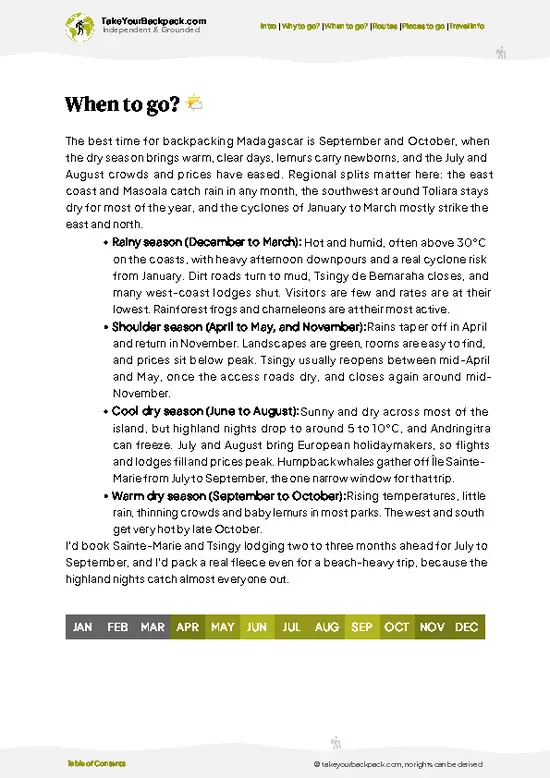
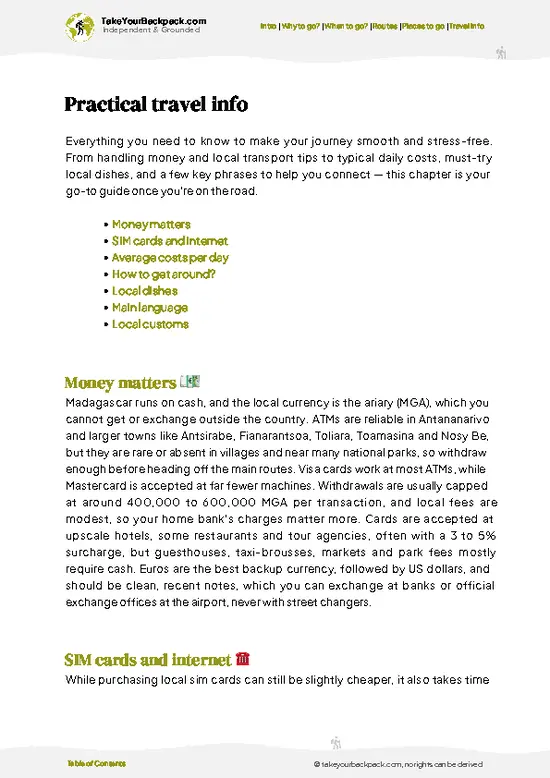
example page 0 from our offline Travel Guide for Madagascar
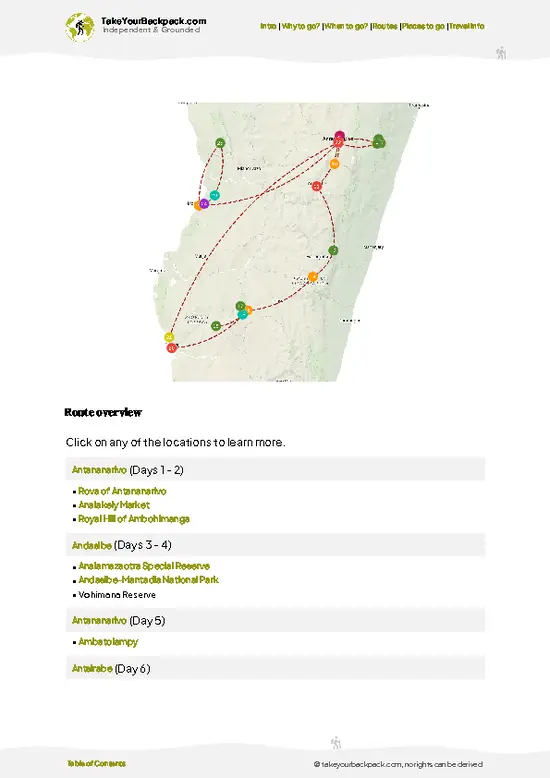
example page 1 from our offline Travel Guide for Madagascar
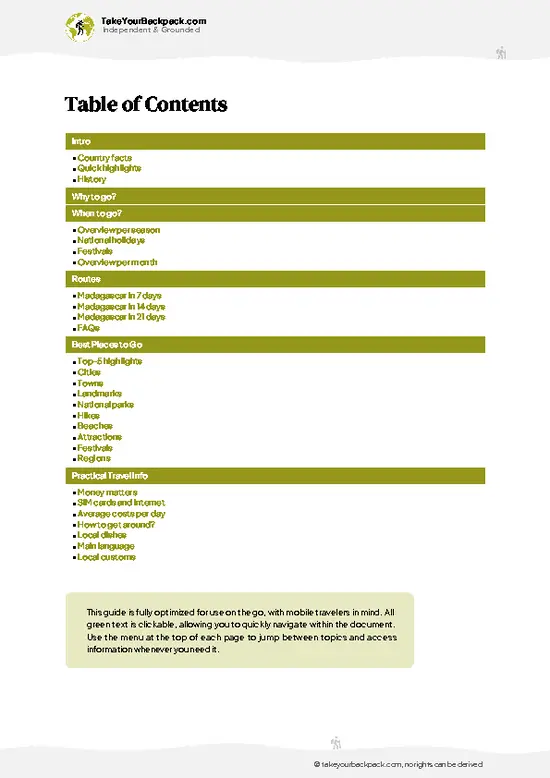
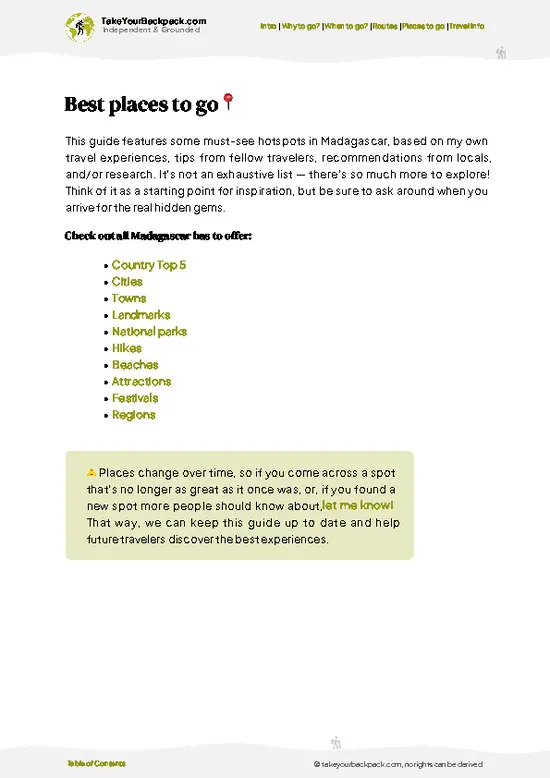
example page 2 from our offline Travel Guide for Madagascar
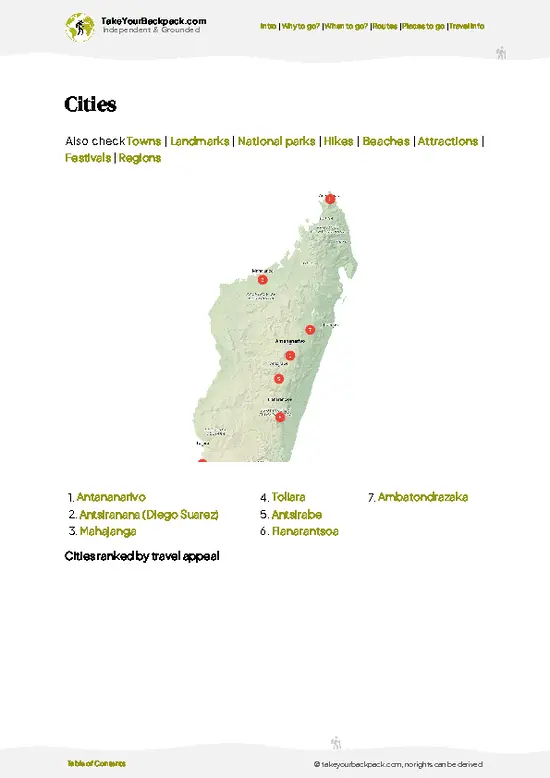
example page 3 from our offline Travel Guide for Madagascar
example page 4 from our offline Travel Guide for Madagascar
example page 5 from our offline Travel Guide for Madagascar
example page 6 from our offline Travel Guide for Madagascar
example page 7 from our offline Travel Guide for Madagascar
Loading the map 🌍
CLICK TO FILTER
cities
towns
landmarks
national parks
hikes
beaches
attractions
festivals
regions
SHOW COUNTRY’S BESTSHOW ALL

✨ Why go?
Ranked #17 national park in Madagascar
What makes this national park worth exploring

Backpackers come for the southernmost point of Madagascar, a place few itineraries reach and almost nobody crowds. The cape is a reserve known as Réserve Spéciale du Cap Sainte Marie, and its limestone plateau of spiny forest holds the radiated tortoise, a species you rarely see so easily elsewhere. The other pull is the journey itself: it works as a rough, rewarding detour for anyone traveling the deep south beyond Tuléar and Fort-Dauphin. Villages are tiny and basic, so come for the isolation, the cliff walks and the sense of having reached the end of the road.

💡 HighlightsMust-see experiences and standout moments

  1. The cape cliffs and Cap Sainte Marie viewpoint: the southernmost tip of the island, where limestone cliffs drop to heavy surf and the wind never really stops. Come for the edge and the open ocean.
  2. The radiated tortoise in the reserve: the Réserve Spéciale protects the spiny scrub where these domed, star-patterned tortoises forage. A local guide will help you spot them without disturbing them.
  3. The lighthouse: a lone beacon on the plateau, easy to walk to, with a long view along the coast and out to sea.
  4. The wild beach below the cape: pale sand and pounding waves, good for a walk and for beachcombing. Admire it from the shore, since the currents are dangerous.
  5. Sunset over the spiny forest: the light turns the scrub gold and the cliffs orange, and the quiet is complete once the wind drops.
Start with … read more 👉
  1. The cape cliffs and Cap Sainte Marie viewpoint: the southernmost tip of the island, where limestone cliffs drop to heavy surf and the wind never really stops. Come for the edge and the open ocean.
  2. The radiated tortoise in the reserve: the Réserve Spéciale protects the spiny scrub where these domed, star-patterned tortoises forage. A local guide will help you spot them without disturbing them.
  3. The lighthouse: a lone beacon on the plateau, easy to walk to, with a long view along the coast and out to sea.
  4. The wild beach below the cape: pale sand and pounding waves, good for a walk and for beachcombing. Admire it from the shore, since the currents are dangerous.
  5. Sunset over the spiny forest: the light turns the scrub gold and the cliffs orange, and the quiet is complete once the wind drops.
Start with the cliffs and lighthouse together, since they give you the whole cape in one short walk.
Spotted a mistake or missing something? Contact us.

🌤️ When to go?Weather, crowds, and seasonal trade-offs

  • Dry Season (May to October): Days run 24 to 28°C (75 to 82°F) with cool nights near 14 to 18°C (57 to 64°F), little rain, and about 11 hours of daylight in June. Southern Madagascar is at its driest, and the lighthouse road is firm.
  • Whale Season (July to September): Humpbacks pass the southern coast, and this is when prices and crowds peak.
  • Hot Season (November to April): Highs reach 30 to 34°C (86 to 93°F), with 13-hour days in December. Brief storms and cyclone swells can close roads, but rooms are cheaper and the cape is nearly empty.
Book transport early for July and August.

source: climatestotravel.comJANJanuary: below average for travelingFEBFebruary: below average for travelingMARMarch: below average for travelingAPRApril: fair for travelingMAYMay: highly recommended for travelingJUNJune: excellent for travelingJULJuly: excellent for travelingAUGAugust: excellent for travelingSEPSeptember: excellent for travelingOCTOctober: highly recommended for travelingNOVNovember: fair for travelingDECDecember: below average for traveling
when-to-go

✈️ The backpacker research shortcutMadagascar Travel Guide

An offline-friendly backpacking guide with optimized travel routes, ranked highlights, transport advice, and the best areas to stay.
example page 0 from our offline Travel Guide for Madagascar
example page 1 from our offline Travel Guide for Madagascar
example page 2 from our offline Travel Guide for Madagascar
example page 3 from our offline Travel Guide for Madagascar
example page 4 from our offline Travel Guide for Madagascar
example page 5 from our offline Travel Guide for Madagascar
example page 6 from our offline Travel Guide for Madagascar
example page 7 from our offline Travel Guide for Madagascar
The digital guide (305 pages) contains:
✅ 96 highlights, ranked by travel appeal
✅ Optimized 7, 14 & 21-day travel routes
✅ Cities, national parks, landmarks, beaches
✅ How to get around
✅ Offline-friendly for travel without Wi-Fi
👉 Click to see all 30+ guide features

📅 Plan smarter in minutes, not weeks
✅ Month by month travel advice
✅ Festivals & national holidays
✅ Budget expectations

🗺️ Go to the right places, skip the overrated ones
✅ Honest pros & cons of destinations
✅ Top hikes, parks & viewpoints
✅ Lesser-known places most travelers miss
✅ Clear “worth it vs skip it” guidance

🛏️ Travel smoothly without rookie mistakes
✅ Best areas to stay
✅ Transport systems explained simply
✅ Common scams & safety advice
✅ SIM cards, money & practical tips

🌍 Understand the country, not just visit it
✅ Culture & traditions
✅ 52 Essential phrases & customs
✅ Festivals worth planning around
✅ Traveler-friendly historical context
✅ Insights that make places more meaningful

📱 Built for real travel conditions
✅ Fully downloadable PDF
✅ Works completely offline
✅ Optimized for phone use
✅ Useful in remote areas & buses
✅ Everything in one place
Stop searching, start planning
Get instant access to your full guide. 30‑day money-back guarantee.
+ Add another guide for just

By proceeding you agree to our terms.
Sent to your inbox immediately after payment • 100% Secure Checkout
Best Backpacking Travel Advisor 2025 tourism awardBest Backpacking
Travel Advisor
2025
What others say about Take Your Backpack Guides:
⭐⭐⭐⭐⭐
Fantastic, amazing amount of information!
⭐⭐⭐⭐⭐
My goodness this is amazing, it's what I've been looking for hats off too you!
⭐⭐⭐⭐⭐
I think this is absolutely BRILLIANT
⭐⭐⭐⭐
Very complete and informative. It's still missing places, but I gotta to commend you
⭐⭐⭐⭐⭐
This is truly amazing, thank you, can't wait to explore it with my kids!
⭐⭐⭐⭐⭐
Awesome resource, thank you!
⭐⭐⭐⭐⭐
This is amazing! Can't wait to explore the ones I haven't seen
⭐⭐⭐⭐
I love this! Well done, great idea.
⭐⭐⭐⭐⭐
Thanks for taking the time to make this gem!
⭐⭐⭐⭐⭐
This might be the best website I've ever seen.
⭐⭐⭐⭐⭐
Congratulations, and thank you so much for your work; it's incredibly valuable.
⭐⭐⭐⭐
In all seriousness I think you did a great job pointing out the important spots
⭐⭐⭐⭐⭐
10/10 very good
⭐⭐⭐⭐⭐
As someone who's only just starting to visit regularly this is awesome, thank you.
⭐⭐⭐⭐
Thank you very much! I'm going to visit my dad, it's going to be very useful!
⭐⭐⭐⭐⭐
This is really cool! We'll be travelling for the first time and this definitely come in handy.
⭐⭐⭐⭐⭐
You are now our minister of culture, congratulations 👨‍💼
⭐⭐⭐⭐⭐
Just wanted to tell you that this is a pearl! Going to follow your recommendations.
⭐⭐⭐⭐⭐
This is so cool. I'll definitely be using the resource for my travels soon.
⭐⭐⭐⭐⭐
This is very impressive! Good work.
⭐⭐⭐⭐⭐
This is an amazing and informative site. Very well done!

🛏️ Where to stay?Where staying makes the most sense

The best base is Faux Cap and the small village settlements near Cap Sainte Marie are very basic, so most backpackers sleep in Tsihombe or Ambovombe, or arrange a tent camp with a local guide. Faux Cap is a poor fit for nightlife but gives you the nearest simple bungalows and a few family-run guesthouses, about 40 to 60 km from the cape by sandy track. Expect to pay roughly Ar 20,000 to 60,000 (US$5 to 14) for a basic room with bucket showers. Social options are thin here, so you will meet other travelers mainly in shared 4x4 taxi-brousse rides or through guides arranged in Tuléar or Fort-Dauphin. … read more 👉
The best base is Faux Cap and the small village settlements near Cap Sainte Marie are very basic, so most backpackers sleep in Tsihombe or Ambovombe, or arrange a tent camp with a local guide. Faux Cap is a poor fit for nightlife but gives you the nearest simple bungalows and a few family-run guesthouses, about 40 to 60 km from the cape by sandy track. Expect to pay roughly Ar 20,000 to 60,000 (US$5 to 14) for a basic room with bucket showers. Social options are thin here, so you will meet other travelers mainly in shared 4x4 taxi-brousse rides or through guides arranged in Tuléar or Fort-Dauphin. Bring a headlamp, since electricity is unreliable.

👛 Costs (as of 22 October 2026)Travel costs and budget guide for Cap Sainte Marie

A day at Cap Sainte Marie, the southern tip of Madagascar, costs about US$30 for a backpacker on a tight budget. The reserve sits near Faux Cap and Tsihombe, with Ambovombe and Tolagnaro (Fort Dauphin) the usual gateways. Pay in cash, since there are no ATMs near the cape.
CategoryBudget RangeLocal Reality
Entrance feeUS$2 to 4Paid at the reserve to the local guide association; small cash notes only.
GuideUS$4 to 8Needed to find the cliff viewpoint and the lighthouse area; fee is usually agreed on site.
Accommodation (high season)US$6 to 12Basic bungalows or rooms in Faux Cap or nearby villages; shared toilets, bucket showers.
Local transportUS$4 to 10Shared 4x4 or bush taxi legs on rough tracks; a private 4x4 for the full trip costs far more.
Food and suppliesUS$4 to 8Rice with fish or zebu in
… read more 👉
A day at Cap Sainte Marie, the southern tip of Madagascar, costs about US$30 for a backpacker on a tight budget. The reserve sits near Faux Cap and Tsihombe, with Ambovombe and Tolagnaro (Fort Dauphin) the usual gateways. Pay in cash, since there are no ATMs near the cape.
CategoryBudget RangeLocal Reality
Entrance feeUS$2 to 4Paid at the reserve to the local guide association; small cash notes only.
GuideUS$4 to 8Needed to find the cliff viewpoint and the lighthouse area; fee is usually agreed on site.
Accommodation (high season)US$6 to 12Basic bungalows or rooms in Faux Cap or nearby villages; shared toilets, bucket showers.
Local transportUS$4 to 10Shared 4x4 or bush taxi legs on rough tracks; a private 4x4 for the full trip costs far more.
Food and suppliesUS$4 to 8Rice with fish or zebu in village eateries; bring bottled water and snacks from the larger towns.
Total Daily BudgetUS$30Per person per day, excluding the long journey in from Tolagnaro.
⚠️ Prices can change and everyone travels differently, so take this as a rough guide. Hope it helps you plan your adventure!

🥾 TrailsDiscover Cap Sainte Marie's top trails and natural wonders

Cap Sainte Marie is a Special Reserve at Madagascar’s southern tip, and its walking is simple: one limestone plateau, one cliff edge, no marked loops to choose between. Terrain is flat, dry spiny scrub over sharp karst, with the Indian Ocean crashing at the southern edge. Expect sun, wind and almost no shade.
  • Lighthouse and Cliff Walk: Easy, roughly 1 to 2 hours round trip from the reserve entrance across open, rocky ground. The path ends at the red-and-white lighthouse and the sheer cliffs, where waves boom into the base and seabirds ride the updraft.
  • Plateau Wildlife Walk: Easy to moderate, about
… read more 👉
Cap Sainte Marie is a Special Reserve at Madagascar’s southern tip, and its walking is simple: one limestone plateau, one cliff edge, no marked loops to choose between. Terrain is flat, dry spiny scrub over sharp karst, with the Indian Ocean crashing at the southern edge. Expect sun, wind and almost no shade.
  • Lighthouse and Cliff Walk: Easy, roughly 1 to 2 hours round trip from the reserve entrance across open, rocky ground. The path ends at the red-and-white lighthouse and the sheer cliffs, where waves boom into the base and seabirds ride the updraft.
  • Plateau Wildlife Walk: Easy to moderate, about 1 to 2 hours on sandy tracks through spiny forest. Look for ring-tailed lemurs, radiated tortoises in the brush, and the endemic birds of the dry south.
  • Egg Beach Walk: Easy, about 30 to 60 minutes. A fossilized egg site lies in the dunes near the cape, where shards of giant elephant bird eggs sometimes surface. Leave them in place.
  • Terrain and Difficulty: Sharp limestone wrecks flimsy shoes, so wear sturdy closed footwear. Heat is the real challenge, so carry plenty of water and a hat.
Cap Sainte Marie is remote. Most travelers arrive by 4WD or taxi-brousse from Tulear or Fort Dauphin, followed by a rough track to the reserve, and there is no public transport inside. A local guide is usually needed at the entrance and makes the wildlife much easier to spot. Crowds are rare, often just a handful of visitors a day. An entrance fee applies, paid in the local currency, usually under US$10.
⚠️ Hiking info can sometimes be outdated or inaccurate. Before you hit the trail, check the latest conditions with locals. If you do spot anything that's off, I'd love to hear from you, so I can update it for fellow travelers.

🛡️ SafetySafety Tips and Common Scams in Cap Sainte Marie

Cap Sainte Marie is remote rather than risky. The coast is exposed to strong Indian Ocean swell, so swim only in calm, shallow pockets and stay out when waves are big, since currents are strong and no lifeguards exist. The sun is fierce with almost no shade, and the wind blows constantly, so carry plenty of water, a hat, and sunscreen. Cliff edges near the lighthouse are unfenced. Go with a local guide, because tracks are sandy and easy to lose, and keep valuables out of sight in villages.

FAQFrequently asked questions about Cap Sainte Marie

Fly or drive to Tuléar or Fort-Dauphin first, then hire a 4x4 with a driver for the sandy track to the cape via Tsihombe and Faux Cap. Plan on 2 days each way from Tuléar or Fort-Dauphin, since the road is rough. Private 4x4 hire usually costs around US$100 to 150 a day including fuel and driver.
Swimming is limited because of strong swell and currents, so most visitors wade or paddle in calm spots rather than swim properly. Surfing is not developed here, and there are no rental shops. Snorkeling is rare, and conditions are rough most days, so it is better to come for the cliffs, lighthouse, and the southernmost tip of Madagascar.
Yes, there is no entrance gate at the beach itself. You may be asked for a small local fee of about Ar 5,000 to 10,000 (roughly US$1 to 2) at the Cap Sainte Marie special reserve or by villagers guiding you to the lighthouse. A guide usually costs about Ar 20,000 to 40,000 (US$5 to 9) for the day.
⚠️ Things can change over time, so always validate details locally before you go.

Other Malagasy national parks near Cap Sainte Marie

Explore more nearby:

  • Berenty Reserve—Ring-tailed lemurs, tamarind gallery forest, Mandrare River, spiny forest| 134 km away
  • Andohahela National Park—Three ecosystems, spiny forest, red-bellied lemurs, Tanosy villages| 188 km away
  • Kalambatritra Reserve—Montane ridges, mossy forest, forest-edge villages, highland views| 285 km away

💡 Not sure where to go next?
Create a personalized itinerary for Madagascar including Cap Sainte Marie and the places that fit your trip.

Generate my itinerary

👉 Discover all national parks

Or checkout all Madagascar has to offer (think cities, towns, villages, national parks, hikes, beaches, festivals)
Country photo of Madagascar

We 💚 feedbackSumming up the experience

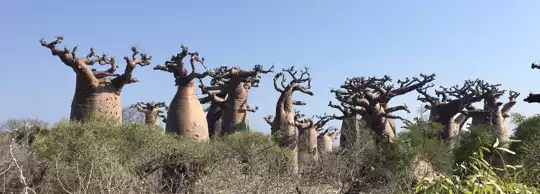
Pair the cape with a slower stretch of the south, such as Fort-Dauphin and its beaches or the baobab-lined road toward Tuléar. I would hire a local guide for the reserve and carry all your water, because shade and shops are rare out here.

✈️ When did I visit Madagascar?
Madagascar I went backpacking in October 2019. With a friend I rented a 4WD and drove around the southern part of Madagascar.

✍️ Help improve this page!
The information on this page is based on my own backpacking experience in Madagascar, supplemented with up-to-date research and feedback from other travelers. Travel details can change, so if you notice anything outdated or incomplete, feel free to let me know.


🙋‍♂️ Give feedback

👋 Meet the founderWho’s Behind Take Your Backpack?

Johan, backpacker and founder of TakeYourBackpackHi, I’m Johan (Netherlands 🇳🇱), the creator of TakeYourBackpack. Over the past 3 decades, I’ve backpacked through 90+ countries across six continents, gaining extensive experience with independent travel, long-term trips, and overland routes.

This site is built on a combination of firsthand travel experience and carefully curated insights from other backpackers. Many guides are based on places I’ve personally visited, while others bring together tips, observations, and practical advice shared by trusted travelers I’ve met along the way.

The goal is to provide realistic, experience-driven guidance — not generic itineraries — so you can explore destinations with better context, clearer expectations, and more confidence.