×

Madagascar🇲🇬 | national parksNosy Tanikely National ParkHouse reef, grazing turtles, lighthouse path, fruit bats | things to do and best time to go

Explore Cap Sainte MarieExplore Île aux Nattes

Backpacking in Nosy Tanikely
🏆 Top picknational park ranked #4
By Johan Kruseman 🇳🇱 | Updated October 22, 2026

The first thing that hit me was the sound: a dry, crackling hiss under the surface, like bacon frying, which turned out to be thousands of tiny reef creatures feeding. I expected silence and big fish. Instead the reef was loud and the turtles came to me. Nosy Tanikely is a tiny marine reserve island in the northwest of Madagascar, southwest of Nosy Be. The water over the sandy shelf is glass-clear, the black volcanic rock is warm underfoot, and lemurs and fruit bats live in the trees above the beach. The reef is shallow, so beginners feel safe, but boats from Nosy Be cluster here by late morning and the sand gets busy. The reserve fee is separate from your boat price, which is why quoted tours often seem cheap. Experienced travelers leave early, before the crowd, and pay the park fee in cash, so bring small notes.

Discover everything you want to know in the 📖 Madagascar Travel Guide.


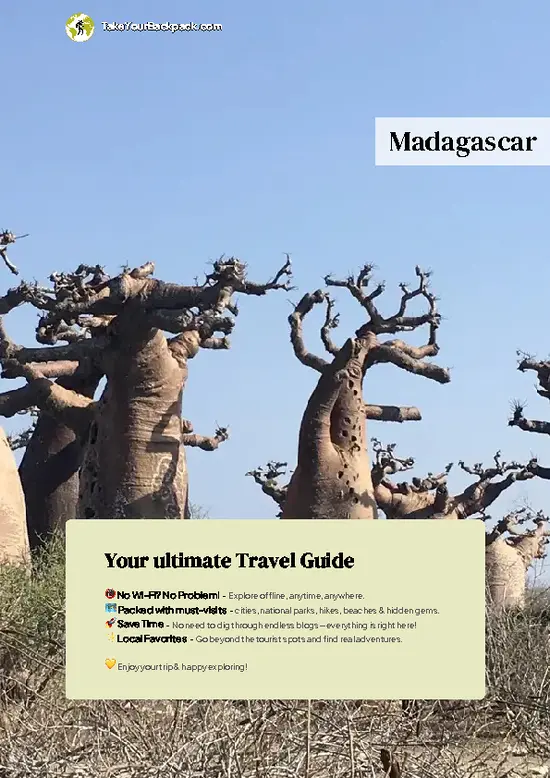
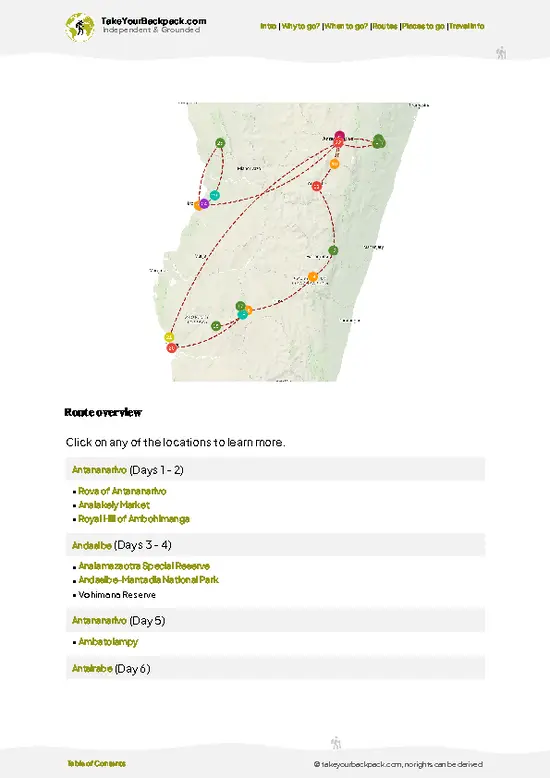
example page 0 from our offline Travel Guide for Madagascar
example page 1 from our offline Travel Guide for Madagascar
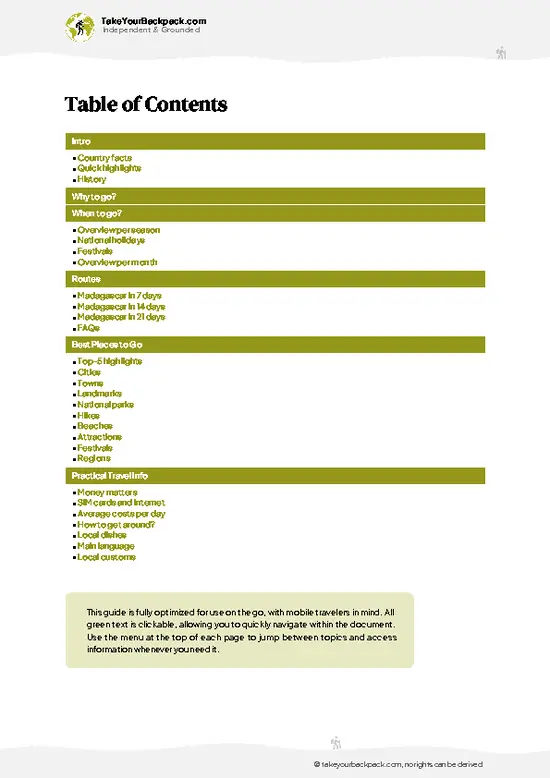
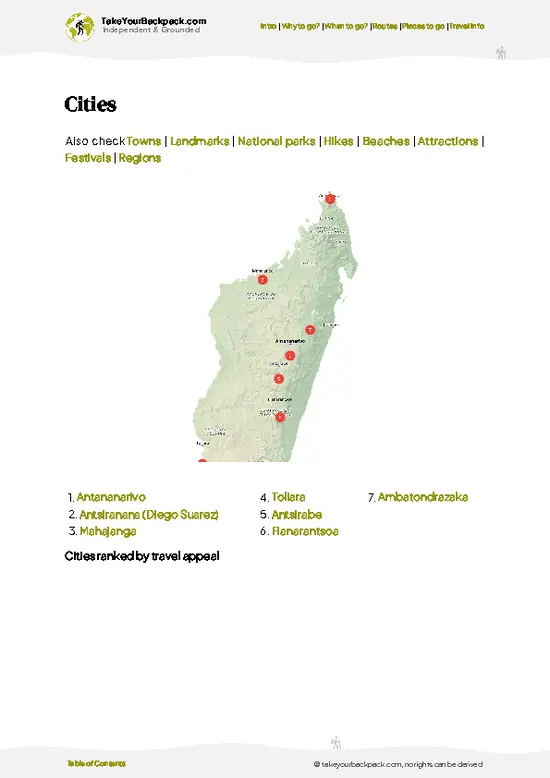
example page 2 from our offline Travel Guide for Madagascar
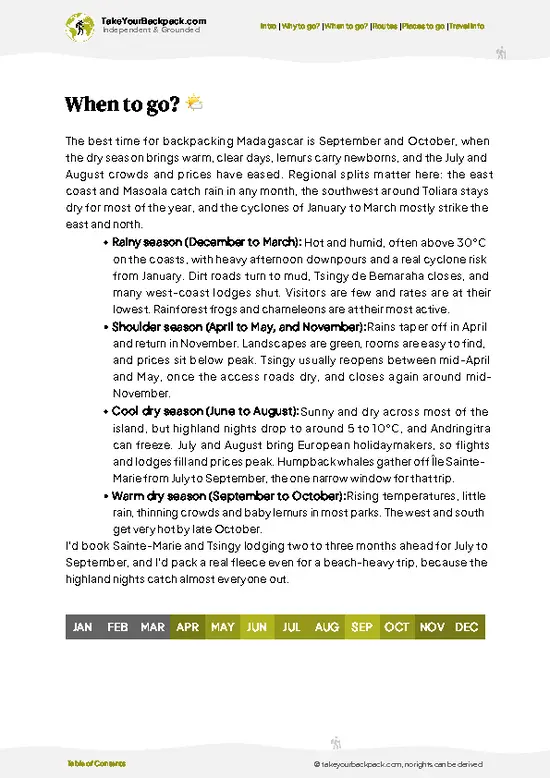
example page 3 from our offline Travel Guide for Madagascar
example page 4 from our offline Travel Guide for Madagascar
example page 5 from our offline Travel Guide for Madagascar
example page 6 from our offline Travel Guide for Madagascar
example page 7 from our offline Travel Guide for Madagascar
Loading the map 🌍
CLICK TO FILTER
cities
towns
landmarks
national parks
hikes
beaches
attractions
festivals
regions
SHOW COUNTRY’S BESTSHOW ALL

✨ Why go?
Ranked #4 national park in Madagascar
What makes this national park worth exploring

Nosy Tanikely is the easiest place in Madagascar to swim with green sea turtles in shallow, calm water, often within a few strokes of the beach. You do not need dive certification, and the reef starts where the sand ends, so a first-timer gets the same sights as a seasoned snorkeler.

The island is also small enough to cover on foot. A short climb from the beach leads to a lighthouse on the summit with a wide view over the Mitsio side of the sea and the green hills of Nosy Be. On the way up you pass baobab-style dry forest, with lemurs and fruit bats in the shade.

On a northern route it works as the natural marine highlight after the rainforest and lemur stops. It pairs well with a boat day out of Nosy Be, so it adds one clear, memorable day without a major detour.

💡 HighlightsWhat this place is best known for

  1. The house reef on the north and west sides: Most people come for this. Coral gardens start a few steps from the sand, and the water is shallow enough that you see brain coral, staghorn plates and clouds of damselfish without a deep dive. Visibility is usually best in the calm morning hours.
  2. Green sea turtles over the seagrass: Turtles graze and surface here regularly, and they ignore you if you stay a few meters back and keep your fins still. Floating beside one eating is a quiet, slow highlight.
  3. The lighthouse: A short, steep path climbs from the beach to the white tower at the island’s top. Reaching it takes ten to fifteen minutes in sandals. From the base you look over the whole reef edge, the turquoise shallows and the mainland coast of Nosy Be on the horizon.
  4. Black lemurs in the forest:
… read more 👉
  1. The house reef on the north and west sides: Most people come for this. Coral gardens start a few steps from the sand, and the water is shallow enough that you see brain coral, staghorn plates and clouds of damselfish without a deep dive. Visibility is usually best in the calm morning hours.
  2. Green sea turtles over the seagrass: Turtles graze and surface here regularly, and they ignore you if you stay a few meters back and keep your fins still. Floating beside one eating is a quiet, slow highlight.
  3. The lighthouse: A short, steep path climbs from the beach to the white tower at the island’s top. Reaching it takes ten to fifteen minutes in sandals. From the base you look over the whole reef edge, the turquoise shallows and the mainland coast of Nosy Be on the horizon.
  4. Black lemurs in the forest: Walk the interior trail behind the beach and you can spot them in the trees, usually near the path rather than deep in the woods. Binoculars help, and so does patience. A guide from the reserve will point them out quickly.
  5. Fruit bats and island birds: Look up in the canopy near the lighthouse trail, where large bats hang in clusters by day. Watching them shuffle and stretch their wings is oddly entertaining, and the wingspan is bigger than you expect.
  6. The drop-off on the reef edge: Where the shallows end, the bottom falls away into blue water. Parrotfish, angelfish, butterflyfish and the odd ray pass along the wall. Stronger swimmers get a different view here, though currents can pull, so stay near your boat or guide.
  7. The beach and its fringe of palms: Fine pale sand, shade for a picnic, and a slow stretch of time between swims. Local vendors usually sell fresh fruit and drinks, so a simple lunch is easy once you have finished snorkeling.
The lighthouse climb and the early reef swim fit together neatly in one morning, since you finish the ascent before the sun gets harsh and then cool off in the water.
Spotted a mistake or missing something? Contact us.

🌤️ When to go?When to go for the best experience

Snorkeling in Nosy Tanikely is best from May to October, when visibility often reaches 15 to 25 meters and the sea off Nosy Be is calm.
  • Cool dry season (June to August): Days reach 26 to 29°C (79 to 84°F), nights drop to about 19 to 21°C (66 to 70°F), and the sun sets near 5:30 pm. Water is a bit cool, so a shorty wetsuit helps. Humpback whales pass offshore from roughly July to September, and prices and crowds peak.
  • Hot dry months (September to November): Highs of 30 to 32°C (86 to 90°F), the clearest water of the year and fewer boats than midyear. Sea turtles are easy to spot all year.
  • Rainy season (December to April): Humid, 29 to 33°C (84 to 91°F), with afternoon downpours and a cyclone risk from January to March. Boat trips get canceled in rough seas, visibility drops after storms, and lodging
… read more 👉
Snorkeling in Nosy Tanikely is best from May to October, when visibility often reaches 15 to 25 meters and the sea off Nosy Be is calm.
  • Cool dry season (June to August): Days reach 26 to 29°C (79 to 84°F), nights drop to about 19 to 21°C (66 to 70°F), and the sun sets near 5:30 pm. Water is a bit cool, so a shorty wetsuit helps. Humpback whales pass offshore from roughly July to September, and prices and crowds peak.
  • Hot dry months (September to November): Highs of 30 to 32°C (86 to 90°F), the clearest water of the year and fewer boats than midyear. Sea turtles are easy to spot all year.
  • Rainy season (December to April): Humid, 29 to 33°C (84 to 91°F), with afternoon downpours and a cyclone risk from January to March. Boat trips get canceled in rough seas, visibility drops after storms, and lodging is cheapest.
Book a morning departure, since the wind picks up after 1 pm and the water is calmest and clearest before then.


source: climatestotravel.comJANJanuary: fair for travelingFEBFebruary: fair for travelingMARMarch: fair for travelingAPRApril: highly recommended for travelingMAYMay: highly recommended for travelingJUNJune: highly recommended for travelingJULJuly: good for travelingAUGAugust: good for travelingSEPSeptember: highly recommended for travelingOCTOctober: highly recommended for travelingNOVNovember: highly recommended for travelingDECDecember: fair for traveling
when-to-go

✈️ The backpacker research shortcutMadagascar Travel Guide

An offline-friendly backpacking guide with optimized travel routes, ranked highlights, transport advice, and the best areas to stay.
example page 0 from our offline Travel Guide for Madagascar
example page 1 from our offline Travel Guide for Madagascar
example page 2 from our offline Travel Guide for Madagascar
example page 3 from our offline Travel Guide for Madagascar
example page 4 from our offline Travel Guide for Madagascar
example page 5 from our offline Travel Guide for Madagascar
example page 6 from our offline Travel Guide for Madagascar
example page 7 from our offline Travel Guide for Madagascar
The digital guide (301 pages) contains:
✅ 96 highlights, ranked by travel appeal
✅ Optimized 7, 14 & 21-day travel routes
✅ Cities, national parks, landmarks, beaches
✅ How to get around
✅ Offline-friendly for travel without Wi-Fi
👉 Click to see all 30+ guide features

📅 Plan smarter in minutes, not weeks
✅ Month by month travel advice
✅ Festivals & national holidays
✅ Budget expectations

🗺️ Go to the right places, skip the overrated ones
✅ Honest pros & cons of destinations
✅ Top hikes, parks & viewpoints
✅ Lesser-known places most travelers miss
✅ Clear “worth it vs skip it” guidance

🛏️ Travel smoothly without rookie mistakes
✅ Best areas to stay
✅ Transport systems explained simply
✅ Common scams & safety advice
✅ SIM cards, money & practical tips

🌍 Understand the country, not just visit it
✅ Culture & traditions
✅ 52 Essential phrases & customs
✅ Festivals worth planning around
✅ Traveler-friendly historical context
✅ Insights that make places more meaningful

📱 Built for real travel conditions
✅ Fully downloadable PDF
✅ Works completely offline
✅ Optimized for phone use
✅ Useful in remote areas & buses
✅ Everything in one place
Stop searching, start planning
Get instant access to your full guide. 30‑day money-back guarantee.
+ Add another guide for just

By proceeding you agree to our terms.
Sent to your inbox immediately after payment • 100% Secure Checkout
Best Backpacking Travel Advisor 2025 tourism awardBest Backpacking
Travel Advisor
2025
What others say about Take Your Backpack Guides:
⭐⭐⭐⭐⭐
Fantastic, amazing amount of information!
⭐⭐⭐⭐⭐
My goodness this is amazing, it's what I've been looking for hats off too you!
⭐⭐⭐⭐⭐
I think this is absolutely BRILLIANT
⭐⭐⭐⭐
Very complete and informative. It's still missing places, but I gotta to commend you
⭐⭐⭐⭐⭐
This is truly amazing, thank you, can't wait to explore it with my kids!
⭐⭐⭐⭐⭐
Awesome resource, thank you!
⭐⭐⭐⭐⭐
This is amazing! Can't wait to explore the ones I haven't seen
⭐⭐⭐⭐
I love this! Well done, great idea.
⭐⭐⭐⭐⭐
Thanks for taking the time to make this gem!
⭐⭐⭐⭐⭐
This might be the best website I've ever seen.
⭐⭐⭐⭐⭐
Congratulations, and thank you so much for your work; it's incredibly valuable.
⭐⭐⭐⭐
In all seriousness I think you did a great job pointing out the important spots
⭐⭐⭐⭐⭐
10/10 very good
⭐⭐⭐⭐⭐
As someone who's only just starting to visit regularly this is awesome, thank you.
⭐⭐⭐⭐
Thank you very much! I'm going to visit my dad, it's going to be very useful!
⭐⭐⭐⭐⭐
This is really cool! We'll be travelling for the first time and this definitely come in handy.
⭐⭐⭐⭐⭐
You are now our minister of culture, congratulations 👨‍💼
⭐⭐⭐⭐⭐
Just wanted to tell you that this is a pearl! Going to follow your recommendations.
⭐⭐⭐⭐⭐
This is so cool. I'll definitely be using the resource for my travels soon.
⭐⭐⭐⭐⭐
This is very impressive! Good work.
⭐⭐⭐⭐⭐
This is an amazing and informative site. Very well done!

🛏️ Where to stay?Where staying makes the most sense

Stay in Hell-Ville or Ambatoloaka on Nosy Be, since most boats to the reserve leave from these two areas or from the nearby coast.
Ambatoloaka is the backpacker hub. It has a long beach, the island’s densest cluster of budget guesthouses and bungalows, and beachfront restaurants and bars where solo travelers get chatting easily. Boat operators and dive shops line the sand, so you can compare snorkeling trips to Nosy Tanikely in person and join a shared boat to split the cost. It gets lively at night, so the area can feel a bit rowdy, though it is generally relaxed. Walk in a group after dark and … read more 👉
Stay in Hell-Ville or Ambatoloaka on Nosy Be, since most boats to the reserve leave from these two areas or from the nearby coast.
Ambatoloaka is the backpacker hub. It has a long beach, the island’s densest cluster of budget guesthouses and bungalows, and beachfront restaurants and bars where solo travelers get chatting easily. Boat operators and dive shops line the sand, so you can compare snorkeling trips to Nosy Tanikely in person and join a shared boat to split the cost. It gets lively at night, so the area can feel a bit rowdy, though it is generally relaxed. Walk in a group after dark and avoid the unlit stretches of beach.
Andilana and Madirokely suit travelers who want a calmer, quieter beach with simple bungalows and a few cafés. Transfers to the departure points are short, and a hotel can arrange the boat for you.
Hell-Ville, the island’s main town, is the cheapest base for supplies, ATMs and the market. It has less beach atmosphere, but it is useful for a night before or after the ferry from the mainland.
If you want an early start, choose Ambatoloaka.

👛 Costs (as of 22 October 2026)Travel costs and budget guide for Nosy Tanikely

Expect to spend about US$35 to 75 a day around Nosy Tanikely, with the boat trip and reserve fee as the main costs.
CategoryBudget RangeLocal Reality
Reserve entryUS$3 to 6Paid in ariary at the island, often collected by the boatman or a park guide.
Boat tripUS$10 to 25Shared pirogue or speedboat from Nosy Be, per person. Private boats cost more but can be split among 4 to 8 people.
Snorkel gearUS$2 to 5Rental on the beach or with the boat. Bringing your own mask is cheaper and fits better.
GuideUS$3 to 8Helpful for finding turtles. Tip in cash.
Accommodation (high season)US$10 to 25Dorm or basic bungalow in Ambatoloaka or Hell-Ville. Fans are common.
FoodUS$6 to 12Grilled fish with rice at local eateries. Lunch on the island is often an extra charge.
Local transportUS$1 to 4Shared taxi-brousse or
… read more 👉
Expect to spend about US$35 to 75 a day around Nosy Tanikely, with the boat trip and reserve fee as the main costs.
CategoryBudget RangeLocal Reality
Reserve entryUS$3 to 6Paid in ariary at the island, often collected by the boatman or a park guide.
Boat tripUS$10 to 25Shared pirogue or speedboat from Nosy Be, per person. Private boats cost more but can be split among 4 to 8 people.
Snorkel gearUS$2 to 5Rental on the beach or with the boat. Bringing your own mask is cheaper and fits better.
GuideUS$3 to 8Helpful for finding turtles. Tip in cash.
Accommodation (high season)US$10 to 25Dorm or basic bungalow in Ambatoloaka or Hell-Ville. Fans are common.
FoodUS$6 to 12Grilled fish with rice at local eateries. Lunch on the island is often an extra charge.
Local transportUS$1 to 4Shared taxi-brousse or tuk-tuk between towns and the departure point.
Total Daily BudgetUS$35 to 75Costs fall if you share a boat and eat at local places.
⚠️ Prices can change and everyone travels differently, so take this as a rough guide. Hope it helps you plan your adventure!

🥾 TrailsBest hikes in Nosy Tanikely national park

Nosy Tanikely is a small volcanic island, only a few hundred meters across, that sits off the southwest coast of Nosy Be. Its name is usually translated as “little island” in Malagasy. The black rock gives away its volcanic origin, and the surrounding shallows grew into a coral reef over a long time.

A lighthouse stands at the top of the island, serving ships that pass through this northwestern channel. The island was formally protected as a marine reserve, among the first of its kind in the country, because the reef and the turtle population were drawing growing numbers of boats and spearfishing … read more 👉
Nosy Tanikely is a small volcanic island, only a few hundred meters across, that sits off the southwest coast of Nosy Be. Its name is usually translated as “little island” in Malagasy. The black rock gives away its volcanic origin, and the surrounding shallows grew into a coral reef over a long time.

A lighthouse stands at the top of the island, serving ships that pass through this northwestern channel. The island was formally protected as a marine reserve, among the first of its kind in the country, because the reef and the turtle population were drawing growing numbers of boats and spearfishing was a threat. The rules ban fishing and collecting inside the reserve, and the island is managed with local rangers who collect the entry fee.

For a visitor today, this history explains why the reef is in better shape than most around Nosy Be, and why you pay a separate fee on arrival. It also explains the few simple rules: do not touch turtles, do not stand on coral, and take your rubbish back to the boat.
⚠️ Hiking info can sometimes be outdated or inaccurate. Before you hit the trail, check the latest conditions with locals. If you do spot anything that's off, I'd love to hear from you, so I can update it for fellow travelers.

🛡️ SafetyTraveler Safety Guide

Nosy Tanikely National Park is a small, well-managed marine reserve off Nosy Be, and the main risks are sun, sea conditions and slippery rock rather than anything dramatic. The boat crossing from Nosy Be can turn choppy when the wind rises, so confirm your boatman has life jackets and keep your camera in a dry bag. Snorkeling happens in shallow bays with mild currents, but drifting is easy, so stay near the beach and watch the boat’s position. Wear a rash guard or T-shirt, since reflected sun burns backs within an hour, and use reef-safe sunscreen. The short trail up to the lighthouse has loose stones and uneven steps, so wear sandals with grip or light shoes. Sea turtles are common and calm, but keep your distance, never touch or chase them, and do not stand on coral. Lemurs near the path … read more 👉
Nosy Tanikely National Park is a small, well-managed marine reserve off Nosy Be, and the main risks are sun, sea conditions and slippery rock rather than anything dramatic. The boat crossing from Nosy Be can turn choppy when the wind rises, so confirm your boatman has life jackets and keep your camera in a dry bag. Snorkeling happens in shallow bays with mild currents, but drifting is easy, so stay near the beach and watch the boat’s position. Wear a rash guard or T-shirt, since reflected sun burns backs within an hour, and use reef-safe sunscreen. The short trail up to the lighthouse has loose stones and uneven steps, so wear sandals with grip or light shoes. Sea turtles are common and calm, but keep your distance, never touch or chase them, and do not stand on coral. Lemurs near the path may approach for food, so leave your snacks packed away. Carry drinking water, as little is sold on the island.

FAQFrequently asked questions about Nosy Tanikely

Half a day is enough. The boat ride from Nosy Be takes about 30 to 60 minutes each way depending on the departure point and boat, and most visitors spend 1.5 to 3 hours on the island itself. Many trips combine it with a stop at Nosy Komba, which turns the outing into a full day of 6 to 8 hours.
Yes, for most travelers. The fee is only about US$3 to 6, and you get coral, reef fish, and green turtles in shallow water just off the beach. The boat is the larger expense, at around US$10 to 25 per person, and visibility is best from May to October.
You need a boat from Nosy Be, since the reserve is an islet roughly 10 km from the coast. Most boats depart from Ambatoloaka, Madirokely, or Hell-Ville, and the crossing takes about 30 to 60 minutes. Book a shared trip for US$10 to 25 per person, or hire a private boat for a group. Nosy Be itself is reached by ferry from Ankify or by flight to Fascene Airport.
⚠️ Things can change over time, so always validate details locally before you go.

Other Malagasy national parks near Nosy Tanikely

Explore more nearby:


💡 Not sure where to go next?
Create a personalized itinerary for Madagascar including Nosy Tanikely and the places that fit your trip.

Generate my itinerary

👉 Discover all national parks

Or checkout all Madagascar has to offer (think cities, towns, villages, national parks, hikes, beaches, festivals)
Country photo of Madagascar

We 💚 feedbackFinal thoughts on exploring Nosy Tanikely

Treat Nosy Tanikely as the sea chapter of a northern loop, after Nosy Be’s lemur forests and ylang-ylang plantations and before heading further out to Nosy Komba. I would book the earliest boat, bring a rash guard and reef-safe sunscreen, and keep the afternoon free for the sunset in Ambatoloaka.

✈️ When did I visit Madagascar?
Madagascar I went backpacking in October 2019. With a friend I rented a 4WD and drove around the southern part of Madagascar.

✍️ Help improve this page!
The information on this page is based on my own backpacking experience in Madagascar, supplemented with up-to-date research and feedback from other travelers. Travel details can change, so if you notice anything outdated or incomplete, feel free to let me know.


🙋‍♂️ Give feedback

👋 Meet the founderWho’s Behind Take Your Backpack?

Johan, backpacker and founder of TakeYourBackpackHi, I’m Johan (Netherlands 🇳🇱), the creator of TakeYourBackpack. Over the past 3 decades, I’ve backpacked through 90+ countries across six continents, gaining extensive experience with independent travel, long-term trips, and overland routes.

This site is built on a combination of firsthand travel experience and carefully curated insights from other backpackers. Many guides are based on places I’ve personally visited, while others bring together tips, observations, and practical advice shared by trusted travelers I’ve met along the way.

The goal is to provide realistic, experience-driven guidance — not generic itineraries — so you can explore destinations with better context, clearer expectations, and more confidence.