×

Madagascar🇲🇬 | townsMananjarycanal junction, coffee trade, Betsimisaraka rituals | things to do and best time to go

Explore ManakaraExplore Ambanja

Backpacking in Mananjary
🌟 Highlighttown ranked #11
By Johan Kruseman 🇳🇱 | Updated September 4, 2026

Most travelers only realize after arriving: Mananjary’s real gift is its slow, riverine pace—a place where you can actually catch your breath before the next wild stretch of Madagascar. Tucked on the east coast, south of the Pangalanes Canal’s northern chaos, Mananjary is less a destination than a pause button. The town itself is modest: sandy streets, a sleepy market, the scent of cloves and river mud in the air. It’s not a nightlife hub or a hotspot for hostels, but it’s a practical launchpad for the canal or a gentle stopover between busier towns like Manakara or Nosy Varika. You’ll find cheap eats, a handful of basic guesthouses, and a vibe that’s more fisherman’s dawn than backpacker’s party. Transport is slow—bush taxis, riverboats, and your own two feet—but that’s the point. Compared to the bustle of Manakara, Mananjary feels like a place to exhale, not to chase. Safety is average for Madagascar: keep your wits, but don’t expect trouble.

Discover everything you want to know in the 📖 Madagascar Travel Guide.
Loading the map 🌍
CLICK TO FILTER
cities
towns
villages
landmarks
national parks
hikes
beaches
attractions
festivals
regions
SHOW COUNTRY’S BESTSHOW ALL

✨ Why go?
Ranked #11 town in Madagascar
Why visitors keep coming back

Mananjary is a gateway for backpackers seeking a blend of culture and nature. Its walkable streets invite exploration, where the scent of street food mingles with the salty air from nearby beaches. This town is a convenient base for hikes in the lush surrounding hills, making it ideal for slow travelers and hikers. You’ll find small-scale guesthouses that foster a friendly atmosphere, encouraging connections among solo travelers and small groups. Most visitors stay a few days, soaking in the local vibe and savoring fresh seafood dishes. While nightlife isn’t a highlight, the social scene thrives in communal spaces, perfect for sharing stories after a day of adventure. Mananjary offers a meaningful pause on your journey, balancing relaxation with the thrill of discovery.
Want to include Mananjary in your Madagascar route?
Create a personalized Madagascar itinerary that includes Mananjary and the places that fit your trip — based on your travel style, budget, and available time. Get your route in seconds.

Generate my trip

💡 HighlightsWhat this place is best known for

  • The wooden jetty (la jetée) — The town’s iconic pier where pirogues, fish buyers and kids diving collide; best at dawn for the landing and at sunset for the slow-moving coastal life.
  • Marché municipal (the central market) — A chaotic, colorful market selling vanilla, cloves, seafood and produce; great for people-watching, bargaining and getting a real sense of the local economy.
  • Fish landing and early-morning auction — Walk the quay before breakfast to see fishermen unload, sort and sell their catch; visceral, noisy, and a real taste of coastal rhythms (bring small change and a camera).
  • Mananjary river estuary and mangrove fringe — Take a short boat trip into the estuary to see birds, mangroves and the meeting point of river and sea; locally guided trips are cheap and reveal fishing practices
read more 👉
  • The wooden jetty (la jetée) — The town’s iconic pier where pirogues, fish buyers and kids diving collide; best at dawn for the landing and at sunset for the slow-moving coastal life.
  • Marché municipal (the central market) — A chaotic, colorful market selling vanilla, cloves, seafood and produce; great for people-watching, bargaining and getting a real sense of the local economy.
  • Fish landing and early-morning auction — Walk the quay before breakfast to see fishermen unload, sort and sell their catch; visceral, noisy, and a real taste of coastal rhythms (bring small change and a camera).
  • Mananjary river estuary and mangrove fringe — Take a short boat trip into the estuary to see birds, mangroves and the meeting point of river and sea; locally guided trips are cheap and reveal fishing practices and crab traps.
  • Antemoro paper and craft workshops — Small local artisans make Antemoro-style paper and other crafts in town; visiting shows traditional techniques and is a good place to buy authentic souvenirs that support local makers.
  • Colonial waterfront buildings and administrative quarter — A stroll along the front de mer reveals weathered colonial architecture, old warehouses and the storytelling patina of a working port — great for photography and imagining the town’s trading past.
  • The town cathedral / main church — The central Catholic church (visible from the waterfront) is both an architectural anchor and a community hub; services and the adjacent squares give a window into local religious life.
  • Spice-trade stalls and packaging warehouses — Small-scale spice traders and storage sheds around the port show how vanilla and cloves move from farms to market; you can often meet traders and learn about seasonal pricing.
  • Main town beach — The compact urban beach is a local hangout: swimming, sunning, kids playing and fishermen mending nets. Not a postcard tropical beach, but honest and lively.
  • Women’s craft cooperatives and small artisan stalls — Scattered around the market and streets are cooperatives where women weave raffia, stitch and sell goods; visits are low-cost, socially meaningful and let you buy direct from makers.
A few real day-trip options outside Mananjary: Nosy Varika and the nearby coastal villages/islets, guided visits to vanilla and clove plantations in the surrounding countryside, and longer estuary/mangrove boat trips to small offshore islets — my personal favorite for a day trip is visiting a vanilla plantation to meet growers and smell the processing, it’s oddly addictive and tells you more about the region than any brochure.
Spotted a mistake or missing something? Contact us.

🏘️ NeighborhoodsNeighborhood guide to Mananjary

Mananjary is a vibrant coastal town that offers a unique blend of culture and adventure, perfect for backpackers looking to dive deep into Madagascar’s charm.

Centre Ville: This is the heartbeat of Mananjary. You’ll find bustling markets, local eateries, and a lively atmosphere. It’s walkable, making it easy to explore on foot. Prices are reasonable, and you can soak in the local vibe. Perfect for short stays, but the nightlife is low-key—ideal if you prefer a quiet evening after a day of exploring.

Plage de Mananjary: If you’re after beach vibes, this area is your go-to. The scent of saltwater fills the air, and the sound of waves is your backdrop. Accommodation here can be pricier, but the views are worth it. It’s a bit quieter, making it suitable for longer stays where you can unwind … read more 👉
Mananjary is a vibrant coastal town that offers a unique blend of culture and adventure, perfect for backpackers looking to dive deep into Madagascar’s charm.

Centre Ville: This is the heartbeat of Mananjary. You’ll find bustling markets, local eateries, and a lively atmosphere. It’s walkable, making it easy to explore on foot. Prices are reasonable, and you can soak in the local vibe. Perfect for short stays, but the nightlife is low-key—ideal if you prefer a quiet evening after a day of exploring.

Plage de Mananjary: If you’re after beach vibes, this area is your go-to. The scent of saltwater fills the air, and the sound of waves is your backdrop. Accommodation here can be pricier, but the views are worth it. It’s a bit quieter, making it suitable for longer stays where you can unwind and enjoy the scenery.

Ambanivohitra: This neighborhood offers a more local experience. It’s less touristy, with a genuine Malagasy feel. Walkability is decent, but be prepared for some uneven paths. Costs are lower, making it great for budget travelers. It’s quieter, perfect for those who want to immerse themselves in the local culture without the distractions of nightlife.

⌛️ 1 dayA smart one-day plan

Mananjary, a coastal town in Madagascar, is a tapestry of vibrant culture and rich history, where the Indian Ocean meets the lush landscapes of the countryside. The air is thick with the scent of salt and spices, and the rhythm of daily life unfolds at a leisurely pace.

Start your morning at the local market, where the colors of fresh produce and handmade crafts pop against the backdrop of bustling vendors. The chatter of locals fills the air, and you can sip on a sweet, spiced tea while nibbling on a flaky, buttery pastry. This is where you’ll feel the heartbeat of Mananjary.

In the afternoon, take a stroll along the beach. The soft sand beneath your feet and the sound of waves crashing create a serene atmosphere. Head to the nearby village of Vohipeno, just a short ride away. It’s not … read more 👉
Mananjary, a coastal town in Madagascar, is a tapestry of vibrant culture and rich history, where the Indian Ocean meets the lush landscapes of the countryside. The air is thick with the scent of salt and spices, and the rhythm of daily life unfolds at a leisurely pace.

Start your morning at the local market, where the colors of fresh produce and handmade crafts pop against the backdrop of bustling vendors. The chatter of locals fills the air, and you can sip on a sweet, spiced tea while nibbling on a flaky, buttery pastry. This is where you’ll feel the heartbeat of Mananjary.

In the afternoon, take a stroll along the beach. The soft sand beneath your feet and the sound of waves crashing create a serene atmosphere. Head to the nearby village of Vohipeno, just a short ride away. It’s not on the typical tourist trail, but the warm smiles of the locals and the chance to see traditional fishing methods make it worthwhile.

As the sun begins to set, return to Mananjary and find a spot at a local eatery. Enjoy a plate of zebu steak, marinated and grilled to perfection, while watching the sky turn shades of orange and pink. The day wraps up with the gentle hum of conversation around you, a perfect end to a day well spent in this charming town.
Turn your Mananjary visit into an Madagascar adventure
Build a complete Madagascar route with Mananjary, hidden gems, must-see destinations, and realistic travel times included.

Generate my trip

🌤️ When to go?Seasonal considerations and timing


  • Weather: The dry season from May to October is your best bet. Expect less humidity and rain, making trails less slippery and the air clearer for those ocean views. The wet season, November to April, brings heavy rains and cyclones, turning paths into mud baths.

  • Temperature: Daytime temps hover around 24-28°C (75-82°F) in the dry months, perfect for hiking without overheating. The wet season can feel hotter and stickier, pushing 30°C (86°F) or more, which drains energy fast.

  • Daylight Hours: Roughly 11-12 hours year-round, but the dry season offers more consistent, bright mornings that get you moving early before the afternoon heat peaks.

  • Crowds: Mananjary isn’t a tourist hotspot, so crowds are minimal year-round. Still, the dry season sees a slight uptick from adventurous travelers,
read more 👉

  • Weather: The dry season from May to October is your best bet. Expect less humidity and rain, making trails less slippery and the air clearer for those ocean views. The wet season, November to April, brings heavy rains and cyclones, turning paths into mud baths.

  • Temperature: Daytime temps hover around 24-28°C (75-82°F) in the dry months, perfect for hiking without overheating. The wet season can feel hotter and stickier, pushing 30°C (86°F) or more, which drains energy fast.

  • Daylight Hours: Roughly 11-12 hours year-round, but the dry season offers more consistent, bright mornings that get you moving early before the afternoon heat peaks.

  • Crowds: Mananjary isn’t a tourist hotspot, so crowds are minimal year-round. Still, the dry season sees a slight uptick from adventurous travelers, so you’ll find more lively local markets and open guesthouses.

  • Seasonal Activities: Dry months are prime for river excursions and coastal hikes. The wet season limits outdoor options but brings lush greenery and fewer travelers, which might appeal if you want solitude.

  • Price Fluctuations: Expect slightly higher prices on accommodation and transport during the dry season due to demand. The wet season offers bargains but at the cost of comfort and accessibility.


Pro-tip: Aim for late May or early October—when the weather is stable, prices are reasonable, and the landscape is waking up or winding down, giving you the best balance of comfort and authenticity.


source: climatestotravel.comJANJanuary: below average for travelingFEBFebruary: below average for travelingMARMarch: below average for travelingAPRApril: fair for travelingMAYMay: highly recommended for travelingJUNJune: excellent for travelingJULJuly: excellent for travelingAUGAugust: excellent for travelingSEPSeptember: excellent for travelingOCTOctober: highly recommended for travelingNOVNovember: fair for travelingDECDecember: below average for traveling
when-to-go

✈️ The backpacker research shortcutMadagascar Travel Guide

An offline-friendly backpacking guide with optimized travel routes, ranked highlights, transport advice, and the best areas to stay.
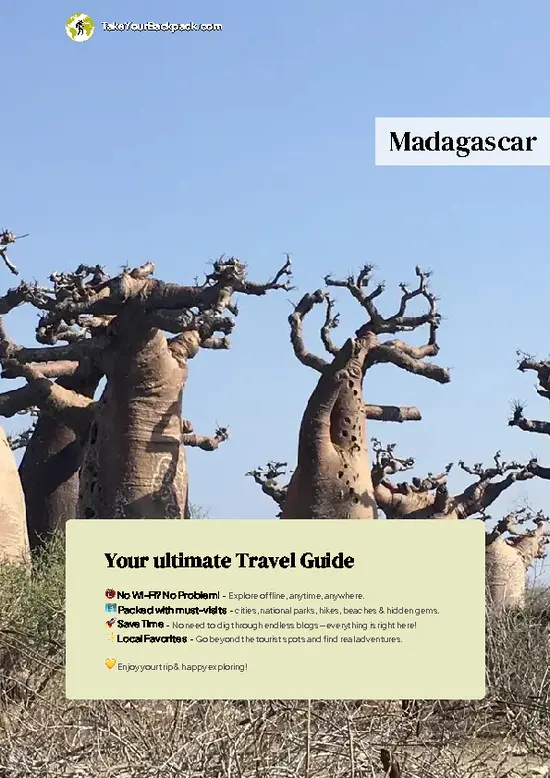
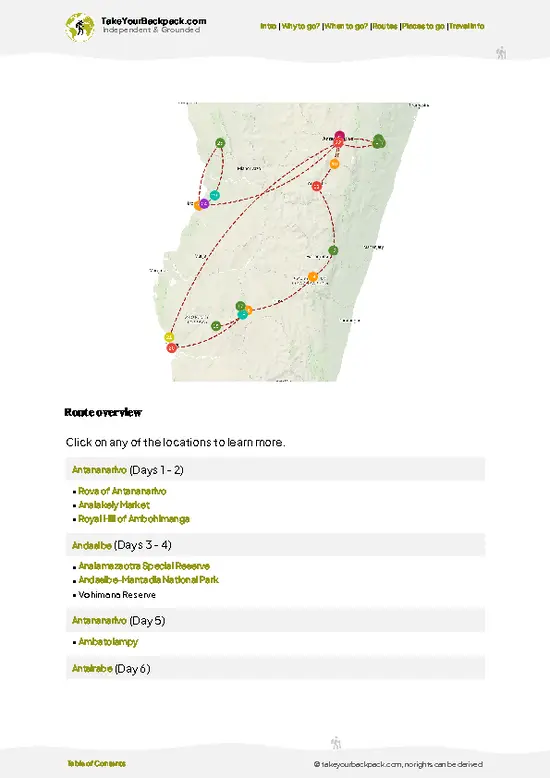
example page 0 from our offline Travel Guide for Madagascar
example page 1 from our offline Travel Guide for Madagascar
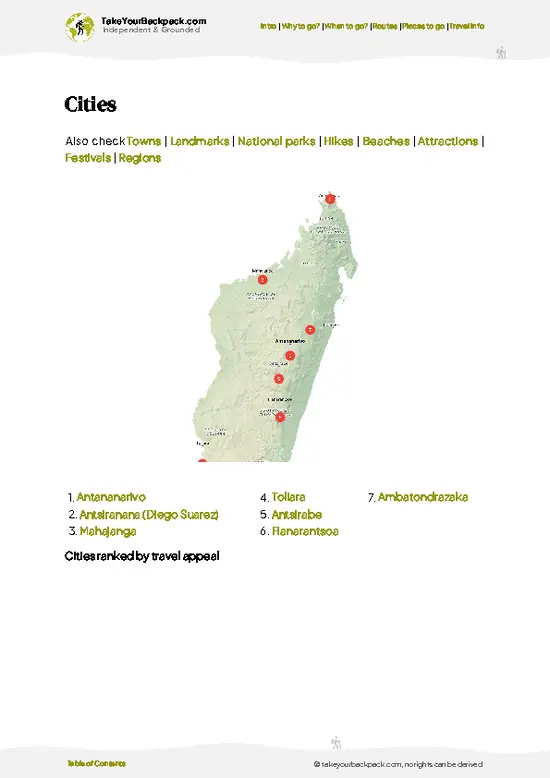
example page 2 from our offline Travel Guide for Madagascar
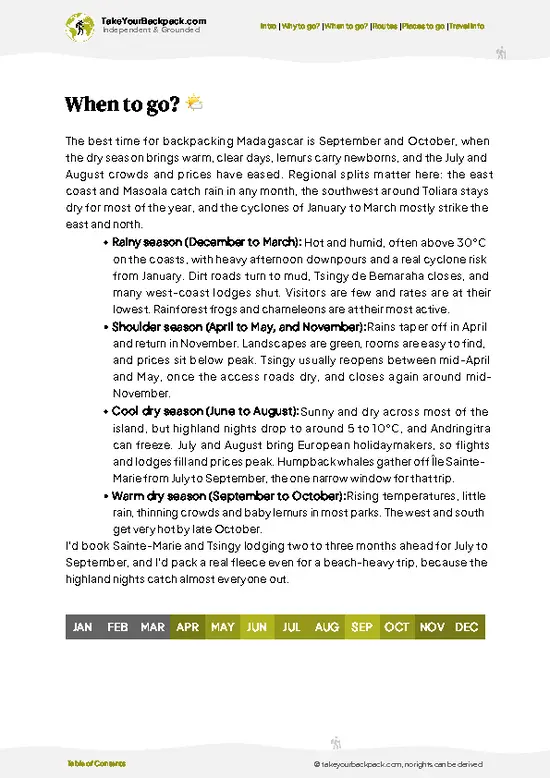
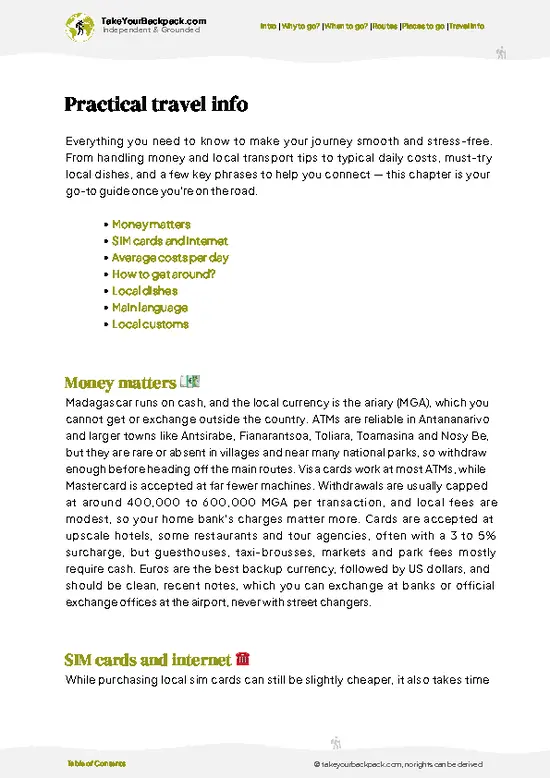
example page 3 from our offline Travel Guide for Madagascar
example page 4 from our offline Travel Guide for Madagascar
example page 5 from our offline Travel Guide for Madagascar
example page 6 from our offline Travel Guide for Madagascar
example page 7 from our offline Travel Guide for Madagascar
The digital guide (418 pages) contains:
110 highlights, ranked by travel appeal
Optimized 7, 14 & 21-day travel routes
Cities, national parks, landmarks, beaches
How to get around
Offline-friendly for travel without Wi-Fi
👉 Click to see all 30+ guide features

📅 Plan smarter in minutes, not weeks
Month by month travel advice
Festivals & national holidays
Budget expectations

🗺️ Go to the right places, skip the overrated ones
Honest pros & cons of destinations
Top hikes, parks & viewpoints
Lesser-known places most travelers miss
Clear “worth it vs skip it” guidance

🛏️ Travel smoothly without rookie mistakes
Best areas to stay
Transport systems explained simply
Common scams & safety advice
SIM cards, money & practical tips

🌍 Understand the country, not just visit it
Culture & traditions
52 Essential phrases & customs
Festivals worth planning around
Traveler-friendly historical context
Insights that make places more meaningful

📱 Built for real travel conditions
Fully downloadable PDF
Works completely offline
Optimized for phone use
Useful in remote areas & buses
Everything in one place
Save weeks of stressful planning
Get instant access to your full guide. 30‑day money-back guarantee.
+ Add another guide for just US$7.80

By proceeding you agree to our terms.
Sent to your inbox immediately after payment • 100% Secure Checkout
Best Backpacking Travel Advisor 2025 tourism awardBest Backpacking
Travel Advisor
2025
What others say about Take Your Backpack Guides:
⭐⭐⭐⭐⭐
Fantastic, amazing amount of information!
⭐⭐⭐⭐⭐
My goodness this is amazing, it's what I've been looking for hats off too you!
⭐⭐⭐⭐⭐
I think this is absolutely BRILLIANT
⭐⭐⭐⭐
Very complete and informative. It's still missing places, but I gotta to commend you
⭐⭐⭐⭐⭐
This is truly amazing, thank you, can't wait to explore it with my kids!
⭐⭐⭐⭐⭐
Awesome resource, thank you!
⭐⭐⭐⭐⭐
This is amazing! Can't wait to explore the ones I haven't seen
⭐⭐⭐⭐
I love this! Well done, great idea.
⭐⭐⭐⭐⭐
Thanks for taking the time to make this gem!
⭐⭐⭐⭐⭐
This might be the best website I've ever seen.
⭐⭐⭐⭐⭐
Congratulations, and thank you so much for your work; it's incredibly valuable.
⭐⭐⭐⭐
In all seriousness I think you did a great job pointing out the important spots
⭐⭐⭐⭐⭐
10/10 very good
⭐⭐⭐⭐⭐
As someone who's only just starting to visit regularly this is awesome, thank you.
⭐⭐⭐⭐
Thank you very much! I'm going to visit my dad, it's going to be very useful!
⭐⭐⭐⭐⭐
This is really cool! We'll be travelling for the first time and this definitely come in handy.
⭐⭐⭐⭐⭐
You are now our minister of culture, congratulations 👨‍💼
⭐⭐⭐⭐⭐
Just wanted to tell you that this is a pearl! Going to follow your recommendations.
⭐⭐⭐⭐⭐
This is so cool. I'll definitely be using the resource for my travels soon.
⭐⭐⭐⭐⭐
This is very impressive! Good work.
⭐⭐⭐⭐⭐
This is an amazing and informative site. Very well done!

🛏️ Where to stay?Best areas and accommodation options

In Mananjary, the best spot for backpackers is the area around the town center, close to the port and main market. This neighborhood hums with local life—the salty tang of the sea mixes with the earthy scent of fresh produce, and the streets pulse with vendors and fishermen. It’s safe enough to wander after dark, thanks to the steady flow of locals and travelers alike. You’ll find a handful of budget guesthouses and simple hostels here, perfect for meeting other backpackers without the isolation of more residential zones. Compared to the quieter, more spread-out outskirts, staying near the center … read more 👉
In Mananjary, the best spot for backpackers is the area around the town center, close to the port and main market. This neighborhood hums with local life—the salty tang of the sea mixes with the earthy scent of fresh produce, and the streets pulse with vendors and fishermen. It’s safe enough to wander after dark, thanks to the steady flow of locals and travelers alike. You’ll find a handful of budget guesthouses and simple hostels here, perfect for meeting other backpackers without the isolation of more residential zones. Compared to the quieter, more spread-out outskirts, staying near the center means you’re plugged into the town’s rhythm—easy access to food stalls, transport, and the ferry terminal. It’s social without being overwhelming, a practical base where the real Mananjary buzz unfolds.

🚌 Getting aroundMoving around without the hassle

Mananjary doesn’t rush you. The town moves with the tide of the river and the slow churn of daily life, where schedules are more a suggestion than a rule. You’ll notice the scent of salt and earth mingling in the air, the chatter of locals bargaining at the market, and the occasional honk of a taxi-brousse weaving through narrow streets. Here, timing is flexible, and your best bet is to blend into the rhythm rather than fight it. That means patience and a readiness to adapt—because the real flow of Mananjary is in its unpredictability, and that’s where the charm lies.


  • Walking: The most reliable way to get around, especially downtown. Streets are compact and full of life, so walking lets you soak in the smells of spices and hear the calls of vendors. No cost, naturally, and you’ll avoid
read more 👉
Mananjary doesn’t rush you. The town moves with the tide of the river and the slow churn of daily life, where schedules are more a suggestion than a rule. You’ll notice the scent of salt and earth mingling in the air, the chatter of locals bargaining at the market, and the occasional honk of a taxi-brousse weaving through narrow streets. Here, timing is flexible, and your best bet is to blend into the rhythm rather than fight it. That means patience and a readiness to adapt—because the real flow of Mananjary is in its unpredictability, and that’s where the charm lies.


  • Walking: The most reliable way to get around, especially downtown. Streets are compact and full of life, so walking lets you soak in the smells of spices and hear the calls of vendors. No cost, naturally, and you’ll avoid the unpredictability of local transport schedules.

  • Taxi-Brousse: The backbone of regional travel. These shared minibuses leave when full, not on a strict timetable, so expect waits but also cheap fares (around 2,000-4,000 MGA for short hops). They’re slow and packed but offer a raw slice of local life.

  • Rickshaws (Pousse-Pousse): Perfect for short trips within town. They’re cheap (usually under 1,000 MGA) and nimble enough to dart through tight spots, but negotiate the price upfront to avoid surprises. They run all day but slow down after sunset.

  • Boat Taxi: For crossing the Mananjary River or reaching nearby coastal spots, small boats operate on demand. Prices vary but expect to pay a bit more than land transport. The ride is scenic, with the smell of brine and the splash of waves—worth it if you want a break from the dust and heat.

👛 Costs (as of 4 September 2026)Travel costs and budget guide for Mananjary

Backpacking in Mananjary, Madagascar, means embracing a slow rhythm where every dollar stretches into a genuine local experience. Here’s how your daily costs typically break down:
  • Dorm Accommodation: Expect to pay around €5 to €10 per night for a basic dorm bed. The options are modest—think simple mosquito nets, a fan if you’re lucky, and a shared bathroom that’s more functional than fancy. It’s enough to rest after a day in the humid coastal air.
  • Meals: Local eateries serve up hearty Malagasy dishes for about €2 to €4 per meal. Rice with zebu or fresh seafood, flavored with local spices, fills you up without emptying your wallet. Street food snacks like samosas or fried bananas hover around €0.50 to €1, perfect for quick bites between adventures.
  • Local Transport: Getting around town usually
read more 👉
Backpacking in Mananjary, Madagascar, means embracing a slow rhythm where every dollar stretches into a genuine local experience. Here’s how your daily costs typically break down:
  • Dorm Accommodation: Expect to pay around €5 to €10 per night for a basic dorm bed. The options are modest—think simple mosquito nets, a fan if you’re lucky, and a shared bathroom that’s more functional than fancy. It’s enough to rest after a day in the humid coastal air.
  • Meals: Local eateries serve up hearty Malagasy dishes for about €2 to €4 per meal. Rice with zebu or fresh seafood, flavored with local spices, fills you up without emptying your wallet. Street food snacks like samosas or fried bananas hover around €0.50 to €1, perfect for quick bites between adventures.
  • Local Transport: Getting around town usually involves tuk-tuks or pousse-pousse (rickshaws), costing roughly €0.50 to €1 per short ride. For longer trips, shared taxis might run €2 to €5 depending on distance. The roads are bumpy, so factor in a bit of extra time and patience.
  • Basic Activities/Entry Fees: Mananjary’s charm is mostly in its natural surroundings and local markets, which are free or cost just a couple of euros to explore. If you want to visit nearby reserves or beaches, entry fees typically range from €1 to €3. Guided tours are rare and usually arranged locally, so prices vary.
  • Miscellaneous Expenses: Bottled water, snacks, and small essentials add up to about €1 to €2 daily. Internet cafes or SIM cards for data are affordable, around €1 to €3, but expect slow speeds and occasional outages.

All told, you’re looking at a daily budget between €10 and €20 to cover the essentials without cutting corners. Mananjary isn’t about luxury; it’s about soaking in the coastal vibe, the scent of the sea mingling with spices, and the slow pulse of daily life. Keep your expectations grounded, and you’ll find the simplicity here is part of the charm.


source: madagascar-tourisme.com
⚠️ Prices can change and everyone travels differently, so take this as a rough guide. Hope it helps you plan your adventure!

🚌 Day tripsBest day trips from Mananjary

Mananjary is a fantastic base for exploring Madagascar’s rich landscapes and vibrant culture. With its laid-back vibe and local charm, you can easily dive into some unforgettable day trips.

Trip to the Pangalanes Canal
Just a short boat ride from Mananjary, the Pangalanes Canal is a winding waterway that showcases the lush greenery of Madagascar. You’ll glide past traditional villages, where the scent of wood smoke mingles with the earthy aroma of the surrounding jungle. The trip takes about two hours each way, and you can expect to spend around $10 for the boat ride. Bring a camera; the golden light filtering through the trees is magical. Many first-timers miss the chance to chat with locals along the way—don’t skip this. It’s a window into daily life here.


Visit to the Andringitra read more 👉
Mananjary is a fantastic base for exploring Madagascar’s rich landscapes and vibrant culture. With its laid-back vibe and local charm, you can easily dive into some unforgettable day trips.

Trip to the Pangalanes Canal
Just a short boat ride from Mananjary, the Pangalanes Canal is a winding waterway that showcases the lush greenery of Madagascar. You’ll glide past traditional villages, where the scent of wood smoke mingles with the earthy aroma of the surrounding jungle. The trip takes about two hours each way, and you can expect to spend around $10 for the boat ride. Bring a camera; the golden light filtering through the trees is magical. Many first-timers miss the chance to chat with locals along the way—don’t skip this. It’s a window into daily life here.


Visit to the Andringitra National Park
A bit more ambitious, Andringitra National Park is about a three-hour drive from Mananjary. This park is a hiker’s paradise, featuring dramatic granite peaks and diverse wildlife. Expect to pay around $15 for park entry and transportation. The best time to go is during the dry season, from May to October, when trails are more accessible. A common mistake is underestimating the weather; pack layers, as temperatures can shift quickly. The views from the summit are worth every step.


Exploration of the Local Markets
Staying close to home, the local markets in Mananjary are a sensory overload. Spend a morning wandering through stalls bursting with vibrant fruits, spices, and handmade crafts. It’s a short walk from the town center, and you can easily spend a couple of hours here. Budget around $5 for snacks and souvenirs. The best time to visit is early morning when the market is bustling with energy. Many travelers overlook the chance to interact with vendors—take a moment to learn about their crafts.
Want to know what more Madagascar offers?
The Madagascar Travel Guide describes 110 highlights, from cities to national parks, from beaches to hikes

Get the Travel Guide -

🛡️ SafetyTraveler Safety Guide

Mananjary is generally safe, but a few practical tips can enhance your experience. Stay aware in crowded markets, where pickpockets might lurk. Keep your valuables close and avoid flashy displays of wealth.

If you’re traveling solo, especially at night, stick to well-lit areas and consider joining a local group for evening strolls. The atmosphere is warm, but a little caution goes a long way.

Scams are rare, but be mindful of overly eager vendors. A friendly smile can quickly turn into a hard sell. Politely decline and keep moving.

Overall, embrace the local vibe, but carry yourself with a blend of confidence and awareness. It’s all part of the adventure.

FAQCommon questions from travelers

Mananjary is worth visiting for its authentic coastal atmosphere and access to nearby natural attractions like the Mananjary River and surrounding rainforests. It offers a quieter, less touristy experience compared to bigger cities. Many travelers use it as a stopover on the way to the Masoala Peninsula or other eastern Madagascar destinations.
Two to three days are sufficient to explore Mananjary and its immediate surroundings. This allows time to visit the local market, enjoy the beach, and take a day trip to nearby natural sites such as the Mananjary River or nearby villages.
No, Mananjary is not practical as a day trip from nearby cities due to limited transport options and travel times. The closest larger city, Fianarantsoa, is about 200 km away and requires a full day of travel each way, making overnight stays necessary.
⚠️ Things can change over time, so always validate details locally before you go.

Other Malagasy towns near Mananjary

Explore more nearby:

  • Manakara—canal port, colonial grid, FCE railway terminus| 108 km away
  • Vohipeno—Antemoro culture, riverbank setting, traditional crafts| 136 km away
  • Ambalavao—granite outcrops, zebu markets, Antemoro paper workshops| 161 km away

💡 Not sure where to go next?
Create a personalized itinerary for Madagascar including Mananjary and the places that fit your trip.

Generate my itinerary

👉 Discover all towns

Or checkout all Madagascar has to offer (think cities, towns, villages, national parks, hikes, beaches, festivals)
Country photo of Madagascar

We 💚 feedbackWhat to keep in mind

Mananjary’s charm lies in its vibrant local markets, where the air is thick with the scent of spices and fresh fruit. You’ll get a taste of authentic Malagasy life that’s hard to find elsewhere. Just be ready for the heat and humidity; it can be relentless. Embrace it, and you’ll find the experience rewarding in ways you didn’t expect.

✈️ When did I visit Madagascar?
Madagascar I went backpacking in October 2019. With a friend I rented a 4WD and drove around the southern part of Madagascar.

✍️ Help improve this page!
The information on this page is based on my own backpacking experience in Madagascar, supplemented with up-to-date research and feedback from other travelers. Travel details can change, so if you notice anything outdated or incomplete, feel free to let me know.


🙋‍♂️ Give feedback

👋 Meet the founderWho’s Behind Take Your Backpack?

Johan, backpacker and founder of TakeYourBackpackHi, I’m Johan (Netherlands 🇳🇱), the creator of TakeYourBackpack. Over the past decade, I’ve backpacked through 80+ countries across six continents, gaining extensive experience with independent travel, long-term trips, and overland routes.

This site is built on a combination of firsthand travel experience and carefully curated insights from other backpackers. Many guides are based on places I’ve personally visited, while others bring together tips, observations, and practical advice shared by trusted travelers I’ve met along the way.

The goal is to provide realistic, experience-driven guidance — not generic itineraries — so you can explore destinations with better context, clearer expectations, and more confidence.

Get full Madagascar guide •
Instant download • 110 highlights • Full Offline guide