×

Madagascar🇲🇬 | townsAmbanjacacao estates, Comorian influence, Sambirano Valley | things to do and best time to go

Explore MananjaryExplore Ambatolampy

Backpacking in Ambanja
🌟 Highlighttown ranked #9
By Johan Kruseman 🇳🇱 | Updated September 4, 2026

A decade ago, Ambanja was the kind of place where the scent of cacao hung thick in the air and the only travelers were bush-dusted cyclists or Peace Corps volunteers. Today, you’ll find more tuk-tuks than bicycles, but the town still feels like a pause button in northwest Madagascar, a humid crossroads between the wilds of Nosy Be and the mainland’s green interior. Ambanja isn’t a destination for urban thrills—its charm is in the slow rhythm of market mornings, the muddy glow of sunset over the Sambirano River, and the easy access to vanilla plantations and forest hikes. It’s practical: buses and bush taxis connect you to bigger towns, but you’ll need a zebu cart or a sturdy pair of sandals for local wandering. Nights are quiet, hostels are sparse, and you’ll meet more cocoa farmers than backpackers, but that’s half the appeal. Compared to the bustle of Ambilobe or the tourist gloss of Nosy Be, Ambanja is more relaxed, more real, and—if you’re after a taste of everyday Madagascar—absolutely worth the detour. Costs are low, safety is reasonable if you keep your wits, and the biggest risk is missing the last taxi-brousse out.

Discover everything you want to know in the 📖 Madagascar Travel Guide.
Loading the map 🌍
CLICK TO FILTER
cities
towns
villages
landmarks
national parks
hikes
beaches
attractions
festivals
regions
SHOW COUNTRY’S BESTSHOW ALL

✨ Why go?
Ranked #9 town in Madagascar
Why visitors keep coming back

Ambanja serves as a gateway for backpackers seeking the essence of Madagascar. Its walkable streets invite exploration, making it easy to pop into local markets for fresh street food that bursts with flavor. The town is a convenient base for hikes in nearby national parks, where the scent of lush vegetation fills the air. Travelers often linger here for a few days, soaking in the friendly atmosphere and connecting with fellow adventurers in small-scale guesthouses. This is a haven for slow travelers and solo explorers who appreciate a laid-back vibe over bustling nightlife. While it’s not a party hub, the camaraderie among backpackers makes it a perfect stop to recharge before heading to the stunning beaches or cultural sites nearby.
Want to include Ambanja in your Madagascar route?
Create a personalized Madagascar itinerary that includes Ambanja and the places that fit your trip — based on your travel style, budget, and available time. Get your route in seconds.

Generate my trip

💡 HighlightsThe experiences that define the visit

  • Grand Marché d’Ambanja (the main market) — The beating heart of town: stalls piled with Sambirano cocoa nibs, fresh vanilla beans, spices, fruit and cheap street food. Great for photographing colors, haggling, and getting a real slice of daily life.
  • Sambirano River quay (embarcadère) — Where pirogues and small barges load cocoa and produce. A short walk along the river gives you people-watching, boat traffic, and easy access to short river rides or a look at local transport logistics.
  • Cocoa-drying yards and cooperatives — Walkable from town are the drying racks and small cooperative yards where farmers dry and sort Sambirano cocoa. Seeing the process up close is a perfect hands-on way to understand why this area is famous for chocolate beans.
  • Fishing harbour and fish market — Ambanja’s
read more 👉
  • Grand Marché d’Ambanja (the main market) — The beating heart of town: stalls piled with Sambirano cocoa nibs, fresh vanilla beans, spices, fruit and cheap street food. Great for photographing colors, haggling, and getting a real slice of daily life.
  • Sambirano River quay (embarcadère) — Where pirogues and small barges load cocoa and produce. A short walk along the river gives you people-watching, boat traffic, and easy access to short river rides or a look at local transport logistics.
  • Cocoa-drying yards and cooperatives — Walkable from town are the drying racks and small cooperative yards where farmers dry and sort Sambirano cocoa. Seeing the process up close is a perfect hands-on way to understand why this area is famous for chocolate beans.
  • Fishing harbour and fish market — Ambanja’s riverside fish landing is loud, smelly and oddly charming. Early morning is best: watch the catches come in, bargain with fishmongers or grab a plate of grilled fish for cheap.
  • Town Hall / old colonial quarter — The small square around the mairie has a handful of colonial-era buildings and shady spots where you can slow down, read the local notices, and get a feel for Ambanja’s historical footprint (and take a break from the market bustle).
  • Église paroissiale (the town’s main Catholic church) — A community hub more than a tourist shrine: attend a service or simply admire the local religious life, the churchyard gatherings and the weekday markets that form around it.
  • Gare routière (bush-taxi station) — Chaotic, essential and very visitable: the bus/taxi hub shows the region’s transport culture, is where you’ll arrange onward trips, and is a great place to overhear travel tips from locals and drivers.
  • Local artisan workshops and woodcarvers — Small, informal workshops tucked into side streets produce carved bowls, raffia goods and simple souvenirs. You can watch techniques, buy directly from makers, and support local craft economies.
  • Spice and vanilla stalls (near the market) — Separate from the bustle of the main market, these specialized stalls let you smell and compare real Sambirano vanilla, cloves and pepper. Great for buying genuine spices to take home—smaller quantities, better prices than tourist shops.
  • Municipal park / green square — A modest shaded park where locals gather in the afternoon; useful for resting, people-watching, and seeing how families and vendors use public space in Ambanja.
A few real day-trip highlights just outside Ambanja: the Sambirano Valley cocoa plantations, Montagne d’Ambre National Park, and the Nosy Be / Ankify island gateway — my personal favorite for a day trip is Montagne d’Ambre.
Spotted a mistake or missing something? Contact us.
🏘️ NeighborhoodsUnderstanding the local layout

Ambanja, a vibrant hub in Madagascar, offers a mix of local culture and stunning landscapes. Here’s how to navigate its neighborhoods for the best backpacking experience.

Centre Ville: This is the heart of Ambanja. You’ll find bustling markets and street food stalls that fill the air with the scent of spices. It’s walkable, with affordable guesthouses and easy access to transport. Perfect for short stays, the nightlife here is lively but not overwhelming.

Mahajanga Road: A bit quieter, this area is lined with palm trees and small cafes. It’s ideal for those seeking a laid-back vibe. Accommodation is slightly pricier, but the tranquility makes it worth it. Great for longer stays, you can soak in the local rhythm without the chaos.

Ambanja Beach: A short ride from the center, this area offers … read more 👉
Ambanja, a vibrant hub in Madagascar, offers a mix of local culture and stunning landscapes. Here’s how to navigate its neighborhoods for the best backpacking experience.

Centre Ville: This is the heart of Ambanja. You’ll find bustling markets and street food stalls that fill the air with the scent of spices. It’s walkable, with affordable guesthouses and easy access to transport. Perfect for short stays, the nightlife here is lively but not overwhelming.

Mahajanga Road: A bit quieter, this area is lined with palm trees and small cafes. It’s ideal for those seeking a laid-back vibe. Accommodation is slightly pricier, but the tranquility makes it worth it. Great for longer stays, you can soak in the local rhythm without the chaos.

Ambanja Beach: A short ride from the center, this area offers stunning sunsets and a relaxed atmosphere. It’s less walkable, but the beach vibes are unbeatable. Perfect for unwinding after a trek, it’s best suited for short stays where you can recharge before your next adventure.

⌛️ 1 day1-day itinerary for Ambanja

Ambanja, Madagascar, is a vibrant town where the scent of vanilla wafts through the air, mingling with the salty breeze from the nearby coast. It’s a place where the rhythm of life feels both slow and invigorating, making it perfect for a day of exploration.

Start your morning at the local market, where the colors of fresh produce pop against the backdrop of bustling vendors. The sound of laughter and haggling fills the air, and you can’t help but feel the pulse of the community. Grab a warm, flaky pastry from a street vendor and sip on a cup of rich, local coffee. This is the fuel you need for the day ahead.

In the afternoon, head to the nearby Ankarana National Park. While it’s a bit off the beaten path, the limestone formations and unique wildlife make it worth the trip. The hike through … read more 👉
Ambanja, Madagascar, is a vibrant town where the scent of vanilla wafts through the air, mingling with the salty breeze from the nearby coast. It’s a place where the rhythm of life feels both slow and invigorating, making it perfect for a day of exploration.

Start your morning at the local market, where the colors of fresh produce pop against the backdrop of bustling vendors. The sound of laughter and haggling fills the air, and you can’t help but feel the pulse of the community. Grab a warm, flaky pastry from a street vendor and sip on a cup of rich, local coffee. This is the fuel you need for the day ahead.

In the afternoon, head to the nearby Ankarana National Park. While it’s a bit off the beaten path, the limestone formations and unique wildlife make it worth the trip. The hike through the park is challenging but rewarding, with the sun filtering through the trees, casting dappled light on the trail. Keep an eye out for lemurs swinging through the branches; their playful antics are a highlight.

As evening approaches, return to Ambanja and stroll along the waterfront. The sunset paints the sky in hues of orange and pink, creating a perfect backdrop for dinner. Try a local seafood dish at a small eatery, where the catch of the day is as fresh as it gets. The warmth of the locals and the sound of waves lapping against the shore will make you feel right at home.
Turn your Ambanja visit into an Madagascar adventure
Build a complete Madagascar route with Ambanja, hidden gems, must-see destinations, and realistic travel times included.

Generate my trip

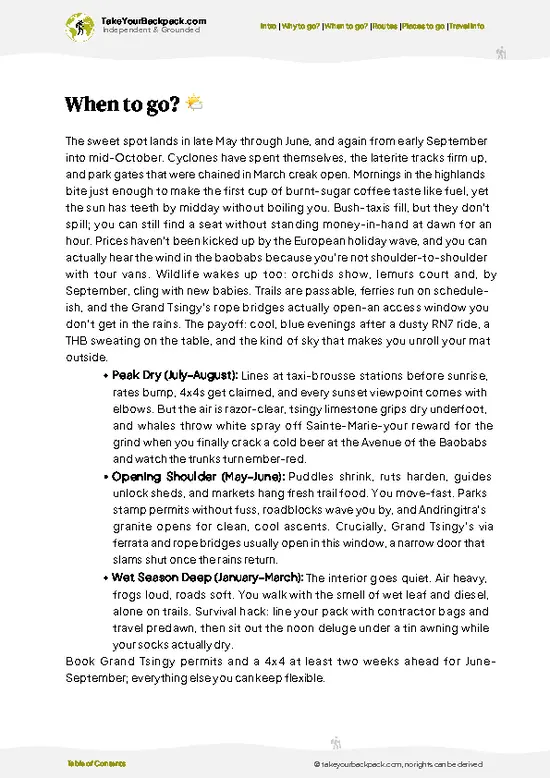
🌤️ When to go?Choosing the right time of year


  • Topic: Weather – Ambanja’s dry season runs from May to October, offering clear skies and minimal rain. This is when the air feels crisp and the trails firm, perfect for trekking without the mud and humidity that dominate the wet season.

  • Topic: Temperature – Expect daytime highs around 25-28°C (77-82°F) during dry months, cooling to 15-18°C (59-64°F) at night. The wet season heats up to 30°C (86°F) with sticky humidity, making outdoor activities more draining.

  • Topic: Daylight Hours – Daylight stays fairly consistent year-round, roughly 11 to 12 hours. However, longer, sunnier days in the dry season mean more time to explore before dusk settles in.

  • Topic: Crowds – Tourist traffic peaks in July and August when the weather is ideal. Visiting shoulder months like May or September gives
read more 👉

  • Topic: Weather – Ambanja’s dry season runs from May to October, offering clear skies and minimal rain. This is when the air feels crisp and the trails firm, perfect for trekking without the mud and humidity that dominate the wet season.

  • Topic: Temperature – Expect daytime highs around 25-28°C (77-82°F) during dry months, cooling to 15-18°C (59-64°F) at night. The wet season heats up to 30°C (86°F) with sticky humidity, making outdoor activities more draining.

  • Topic: Daylight Hours – Daylight stays fairly consistent year-round, roughly 11 to 12 hours. However, longer, sunnier days in the dry season mean more time to explore before dusk settles in.

  • Topic: Crowds – Tourist traffic peaks in July and August when the weather is ideal. Visiting shoulder months like May or September gives you space to breathe and better deals without sacrificing comfort.

  • Topic: Seasonal Activities – Dry months unlock hiking, wildlife spotting, and river excursions. The wet season, while lush, often restricts access to trails and can dampen plans with sudden downpours.

  • Topic: Price Fluctuations – Accommodation and tours spike in the dry season’s peak months. Booking in shoulder seasons can save you 20-30%, letting you stretch your budget further without missing out on the essentials.


Pro-tip: Aim for late May or early September—when the air smells fresh, the crowds thin, and the landscape is still vivid—this timing turns Ambanja into a quietly thrilling adventure rather than a rushed checklist.


source: climatestotravel.comJANJanuary: fair for travelingFEBFebruary: fair for travelingMARMarch: fair for travelingAPRApril: good for travelingMAYMay: highly recommended for travelingJUNJune: excellent for travelingJULJuly: excellent for travelingAUGAugust: excellent for travelingSEPSeptember: highly recommended for travelingOCTOctober: excellent for travelingNOVNovember: fair for travelingDECDecember: fair for traveling
madagascar-city-ambanja
© Google |

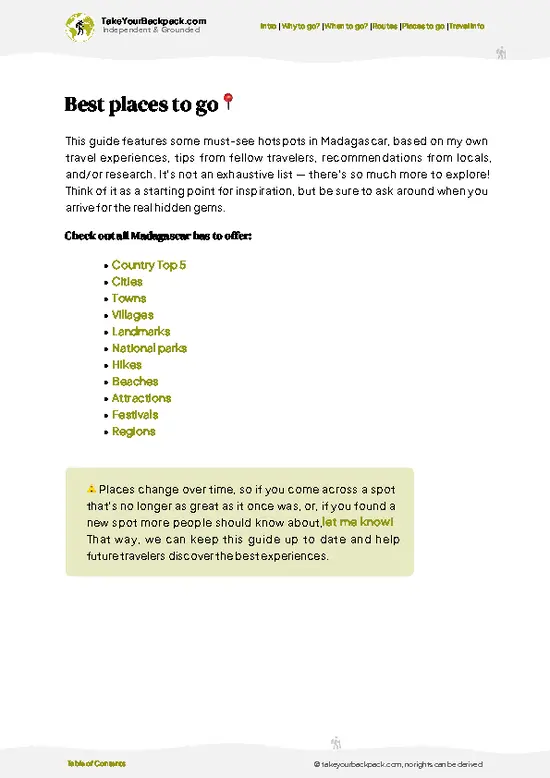
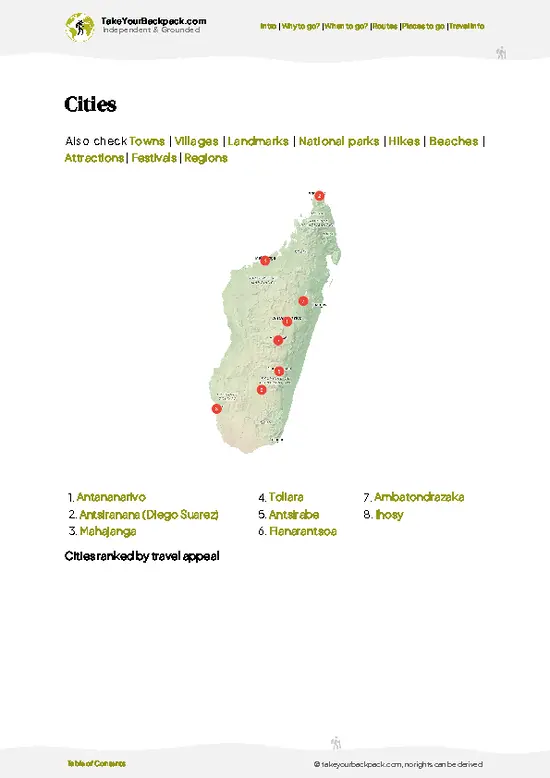
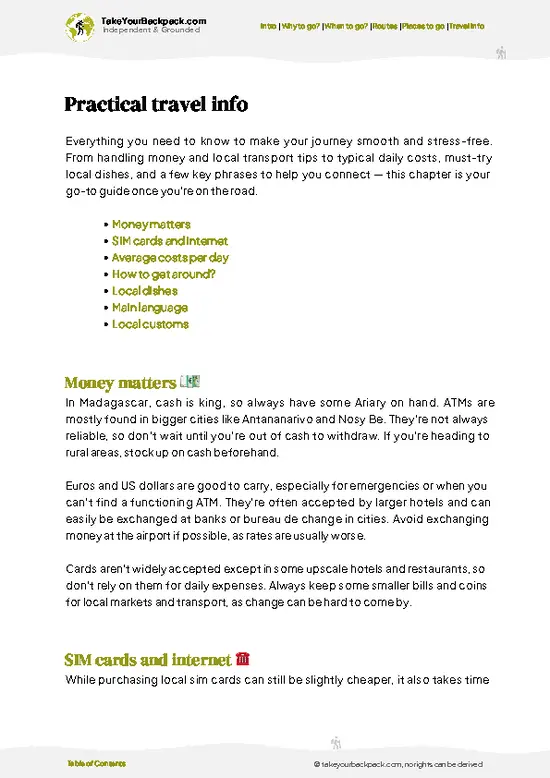
✈️ The backpacker research shortcutMadagascar Travel Guide

An offline-friendly backpacking guide with optimized travel routes, ranked highlights, transport advice, and the best areas to stay.
example page 0 from our offline Travel Guide for Madagascar
example page 1 from our offline Travel Guide for Madagascar
example page 2 from our offline Travel Guide for Madagascar
example page 3 from our offline Travel Guide for Madagascar
example page 4 from our offline Travel Guide for Madagascar
example page 5 from our offline Travel Guide for Madagascar
example page 6 from our offline Travel Guide for Madagascar
example page 7 from our offline Travel Guide for Madagascar
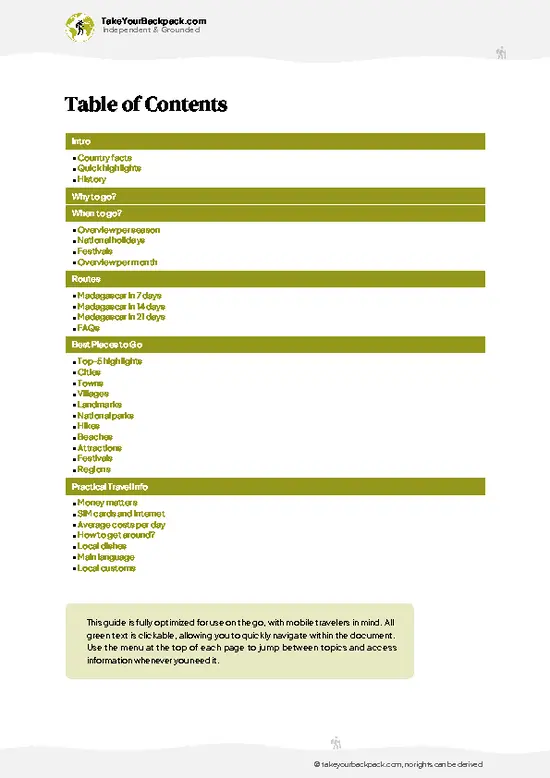
The digital guide (418 pages) contains:
110 highlights, ranked by travel appeal
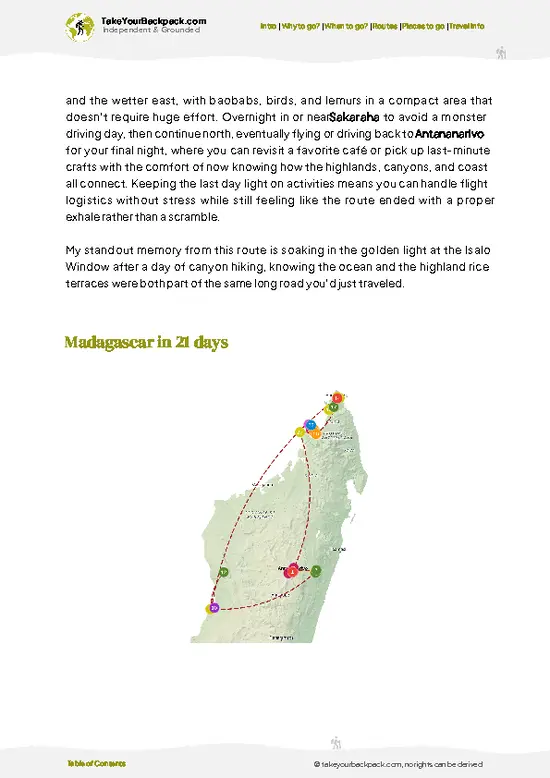
Optimized 7, 14 & 21-day travel routes
Cities, national parks, landmarks, beaches
How to get around
Offline-friendly for travel without Wi-Fi
👉 Click to see all 30+ guide features

📅 Plan smarter in minutes, not weeks
Month by month travel advice
Festivals & national holidays
Budget expectations

🗺️ Go to the right places, skip the overrated ones
Honest pros & cons of destinations
Top hikes, parks & viewpoints
Lesser-known places most travelers miss
Clear “worth it vs skip it” guidance

🛏️ Travel smoothly without rookie mistakes
Best areas to stay
Transport systems explained simply
Common scams & safety advice
SIM cards, money & practical tips

🌍 Understand the country, not just visit it
Culture & traditions
52 Essential phrases & customs
Festivals worth planning around
Traveler-friendly historical context
Insights that make places more meaningful

📱 Built for real travel conditions
Fully downloadable PDF
Works completely offline
Optimized for phone use
Useful in remote areas & buses
Everything in one place
Save weeks of stressful planning
Get instant access to your full guide. 30‑day money-back guarantee.
+ Add another guide for just US$7.80

By proceeding you agree to our terms.
Sent to your inbox immediately after payment • 100% Secure Checkout
Best Backpacking Travel Advisor 2025 tourism awardBest Backpacking
Travel Advisor
2025
What others say about Take Your Backpack Guides:
⭐⭐⭐⭐⭐
Fantastic, amazing amount of information!
⭐⭐⭐⭐⭐
My goodness this is amazing, it's what I've been looking for hats off too you!
⭐⭐⭐⭐⭐
I think this is absolutely BRILLIANT
⭐⭐⭐⭐
Very complete and informative. It's still missing places, but I gotta to commend you
⭐⭐⭐⭐⭐
This is truly amazing, thank you, can't wait to explore it with my kids!
⭐⭐⭐⭐⭐
Awesome resource, thank you!
⭐⭐⭐⭐⭐
This is amazing! Can't wait to explore the ones I haven't seen
⭐⭐⭐⭐
I love this! Well done, great idea.
⭐⭐⭐⭐⭐
Thanks for taking the time to make this gem!
⭐⭐⭐⭐⭐
This might be the best website I've ever seen.
⭐⭐⭐⭐⭐
Congratulations, and thank you so much for your work; it's incredibly valuable.
⭐⭐⭐⭐
In all seriousness I think you did a great job pointing out the important spots
⭐⭐⭐⭐⭐
10/10 very good
⭐⭐⭐⭐⭐
As someone who's only just starting to visit regularly this is awesome, thank you.
⭐⭐⭐⭐
Thank you very much! I'm going to visit my dad, it's going to be very useful!
⭐⭐⭐⭐⭐
This is really cool! We'll be travelling for the first time and this definitely come in handy.
⭐⭐⭐⭐⭐
You are now our minister of culture, congratulations 👨‍💼
⭐⭐⭐⭐⭐
Just wanted to tell you that this is a pearl! Going to follow your recommendations.
⭐⭐⭐⭐⭐
This is so cool. I'll definitely be using the resource for my travels soon.
⭐⭐⭐⭐⭐
This is very impressive! Good work.
⭐⭐⭐⭐⭐
This is an amazing and informative site. Very well done!

🛏️ Where to stay?Where staying makes the most sense

Ambanja’s heart for backpackers beats strongest near the town center, where the streets hum with local markets and the scent of freshly grilled seafood drifts through the air. This area is your best bet—not just for safety, but for plugging into the pulse of daily life. It’s where you’ll find the few budget hostels that double as social hubs, perfect for swapping stories over a cold drink after a day exploring the nearby vanilla plantations or the lush surroundings.

Venture too far out, and the vibe shifts—quieter, less connected, and with fewer options for meeting fellow travelers. The outskirts … read more 👉
Ambanja’s heart for backpackers beats strongest near the town center, where the streets hum with local markets and the scent of freshly grilled seafood drifts through the air. This area is your best bet—not just for safety, but for plugging into the pulse of daily life. It’s where you’ll find the few budget hostels that double as social hubs, perfect for swapping stories over a cold drink after a day exploring the nearby vanilla plantations or the lush surroundings.

Venture too far out, and the vibe shifts—quieter, less connected, and with fewer options for meeting fellow travelers. The outskirts might offer peace, but they lack the buzz that makes Ambanja feel alive. Staying central means you’re steps away from local eateries, transport links, and the informal networks that make solo travel smoother. The streets here are lively but manageable, with enough foot traffic to feel secure without the chaos of a big city. This balance is what turns Ambanja from a stopover into a place you’ll want to linger in.

🚌 Getting aroundMoving around without the hassle

Ambanja moves at its own rhythm—neither frantic nor slow, but a steady pulse shaped by the tropical sun and the hum of daily markets. The air carries the scent of vanilla and fresh fruit, mixing with the occasional diesel whiff from a passing taxi-brousse. Here, time feels elastic; schedules exist but bend to the flow of local life. You won’t find rigid timetables posted everywhere, but the town’s transit system is a practical dance of shared rides, motorbikes, and your own two feet. Mastering this flow means blending patience with a bit of streetwise savvy—because the payoff is a seamless, authentic experience that feels like you’re part of the town’s heartbeat, not just passing through.


  • Walking: Ambanja’s compact center is best explored on foot. The streets are shaded by tall trees,
read more 👉
Ambanja moves at its own rhythm—neither frantic nor slow, but a steady pulse shaped by the tropical sun and the hum of daily markets. The air carries the scent of vanilla and fresh fruit, mixing with the occasional diesel whiff from a passing taxi-brousse. Here, time feels elastic; schedules exist but bend to the flow of local life. You won’t find rigid timetables posted everywhere, but the town’s transit system is a practical dance of shared rides, motorbikes, and your own two feet. Mastering this flow means blending patience with a bit of streetwise savvy—because the payoff is a seamless, authentic experience that feels like you’re part of the town’s heartbeat, not just passing through.


  • Walking: Ambanja’s compact center is best explored on foot. The streets are shaded by tall trees, and the market buzz is just a few minutes away from most guesthouses. Walking costs nothing, lets you soak in the scents of vanilla pods drying in the sun, and reveals small street vendors selling fresh lychees or grilled fish.


  • Taxi-Brousse: The backbone of regional travel, these shared minibuses leave when full, usually between 6 a.m. and 5 p.m. Fares are low—often under $2 for short hops—but expect a bumpy ride on uneven roads. It’s not about comfort; it’s about connection and speed, getting you to nearby towns like Antsiranana or Nosy Be in a few hours.


  • Local Taxis: For short trips within Ambanja, local taxis run on a loose schedule but are easy to flag down. Prices are negotiable but generally affordable, around $0.50 to $1 per ride. They’re a quick way to dodge the midday heat or carry heavy bags, though traffic can slow you down during market hours.


  • Motorcycle Taxis (Pousse-Pousse): These are the fastest way to weave through narrow streets and crowded areas. Fares are slightly higher than local taxis but still budget-friendly. Ideal for quick errands or reaching spots where larger vehicles can’t go, especially when the sun is dipping and the light softens over the vanilla plantations.

👛 Costs (as of 4 September 2026)What things cost and how to budget

Backpacking in Ambanja, Madagascar, is a raw, earthy experience where every dollar stretches further than you might expect, but knowing the local rhythm saves you from surprises.
  • Dorm Accommodation: Expect to pay around €5 to €10 per night for a basic dorm bed. These spots are simple—think mosquito nets, creaky wooden beds, and the occasional rooster crowing at dawn. It’s not luxury, but it’s clean enough and perfectly placed for exploring.
  • Meals: Street food and local eateries dominate here. A hearty meal of rice, zebu (local beef), and fresh veggies will set you back about €1.50 to €3. If you opt for something a bit more Western or in a tourist-friendly spot, prices can climb to €5 or €6, but the local flavors are worth the modest splurge.
  • Local Transport: The main mode is the taxi-brousse
read more 👉
Backpacking in Ambanja, Madagascar, is a raw, earthy experience where every dollar stretches further than you might expect, but knowing the local rhythm saves you from surprises.
  • Dorm Accommodation: Expect to pay around €5 to €10 per night for a basic dorm bed. These spots are simple—think mosquito nets, creaky wooden beds, and the occasional rooster crowing at dawn. It’s not luxury, but it’s clean enough and perfectly placed for exploring.
  • Meals: Street food and local eateries dominate here. A hearty meal of rice, zebu (local beef), and fresh veggies will set you back about €1.50 to €3. If you opt for something a bit more Western or in a tourist-friendly spot, prices can climb to €5 or €6, but the local flavors are worth the modest splurge.
  • Local Transport: The main mode is the taxi-brousse (shared minibus), costing roughly €0.50 to €1 for short hops around town or to nearby villages. For a tuk-tuk or moto-taxi, budget around €1 to €2 per ride. Walking is often the best way to soak in the atmosphere and save cash.
  • Basic Activities/Entry Fees: Nature and culture are the draws here. Entry to local parks or reserves typically costs between €2 and €5. Guided tours or boat trips on the Sambirano River might push that to €10 or €15, but they’re worth it for the close-up wildlife and lush scenery.
  • Miscellaneous Expenses: Bottled water, snacks, and occasional treats like fresh fruit or a cold drink usually add up to about €1 to €3 daily. Internet cafes or SIM cards for data are cheap, around €1 to €2, but expect slow speeds.

All told, you’re looking at a daily budget of roughly €10 to €25. This range covers the essentials without cutting corners on comfort or experience. Ambanja’s charm is in its simplicity—knowing where to spend and where to save turns the rough edges into part of the adventure.


source: madagascar-tourisme.com
⚠️ Prices can change and everyone travels differently, so take this as a rough guide. Hope it helps you plan your adventure!

🚌 Day tripsEasy escapes and nearby places

Ambanja, Madagascar, is a backpacker’s dream base, offering a gateway to stunning landscapes and vibrant local culture. Here are some day trips that will elevate your experience.

Nosy Be Island
A quick boat ride from Ambanja, Nosy Be is a tropical paradise where you can dive into crystal-clear waters or lounge on sun-kissed beaches. The island is known for its rich marine life, making snorkeling a must. Expect to pay around $20 for the boat ride and a bit more for gear rental. The best time to visit is during the dry season from May to October. Many first-timers underestimate the time needed for the boat ride, so plan for about an hour each way to maximize your beach time.


Lokobe National Park
This lush reserve is a haven for wildlife enthusiasts. A guided trek through the park reveals … read more 👉
Ambanja, Madagascar, is a backpacker’s dream base, offering a gateway to stunning landscapes and vibrant local culture. Here are some day trips that will elevate your experience.

Nosy Be Island
A quick boat ride from Ambanja, Nosy Be is a tropical paradise where you can dive into crystal-clear waters or lounge on sun-kissed beaches. The island is known for its rich marine life, making snorkeling a must. Expect to pay around $20 for the boat ride and a bit more for gear rental. The best time to visit is during the dry season from May to October. Many first-timers underestimate the time needed for the boat ride, so plan for about an hour each way to maximize your beach time.


Lokobe National Park
This lush reserve is a haven for wildlife enthusiasts. A guided trek through the park reveals unique flora and fauna, including the elusive black lemur. The journey takes about 30 minutes by taxi-brousse, costing around $5. Allocate a full day for this adventure, as the trails can be challenging but rewarding. The dry season is ideal for spotting wildlife, but be prepared for muddy paths in the rainy months. A common mistake is underestimating the need for sturdy footwear; the trails demand it.
👉 Explore Lokobe National Park

Ambanja’s Cocoa Plantations
Immerse yourself in the rich aroma of cocoa at local plantations. A guided tour will take you through the process of chocolate-making, from bean to bar. It’s a short 15-minute ride from town, costing about $10 for the tour. The best time to visit is during the harvest season from May to September. Many travelers miss out on this experience, thinking it’s just for chocolate lovers, but the cultural insights are invaluable.
Want to know what more Madagascar offers?
The Madagascar Travel Guide describes 110 highlights, from cities to national parks, from beaches to hikes

Get the Travel Guide -

🛡️ SafetyScams, Hazards, and Annoyances

Ambanja is generally safe, but a few practical tips can enhance your experience. Stay aware in crowded markets, where pickpockets might lurk. Keep your valuables close and avoid flashy displays of wealth. If you’re solo, stick to well-lit areas after dark; the streets can feel quiet, and a little caution goes a long way.

Common scams are rare, but be mindful of overly friendly locals who might offer unsolicited guidance—sometimes, it comes with a price tag. Embrace the local vibe, but trust your instincts. Carry yourself confidently, and you’ll navigate Ambanja like a pro, soaking in the rich scents of spices and the warmth of the community.

FAQFrequently asked questions about Ambanja

Ambanja is worth visiting for its unique vanilla plantations and proximity to the Manongarivo Reserve, offering a genuine experience of northern Madagascar's biodiversity. It is more than just a stopover if you are interested in nature and local agriculture. The town provides a quieter, less touristy alternative to other northern destinations.
Two to three days are sufficient to explore Ambanja and its surroundings, including a visit to the vanilla plantations and a day trip to the nearby Manongarivo Reserve. This allows time to experience local markets and the natural environment without rushing.
Ambanja can be visited as a day trip from Diego Suarez (Antsiranana), which is about 140 kilometers away, but it involves a long travel time of around 3 to 4 hours each way by road. Staying overnight in Ambanja is recommended to fully enjoy the area without spending most of the day traveling.
⚠️ Things can change over time, so always validate details locally before you go.

Other Malagasy towns near Ambanja

Explore more nearby:

  • Ankify—ferry port, mangrove coastline, island connections| 13 km away
  • Nosy Komba—volcanic island, black lemurs, fishing villages| 24 km away
  • Sambava—vanilla plantations, coconut groves, river deltas| 197 km away

💡 Not sure where to go next?
Create a personalized itinerary for Madagascar including Ambanja and the places that fit your trip.

Generate my itinerary

👉 Discover all towns

Or checkout all Madagascar has to offer (think cities, towns, villages, national parks, hikes, beaches, festivals)
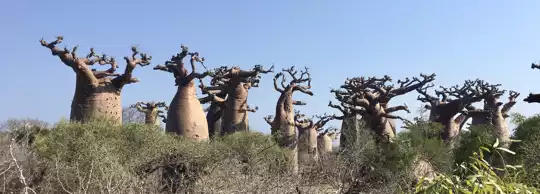
Country photo of Madagascar

We 💚 feedbackParting advice and final tips

Ambanja is a sensory delight, with the air thick with the scent of cacao and the vibrant energy of local markets. You’ll find genuine warmth in the people, making every interaction feel like a shared moment. But be ready for the heat and humidity; it can be relentless. Embrace it, and you’ll discover a deeper connection to this unique corner of Madagascar.

✈️ When did I visit Madagascar?
Madagascar I went backpacking in October 2019. With a friend I rented a 4WD and drove around the southern part of Madagascar.

✍️ Help improve this page!
The information on this page is based on my own backpacking experience in Madagascar, supplemented with up-to-date research and feedback from other travelers. Travel details can change, so if you notice anything outdated or incomplete, feel free to let me know.


🙋‍♂️ Give feedback

👋 Meet the founderWho’s Behind Take Your Backpack?

Johan, backpacker and founder of TakeYourBackpackHi, I’m Johan (Netherlands 🇳🇱), the creator of TakeYourBackpack. Over the past decade, I’ve backpacked through 80+ countries across six continents, gaining extensive experience with independent travel, long-term trips, and overland routes.

This site is built on a combination of firsthand travel experience and carefully curated insights from other backpackers. Many guides are based on places I’ve personally visited, while others bring together tips, observations, and practical advice shared by trusted travelers I’ve met along the way.

The goal is to provide realistic, experience-driven guidance — not generic itineraries — so you can explore destinations with better context, clearer expectations, and more confidence.

Get full Madagascar guide •
Instant download • 110 highlights • Full Offline guide