×

Madagascar🇲🇬 | townsManakaracanal port, colonial grid, FCE railway terminus | things to do and best time to go

Explore SambavaExplore Mananjary

Backpacking in Manakara
🌟 Highlighttown ranked #10
By Johan Kruseman 🇳🇱 | Updated July 30, 2026

Most travelers only realize after arriving: Manakara’s real gift is its slow, unhurried pace—just when you’re desperate for a breather from Madagascar’s relentless, bone-rattling roads. Tucked on the southeast coast where the Pangalanes Canal meets the Indian Ocean, Manakara feels like a town built for catching your breath. The air smells faintly of salt and clove. There’s a sleepy market, a handful of crumbling colonial buildings, and a beach that’s more for wandering than swimming—think driftwood, not sunbathers. For backpackers, Manakara isn’t a destination for nightlife or urban thrills; it’s a practical stopover, especially if you’re riding the legendary Fianarantsoa–Côte Est railway or plotting a trip up the canal by pirogue. It’s walkable, with cheap eats and a few basic guesthouses, but don’t expect a buzzing hostel scene or easy camaraderie—most travelers pass through, not linger. Compared to busier towns like Fianarantsoa, Manakara is quieter, cheaper, and more about the journey than the destination. Safety is generally fine, but the town sleeps early, and you’ll want to keep your wits about you after dark.

Discover everything you want to know in the 📖 Madagascar Travel Guide.
Loading the map 🌍
CLICK TO FILTER
cities
towns
villages
landmarks
national parks
hikes
beaches
attractions
festivals
regions
SHOW COUNTRY’S BESTSHOW ALL

✨ Why go?
Ranked #10 town in Madagascar
What makes this town worth visiting

Backpackers flock to Manakara for its role as a gateway to Madagascar’s lush landscapes and vibrant culture. The walkable streets invite exploration, where you can savor local dishes like romazava and koba at small eateries. It’s a hub for those heading to nearby hikes in the Andringitra National Park or relaxing on the beaches of the Indian Ocean. The small-scale hostels and guesthouses foster a friendly atmosphere, perfect for solo travelers or those in small groups looking to connect. Most visitors stay a few days, soaking in the laid-back vibe and chatting with locals. While it’s not a party town, the social scene is warm and inviting, making it ideal for slow travelers who appreciate the journey as much as the destination.
Want to include Manakara in your Madagascar route?
Create a personalized Madagascar itinerary that includes Manakara and the places that fit your trip — based on your travel style, budget, and available time. Get your route in seconds.

Generate my trip

💡 HighlightsDon't-miss highlights and experiences

  • FCE railway terminus and station — The reason most people end up in Manakara: the old Fianarantsoa-Côte Est line finishes here. The station has that creaky, charming colonial vibe and watching the train arrive or depart is a living slice of Malagasy travel history.
  • Canal des Pangalanes quay — Where the long freshwater canal threads through town. Take a pirogue or just sit on the quay to watch goods and people move by; it’s the social and economic spine of Manakara.
  • Manakara municipal market (marché) — Tight lanes, piles of vanilla, bright fruit, dried fish and local spices. It’s noisy, smelly and honest — the best place to see daily life and buy cheap snacks or small crafts.
  • Harbour and fish market on the estuary — Early morning is prime: pirogues return, fish are displayed on the jetty
read more 👉
  • FCE railway terminus and station — The reason most people end up in Manakara: the old Fianarantsoa-Côte Est line finishes here. The station has that creaky, charming colonial vibe and watching the train arrive or depart is a living slice of Malagasy travel history.
  • Canal des Pangalanes quay — Where the long freshwater canal threads through town. Take a pirogue or just sit on the quay to watch goods and people move by; it’s the social and economic spine of Manakara.
  • Manakara municipal market (marché) — Tight lanes, piles of vanilla, bright fruit, dried fish and local spices. It’s noisy, smelly and honest — the best place to see daily life and buy cheap snacks or small crafts.
  • Harbour and fish market on the estuary — Early morning is prime: pirogues return, fish are displayed on the jetty and local women haggle. It’s raw and lively; photographers and food lovers will like it.
  • Seafront promenade and jetty — A short stretch of beach and a simple jetty where locals fish, kids swim and sunsets are surprisingly pretty. Not a white-sand resort, but authentic coastal atmosphere.
  • Old rolling stock and railway sheds — Around the station you’ll find battered carriages and diesel engines that tell the story of the line’s heyday. They’re accessible (and great for train geeks and curious backpackers).
  • Main town Catholic mission and church complex — The mission played a big role in the town’s social history; the church and adjacent buildings show missionary-era architecture and ongoing community life.
  • Betsimisaraka neighborhood walks — Walk the residential streets to see traditional stilted wooden houses, rice-sack gardens and everyday routines. A low-key way to connect with local culture—ask before entering private yards.
  • Mangrove and short pirogue outings from town — You don’t need to go far to paddle into small mangrove channels right off the Pangalanes. These short trips show coastal ecology and local fishing techniques up close.
  • Waterfront craft stalls and street food strip — A line of small vendors selling raffia goods, carved souvenirs and grilled seafood. Cheap, colorful and useful for picking up an authentic keepsake or a quick meal.
A few easy day trips outside Manakara: the nearby Betsimisaraka town of Vohipeno (my personal favorite for authentic village life), the coastal hub of Farafangana a few hours south, and short Pangalanes boat rides upriver to neighbouring fishing villages and mangrove islets.
Spotted a mistake or missing something? Contact us.

🏘️ NeighborhoodsWhere things are and how it's laid out

Manakara is a vibrant coastal town that offers a unique blend of Malagasy culture and stunning landscapes. Each neighborhood has its own character, making it essential to choose wisely based on your travel style.

Centre Ville: This is the bustling heart of Manakara. Expect a lively atmosphere with local markets and street vendors. It’s walkable, with plenty of budget-friendly accommodations. The nightlife here is modest but charming, with small bars where you can mingle with locals. Perfect for short stays, as you can easily explore on foot.

Plage de Manakara: If you crave the sound of waves, this area is for you. The beach vibe is laid-back, ideal for relaxation. Accommodations range from basic to mid-range, and while it’s quieter at night, you can find a few beachside spots for a drink. … read more 👉
Manakara is a vibrant coastal town that offers a unique blend of Malagasy culture and stunning landscapes. Each neighborhood has its own character, making it essential to choose wisely based on your travel style.

Centre Ville: This is the bustling heart of Manakara. Expect a lively atmosphere with local markets and street vendors. It’s walkable, with plenty of budget-friendly accommodations. The nightlife here is modest but charming, with small bars where you can mingle with locals. Perfect for short stays, as you can easily explore on foot.

Plage de Manakara: If you crave the sound of waves, this area is for you. The beach vibe is laid-back, ideal for relaxation. Accommodations range from basic to mid-range, and while it’s quieter at night, you can find a few beachside spots for a drink. Great for longer stays if you want to soak up the sun and enjoy the ocean.

Andranovory: A bit off the beaten path, this neighborhood offers a more authentic experience. The walkability is decent, but you might need a bike or a taxi for longer distances. It’s quieter, making it suitable for those seeking solitude. Ideal for longer stays to truly immerse yourself in local life.

⌛️ 1 daySeeing the highlights in 24 hours

Manakara, a coastal town on Madagascar’s southeastern shore, pulses with a unique rhythm. The scent of vanilla wafts through the air, mingling with the salty breeze from the Indian Ocean. This town is a gateway to lush landscapes and vibrant local culture, making it a perfect spot for a day of exploration.

Start your morning at the bustling market, where the colors of fresh produce and spices pop against the backdrop of local chatter. Grab a warm, flaky “mofo gasy” (Malagasy pancake) from a vendor. The sweet, slightly smoky flavor pairs perfectly with a cup of strong coffee. As you wander through the stalls, take in the lively atmosphere—this is where the heart of Manakara beats.

In the afternoon, head to the nearby beaches. The soft sand and gentle waves invite you to relax, but don’t miss … read more 👉
Manakara, a coastal town on Madagascar’s southeastern shore, pulses with a unique rhythm. The scent of vanilla wafts through the air, mingling with the salty breeze from the Indian Ocean. This town is a gateway to lush landscapes and vibrant local culture, making it a perfect spot for a day of exploration.

Start your morning at the bustling market, where the colors of fresh produce and spices pop against the backdrop of local chatter. Grab a warm, flaky “mofo gasy” (Malagasy pancake) from a vendor. The sweet, slightly smoky flavor pairs perfectly with a cup of strong coffee. As you wander through the stalls, take in the lively atmosphere—this is where the heart of Manakara beats.

In the afternoon, head to the nearby beaches. The soft sand and gentle waves invite you to relax, but don’t miss the chance to explore the nearby “Lac de Manakara.” This serene lake, often overlooked by tourists, offers a tranquil escape. Rent a canoe and paddle through the mangroves, where the sounds of chirping birds and rustling leaves create a soothing soundtrack.

As evening approaches, stroll along the waterfront promenade. The sunset casts a golden hue over the ocean, and local fishermen return with their catch. Stop by a small eatery for a plate of “romazava,” a traditional Malagasy stew. The warmth of the spices and the laughter of locals will make you feel right at home.

Manakara is not just a destination; it’s an experience that lingers long after you leave.
Turn your Manakara visit into an Madagascar adventure
Build a complete Madagascar route with Manakara, hidden gems, must-see destinations, and realistic travel times included.

Generate my trip

🌤️ When to go?Best time to visit Manakara


  • Topic: Weather – The dry season from May to October is your best bet. Expect clear skies and minimal rain, which means dusty trails instead of mud baths. The wet season (November to April) brings heavy rains that can flood roads and slow down travel.

  • Topic: Temperature – Temperatures hover between 20-27°C (68-81°F) during the dry months, offering warm but comfortable days. The wet season heats up to 28-32°C (82-90°F), making humidity stick to your skin like a second layer.

  • Topic: Daylight Hours – Around 11 to 12 hours of daylight year-round, but the dry season’s clearer skies mean you’ll get more usable light for trekking and exploring without the threat of sudden downpours.

  • Topic: Crowds – Manakara stays relatively quiet year-round, but the dry season attracts more adventurous backpackers,
read more 👉

  • Topic: Weather – The dry season from May to October is your best bet. Expect clear skies and minimal rain, which means dusty trails instead of mud baths. The wet season (November to April) brings heavy rains that can flood roads and slow down travel.

  • Topic: Temperature – Temperatures hover between 20-27°C (68-81°F) during the dry months, offering warm but comfortable days. The wet season heats up to 28-32°C (82-90°F), making humidity stick to your skin like a second layer.

  • Topic: Daylight Hours – Around 11 to 12 hours of daylight year-round, but the dry season’s clearer skies mean you’ll get more usable light for trekking and exploring without the threat of sudden downpours.

  • Topic: Crowds – Manakara stays relatively quiet year-round, but the dry season attracts more adventurous backpackers, so expect a slight bump in hostel prices and a livelier vibe.

  • Topic: Seasonal Activities – The dry months open up river trips on the Pangalanes Canal and hiking in nearby rainforests without the hassle of slippery paths or leeches. Wet season limits these options and can make boat rides choppy.

  • Topic: Price Fluctuations – Accommodation and transport costs rise modestly during the dry season due to increased demand. Booking ahead can save you from last-minute price hikes.


Pro-tip: Aim for late May or early October—when the weather is crisp, crowds are thin, and the landscape is lush from recent rains, giving you the best of both worlds.


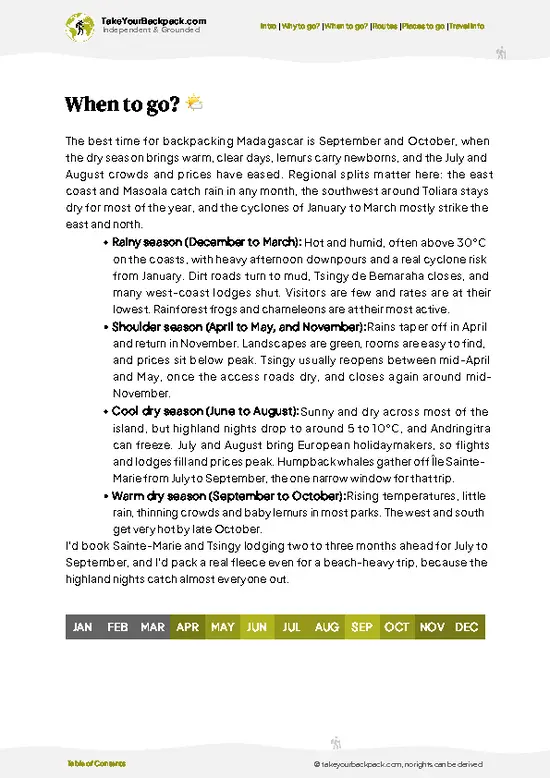
source: climatestotravel.comJANJanuary: below average for travelingFEBFebruary: below average for travelingMARMarch: below average for travelingAPRApril: fair for travelingMAYMay: highly recommended for travelingJUNJune: excellent for travelingJULJuly: excellent for travelingAUGAugust: excellent for travelingSEPSeptember: excellent for travelingOCTOctober: highly recommended for travelingNOVNovember: fair for travelingDECDecember: below average for traveling
madagascar-city-manakara
© Google |

✈️ The backpacker research shortcutMadagascar Travel Guide

An offline-friendly backpacking guide with optimized travel routes, ranked highlights, transport advice, and the best areas to stay.
example page 0 from our offline Travel Guide for Madagascar
example page 1 from our offline Travel Guide for Madagascar
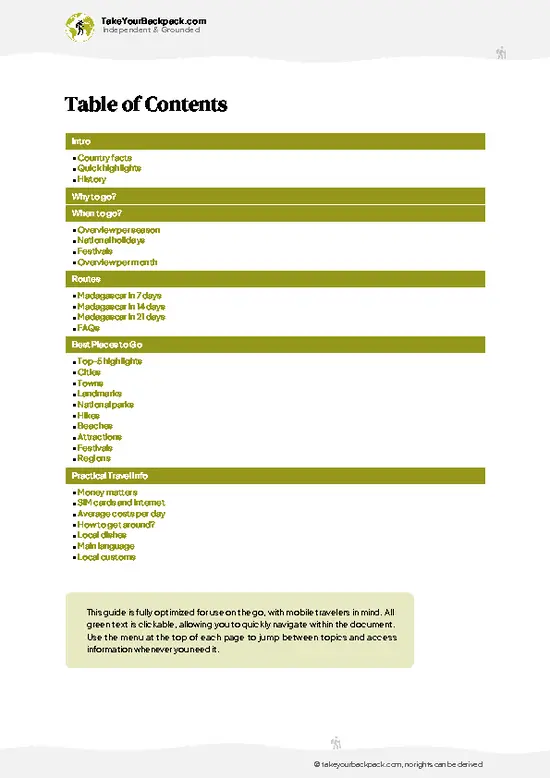
example page 2 from our offline Travel Guide for Madagascar
example page 3 from our offline Travel Guide for Madagascar
example page 4 from our offline Travel Guide for Madagascar
example page 5 from our offline Travel Guide for Madagascar
example page 6 from our offline Travel Guide for Madagascar
example page 7 from our offline Travel Guide for Madagascar
The digital guide (418 pages) contains:
110 highlights, ranked by travel appeal
Optimized 7, 14 & 21-day travel routes
Cities, national parks, landmarks, beaches
How to get around
Offline-friendly for travel without Wi-Fi
👉 Click to see all 30+ guide features

📅 Plan smarter in minutes, not weeks
Month by month travel advice
Festivals & national holidays
Budget expectations

🗺️ Go to the right places, skip the overrated ones
Honest pros & cons of destinations
Top hikes, parks & viewpoints
Lesser-known places most travelers miss
Clear “worth it vs skip it” guidance

🛏️ Travel smoothly without rookie mistakes
Best areas to stay
Transport systems explained simply
Common scams & safety advice
SIM cards, money & practical tips

🌍 Understand the country, not just visit it
Culture & traditions
52 Essential phrases & customs
Festivals worth planning around
Traveler-friendly historical context
Insights that make places more meaningful

📱 Built for real travel conditions
Fully downloadable PDF
Works completely offline
Optimized for phone use
Useful in remote areas & buses
Everything in one place
Save weeks of stressful planning
Get instant access to your full guide. 30‑day money-back guarantee.


By proceeding you agree to our terms.
Sent to your inbox immediately after payment • 100% Secure Checkout
Best Backpacking Travel Advisor 2025 tourism awardBest Backpacking
Travel Advisor
2025
What others say about Take Your Backpack Guides:
⭐⭐⭐⭐⭐
Fantastic, amazing amount of information!
⭐⭐⭐⭐⭐
My goodness this is amazing, it's what I've been looking for hats off too you!
⭐⭐⭐⭐⭐
I think this is absolutely BRILLIANT
⭐⭐⭐⭐
Very complete and informative. It's still missing places, but I gotta to commend you
⭐⭐⭐⭐⭐
This is truly amazing, thank you, can't wait to explore it with my kids!
⭐⭐⭐⭐⭐
Awesome resource, thank you!
⭐⭐⭐⭐⭐
This is amazing! Can't wait to explore the ones I haven't seen
⭐⭐⭐⭐
I love this! Well done, great idea.
⭐⭐⭐⭐⭐
Thanks for taking the time to make this gem!
⭐⭐⭐⭐⭐
This might be the best website I've ever seen.
⭐⭐⭐⭐⭐
Congratulations, and thank you so much for your work; it's incredibly valuable.
⭐⭐⭐⭐
In all seriousness I think you did a great job pointing out the important spots
⭐⭐⭐⭐⭐
10/10 very good
⭐⭐⭐⭐⭐
As someone who's only just starting to visit regularly this is awesome, thank you.
⭐⭐⭐⭐
Thank you very much! I'm going to visit my dad, it's going to be very useful!
⭐⭐⭐⭐⭐
This is really cool! We'll be travelling for the first time and this definitely come in handy.
⭐⭐⭐⭐⭐
You are now our minister of culture, congratulations 👨‍💼
⭐⭐⭐⭐⭐
Just wanted to tell you that this is a pearl! Going to follow your recommendations.
⭐⭐⭐⭐⭐
This is so cool. I'll definitely be using the resource for my travels soon.
⭐⭐⭐⭐⭐
This is very impressive! Good work.
⭐⭐⭐⭐⭐
This is an amazing and informative site. Very well done!

🛏️ Where to stay?How to pick the right area

Manakara’s best spot for backpackers is the stretch along the beachfront near the town center. This area hums with life—fishermen hauling in their catch, the salty tang of the sea mixing with the scent of grilled seafood from street vendors. It’s safe enough to wander after dark, with locals who are used to travelers and open to conversation. The vibe here is casual but lively, perfect for solo backpackers looking to connect without the pressure of a party scene.

Hostels and budget guesthouses cluster around this zone, offering simple, clean rooms and a chance to meet fellow travelers over shared … read more 👉
Manakara’s best spot for backpackers is the stretch along the beachfront near the town center. This area hums with life—fishermen hauling in their catch, the salty tang of the sea mixing with the scent of grilled seafood from street vendors. It’s safe enough to wander after dark, with locals who are used to travelers and open to conversation. The vibe here is casual but lively, perfect for solo backpackers looking to connect without the pressure of a party scene.

Hostels and budget guesthouses cluster around this zone, offering simple, clean rooms and a chance to meet fellow travelers over shared meals or morning coffee. Compared to the quieter, more residential neighborhoods inland, staying by the water means you’re steps from the ferry docks and local markets, which keeps logistics smooth and spontaneous day trips easy.

Avoid the outskirts where infrastructure thins out and transport options dwindle. Here, proximity to the pulse of Manakara’s daily rhythm turns a basic stay into an immersive experience, making every moment feel earned.

🚌 Getting aroundHow to get from A to B

Manakara moves at its own rhythm, a blend of laid-back coastal calm and the occasional burst of market-day energy. The air carries the salty tang of the Indian Ocean, mingled with the earthy scent of rain-soaked soil from the nearby rainforest. Time here isn’t dictated by clocks but by the sun’s slow arc and the ebb and flow of locals going about their day. You won’t find rigid schedules or polished timetables; instead, you’ll navigate a system that rewards patience and a keen eye for opportunity. This is a place where the journey itself is part of the experience, and understanding the local flow unlocks a smoother, more authentic ride.

Walking: The heart of Manakara is compact enough to explore on foot. Streets are uneven and sometimes muddy after rain, so sturdy shoes are a must. Walking … read more 👉
Manakara moves at its own rhythm, a blend of laid-back coastal calm and the occasional burst of market-day energy. The air carries the salty tang of the Indian Ocean, mingled with the earthy scent of rain-soaked soil from the nearby rainforest. Time here isn’t dictated by clocks but by the sun’s slow arc and the ebb and flow of locals going about their day. You won’t find rigid schedules or polished timetables; instead, you’ll navigate a system that rewards patience and a keen eye for opportunity. This is a place where the journey itself is part of the experience, and understanding the local flow unlocks a smoother, more authentic ride.

Walking: The heart of Manakara is compact enough to explore on foot. Streets are uneven and sometimes muddy after rain, so sturdy shoes are a must. Walking lets you soak in the scents of street food stalls and the chatter of vendors without missing a beat. It’s free, flexible, and the best way to catch the town’s pulse.

Taxi-Brousse: These shared minibuses are the budget traveler’s lifeline for longer trips. They don’t run on a strict timetable—departures happen when full, which can mean waiting but also a chance to chat with locals. Expect to pay around 3,000 to 5,000 Ariary for trips within the region. The ride is bumpy and slow, but it’s the most authentic way to see the countryside and meet people.

Bateau Taxi (Boat Taxi): For crossing the Faraony River or exploring nearby coastal spots, boat taxis offer a scenic alternative. They leave when enough passengers gather, usually from early morning until late afternoon. Prices vary but are generally affordable, around 2,000 to 4,000 Ariary. The gentle rocking and sea breeze make this a memorable, if occasionally wet, mode of transit.

Local Pousse-Pousse (Rickshaw): For short hops within town, these pedal-powered rickshaws are everywhere. They’re cheap—usually under 1,000 Ariary—and perfect for navigating narrow lanes where cars can’t go. The ride is slow but gives you a close-up view of daily life, with the added bonus of a breeze on hot days.

Train Fianarantsoa-Côte Est (FCE): If your budget allows and you’re after a legendary experience, the FCE train is a must. It’s slow, often delayed, and basic, but the views of lush hills and river valleys are unmatched. Tickets cost about 15,000 to 20,000 Ariary for the full route. The train’s unpredictable schedule means flexibility is key, but the reward is a journey that feels like stepping back in time.

👛 Costs (as of 30 July 2026)What things cost and how to budget

Backpacking in Manakara, Madagascar, means embracing a slower pace where the rhythms of the town shape your budget as much as your itinerary. Here’s what you can expect to spend daily, broken down by essentials.
  • Dorm Accommodation: Dorm beds in basic guesthouses or hostels hover around €7 to €12 per night. These places are simple but clean, often with a fan and shared bathrooms. Expect the scent of wood and earth mingling with the ocean breeze, a reminder you’re far from the usual tourist circuits.
  • Meals: Local eateries serve up hearty Malagasy dishes for about €2 to €4 per meal. Rice with zebu meat or fresh fish, flavored with local spices, fills you up without emptying your wallet. Street food snacks like sambos (fried pastries) cost less than a euro, perfect for nibbling between stops.
read more 👉
Backpacking in Manakara, Madagascar, means embracing a slower pace where the rhythms of the town shape your budget as much as your itinerary. Here’s what you can expect to spend daily, broken down by essentials.
  • Dorm Accommodation: Dorm beds in basic guesthouses or hostels hover around €7 to €12 per night. These places are simple but clean, often with a fan and shared bathrooms. Expect the scent of wood and earth mingling with the ocean breeze, a reminder you’re far from the usual tourist circuits.
  • Meals: Local eateries serve up hearty Malagasy dishes for about €2 to €4 per meal. Rice with zebu meat or fresh fish, flavored with local spices, fills you up without emptying your wallet. Street food snacks like sambos (fried pastries) cost less than a euro, perfect for nibbling between stops.
  • Local Transport: Getting around town mostly means tuk-tuks or pousse-pousse (rickshaws), which cost around €0.50 to €1 per short ride. For longer trips, shared taxis might run you €2 to €4. The slow pace and open-air rides let you soak in the humid, salty air and the chatter of daily life.
  • Basic Activities/Entry Fees: Manakara’s main draws—like the local markets or the beachfront—are free or cost a nominal fee under €1. If you want to take the famous Fianarantsoa-Côte Est (FCE) train ride, budget around €10 to €15 for a day trip, a worthwhile splurge for the views and the chance to mingle with locals.
  • Miscellaneous Expenses: Bottled water, snacks, and occasional tips add up to about €1 to €3 daily. Keep cash handy as card payments are rare, and small change is king.

All told, you’re looking at roughly €12 to €25 per day to live comfortably in Manakara without cutting corners. This range lets you enjoy local flavors, simple comforts, and the unique charm of this coastal town without feeling like you’re constantly pinching pennies.


source: madagascar-tourisme.com
⚠️ Prices can change and everyone travels differently, so take this as a rough guide. Hope it helps you plan your adventure!

🚌 Day tripsWhere to go beyond the main area

Manakara is a backpacker’s dream base, offering a gateway to Madagascar’s rich landscapes and vibrant culture. Here are some day trips that will elevate your experience.

1. The Canal des Pangalanes
A boat ride along the Canal des Pangalanes is a must. This winding waterway is lined with lush vegetation and local villages, giving you a glimpse into everyday life. The journey takes about two hours, and you can expect to pay around $10 for a shared boat. Bring snacks and a camera; the light filtering through the trees creates a magical atmosphere. Many first-timers rush through this, but taking your time to soak in the sights makes all the difference.


2. Vohipeno Beach
Just a short ride from Manakara, Vohipeno Beach offers a slice of paradise. The soft sand and gentle waves are perfect … read more 👉
Manakara is a backpacker’s dream base, offering a gateway to Madagascar’s rich landscapes and vibrant culture. Here are some day trips that will elevate your experience.

1. The Canal des Pangalanes
A boat ride along the Canal des Pangalanes is a must. This winding waterway is lined with lush vegetation and local villages, giving you a glimpse into everyday life. The journey takes about two hours, and you can expect to pay around $10 for a shared boat. Bring snacks and a camera; the light filtering through the trees creates a magical atmosphere. Many first-timers rush through this, but taking your time to soak in the sights makes all the difference.


2. Vohipeno Beach
Just a short ride from Manakara, Vohipeno Beach offers a slice of paradise. The soft sand and gentle waves are perfect for a relaxing day. It takes about 30 minutes to get there, costing around $5 for transport. Bring a picnic and enjoy the local seafood from beach vendors. The best time to visit is during the dry season, when the sun is bright and the water is inviting. Don’t forget sunscreen; the sun can be relentless.


3. Andringitra National Park
For the adventurous, a day trip to Andringitra National Park is worth every effort. It’s about a three-hour drive, costing around $15 for a shared taxi-brousse. The park is known for its dramatic landscapes and diverse wildlife. Plan to arrive early to maximize your hiking time. Many backpackers underestimate the terrain; sturdy shoes are essential for navigating the trails.


4. Local Markets of Manakara
Staying local can be just as rewarding. Spend a morning exploring Manakara’s vibrant markets. You’ll find everything from fresh produce to handmade crafts. It’s a short walk from your accommodation, and you can easily spend a couple of hours here without spending more than $5. The scents of spices and fruits fill the air, creating a sensory feast. First-timers often overlook this, but it’s a fantastic way to connect with the local culture.
Want to know what more Madagascar offers?
The Madagascar Travel Guide describes 110 highlights, from cities to national parks, from beaches to hikes

Get the Travel Guide -

🛡️ SafetySafety Tips and Common Scams in Manakara

Manakara is generally safe, but a few simple practices can enhance your experience. Stay aware in crowded markets, where pickpockets may lurk. Keep your valuables close and your bag zipped. Solo travelers should avoid wandering too far after dark; the streets can feel different when the sun sets.

Watch for common scams, like overly friendly locals offering unsolicited guidance that ends with a hefty fee. A polite but firm “no, thank you” usually suffices.

Annoyances can include persistent street vendors; a friendly smile and a quick “non” can help you move on. Embrace the vibrant atmosphere, but stay grounded in your surroundings, and you’ll navigate Manakara like a pro.

Other Malagasy towns near Manakara

Explore more nearby:

  • Vohipeno—Antemoro culture, riverbank setting, traditional crafts| 29 km away
  • Farafangana—river mouth, clove production, southeastern markets| 77 km away
  • Mananjary—canal junction, coffee trade, Betsimisaraka rituals| 108 km away

💡 Not sure where to go next?
Create a personalized itinerary for Madagascar including Manakara and the places that fit your trip.

Generate my itinerary

👉 Discover all towns

Or checkout all Madagascar has to offer (think cities, towns, villages, national parks, hikes, beaches, festivals)
Country photo of Madagascar

We 💚 feedbackWhat to keep in mind

Manakara’s charm lies in its vibrant markets, where the scent of fresh vanilla mingles with the sound of laughter. You’ll feel the pulse of local life here. But be ready for the heat; it can be stifling. Embrace the sweat, and you’ll find that the warmth of the people makes every bead of it worthwhile. It’s a trade-off, but one that pays off in unforgettable moments.

✈️ When did I visit Madagascar?
Madagascar I went backpacking in October 2019. With a friend I rented a 4WD and drove around the southern part of Madagascar.

✍️ Help improve this page!
The information on this page is based on my own backpacking experience in Madagascar, supplemented with up-to-date research and feedback from other travelers. Travel details can change, so if you notice anything outdated or incomplete, feel free to let me know.


🙋‍♂️ Give feedback

👋 Meet the founderWho’s Behind Take Your Backpack?

Johan, backpacker and founder of TakeYourBackpackHi, I’m Johan (Netherlands 🇳🇱), the creator of TakeYourBackpack. Over the past decade, I’ve backpacked through 80+ countries across six continents, gaining extensive experience with independent travel, long-term trips, and overland routes.

This site is built on a combination of firsthand travel experience and carefully curated insights from other backpackers. Many guides are based on places I’ve personally visited, while others bring together tips, observations, and practical advice shared by trusted travelers I’ve met along the way.

The goal is to provide realistic, experience-driven guidance — not generic itineraries — so you can explore destinations with better context, clearer expectations, and more confidence.

Get full Madagascar guide •
Instant download • 110 highlights • Full Offline guide