×

Madagascar🇲🇬 | townsRanohiraIsalo park access, sandstone cliffs, small hotels | things to do and best time to go

Explore Nosy KombaExplore Sakaraha

Backpacking in Ranohira
🏆 Top picktown ranked #6
By Johan Kruseman 🇳🇱 | Updated September 3, 2026

Most travelers only realize after arriving: Ranohira’s real gift is how it lets you wake up with the sunrise already painting the Isalo Massif gold—no dawn bus rides, no frantic packing, just you and the cool, mineral-scented air. Ranohira sits in southern Madagascar, a dusty, sun-baked outpost on the RN7, acting as the de facto gateway to Isalo National Park. The town itself is small, practical, and honest—think a handful of sandy streets, a few basic shops, and the kind of local restaurants where zebu stew is the main event. It’s not a place you linger for urban charm, but as a base for hiking, it’s unbeatable: trailheads are minutes away, and every other traveler here is either coming off a trek or gearing up for one. You’ll find hostels and simple guesthouses, a couple of lively bars where boots and stories pile up, and a social scene that’s more “shared sunrise coffee” than “all-night party.” Buses connect Ranohira to Tulear and Fianarantsoa, but schedules are loose and rides are long—once you’re here, you’ll mostly walk or grab a local taxi-brousse. Costs are lower than in Madagascar’s bigger towns, and safety is straightforward: keep your wits about you, but the vibe is more sleepy than sketchy. Compared to the bustle of Tulear or the crossroads feel of Ihosy, Ranohira is stripped-down and purposeful—less distraction, more direct access to the wild.

Discover everything you want to know in the 📖 Madagascar Travel Guide.
Loading the map 🌍
CLICK TO FILTER
cities
towns
villages
landmarks
national parks
hikes
beaches
attractions
festivals
regions
SHOW COUNTRY’S BESTSHOW ALL

✨ Why go?
Ranked #6 town in Madagascar
Why Ranohira should be on your travel list

Ranohira serves as a gateway for backpackers venturing into Madagascar’s wild heart. Nestled near Isalo National Park, it’s the perfect base for those eager to tackle stunning hikes and explore dramatic canyons. The local guesthouses and small-scale hostels offer a cozy atmosphere, where you can swap stories over a plate of zebu steak or a bowl of rice and beans. The streets are walkable, inviting you to meander through the town, soaking in the scents of street food and the warmth of friendly locals.

Most travelers linger here for a few days, soaking up the laid-back vibe and preparing for adventures. It’s not a party town, but rather a haven for slow travelers, hikers, and solo adventurers looking for connection. You’ll find a sense of community in the shared spaces, where fellow backpackers … read more 👉
Ranohira serves as a gateway for backpackers venturing into Madagascar’s wild heart. Nestled near Isalo National Park, it’s the perfect base for those eager to tackle stunning hikes and explore dramatic canyons. The local guesthouses and small-scale hostels offer a cozy atmosphere, where you can swap stories over a plate of zebu steak or a bowl of rice and beans. The streets are walkable, inviting you to meander through the town, soaking in the scents of street food and the warmth of friendly locals.

Most travelers linger here for a few days, soaking up the laid-back vibe and preparing for adventures. It’s not a party town, but rather a haven for slow travelers, hikers, and solo adventurers looking for connection. You’ll find a sense of community in the shared spaces, where fellow backpackers gather to plan their next move. Whether you’re gearing up for a trek or simply enjoying the local culture, Ranohira offers a practical and welcoming stop that feels like a well-earned pause in your journey.
Want to include Ranohira in your Madagascar route?
Create a personalized Madagascar itinerary that includes Ranohira and the places that fit your trip — based on your travel style, budget, and available time. Get your route in seconds.

Generate my trip

💡 HighlightsKey sights and experiences for travelers

Quick clarification before I put the list together: do you want “strictly within the built village limits” of Ranohira (which limits things to the market, visitor office, a few shops, churches, lodges and local viewpoints), or are you OK with including immediate, easily visitable attractions that sit just outside the village entrance (the Isalo National Park sites like Piscine Naturelle, La Fenêtre, canyons, and nearby natural viewpoints)? Also: are hotels, guesthouses, and local craft workshops acceptable as “highlights,” or do you only want public/cultural sites?
Spotted a mistake or missing something? Contact us.

🏘️ NeighborhoodsNeighborhood guide to Ranohira

Ranohira is your gateway to the stunning landscapes of Madagascar, a place where the air is thick with the scent of baobab trees and the sun casts long shadows over red earth. Here’s how to navigate its neighborhoods like a pro.

Centre Ville: This is the heart of Ranohira, buzzing with local markets and street vendors. You’ll find budget-friendly accommodations and eateries serving hearty Malagasy dishes. The vibe is lively, perfect for those who thrive on energy. Walkability is high; everything is within reach. Ideal for short stays, but the constant activity might wear you out if you’re looking for peace.

Andranoboka: A quieter area, Andranoboka offers a more relaxed atmosphere. It’s a bit farther from the main action, but that means fewer tourists and a more authentic experience. Here, … read more 👉
Ranohira is your gateway to the stunning landscapes of Madagascar, a place where the air is thick with the scent of baobab trees and the sun casts long shadows over red earth. Here’s how to navigate its neighborhoods like a pro.

Centre Ville: This is the heart of Ranohira, buzzing with local markets and street vendors. You’ll find budget-friendly accommodations and eateries serving hearty Malagasy dishes. The vibe is lively, perfect for those who thrive on energy. Walkability is high; everything is within reach. Ideal for short stays, but the constant activity might wear you out if you’re looking for peace.

Andranoboka: A quieter area, Andranoboka offers a more relaxed atmosphere. It’s a bit farther from the main action, but that means fewer tourists and a more authentic experience. Here, you can find cozy guesthouses and local cafes. It’s great for longer stays, allowing you to soak in the local culture without the hustle.

Tsaranoro Valley: If you’re after breathtaking views and adventure, head to Tsaranoro Valley. It’s a bit of a trek from the town center, but the stunning landscapes are worth it. This area is perfect for those looking to hike and explore. Accommodations are more rustic, catering to the adventurous spirit. It’s best suited for longer stays, as you’ll want time to fully embrace the natural beauty.

Each area has its own charm, so choose based on your vibe and what you want to experience.

⌛️ 1 dayA smart one-day plan

Ranohira, a small town in Madagascar, is your gateway to the breathtaking landscapes of Isalo National Park. The air here carries a hint of eucalyptus and wild herbs, setting the stage for a day filled with adventure and discovery.

Start your morning with a stroll through the local market. The vibrant colors of fresh produce and handmade crafts create a lively atmosphere. Engage with the vendors; their smiles are as warm as the sun rising over the sandstone cliffs. Grab a piece of sweet, ripe mango or a flaky pastry called “mofo gasy” to fuel your day.

Afterward, head to Isalo National Park. The entrance is just a short drive from town. Spend the morning hiking the trails, where the light filters through the towering rock formations, casting playful shadows. The scent of dry grass and the … read more 👉
Ranohira, a small town in Madagascar, is your gateway to the breathtaking landscapes of Isalo National Park. The air here carries a hint of eucalyptus and wild herbs, setting the stage for a day filled with adventure and discovery.

Start your morning with a stroll through the local market. The vibrant colors of fresh produce and handmade crafts create a lively atmosphere. Engage with the vendors; their smiles are as warm as the sun rising over the sandstone cliffs. Grab a piece of sweet, ripe mango or a flaky pastry called “mofo gasy” to fuel your day.

Afterward, head to Isalo National Park. The entrance is just a short drive from town. Spend the morning hiking the trails, where the light filters through the towering rock formations, casting playful shadows. The scent of dry grass and the distant sound of a waterfall beckon you deeper into the park. Don’t miss the natural swimming pool; it’s a refreshing reward after a challenging trek.

In the afternoon, return to Ranohira and explore the lesser-known neighborhood of Andranomandevy. Here, you’ll find local artisans crafting intricate wood carvings. Take your time to chat with them; their stories add depth to the pieces they create.

As evening approaches, settle into a local eatery. Try the “romazava,” a traditional Malagasy stew that warms you from the inside out. The atmosphere is casual, filled with laughter and the sounds of clinking dishes.

End your day by watching the sunset over the cliffs. The sky transforms into a canvas of oranges and purples, a perfect backdrop to reflect on your day. In Ranohira, every moment is a step into the heart of Madagascar, where the beauty feels earned and the experiences linger long after you leave.
Turn your Ranohira visit into an Madagascar adventure
Build a complete Madagascar route with Ranohira, hidden gems, must-see destinations, and realistic travel times included.

Generate my trip

🌤️ When to go?When to go for the best experience


  • Weather: Ranohira’s dry season from May to October is your best bet. Expect clear skies and minimal rain, perfect for trekking the iconic Isalo National Park. The wet season (November to April) brings heavy rains that can turn trails into slippery mudslides, making hiking risky and less enjoyable.

  • Temperature: During the dry months, daytime highs hover around 20-25°C (68-77°F), with cool nights dropping to 10-15°C (50-59°F). This range keeps the air crisp but comfortable, ideal for early morning hikes and evening campfires without overheating or shivering.

  • Daylight Hours: Dry season days stretch longer, offering about 11-12 hours of daylight. This extra light lets you start early and linger late on trails, soaking in the sandstone formations and rare wildlife without rushing.

  • Crowds:
read more 👉

  • Weather: Ranohira’s dry season from May to October is your best bet. Expect clear skies and minimal rain, perfect for trekking the iconic Isalo National Park. The wet season (November to April) brings heavy rains that can turn trails into slippery mudslides, making hiking risky and less enjoyable.

  • Temperature: During the dry months, daytime highs hover around 20-25°C (68-77°F), with cool nights dropping to 10-15°C (50-59°F). This range keeps the air crisp but comfortable, ideal for early morning hikes and evening campfires without overheating or shivering.

  • Daylight Hours: Dry season days stretch longer, offering about 11-12 hours of daylight. This extra light lets you start early and linger late on trails, soaking in the sandstone formations and rare wildlife without rushing.

  • Crowds: Peak season (July-August) sees more tourists, especially Europeans escaping their winter. Trails and accommodations fill up, so booking ahead is crucial. Visiting shoulder months like May or September balances fewer people with great weather.

  • Seasonal Activities: Dry months open up all activities—hiking, swimming in natural pools, and guided night walks to spot lemurs. The wet season limits access to some trails and dims the chances of wildlife sightings due to dense foliage.

  • Price Fluctuations: Expect higher prices for lodging and tours during peak months. Off-peak visits can save you 20-30%, but be ready for some rain and limited services.


Pro-tip: Aim for late May or early September—when the air smells fresh from recent rains, the crowds thin, and the landscape is lush without the mud. It’s the sweet spot where Ranohira feels both wild and welcoming.


source: climatestotravel.comJANJanuary: below average for travelingFEBFebruary: below average for travelingMARMarch: below average for travelingAPRApril: fair for travelingMAYMay: highly recommended for travelingJUNJune: excellent for travelingJULJuly: excellent for travelingAUGAugust: excellent for travelingSEPSeptember: highly recommended for travelingOCTOctober: excellent for travelingNOVNovember: fair for travelingDECDecember: below average for traveling
when-to-go

✈️ The backpacker research shortcutMadagascar Travel Guide

An offline-friendly backpacking guide with optimized travel routes, ranked highlights, transport advice, and the best areas to stay.
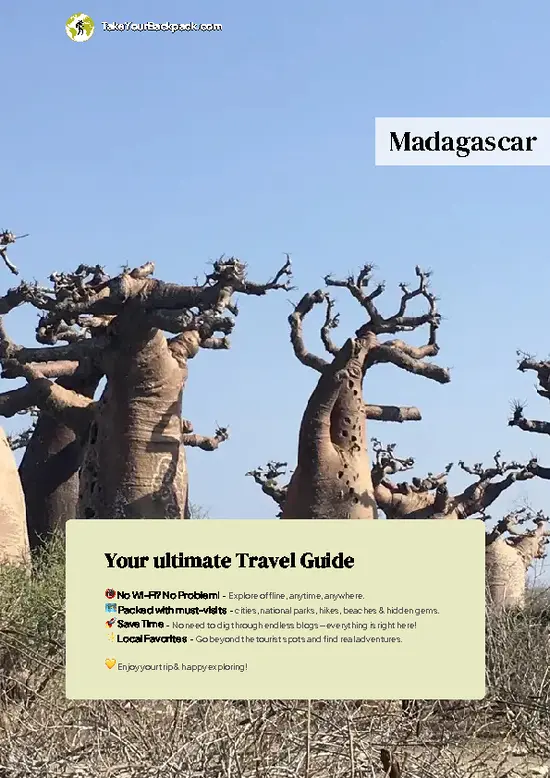
example page 0 from our offline Travel Guide for Madagascar
example page 1 from our offline Travel Guide for Madagascar
example page 2 from our offline Travel Guide for Madagascar
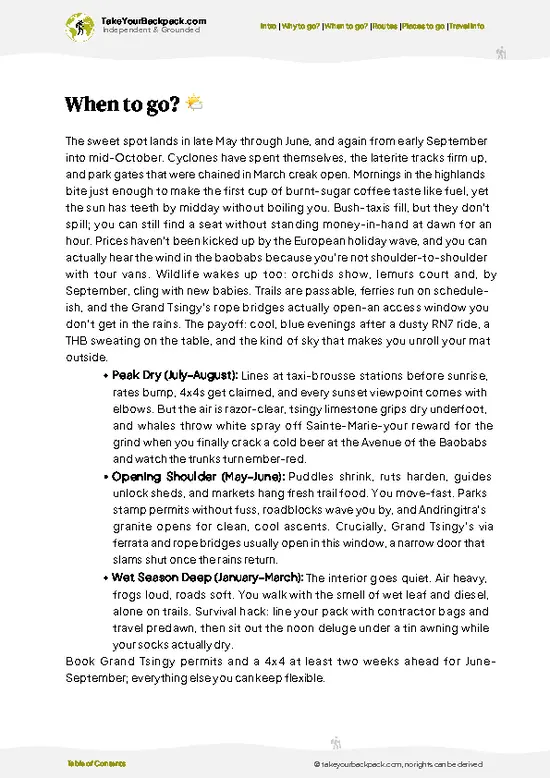
example page 3 from our offline Travel Guide for Madagascar
example page 4 from our offline Travel Guide for Madagascar
example page 5 from our offline Travel Guide for Madagascar
example page 6 from our offline Travel Guide for Madagascar
example page 7 from our offline Travel Guide for Madagascar
The digital guide (418 pages) contains:
110 highlights, ranked by travel appeal
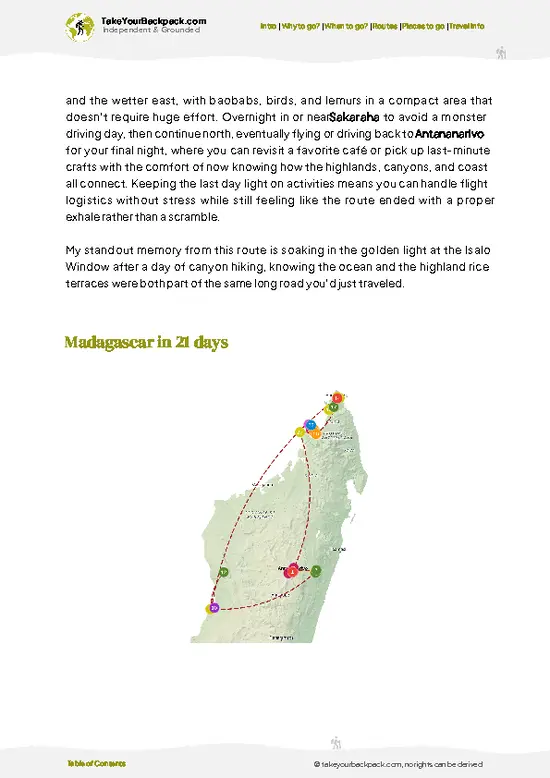
Optimized 7, 14 & 21-day travel routes
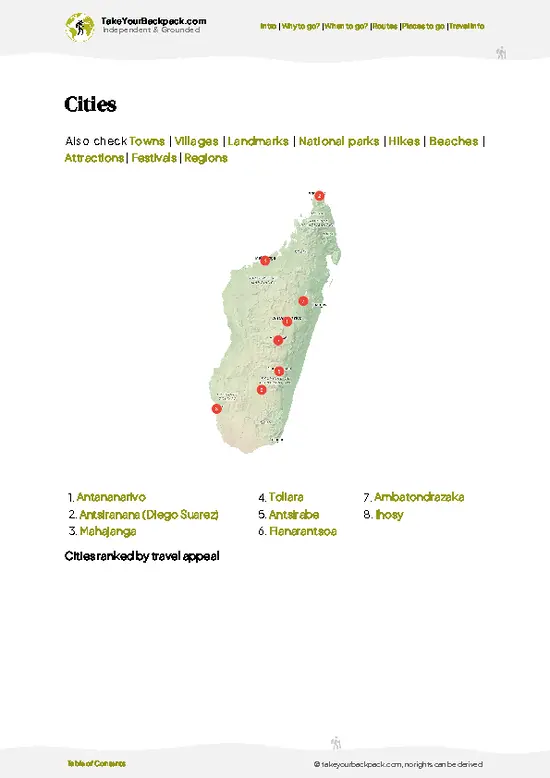
Cities, national parks, landmarks, beaches
How to get around
Offline-friendly for travel without Wi-Fi
👉 Click to see all 30+ guide features

📅 Plan smarter in minutes, not weeks
Month by month travel advice
Festivals & national holidays
Budget expectations

🗺️ Go to the right places, skip the overrated ones
Honest pros & cons of destinations
Top hikes, parks & viewpoints
Lesser-known places most travelers miss
Clear “worth it vs skip it” guidance

🛏️ Travel smoothly without rookie mistakes
Best areas to stay
Transport systems explained simply
Common scams & safety advice
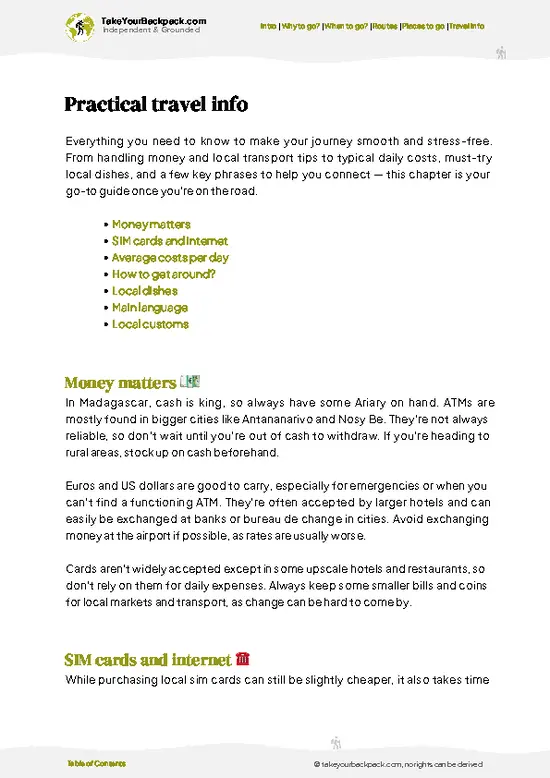
SIM cards, money & practical tips

🌍 Understand the country, not just visit it
Culture & traditions
52 Essential phrases & customs
Festivals worth planning around
Traveler-friendly historical context
Insights that make places more meaningful

📱 Built for real travel conditions
Fully downloadable PDF
Works completely offline
Optimized for phone use
Useful in remote areas & buses
Everything in one place
Save weeks of stressful planning
Get instant access to your full guide. 30‑day money-back guarantee.
+ Add another guide for just US$7.80

By proceeding you agree to our terms.
Sent to your inbox immediately after payment • 100% Secure Checkout
Best Backpacking Travel Advisor 2025 tourism awardBest Backpacking
Travel Advisor
2025
What others say about Take Your Backpack Guides:
⭐⭐⭐⭐⭐
Fantastic, amazing amount of information!
⭐⭐⭐⭐⭐
My goodness this is amazing, it's what I've been looking for hats off too you!
⭐⭐⭐⭐⭐
I think this is absolutely BRILLIANT
⭐⭐⭐⭐
Very complete and informative. It's still missing places, but I gotta to commend you
⭐⭐⭐⭐⭐
This is truly amazing, thank you, can't wait to explore it with my kids!
⭐⭐⭐⭐⭐
Awesome resource, thank you!
⭐⭐⭐⭐⭐
This is amazing! Can't wait to explore the ones I haven't seen
⭐⭐⭐⭐
I love this! Well done, great idea.
⭐⭐⭐⭐⭐
Thanks for taking the time to make this gem!
⭐⭐⭐⭐⭐
This might be the best website I've ever seen.
⭐⭐⭐⭐⭐
Congratulations, and thank you so much for your work; it's incredibly valuable.
⭐⭐⭐⭐
In all seriousness I think you did a great job pointing out the important spots
⭐⭐⭐⭐⭐
10/10 very good
⭐⭐⭐⭐⭐
As someone who's only just starting to visit regularly this is awesome, thank you.
⭐⭐⭐⭐
Thank you very much! I'm going to visit my dad, it's going to be very useful!
⭐⭐⭐⭐⭐
This is really cool! We'll be travelling for the first time and this definitely come in handy.
⭐⭐⭐⭐⭐
You are now our minister of culture, congratulations 👨‍💼
⭐⭐⭐⭐⭐
Just wanted to tell you that this is a pearl! Going to follow your recommendations.
⭐⭐⭐⭐⭐
This is so cool. I'll definitely be using the resource for my travels soon.
⭐⭐⭐⭐⭐
This is very impressive! Good work.
⭐⭐⭐⭐⭐
This is an amazing and informative site. Very well done!

🛏️ Where to stay?How to pick the right area

Ranohira’s backpacker scene centers around the stretch along the main road leading into the town from the national park entrance. This area is where you’ll find the pulse of budget travel—hostels, guesthouses, and small eateries cluster here, creating a low-key social hub. The vibe is relaxed but lively enough to meet fellow travelers swapping stories after a day in Isalo National Park. The air carries a mix of dusty earth and sizzling street food, grounding you in the rawness of this remote place.

Staying here means safety through numbers and easy access to the park shuttles and guides, which … read more 👉
Ranohira’s backpacker scene centers around the stretch along the main road leading into the town from the national park entrance. This area is where you’ll find the pulse of budget travel—hostels, guesthouses, and small eateries cluster here, creating a low-key social hub. The vibe is relaxed but lively enough to meet fellow travelers swapping stories after a day in Isalo National Park. The air carries a mix of dusty earth and sizzling street food, grounding you in the rawness of this remote place.

Staying here means safety through numbers and easy access to the park shuttles and guides, which is crucial since the town itself is small and quiet after sundown. Wander a bit off this main strip, and you’ll hit quieter residential zones that feel isolated and less secure, especially for solo travelers. The main backpacker area also benefits from basic amenities—shops, cafes, and informal tour desks—so you’re not scrambling for essentials.

In short, choose the main road corridor for its blend of community, convenience, and that gritty, authentic edge that makes Ranohira more than just a pit stop. It’s where the backpacker spirit lives, and where your adventure starts before you even hit the trails.

🚌 Getting aroundGetting around like a local

Ranohira moves at its own rhythm — a blend of deliberate calm and bursts of local hustle. The sun slants low in the late afternoon, casting long shadows over dusty streets where the scent of eucalyptus mingles with the faint smoke of cooking fires. This isn’t a place where timetables rule your day; instead, it’s about reading the flow of people, the occasional honk of a taxi-brousse, and the steady shuffle of feet on gravel. You’ll find that patience here isn’t just a virtue; it’s your best tool for unlocking the town’s quiet charm and the wild landscapes beyond.


  • Walking: The heart of Ranohira is compact enough to explore on foot. Walking lets you soak in the dry, warm air, the cracked earth underfoot, and the vibrant chatter of market vendors. It’s free, flexible, and the best way to
read more 👉
Ranohira moves at its own rhythm — a blend of deliberate calm and bursts of local hustle. The sun slants low in the late afternoon, casting long shadows over dusty streets where the scent of eucalyptus mingles with the faint smoke of cooking fires. This isn’t a place where timetables rule your day; instead, it’s about reading the flow of people, the occasional honk of a taxi-brousse, and the steady shuffle of feet on gravel. You’ll find that patience here isn’t just a virtue; it’s your best tool for unlocking the town’s quiet charm and the wild landscapes beyond.


  • Walking: The heart of Ranohira is compact enough to explore on foot. Walking lets you soak in the dry, warm air, the cracked earth underfoot, and the vibrant chatter of market vendors. It’s free, flexible, and the best way to catch the subtle shifts in light and life from dawn to dusk.


  • Taxi-Brousse: These shared minibuses are the lifeline for budget travelers heading to or from Ranohira. They don’t run on a strict schedule — expect departures when full, usually between 6 AM and 5 PM. Fares hover around a few dollars, making them the cheapest option for longer hauls. The ride is bumpy and slow, but it’s a raw, authentic way to meet locals and see the rugged terrain unfold outside your window.


  • Local Taxis: For short hops within town or to nearby sites like Isalo National Park, local taxis offer a quick, if slightly pricier, alternative. They’re easy to flag down, and fares should be negotiated upfront — expect to pay a couple of dollars for a 10-15 minute ride. The comfort is basic, but the drivers know the best routes to avoid the roughest patches of road.


  • Bicycle Rentals: If you want to stretch your legs beyond the town center, renting a bicycle is a smart move. The terrain is mostly flat with some gentle hills, and the dry air keeps things from feeling sticky even under the midday sun. Rentals cost a few dollars per day, and this option gives you the freedom to chase the golden light across the landscape at your own pace.

👛 Costs (as of 3 September 2026)What things cost and how to budget

Backpacking in Ranohira, Madagascar, means embracing a raw, rugged vibe where every dollar counts and the rewards come in the form of wide-open skies and wild landscapes. Here’s how your daily costs typically break down:
  • Dorm Accommodation: Expect to pay around €8-€15 per night for a bed in a basic guesthouse dorm. These places are simple—think mosquito nets, shared bathrooms, and the occasional rooster crowing at dawn. It’s not luxury, but it’s clean and gets you close to the local rhythm.
  • Meals: Local eateries serve up hearty Malagasy dishes for about €2-€5 per meal. Rice with zebu meat or fresh veggies is common, and street food snacks like sambos (fried pastries) cost less than a euro. If you’re craving something more Western or a beer, budget a bit extra—around €3-€6.
  • Local Transport:
read more 👉
Backpacking in Ranohira, Madagascar, means embracing a raw, rugged vibe where every dollar counts and the rewards come in the form of wide-open skies and wild landscapes. Here’s how your daily costs typically break down:
  • Dorm Accommodation: Expect to pay around €8-€15 per night for a bed in a basic guesthouse dorm. These places are simple—think mosquito nets, shared bathrooms, and the occasional rooster crowing at dawn. It’s not luxury, but it’s clean and gets you close to the local rhythm.
  • Meals: Local eateries serve up hearty Malagasy dishes for about €2-€5 per meal. Rice with zebu meat or fresh veggies is common, and street food snacks like sambos (fried pastries) cost less than a euro. If you’re craving something more Western or a beer, budget a bit extra—around €3-€6.
  • Local Transport: Getting around Ranohira is mostly by taxi-brousse or shared taxis, costing roughly €1-€3 for short trips within town or nearby villages. If you’re heading to the park entrance or further afield, expect to pay closer to €5-€10, depending on negotiation skills and timing.
  • Basic Activities/Entry Fees: The big draw here is Isalo National Park. Entry fees hover around €7-€10, plus mandatory guide fees that can add another €10-€15 per day if you join a group. Solo travelers might pay more, but guides are worth it—they know the trails, the best views, and how to spot wildlife.
  • Miscellaneous Expenses: Water, snacks, tips, and small souvenirs usually add up to about €2-€5 daily. Keep some cash handy for unexpected needs—like a quick phone top-up or a cold drink after a long hike.

All told, you’re looking at a daily budget of roughly €20-€40. It’s not dirt cheap, but it’s a fair trade for the chance to walk through landscapes that feel carved by time itself. The key to stretching your budget here is to embrace the local pace—eat where locals eat, share rides, and don’t rush the experience. The slow, sweaty trek through Isalo’s canyons is part of the story, not just a hurdle to the view.


source: madagascar-tourisme.com
⚠️ Prices can change and everyone travels differently, so take this as a rough guide. Hope it helps you plan your adventure!

🚌 Day tripsEasy escapes and nearby places

Ranohira, Madagascar, is a backpacker’s dream base, offering easy access to some of the island’s most captivating landscapes and experiences. Here’s how to make the most of your day trips from this charming town.

Isalo National Park
Just a short drive from Ranohira, Isalo National Park is a must-visit. The park’s dramatic sandstone formations and deep canyons create a surreal backdrop for hiking. Expect to spend about 3-4 hours exploring the trails, with a budget of around $10 for entry and transport. The best time to visit is during the dry season from May to October when the trails are less muddy. A common mistake is underestimating the sun; bring plenty of water and sunscreen to avoid fatigue.
👉 Explore Isalo National Park

La Fenêtre de l’Isalo
This natural rock formation is a stunning … read more 👉
Ranohira, Madagascar, is a backpacker’s dream base, offering easy access to some of the island’s most captivating landscapes and experiences. Here’s how to make the most of your day trips from this charming town.

Isalo National Park
Just a short drive from Ranohira, Isalo National Park is a must-visit. The park’s dramatic sandstone formations and deep canyons create a surreal backdrop for hiking. Expect to spend about 3-4 hours exploring the trails, with a budget of around $10 for entry and transport. The best time to visit is during the dry season from May to October when the trails are less muddy. A common mistake is underestimating the sun; bring plenty of water and sunscreen to avoid fatigue.
👉 Explore Isalo National Park

La Fenêtre de l’Isalo
This natural rock formation is a stunning viewpoint that’s worth the trek. It’s about a 1.5-hour hike from the park entrance, and the panoramic views at sunset are breathtaking. The round trip takes about 3 hours, and you can do it for less than $5 if you walk instead of hiring a guide. The golden hour casts a warm glow, making the effort feel rewarding. Many first-timers miss the trailhead; look for the sign near the park entrance.


Ranohira Village
Take a leisurely day to explore the village itself. Engage with locals, sample traditional Malagasy dishes, and soak in the vibrant culture. This is a free experience, but budget around $5 for food and small purchases. Spend a few hours wandering, especially in the morning when the market buzzes with life. A common oversight is sticking to the main roads; venture into side streets for a more authentic feel.


Blue Pool
A hidden oasis about an hour’s hike from the village, the Blue Pool is a refreshing spot to cool off after a day of hiking. The water is crystal clear, and you can easily spend a couple of hours here. The round trip is about 2-3 hours, and it’s free, though you might want to bring snacks. The best time to go is early morning to avoid crowds. Many backpackers miss this gem because they don’t ask locals for directions; don’t hesitate to chat!
Want to know what more Madagascar offers?
The Madagascar Travel Guide describes 110 highlights, from cities to national parks, from beaches to hikes

Get the Travel Guide -

🛡️ SafetyTraveler Safety Guide

Ranohira is generally safe, but like any place, a little awareness goes a long way. The town’s charm lies in its dusty streets and vibrant markets, but keep your belongings close, especially in crowded areas. Pickpocketing can happen, particularly near the entrance to Isalo National Park, where excitement can distract you.

If you’re traveling solo, stick to well-lit areas after dark. The atmosphere shifts; the lively chatter fades, and shadows stretch. It’s best to grab a bite at a local eatery before sunset.

Scams are rare, but be cautious of overly friendly strangers offering unsolicited help. Politely decline and trust your instincts. Everyday annoyances might include aggressive vendors or the occasional stray dog, but a firm “no” usually does the trick. Embrace the quirks; they’re part … read more 👉
Ranohira is generally safe, but like any place, a little awareness goes a long way. The town’s charm lies in its dusty streets and vibrant markets, but keep your belongings close, especially in crowded areas. Pickpocketing can happen, particularly near the entrance to Isalo National Park, where excitement can distract you.

If you’re traveling solo, stick to well-lit areas after dark. The atmosphere shifts; the lively chatter fades, and shadows stretch. It’s best to grab a bite at a local eatery before sunset.

Scams are rare, but be cautious of overly friendly strangers offering unsolicited help. Politely decline and trust your instincts. Everyday annoyances might include aggressive vendors or the occasional stray dog, but a firm “no” usually does the trick. Embrace the quirks; they’re part of the experience. Carry yourself with confidence, and you’ll navigate Ranohira like a pro.

FAQCommon questions from travelers

Yes, Ranohira is worth visiting for its proximity to Isalo National Park, a highlight for hiking and unique landscapes. It offers more than just a stopover with opportunities for canyon walks, natural pools, and wildlife spotting.
You need at least 2 to 3 days in Ranohira to explore Isalo National Park thoroughly and enjoy the local village atmosphere. This allows time for multiple hikes and relaxation in natural pools.
No, Ranohira is not practical as a day trip from nearby cities due to travel times. It is about 240 km from Tulear and 700 km from Antananarivo, requiring several hours of driving each way.
⚠️ Things can change over time, so always validate details locally before you go.

Other Malagasy towns near Ranohira

Explore more nearby:

  • Sakaraha—sapphire mines, dry bushland, roadside stalls| 100 km away
  • Betroka—barren plateaus, Bara cattle herders, southern crossroads| 106 km away
  • Ambalavao—granite outcrops, zebu markets, Antemoro paper workshops| 176 km away

💡 Not sure where to go next?
Create a personalized itinerary for Madagascar including Ranohira and the places that fit your trip.

Generate my itinerary

👉 Discover all towns

Or checkout all Madagascar has to offer (think cities, towns, villages, national parks, hikes, beaches, festivals)
Country photo of Madagascar

We 💚 feedbackParting advice and final tips

Ranohira is a gateway to the surreal landscapes of Isalo National Park, where the sun sets the sandstone cliffs ablaze in hues of orange and pink. You’ll feel like you’ve stepped onto another planet. But be ready for the heat; it can be relentless. Hydration is key, and the trails can be rugged. Embrace the sweat—it’s part of the adventure. The payoff? Those breathtaking views are worth every drop.

✈️ When did I visit Madagascar?
Madagascar I went backpacking in October 2019. With a friend I rented a 4WD and drove around the southern part of Madagascar.

✍️ Help improve this page!
The information on this page is based on my own backpacking experience in Madagascar, supplemented with up-to-date research and feedback from other travelers. Travel details can change, so if you notice anything outdated or incomplete, feel free to let me know.


🙋‍♂️ Give feedback

👋 Meet the founderWho’s Behind Take Your Backpack?

Johan, backpacker and founder of TakeYourBackpackHi, I’m Johan (Netherlands 🇳🇱), the creator of TakeYourBackpack. Over the past decade, I’ve backpacked through 80+ countries across six continents, gaining extensive experience with independent travel, long-term trips, and overland routes.

This site is built on a combination of firsthand travel experience and carefully curated insights from other backpackers. Many guides are based on places I’ve personally visited, while others bring together tips, observations, and practical advice shared by trusted travelers I’ve met along the way.

The goal is to provide realistic, experience-driven guidance — not generic itineraries — so you can explore destinations with better context, clearer expectations, and more confidence.

Get full Madagascar guide •
Instant download • 110 highlights • Full Offline guide