×

Malaysia🇲🇾 | landmarksMulu Cavesvast chambers, rainforest setting, bat exodus | things to do and best time to go

Explore Gua TempurungExplore Bario

Backpacking in Mulu Caves
🌟 Highlightunique site ranked #2
By Johan Kruseman 🇳🇱 | Updated June 2, 2026

Most people think Mulu Caves is just a quick “bat exodus for the ‘Gram” stop in Borneo, something you tick off between beach days. That’s wrong. Mulu, in Sarawak on Malaysian Borneo, is an entire underground world that quietly eats three days of your life in the best way.

For backpackers, it’s both magic and mildly painful. The wow-factor is off the charts: caverns so huge your headlamp feels like a joke, razor-sharp limestone pinnacles, and that nightly river of bats pouring out of Deer Cave like smoke. But it’s not cheap by Southeast Asia standards, and you can’t just wander freely; park rules, mandatory guides, and set tours keep things controlled and a bit theme-park-ish. Access is usually by small plane, so no “I’ll just bus it tomorrow” flexibility. Still, when you’re deep in a silent chamber, watching dust sparkle in your torch beam, the crowds and costs fade fast.

Discover everything you want to know in the 📖 Malaysia Travel Guide.
Loading the map 🌍
CLICK TO FILTER
cities
towns
villages
landmarks
national parks
hikes
beaches
attractions
festivals
regions
SHOW COUNTRY’S BESTSHOW ALL

✨ Why go?
Ranked #2 unique site in Malaysia
Why visitors keep coming back

The Mulu Caves in Malaysia are not just another stop on your backpacking route; they’re a must-experience for anyone serious about the wonders of nature. Sure, you’ll encounter crowds—especially during peak season—but don’t let that deter you. The scale of these caves is mind-blowing. You’re walking through chambers that could fit entire cathedrals, and the echoes of dripping water create a soundtrack that’s both eerie and beautiful.

The cost is surprisingly low for what you get. Entry fees are reasonable, and guided tours are worth every penny. You’ll learn about the unique ecosystems and the indigenous cultures that call this place home. Plus, the accessibility is a bonus; you can easily fit Mulu into a broader route through Borneo, making it a natural stop between other adventures.

What … read more 👉
The Mulu Caves in Malaysia are not just another stop on your backpacking route; they’re a must-experience for anyone serious about the wonders of nature. Sure, you’ll encounter crowds—especially during peak season—but don’t let that deter you. The scale of these caves is mind-blowing. You’re walking through chambers that could fit entire cathedrals, and the echoes of dripping water create a soundtrack that’s both eerie and beautiful.

The cost is surprisingly low for what you get. Entry fees are reasonable, and guided tours are worth every penny. You’ll learn about the unique ecosystems and the indigenous cultures that call this place home. Plus, the accessibility is a bonus; you can easily fit Mulu into a broader route through Borneo, making it a natural stop between other adventures.

What really sets Mulu apart is the authenticity. You’re not just ticking off a box for Instagram; you’re immersing yourself in a living, breathing ecosystem. The real magic lies in the experience of being surrounded by nature’s grandeur, far from the polished tourist traps. Embrace the journey, and you’ll find that Mulu is worth every step.
Want to include Mulu Caves in your Malaysia route?
Create a personalized Malaysia itinerary that includes Mulu Caves and the places that fit your trip — based on your travel style, budget, and available time. Get your route in seconds.

Generate my trip

💡 HighlightsDon't-miss highlights and experiences

  1. Deer Cave & the Bat Exodus — The massive entrance chamber that dumps out hundreds of thousands of bats at dusk is pure theatre: you can feel and hear the airflow as the bats stream out in a dark, twisting ribbon. It’s easy to access from the park base and still gives that “wow” moment without a knife-edge hike. (Personal favorite — nothing beats standing on the boardwalk as the sky fills.)
  2. Sarawak Chamber — One of the largest known cave chambers on Earth by area, this room is cathedral-scale; photos don’t really convey the sheer empty volume. Its scale creates unusual acoustics and microclimates, and the sense of being tiny in a natural cathedral is unforgettable.
  3. Clearwater Cave system — A vast river cave network with crystal-clear underground streams and long mapped passages — it’s a
read more 👉
  1. Deer Cave & the Bat Exodus — The massive entrance chamber that dumps out hundreds of thousands of bats at dusk is pure theatre: you can feel and hear the airflow as the bats stream out in a dark, twisting ribbon. It’s easy to access from the park base and still gives that “wow” moment without a knife-edge hike. (Personal favorite — nothing beats standing on the boardwalk as the sky fills.)
  2. Sarawak Chamber — One of the largest known cave chambers on Earth by area, this room is cathedral-scale; photos don’t really convey the sheer empty volume. Its scale creates unusual acoustics and microclimates, and the sense of being tiny in a natural cathedral is unforgettable.
  3. Clearwater Cave system — A vast river cave network with crystal-clear underground streams and long mapped passages — it’s a caver’s dream and a scientist’s playground. Short guided trips let you float on an underground river; longer treks reveal how extensive and interconnected the whole system is.
  4. The Pinnacles (Gunung Api) — Needle-like limestone spires on a mountain ridge that look sculpted by another planet. Getting there is a serious trek (steep, hot, and often muddy), but the skyline at sunrise and the rock formations are unlike anything else in Borneo.
  5. Lang’s Cave — The most visitor-friendly show cave in the park with well-lit trails, impressive stalactites and stalagmites, and explanatory signs. It’s a good intro if you want dramatic formations without the effort of more remote cave trips.
  6. Canopy Skywalk and rainforest trails — A high walkway through the dipterocarp canopy that gives a different perspective on the karst landscape and lets you spot birds, hornbills, and the park’s huge biodiversity. It’s a calm counterpoint to the subterranean drama.
  7. UNESCO karst landscape & cultural context — The caves are part of Gunung Mulu National Park, a UNESCO World Heritage site because of its limestone karst, biodiversity and geological importance. That status means well-maintained trails, research signage, and a sense that you’re visiting somewhere globally significant, not just a pretty cave.
Spotted a mistake or missing something? Contact us.

🌤️ When to go?Choosing the right time of year


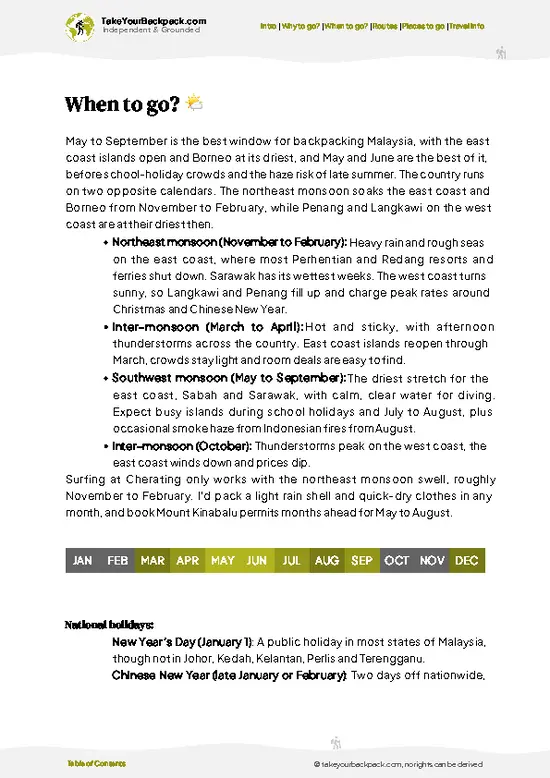
  • Topic: Weather – The dry season from March to September is your best bet. Rainfall drops significantly, making the jungle trails less of a mudslide and the caves safer to explore. The wet season (October to February) floods trails and can close some cave entrances.

  • Topic: Temperature – Expect a steady 24-32°C (75-90°F) year-round. The cave interiors stay cool, around 20-22°C (68-72°F), which is a welcome break from the tropical heat outside.

  • Topic: Daylight Hours – Daylight is pretty consistent, about 12 hours daily. Start early to maximize your time underground and avoid the afternoon humidity.

  • Topic: Crowds – Peak months (June-August) bring in more tourists, especially on weekends. If you want solitude, aim for shoulder months like March or September when the crowds thin but the
read more 👉

  • Topic: Weather – The dry season from March to September is your best bet. Rainfall drops significantly, making the jungle trails less of a mudslide and the caves safer to explore. The wet season (October to February) floods trails and can close some cave entrances.

  • Topic: Temperature – Expect a steady 24-32°C (75-90°F) year-round. The cave interiors stay cool, around 20-22°C (68-72°F), which is a welcome break from the tropical heat outside.

  • Topic: Daylight Hours – Daylight is pretty consistent, about 12 hours daily. Start early to maximize your time underground and avoid the afternoon humidity.

  • Topic: Crowds – Peak months (June-August) bring in more tourists, especially on weekends. If you want solitude, aim for shoulder months like March or September when the crowds thin but the weather stays dry.

  • Topic: Seasonal Activities – Bat exodus happens year-round but is most dramatic in the dry season evenings. Also, some guided tours only run in the dry months due to safety concerns.

  • Topic: Price Fluctuations – Accommodation and tours spike during peak season. Booking in shoulder months can save you 20-30% without sacrificing the experience.


Pro-tip: Visit just before or after peak season to dodge crowds and rain, snag better deals, and still catch the caves at their most accessible and awe-inspiring.


source: climatestotravel.comJANJanuary: fair for travelingFEBFebruary: fair for travelingMARMarch: highly recommended for travelingAPRApril: highly recommended for travelingMAYMay: highly recommended for travelingJUNJune: good for travelingJULJuly: good for travelingAUGAugust: good for travelingSEPSeptember: highly recommended for travelingOCTOctober: below average for travelingNOVNovember: below average for travelingDECDecember: below average for traveling
malaysia-unique-site-mulu-caves
© Google |

✈️ The backpacker research shortcutMalaysia Travel Guide

An offline-friendly backpacking guide with optimized travel routes, ranked highlights, transport advice, and the best areas to stay.
example page 0 from our offline Travel Guide for Malaysia
example page 1 from our offline Travel Guide for Malaysia
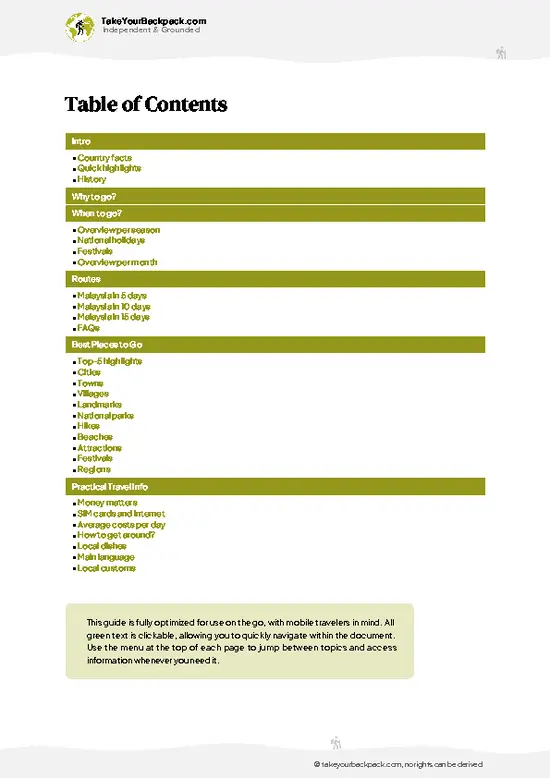
example page 2 from our offline Travel Guide for Malaysia
example page 3 from our offline Travel Guide for Malaysia
example page 4 from our offline Travel Guide for Malaysia
example page 5 from our offline Travel Guide for Malaysia
example page 6 from our offline Travel Guide for Malaysia
example page 7 from our offline Travel Guide for Malaysia
The digital guide (407 pages) contains:
107 highlights, ranked by travel appeal
Optimized 5, 10 & 15-day travel routes
Cities, national parks, landmarks, beaches
How to get around
Offline-friendly for travel without Wi-Fi
👉 Click to see all 30+ guide features

📅 Plan smarter in minutes, not weeks
Month by month travel advice
Festivals & national holidays
Budget expectations

🗺️ Go to the right places, skip the overrated ones
Honest pros & cons of destinations
Top hikes, parks & viewpoints
Lesser-known places most travelers miss
Clear “worth it vs skip it” guidance

🛏️ Travel smoothly without rookie mistakes
Best areas to stay
Transport systems explained simply
Common scams & safety advice
SIM cards, money & practical tips

🌍 Understand the country, not just visit it
Culture & traditions
52 Essential phrases & customs
Festivals worth planning around
Traveler-friendly historical context
Insights that make places more meaningful

📱 Built for real travel conditions
Fully downloadable PDF
Works completely offline
Optimized for phone use
Useful in remote areas & buses
Everything in one place
Save weeks of stressful planning
Get instant access to your full guide. 30‑day money-back guarantee.


By proceeding you agree to our terms.
Sent to your inbox immediately after payment • 100% Secure Checkout
Best Backpacking Travel Advisor 2025 tourism awardBest Backpacking
Travel Advisor
2025
What others say about Take Your Backpack Guides:
⭐⭐⭐⭐⭐
Fantastic, amazing amount of information!
⭐⭐⭐⭐⭐
My goodness this is amazing, it's what I've been looking for hats off too you!
⭐⭐⭐⭐⭐
I think this is absolutely BRILLIANT
⭐⭐⭐⭐
Very complete and informative. It's still missing places, but I gotta to commend you
⭐⭐⭐⭐⭐
This is truly amazing, thank you, can't wait to explore it with my kids!
⭐⭐⭐⭐⭐
Awesome resource, thank you!
⭐⭐⭐⭐⭐
This is amazing! Can't wait to explore the ones I haven't seen
⭐⭐⭐⭐
I love this! Well done, great idea.
⭐⭐⭐⭐⭐
Thanks for taking the time to make this gem!
⭐⭐⭐⭐⭐
This might be the best website I've ever seen.
⭐⭐⭐⭐⭐
Congratulations, and thank you so much for your work; it's incredibly valuable.
⭐⭐⭐⭐
In all seriousness I think you did a great job pointing out the important spots
⭐⭐⭐⭐⭐
10/10 very good
⭐⭐⭐⭐⭐
As someone who's only just starting to visit regularly this is awesome, thank you.
⭐⭐⭐⭐
Thank you very much! I'm going to visit my dad, it's going to be very useful!
⭐⭐⭐⭐⭐
This is really cool! We'll be travelling for the first time and this definitely come in handy.
⭐⭐⭐⭐⭐
You are now our minister of culture, congratulations 👨‍💼
⭐⭐⭐⭐⭐
Just wanted to tell you that this is a pearl! Going to follow your recommendations.
⭐⭐⭐⭐⭐
This is so cool. I'll definitely be using the resource for my travels soon.
⭐⭐⭐⭐⭐
This is very impressive! Good work.
⭐⭐⭐⭐⭐
This is an amazing and informative site. Very well done!

🛏️ Where to stay?How to pick the right area

Staying near the Mulu Caves in Malaysia is a balancing act between adventure and comfort. First off, you’ll want to be in the vicinity of the Mulu National Park entrance. This area is your best bet for easy access to the caves and trails. It’s where the action is, but don’t expect solitude. Crowds can be a reality, especially during peak seasons.

Look for accommodations in the small village of Mulu itself. It’s a tight-knit community where you can find budget-friendly lodgings. The vibe here is laid-back, and you’ll meet fellow travelers eager to swap stories. Safety isn’t a concern; locals … read more 👉
Staying near the Mulu Caves in Malaysia is a balancing act between adventure and comfort. First off, you’ll want to be in the vicinity of the Mulu National Park entrance. This area is your best bet for easy access to the caves and trails. It’s where the action is, but don’t expect solitude. Crowds can be a reality, especially during peak seasons.

Look for accommodations in the small village of Mulu itself. It’s a tight-knit community where you can find budget-friendly lodgings. The vibe here is laid-back, and you’ll meet fellow travelers eager to swap stories. Safety isn’t a concern; locals are friendly and welcoming.

If you’re feeling a bit more adventurous, consider staying in one of the eco-lodges or homestays. These spots often offer a more authentic experience, with meals made from local ingredients and the chance to connect with the culture.

Don’t overlook the communal areas; they’re where the real magic happens. Share a meal, swap tips, and maybe even join a group for a night hike. The camaraderie among backpackers here is palpable, and it’s what makes the journey worthwhile. Embrace the chaos, and you’ll find the heart of Mulu.

👛 Costs (as of 8 May 2025)Travel costs and budget guide for Mulu Caves

Visiting the Mulu Caves in Malaysia isn’t just about the breathtaking formations; it’s also about navigating the costs that come with the adventure. Here’s a breakdown of what you can expect to spend.
  • Entrance Fees: Expect to pay around €20 to €30 (USD $22 to $33) for a day pass. This grants you access to several caves, but some specialized tours may cost more. The experience is worth it, but be ready for the price tag.
  • Guided Tours: If you want to dive deeper into the caves, guided tours range from €40 to €100 (USD $44 to $110), depending on the length and complexity. Some tours include equipment, while others might not, so check the details before booking.
  • Accommodation: Options vary widely. Budget hostels start at around €10 (USD $11) per night, while mid-range hotels can go up to €50 (USD
read more 👉
Visiting the Mulu Caves in Malaysia isn’t just about the breathtaking formations; it’s also about navigating the costs that come with the adventure. Here’s a breakdown of what you can expect to spend.
  • Entrance Fees: Expect to pay around €20 to €30 (USD $22 to $33) for a day pass. This grants you access to several caves, but some specialized tours may cost more. The experience is worth it, but be ready for the price tag.
  • Guided Tours: If you want to dive deeper into the caves, guided tours range from €40 to €100 (USD $44 to $110), depending on the length and complexity. Some tours include equipment, while others might not, so check the details before booking.
  • Accommodation: Options vary widely. Budget hostels start at around €10 (USD $11) per night, while mid-range hotels can go up to €50 (USD $55). If you’re feeling adventurous, consider staying in a longhouse for a unique experience, which can cost about €25 (USD $28).
  • Food: Meals can be quite affordable. Street food and local eateries offer dishes for as low as €2 to €5 (USD $2.20 to $5.50). If you prefer dining in restaurants, expect to pay around €10 to €20 (USD $11 to $22) for a decent meal.
  • Transportation: Getting to Mulu can be pricey. Flights from major cities in Malaysia can range from €50 to €150 (USD $55 to $165). Once there, local transport options like taxis or shuttles are available, costing about €5 to €15 (USD $5.50 to $16.50) for short trips.

Be prepared for the costs, but know that the experience of exploring the Mulu Caves is genuinely transformative. The crowds can be overwhelming, but the beauty and scale of the caves make it all worthwhile.
⚠️ Prices can change and everyone travels differently, so take this as a rough guide. Hope it helps you plan your adventure!

Other Malaysian landmarks near Mulu Caves

Explore more nearby:

  • Batu Caves—towering limestone, Hindu shrines, steep stairway| 1469 km away
  • Gua Tempurung—underground river, marble chambers, stalactite formations| 1520 km away

💡 Not sure where to go next?
Create a personalized itinerary for Malaysia including Mulu Caves and the places that fit your trip.

Generate my itinerary

👉 Discover all landmarks

Or checkout all Malaysia has to offer (think cities, towns, villages, national parks, hikes, beaches, festivals)
Country photo of Malaysia

We 💚 feedbackSumming up the experience

Mulu Caves are a wild ride. The sheer scale of the chambers and the intricate limestone formations will leave you in awe. But let’s be real: the crowds can be overwhelming, especially during peak season. You’ll share the experience with plenty of other adventurers, which can dilute the magic. Still, if you can embrace the chaos, the beauty here is worth every step. Just go in with your eyes wide open.

✈️ When did I visit Malaysia?
As part of my 1.5 year travel around the world trip, I visited Malaysia in January 2016.

✍️ Help improve this page!
The information on this page is based on my own backpacking experience in Malaysia, supplemented with up-to-date research and feedback from other travelers. Travel details can change, so if you notice anything outdated or incomplete, feel free to let me know.


🙋‍♂️ Give feedback

👋 Meet the founderWho’s Behind Take Your Backpack?

Johan, backpacker and founder of TakeYourBackpackHi, I’m Johan (Netherlands 🇳🇱), the creator of TakeYourBackpack. Over the past decade, I’ve backpacked through 80+ countries across six continents, gaining extensive experience with independent travel, long-term trips, and overland routes.

This site is built on a combination of firsthand travel experience and carefully curated insights from other backpackers. Many guides are based on places I’ve personally visited, while others bring together tips, observations, and practical advice shared by trusted travelers I’ve met along the way.

The goal is to provide realistic, experience-driven guidance — not generic itineraries — so you can explore destinations with better context, clearer expectations, and more confidence.

Get full Malaysia guide •
Instant download • 107 highlights • Full Offline guide