×

Mali🇲🇱 | citiesKayesred cliffs, Senegal River, colonial-era railway, arid landscapes | things to do and best time to go

Explore SegouExplore Koulikoro

Backpacking in Kayes
🌟 Highlightcity ranked #4
By Johan Kruseman 🇳🇱 | Updated August 2, 2026

Forget the myth: Kayes is not just a hot, dusty stopover on the way to somewhere else. Tucked in Mali’s far west, near the Senegalese border, Kayes is a crossroads city with a pulse all its own. For backpackers, it’s a study in trade-offs. The colonial-era train station and the crumbling, sunbaked facades along Avenue de l’Indépendance hint at a grander past, while the lively market and riverside evenings offer a taste of daily Malian life. You won’t find a backpacker scene here—expect to be the only foreigner in most places, which can be thrilling or isolating depending on your mood. Travel is slow, costs are low, and comfort is basic. Compared to Bamako or Mopti, Kayes is grittier, less cosmopolitan, but also more raw and real. The heat is legendary; the welcome, surprisingly warm.

Discover everything you want to know in the 📖 Mali Travel Guide.
Safety warning

The current risk level for Mali is high. Check the advice before going.


Get your Mali guide
72 ranked highlights, routes & tips, works offline (299 pages)
Loading the map 🌍
CLICK TO FILTER
cities
towns
landmarks
national parks
hikes
attractions
festivals
regions
SHOW COUNTRY’S BESTSHOW ALL

✨ Why go?
Ranked #4 city in Mali
Reasons people choose to visit here

Kayes, Mali, is a strategic stop for backpackers weaving through West Africa. It’s not just a place to pass through; it’s a basecamp for those eager to explore the surrounding landscapes. The city offers a mix of affordable hostels and local eateries, making it easy to stretch your budget while enjoying authentic flavors.

You’ll find the streets walkable, allowing you to soak in the local vibe without the hassle of transport. While the nightlife isn’t wild, it’s laid-back and offers a chance to connect with fellow travelers over a cold drink. The day trips from Kayes are where the real adventure lies, but you’ll want to spend a night or two to recharge and plan.

For those on a longer journey, Kayes serves as a gateway to other destinations, making onward travel straightforward. If you’re … read more 👉
Kayes, Mali, is a strategic stop for backpackers weaving through West Africa. It’s not just a place to pass through; it’s a basecamp for those eager to explore the surrounding landscapes. The city offers a mix of affordable hostels and local eateries, making it easy to stretch your budget while enjoying authentic flavors.

You’ll find the streets walkable, allowing you to soak in the local vibe without the hassle of transport. While the nightlife isn’t wild, it’s laid-back and offers a chance to connect with fellow travelers over a cold drink. The day trips from Kayes are where the real adventure lies, but you’ll want to spend a night or two to recharge and plan.

For those on a longer journey, Kayes serves as a gateway to other destinations, making onward travel straightforward. If you’re looking for a place that balances comfort and value, Kayes fits the bill, whether you’re staying a while or just passing through.
Want to include Kayes in your Mali route?
Create a personalized Mali itinerary that includes Kayes and the places that fit your trip — based on your travel style, budget, and available time. Get your route in seconds.

Generate my trip

💡 HighlightsWhat this place is best known for

  • Gare de Kayes (Dakar-Niger railway station) — The historic rail hub that put Kayes on the map; great for people-watching, old colonial architecture, and catching a slow, atmospheric train if you want to travel overland.
  • Marché central de Kayes — A loud, colorful market where you’ll find fresh produce, spices, fabrics, phone repair stalls and the daily rhythm of the city; a good place to meet locals and sample street food.
  • Quai du fleuve Sénégal / riverfront — The Senegal River waterfront is where life gathers: fishermen, ferry crossings and small boat trips upriver. Early morning or late afternoon light is worth the walk.
  • Grande Mosquée de Kayes — The city’s main mosque and social center; architecturally modest but culturally central, especially during prayer times and festivals (observe
read more 👉
  • Gare de Kayes (Dakar-Niger railway station) — The historic rail hub that put Kayes on the map; great for people-watching, old colonial architecture, and catching a slow, atmospheric train if you want to travel overland.
  • Marché central de Kayes — A loud, colorful market where you’ll find fresh produce, spices, fabrics, phone repair stalls and the daily rhythm of the city; a good place to meet locals and sample street food.
  • Quai du fleuve Sénégal / riverfront — The Senegal River waterfront is where life gathers: fishermen, ferry crossings and small boat trips upriver. Early morning or late afternoon light is worth the walk.
  • Grande Mosquée de Kayes — The city’s main mosque and social center; architecturally modest but culturally central, especially during prayer times and festivals (observe local dress and etiquette).
  • Dépôt et ateliers du chemin de fer — The railway workshops and yards next to the station: dusty, mechanic-filled, and historically interesting if you like industrial heritage and old locomotives (ask before photographing or entering).
  • Boulevard et quartiers coloniaux — Stroll the old colonial-era streets near the center to see weathered colonial buildings, government offices and shaded squares—small-scale architecture that tells the city’s history.
  • Marché des artisans / quartier des forgerons — A compact area of craftsmen making metalwork, leather goods and sewn textiles; good for picking up sturdy, locally made souvenirs and watching skills in action.
  • Maison des Jeunes et de la Culture (MJC) — The local cultural center where music nights, theater and community events happen; check the calendar for live performances and local dance troupes.
  • Place centrale / square with monuments — The main civic square (often called Place de l’Indépendance or similar) where official events, markets and gatherings happen—useful for sensing civic life and snapping cityscape photos.
  • Gare routière et carrefour des transports — The coach/bush taxi station: chaotic, efficient and indispensable for moving on. It’s a living place that reveals daily movement, trade routes and how locals travel regionally.
A few real, visitable spots a short drive from Kayes worth day-tripping to are Fort Médine (historic riverside fort), the Gouina Falls area on the Sénégal River, and the nearby gold-mining towns and villages around Kéniéba — all good for history, river scenery or regional color.
Spotted a mistake or missing something? Contact us.

🏘️ NeighborhoodsKey areas and districts to know

Kayes, a bustling hub in Mali, offers a unique blend of culture and practicality for backpackers. Here’s a breakdown of key neighborhoods to help you navigate your stay.

Centre Ville
This is the heart of Kayes. It’s vibrant, with local markets and street food that pulse with life. Costs are moderate, making it budget-friendly. Walkability is high, so you can easily explore on foot. Nightlife is low-key, with a few bars and cafes. Perfect for short stays, as you’ll find essential services nearby.

Bamako Road
A bit more laid-back, this area is ideal for those seeking a quieter vibe. It’s slightly more expensive but offers comfortable guesthouses. Transport access is good, with easy connections to other parts of the city. Great for longer stays, as you can enjoy a slower pace while still … read more 👉
Kayes, a bustling hub in Mali, offers a unique blend of culture and practicality for backpackers. Here’s a breakdown of key neighborhoods to help you navigate your stay.

Centre Ville
This is the heart of Kayes. It’s vibrant, with local markets and street food that pulse with life. Costs are moderate, making it budget-friendly. Walkability is high, so you can easily explore on foot. Nightlife is low-key, with a few bars and cafes. Perfect for short stays, as you’ll find essential services nearby.

Bamako Road
A bit more laid-back, this area is ideal for those seeking a quieter vibe. It’s slightly more expensive but offers comfortable guesthouses. Transport access is good, with easy connections to other parts of the city. Great for longer stays, as you can enjoy a slower pace while still being close to the action.

Kangaba District
This neighborhood is a hidden treasure for nature lovers. It’s a bit further out, so costs can vary. The walkability decreases, but the scenery makes up for it. Nightlife is virtually non-existent, making it perfect for those who want peace. Best suited for longer stays, where you can immerse yourself in local life.

Sikasso Road
A bustling area with a mix of locals and travelers. It’s affordable and offers a range of accommodations. Walkability is decent, but expect some hustle and bustle. Nightlife is moderate, with local music and gatherings. Good for both short and longer stays, as it provides a balanced experience.

⌛️ 1 daySeeing the highlights in 24 hours

Kayes, Mali, is a vibrant hub where the pulse of the Niger River meets the rich tapestry of local culture. This city, often overlooked by travelers, offers a unique blend of history, bustling markets, and warm hospitality. Spending a day here can be a delightful adventure if you know where to focus your energy.

Start your morning at the bustling Kayes Market in the heart of the city. The aroma of spices fills the air as vendors showcase colorful textiles, fresh produce, and handmade crafts. Engage with locals; their stories are as rich as the goods they sell. After soaking in the market’s energy, head to the nearby Fort of Kayes, a relic from the colonial era. Climb to the top for panoramic views of the city and the river, a perfect spot for some memorable photos.

As the sun climbs higher, … read more 👉
Kayes, Mali, is a vibrant hub where the pulse of the Niger River meets the rich tapestry of local culture. This city, often overlooked by travelers, offers a unique blend of history, bustling markets, and warm hospitality. Spending a day here can be a delightful adventure if you know where to focus your energy.

Start your morning at the bustling Kayes Market in the heart of the city. The aroma of spices fills the air as vendors showcase colorful textiles, fresh produce, and handmade crafts. Engage with locals; their stories are as rich as the goods they sell. After soaking in the market’s energy, head to the nearby Fort of Kayes, a relic from the colonial era. Climb to the top for panoramic views of the city and the river, a perfect spot for some memorable photos.

As the sun climbs higher, make your way to the neighborhood of Kourouma. Here, you’ll find the lesser-known but fascinating Museum of Kayes. It’s a small space, but it’s packed with artifacts and exhibits that tell the story of the region’s history and culture. Spend some time exploring; it’s a refreshing break from the more touristy spots.

In the afternoon, stroll along the banks of the Niger River. The riverside is a great place to relax and watch local fishermen at work. Grab a bite at a nearby eatery; try the local dish, tô, a staple made from millet.

As evening approaches, head back to the city center. The streets come alive with music and laughter. Find a local spot to enjoy a cold bissap drink while watching the sunset. This is where Kayes truly shines, as the community gathers to unwind. You’ll leave with a deeper appreciation for this often-missed corner of Mali, feeling like you’ve uncovered a piece of its soul.
Turn your Kayes visit into an Mali adventure
Build a complete Mali route with Kayes, hidden gems, must-see destinations, and realistic travel times included.

Generate my trip

🌤️ When to go?Seasonal considerations and timing


  • Topic: Weather – Kayes sits in a hot semi-arid zone. The dry season from November to May offers clear skies and minimal rain, making trekking and outdoor activities far more manageable. The wet season, June to October, brings heavy rains that can turn dirt roads into mud traps and limit mobility.

  • Topic: Temperature – Expect highs around 35–40°C (95–104°F) in the hottest months, especially March to May. Nights cool down to about 20°C (68°F) during the dry season, offering relief. The wet season slightly lowers daytime highs but adds humidity, which can sap energy fast.

  • Topic: Daylight Hours – Daylight remains fairly consistent year-round, roughly 11.5 to 12.5 hours. This steadiness means you can plan hikes and excursions without worrying about drastic shifts in available light.

  • Topic:
read more 👉

  • Topic: Weather – Kayes sits in a hot semi-arid zone. The dry season from November to May offers clear skies and minimal rain, making trekking and outdoor activities far more manageable. The wet season, June to October, brings heavy rains that can turn dirt roads into mud traps and limit mobility.

  • Topic: Temperature – Expect highs around 35–40°C (95–104°F) in the hottest months, especially March to May. Nights cool down to about 20°C (68°F) during the dry season, offering relief. The wet season slightly lowers daytime highs but adds humidity, which can sap energy fast.

  • Topic: Daylight Hours – Daylight remains fairly consistent year-round, roughly 11.5 to 12.5 hours. This steadiness means you can plan hikes and excursions without worrying about drastic shifts in available light.

  • Topic: Crowds – Kayes is off the beaten path, so crowds are minimal year-round. However, local festivals and market days during the dry season can bring a lively buzz, offering authentic cultural immersion without tourist overload.

  • Topic: Seasonal Activities – The dry season is prime for river excursions on the Senegal River and exploring nearby natural reserves. The wet season, while challenging, transforms the landscape into lush greenery, rewarding those willing to brave the elements with unique photo ops and fewer travelers.

  • Topic: Price Fluctuations – Accommodation and transport costs dip during the wet season due to lower demand, but the trade-off is less reliable travel conditions. The dry season commands higher prices but guarantees smoother logistics and better overall experience.


Pro-tip: Aim for late November to February to balance comfortable temperatures, dry trails, and vibrant local life—maximizing your value without sweating through every step.


source: climatestotravel.comJANJanuary: excellent for travelingFEBFebruary: excellent for travelingMARMarch: highly recommended for travelingAPRApril: good for travelingMAYMay: good for travelingJUNJune: fair for travelingJULJuly: below average for travelingAUGAugust: below average for travelingSEPSeptember: fair for travelingOCTOctober: fair for travelingNOVNovember: highly recommended for travelingDECDecember: excellent for traveling
when-to-go

✈️ The backpacker research shortcutMali Travel Guide

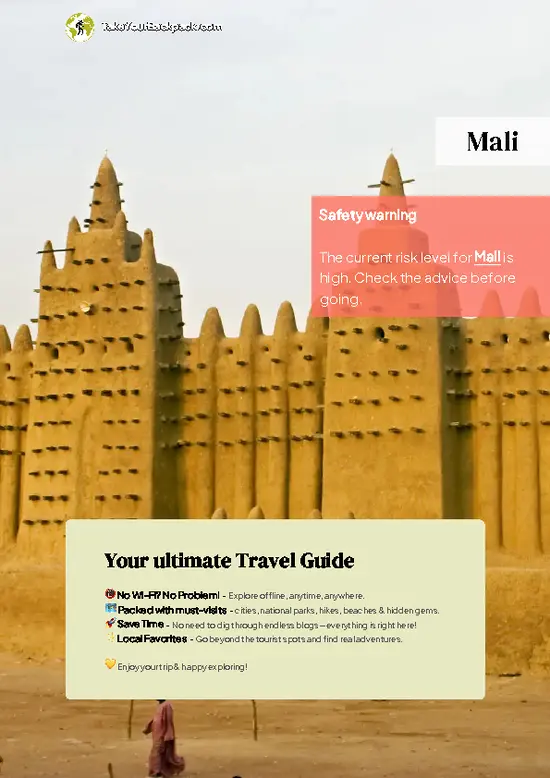
An offline-friendly backpacking guide with optimized travel routes, ranked highlights, transport advice, and the best areas to stay.
example page 0 from our offline Travel Guide for Mali
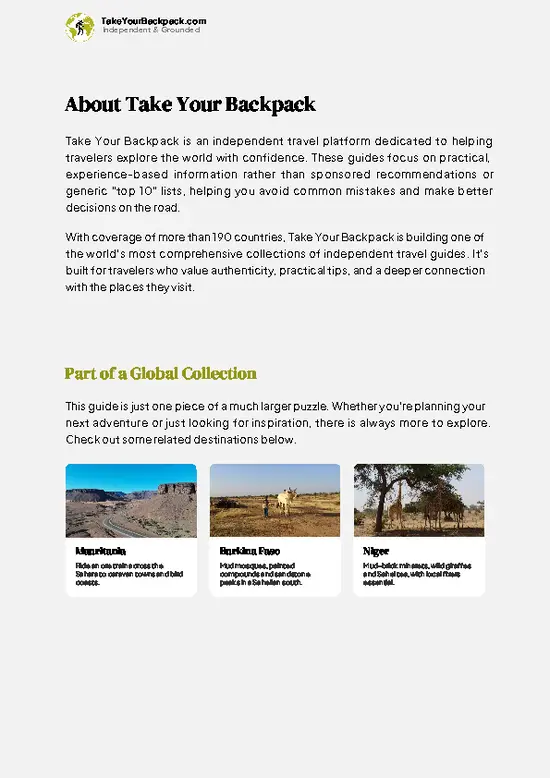
example page 1 from our offline Travel Guide for Mali
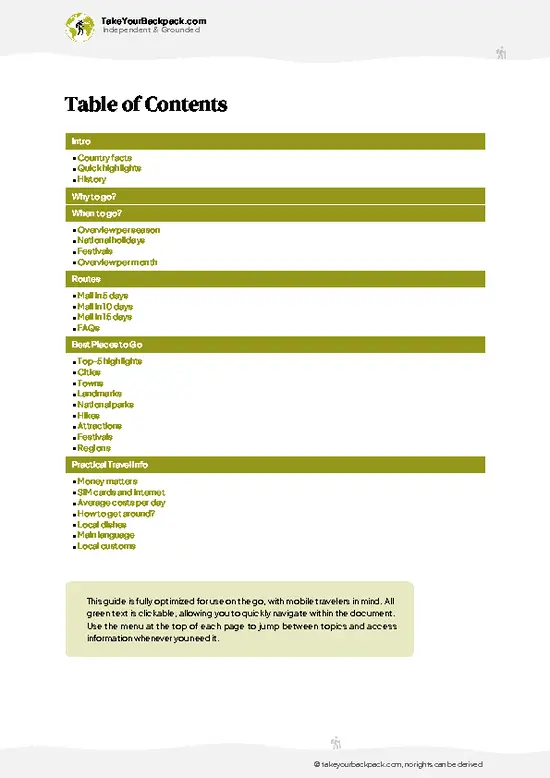
example page 2 from our offline Travel Guide for Mali
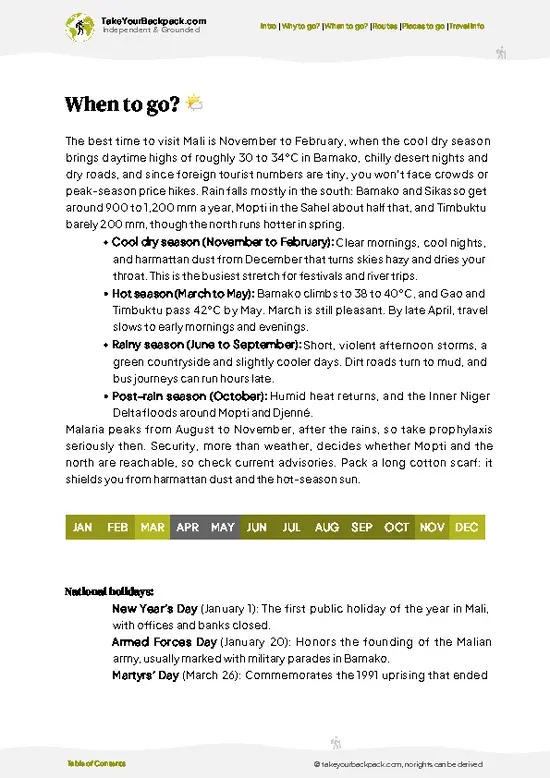
example page 3 from our offline Travel Guide for Mali
example page 4 from our offline Travel Guide for Mali
example page 5 from our offline Travel Guide for Mali
example page 6 from our offline Travel Guide for Mali
example page 7 from our offline Travel Guide for Mali
The digital guide (299 pages) contains:
72 highlights, ranked by travel appeal
Optimized 5, 10 & 15-day travel routes
Cities, national parks, landmarks, beaches
How to get around
Offline-friendly for travel without Wi-Fi
👉 Click to see all 30+ guide features

📅 Plan smarter in minutes, not weeks
Month by month travel advice
Festivals & national holidays
Budget expectations

🗺️ Go to the right places, skip the overrated ones
Honest pros & cons of destinations
Top hikes, parks & viewpoints
Lesser-known places most travelers miss
Clear “worth it vs skip it” guidance

🛏️ Travel smoothly without rookie mistakes
Best areas to stay
Transport systems explained simply
Common scams & safety advice
SIM cards, money & practical tips

🌍 Understand the country, not just visit it
Culture & traditions
52 Essential phrases & customs
Festivals worth planning around
Traveler-friendly historical context
Insights that make places more meaningful

📱 Built for real travel conditions
Fully downloadable PDF
Works completely offline
Optimized for phone use
Useful in remote areas & buses
Everything in one place
Save weeks of stressful planning
Get instant access to your full guide. 30‑day money-back guarantee.
+ Add another guide for just US$7.80

By proceeding you agree to our terms.
Sent to your inbox immediately after payment • 100% Secure Checkout
Best Backpacking Travel Advisor 2025 tourism awardBest Backpacking
Travel Advisor
2025
What others say about Take Your Backpack Guides:
⭐⭐⭐⭐⭐
Fantastic, amazing amount of information!
⭐⭐⭐⭐⭐
My goodness this is amazing, it's what I've been looking for hats off too you!
⭐⭐⭐⭐⭐
I think this is absolutely BRILLIANT
⭐⭐⭐⭐
Very complete and informative. It's still missing places, but I gotta to commend you
⭐⭐⭐⭐⭐
This is truly amazing, thank you, can't wait to explore it with my kids!
⭐⭐⭐⭐⭐
Awesome resource, thank you!
⭐⭐⭐⭐⭐
This is amazing! Can't wait to explore the ones I haven't seen
⭐⭐⭐⭐
I love this! Well done, great idea.
⭐⭐⭐⭐⭐
Thanks for taking the time to make this gem!
⭐⭐⭐⭐⭐
This might be the best website I've ever seen.
⭐⭐⭐⭐⭐
Congratulations, and thank you so much for your work; it's incredibly valuable.
⭐⭐⭐⭐
In all seriousness I think you did a great job pointing out the important spots
⭐⭐⭐⭐⭐
10/10 very good
⭐⭐⭐⭐⭐
As someone who's only just starting to visit regularly this is awesome, thank you.
⭐⭐⭐⭐
Thank you very much! I'm going to visit my dad, it's going to be very useful!
⭐⭐⭐⭐⭐
This is really cool! We'll be travelling for the first time and this definitely come in handy.
⭐⭐⭐⭐⭐
You are now our minister of culture, congratulations 👨‍💼
⭐⭐⭐⭐⭐
Just wanted to tell you that this is a pearl! Going to follow your recommendations.
⭐⭐⭐⭐⭐
This is so cool. I'll definitely be using the resource for my travels soon.
⭐⭐⭐⭐⭐
This is very impressive! Good work.
⭐⭐⭐⭐⭐
This is an amazing and informative site. Very well done!

🛏️ Where to stay?Best areas to stay in Mali

In Kayes, Mali, backpackers aiming for a balance of safety, social buzz, and budget-friendly options should zero in on the central district around the main market and the train station area. This zone acts as the city’s logistical heart, where travelers naturally converge. It’s not just about proximity to transport; it’s where you’ll find the pulse of local life and a handful of guesthouses catering to budget travelers. The vibe here is straightforward and practical—think functional rather than flashy—with enough foot traffic to feel secure without the chaos of a tourist trap.

Compared to the … read more 👉
In Kayes, Mali, backpackers aiming for a balance of safety, social buzz, and budget-friendly options should zero in on the central district around the main market and the train station area. This zone acts as the city’s logistical heart, where travelers naturally converge. It’s not just about proximity to transport; it’s where you’ll find the pulse of local life and a handful of guesthouses catering to budget travelers. The vibe here is straightforward and practical—think functional rather than flashy—with enough foot traffic to feel secure without the chaos of a tourist trap.

Compared to the quieter residential neighborhoods on the outskirts, which offer calm but little social interaction or traveler infrastructure, the central area wins for solo backpackers who want to plug into the city’s rhythm. Hostels are sparse but present, often family-run, providing a chance to connect with locals and fellow travelers alike. You sacrifice some comfort and polish here, but gain authentic engagement and convenience. This trade-off favors those who value immersion and community over luxury, making the central district the strategic choice for savvy backpackers navigating Kayes.

🚌 Getting aroundGetting around like a local

Kayes moves at its own rhythm—less a clockwork machine and more a pulse you feel underfoot. The city’s flow is a blend of deliberate pauses and sudden bursts, where schedules exist but bend to the reality of the day’s heat and the mood of the driver. You won’t find strict timetables here; instead, you’ll navigate a system that rewards patience and a keen eye for opportunity. Understanding this dance between time, money, and comfort is your key to mastering Kayes’ transit game.


  • Walking: The most straightforward and cost-free way to get around, especially in the central market and riverfront areas. It’s slow but immersive—expect to spend 15-30 minutes between major spots. No schedule, full control, and zero expense.


  • Minibus Taxis: These are the backbone of local transit, running roughly
read more 👉
Kayes moves at its own rhythm—less a clockwork machine and more a pulse you feel underfoot. The city’s flow is a blend of deliberate pauses and sudden bursts, where schedules exist but bend to the reality of the day’s heat and the mood of the driver. You won’t find strict timetables here; instead, you’ll navigate a system that rewards patience and a keen eye for opportunity. Understanding this dance between time, money, and comfort is your key to mastering Kayes’ transit game.


  • Walking: The most straightforward and cost-free way to get around, especially in the central market and riverfront areas. It’s slow but immersive—expect to spend 15-30 minutes between major spots. No schedule, full control, and zero expense.


  • Minibus Taxis: These are the backbone of local transit, running roughly from 6 a.m. to 7 p.m. Fares hover around 200-300 CFA francs ($0.35-$0.50). They’re quick compared to walking but can get cramped and hot, especially during midday. Departure times are flexible—vehicles leave when full, so expect some waiting.


  • Shared Bush Taxis: Ideal for longer hops out of town or to nearby villages. They operate on a semi-fixed schedule, usually leaving once filled, which can mean waits of 15-45 minutes. Prices vary by distance but remain budget-friendly. Comfort is basic—think hard seats and open windows, but you gain speed and reach.


  • Motorcycle Taxis (Zémidjans): The fastest way to weave through traffic and cover short distances. Available 24/7, fares are negotiable but generally start around 300 CFA francs. They offer a thrilling, if less comfortable, ride and save you time when you’re on a tight schedule.


  • Private Car Hire: For those who want comfort and control, renting a car or hiring a driver is an option, though it’s the priciest. Expect to pay significantly more, but you gain flexibility and escape the unpredictability of shared transit. Best reserved for groups or longer excursions.


Mastering Kayes transit means balancing your priorities: if you want to save money, prepare for slower, less predictable rides; if time is tight, be ready to spend a bit more or embrace the zémidjan’s adrenaline rush. Comfort is a luxury here, often traded for authenticity and local color. Your savvy choices turn the city’s flow from chaos into a strategic advantage.

👛 Costs (as of 2 August 2026)Typical daily expenses

Backpacking in Kayes, Mali, is a study in balancing essentials with local realities. Here’s how the daily costs typically break down for an independent traveler aiming to navigate time, money, and comfort with precision:
  • Dorm Accommodation (High Season): Expect to pay around €8 to €12 per night. High season drives prices up slightly due to demand, but options remain basic—think simple rooms with minimal amenities.
  • Dorm Accommodation (Off-Season): Prices drop to about €5 to €8. Fewer travelers mean better bargaining power, but facilities don’t improve, so comfort stays modest.
  • Meals: Local eateries serve filling meals for roughly €2 to €4 each. Street food is cheaper, often under €1.50, but expect simple, hearty fare rather than variety or luxury.
  • Local Transport: Short rides on bush taxis
read more 👉
Backpacking in Kayes, Mali, is a study in balancing essentials with local realities. Here’s how the daily costs typically break down for an independent traveler aiming to navigate time, money, and comfort with precision:
  • Dorm Accommodation (High Season): Expect to pay around €8 to €12 per night. High season drives prices up slightly due to demand, but options remain basic—think simple rooms with minimal amenities.
  • Dorm Accommodation (Off-Season): Prices drop to about €5 to €8. Fewer travelers mean better bargaining power, but facilities don’t improve, so comfort stays modest.
  • Meals: Local eateries serve filling meals for roughly €2 to €4 each. Street food is cheaper, often under €1.50, but expect simple, hearty fare rather than variety or luxury.
  • Local Transport: Short rides on bush taxis or shared minibuses typically cost €0.50 to €1.50. These are the backbone of getting around but can be unpredictable in schedule and comfort.
  • City Transport Pass: Kayes doesn’t have a formal city transport pass system. Budgeting for individual rides is necessary, so factor in daily transport costs rather than a pass.
  • Basic Activities/Entry Fees: Cultural sites and local attractions usually charge minimal fees, around €1 to €3. These are straightforward expenses with no frills but offer insight into the region’s heritage.
  • Miscellaneous Expenses: Budget about €1 to €3 for essentials like bottled water, snacks, or small personal items. These add up but remain manageable with careful planning.

In total, a backpacker in Kayes can expect to spend between €12 and €25 per day, depending on the season and personal choices. This range reflects a trade-off: you’re sacrificing luxury and convenience for authenticity and cost-efficiency, but with a clear view of where your money goes.
⚠️ Prices can change and everyone travels differently, so take this as a rough guide. Hope it helps you plan your adventure!

🚌 Day tripsShort trips worth adding

Kayes, Mali, is a strategic launchpad for day trips that blend culture, nature, and adventure. Here are some standout options that make the most of your time and budget.

Bafoulabé
Just a two-hour ride from Kayes, Bafoulabé offers a glimpse into traditional Malian life. The town is famous for its vibrant markets and the nearby Bafing River, perfect for a refreshing swim. You can grab a local meal for under $5, making it a budget-friendly escape. The best time to visit is during the dry season, from November to March, when the weather is pleasant. A common mistake is underestimating the local transport; always confirm departure times to avoid long waits.
👉 Explore Bafoulabé

Kangaba
About three hours from Kayes, Kangaba is a treasure trove of history and natural beauty. The town is known … read more 👉
Kayes, Mali, is a strategic launchpad for day trips that blend culture, nature, and adventure. Here are some standout options that make the most of your time and budget.

Bafoulabé
Just a two-hour ride from Kayes, Bafoulabé offers a glimpse into traditional Malian life. The town is famous for its vibrant markets and the nearby Bafing River, perfect for a refreshing swim. You can grab a local meal for under $5, making it a budget-friendly escape. The best time to visit is during the dry season, from November to March, when the weather is pleasant. A common mistake is underestimating the local transport; always confirm departure times to avoid long waits.
👉 Explore Bafoulabé

Kangaba
About three hours from Kayes, Kangaba is a treasure trove of history and natural beauty. The town is known for its ancient rock formations and the stunning Niger River. You can hike to the nearby cliffs for panoramic views, and the round-trip cost for transport and food will be around $15. Visit in the cooler mornings or late afternoons to avoid the heat. First-timers often miss the best viewpoints; ask locals for tips on where to go.


Sikasso
A bit further afield, Sikasso is roughly four hours away but worth every minute. This bustling city is rich in culture, with its colorful markets and historical sites like the Sikasso Fortress. Expect to spend about $20 for a full day, including transport and meals. The ideal time to visit is during the cotton harvest season, from October to December, when the landscape is alive with activity. Many travelers overlook the local guides; hiring one can enhance your experience significantly.


Nioro du Sahel
Just under two hours from Kayes, Nioro du Sahel is a quieter option for those seeking a more laid-back vibe. Known for its agricultural landscape, you can explore local farms and enjoy fresh produce. Costs are minimal, around $10 for transport and snacks. The best time to go is during the cooler months, from November to February. A common pitfall is not bringing enough water; the heat can be intense, even in winter.
Want to know what more Mali offers?
The Mali Travel Guide describes 72 highlights, from cities to national parks, from beaches to hikes

Get the Travel Guide -

🍲 FoodWhat to Eat & Drink

In Kayes, food is a vibrant tapestry of flavors that tells the story of the region. You can’t miss trying tiguadege na, a hearty peanut stew often served with rice or millet. The rich, nutty taste is a staple that warms the soul. Pair it with fufu, a starchy side that complements the stew perfectly.

Street food is where the magic happens. Vendors line the bustling markets, offering grilled skewers of meat, often marinated with local spices. The aroma wafts through the air, drawing you in. Grab a bowl of jollof rice from a vendor and savor the spicy, tomato-infused goodness while mingling with locals.

When it comes to drinks, try the refreshing bissap, a hibiscus tea that’s both tart and sweet. It’s a favorite among locals, especially in the heat of the day.

Etiquette is simple: share … read more 👉
In Kayes, food is a vibrant tapestry of flavors that tells the story of the region. You can’t miss trying tiguadege na, a hearty peanut stew often served with rice or millet. The rich, nutty taste is a staple that warms the soul. Pair it with fufu, a starchy side that complements the stew perfectly.

Street food is where the magic happens. Vendors line the bustling markets, offering grilled skewers of meat, often marinated with local spices. The aroma wafts through the air, drawing you in. Grab a bowl of jollof rice from a vendor and savor the spicy, tomato-infused goodness while mingling with locals.

When it comes to drinks, try the refreshing bissap, a hibiscus tea that’s both tart and sweet. It’s a favorite among locals, especially in the heat of the day.

Etiquette is simple: share your food and drinks. It’s common to offer a taste to friends or even strangers. This communal spirit enhances the experience, making every meal a celebration of connection.

🛡️ SafetyStaying Safe: What Travelers Should Know

In Kayes, safety is generally manageable, but awareness is key. Stick to well-lit areas at night, especially around the market and bus station, where activity can dwindle after dark. If you’re solo, keep your belongings close and maintain a confident posture; it can deter unwanted attention.

Common scams include overly friendly locals offering unsolicited help, often with the expectation of a tip. Politely decline assistance unless you’re sure it’s genuine. Street vendors can be persistent, but a firm “no, thank you” usually does the trick.

Annoyances like aggressive taxi drivers can test your patience. Agree on a fare before getting in, or use a reputable ride-hailing app if available. Overall, Kayes is navigable with a bit of savvy, allowing you to focus on the rich experiences rather than potential pitfalls.

Other Malian cities near Kayes

Explore more nearby:

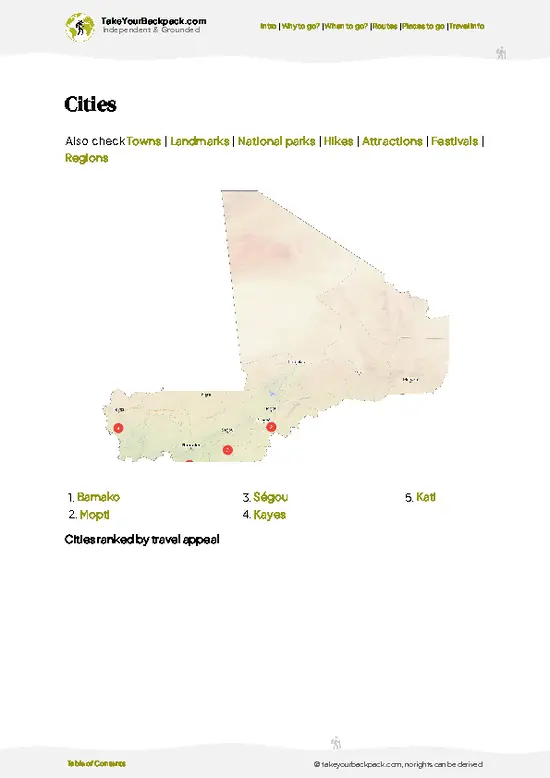
  • Kita—Railway junction, music heritage, mango orchards| 263 km away
  • Kati—Military base, commuter town, Bamako outskirts| 410 km away
  • Bamako—urban sprawl, music venues, street art, Niger River bridges| 422 km away

💡 Not sure where to go next?
Create a personalized itinerary for Mali including Kayes and the places that fit your trip.

Generate my itinerary

👉 Discover all cities

Or checkout all Mali has to offer (think cities, towns, villages, national parks, hikes, beaches, festivals)
Country photo of Mali

We 💚 feedbackParting advice and final tips

Kayes has a raw, unfiltered vibe that’s hard to find elsewhere. The best surprise? The warmth of the locals; they’ll invite you into their lives with open arms. But a heads-up: the heat can be relentless, especially in the summer. Stay hydrated and pace yourself. Embrace the chaos of the market and let the rhythm of daily life sweep you in. It’s a place that rewards curiosity, so dive in and savor every moment.

✍️ Help improve this page!
The information on this page is based on in-depth research, insights shared by experienced travelers, and feedback from the local travel community in Mali. While every effort is made to keep the information accurate and current, conditions can change — so if you spot anything incorrect or outdated, please get in touch.


🙋‍♂️ Give feedback

👋 Meet the founderWho’s Behind Take Your Backpack?

Johan, backpacker and founder of TakeYourBackpackHi, I’m Johan (Netherlands 🇳🇱), the creator of TakeYourBackpack. Over the past decade, I’ve backpacked through 80+ countries across six continents, gaining extensive experience with independent travel, long-term trips, and overland routes.

This site is built on a combination of firsthand travel experience and carefully curated insights from other backpackers. Many guides are based on places I’ve personally visited, while others bring together tips, observations, and practical advice shared by trusted travelers I’ve met along the way.

The goal is to provide realistic, experience-driven guidance — not generic itineraries — so you can explore destinations with better context, clearer expectations, and more confidence.

Get full Mali guide •
Instant download • 72 highlights • Full Offline guide