×

Mali🇲🇱 | citiesKatiMandé escarpment, roadside mutton grills, tea benches, garrison town | things to do and best time to go

Explore KayesExplore Festival International de la Percussion de Bamako

Backpacking in Kati
👀 For curious travelerscity ranked #8
By Johan Kruseman 🇳🇱 | Updated October 22, 2026

Staying in Kati instead of Bamako comes down to whether you want a quiet base or access to the city’s hostels and transport, and for nearly everyone Bamako wins. Kati is a garrison town on the Mandé escarpment, in southern Mali about 15 km northwest of Bamako, and its main camp is closed to visitors. Photographing soldiers or the camp is banned, so keep your camera down near checkpoints and carry your passport. Skip the idea of a sightseeing stop: there are no museums or guided attractions. What is worth your time is the ridge air, the local market and honest streets with little hassle. A first day could mean a morning market walk, lunch at a roadside grill and an afternoon on the escarpment.

Discover everything you want to know in the 📖 Mali Travel Guide.
Safety warning

The current risk level for Mali is high. Check the advice before going.


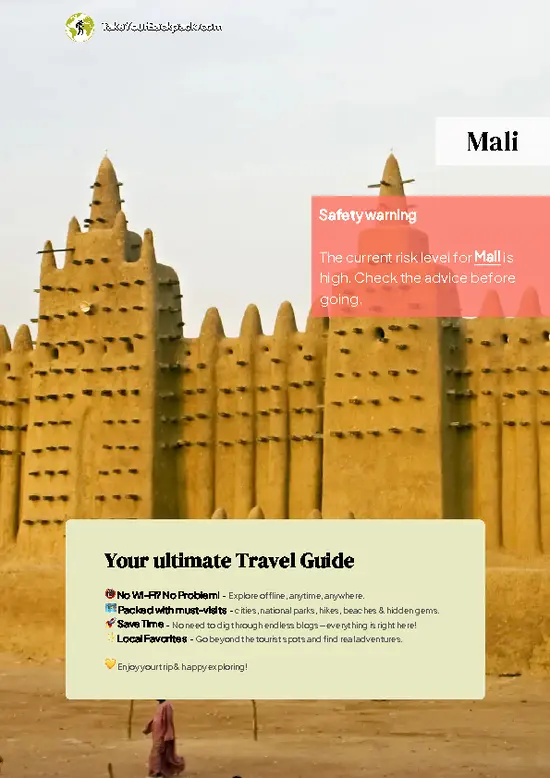
example page 0 from our offline Travel Guide for Mali
example page 1 from our offline Travel Guide for Mali
example page 2 from our offline Travel Guide for Mali
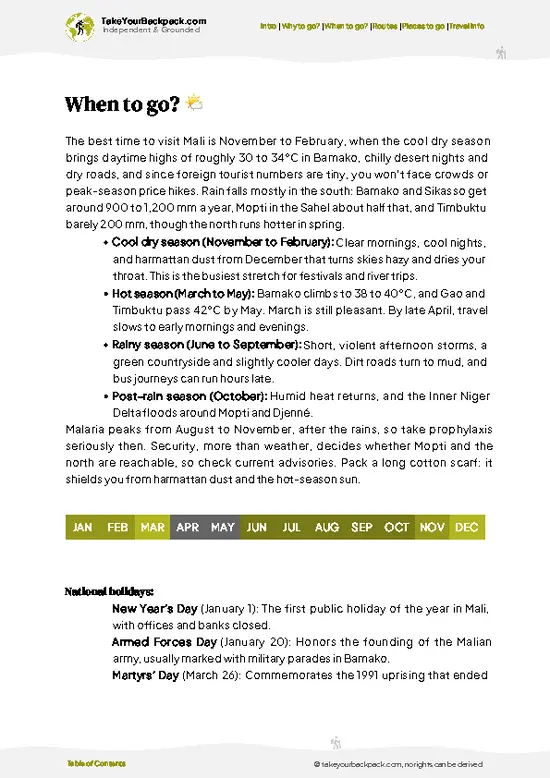
example page 3 from our offline Travel Guide for Mali
example page 4 from our offline Travel Guide for Mali
example page 5 from our offline Travel Guide for Mali
example page 6 from our offline Travel Guide for Mali
example page 7 from our offline Travel Guide for Mali
Loading the map 🌍
CLICK TO FILTER
cities
towns
landmarks
national parks
hikes
attractions
festivals
regions
SHOW COUNTRY’S BESTSHOW ALL

✨ Why go?
Ranked #8 city in Mali
The unique appeal for travelers

Kati works for a small group of backpackers: those who want a look at Mali beyond the capital without committing a whole day. Its hillside position gives it a cooler, breezier feel than the flat sprawl of Bamako, and the market is an everyday one where people shop for themselves, so prices aren’t inflated and nobody is selling you a mask. It is a place to walk, eat grilled meat and drink sweet tea, not to tick off sights. As a route stop it makes sense only as a half-day. The main road links it quickly to the capital, where onward buses and accommodation sit, and there are no hostels in Kati itself. Come for the Mandé escarpment views and the ordinary market life, then move on before dark.

💡 HighlightsPlaces and moments you shouldn't skip

  1. Kati Escarpment Viewpoints: The ridge above town drops toward the Niger plain, and on a clear day you can pick out Bamako’s sprawl. Free, 1 to 2 hours. Go in the cool of morning, and stay clear of anything near military land.
  2. Marché de Kati: The town’s main market sells vegetables, grain, cloth, used clothes and household goods, and it is busiest in the morning. Entry is free, 1 to 2 hours. Bargain gently and ask before photographing people.
  3. Roadside Grill Stalls: Along the main road, vendors grill mutton and chicken over charcoal and serve it with onions and bread. Expect €2 to 4 for a filling meal, 30 to 45 minutes. Lunchtime and early evening are liveliest.
  4. Tea Corners: Men gather on benches to brew strong green tea in three rounds, getting sweeter each time. A glass costs well under €1, and
… read more 👉
  1. Kati Escarpment Viewpoints: The ridge above town drops toward the Niger plain, and on a clear day you can pick out Bamako’s sprawl. Free, 1 to 2 hours. Go in the cool of morning, and stay clear of anything near military land.
  2. Marché de Kati: The town’s main market sells vegetables, grain, cloth, used clothes and household goods, and it is busiest in the morning. Entry is free, 1 to 2 hours. Bargain gently and ask before photographing people.
  3. Roadside Grill Stalls: Along the main road, vendors grill mutton and chicken over charcoal and serve it with onions and bread. Expect €2 to 4 for a filling meal, 30 to 45 minutes. Lunchtime and early evening are liveliest.
  4. Tea Corners: Men gather on benches to brew strong green tea in three rounds, getting sweeter each time. A glass costs well under €1, and you should allow 45 minutes. Late afternoon is when the benches fill.
For a first visit, the escarpment viewpoints are the best choice because they show why this ridge mattered. Kati makes a short base for day trips to the Bamako National Museum, the Mandé cliffs near Siby and the historic village of Kangaba.
Spotted a mistake or missing something? Contact us.

Things to do near Kati

Ratings based on Tripadvisor reviews. When you book through this link, you support our work at no extra cost to you.

🏘️ NeighborhoodsHow different areas shape the experience

Kati is a garrison and market town about 15 km northwest of Bamako, and its areas are compact enough that you rarely need more than a day to place them.
  • Central market and main road: This is the part worth your time. The market sells fruit, millet, fabric and grilled meat, and it runs strongest in the morning before the heat builds. Everything is walkable, but go early because stalls thin out by afternoon.
  • Military camp district: Kati is known for its large army base, which dominates the town’s northern side. There is nothing to see and photographing the camp or soldiers causes problems, so walk past and keep your camera in your bag.
  • Residential quarters: Dusty lanes of family compounds with mango trees, goats and small tea stands. They suit a slow stroll to see everyday life, but there are no
… read more 👉
Kati is a garrison and market town about 15 km northwest of Bamako, and its areas are compact enough that you rarely need more than a day to place them.
  • Central market and main road: This is the part worth your time. The market sells fruit, millet, fabric and grilled meat, and it runs strongest in the morning before the heat builds. Everything is walkable, but go early because stalls thin out by afternoon.
  • Military camp district: Kati is known for its large army base, which dominates the town’s northern side. There is nothing to see and photographing the camp or soldiers causes problems, so walk past and keep your camera in your bag.
  • Residential quarters: Dusty lanes of family compounds with mango trees, goats and small tea stands. They suit a slow stroll to see everyday life, but there are no sights, so give them an hour at most.
  • Hillside edges: Rocky slopes overlook the town and the plain toward Bamako. Reaching them takes a short walk or a cheap motorbike ride, and the view is the best reason to go, though there is no formal trail.

⌛️ 1 dayA smart one-day plan

8:00 AM: Kati Grand Marché
Start at the market, the one stop that explains Kati. Soldiers, traders and families from the surrounding villages all shop here, and the stalls sell millet, peanuts, shea butter, secondhand clothes and phone credit. Go before the heat builds, buy a small bag of roasted peanuts, and walk the lanes slowly for about an hour and a half. Keep your camera low around uniformed personnel.

10:00 AM: Kati Mosque and old quarter
Walk ten minutes to the old residential streets near the central mosque. Mud-brick compounds sit beside concrete houses, and the neighborhood gives you a feel for daily life far from any tourist circuit. Ask permission before photographing people. Dress modestly, with covered shoulders and knees.

12:00 PM: Lunch at a maquis near the main road
Sit down … read more 👉
8:00 AM: Kati Grand Marché
Start at the market, the one stop that explains Kati. Soldiers, traders and families from the surrounding villages all shop here, and the stalls sell millet, peanuts, shea butter, secondhand clothes and phone credit. Go before the heat builds, buy a small bag of roasted peanuts, and walk the lanes slowly for about an hour and a half. Keep your camera low around uniformed personnel.

10:00 AM: Kati Mosque and old quarter
Walk ten minutes to the old residential streets near the central mosque. Mud-brick compounds sit beside concrete houses, and the neighborhood gives you a feel for daily life far from any tourist circuit. Ask permission before photographing people. Dress modestly, with covered shoulders and knees.

12:00 PM: Lunch at a maquis near the main road
Sit down at a simple local eatery for grilled chicken or fish with attiéké or rice, and a cold bissap juice. It is the best way to rest through the hottest hours. Linger until about 2:00 PM, since the streets are quiet then anyway.

2:30 PM: Koulouba hillside edge
The escarpment above town is not part of any standard route. Take a moto-taxi toward the base of the rocky ridge and walk a short stretch for views across the plain toward Bamako. Military zones are nearby, so stay on public tracks and turn back if anyone asks you to. Allow an hour.

4:30 PM: Tea with the neighbors
Finish at a roadside tea stand, where men brew three rounds of strong green tea over charcoal. Sit, greet people in French or a few words of Bambara (“i ni ce”), and let the conversation set the pace. Head back before dark.

🌤️ When to go?Best time to visit Kati

November to February is the most comfortable window for Kati, with highs around 30 to 35°C (86 to 95°F) and cooler nights near 16 to 20°C (61 to 68°F).
  • Cool dry season (Nov to Feb): Dusty harmattan haze can dull views, but walking is easy and roads stay passable. Prices stay steady since few tourists come.
  • Hot season (Mar to May): Highs reach 38 to 42°C (100 to 108°F). Plan outings before 10 am and rest through midday.
  • Rainy season (Jun to Oct): Showers turn dirt lanes muddy, and the countryside goes green. July and August are wettest, and transport slows on flooded roads.
Aim for November or December, when the air is cooler and the fields are still green from the rains.

source: climatestotravel.comJANJanuary: excellent for travelingFEBFebruary: excellent for travelingMARMarch: good for travelingAPRApril: fair for travelingMAYMay: fair for travelingJUNJune: below average for travelingJULJuly: below average for travelingAUGAugust: below average for travelingSEPSeptember: below average for travelingOCTOctober: good for travelingNOVNovember: highly recommended for travelingDECDecember: excellent for traveling
when-to-go

✈️ The backpacker research shortcutMali Travel Guide

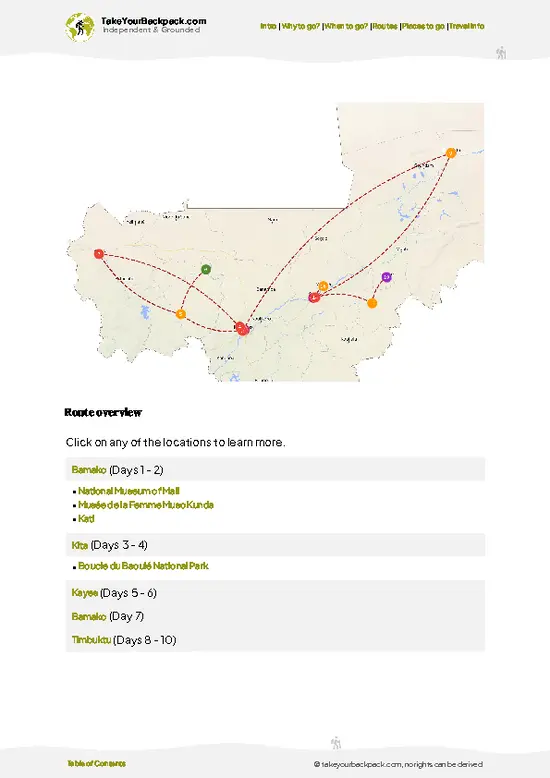
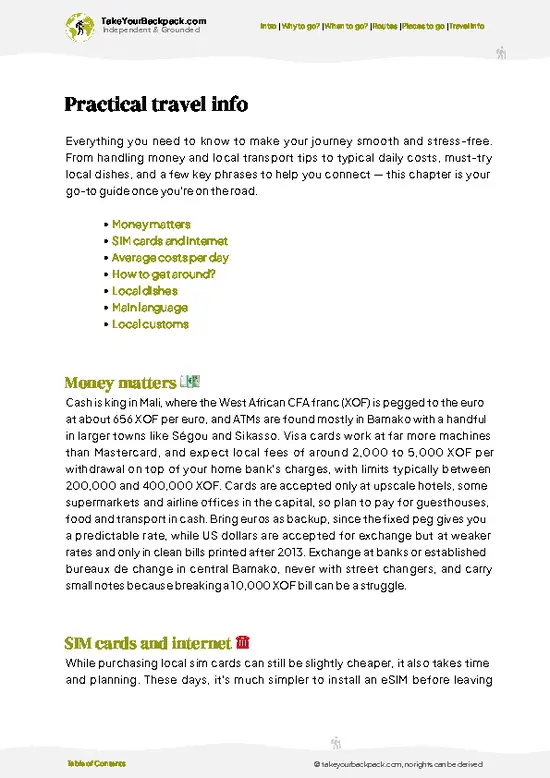
An offline-friendly backpacking guide with optimized travel routes, ranked highlights, transport advice, and the best areas to stay.
example page 0 from our offline Travel Guide for Mali
example page 1 from our offline Travel Guide for Mali
example page 2 from our offline Travel Guide for Mali
example page 3 from our offline Travel Guide for Mali
example page 4 from our offline Travel Guide for Mali
example page 5 from our offline Travel Guide for Mali
example page 6 from our offline Travel Guide for Mali
example page 7 from our offline Travel Guide for Mali
The digital guide (266 pages) contains:
✅ 61 highlights, ranked by travel appeal
✅ Optimized 5, 10 & 15-day travel routes
✅ Cities, national parks, landmarks, beaches
✅ How to get around
✅ Offline-friendly for travel without Wi-Fi
👉 Click to see all 30+ guide features

📅 Plan smarter in minutes, not weeks
✅ Month by month travel advice
✅ Festivals & national holidays
✅ Budget expectations

🗺️ Go to the right places, skip the overrated ones
✅ Honest pros & cons of destinations
✅ Top hikes, parks & viewpoints
✅ Lesser-known places most travelers miss
✅ Clear “worth it vs skip it” guidance

🛏️ Travel smoothly without rookie mistakes
✅ Best areas to stay
✅ Transport systems explained simply
✅ Common scams & safety advice
✅ SIM cards, money & practical tips

🌍 Understand the country, not just visit it
✅ Culture & traditions
✅ 52 Essential phrases & customs
✅ Festivals worth planning around
✅ Traveler-friendly historical context
✅ Insights that make places more meaningful

📱 Built for real travel conditions
✅ Fully downloadable PDF
✅ Works completely offline
✅ Optimized for phone use
✅ Useful in remote areas & buses
✅ Everything in one place
Stop searching, start planning
Get instant access to your full guide. 30‑day money-back guarantee.
+ Add another guide for just

By proceeding you agree to our terms.
Sent to your inbox immediately after payment • 100% Secure Checkout
Best Backpacking Travel Advisor 2025 tourism awardBest Backpacking
Travel Advisor
2025
What others say about Take Your Backpack Guides:
⭐⭐⭐⭐⭐
Fantastic, amazing amount of information!
⭐⭐⭐⭐⭐
My goodness this is amazing, it's what I've been looking for hats off too you!
⭐⭐⭐⭐⭐
I think this is absolutely BRILLIANT
⭐⭐⭐⭐
Very complete and informative. It's still missing places, but I gotta to commend you
⭐⭐⭐⭐⭐
This is truly amazing, thank you, can't wait to explore it with my kids!
⭐⭐⭐⭐⭐
Awesome resource, thank you!
⭐⭐⭐⭐⭐
This is amazing! Can't wait to explore the ones I haven't seen
⭐⭐⭐⭐
I love this! Well done, great idea.
⭐⭐⭐⭐⭐
Thanks for taking the time to make this gem!
⭐⭐⭐⭐⭐
This might be the best website I've ever seen.
⭐⭐⭐⭐⭐
Congratulations, and thank you so much for your work; it's incredibly valuable.
⭐⭐⭐⭐
In all seriousness I think you did a great job pointing out the important spots
⭐⭐⭐⭐⭐
10/10 very good
⭐⭐⭐⭐⭐
As someone who's only just starting to visit regularly this is awesome, thank you.
⭐⭐⭐⭐
Thank you very much! I'm going to visit my dad, it's going to be very useful!
⭐⭐⭐⭐⭐
This is really cool! We'll be travelling for the first time and this definitely come in handy.
⭐⭐⭐⭐⭐
You are now our minister of culture, congratulations 👨‍💼
⭐⭐⭐⭐⭐
Just wanted to tell you that this is a pearl! Going to follow your recommendations.
⭐⭐⭐⭐⭐
This is so cool. I'll definitely be using the resource for my travels soon.
⭐⭐⭐⭐⭐
This is very impressive! Good work.
⭐⭐⭐⭐⭐
This is an amazing and informative site. Very well done!

🛏️ Where to stay?Best areas to stay in Mali

Most backpackers sleep in Bamako, about 15 km away, and visit Kati on a day trip, because Kati itself has very few places to stay for foreigners. Bamako’s Hippodrome and Badalabougou districts have the widest range of budget beds, from simple guesthouses to a few hostel-style dorms, usually at roughly €10 to 20 a night. Both have eateries within walking distance, and taxis are easy to find. Badalabougou sits on the south bank of the Niger, which suits those wanting a quieter evening, while Hippodrome has more restaurants and a little more traffic noise after dark. Sotrama minibuses link both with … read more 👉
Most backpackers sleep in Bamako, about 15 km away, and visit Kati on a day trip, because Kati itself has very few places to stay for foreigners. Bamako’s Hippodrome and Badalabougou districts have the widest range of budget beds, from simple guesthouses to a few hostel-style dorms, usually at roughly €10 to 20 a night. Both have eateries within walking distance, and taxis are easy to find. Badalabougou sits on the south bank of the Niger, which suits those wanting a quieter evening, while Hippodrome has more restaurants and a little more traffic noise after dark. Sotrama minibuses link both with the Kati road each morning. If you do stay in Kati, pick a basic room near the main road rather than in the residential lanes, since lighting is poor after dark and taxis are hard to find. Book ahead where you can and arrive in daylight.

🚌 Getting aroundGetting around like a local

Kati’s central market area is easy on foot, but the town sprawls along the main road, so beyond about 2 km you will want wheels. Traffic thickens near the Bamako road, especially at rush hour, and there is no formal public transport system. Locals rely on shared minibuses and motorbikes, and so will you.
  • Walking: Free and best for the market and nearby lanes. Go before midday, since the heat makes anything longer than 20 minutes tiring.
  • Sotrama minibuses: These shared vans run between Kati and Bamako and cost roughly €0.50 to 1. They leave when full, usually from early morning to evening, and the ride takes 30 to 60 minutes depending on traffic. They are crowded, so keep valuables in front.
  • Motorbike taxis: Short rides within town cost about €0.50 to 1.50. Agree the fare before climbing on, since
… read more 👉
Kati’s central market area is easy on foot, but the town sprawls along the main road, so beyond about 2 km you will want wheels. Traffic thickens near the Bamako road, especially at rush hour, and there is no formal public transport system. Locals rely on shared minibuses and motorbikes, and so will you.
  • Walking: Free and best for the market and nearby lanes. Go before midday, since the heat makes anything longer than 20 minutes tiring.
  • Sotrama minibuses: These shared vans run between Kati and Bamako and cost roughly €0.50 to 1. They leave when full, usually from early morning to evening, and the ride takes 30 to 60 minutes depending on traffic. They are crowded, so keep valuables in front.
  • Motorbike taxis: Short rides within town cost about €0.50 to 1.50. Agree the fare before climbing on, since there are no meters. Skip them on busy main roads at night.
  • Private taxis: A taxi from Bamako costs about €6 to 12 one way, depending on your bargaining. They are the comfortable choice with luggage, and worth it if you arrive after dark when minibuses thin out.

👛 Costs (as of 22 October 2026)Money, prices, and spending tips

Kati costs backpackers roughly €27 to 34 a day, since it is a small town with local prices, though beds are mostly in Bamako nearby.
CategoryBudget RangeLocal Reality
Dorm accommodation (high season)€10 to 15Basic guesthouse beds in Bamako, as dorms are rare
Dorm accommodation (off-season)€8 to 12Discounts are small and negotiable
Meals€5 to 8Street food and market meals
Local transport€2 to 4Minibus and motorbike rides
City transport passNot availableYou pay each ride in cash
Basic activities/entry fees€2 to 5Mostly free; guides cost extra
Miscellaneous€2 to 3Water, SIM data, tea
Total Daily Budget€27 to 34Cash only, in local currency
Carry small notes, since drivers rarely have change, and share taxis with others to cut fares.

source: worldbank.org
⚠️ Prices can change and everyone travels differently, so take this as a rough guide. Hope it helps you plan your adventure!

🚌 Day tripsShort trips worth adding

Kati works as a half-day outing from Bamako or as a base for rural excursions, though tourist infrastructure is thin and you will rely on local transport and a bit of patience.
Koulikoro: Koulikoro is a river town on the Niger with a quiet port and old colonial buildings. A shared minibus from Kati takes roughly 1.5 to 2 hours, and a round trip costs about €4 to 8. November to February is easiest. First-timers often leave too late and miss the last ride back, so start early.
👉 Explore Koulikoro
Siby: Siby sits at the foot of the Manding escarpment, with sandstone arches, caves and rock paintings, plus the Kangaba region’s cultural ties. Expect 2 to 3 hours each way, and a hired guide adds about €10 to 15. Go in the cooler months, when climbing is bearable, and bring plenty of water since shade … read more 👉
Kati works as a half-day outing from Bamako or as a base for rural excursions, though tourist infrastructure is thin and you will rely on local transport and a bit of patience.
Koulikoro: Koulikoro is a river town on the Niger with a quiet port and old colonial buildings. A shared minibus from Kati takes roughly 1.5 to 2 hours, and a round trip costs about €4 to 8. November to February is easiest. First-timers often leave too late and miss the last ride back, so start early.
👉 Explore Koulikoro
Siby: Siby sits at the foot of the Manding escarpment, with sandstone arches, caves and rock paintings, plus the Kangaba region’s cultural ties. Expect 2 to 3 hours each way, and a hired guide adds about €10 to 15. Go in the cooler months, when climbing is bearable, and bring plenty of water since shade is limited.

Bamako: The capital has the National Museum, the Grand Marché and riverside views over the Niger. It is a 30 to 60 minute ride, costing about €1 round trip by minibus. Avoid arriving at rush hour, when the road clogs and a short trip becomes a long one.
👉 Explore Bamako

🍲 FoodLocal Cuisine & Drinks

Kati’s food reflects the Bamako region, with a strong market-and-street feel. Look for grilled meat (brochettes of beef or mutton) sold at roadside stands in the evening, served with raw onion and a pinch of pepper. Riz gras and tigadèguèna, a peanut-based sauce stew, come up at small family eateries. Mornings call for fried dough and sweet bissap or ginger juice from vendors near the market. Tea matters too: attaya, strong green tea poured in three rounds, brings men and women together on plastic stools along the road. Water-based drinks like bissap are cheap, and a plate of rice and sauce costs roughly €1.50 to 3. Eat where locals queue and food is cooked in front of you. Drink bottled water, and skip anything with ice unless you know where it came from.

🛡️ SafetySafety Tips and Common Scams in Kati

Kati itself is a calm town for daily life, but it is a military garrison, and that shapes what you should do. Do not photograph the camp, soldiers or checkpoints, and carry a photocopy of your passport because ID checks happen on the road. Political tension in Mali means checking current government advice before you travel, and avoid traveling at night or beyond Bamako’s surroundings without local guidance. Solo travelers, especially women, tend to get more attention here than in busier cities, so dress modestly and keep conversations polite and brief. Petty theft is the usual annoyance in crowded markets and minibuses, so carry little cash and keep your phone out of back pockets. Fixers and motorbike drivers sometimes quote inflated fares, so agree the price first. Stay inside town after dark.

FAQFrequently asked questions about Kati

One day is enough for Kati itself, since the sights are the market, the hillside views and the surrounding lanes. Add a second day if you combine it with Koulikoro, about 1.5 to 2 hours away, or Siby, 2 to 3 hours. Most visitors base themselves in Bamako, 15 km away, and take a minibus costing roughly €0.50 to 1.
Kati is calm for daily life, but as a military garrison it needs sensible behavior from solo backpackers. Do not photograph the army camp, carry a passport copy for checkpoints and avoid night travel. Check current government advice before going, and expect petty theft in crowded markets and minibuses.
Kati is known for its large military camp, which has played a central role in Mali’s modern political history. Day to day it is a market town, with grilled meat stands, attaya tea and a busy central market. It lies about 15 km northwest of Bamako, a 30 to 60 minute ride by minibus.
⚠️ Things can change over time, so always validate details locally before you go.

Other Malian cities near Kati

Explore more nearby:

  • Bamako—Live music nights, Grand Marché lanes, Niger riverside maquis, National Museum| 14 km away
  • Ségou—Bogolan dyers, pirogue sunsets, colonial quarter, calm riverfront| 211 km away
  • Kayes—Railway workshops, Senegal River banks, red rock outcrops, extreme heat| 410 km away

💡 Not sure where to go next?
Create a personalized itinerary for Mali including Kati and the places that fit your trip.

Generate my itinerary

👉 Discover all cities

Or checkout all Mali has to offer (think cities, towns, villages, national parks, hikes, beaches, festivals)
Country photo of Mali

We 💚 feedbackWhat to keep in mind

Kati suits curious, low-key travelers who like local life over sights, and anyone happy with a short, slow half-day. If you want nightlife or monuments, stay in Bamako. I would come with small bills, learn the Bambara greetings and leave the camera in the bag near any uniform.

✍️ Help improve this page!
The information on this page is based on in-depth research, insights shared by experienced travelers, and feedback from the local travel community in Mali. While every effort is made to keep the information accurate and current, conditions can change — so if you spot anything incorrect or outdated, please get in touch.


🙋‍♂️ Give feedback

👋 Meet the founderWho’s Behind Take Your Backpack?

Johan, backpacker and founder of TakeYourBackpackHi, I’m Johan (Netherlands 🇳🇱), the creator of TakeYourBackpack. Over the past 3 decades, I’ve backpacked through 90+ countries across six continents, gaining extensive experience with independent travel, long-term trips, and overland routes.

This site is built on a combination of firsthand travel experience and carefully curated insights from other backpackers. Many guides are based on places I’ve personally visited, while others bring together tips, observations, and practical advice shared by trusted travelers I’ve met along the way.

The goal is to provide realistic, experience-driven guidance — not generic itineraries — so you can explore destinations with better context, clearer expectations, and more confidence.