×

Mali🇲🇱 | townsKoroBorder market, Dogon plateau, craft traditions | things to do and best time to go

Explore GaoExplore Nioro du Sahel

Backpacking in Koro
🌟 Highlighttown ranked #9
By Johan Kruseman 🇳🇱 | Updated June 18, 2026

Forget the fantasy of Koro as a bustling Saharan crossroads or a secret festival town—most travelers breeze past, picturing a dusty outpost with little to offer. In reality, Koro sits in Mali’s Mopti Region, right on the edge of the Dogon Plateau, where the air shifts from dry Sahel to the earthy scent of cliffside villages. For backpackers, Koro is less a destination than a hinge: a practical, sometimes gritty, launchpad for Dogon Country treks or a rest stop between Mopti’s river bustle and the escarpment’s drama. The market pulses with local life, not tourist trinkets, and evenings are slow—think tea under a mango tree, not hostel bar crawls. Transport is basic: battered bush taxis, no trains, and you’ll walk most places. It’s cheaper than Bandiagara, less scenic than Sanga, but feels more real—raw, a little rough, and honest about it. Safety is variable; ask locals about current conditions before wandering far.

Discover everything you want to know in the 📖 Mali Travel Guide.
Safety warning

The current risk level for Mali is high. Check the advice before going.


Get your Mali guide
76 ranked highlights, routes & tips, works offline (321 pages)
Loading the map 🌍
CLICK TO FILTER
cities
towns
landmarks
national parks
hikes
attractions
festivals
regions
SHOW COUNTRY’S BESTSHOW ALL

✨ Why go?
Ranked #9 town in Mali
What makes it a must-see town

Koro, Mali, is a strategic stop for backpackers weaving through the region. Its proximity to hikes and cultural sites makes it a natural waypoint. You can easily access the Bandiagara Escarpment for stunning views and rich Dogon culture. The walkable streets invite exploration, with local markets bursting with the scent of spices and fresh produce. Small-scale guesthouses and hostels offer a cozy atmosphere, perfect for solo travelers or small groups looking to connect. While some pass through quickly, others linger for a few days to soak in the friendly social vibe and indulge in local dishes. Koro is ideal for those who appreciate a slower pace, where the journey feels as rewarding as the destination.
Want to include Koro in your Mali route?
Create a personalized Mali itinerary that includes Koro and the places that fit your trip — based on your travel style, budget, and available time. Get your route in seconds.

Generate my trip

💡 HighlightsEssential experiences to have while visiting Koro

  • Koro Central Market (Marché de Koro) — The beating heart of the town: colourful stalls, fresh produce, spices and the best place to watch daily life unfold. Visit in the morning to see vendors setting up, bargain with local traders and try street snacks you won’t find on a guidebook map.
  • Grand Friday Mosque of Koro — The town’s main mosque and social anchor; it’s where people gather for Friday prayers and public announcements. Even if you don’t go inside, the courtyard and surrounding streets offer a good window into local religious and architectural traditions (dress respectfully and observe prayer times).
  • Koro Livestock Market — A lively, practical spectacle: traders, herders and buyers negotiating cattle, goats and sheep. It’s noisy, messy and wonderfully authentic — great for photos
read more 👉
  • Koro Central Market (Marché de Koro) — The beating heart of the town: colourful stalls, fresh produce, spices and the best place to watch daily life unfold. Visit in the morning to see vendors setting up, bargain with local traders and try street snacks you won’t find on a guidebook map.
  • Grand Friday Mosque of Koro — The town’s main mosque and social anchor; it’s where people gather for Friday prayers and public announcements. Even if you don’t go inside, the courtyard and surrounding streets offer a good window into local religious and architectural traditions (dress respectfully and observe prayer times).
  • Koro Livestock Market — A lively, practical spectacle: traders, herders and buyers negotiating cattle, goats and sheep. It’s noisy, messy and wonderfully authentic — great for photos and for understanding the regional economy (best visited early morning).
  • Artisans’ Quarter — Clusters of blacksmiths, potters and weavers working in open courtyards. Watching techniques passed down generations — or picking up a locally-made tool, pot or textile — is more interesting here than in any souvenir shop.
  • Traditional Granary and Mud Architecture Clusters — Small pockets of historic mud-brick houses and compound granaries inside town that show traditional Sahelian building methods. They’re subtle and easy to miss, but worth a slow walk through nearby lanes with a local guide to explain construction and storage customs.
  • Women’s Market and Dyeing Workshops — Areas where women trade produce, textiles and do indigo/cloth-dye work. The colors, repetitive patterns and the social rhythm make this a quiet cultural highlight; ask politely before photographing people at work.
  • Town Square / Meeting Place (Place du Marché) — The informal living room of Koro: elders, youth, and traders convene here through the day. It’s the best single spot to overhear local gossip, watch bargaining rituals and catch impromptu music or storytelling sessions.
  • Seasonal Market Gardens and Wadi Edges — Just inside the town limits, narrow irrigated plots and seasonal streambeds supply vegetables and herbs to Koro. A guided stroll shows small-scale irrigation techniques and offers a look at the foodways that feed the town year-round.
  • Cercle Administrative Quarter — The municipal offices and public buildings where civic life happens: postings, permitting and public notices. Visiting (or simply observing) here is useful for understanding local governance and for practical travel info like market days or transport links.
  • Community Meeting Houses and Elders’ Compounds — Small compounds where local elders, griots and traditional leaders hold meetings and ceremonies. With permission, attending or speaking with elders provides deep insight into local customs, dispute resolution and oral history — the human side of Koro you won’t read about elsewhere.
A few real, visitable highlights just outside Koro worth day trips: the Bandiagara Escarpment and Dogon villages (classic cliff villages like Sangha and nearby hamlets), the regional towns of Douentza or Mopti for the Niger River markets and boat trips, and the wider Dogon Country for rock-hewn sites and guided village walks.
Spotted a mistake or missing something? Contact us.
🏘️ NeighborhoodsHow different areas shape the experience

Koro, a vibrant town in Mali, offers a unique blend of culture and adventure for backpackers. Here’s a breakdown of its key neighborhoods:

Centre Ville: This is the heart of Koro. The atmosphere buzzes with local markets and street vendors. It’s walkable, making it easy to explore shops and eateries. Prices are reasonable, perfect for budget travelers. Nightlife is low-key, with a few bars offering local music. Ideal for short stays, you can soak in the local vibe quickly.

Quartier de la Gare: Close to the train station, this area is a transit hub. It’s bustling but not overwhelming. Accommodations here are affordable, catering to backpackers. The vibe is more relaxed, making it suitable for longer stays. You can easily access transport to nearby attractions, which is a plus.

Quartier des read more 👉
Koro, a vibrant town in Mali, offers a unique blend of culture and adventure for backpackers. Here’s a breakdown of its key neighborhoods:

Centre Ville: This is the heart of Koro. The atmosphere buzzes with local markets and street vendors. It’s walkable, making it easy to explore shops and eateries. Prices are reasonable, perfect for budget travelers. Nightlife is low-key, with a few bars offering local music. Ideal for short stays, you can soak in the local vibe quickly.

Quartier de la Gare: Close to the train station, this area is a transit hub. It’s bustling but not overwhelming. Accommodations here are affordable, catering to backpackers. The vibe is more relaxed, making it suitable for longer stays. You can easily access transport to nearby attractions, which is a plus.

Quartier des Artisans: This neighborhood is a treasure trove of local crafts. The scent of wood and paint fills the air as artisans work. It’s quieter, perfect for those seeking a peaceful retreat. Prices vary, but you can find unique souvenirs. Great for longer stays, you’ll feel connected to the local culture here.

⌛️ 1 dayWhat you can realistically do in a day

Koro, Mali, is a vibrant tapestry of life, where the rhythm of daily activities pulses through the streets. The scent of spices wafts from local stalls, mingling with the earthy aroma of the surrounding landscape. This town offers a glimpse into authentic Malian culture, far from the usual tourist paths.

Start your morning at the bustling market. The sun filters through the awnings, casting playful shadows as vendors call out their wares. Grab a warm baguette from a local baker and pair it with some fresh mango slices. This simple breakfast fuels you for the day ahead. Afterward, wander through the narrow streets of the old town, where mud-brick houses stand as a testament to traditional architecture.

In the afternoon, head to the nearby Bandiagara Escarpment. It’s a bit of a trek, but … read more 👉
Koro, Mali, is a vibrant tapestry of life, where the rhythm of daily activities pulses through the streets. The scent of spices wafts from local stalls, mingling with the earthy aroma of the surrounding landscape. This town offers a glimpse into authentic Malian culture, far from the usual tourist paths.

Start your morning at the bustling market. The sun filters through the awnings, casting playful shadows as vendors call out their wares. Grab a warm baguette from a local baker and pair it with some fresh mango slices. This simple breakfast fuels you for the day ahead. Afterward, wander through the narrow streets of the old town, where mud-brick houses stand as a testament to traditional architecture.

In the afternoon, head to the nearby Bandiagara Escarpment. It’s a bit of a trek, but the views are worth every step. The cliffs rise dramatically, and the landscape unfolds like a painting. Take a moment to soak in the vastness, letting the quiet envelop you.

As evening approaches, return to Koro and find a spot at a local eatery. Try the jollof rice, bursting with flavor, while the sun sets, painting the sky in hues of orange and pink. This is the moment to reflect on your day, surrounded by the laughter and chatter of the locals.

Koro may not be on every tourist’s radar, but its heart beats strong, inviting you to experience its genuine spirit.
Turn your Koro visit into an Mali adventure
Build a complete Mali route with Koro, hidden gems, must-see destinations, and realistic travel times included.

Generate my trip

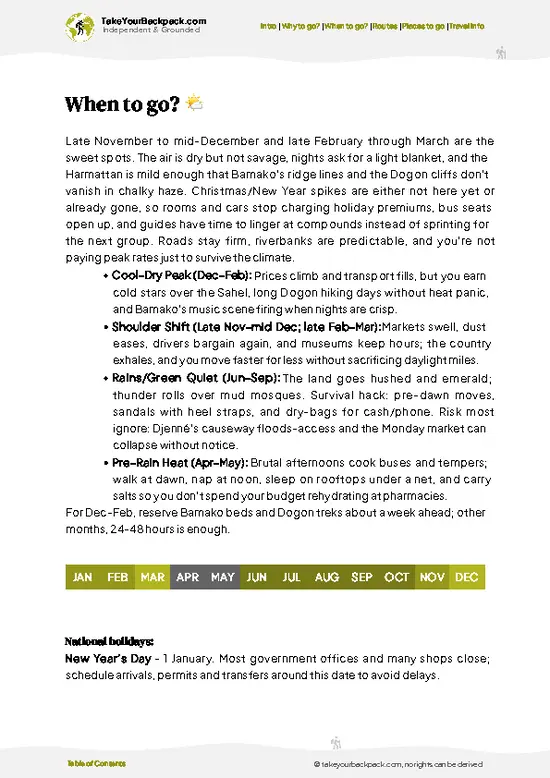
🌤️ When to go?Best time to visit Koro


  • Weather: Koro’s climate swings between a dry season and a rainy season. The dry months from November to February offer clear skies and dust-scented air, perfect for trekking without mud slowing you down. Rainy season (June to September) brings heavy downpours that can turn trails into slippery challenges and flood low-lying areas.

  • Temperature: Expect daytime highs around 30-35°C (86-95°F) during the dry season, cooling off to 15-20°C (59-68°F) at night. The rainy season is slightly cooler but more humid, which can sap your energy faster.

  • Daylight Hours: Daylight stays steady year-round, roughly 11 to 12 hours, giving you reliable windows for early starts and late finishes without rushing.

  • Crowds: Koro remains off the beaten path, but the dry season attracts more local festivals and
read more 👉

  • Weather: Koro’s climate swings between a dry season and a rainy season. The dry months from November to February offer clear skies and dust-scented air, perfect for trekking without mud slowing you down. Rainy season (June to September) brings heavy downpours that can turn trails into slippery challenges and flood low-lying areas.

  • Temperature: Expect daytime highs around 30-35°C (86-95°F) during the dry season, cooling off to 15-20°C (59-68°F) at night. The rainy season is slightly cooler but more humid, which can sap your energy faster.

  • Daylight Hours: Daylight stays steady year-round, roughly 11 to 12 hours, giving you reliable windows for early starts and late finishes without rushing.

  • Crowds: Koro remains off the beaten path, but the dry season attracts more local festivals and visitors, so expect a livelier atmosphere and more interaction opportunities.

  • Seasonal Activities: Dry season is prime for cultural festivals and market days, where the air buzzes with music and the scent of grilled meats. The rainy season is quieter, focusing on lush landscapes but fewer events.

  • Price Fluctuations: Accommodation and guides tend to be pricier during the dry season due to demand. The rainy season offers better deals but fewer services and less predictable conditions.


Pro-tip: Aim for late November to early February—dry, cool mornings and vibrant local life make every step outside feel earned and alive.


source: climatestotravel.comJANJanuary: excellent for travelingFEBFebruary: excellent for travelingMARMarch: highly recommended for travelingAPRApril: good for travelingMAYMay: fair for travelingJUNJune: fair for travelingJULJuly: below average for travelingAUGAugust: below average for travelingSEPSeptember: fair for travelingOCTOctober: good for travelingNOVNovember: highly recommended for travelingDECDecember: excellent for traveling
when-to-go

✈️ The backpacker research shortcutMali Travel Guide

An offline-friendly backpacking guide with optimized travel routes, ranked highlights, transport advice, and the best areas to stay.
example page 0 from our offline Travel Guide for Mali
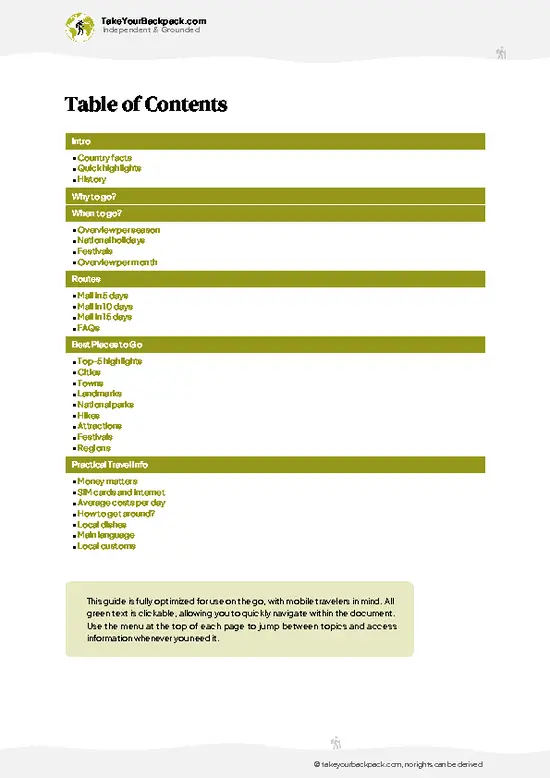
example page 1 from our offline Travel Guide for Mali
example page 2 from our offline Travel Guide for Mali
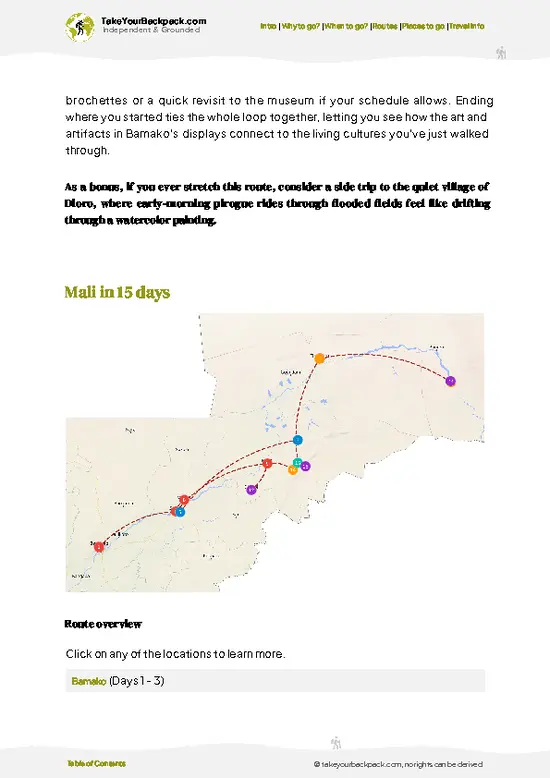
example page 3 from our offline Travel Guide for Mali
example page 4 from our offline Travel Guide for Mali
example page 5 from our offline Travel Guide for Mali
example page 6 from our offline Travel Guide for Mali
example page 7 from our offline Travel Guide for Mali
The digital guide (321 pages) contains:
76 highlights, ranked by travel appeal
Optimized 5, 10 & 15-day travel routes
Cities, national parks, landmarks, beaches
How to get around
Offline-friendly for travel without Wi-Fi
👉 Click to see all 30+ guide features

📅 Plan smarter in minutes, not weeks
Month by month travel advice
Festivals & national holidays
Budget expectations

🗺️ Go to the right places, skip the overrated ones
Honest pros & cons of destinations
Top hikes, parks & viewpoints
Lesser-known places most travelers miss
Clear “worth it vs skip it” guidance

🛏️ Travel smoothly without rookie mistakes
Best areas to stay
Transport systems explained simply
Common scams & safety advice
SIM cards, money & practical tips

🌍 Understand the country, not just visit it
Culture & traditions
52 Essential phrases & customs
Festivals worth planning around
Traveler-friendly historical context
Insights that make places more meaningful

📱 Built for real travel conditions
Fully downloadable PDF
Works completely offline
Optimized for phone use
Useful in remote areas & buses
Everything in one place
Save weeks of stressful planning
Get instant access to your full guide. 30‑day money-back guarantee.


By proceeding you agree to our terms.
Sent to your inbox immediately after payment • 100% Secure Checkout
Best Backpacking Travel Advisor 2025 tourism awardBest Backpacking
Travel Advisor
2025
What others say about Take Your Backpack Guides:
⭐⭐⭐⭐⭐
Fantastic, amazing amount of information!
⭐⭐⭐⭐⭐
My goodness this is amazing, it's what I've been looking for hats off too you!
⭐⭐⭐⭐⭐
I think this is absolutely BRILLIANT
⭐⭐⭐⭐
Very complete and informative. It's still missing places, but I gotta to commend you
⭐⭐⭐⭐⭐
This is truly amazing, thank you, can't wait to explore it with my kids!
⭐⭐⭐⭐⭐
Awesome resource, thank you!
⭐⭐⭐⭐⭐
This is amazing! Can't wait to explore the ones I haven't seen
⭐⭐⭐⭐
I love this! Well done, great idea.
⭐⭐⭐⭐⭐
Thanks for taking the time to make this gem!
⭐⭐⭐⭐⭐
This might be the best website I've ever seen.
⭐⭐⭐⭐⭐
Congratulations, and thank you so much for your work; it's incredibly valuable.
⭐⭐⭐⭐
In all seriousness I think you did a great job pointing out the important spots
⭐⭐⭐⭐⭐
10/10 very good
⭐⭐⭐⭐⭐
As someone who's only just starting to visit regularly this is awesome, thank you.
⭐⭐⭐⭐
Thank you very much! I'm going to visit my dad, it's going to be very useful!
⭐⭐⭐⭐⭐
This is really cool! We'll be travelling for the first time and this definitely come in handy.
⭐⭐⭐⭐⭐
You are now our minister of culture, congratulations 👨‍💼
⭐⭐⭐⭐⭐
Just wanted to tell you that this is a pearl! Going to follow your recommendations.
⭐⭐⭐⭐⭐
This is so cool. I'll definitely be using the resource for my travels soon.
⭐⭐⭐⭐⭐
This is very impressive! Good work.
⭐⭐⭐⭐⭐
This is an amazing and informative site. Very well done!

🛏️ Where to stay?How to pick the right area

In Koro, Mali, the best spot for backpackers is the central quarter near the main market. This area hums with life from dawn till dusk—vendors shouting, spices scenting the air, and locals weaving through narrow streets. It’s where you’ll find the most budget-friendly guesthouses and a handful of hostels that cater to solo travelers. Staying here means you’re plugged into the town’s pulse, with easy access to food stalls serving up fresh millet porridge and grilled fish, plus a chance to strike up conversations over shared meals.

Compared to the quieter residential neighborhoods on the outskirts, … read more 👉
In Koro, Mali, the best spot for backpackers is the central quarter near the main market. This area hums with life from dawn till dusk—vendors shouting, spices scenting the air, and locals weaving through narrow streets. It’s where you’ll find the most budget-friendly guesthouses and a handful of hostels that cater to solo travelers. Staying here means you’re plugged into the town’s pulse, with easy access to food stalls serving up fresh millet porridge and grilled fish, plus a chance to strike up conversations over shared meals.

Compared to the quieter residential neighborhoods on the outskirts, the central market area feels safer by day because of the constant foot traffic and local presence. At night, it’s lively but not overwhelming, offering a social vibe without the tourist traps. You’ll want to avoid the industrial zones or isolated suburbs—they’re less welcoming and can feel stark after dark. So, settle where the streets are alive, the air carries the scent of earth and smoke, and the rhythm of daily life invites you in. That’s where Koro’s real story unfolds.

🚌 Getting aroundHow to get from A to B

Koro moves at its own rhythm—neither frantic nor sluggish, but a steady pulse that matches the warm, dusty air and the chatter spilling from open market stalls. The town’s flow isn’t about strict timetables or rigid order; it’s more like a dance where locals and travelers alike read the cues of the sun, the calls of vendors, and the occasional honk of a shared taxi. You’ll find that patience here isn’t just a virtue—it’s your best tool. The streets hum with a mix of scooters weaving through narrow alleys, pedestrians balancing baskets on their heads, and the occasional burst of laughter from a roadside café. This isn’t a place where you rush; it’s a place where you sync up with the natural ebb and flow, and that’s how you unlock the real charm.


  • Walking: The heart of Koro is compact enough
read more 👉
Koro moves at its own rhythm—neither frantic nor sluggish, but a steady pulse that matches the warm, dusty air and the chatter spilling from open market stalls. The town’s flow isn’t about strict timetables or rigid order; it’s more like a dance where locals and travelers alike read the cues of the sun, the calls of vendors, and the occasional honk of a shared taxi. You’ll find that patience here isn’t just a virtue—it’s your best tool. The streets hum with a mix of scooters weaving through narrow alleys, pedestrians balancing baskets on their heads, and the occasional burst of laughter from a roadside café. This isn’t a place where you rush; it’s a place where you sync up with the natural ebb and flow, and that’s how you unlock the real charm.


  • Walking: The heart of Koro is compact enough to explore on foot, letting you soak in the scent of spices and the texture of cracked pavement underfoot. Most key spots are within a 20-minute stroll, making walking the cheapest and most immersive option.

  • Shared Taxis (Minibuses): These clatter through the main streets from dawn until dusk, usually starting around 6:30 AM and winding down by 7 PM. Fares hover around a couple of dollars, and while they’re often packed, the ride offers a front-row seat to local life and quick hops between neighborhoods.

  • Motorcycle Taxis (Boda Bodas): If you’re in a hurry or carrying gear, these are your go-to. They operate 24/7, with prices negotiable but generally affordable. The wind in your face and the scent of earth after rain make these rides memorable, though hold tight—the streets can get lively.

  • Bicycle Rentals: For a bit more freedom and speed without losing connection to the surroundings, renting a bike is a smart move. Rentals run about $5 per day, and you can cover more ground while still catching the town’s textures and sounds up close.

👛 Costs (as of 6 April 2026)Money, prices, and spending tips

Backpacking in Koro, Mali, means embracing a raw, authentic experience where every expense reflects the local pace and resources. Here’s what you’re realistically looking at day-to-day.
  • Dorm Accommodation: Options are sparse and basic, often in guesthouses or small inns rather than formal hostels. Expect to pay around €5 to €10 per night. Rooms are simple—think mosquito nets, a fan if you’re lucky, and a firm mattress. It’s not luxury, but it’s clean enough to rest after dusty days.
  • Meals: Street food and small local eateries dominate. A filling meal of millet porridge, grilled meat, or rice with sauce will cost about €1 to €3. Fresh fruit and snacks are cheap but seasonal. If you want something more substantial or imported, prices jump quickly, so stick to local fare for budget sanity.
read more 👉
Backpacking in Koro, Mali, means embracing a raw, authentic experience where every expense reflects the local pace and resources. Here’s what you’re realistically looking at day-to-day.
  • Dorm Accommodation: Options are sparse and basic, often in guesthouses or small inns rather than formal hostels. Expect to pay around €5 to €10 per night. Rooms are simple—think mosquito nets, a fan if you’re lucky, and a firm mattress. It’s not luxury, but it’s clean enough to rest after dusty days.
  • Meals: Street food and small local eateries dominate. A filling meal of millet porridge, grilled meat, or rice with sauce will cost about €1 to €3. Fresh fruit and snacks are cheap but seasonal. If you want something more substantial or imported, prices jump quickly, so stick to local fare for budget sanity.
  • Local Transport: Transport is mostly by shared taxis or motorbike taxis. Short rides within town cost roughly €0.50 to €1.50. For longer trips or private hires, expect to pay more, but most travelers keep it local and cheap by walking or hopping on shared rides.
  • Basic Activities/Entry Fees: Koro isn’t a hotspot for pricey tourist attractions. Visiting local markets, cultural sites, or natural spots usually costs nothing or just a small donation, around €0 to €2. Guided tours are rare and often arranged informally, so budget accordingly if you want a deeper dive.
  • Miscellaneous Expenses: This covers bottled water (essential in the heat), phone credit, and occasional treats like tea or snacks. Plan on €1 to €3 daily. Water is crucial—tap water isn’t safe, so factor in the cost of buying enough to stay hydrated.

All told, you’re looking at a daily budget between €8 and €20. This range covers the basics without cutting corners on safety or comfort. Koro’s charm is in its simplicity, and your spending reflects a straightforward, grounded way to experience Mali’s heartland.
⚠️ Prices can change and everyone travels differently, so take this as a rough guide. Hope it helps you plan your adventure!

🚌 Day tripsEasy escapes and nearby places

Koro, Mali, is a backpacker’s dream base for exploring the rich tapestry of West African culture and stunning landscapes. With a bit of planning, you can unlock some truly rewarding day trips.

Dogon Country
Just a couple of hours from Koro, the Dogon Country is a must-see. The dramatic cliffs and ancient villages are steeped in history and spirituality. You’ll trek through terraced fields and meet locals who still practice traditional ways of life. The journey takes about 2-3 hours by shared taxi-brousse, costing around 5,000 CFA. Aim for the dry season (November to March) for the best weather. A common mistake? Underestimating the physical demands of the hike; wear sturdy shoes and bring plenty of water.
👉 Explore Dogon Country

Lake Bandiagara
This serene lake is perfect for a day … read more 👉
Koro, Mali, is a backpacker’s dream base for exploring the rich tapestry of West African culture and stunning landscapes. With a bit of planning, you can unlock some truly rewarding day trips.

Dogon Country
Just a couple of hours from Koro, the Dogon Country is a must-see. The dramatic cliffs and ancient villages are steeped in history and spirituality. You’ll trek through terraced fields and meet locals who still practice traditional ways of life. The journey takes about 2-3 hours by shared taxi-brousse, costing around 5,000 CFA. Aim for the dry season (November to March) for the best weather. A common mistake? Underestimating the physical demands of the hike; wear sturdy shoes and bring plenty of water.
👉 Explore Dogon Country

Lake Bandiagara
This serene lake is perfect for a day of relaxation and exploration. It’s about an hour from Koro, and you can rent a canoe for a few thousand CFA. The stillness of the water, framed by lush greenery, is a refreshing escape. Early mornings are best to catch the sunrise and avoid the heat. Many first-timers miss the chance to chat with local fishermen; their stories add depth to the experience.


Segou
A vibrant town known for its arts and crafts, Segou is a 3-hour ride from Koro. The bus fare is around 2,500 CFA. Explore local markets filled with textiles and pottery, and don’t miss the riverside promenade at sunset. The best time to visit is during the annual Festival on the Niger in February, but any time offers a taste of local life. A rookie mistake? Skipping the local eateries; the street food is a culinary adventure you won’t want to miss.
👉 Explore Segou
Want to know what more Mali offers?
The Mali Travel Guide describes 76 highlights, from cities to national parks, from beaches to hikes

Get the Travel Guide -

🛡️ SafetyTraveler Safety Guide

Koro, Mali, is generally safe, but a few practical tips can enhance your experience. Stay aware in crowded markets; pickpockets can be a nuisance. When wandering solo, especially after dark, stick to well-lit areas and keep your phone handy for navigation.

Common scams often involve overly friendly locals offering unsolicited help, which can lead to unexpected fees. Politely decline and trust your instincts.

Annoyances like aggressive street vendors can be managed with a firm but friendly “no, thank you.” Carry yourself confidently, and engage with locals when it feels right. This approach not only keeps you safe but also opens doors to genuine interactions.

Other Malian towns near Koro

Explore more nearby:

  • Bankass—Market center, Dogon crossroads, millet fields| 47 km away
  • Bandiagara—Cliff villages, Dogon culture, escarpment views| 65 km away
  • Douentza—Hiking base, rocky outcrops, Fulani encampments| 104 km away

💡 Not sure where to go next?
Create a personalized itinerary for Mali including Koro and the places that fit your trip.

Generate my itinerary

👉 Discover all towns

Or checkout all Mali has to offer (think cities, towns, villages, national parks, hikes, beaches, festivals)
Country photo of Mali

We 💚 feedbackIs it worth it?

Koro has a pulse that’s hard to ignore. The air is thick with the scent of spices and the laughter of locals fills the streets. Don’t miss the weekly market; it’s a sensory overload and a chance to connect. Just be ready for the heat—hydrate and take breaks. Embrace the chaos; it’s where the real magic happens.

✍️ Help improve this page!
The information on this page is based on in-depth research, insights shared by experienced travelers, and feedback from the local travel community in Mali. While every effort is made to keep the information accurate and current, conditions can change — so if you spot anything incorrect or outdated, please get in touch.


🙋‍♂️ Give feedback

👋 Meet the founderWho’s Behind Take Your Backpack?

Johan, backpacker and founder of TakeYourBackpackHi, I’m Johan (Netherlands 🇳🇱), the creator of TakeYourBackpack. Over the past decade, I’ve backpacked through 80+ countries across six continents, gaining extensive experience with independent travel, long-term trips, and overland routes.

This site is built on a combination of firsthand travel experience and carefully curated insights from other backpackers. Many guides are based on places I’ve personally visited, while others bring together tips, observations, and practical advice shared by trusted travelers I’ve met along the way.

The goal is to provide realistic, experience-driven guidance — not generic itineraries — so you can explore destinations with better context, clearer expectations, and more confidence.

Get full Mali guide •
Instant download • 76 highlights • Full Offline guide