v2.webp)
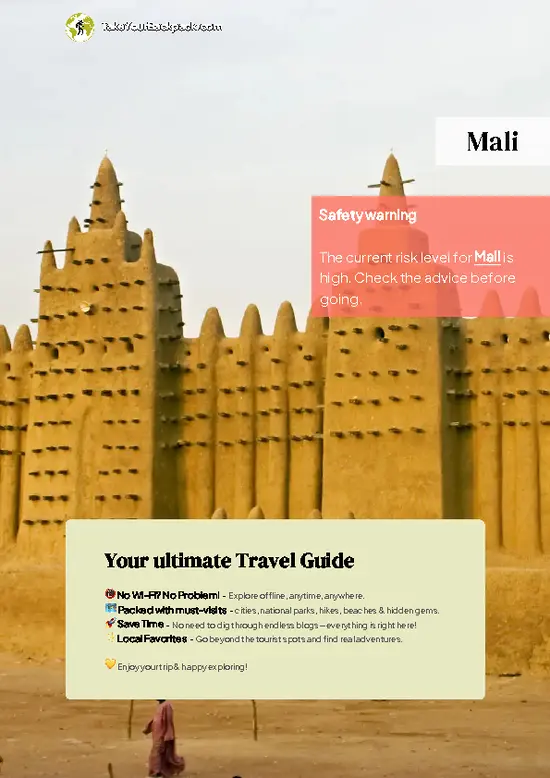
- Djinguereber Mosque — The iconic mud-brick mosque at the heart of Timbuktu’s spiritual life. Visit to see classic Sudano-Sahelian architecture, climb the minaret steps with a guide for city views, and feel how the mosque still anchors daily worship and festivals.
- Sankoré Mosque and University — Once a world-famous center of Sunni learning. The mosque complex and its courtyard still convey the scale of Timbuktu’s scholarly past; you’ll also find manuscript custodians and small reading rooms nearby.
- Sidi Yahya Mosque — Smaller and supremely atmospheric, Sidi Yahya is a living shrine with a famous carved door and deep local reverence. It’s an intimate place to observe local piety and the oral histories that keep Timbuktu’s memory alive.
- Mahmud Kati Mosque — One of the town’s older mosques
- Djinguereber Mosque — The iconic mud-brick mosque at the heart of Timbuktu’s spiritual life. Visit to see classic Sudano-Sahelian architecture, climb the minaret steps with a guide for city views, and feel how the mosque still anchors daily worship and festivals.
- Sankoré Mosque and University — Once a world-famous center of Sunni learning. The mosque complex and its courtyard still convey the scale of Timbuktu’s scholarly past; you’ll also find manuscript custodians and small reading rooms nearby.
- Sidi Yahya Mosque — Smaller and supremely atmospheric, Sidi Yahya is a living shrine with a famous carved door and deep local reverence. It’s an intimate place to observe local piety and the oral histories that keep Timbuktu’s memory alive.
- Mahmud Kati Mosque — One of the town’s older mosques with strong community roots. Its massive buttresses and packed-earthen facades are textbook Timbuktu, and the surrounding lanes are full of daily life to watch.
- Centre Ahmed Baba (Ahmed Baba Institute) — The main research and conservation center for Timbuktu’s manuscripts. The archive and exhibits explain the manuscript rescue efforts and let you see how fragile pages are preserved and catalogued.
- Mamma Haidara Library (private manuscript library) — A family-run treasure trove of manuscripts that survived by being hidden and guarded for generations. Visits (arranged by prior contact or local fixer) are quietly powerful — original pages, marginal notes and the story of community stewardship.
- Timbuktu Museum (Musée de Tombouctou) — Small but worthwhile: local ethnography, Tuareg and Songhai artifacts, and displays about trade and scholarship. Good stop if you want context before wandering the medina.
- Grand Marché (main market) and artisanal quarter — The best place to feel Timbuktu’s everyday pulse: spices, cloth, leather goods, metalwork and vendors who still trade stories as much as goods. Great for bargaining, people-watching and snapping candid photos.
- Old Medina and mud-brick alleyways — No single monument, but wandering the narrow lanes and courtyards is essential. The houses, wooden beams, rooftop terraces and shaded squares tell more about daily life here than any guidebook paragraph.
- Koyma (the public square in front of the mosque complex) — The social hub where traders, students and elders meet. Timing a visit for late afternoon gives you market energy, mosque calls to prayer and that indefinable Timbuktu atmosphere all at once.
Spotted a mistake or missing something? Contact us.

 Best Backpacking
.jpg) Hi, I’m Johan (Netherlands 🇳🇱), the creator of TakeYourBackpack. Over the past decade, I’ve backpacked through 80+ countries across six continents, gaining extensive experience with independent travel, long-term trips, and overland routes.
Hi, I’m Johan (Netherlands 🇳🇱), the creator of TakeYourBackpack. Over the past decade, I’ve backpacked through 80+ countries across six continents, gaining extensive experience with independent travel, long-term trips, and overland routes.