×

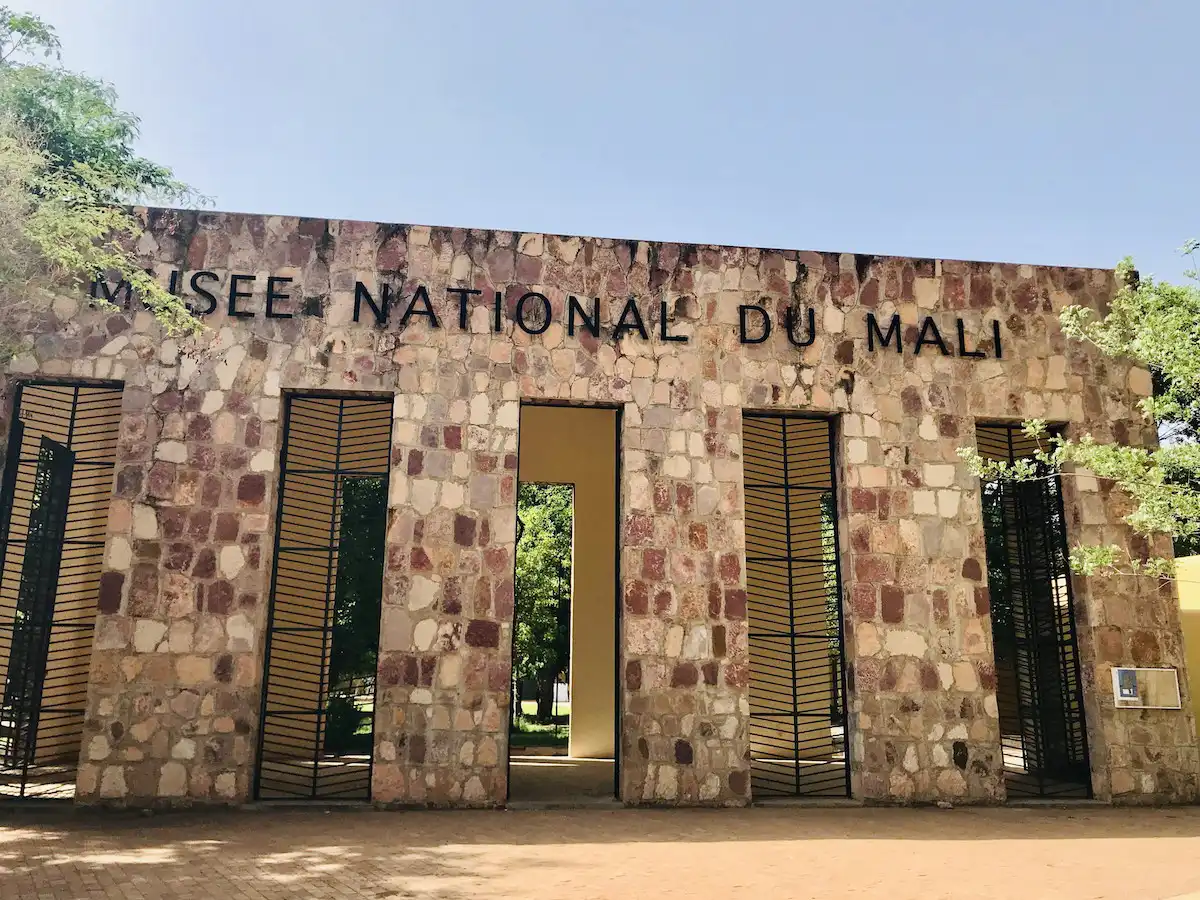
Mali🇲🇱 | attractionsNational Museum of MaliDjenné terracottas, Dogon masks, Chiwara headdresses, kora and balafon | things to do and best time to go

Explore Djenné Grand MosqueExplore Bamako Grand Mosque

Backpacking in National Museum of Mali
🏆 Top pickattraction ranked #2
By Johan Kruseman 🇳🇱 | Updated October 22, 2026

The reason most people come is the collection of Dogon masks, Djenné terracottas and Bamana sculpture, the best single-room answer to what Mali’s cultures actually look like. What gets overlooked is how much this museum prepares you for the road: ten minutes with the textile and mask halls makes a Dogon village or a Djenné market far easier to read. It sits in Mali’s capital, Bamako, near the botanical garden and zoo. The displays are labeled mostly in French, the building is calm, and crowds are rare, so you get galleries nearly to yourself. The entry fee is modest and fair for what you see. Skip the gift shop unless you need a bogolan cloth, since the market prices are better. Spend your time on the archaeology and masks. A first day works well as a slow morning walk through the halls, then lunch in the garden.

Discover everything you want to know in the 📖 Mali Travel Guide.
Safety warning

The current risk level for Mali is high. Check the advice before going.


example page 0 from our offline Travel Guide for Mali
example page 1 from our offline Travel Guide for Mali
example page 2 from our offline Travel Guide for Mali
example page 3 from our offline Travel Guide for Mali
example page 4 from our offline Travel Guide for Mali
example page 5 from our offline Travel Guide for Mali
example page 6 from our offline Travel Guide for Mali
example page 7 from our offline Travel Guide for Mali
Loading the map 🌍
CLICK TO FILTER
cities
towns
landmarks
national parks
hikes
attractions
festivals
regions
SHOW COUNTRY’S BESTSHOW ALL

✨ Why go?
Ranked #2 attraction in Mali
Why visitors keep coming back

National Museum of Mali is the quickest way to decode the country before you hit the long, dusty roads. The collection holds thousands of objects, from Djenné-Djenno terracotta figures to Dogon masks and the antelope headdresses of the Bamana, so a village mask dance or a Segou workshop suddenly makes sense. You see what the names in your guidebook actually refer to.

The second reason is context for the textiles. The bogolan mud cloth and indigo Fulani blankets on display show the techniques you will meet again in markets, and you will know good cloth from tourist cloth when a seller opens a bundle. Few places in Bamako teach that so cheaply.

It also works as a reliable, shaded stop in a capital where heat and traffic wear you down. The grounds are green and quiet, and you can pace yourself … read more 👉
National Museum of Mali is the quickest way to decode the country before you hit the long, dusty roads. The collection holds thousands of objects, from Djenné-Djenno terracotta figures to Dogon masks and the antelope headdresses of the Bamana, so a village mask dance or a Segou workshop suddenly makes sense. You see what the names in your guidebook actually refer to.

The second reason is context for the textiles. The bogolan mud cloth and indigo Fulani blankets on display show the techniques you will meet again in markets, and you will know good cloth from tourist cloth when a seller opens a bundle. Few places in Bamako teach that so cheaply.

It also works as a reliable, shaded stop in a capital where heat and traffic wear you down. The grounds are green and quiet, and you can pace yourself through the galleries without a guide, though a short conversation with a museum attendant pays off. For travelers heading north or east, it is the best primer the country offers.

💡 HighlightsTop highlights of National Museum of Mali

  1. Djenné-Djenno terracottas: Clay figures of kneeling and mounted people from the ancient Inner Niger Delta, some made around a thousand years ago. Their elongated limbs and detailed faces are the museum’s signature, and nothing you see later in Djenné town will show you this older city.
  2. Dogon masks and sculpture: Carved masks, ladders and figures from the Bandiagara escarpment, with notes on their use in funeral and initiation ceremonies. Seeing them up close beforehand makes a mask dance in the cliffs much easier to follow.
  3. Bogolan mud cloth hall: Hand-dyed cotton in earthy brown and white patterns, made with fermented mud. Each motif has a meaning, and the display explains how the cloth is made.
  4. Fulani indigo blankets: Heavy woven blankets from the Macina region, with bold stripes and geometric
… read more 👉
  1. Djenné-Djenno terracottas: Clay figures of kneeling and mounted people from the ancient Inner Niger Delta, some made around a thousand years ago. Their elongated limbs and detailed faces are the museum’s signature, and nothing you see later in Djenné town will show you this older city.
  2. Dogon masks and sculpture: Carved masks, ladders and figures from the Bandiagara escarpment, with notes on their use in funeral and initiation ceremonies. Seeing them up close beforehand makes a mask dance in the cliffs much easier to follow.
  3. Bogolan mud cloth hall: Hand-dyed cotton in earthy brown and white patterns, made with fermented mud. Each motif has a meaning, and the display explains how the cloth is made.
  4. Fulani indigo blankets: Heavy woven blankets from the Macina region, with bold stripes and geometric bands. They show how wool and cotton weaving differs across the country.
  5. Bamana Chiwara headdresses: Stylized antelope figures worn in farming rituals. The vertical, curving horns are some of the most recognizable shapes in Malian art.
  6. Musical instruments: Kora, balafon and ngoni, with explanations of their roles in griot traditions. A good grounding if you plan to catch live music in the evening.
  7. Museum garden: A shaded courtyard where you can cool off between halls. It is a rare quiet corner in Bamako, and a decent place to review your notes.
Start with the Djenné-Djenno terracottas, since National Museum of Mali is built around them and they frame everything else in the galleries.
Spotted a mistake or missing something? Contact us.

Things to do near National Museum of Mali

Ratings based on Tripadvisor reviews. When you book through this link, you support our work at no extra cost to you.

🌤️ When to go?When to go for the best experience

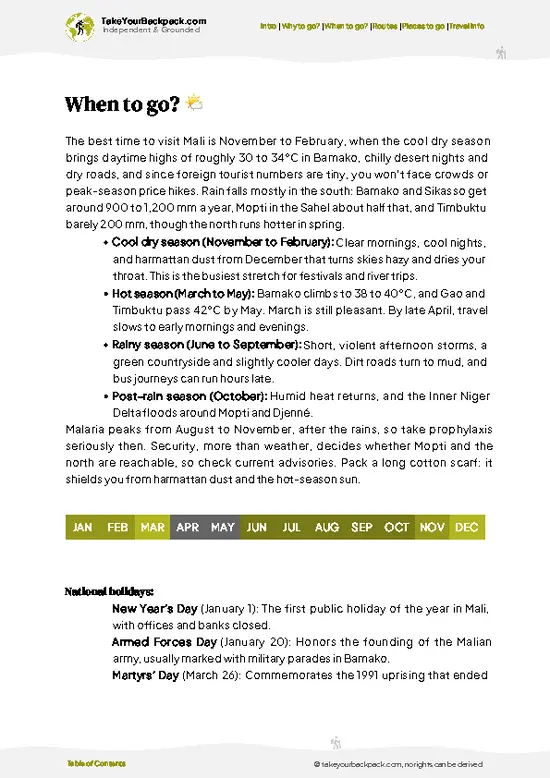
  • Cool Dry Season (November to February): Bamako’s mildest stretch, with days around 30 to 34°C (86 to 93°F) and nights dipping to 16 to 20°C (61 to 68°F). Harmattan haze can dull the sky, but the museum’s shaded gardens and indoor halls stay comfortable. This is when most visitors arrive, though you will rarely share a gallery with more than a small group.
  • Hot Season (March to May): Afternoons reach 38 to 41°C (100 to 106°F) and the city feels like an oven. Go right at opening and plan to be out by midday, since the exhibition halls hold heat.
  • Rainy Season (June to October): Highs of 30 to 33°C (86 to 91°F) with heavy afternoon downpours, especially July to September. Roads flood, taxis get scarce, but the museum is a perfect refuge and quiet. Daylight runs about 11 to 13 hours across the year.
… read more 👉
  • Cool Dry Season (November to February): Bamako’s mildest stretch, with days around 30 to 34°C (86 to 93°F) and nights dipping to 16 to 20°C (61 to 68°F). Harmattan haze can dull the sky, but the museum’s shaded gardens and indoor halls stay comfortable. This is when most visitors arrive, though you will rarely share a gallery with more than a small group.
  • Hot Season (March to May): Afternoons reach 38 to 41°C (100 to 106°F) and the city feels like an oven. Go right at opening and plan to be out by midday, since the exhibition halls hold heat.
  • Rainy Season (June to October): Highs of 30 to 33°C (86 to 91°F) with heavy afternoon downpours, especially July to September. Roads flood, taxis get scarce, but the museum is a perfect refuge and quiet. Daylight runs about 11 to 13 hours across the year.
Prices for guesthouses and taxis in Bamako barely move with the seasons, so choose by comfort. Aim for a weekday visit, as the museum is closed on some public holidays.


source: climatestotravel.comJANJanuary: highly recommended for travelingFEBFebruary: excellent for travelingMARMarch: fair for travelingAPRApril: fair for travelingMAYMay: fair for travelingJUNJune: below average for travelingJULJuly: below average for travelingAUGAugust: below average for travelingSEPSeptember: below average for travelingOCTOctober: good for travelingNOVNovember: excellent for travelingDECDecember: highly recommended for traveling
mali-attraction-national-museum-of-mali
© Google |

✈️ The backpacker research shortcutMali Travel Guide

An offline-friendly backpacking guide with optimized travel routes, ranked highlights, transport advice, and the best areas to stay.
example page 0 from our offline Travel Guide for Mali
example page 1 from our offline Travel Guide for Mali
example page 2 from our offline Travel Guide for Mali
example page 3 from our offline Travel Guide for Mali
example page 4 from our offline Travel Guide for Mali
example page 5 from our offline Travel Guide for Mali
example page 6 from our offline Travel Guide for Mali
example page 7 from our offline Travel Guide for Mali
The digital guide (266 pages) contains:
✅ 61 highlights, ranked by travel appeal
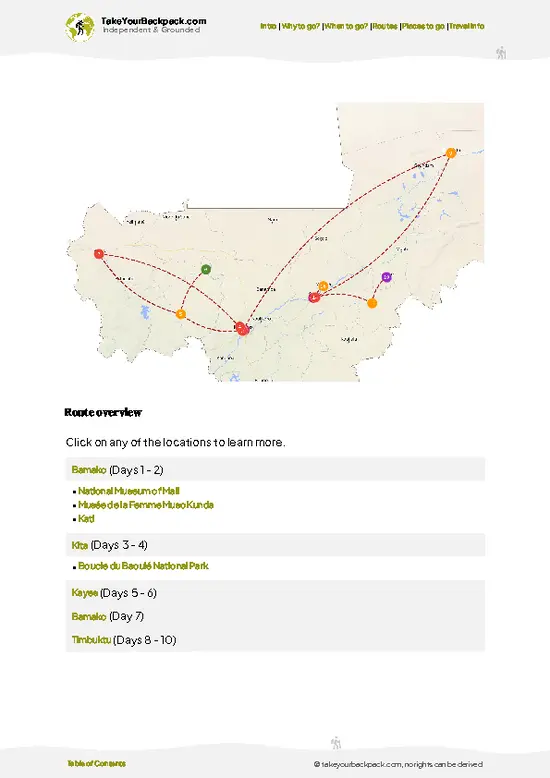
✅ Optimized 5, 10 & 15-day travel routes
✅ Cities, national parks, landmarks, beaches
✅ How to get around
✅ Offline-friendly for travel without Wi-Fi
👉 Click to see all 30+ guide features

📅 Plan smarter in minutes, not weeks
✅ Month by month travel advice
✅ Festivals & national holidays
✅ Budget expectations

🗺️ Go to the right places, skip the overrated ones
✅ Honest pros & cons of destinations
✅ Top hikes, parks & viewpoints
✅ Lesser-known places most travelers miss
✅ Clear “worth it vs skip it” guidance

🛏️ Travel smoothly without rookie mistakes
✅ Best areas to stay
✅ Transport systems explained simply
✅ Common scams & safety advice
✅ SIM cards, money & practical tips

🌍 Understand the country, not just visit it
✅ Culture & traditions
✅ 52 Essential phrases & customs
✅ Festivals worth planning around
✅ Traveler-friendly historical context
✅ Insights that make places more meaningful

📱 Built for real travel conditions
✅ Fully downloadable PDF
✅ Works completely offline
✅ Optimized for phone use
✅ Useful in remote areas & buses
✅ Everything in one place
Stop searching, start planning
Get instant access to your full guide. 30‑day money-back guarantee.
+ Add another guide for just

By proceeding you agree to our terms.
Sent to your inbox immediately after payment • 100% Secure Checkout
Best Backpacking Travel Advisor 2025 tourism awardBest Backpacking
Travel Advisor
2025
What others say about Take Your Backpack Guides:
⭐⭐⭐⭐⭐
Fantastic, amazing amount of information!
⭐⭐⭐⭐⭐
My goodness this is amazing, it's what I've been looking for hats off too you!
⭐⭐⭐⭐⭐
I think this is absolutely BRILLIANT
⭐⭐⭐⭐
Very complete and informative. It's still missing places, but I gotta to commend you
⭐⭐⭐⭐⭐
This is truly amazing, thank you, can't wait to explore it with my kids!
⭐⭐⭐⭐⭐
Awesome resource, thank you!
⭐⭐⭐⭐⭐
This is amazing! Can't wait to explore the ones I haven't seen
⭐⭐⭐⭐
I love this! Well done, great idea.
⭐⭐⭐⭐⭐
Thanks for taking the time to make this gem!
⭐⭐⭐⭐⭐
This might be the best website I've ever seen.
⭐⭐⭐⭐⭐
Congratulations, and thank you so much for your work; it's incredibly valuable.
⭐⭐⭐⭐
In all seriousness I think you did a great job pointing out the important spots
⭐⭐⭐⭐⭐
10/10 very good
⭐⭐⭐⭐⭐
As someone who's only just starting to visit regularly this is awesome, thank you.
⭐⭐⭐⭐
Thank you very much! I'm going to visit my dad, it's going to be very useful!
⭐⭐⭐⭐⭐
This is really cool! We'll be travelling for the first time and this definitely come in handy.
⭐⭐⭐⭐⭐
You are now our minister of culture, congratulations 👨‍💼
⭐⭐⭐⭐⭐
Just wanted to tell you that this is a pearl! Going to follow your recommendations.
⭐⭐⭐⭐⭐
This is so cool. I'll definitely be using the resource for my travels soon.
⭐⭐⭐⭐⭐
This is very impressive! Good work.
⭐⭐⭐⭐⭐
This is an amazing and informative site. Very well done!

🛏️ Where to stay?Best areas and accommodation options

Hippodrome and Badalabougou are the two neighborhoods to book, and both are a short taxi ride from the National Museum of Mali, which sits on the Route de Koulikoro side of town near the zoo and botanical gardens. Hippodrome is a leafy residential district on the north bank with small guesthouses, bars and restaurants within walking distance of each other. Expats and NGO workers live here, so streets feel relatively calm and well lit, and you will meet other travelers over dinner. It is the better pick for solo travelers wanting company and easy access to ATMs and cafes.
Badalabougou, across the … read more 👉
Hippodrome and Badalabougou are the two neighborhoods to book, and both are a short taxi ride from the National Museum of Mali, which sits on the Route de Koulikoro side of town near the zoo and botanical gardens. Hippodrome is a leafy residential district on the north bank with small guesthouses, bars and restaurants within walking distance of each other. Expats and NGO workers live here, so streets feel relatively calm and well lit, and you will meet other travelers over dinner. It is the better pick for solo travelers wanting company and easy access to ATMs and cafes.
Badalabougou, across the Niger on the south bank, is quieter and cheaper, with a few budget guesthouses and a handful of riverside terraces. Taxis cross the bridges easily, but traffic at rush hour can turn a 15-minute ride into an hour, so plan around it.
Centre-ville near the Grand Marché is the cheapest and most chaotic option. It suits you if you want to be close to bus companies and the market, but it is noisy and less comfortable after dark. Whichever area you choose, arrange taxis through your guesthouse at night and check current travel advisories for Mali before booking.

👛 Costs (as of 22 October 2026)How expensive it really is

A visit to the National Museum of Mali costs about €26 to 49 per person for the day once entry, transport and food are counted. Entry is modest by international standards, and you pay everything in cash.
CategoryBudget RangeLocal Reality
Entrance Ticket€2 to 4Paid at the gate in cash; rates for foreigners are higher than for residents. Photography may cost extra.
Guide€0 to 5Staff can walk you through the textile, instrument and mask halls, and a tip is expected.
Local Transport€2 to 5Shared taxis and short private taxis from Hippodrome or the center. Agree the fare before getting in.
Food and Drink€2 to 5Rice and sauce or grilled chicken at local eateries, plus water and a cold drink nearby.
Accommodation (High Season)€15 to 30A simple guesthouse room in Hippodrome or Badalabougou from November
… read more 👉
A visit to the National Museum of Mali costs about €26 to 49 per person for the day once entry, transport and food are counted. Entry is modest by international standards, and you pay everything in cash.
CategoryBudget RangeLocal Reality
Entrance Ticket€2 to 4Paid at the gate in cash; rates for foreigners are higher than for residents. Photography may cost extra.
Guide€0 to 5Staff can walk you through the textile, instrument and mask halls, and a tip is expected.
Local Transport€2 to 5Shared taxis and short private taxis from Hippodrome or the center. Agree the fare before getting in.
Food and Drink€2 to 5Rice and sauce or grilled chicken at local eateries, plus water and a cold drink nearby.
Accommodation (High Season)€15 to 30A simple guesthouse room in Hippodrome or Badalabougou from November to February.
Accommodation (Low Season)€12 to 25Slightly softer rates during the rains, with room for bargaining.
Total Daily Budget€26 to 49Covers one night, a museum visit, taxis and meals for one person.
⚠️ Prices can change and everyone travels differently, so take this as a rough guide. Hope it helps you plan your adventure!

FAQFrequently asked questions about National Museum of Mali

Plan two to three hours at the National Museum of Mali, which is enough to see the main halls of masks, textiles, instruments and archaeological pieces. Add another hour if you want to wander the gardens and look at the traditional architecture on site. Going right at opening keeps you out of the midday heat and leaves your afternoon free for the Grand Marché or the riverfront in Bamako.
Yes, the National Museum of Mali is worth the modest entry fee of roughly €2 to 4. You get one of West Africa’s strongest collections of Bamana, Dogon and Fulani art, plus a major textile display including bogolan mud cloth. A guide for a small tip adds useful context, and few attractions in Bamako offer this much for the price.
Take a taxi from central Bamako or Hippodrome, which usually takes 15 to 30 minutes depending on traffic and costs about €2 to 5 each way. The National Museum of Mali is on the Route de Koulikoro near the zoo and botanical gardens, so tell the driver the museum name or those landmarks. Agree the fare before you set off, and arrange a return taxi through your guesthouse if you visit late in the day.
⚠️ Things can change over time, so always validate details locally before you go.

Other Malian attractions near National Museum of Mali

Explore more nearby:


💡 Not sure where to go next?
Create a personalized itinerary for Mali including National Museum of Mali and the places that fit your trip.

Generate my itinerary

👉 Discover all attractions

Or checkout all Mali has to offer (think cities, towns, villages, national parks, hikes, beaches, festivals)
Country photo of Mali

We 💚 feedbackWhat to keep in mind

National Museum of Mali has a courtyard that most first-timers walk straight past on the way to the galleries. I would sit there for a few minutes before and after your visit, because the quiet lets the objects settle, and it is one of the calmest spots in Bamako. Bring small bills for the entry fee and any photo permit.

✍️ Help improve this page!
The information on this page is based on in-depth research, insights shared by experienced travelers, and feedback from the local travel community in Mali. While every effort is made to keep the information accurate and current, conditions can change — so if you spot anything incorrect or outdated, please get in touch.


🙋‍♂️ Give feedback

👋 Meet the founderWho’s Behind Take Your Backpack?

Johan, backpacker and founder of TakeYourBackpackHi, I’m Johan (Netherlands 🇳🇱), the creator of TakeYourBackpack. Over the past 3 decades, I’ve backpacked through 90+ countries across six continents, gaining extensive experience with independent travel, long-term trips, and overland routes.

This site is built on a combination of firsthand travel experience and carefully curated insights from other backpackers. Many guides are based on places I’ve personally visited, while others bring together tips, observations, and practical advice shared by trusted travelers I’ve met along the way.

The goal is to provide realistic, experience-driven guidance — not generic itineraries — so you can explore destinations with better context, clearer expectations, and more confidence.