×

Mali🇲🇱 | townsNiafunkéRiverbank town, music legacy, rice farming | things to do and best time to go

Explore Gourma-RharousExplore Bankass

Backpacking in Niafunké
🌟 Highlighttown ranked #6
By Johan Kruseman 🇳🇱 | Updated June 12, 2026

The call to prayer drifts over the Niger River as you step off the battered pinasse, sandals sinking into warm, powdery dust. The air smells of woodsmoke and river mud; goats shuffle past, unhurried. Niafunké sits in northern Mali, west of Timbuktu, a river town that feels like a pause button pressed on the world. For backpackers, it’s not a destination for nightlife or grand architecture—think more slow afternoons, tea with locals, and the hum of Malian blues from a transistor radio. The town’s fame comes mostly from Ali Farka Touré, whose music still echoes in the courtyards, but don’t expect a tourist scene. Niafunké works best as a low-key stopover if you’re tracing the river between Timbuktu and Mopti, or as a base for exploring the Sahel’s rhythms. Transport is slow—riverboats or battered bush taxis—and you’ll walk everywhere. Costs are low, but so is comfort. It’s quieter and more authentic than Mopti, less isolated than Timbuktu, and you’ll likely be the only foreigner in sight. Safety is a real concern; check the current situation before committing. If you want crowds, keep moving. If you want a story, linger.

Discover everything you want to know in the 📖 Mali Travel Guide.
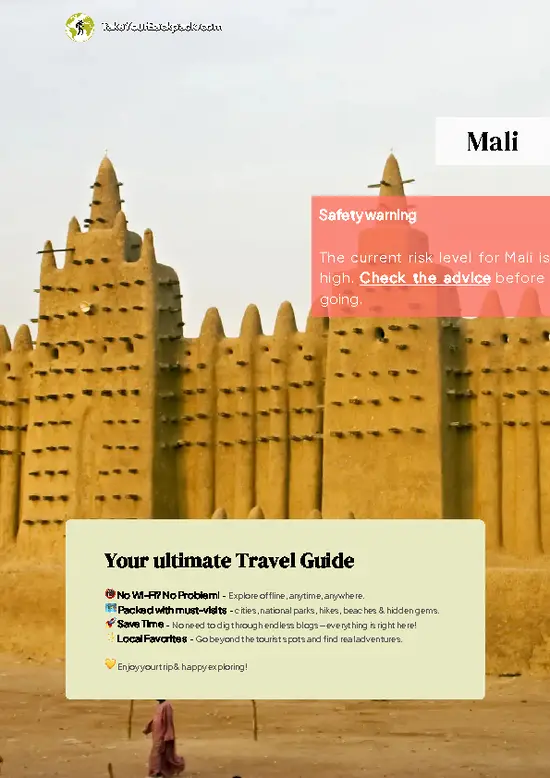
Safety warning

The current risk level for Mali is high. Check the advice before going.


Get your Mali guide
76 ranked highlights, routes & tips, works offline (321 pages)
Loading the map 🌍
CLICK TO FILTER
cities
towns
landmarks
national parks
hikes
attractions
festivals
regions
SHOW COUNTRY’S BESTSHOW ALL

✨ Why go?
Ranked #6 town in Mali
Reasons people choose to visit here

Niafunké is a gateway for backpackers seeking a blend of culture and nature in Mali. Its walkable streets invite exploration, where the scent of local spices wafts from small eateries, offering authentic meals that fuel your adventures. This town serves as a convenient base for hikes into the nearby Bandiagara Escarpment, a UNESCO World Heritage site, or a dip in the Niger River.

You’ll find cozy guesthouses and hostels that foster a friendly atmosphere, perfect for solo travelers or small groups looking to connect. Most backpackers linger a few days, soaking in the laid-back vibe and sharing stories with fellow adventurers. The pace here is relaxed, making it ideal for slow travelers who appreciate the journey as much as the destination. While nightlife isn’t a highlight, the community … read more 👉
Niafunké is a gateway for backpackers seeking a blend of culture and nature in Mali. Its walkable streets invite exploration, where the scent of local spices wafts from small eateries, offering authentic meals that fuel your adventures. This town serves as a convenient base for hikes into the nearby Bandiagara Escarpment, a UNESCO World Heritage site, or a dip in the Niger River.

You’ll find cozy guesthouses and hostels that foster a friendly atmosphere, perfect for solo travelers or small groups looking to connect. Most backpackers linger a few days, soaking in the laid-back vibe and sharing stories with fellow adventurers. The pace here is relaxed, making it ideal for slow travelers who appreciate the journey as much as the destination. While nightlife isn’t a highlight, the community spirit and cultural richness make Niafunké a rewarding stop on your Mali itinerary.
Want to include Niafunké in your Mali route?
Create a personalized Mali itinerary that includes Niafunké and the places that fit your trip — based on your travel style, budget, and available time. Get your route in seconds.

Generate my trip

💡 HighlightsTop highlights of Niafunké

  • Maison d’Ali Farka Touré (the musician’s house) — The former home of Ali Farka Touré is the town’s cultural touchstone: fans come to see photographs, hear stories from locals who knew him, and feel the musical roots that shaped his sound.
  • Ali Farka Touré’s grave / local memorial — A quiet, respectful site where residents pay tribute; visiting gives real insight into how the town remembers one of Mali’s most famous sons.
  • Niger River quays and ferry landing — The riverfront is the town’s living room: pirogues, cargo boats and ferries arrive and leave, fishermen work the banks, and sunsets over the Niger are worth the walk.
  • Riverside fish market and smoking platforms — Raw, colourful and alive with activity; you’ll see freshly caught fish being processed and smoked, a great place to taste
read more 👉
  • Maison d’Ali Farka Touré (the musician’s house) — The former home of Ali Farka Touré is the town’s cultural touchstone: fans come to see photographs, hear stories from locals who knew him, and feel the musical roots that shaped his sound.
  • Ali Farka Touré’s grave / local memorial — A quiet, respectful site where residents pay tribute; visiting gives real insight into how the town remembers one of Mali’s most famous sons.
  • Niger River quays and ferry landing — The riverfront is the town’s living room: pirogues, cargo boats and ferries arrive and leave, fishermen work the banks, and sunsets over the Niger are worth the walk.
  • Riverside fish market and smoking platforms — Raw, colourful and alive with activity; you’ll see freshly caught fish being processed and smoked, a great place to taste local river cuisine and observe daily commerce.
  • Grand marché (weekly market) — The heart of town life: markets swap everything from millet and fabrics to tools and livestock. Best visited on market day for the fullest experience of local trade and chatter.
  • The main mosque / Friday mosque — A central spiritual and architectural landmark where you can observe Sudano-Sahelian religious life (visit respectfully, outside prayer if you’re not Muslim).
  • Boat-building yards and fishermen’s quarter — Traditional pirogue-building and repair is still done by hand here; it’s an honest, tactile craft to watch up close and a window into river-dependent livelihoods.
  • Local artisan workshops and tailors — Small, often family-run workshops where leatherworkers, tailors and weavers produce everyday goods; great for simple, authentic souvenirs and to support local makers.
  • Mairie (town hall) and the market square — More than bureaucracy: the mairie is a local meeting point tied to recent history (Ali Farka Touré served as mayor) and a good spot to pick up practical local info from officials or elders.
  • Evening music spots and informal jam sessions — Drop into a café or a courtyard after dusk and you’re likely to find local guitarists and singers keeping the town’s musical traditions alive—raw, communal, and memorable.
A few visitable highlights a short trip from Niafunké: nearby riverside villages and islands on the Niger (short boat hops), the market town of Diré a bit upriver, and the surrounding seasonal floodplain and wetlands for village visits and birdwatching.
Spotted a mistake or missing something? Contact us.
🏘️ NeighborhoodsKey areas and districts to know

Niafunké is a vibrant hub in Mali, where the rhythm of life pulses through its streets. Each neighborhood offers a unique flavor, making it essential to choose wisely for your stay.

Centre Ville: This is the heart of Niafunké. Expect a lively atmosphere with bustling markets and local eateries. It’s walkable, making it easy to explore on foot. Prices here are reasonable, catering to backpackers. The nightlife is modest, with a few bars where you can sip on local drinks. Perfect for short stays, as you can soak in the local culture quickly.

Quartier de la Gare: Close to the train station, this area is ideal for those arriving or departing. It’s a bit quieter, with a more laid-back vibe. Accommodations are affordable, and you can find some hidden cafés. The walkability is decent, but you may … read more 👉
Niafunké is a vibrant hub in Mali, where the rhythm of life pulses through its streets. Each neighborhood offers a unique flavor, making it essential to choose wisely for your stay.

Centre Ville: This is the heart of Niafunké. Expect a lively atmosphere with bustling markets and local eateries. It’s walkable, making it easy to explore on foot. Prices here are reasonable, catering to backpackers. The nightlife is modest, with a few bars where you can sip on local drinks. Perfect for short stays, as you can soak in the local culture quickly.

Quartier de la Gare: Close to the train station, this area is ideal for those arriving or departing. It’s a bit quieter, with a more laid-back vibe. Accommodations are affordable, and you can find some hidden cafés. The walkability is decent, but you may want to grab a taxi for longer distances. Great for longer stays if you prefer a slower pace.

Quartier des Artisans: This neighborhood is a treasure trove of local crafts. The atmosphere is creative, filled with artisans at work. Prices can vary, but you’ll find unique souvenirs. It’s less about nightlife and more about daytime exploration. Walkability is good, and it’s suitable for both short visits and longer immersions in local culture.

⌛️ 1 dayWhat you can realistically do in a day

Niafunké, Mali, is a vibrant town that pulses with the rhythm of life along the banks of the Niger River. Known for its rich musical heritage, particularly as the home of the legendary Ali Farka Touré, it offers a blend of culture, community, and stunning landscapes that make it a worthy stop.

Start your morning with a stroll through the bustling market. The air is thick with the scent of spices and fresh produce. Vendors call out, their voices mingling with laughter and chatter. Grab a flaky *boulle* (a local pastry) and a cup of sweet, strong tea. This is your chance to soak in the local vibe and chat with friendly faces.

In the afternoon, head to the riverbank. The light dances on the water, and you can often spot fishermen casting their nets. If you’re feeling adventurous, rent a small … read more 👉
Niafunké, Mali, is a vibrant town that pulses with the rhythm of life along the banks of the Niger River. Known for its rich musical heritage, particularly as the home of the legendary Ali Farka Touré, it offers a blend of culture, community, and stunning landscapes that make it a worthy stop.

Start your morning with a stroll through the bustling market. The air is thick with the scent of spices and fresh produce. Vendors call out, their voices mingling with laughter and chatter. Grab a flaky *boulle* (a local pastry) and a cup of sweet, strong tea. This is your chance to soak in the local vibe and chat with friendly faces.

In the afternoon, head to the riverbank. The light dances on the water, and you can often spot fishermen casting their nets. If you’re feeling adventurous, rent a small boat and glide along the river. This isn’t just a scenic ride; it’s a glimpse into daily life here. Keep an eye out for the small village of Tenenkou, just a short boat ride away. It’s not on the typical tourist radar, but the warmth of the locals and their traditional fishing methods are a rewarding experience.

As the sun begins to set, return to Niafunké and find a spot at a local eatery. Enjoy a plate of *tô* with a spicy sauce while listening to the sounds of traditional music wafting through the air. The evening is alive with energy, and you might even catch a local band performing. This is the heart of Niafunké, where every moment feels like a celebration of life.
Turn your Niafunké visit into an Mali adventure
Build a complete Mali route with Niafunké, hidden gems, must-see destinations, and realistic travel times included.

Generate my trip

🌤️ When to go?Weather, crowds, and seasonal trade-offs


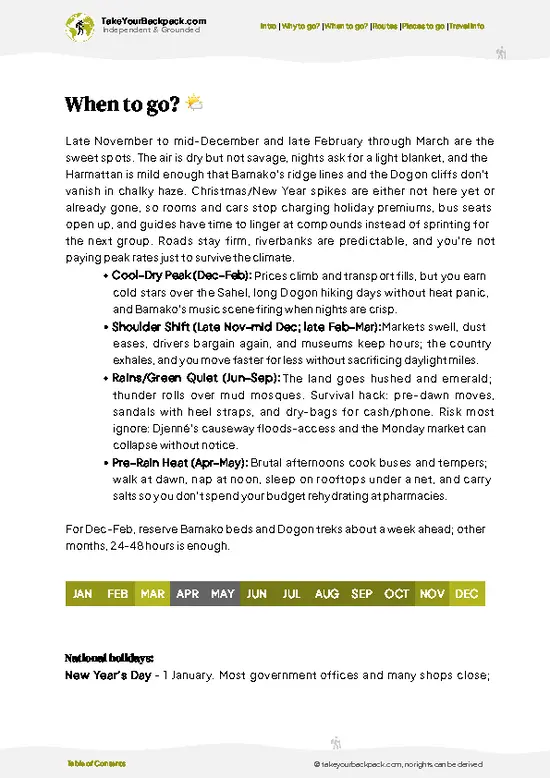
  • Weather: The dry season from November to February is your best bet. Expect clear skies and minimal rain, which means dusty trails but no mud to slow you down. The rainy season (June to September) floods the Niger River, making some paths impassable and the air thick with humidity.

  • Temperature: During the dry season, daytime highs hover around 28-32°C (82-90°F), cooling to a crisp 15-18°C (59-64°F) at night. The contrast sharpens your senses—warm sun on your skin, cool breeze in the evening. Avoid the scorching hot months of April and May, where temps can spike above 40°C (104°F), draining your energy fast.

  • Daylight Hours: Daylight is fairly consistent year-round, roughly 11 to 12 hours. Early mornings and late afternoons offer the best light for photography and exploration, with softer
read more 👉

  • Weather: The dry season from November to February is your best bet. Expect clear skies and minimal rain, which means dusty trails but no mud to slow you down. The rainy season (June to September) floods the Niger River, making some paths impassable and the air thick with humidity.

  • Temperature: During the dry season, daytime highs hover around 28-32°C (82-90°F), cooling to a crisp 15-18°C (59-64°F) at night. The contrast sharpens your senses—warm sun on your skin, cool breeze in the evening. Avoid the scorching hot months of April and May, where temps can spike above 40°C (104°F), draining your energy fast.

  • Daylight Hours: Daylight is fairly consistent year-round, roughly 11 to 12 hours. Early mornings and late afternoons offer the best light for photography and exploration, with softer shadows and cooler air.

  • Crowds: Niafunké is off the beaten path, so expect solitude most of the year. The dry season draws a few more travelers, especially around local festivals, but it never feels crowded—perfect for immersive experiences.

  • Seasonal Activities: The dry season aligns with fishing and river navigation, letting you witness traditional life in full swing. The river’s lower levels reveal sandbanks and islands to explore, while the rainy season swells the Niger, transforming the landscape dramatically but limiting access.

  • Price Fluctuations: Prices for lodging and guides tend to rise slightly during the dry season due to increased demand, but the difference is modest. The rainy season offers cheaper rates but comes with trade-offs in accessibility and comfort.


Pro-tip: Aim for late November to early February to catch Niafunké at its most accessible and comfortable, when the air is dry, the river calm, and the town’s rhythms are easiest to sync with.


source: climatestotravel.comJANJanuary: excellent for travelingFEBFebruary: excellent for travelingMARMarch: highly recommended for travelingAPRApril: fair for travelingMAYMay: fair for travelingJUNJune: below average for travelingJULJuly: below average for travelingAUGAugust: below average for travelingSEPSeptember: below average for travelingOCTOctober: good for travelingNOVNovember: excellent for travelingDECDecember: excellent for traveling
when-to-go

✈️ The backpacker research shortcutMali Travel Guide

An offline-friendly backpacking guide with optimized travel routes, ranked highlights, transport advice, and the best areas to stay.
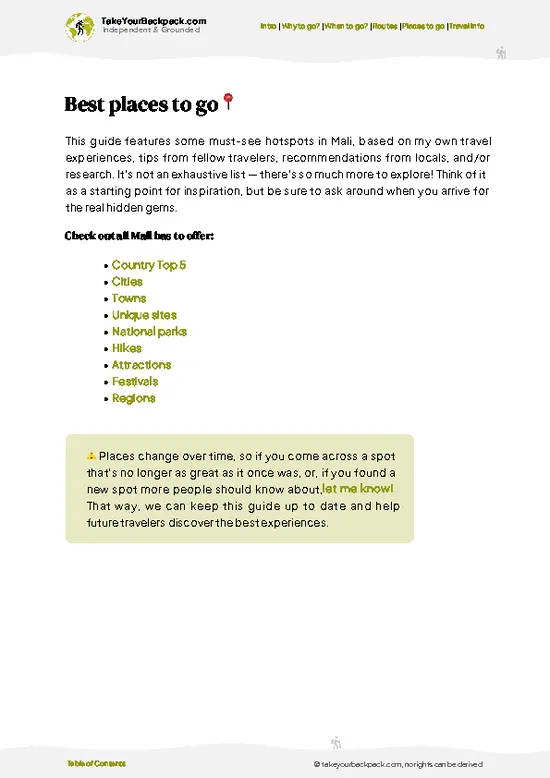
example page 0 from our offline Travel Guide for Mali
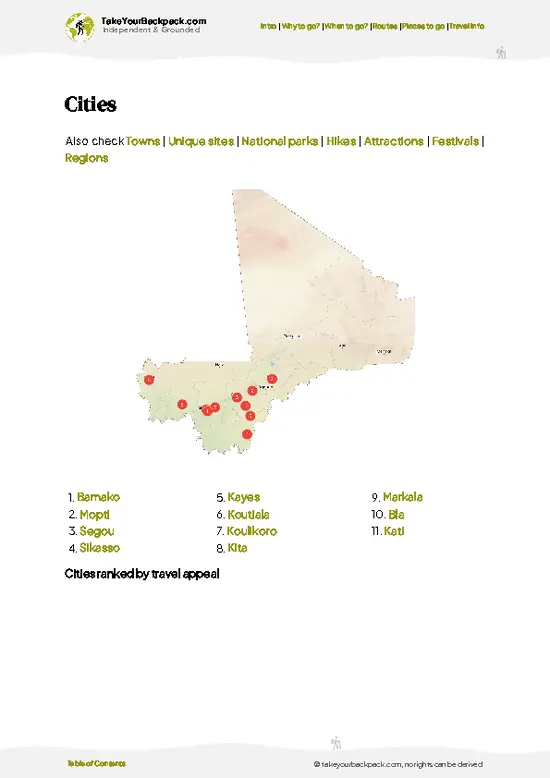
example page 1 from our offline Travel Guide for Mali
example page 2 from our offline Travel Guide for Mali
example page 3 from our offline Travel Guide for Mali
example page 4 from our offline Travel Guide for Mali
example page 5 from our offline Travel Guide for Mali
example page 6 from our offline Travel Guide for Mali
example page 7 from our offline Travel Guide for Mali
The digital guide (321 pages) contains:
76 highlights, ranked by travel appeal
Optimized 5, 10 & 15-day travel routes
Cities, national parks, landmarks, beaches
How to get around
Offline-friendly for travel without Wi-Fi
👉 Click to see all 30+ guide features

📅 Plan smarter in minutes, not weeks
Month by month travel advice
Festivals & national holidays
Budget expectations

🗺️ Go to the right places, skip the overrated ones
Honest pros & cons of destinations
Top hikes, parks & viewpoints
Lesser-known places most travelers miss
Clear “worth it vs skip it” guidance

🛏️ Travel smoothly without rookie mistakes
Best areas to stay
Transport systems explained simply
Common scams & safety advice
SIM cards, money & practical tips

🌍 Understand the country, not just visit it
Culture & traditions
52 Essential phrases & customs
Festivals worth planning around
Traveler-friendly historical context
Insights that make places more meaningful

📱 Built for real travel conditions
Fully downloadable PDF
Works completely offline
Optimized for phone use
Useful in remote areas & buses
Everything in one place
Save weeks of stressful planning
Get instant access to your full guide. 30‑day money-back guarantee.


By proceeding you agree to our terms.
Sent to your inbox immediately after payment • 100% Secure Checkout
Best Backpacking Travel Advisor 2025 tourism awardBest Backpacking
Travel Advisor
2025
What others say about Take Your Backpack Guides:
⭐⭐⭐⭐⭐
Fantastic, amazing amount of information!
⭐⭐⭐⭐⭐
My goodness this is amazing, it's what I've been looking for hats off too you!
⭐⭐⭐⭐⭐
I think this is absolutely BRILLIANT
⭐⭐⭐⭐
Very complete and informative. It's still missing places, but I gotta to commend you
⭐⭐⭐⭐⭐
This is truly amazing, thank you, can't wait to explore it with my kids!
⭐⭐⭐⭐⭐
Awesome resource, thank you!
⭐⭐⭐⭐⭐
This is amazing! Can't wait to explore the ones I haven't seen
⭐⭐⭐⭐
I love this! Well done, great idea.
⭐⭐⭐⭐⭐
Thanks for taking the time to make this gem!
⭐⭐⭐⭐⭐
This might be the best website I've ever seen.
⭐⭐⭐⭐⭐
Congratulations, and thank you so much for your work; it's incredibly valuable.
⭐⭐⭐⭐
In all seriousness I think you did a great job pointing out the important spots
⭐⭐⭐⭐⭐
10/10 very good
⭐⭐⭐⭐⭐
As someone who's only just starting to visit regularly this is awesome, thank you.
⭐⭐⭐⭐
Thank you very much! I'm going to visit my dad, it's going to be very useful!
⭐⭐⭐⭐⭐
This is really cool! We'll be travelling for the first time and this definitely come in handy.
⭐⭐⭐⭐⭐
You are now our minister of culture, congratulations 👨‍💼
⭐⭐⭐⭐⭐
Just wanted to tell you that this is a pearl! Going to follow your recommendations.
⭐⭐⭐⭐⭐
This is so cool. I'll definitely be using the resource for my travels soon.
⭐⭐⭐⭐⭐
This is very impressive! Good work.
⭐⭐⭐⭐⭐
This is an amazing and informative site. Very well done!

🛏️ Where to stay?How to pick the right area

In Niafunké, the best spot for backpackers is the area around the town center, where the pulse of daily life beats strongest. This neighborhood is compact, making it easy to navigate on foot, and it hums with the chatter of locals and travelers alike. The streets here are lined with small markets and open-air cafés where the scent of fresh millet bread and smoky grilled fish drifts through the air, grounding you in the rhythm of the Niger River’s edge.

Safety is a practical concern, and this central zone benefits from a steady presence of locals and vendors, which naturally deters trouble. It’s … read more 👉
In Niafunké, the best spot for backpackers is the area around the town center, where the pulse of daily life beats strongest. This neighborhood is compact, making it easy to navigate on foot, and it hums with the chatter of locals and travelers alike. The streets here are lined with small markets and open-air cafés where the scent of fresh millet bread and smoky grilled fish drifts through the air, grounding you in the rhythm of the Niger River’s edge.

Safety is a practical concern, and this central zone benefits from a steady presence of locals and vendors, which naturally deters trouble. It’s where you’ll find the few budget guesthouses and hostels that cater to solo travelers, offering simple but clean accommodations. The vibe is unpretentious and welcoming, with a mix of Malian families and international visitors swapping stories over shared meals.

Compared to the quieter, more residential outskirts, staying here means you’re plugged into the social fabric—essential for solo backpackers craving connection without sacrificing ease. The light in the late afternoon filters through baobab trees, casting long shadows that invite you to linger, making the modest challenges of travel here feel like part of the adventure’s heartbeat.

🚌 Getting aroundHow to get from A to B

Niafunké moves at its own rhythm—less a clock-bound town and more a place where the sun’s position and the river’s mood dictate your pace. The air carries the earthy scent of the Niger River’s floodplain, mingled with dust and the faint aroma of grilled fish from the market stalls. Here, time is elastic; schedules are suggestions, not rules. You’ll find that the locals navigate by intuition and familiarity rather than timetables, which means your best bet is to embrace a flexible mindset. The payoff is a genuine connection to the town’s pulse, where every journey feels like part of the story rather than just a means to an end.

Walking: The most reliable and immersive way to get around. Niafunké’s compact layout means you can cover most of the town on foot within 20 to 30 minutes. Walking … read more 👉
Niafunké moves at its own rhythm—less a clock-bound town and more a place where the sun’s position and the river’s mood dictate your pace. The air carries the earthy scent of the Niger River’s floodplain, mingled with dust and the faint aroma of grilled fish from the market stalls. Here, time is elastic; schedules are suggestions, not rules. You’ll find that the locals navigate by intuition and familiarity rather than timetables, which means your best bet is to embrace a flexible mindset. The payoff is a genuine connection to the town’s pulse, where every journey feels like part of the story rather than just a means to an end.

Walking: The most reliable and immersive way to get around. Niafunké’s compact layout means you can cover most of the town on foot within 20 to 30 minutes. Walking lets you absorb the textures—the cracked mud walls, the chatter of market vendors, and the sudden bursts of laughter from children playing soccer in dusty alleys. It’s free, flexible, and perfect for spontaneous detours.

Motorcycle Taxis (Jakarta): These are the town’s unofficial lifelines, darting through narrow streets and unpaved paths. Expect to negotiate fares upfront—usually between 200 and 500 CFA francs for short trips. They operate from dawn until dusk, but after dark, availability drops sharply. Speedy and nimble, they’re your best option when time is tight or the sun is blazing.

Shared Minibuses (Bush Taxis): For trips to nearby villages or the outskirts, these minibuses gather passengers until full, then depart. They’re cheap—around 500 to 1,000 CFA francs depending on distance—but unpredictable in timing. You might wait 30 minutes or more for departure, so factor that into your plans. The ride is bumpy, windows open to the dusty air, and the driver’s playlist is usually local radio or the occasional call to prayer.

River Pirogues: If you’re feeling adventurous and want to cross the Niger or explore riverside communities, pirogues (dugout canoes) are the way to go. They don’t run on a schedule; you negotiate directly with the boatman. Prices vary widely, but expect around 1,000 to 2,000 CFA francs for short crossings. The ride is slow and rhythmic, with the splash of oars and the scent of wet wood filling the air—an experience that’s as much about the journey as the destination.

Mastering Niafunké’s flow means shedding rigid expectations and tuning into the town’s natural tempo. Whether you’re hoofing it through sunlit streets or bouncing along in a bush taxi, each mode of transit offers a different slice of local life—and a chance to move beyond the tourist’s checklist into something richer.

👛 Costs (as of 2 April 2026)Money, prices, and spending tips

Backpacking in Niafunké, Mali, means embracing a pace that’s slow but rich with local color, and your daily costs reflect the town’s modest, rural vibe.
  • Dorm Accommodation: Options here are sparse and basic. Expect to pay around €5-€10 per night for a simple guesthouse or shared room. These places often lack hot water and air conditioning, but they offer a clean bed and a chance to connect with locals or fellow travelers.
  • Meals: Food costs are low, especially if you stick to local markets and street vendors. A filling meal of rice, fish, or millet with sauce will run about €1-€3. Western-style or imported foods are rare and pricier, so plan to eat like the locals for the best value and flavor.
  • Local Transport: Getting around Niafunké usually means shared taxis or motorbike rides. These
read more 👉
Backpacking in Niafunké, Mali, means embracing a pace that’s slow but rich with local color, and your daily costs reflect the town’s modest, rural vibe.
  • Dorm Accommodation: Options here are sparse and basic. Expect to pay around €5-€10 per night for a simple guesthouse or shared room. These places often lack hot water and air conditioning, but they offer a clean bed and a chance to connect with locals or fellow travelers.
  • Meals: Food costs are low, especially if you stick to local markets and street vendors. A filling meal of rice, fish, or millet with sauce will run about €1-€3. Western-style or imported foods are rare and pricier, so plan to eat like the locals for the best value and flavor.
  • Local Transport: Getting around Niafunké usually means shared taxis or motorbike rides. These cost roughly €0.50-€1 per trip within town. For longer distances, like trips to nearby villages, expect to pay up to €3-€5. Walking is often the best way to soak in the atmosphere and save money.
  • Basic Activities/Entry Fees: Niafunké is more about the experience than ticketed attractions. Visiting local markets, riverside spots, or cultural sites is generally free or costs a nominal fee under €1. Guided tours are rare and usually arranged informally, so budget around €5 if you want a local guide for a day.
  • Miscellaneous Expenses: This includes bottled water, snacks, phone credit, or small souvenirs. Plan for about €1-€3 daily. Water quality is a concern, so bottled water is a must, adding a small but necessary expense.

All told, a realistic daily budget for backpacking in Niafunké falls between €8 and €22. This range covers the essentials without cutting corners on safety or comfort, letting you focus on the town’s quiet rhythms and earthy charm.
⚠️ Prices can change and everyone travels differently, so take this as a rough guide. Hope it helps you plan your adventure!

🚌 Day tripsShort trips worth adding

Niafunké, Mali, is a vibrant hub for backpackers eager to explore the rich culture and stunning landscapes of the region. With its laid-back vibe and friendly locals, it’s the perfect base for unforgettable day trips.

Lake Dembi
Just a short ride from Niafunké, Lake Dembi is a serene escape where the air is thick with the scent of wet earth and blooming water lilies. Spend your day fishing or simply soaking in the tranquil atmosphere. The journey takes about an hour by bush taxi, costing around 1,500 CFA. Early mornings are best, as the light dances on the water, creating a magical scene. Many first-timers miss the chance to bring a picnic; don’t be that traveler. Pack some local bread and cheese for a perfect lakeside lunch.


Gao
A bit further afield, Gao offers a glimpse into Mali’s … read more 👉
Niafunké, Mali, is a vibrant hub for backpackers eager to explore the rich culture and stunning landscapes of the region. With its laid-back vibe and friendly locals, it’s the perfect base for unforgettable day trips.

Lake Dembi
Just a short ride from Niafunké, Lake Dembi is a serene escape where the air is thick with the scent of wet earth and blooming water lilies. Spend your day fishing or simply soaking in the tranquil atmosphere. The journey takes about an hour by bush taxi, costing around 1,500 CFA. Early mornings are best, as the light dances on the water, creating a magical scene. Many first-timers miss the chance to bring a picnic; don’t be that traveler. Pack some local bread and cheese for a perfect lakeside lunch.


Gao
A bit further afield, Gao offers a glimpse into Mali’s history with its ancient mosques and bustling markets. The trip takes about two hours, costing around 3,000 CFA. The best time to visit is during the cooler months, from November to February. The vibrant colors of the market are best experienced in the morning when the stalls brim with spices and textiles. A common mistake is underestimating the heat; bring plenty of water and a hat to stay comfortable while exploring.
👉 Explore Gao

Dogon Country
While a bit ambitious for a day trip, the Dogon Country is accessible if you start early. The dramatic cliffs and unique architecture are worth the effort. Expect a three-hour journey for about 5,000 CFA. The best time to go is during the dry season, when the trails are less muddy. Many backpackers overlook the importance of hiring a local guide; they not only enhance your experience but also support the community.
👉 Explore Dogon Country

Hombori
Hombori is a stunning destination for rock climbing and hiking enthusiasts. It’s about a two-hour drive, costing around 4,000 CFA. The best time to visit is in the late afternoon when the sun casts long shadows over the rocks. Many first-timers miss the chance to explore the surrounding villages; take a detour to meet locals and experience their hospitality.
Want to know what more Mali offers?
The Mali Travel Guide describes 76 highlights, from cities to national parks, from beaches to hikes

Get the Travel Guide -

🛡️ SafetyStaying Safe: What Travelers Should Know

Niafunké is generally safe, but a few practical tips can enhance your experience. Stick to well-lit areas at night, especially if you’re solo. The streets can feel quiet, and a little caution goes a long way.

Be mindful of your belongings in crowded markets; pickpockets can be a nuisance. When engaging with locals, a friendly smile can open doors, but be wary of overly eager guides offering unsolicited help. They might expect a tip that feels more like a demand.

Always negotiate prices upfront, whether for a taxi or a souvenir. This simple step can save you from inflated costs. Trust your instincts; if something feels off, it probably is. By staying aware and grounded, you’ll navigate Niafunké with ease, soaking in its vibrant culture without unnecessary stress.

Other Malian towns near Niafunké

Explore more nearby:

  • Goundam—Lakeside town, Songhai heritage, seasonal fishing| 65 km away
  • Youwarou—Floodplain village, Bozo fishing, seasonal access| 68 km away
  • Diré—Niger River port, date palms, riverine trade| 73 km away

💡 Not sure where to go next?
Create a personalized itinerary for Mali including Niafunké and the places that fit your trip.

Generate my itinerary

👉 Discover all towns

Or checkout all Mali has to offer (think cities, towns, villages, national parks, hikes, beaches, festivals)
Country photo of Mali

We 💚 feedbackIs it worth it?

Niafunké is a pulse of life, where the air hums with the sound of the n’goni and the scent of grilled fish wafts through the market. The best surprise? The warmth of the locals; they’ll invite you into their world with open arms. Just a heads-up: the heat can be relentless, so plan your explorations for early morning or late afternoon. Embrace the rhythm, and you’ll find a deeper connection to this vibrant place.

✍️ Help improve this page!
The information on this page is based on in-depth research, insights shared by experienced travelers, and feedback from the local travel community in Mali. While every effort is made to keep the information accurate and current, conditions can change — so if you spot anything incorrect or outdated, please get in touch.


🙋‍♂️ Give feedback

👋 Meet the founderWho’s Behind Take Your Backpack?

Johan, backpacker and founder of TakeYourBackpackHi, I’m Johan (Netherlands 🇳🇱), the creator of TakeYourBackpack. Over the past decade, I’ve backpacked through 80+ countries across six continents, gaining extensive experience with independent travel, long-term trips, and overland routes.

This site is built on a combination of firsthand travel experience and carefully curated insights from other backpackers. Many guides are based on places I’ve personally visited, while others bring together tips, observations, and practical advice shared by trusted travelers I’ve met along the way.

The goal is to provide realistic, experience-driven guidance — not generic itineraries — so you can explore destinations with better context, clearer expectations, and more confidence.

Get full Mali guide •
Instant download • 76 highlights • Full Offline guide