v2.webp)
The Sleeping Lady
Forget the Instagrammed statues and endless marble torsos you’ve seen elsewhere. The Sleeping Lady is a palm-sized, clay figure from the Ħal Saflieni Hypogeum, and she’s the closest thing Malta has to a Mona Lisa. She’s not beautiful in the classical sense—she’s real, rounded, and utterly human, curled up as if she’s just dozed off after a long day. The magic is in her vulnerability. You can stand inches away and feel the weight of 5,000 years collapse into a single, intimate moment. No glass box, no velvet rope—just you and the most honest depiction of rest in the ancient world.
The Venus of Malta (Ħaġar Qim Figurines)
These aren’t your average fertility goddesses. The Venus of Malta figurines are squat, powerful, and unapologetically hefty. They’re a direct line to a prehistoric … read more 👉
Forget the Instagrammed statues and endless marble torsos you’ve seen elsewhere. The Sleeping Lady is a palm-sized, clay figure from the Ħal Saflieni Hypogeum, and she’s the closest thing Malta has to a Mona Lisa. She’s not beautiful in the classical sense—she’s real, rounded, and utterly human, curled up as if she’s just dozed off after a long day. The magic is in her vulnerability. You can stand inches away and feel the weight of 5,000 years collapse into a single, intimate moment. No glass box, no velvet rope—just you and the most honest depiction of rest in the ancient world.
The Venus of Malta (Ħaġar Qim Figurines)
These aren’t your average fertility goddesses. The Venus of Malta figurines are squat, powerful, and unapologetically hefty. They’re a direct line to a prehistoric … read more 👉
The Sleeping Lady
Forget the Instagrammed statues and endless marble torsos you’ve seen elsewhere. The Sleeping Lady is a palm-sized, clay figure from the Ħal Saflieni Hypogeum, and she’s the closest thing Malta has to a Mona Lisa. She’s not beautiful in the classical sense—she’s real, rounded, and utterly human, curled up as if she’s just dozed off after a long day. The magic is in her vulnerability. You can stand inches away and feel the weight of 5,000 years collapse into a single, intimate moment. No glass box, no velvet rope—just you and the most honest depiction of rest in the ancient world.
The Venus of Malta (Ħaġar Qim Figurines)
These aren’t your average fertility goddesses. The Venus of Malta figurines are squat, powerful, and unapologetically hefty. They’re a direct line to a prehistoric culture that celebrated abundance and earthiness, not the airbrushed ideals you’ll find in most European museums. The craftsmanship is raw but deliberate—each curve and fold tells you these people had their own ideas about beauty and power. If you want to see what a matriarchal society might have looked like, this is your window.
The Tarxien Temples Reliefs
Most museums give you a sanitized version of prehistory. Here, you get the real deal: stone slabs carved with spirals, animals, and mysterious symbols, all yanked straight from the Tarxien Temples. These aren’t just pretty patterns; they’re the closest thing we have to a prehistoric comic strip. Stand in front of them and try to decode the story—bulls, spirals, and what might be the world’s oldest sheep. It’s a direct hit of ancient Maltese creativity, and it’s way more fun than another Roman bust.
The Bronze Age Daggers
If you’re tired of staring at chipped pottery, the Bronze Age daggers are your wake-up call. These weapons are sleek, deadly, and surprisingly modern in their design. They’re not just relics—they’re a reminder that Malta was a crossroads of trade and conflict long before it was a tourist destination. The detail work is sharp enough to make you wince, and you can practically feel the tension of a world where survival depended on the edge of a blade.
The Phoenician Jewelry Collection
This is where the museum ditches the dusty stereotype and goes full-on treasure chest. The Phoenician jewelry—rings, amulets, and beads—proves that Malta was plugged into the ancient Mediterranean’s wildest trade networks. These pieces are bold, intricate, and dripping with personality. You’ll see influences from Egypt, Greece, and the Levant, all mashed up in gold and glass. It’s a crash course in ancient bling, and it’s impossible not to imagine the swagger of the people who wore it.
The Roman Domus Mosaics
Most people come for the Neolithic wonders, but don’t skip the Roman mosaics. These floor panels are a riot of color and geometry, lifted from a villa that once stood in Rabat. The detail is obsessive—tiny tesserae arranged into swirling patterns and mythological scenes. It’s a reminder that Malta didn’t just survive the Roman Empire; it thrived, importing style and luxury while still keeping its own edge. Stand over these mosaics and you’re literally walking on the art of a vanished world.
Forget the Instagrammed statues and endless marble torsos you’ve seen elsewhere. The Sleeping Lady is a palm-sized, clay figure from the Ħal Saflieni Hypogeum, and she’s the closest thing Malta has to a Mona Lisa. She’s not beautiful in the classical sense—she’s real, rounded, and utterly human, curled up as if she’s just dozed off after a long day. The magic is in her vulnerability. You can stand inches away and feel the weight of 5,000 years collapse into a single, intimate moment. No glass box, no velvet rope—just you and the most honest depiction of rest in the ancient world.
The Venus of Malta (Ħaġar Qim Figurines)
These aren’t your average fertility goddesses. The Venus of Malta figurines are squat, powerful, and unapologetically hefty. They’re a direct line to a prehistoric culture that celebrated abundance and earthiness, not the airbrushed ideals you’ll find in most European museums. The craftsmanship is raw but deliberate—each curve and fold tells you these people had their own ideas about beauty and power. If you want to see what a matriarchal society might have looked like, this is your window.
The Tarxien Temples Reliefs
Most museums give you a sanitized version of prehistory. Here, you get the real deal: stone slabs carved with spirals, animals, and mysterious symbols, all yanked straight from the Tarxien Temples. These aren’t just pretty patterns; they’re the closest thing we have to a prehistoric comic strip. Stand in front of them and try to decode the story—bulls, spirals, and what might be the world’s oldest sheep. It’s a direct hit of ancient Maltese creativity, and it’s way more fun than another Roman bust.
The Bronze Age Daggers
If you’re tired of staring at chipped pottery, the Bronze Age daggers are your wake-up call. These weapons are sleek, deadly, and surprisingly modern in their design. They’re not just relics—they’re a reminder that Malta was a crossroads of trade and conflict long before it was a tourist destination. The detail work is sharp enough to make you wince, and you can practically feel the tension of a world where survival depended on the edge of a blade.
The Phoenician Jewelry Collection
This is where the museum ditches the dusty stereotype and goes full-on treasure chest. The Phoenician jewelry—rings, amulets, and beads—proves that Malta was plugged into the ancient Mediterranean’s wildest trade networks. These pieces are bold, intricate, and dripping with personality. You’ll see influences from Egypt, Greece, and the Levant, all mashed up in gold and glass. It’s a crash course in ancient bling, and it’s impossible not to imagine the swagger of the people who wore it.
The Roman Domus Mosaics
Most people come for the Neolithic wonders, but don’t skip the Roman mosaics. These floor panels are a riot of color and geometry, lifted from a villa that once stood in Rabat. The detail is obsessive—tiny tesserae arranged into swirling patterns and mythological scenes. It’s a reminder that Malta didn’t just survive the Roman Empire; it thrived, importing style and luxury while still keeping its own edge. Stand over these mosaics and you’re literally walking on the art of a vanished world.
Spotted a mistake or missing something? Contact us.

Valletta Food Tour
✓ Free cancellation

Private Customizable Full-Day Tour in Malta
✓ Free cancellation

Valletta Walking Tour, In a Small Group
✓ Free cancellation

Private Tour - A Monumental Maltese Experience
✓ Free cancellation

Half Day Private Tour around the Island in Malta
✓ Free cancellation

Malta Private Full-Day Customizable Tour
✓ Free cancellation

Private Chauffeur Island Tour of Malta ( Fully Customizable )
✓ Free cancellation

Private Buggy Tour in Gozo incl Driver, Transfers & Lunch
✓ Free cancellation
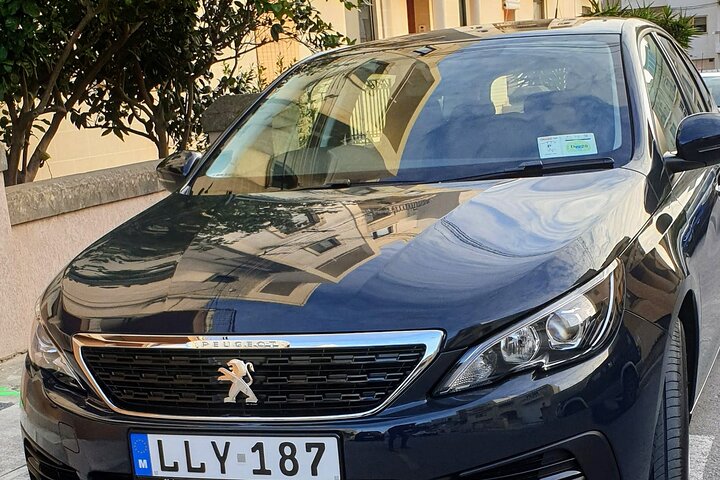
Malta Airport Cab Transfer to Bugibba /St Paul's Bay / Qawra Area
✓ Free cancellation

Malta: Luxury Private Taxi Tours, Customize your itinerary
✓ Free cancellation
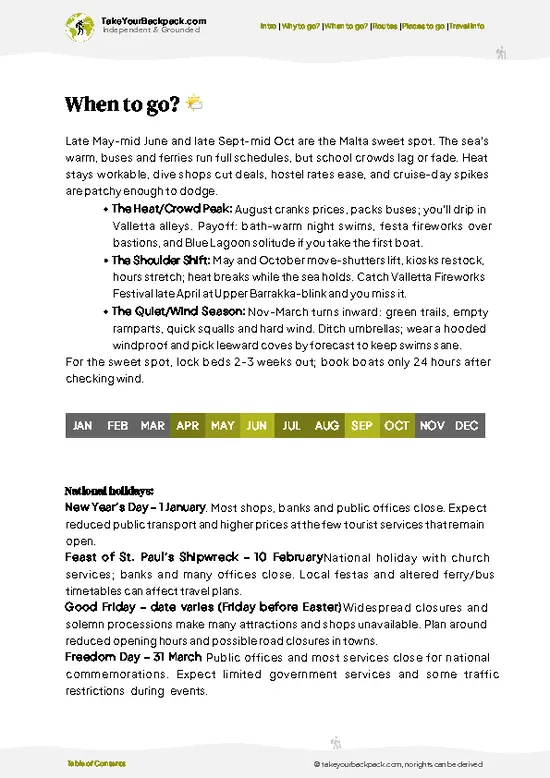
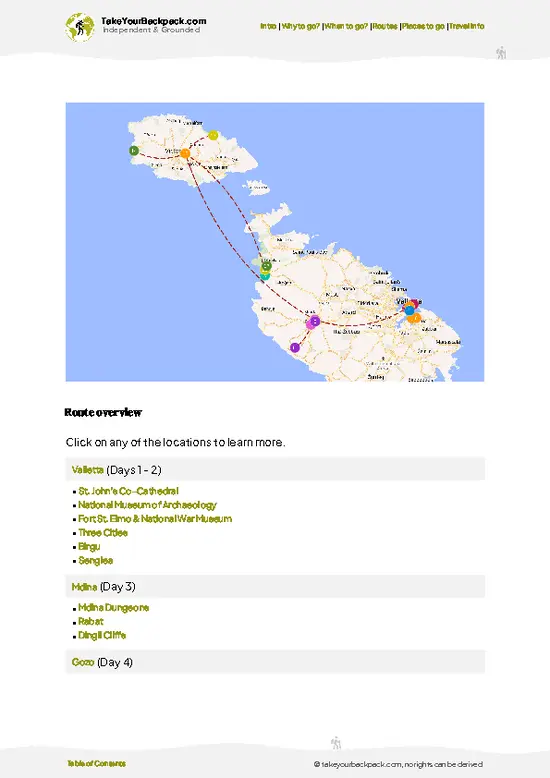
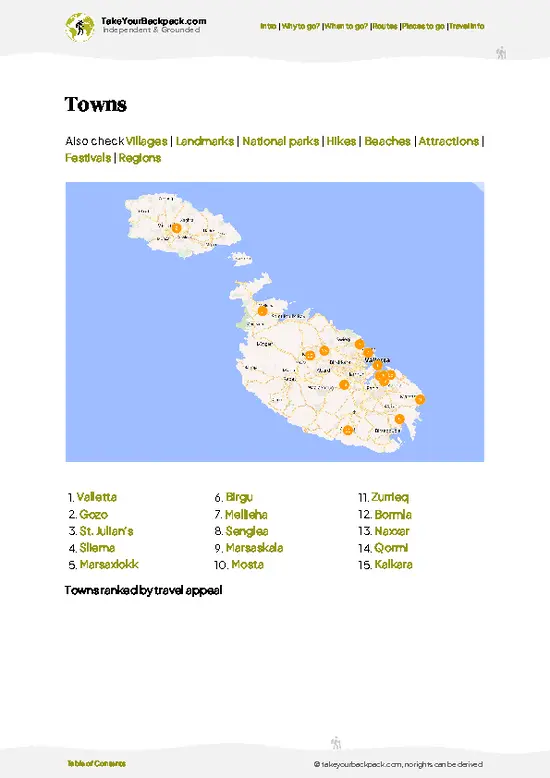

 Best Backpacking
.jpg) Hi, I’m Johan (Netherlands 🇳🇱), the creator of TakeYourBackpack. Over the past decade, I’ve backpacked through 80+ countries across six continents, gaining extensive experience with independent travel, long-term trips, and overland routes.
Hi, I’m Johan (Netherlands 🇳🇱), the creator of TakeYourBackpack. Over the past decade, I’ve backpacked through 80+ countries across six continents, gaining extensive experience with independent travel, long-term trips, and overland routes.