×

Mauritania🇲🇷 | attractionsNational Museum of Mauritaniaarchaeological exhibits, ethnographic displays, prehistoric artifacts | things to do and best time to go

Explore Old Fortified Quarter of OuadaneExplore National Library of Mauritania

Backpacking in National Museum of Mauritania
👍 Recommendedattraction ranked #6
By Johan Kruseman 🇳🇱 | Updated May 15, 2026

Here’s the curveball: the National Museum of Mauritania isn’t some dusty relic warehouse—it’s one of the only places in Nouakchott where you can actually touch ancient Saharan artifacts without a velvet rope or a security guard breathing down your neck. You’ll find it right in the heart of Nouakchott, Mauritania’s low-key capital, wedged between embassies and government blocks that look like they were designed by someone who’s never seen a postcard.

Let’s be blunt: this isn’t the Louvre, and it’s not pretending to be. The museum is small, sometimes eerily quiet, and yes, the displays are a bit rough around the edges—think handwritten labels and sun-faded maps. But that’s exactly the charm. For the price of a street snack, you get a crash course in Mauritania’s pre-Islamic roots, nomadic traditions, and the kind of archaeological finds that never make it to Instagram. No crowds, no hype, just raw, unfiltered history. Compared to the sand-blasted monotony of Nouakchott’s cityscape, this place is a genuine jolt of context and character—if you’re willing to look past the lack of polish.

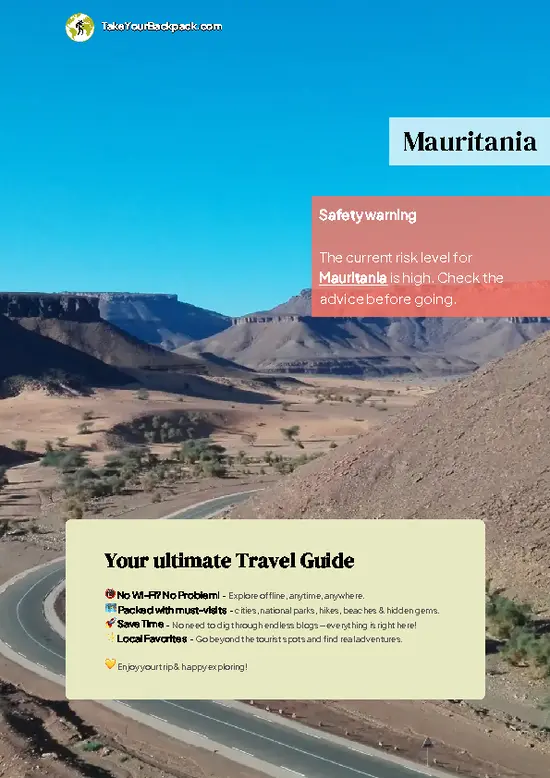
Discover everything you want to know in the 📖 Mauritania Travel Guide.
Safety warning

The current risk level for Mauritania is high. Check the advice before going.


Get your Mauritania guide
63 ranked highlights, routes & tips, works offline (269 pages)
Loading the map 🌍
CLICK TO FILTER
cities
towns
villages
landmarks
national parks
hikes
beaches
attractions
festivals
regions
SHOW COUNTRY’S BESTSHOW ALL

✨ Why go?
Ranked #6 attraction in Mauritania
Why visitors keep coming back

The National Museum of Mauritania isn’t some glossy, overhyped tourist trap where you snap a quick selfie and move on. It’s a raw, gritty dive into the country’s soul, and that’s exactly why backpackers carve out time for it. This place is the cultural heartbeat of Nouakchott, packed with artifacts that tell stories you won’t find plastered across Instagram feeds. You’re looking at ancient tools, traditional crafts, and relics that map out Mauritania’s complex history—from Saharan nomads to colonial struggles. It’s not just about ticking a box; it’s about feeling the weight of centuries in a single room.

Sure, the museum isn’t shiny or tourist-friendly in the usual sense. The crowds are manageable, but the real challenge is peeling back layers of history that aren’t spoon-fed. That effort … read more 👉
The National Museum of Mauritania isn’t some glossy, overhyped tourist trap where you snap a quick selfie and move on. It’s a raw, gritty dive into the country’s soul, and that’s exactly why backpackers carve out time for it. This place is the cultural heartbeat of Nouakchott, packed with artifacts that tell stories you won’t find plastered across Instagram feeds. You’re looking at ancient tools, traditional crafts, and relics that map out Mauritania’s complex history—from Saharan nomads to colonial struggles. It’s not just about ticking a box; it’s about feeling the weight of centuries in a single room.

Sure, the museum isn’t shiny or tourist-friendly in the usual sense. The crowds are manageable, but the real challenge is peeling back layers of history that aren’t spoon-fed. That effort pays off big time. For backpackers on the classic Mauritania route, this museum is a major milestone—a moment to pause, reflect, and understand why the desert and its people have shaped such a unique identity. It’s a place where history isn’t just displayed; it’s lived. If you want to grasp Mauritania beyond the dunes and markets, this is your no-nonsense gateway.
Want to include National Museum of Mauritania in your Mauritania route?
Create a personalized Mauritania itinerary that includes National Museum of Mauritania and the places that fit your trip — based on your travel style, budget, and available time. Get your route in seconds.

Generate my trip

💡 HighlightsDon't-miss highlights and experiences

1. The Ancient Manuscripts Room
Forget the Instagram fantasy of endless, perfectly preserved scrolls under glass. The real deal? A handful of battered, centuries-old Qur’ans and scientific treatises, rescued from the sands of Chinguetti and Ouadane, displayed with the kind of reverence you’d expect for relics that survived Saharan bandits, colonial neglect, and the occasional goat. The lighting is harsh, the labels are faded, but the sense of history is raw and electric. You’re staring at the actual pages that once mapped the stars for desert caravans and preserved knowledge while Europe was still in the Dark Ages. This is Mauritania’s intellectual backbone, not a curated fantasy.


2. The Prehistoric Stone Tools Collection
If you’ve ever rolled your eyes at yet another glass case of arrowheads, … read more 👉
1. The Ancient Manuscripts Room
Forget the Instagram fantasy of endless, perfectly preserved scrolls under glass. The real deal? A handful of battered, centuries-old Qur’ans and scientific treatises, rescued from the sands of Chinguetti and Ouadane, displayed with the kind of reverence you’d expect for relics that survived Saharan bandits, colonial neglect, and the occasional goat. The lighting is harsh, the labels are faded, but the sense of history is raw and electric. You’re staring at the actual pages that once mapped the stars for desert caravans and preserved knowledge while Europe was still in the Dark Ages. This is Mauritania’s intellectual backbone, not a curated fantasy.


2. The Prehistoric Stone Tools Collection
If you’ve ever rolled your eyes at yet another glass case of arrowheads, brace yourself: these tools are the real, unvarnished evidence of human survival in the Sahara, dating back tens of thousands of years. No slick interactive screens, just the weight of time and the realization that you’re looking at the handiwork of people who hunted, cooked, and thrived in a landscape most of us wouldn’t last a day in. It’s not pretty, but it’s honest—and it’s a direct handshake with prehistory.


3. The Moorish Nomad Life Exhibit
Instagram will show you a filtered tent and a camel. The museum gives you the battered leather water bags, the iron tools, and the actual textiles used by Mauritania’s nomads. There’s no attempt to romanticize the hardship—just a blunt, tactile sense of how people carved out life in a place where the sun is merciless and the sand never stops. You’ll leave with a new respect for the ingenuity and grit it takes to survive here, far beyond the tourist-camel-ride version.


4. The Colonial-Era Artifacts
This isn’t the sanitized, apologetic colonial history you’ll find in European museums. Here, the French presence is documented in objects that feel both mundane and loaded: coins, rifles, administrative stamps, and the odd bit of military kit. It’s a crash course in how Mauritania was shaped by outsiders, and how the locals adapted, resisted, or simply endured. The display is sparse, but the subtext is heavy—this is history with the gloves off.


5. The Ancient Rock Art Replicas
You won’t find crowds jostling for selfies here. Instead, you get close-up views of painstaking reproductions of the rock engravings from the Adrar and Tagant plateaus—scenes of giraffes, hunters, and cattle that predate Islam by millennia. The originals are scattered across remote desert outcrops, nearly impossible to reach without a 4x4 and a week to spare. The museum’s versions are your best shot at seeing this art without risking heatstroke or a broken axle. It’s a rare, unfiltered glimpse into a Sahara that was once green and teeming with life.
Spotted a mistake or missing something? Contact us.

🌤️ When to go?Weather, crowds, and seasonal trade-offs


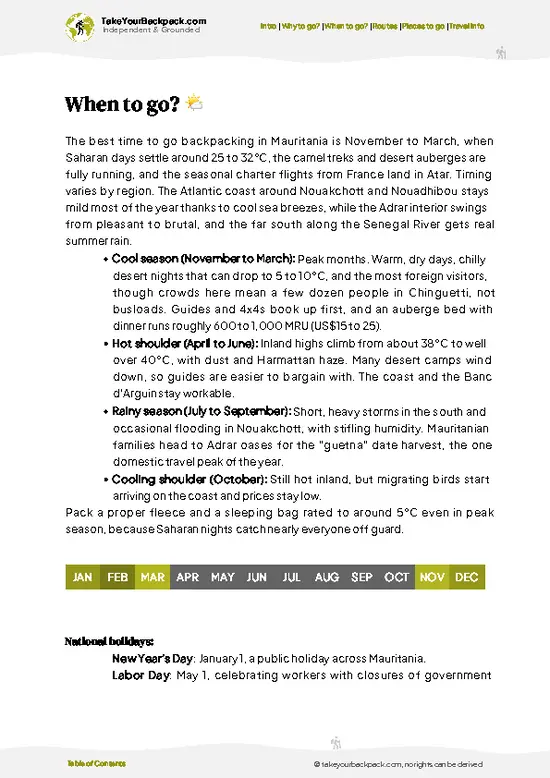
  • Topic: Weather and Temperature – The best time to visit the National Museum of Mauritania is between November and February. During these months, temperatures hover around a comfortable 20-25°C (68-77°F), avoiding the brutal heat of summer when it can soar above 40°C (104°F). The dry season means less dust and clearer skies, making your museum visit more pleasant.

  • Topic: Daylight Hours – From November to February, daylight lasts about 11 to 12 hours, giving you ample time to explore without rushing. The sun sets early enough to enjoy evening strolls in Nouakchott, where the museum is located, without the oppressive heat of midday.

  • Topic: Crowds – Expect fewer tourists during the cooler months, especially on weekdays. The museum doesn’t draw massive crowds like other global landmarks,
read more 👉

  • Topic: Weather and Temperature – The best time to visit the National Museum of Mauritania is between November and February. During these months, temperatures hover around a comfortable 20-25°C (68-77°F), avoiding the brutal heat of summer when it can soar above 40°C (104°F). The dry season means less dust and clearer skies, making your museum visit more pleasant.

  • Topic: Daylight Hours – From November to February, daylight lasts about 11 to 12 hours, giving you ample time to explore without rushing. The sun sets early enough to enjoy evening strolls in Nouakchott, where the museum is located, without the oppressive heat of midday.

  • Topic: Crowds – Expect fewer tourists during the cooler months, especially on weekdays. The museum doesn’t draw massive crowds like other global landmarks, but visiting outside of local holidays (like Eid) ensures a quieter, more immersive experience.

  • Topic: Seasonal Activities – Visiting in the cooler months aligns with local cultural events and markets that pop up around Nouakchott, enriching your trip beyond the museum walls. Summer months are less active culturally due to the heat, so timing your visit here adds layers to your experience.

  • Topic: Price Fluctuations – Tourist services and accommodations tend to be pricier during the cooler, more comfortable months when demand peaks. However, the National Museum itself has a fixed, modest entry fee, so your main cost consideration is lodging and transport.


Pro-tip: Aim for early mornings at the museum during November to February to dodge any lingering crowds and catch the exhibits in soft natural light.


source: climatestotravel.comJANJanuary: excellent for travelingFEBFebruary: excellent for travelingMARMarch: good for travelingAPRApril: fair for travelingMAYMay: fair for travelingJUNJune: below average for travelingJULJuly: below average for travelingAUGAugust: below average for travelingSEPSeptember: fair for travelingOCTOctober: good for travelingNOVNovember: excellent for travelingDECDecember: excellent for traveling
when-to-go

✈️ The backpacker research shortcutMauritania Travel Guide

An offline-friendly backpacking guide with optimized travel routes, ranked highlights, transport advice, and the best areas to stay.
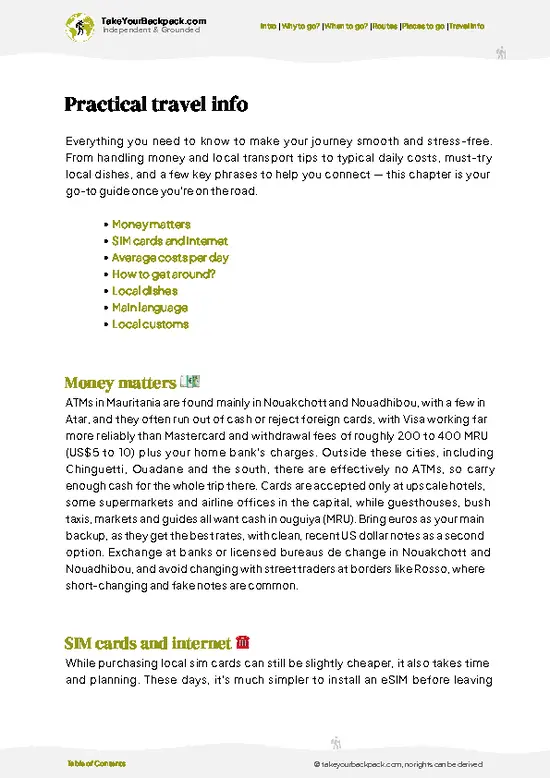
example page 0 from our offline Travel Guide for Mauritania
example page 1 from our offline Travel Guide for Mauritania
example page 2 from our offline Travel Guide for Mauritania
example page 3 from our offline Travel Guide for Mauritania
example page 4 from our offline Travel Guide for Mauritania
example page 5 from our offline Travel Guide for Mauritania
example page 6 from our offline Travel Guide for Mauritania
example page 7 from our offline Travel Guide for Mauritania
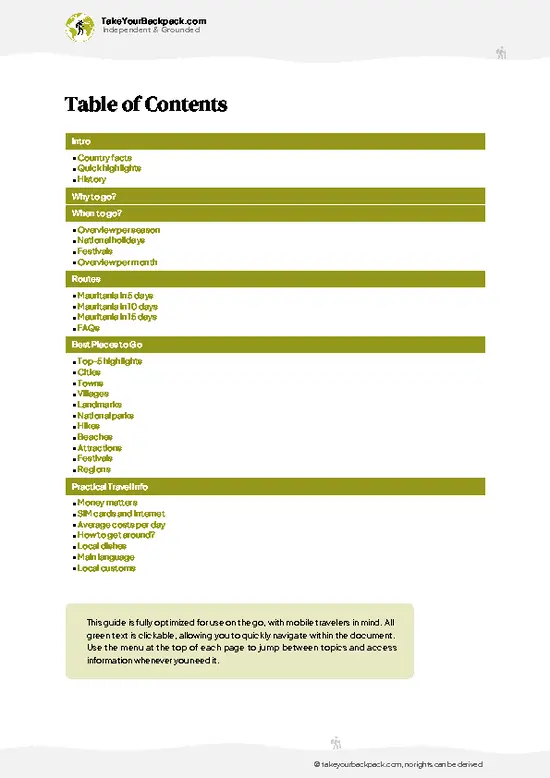
The digital guide (269 pages) contains:
63 highlights, ranked by travel appeal
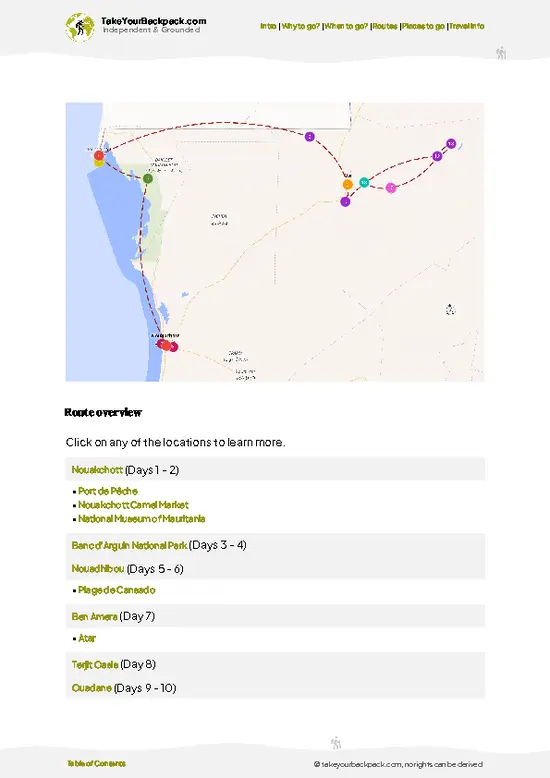
Optimized 5, 10 & 15-day travel routes
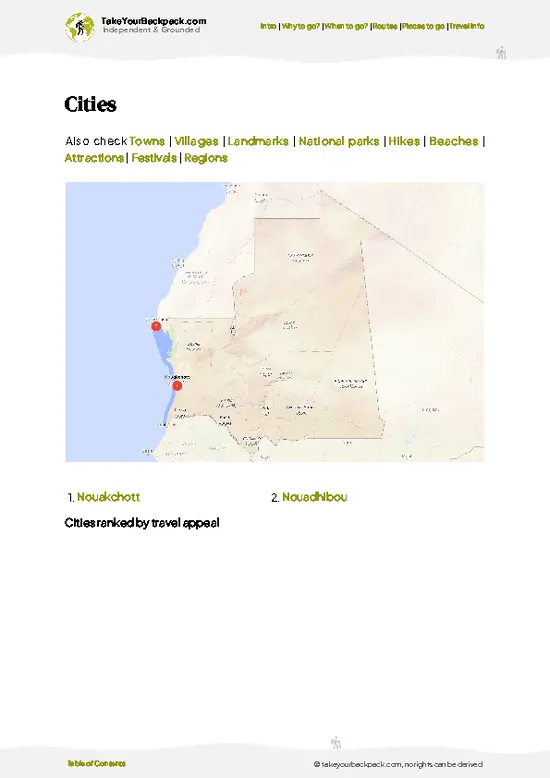
Cities, national parks, landmarks, beaches
How to get around
Offline-friendly for travel without Wi-Fi
👉 Click to see all 30+ guide features

📅 Plan smarter in minutes, not weeks
Month by month travel advice
Festivals & national holidays
Budget expectations

🗺️ Go to the right places, skip the overrated ones
Honest pros & cons of destinations
Top hikes, parks & viewpoints
Lesser-known places most travelers miss
Clear “worth it vs skip it” guidance

🛏️ Travel smoothly without rookie mistakes
Best areas to stay
Transport systems explained simply
Common scams & safety advice
SIM cards, money & practical tips

🌍 Understand the country, not just visit it
Culture & traditions
52 Essential phrases & customs
Festivals worth planning around
Traveler-friendly historical context
Insights that make places more meaningful

📱 Built for real travel conditions
Fully downloadable PDF
Works completely offline
Optimized for phone use
Useful in remote areas & buses
Everything in one place
Save weeks of stressful planning
Get instant access to your full guide. 30‑day money-back guarantee.


By proceeding you agree to our terms.
Sent to your inbox immediately after payment • 100% Secure Checkout
Best Backpacking Travel Advisor 2025 tourism awardBest Backpacking
Travel Advisor
2025
What others say about Take Your Backpack Guides:
⭐⭐⭐⭐⭐
Fantastic, amazing amount of information!
⭐⭐⭐⭐⭐
My goodness this is amazing, it's what I've been looking for hats off too you!
⭐⭐⭐⭐⭐
I think this is absolutely BRILLIANT
⭐⭐⭐⭐
Very complete and informative. It's still missing places, but I gotta to commend you
⭐⭐⭐⭐⭐
This is truly amazing, thank you, can't wait to explore it with my kids!
⭐⭐⭐⭐⭐
Awesome resource, thank you!
⭐⭐⭐⭐⭐
This is amazing! Can't wait to explore the ones I haven't seen
⭐⭐⭐⭐
I love this! Well done, great idea.
⭐⭐⭐⭐⭐
Thanks for taking the time to make this gem!
⭐⭐⭐⭐⭐
This might be the best website I've ever seen.
⭐⭐⭐⭐⭐
Congratulations, and thank you so much for your work; it's incredibly valuable.
⭐⭐⭐⭐
In all seriousness I think you did a great job pointing out the important spots
⭐⭐⭐⭐⭐
10/10 very good
⭐⭐⭐⭐⭐
As someone who's only just starting to visit regularly this is awesome, thank you.
⭐⭐⭐⭐
Thank you very much! I'm going to visit my dad, it's going to be very useful!
⭐⭐⭐⭐⭐
This is really cool! We'll be travelling for the first time and this definitely come in handy.
⭐⭐⭐⭐⭐
You are now our minister of culture, congratulations 👨‍💼
⭐⭐⭐⭐⭐
Just wanted to tell you that this is a pearl! Going to follow your recommendations.
⭐⭐⭐⭐⭐
This is so cool. I'll definitely be using the resource for my travels soon.
⭐⭐⭐⭐⭐
This is very impressive! Good work.
⭐⭐⭐⭐⭐
This is an amazing and informative site. Very well done!

🛏️ Where to stay?How to pick the right area

The National Museum of Mauritania sits in Nouakchott’s heart, a city that’s not exactly a backpacker’s paradise on first glance. Forget the glossy Instagram shots—this place is raw, gritty, and yes, crowded with locals more than tourists. The museum itself is a quiet refuge amid the city’s chaos, but where you stay makes all the difference.

If you want to be close and safe, aim for the neighborhood around Avenue Gamal Abdel Nasser. It’s the city’s pulse, where you’ll find a mix of budget guesthouses and small inns that attract solo travelers and backpackers who aren’t afraid to dive into the … read more 👉
The National Museum of Mauritania sits in Nouakchott’s heart, a city that’s not exactly a backpacker’s paradise on first glance. Forget the glossy Instagram shots—this place is raw, gritty, and yes, crowded with locals more than tourists. The museum itself is a quiet refuge amid the city’s chaos, but where you stay makes all the difference.

If you want to be close and safe, aim for the neighborhood around Avenue Gamal Abdel Nasser. It’s the city’s pulse, where you’ll find a mix of budget guesthouses and small inns that attract solo travelers and backpackers who aren’t afraid to dive into the real Mauritanian experience. This area is social enough to meet other travelers but not so touristy that you lose authenticity. Streets here buzz with local markets, street food stalls, and the occasional café where you can swap stories with fellow wanderers.

Avoid the outskirts or overly commercial zones—they’re either too isolated or too sterile. Staying near the museum means you’re within walking distance of key city spots, which is crucial because taxis can be unpredictable and pricey. Plus, the vibe here is a blend of local life and traveler camaraderie, which is exactly what you want when you’re backpacking solo in a place like Nouakchott. It’s not about luxury; it’s about connection, safety, and that gritty charm that makes Mauritania stick in your memory.

👛 Costs (as of 15 May 2025)What things cost and how to budget

As of the most recent estimates, the National Museum of Mauritania charges an entry fee of 50 Mauritanian Ouguiya (MRU), approximately €1 to €2. ([petitfute.co.uk](https://www.petitfute.co.uk/v52566-nouakchott/c1173-visites-points-d-interet/c958-musee/275650-musee-national.html?utm_source=openai))
⚠️ Prices can change and everyone travels differently, so take this as a rough guide. Hope it helps you plan your adventure!

Other Mauritanian attractions near National Museum of Mauritania

Explore more nearby:


💡 Not sure where to go next?
Create a personalized itinerary for Mauritania including National Museum of Mauritania and the places that fit your trip.

Generate my itinerary

👉 Discover all attractions

Or checkout all Mauritania has to offer (think cities, towns, villages, national parks, hikes, beaches, festivals)
Country photo of Mauritania

We 💚 feedbackSumming up the experience

The National Museum of Mauritania isn’t your flashy, crowd-packed blockbuster. Expect a quiet, sometimes dusty space where the real story unfolds in the artifacts—ancient tools, rock art, and relics that whisper the Sahara’s deep history. Don’t come expecting polished displays or English everywhere; it’s raw and real, which is exactly why it hits differently. The best surprise? How these humble pieces connect you to a vast, often overlooked culture. If you’re patient and curious, this place rewards with a rare kind of magic.

✍️ Help improve this page!
The information on this page is based on in-depth research, insights shared by experienced travelers, and feedback from the local travel community in Mauritania. While every effort is made to keep the information accurate and current, conditions can change — so if you spot anything incorrect or outdated, please get in touch.


🙋‍♂️ Give feedback

👋 Meet the founderWho’s Behind Take Your Backpack?

Johan, backpacker and founder of TakeYourBackpackHi, I’m Johan (Netherlands 🇳🇱), the creator of TakeYourBackpack. Over the past decade, I’ve backpacked through 80+ countries across six continents, gaining extensive experience with independent travel, long-term trips, and overland routes.

This site is built on a combination of firsthand travel experience and carefully curated insights from other backpackers. Many guides are based on places I’ve personally visited, while others bring together tips, observations, and practical advice shared by trusted travelers I’ve met along the way.

The goal is to provide realistic, experience-driven guidance — not generic itineraries — so you can explore destinations with better context, clearer expectations, and more confidence.

Get full Mauritania guide •
Instant download • 63 highlights • Full Offline guide