The Fish Market Frenzy
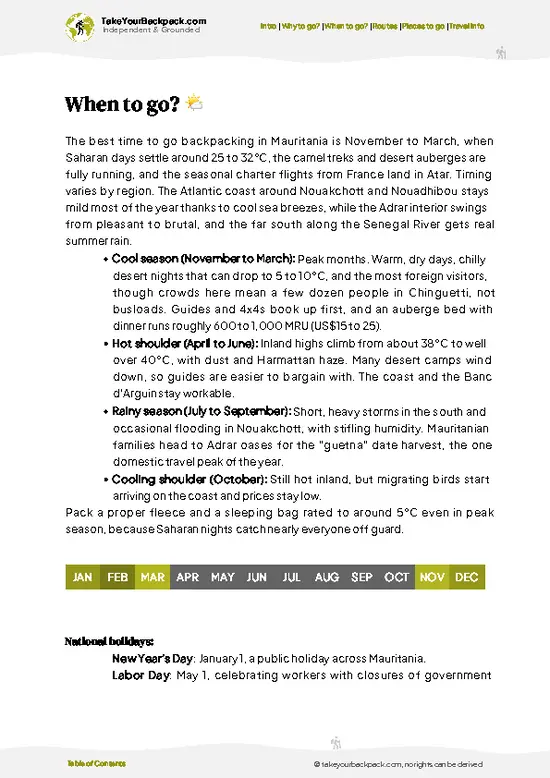
Forget the sanitized seafood counters you know. Nouakchott’s fish market is a sensory overload—raw, loud, and absolutely alive. Fishermen haul in their catch straight from the Atlantic, dumping wriggling fish onto the sand as buyers haggle with the kind of intensity that makes Wall Street look like a book club. The air is thick with salt, diesel, and the sharp tang of fresh fish. If you want to see Mauritania’s economic engine in action, this is it. Don’t expect Instagrammable neatness; expect grit, sweat, and the kind of authenticity that’s impossible to fake.
The Maze of Fabric Stalls
If you think you’ve seen “colorful markets,” you haven’t seen the textile section here. Bolts of wax print, shimmering satins, and hand-dyed veils are stacked in improbable towers. Women … read more 👉
Forget the sanitized seafood counters you know. Nouakchott’s fish market is a sensory overload—raw, loud, and absolutely alive. Fishermen haul in their catch straight from the Atlantic, dumping wriggling fish onto the sand as buyers haggle with the kind of intensity that makes Wall Street look like a book club. The air is thick with salt, diesel, and the sharp tang of fresh fish. If you want to see Mauritania’s economic engine in action, this is it. Don’t expect Instagrammable neatness; expect grit, sweat, and the kind of authenticity that’s impossible to fake.
The Maze of Fabric Stalls
If you think you’ve seen “colorful markets,” you haven’t seen the textile section here. Bolts of wax print, shimmering satins, and hand-dyed veils are stacked in improbable towers. Women … read more 👉
The Fish Market Frenzy
Forget the sanitized seafood counters you know. Nouakchott’s fish market is a sensory overload—raw, loud, and absolutely alive. Fishermen haul in their catch straight from the Atlantic, dumping wriggling fish onto the sand as buyers haggle with the kind of intensity that makes Wall Street look like a book club. The air is thick with salt, diesel, and the sharp tang of fresh fish. If you want to see Mauritania’s economic engine in action, this is it. Don’t expect Instagrammable neatness; expect grit, sweat, and the kind of authenticity that’s impossible to fake.
The Maze of Fabric Stalls
If you think you’ve seen “colorful markets,” you haven’t seen the textile section here. Bolts of wax print, shimmering satins, and hand-dyed veils are stacked in improbable towers. Women in flowing melhafa bargain with a precision that’s part theater, part blood sport. The patterns aren’t just pretty—they’re a living language, signaling tribe, status, and taste. This is where Mauritania’s style is born, and if you’re lucky, you’ll walk away with a story sewn into your souvenir.
The Tea Rituals in the Shadows
You’ll spot clusters of men hunched over battered trays, pouring green tea from a height that would make a barista nervous. This isn’t just a caffeine fix; it’s a social contract. The tea is poured three times, each glass sweeter than the last, and you’re expected to linger. If you’re invited to join, accept. The conversation will be in a mix of Arabic, French, and hand gestures, but the hospitality is universal. This is the real Mauritanian welcome—no filter, no performance.
The Goldsmiths’ Alley
Tucked away from the main chaos, you’ll find a row of tiny workshops where goldsmiths melt, hammer, and twist precious metal into intricate jewelry. There’s no glass separating you from the action—just a haze of torch smoke and the clink of tools. The designs are a blend of Moorish tradition and Saharan flair, and you can watch a bracelet take shape from raw gold to finished heirloom. No hard sell, just quiet pride in the craft.
The Street Food Gauntlet
You won’t find gourmet food trucks, but you will find skewers of grilled meat, fried fish, and flatbreads hot off the griddle. The best stalls are the ones with the longest lines and the least signage. Order what everyone else is having, eat with your hands, and don’t ask too many questions about the ingredients. The flavors are bold, the prices are low, and the experience is pure, unfiltered Mauritania.
The Human Theater
This isn’t a market for passive people-watching. You’re in the middle of the action, dodging donkey carts, sidestepping wheelbarrows, and getting swept into arguments about the price of onions. The market is a living, breathing organism—chaotic, unpredictable, and utterly magnetic. If you want to understand Nouakchott, skip the guidebook and spend an hour just moving with the current. You’ll come out changed, or at least with a story worth telling.
Forget the sanitized seafood counters you know. Nouakchott’s fish market is a sensory overload—raw, loud, and absolutely alive. Fishermen haul in their catch straight from the Atlantic, dumping wriggling fish onto the sand as buyers haggle with the kind of intensity that makes Wall Street look like a book club. The air is thick with salt, diesel, and the sharp tang of fresh fish. If you want to see Mauritania’s economic engine in action, this is it. Don’t expect Instagrammable neatness; expect grit, sweat, and the kind of authenticity that’s impossible to fake.
The Maze of Fabric Stalls
If you think you’ve seen “colorful markets,” you haven’t seen the textile section here. Bolts of wax print, shimmering satins, and hand-dyed veils are stacked in improbable towers. Women in flowing melhafa bargain with a precision that’s part theater, part blood sport. The patterns aren’t just pretty—they’re a living language, signaling tribe, status, and taste. This is where Mauritania’s style is born, and if you’re lucky, you’ll walk away with a story sewn into your souvenir.
The Tea Rituals in the Shadows
You’ll spot clusters of men hunched over battered trays, pouring green tea from a height that would make a barista nervous. This isn’t just a caffeine fix; it’s a social contract. The tea is poured three times, each glass sweeter than the last, and you’re expected to linger. If you’re invited to join, accept. The conversation will be in a mix of Arabic, French, and hand gestures, but the hospitality is universal. This is the real Mauritanian welcome—no filter, no performance.
The Goldsmiths’ Alley
Tucked away from the main chaos, you’ll find a row of tiny workshops where goldsmiths melt, hammer, and twist precious metal into intricate jewelry. There’s no glass separating you from the action—just a haze of torch smoke and the clink of tools. The designs are a blend of Moorish tradition and Saharan flair, and you can watch a bracelet take shape from raw gold to finished heirloom. No hard sell, just quiet pride in the craft.
The Street Food Gauntlet
You won’t find gourmet food trucks, but you will find skewers of grilled meat, fried fish, and flatbreads hot off the griddle. The best stalls are the ones with the longest lines and the least signage. Order what everyone else is having, eat with your hands, and don’t ask too many questions about the ingredients. The flavors are bold, the prices are low, and the experience is pure, unfiltered Mauritania.
The Human Theater
This isn’t a market for passive people-watching. You’re in the middle of the action, dodging donkey carts, sidestepping wheelbarrows, and getting swept into arguments about the price of onions. The market is a living, breathing organism—chaotic, unpredictable, and utterly magnetic. If you want to understand Nouakchott, skip the guidebook and spend an hour just moving with the current. You’ll come out changed, or at least with a story worth telling.
Spotted a mistake or missing something? Contact us.
v2.webp)

Best Backpacking
Hi, I’m Johan (Netherlands 🇳🇱), the creator of TakeYourBackpack. Over the past decade, I’ve backpacked through 80+ countries across six continents, gaining extensive experience with independent travel, long-term trips, and overland routes.