×

Mauritania🇲🇷 | townsTidjikjadate festival, colonial-era buildings, central plateau | things to do and best time to go

Explore TergitExplore Boutilimit

Backpacking in Tidjikja
🏆 Top picktown ranked #4
By Johan Kruseman 🇳🇱 | Updated June 3, 2026

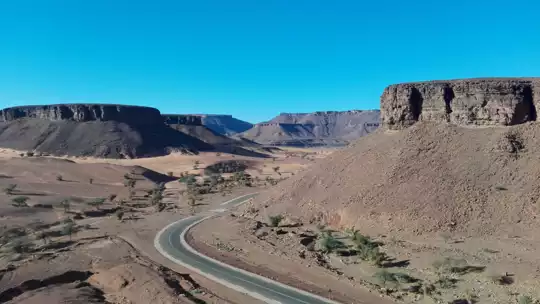
Forget the idea that Tidjikja is just a sun-bleached pit stop on the way to somewhere “real.” That’s the lazy traveler’s myth. Tidjikja sits deep in central Mauritania, a good 700 kilometers from Nouakchott, surrounded by the Tagant plateau’s ochre cliffs and endless sand. The town itself is no mirage: it’s a slow-burn introduction to Saharan rhythm, with mud-brick alleys that glow gold at dusk and a market where the scent of dried dates and camel milk hangs in the air. For backpackers, Tidjikja is less a destination for bucket-list sights and more a logistical and cultural anchor. It’s a launchpad for desert treks or a necessary breather between the chaos of Nouakchott and the isolation of the Adrar. Don’t expect hostels or a buzzing backpacker scene—nights are quiet, and you’ll likely be the only foreigner at your auberge. Getting here means braving long, bumpy bush taxis or private 4x4s, but once you arrive, the town is walkable and safe, if a bit reserved. Compared to Atar, Tidjikja feels more authentic and less trafficked, but also more challenging—fewer comforts, more reward for those who want to earn their Saharan stripes.

Discover everything you want to know in the 📖 Mauritania Travel Guide.
Safety warning

The current risk level for Mauritania is high. Check the advice before going.


Get your Mauritania guide
63 ranked highlights, routes & tips, works offline (269 pages)
Loading the map 🌍
CLICK TO FILTER
cities
towns
villages
landmarks
national parks
hikes
beaches
attractions
festivals
regions
SHOW COUNTRY’S BESTSHOW ALL

✨ Why go?
Ranked #4 town in Mauritania
Reasons people choose to visit here

Backpackers flock to Tidjikja not just for its charm, but for its strategic position on the route to Mauritania’s stunning landscapes. This town serves as a gateway to nearby hikes in the Adrar region, where the craggy cliffs and vast dunes beckon adventurers. The local guesthouses offer a cozy, intimate atmosphere, perfect for solo travelers or small groups looking to share stories over a bowl of traditional tagine.

The walkable streets are lined with friendly faces, making it easy to connect with fellow travelers or locals. You’ll find that most visitors stay a few days, soaking in the slow pace and the cultural richness that surrounds them. The scent of spices wafts through the air, inviting you to explore local eateries that serve up authentic flavors.

While Tidjikja isn’t a nightlife … read more 👉
Backpackers flock to Tidjikja not just for its charm, but for its strategic position on the route to Mauritania’s stunning landscapes. This town serves as a gateway to nearby hikes in the Adrar region, where the craggy cliffs and vast dunes beckon adventurers. The local guesthouses offer a cozy, intimate atmosphere, perfect for solo travelers or small groups looking to share stories over a bowl of traditional tagine.

The walkable streets are lined with friendly faces, making it easy to connect with fellow travelers or locals. You’ll find that most visitors stay a few days, soaking in the slow pace and the cultural richness that surrounds them. The scent of spices wafts through the air, inviting you to explore local eateries that serve up authentic flavors.

While Tidjikja isn’t a nightlife hub, its social vibe is palpable, especially in the evenings when travelers gather to swap tales under the stars. This town is ideal for those who appreciate a blend of adventure and community, making it a worthwhile stop on your journey.
Want to include Tidjikja in your Mauritania route?
Create a personalized Mauritania itinerary that includes Tidjikja and the places that fit your trip — based on your travel style, budget, and available time. Get your route in seconds.

Generate my trip

💡 HighlightsTop highlights of Tidjikja

  • The old ksar (historic medina) — narrow mud-brick lanes, carved doors and compact courtyard houses. Walk it slowly and you’ll see how the town grew: architecture, storage rooms for dates, and real daily life in an oasis settlement.
  • Friday souk (central market) — the weekly heartbeat of Tidjikja: livestock, dates, spices and second-hand goods. Great for people-watching, bartering and tasting street snacks while locals conduct business.
  • Palm groves and oasis gardens — green, shady strips of date palms right inside town. They’re practical and beautiful: hand-irrigation channels, terrace plots and a quiet place to escape the sun and meet farmers.
  • The town mosque — the main neighborhood mosque, a focal point of communal life. Even if you don’t go inside, the courtyard, call to prayer and surrounding
read more 👉
  • The old ksar (historic medina) — narrow mud-brick lanes, carved doors and compact courtyard houses. Walk it slowly and you’ll see how the town grew: architecture, storage rooms for dates, and real daily life in an oasis settlement.
  • Friday souk (central market) — the weekly heartbeat of Tidjikja: livestock, dates, spices and second-hand goods. Great for people-watching, bartering and tasting street snacks while locals conduct business.
  • Palm groves and oasis gardens — green, shady strips of date palms right inside town. They’re practical and beautiful: hand-irrigation channels, terrace plots and a quiet place to escape the sun and meet farmers.
  • The town mosque — the main neighborhood mosque, a focal point of communal life. Even if you don’t go inside, the courtyard, call to prayer and surrounding social bustle tell you a lot about local rhythms.
  • Festival des Dattes (Date Festival) — when it’s on (usually annually) the whole town fills with stalls, tastings, music and competitions tied to the date harvest. A seasonal highlight that’s worth timing your visit around.
  • Traditional craft workshops — small, working places where leatherworkers, weavers and carpenters still make everyday items. Watching someone stitch a leather bag or weave a mat gives insight into skills passed down through generations.
  • Public wells and old cisterns — simple but essential: historic water points that explain how communities survive in the desert. Visiting them shows traditional water management and is a good photo subject at golden hour.
  • Marabout tombs and local shrines — modest mausoleums of local saints and religious figures scattered through the town. They’re important culturally and spiritually, and visiting respectfully gives context to local beliefs and history.
  • Market cafés and tea spots — tiny cafés around the bazaar where tea is poured strong and conversations happen fast. Sit, drink tea, smoke a cigarette if you want, and listen — that’s where you meet real Tidjikja people.
  • Town rooftops and sunset viewpoint — climb a rooftop or a low hill at dusk for sweeping views over the ksar, palms and the Tagant plateau beyond. Sunset here is quiet and puts the whole place into perspective.
A few nearby visitable highlights for day trips: the Tagant plateau and surrounding desert scenery, the ancient ksar of Tichit, and the small nomad camps and oases that dot the countryside around Tidjikja.
Spotted a mistake or missing something? Contact us.
🏘️ NeighborhoodsWhere things are and how it's laid out

Tidjikja is a captivating stop in Mauritania, where the desert whispers stories of ancient trade routes and vibrant local culture. Each neighborhood offers a unique slice of life, making it essential for backpackers to choose wisely.

Centre Ville: This is the heart of Tidjikja, buzzing with energy. You’ll find local markets where spices mingle in the air, and the vibrant colors of textiles catch your eye. It’s walkable, with plenty of budget-friendly accommodations. Nightlife is low-key, perfect for winding down after a day of exploration. Ideal for short stays, as everything is within reach.

Quartier des Artisans: A haven for those who appreciate craftsmanship. The scent of wood and leather fills the air as artisans create their works. It’s quieter here, making it suitable for longer stays … read more 👉
Tidjikja is a captivating stop in Mauritania, where the desert whispers stories of ancient trade routes and vibrant local culture. Each neighborhood offers a unique slice of life, making it essential for backpackers to choose wisely.

Centre Ville: This is the heart of Tidjikja, buzzing with energy. You’ll find local markets where spices mingle in the air, and the vibrant colors of textiles catch your eye. It’s walkable, with plenty of budget-friendly accommodations. Nightlife is low-key, perfect for winding down after a day of exploration. Ideal for short stays, as everything is within reach.

Quartier des Artisans: A haven for those who appreciate craftsmanship. The scent of wood and leather fills the air as artisans create their works. It’s quieter here, making it suitable for longer stays if you want to immerse yourself in the local culture. Transport options are limited, but the peaceful vibe makes it worth the trek.

La Gare: Close to the bus station, this area is bustling with travelers coming and going. It’s less picturesque but practical for those needing quick access to transport. The vibe is transient, with a mix of locals and backpackers. Accommodations are affordable, but nightlife is sparse. Best for short stays or if you’re just passing through.

Les Collines: A bit further out, this neighborhood offers stunning views of the surrounding landscape. It’s a quieter escape, perfect for longer stays if you want to recharge. The walk to the center is a bit of a hike, but the tranquility and scenery make it worthwhile.

⌛️ 1 daySeeing the highlights in 24 hours

Tidjikja, a town steeped in history and culture, offers a glimpse into Mauritania’s rich tapestry. The sun rises over the ochre buildings, casting long shadows that dance across the sandy streets. This is a place where the scent of spices mingles with the earthy aroma of the desert, creating an atmosphere that feels both ancient and alive.

Start your morning at the bustling market, where locals barter for everything from vibrant textiles to fresh produce. The sounds of laughter and haggling fill the air, and you can’t help but be drawn into the rhythm of daily life. Grab a warm, flaky pastry from a nearby vendor, and savor the flaky layers while soaking in the vibrant energy around you. This is not just a meal; it’s a connection to the community.

In the afternoon, wander through the narrow … read more 👉
Tidjikja, a town steeped in history and culture, offers a glimpse into Mauritania’s rich tapestry. The sun rises over the ochre buildings, casting long shadows that dance across the sandy streets. This is a place where the scent of spices mingles with the earthy aroma of the desert, creating an atmosphere that feels both ancient and alive.

Start your morning at the bustling market, where locals barter for everything from vibrant textiles to fresh produce. The sounds of laughter and haggling fill the air, and you can’t help but be drawn into the rhythm of daily life. Grab a warm, flaky pastry from a nearby vendor, and savor the flaky layers while soaking in the vibrant energy around you. This is not just a meal; it’s a connection to the community.

In the afternoon, wander through the narrow streets of the old town, where the architecture tells stories of centuries past. Make your way to the lesser-known neighborhood of Ksar, where you’ll find traditional mud-brick homes adorned with intricate carvings. Here, you can chat with locals, who are often eager to share tales of their ancestors and the town’s history. This is a side of Tidjikja that many tourists overlook, but it’s where the heart of the town truly beats.

As the sun begins to set, head to the edge of town to watch the golden light transform the landscape. Find a quiet spot near the ancient ruins of the old fort, where you can reflect on the day. The cool evening air carries the distant sounds of drums and laughter from a nearby gathering. Join in if you feel adventurous, or simply enjoy the moment as the stars begin to twinkle overhead.

In Tidjikja, every corner offers a new discovery, and each interaction deepens your understanding of this remarkable place. Embrace the journey, and let the town reveal its secrets to you.
Turn your Tidjikja visit into an Mauritania adventure
Build a complete Mauritania route with Tidjikja, hidden gems, must-see destinations, and realistic travel times included.

Generate my trip

🌤️ When to go?Weather, crowds, and seasonal trade-offs


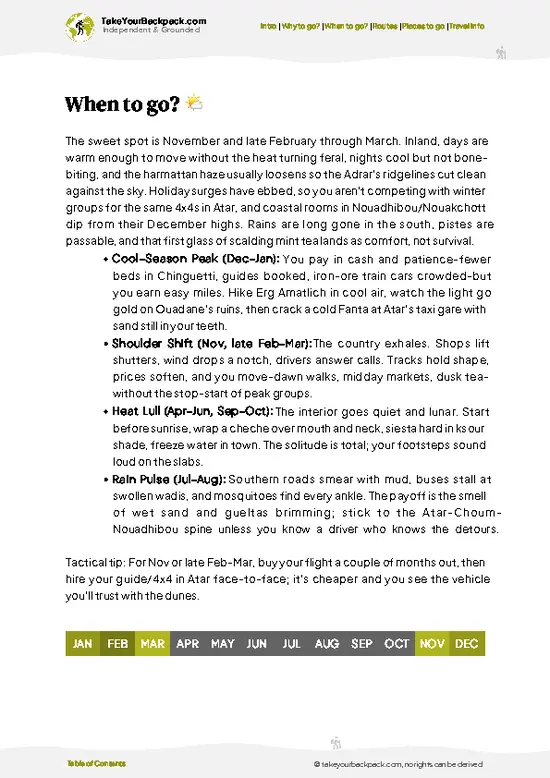
  • Weather: Tidjikja sits in the Sahara’s edge, so summers scorch with highs often above 45°C (113°F). The dry heat is relentless, making winter months from November to February the only comfortable window, with daytime temps around 20-25°C (68-77°F).

  • Temperature: Nights can drop sharply, especially in winter, dipping to 5°C (41°F). Pack layers to handle this swing—day warmth contrasts with chilly desert evenings.

  • Daylight Hours: Daylight is fairly stable year-round, roughly 11 to 12 hours, but winter’s softer light makes early mornings and late afternoons perfect for exploring without frying under the sun.

  • Crowds: Tidjikja is off the beaten path, so crowds are minimal year-round. However, the cooler season attracts a handful of adventurous travelers, offering a quieter, more authentic
read more 👉

  • Weather: Tidjikja sits in the Sahara’s edge, so summers scorch with highs often above 45°C (113°F). The dry heat is relentless, making winter months from November to February the only comfortable window, with daytime temps around 20-25°C (68-77°F).

  • Temperature: Nights can drop sharply, especially in winter, dipping to 5°C (41°F). Pack layers to handle this swing—day warmth contrasts with chilly desert evenings.

  • Daylight Hours: Daylight is fairly stable year-round, roughly 11 to 12 hours, but winter’s softer light makes early mornings and late afternoons perfect for exploring without frying under the sun.

  • Crowds: Tidjikja is off the beaten path, so crowds are minimal year-round. However, the cooler season attracts a handful of adventurous travelers, offering a quieter, more authentic vibe.

  • Seasonal Activities: The cooler months align with local festivals and markets, where the desert’s cultural pulse is strongest. Summer’s heat shuts down much of this, so timing your visit here unlocks richer experiences.

  • Price Fluctuations: Accommodation and transport costs dip in the extreme heat months due to low demand. Visiting in winter means paying a bit more but gaining comfort and access to local life.


Pro-tip: Aim for late November to early February—when the desert’s harshness softens, the air smells of dry earth and spices, and every step feels earned rather than endured.


source: climatestotravel.comJANJanuary: excellent for travelingFEBFebruary: excellent for travelingMARMarch: good for travelingAPRApril: fair for travelingMAYMay: below average for travelingJUNJune: below average for travelingJULJuly: below average for travelingAUGAugust: below average for travelingSEPSeptember: fair for travelingOCTOctober: good for travelingNOVNovember: highly recommended for travelingDECDecember: excellent for traveling
when-to-go

✈️ The backpacker research shortcutMauritania Travel Guide

An offline-friendly backpacking guide with optimized travel routes, ranked highlights, transport advice, and the best areas to stay.
example page 0 from our offline Travel Guide for Mauritania
example page 1 from our offline Travel Guide for Mauritania
example page 2 from our offline Travel Guide for Mauritania
example page 3 from our offline Travel Guide for Mauritania
example page 4 from our offline Travel Guide for Mauritania
example page 5 from our offline Travel Guide for Mauritania
example page 6 from our offline Travel Guide for Mauritania
example page 7 from our offline Travel Guide for Mauritania
The digital guide (269 pages) contains:
63 highlights, ranked by travel appeal
Optimized 5, 10 & 15-day travel routes
Cities, national parks, landmarks, beaches
How to get around
Offline-friendly for travel without Wi-Fi
👉 Click to see all 30+ guide features

📅 Plan smarter in minutes, not weeks
Month by month travel advice
Festivals & national holidays
Budget expectations

🗺️ Go to the right places, skip the overrated ones
Honest pros & cons of destinations
Top hikes, parks & viewpoints
Lesser-known places most travelers miss
Clear “worth it vs skip it” guidance

🛏️ Travel smoothly without rookie mistakes
Best areas to stay
Transport systems explained simply
Common scams & safety advice
SIM cards, money & practical tips

🌍 Understand the country, not just visit it
Culture & traditions
52 Essential phrases & customs
Festivals worth planning around
Traveler-friendly historical context
Insights that make places more meaningful

📱 Built for real travel conditions
Fully downloadable PDF
Works completely offline
Optimized for phone use
Useful in remote areas & buses
Everything in one place
Save weeks of stressful planning
Get instant access to your full guide. 30‑day money-back guarantee.


By proceeding you agree to our terms.
Sent to your inbox immediately after payment • 100% Secure Checkout
Best Backpacking Travel Advisor 2025 tourism awardBest Backpacking
Travel Advisor
2025
What others say about Take Your Backpack Guides:
⭐⭐⭐⭐⭐
Fantastic, amazing amount of information!
⭐⭐⭐⭐⭐
My goodness this is amazing, it's what I've been looking for hats off too you!
⭐⭐⭐⭐⭐
I think this is absolutely BRILLIANT
⭐⭐⭐⭐
Very complete and informative. It's still missing places, but I gotta to commend you
⭐⭐⭐⭐⭐
This is truly amazing, thank you, can't wait to explore it with my kids!
⭐⭐⭐⭐⭐
Awesome resource, thank you!
⭐⭐⭐⭐⭐
This is amazing! Can't wait to explore the ones I haven't seen
⭐⭐⭐⭐
I love this! Well done, great idea.
⭐⭐⭐⭐⭐
Thanks for taking the time to make this gem!
⭐⭐⭐⭐⭐
This might be the best website I've ever seen.
⭐⭐⭐⭐⭐
Congratulations, and thank you so much for your work; it's incredibly valuable.
⭐⭐⭐⭐
In all seriousness I think you did a great job pointing out the important spots
⭐⭐⭐⭐⭐
10/10 very good
⭐⭐⭐⭐⭐
As someone who's only just starting to visit regularly this is awesome, thank you.
⭐⭐⭐⭐
Thank you very much! I'm going to visit my dad, it's going to be very useful!
⭐⭐⭐⭐⭐
This is really cool! We'll be travelling for the first time and this definitely come in handy.
⭐⭐⭐⭐⭐
You are now our minister of culture, congratulations 👨‍💼
⭐⭐⭐⭐⭐
Just wanted to tell you that this is a pearl! Going to follow your recommendations.
⭐⭐⭐⭐⭐
This is so cool. I'll definitely be using the resource for my travels soon.
⭐⭐⭐⭐⭐
This is very impressive! Good work.
⭐⭐⭐⭐⭐
This is an amazing and informative site. Very well done!

🛏️ Where to stay?Best areas to stay in Mauritania

In Tidjikja, the best spot for backpackers is the area around the central market and the old town. This neighborhood hums with daily life—the scent of spices and fresh bread drifts through narrow alleys, and the late afternoon light casts long shadows on sunbaked walls. It’s where you’ll find the pulse of the town, and more importantly, other travelers who’ve chosen to stay close to the action.

Compared to the quieter outskirts, this area feels safer because it’s well-trafficked and locals are used to visitors. You’ll catch the rhythm of the town here, from early-morning traders setting up stalls … read more 👉
In Tidjikja, the best spot for backpackers is the area around the central market and the old town. This neighborhood hums with daily life—the scent of spices and fresh bread drifts through narrow alleys, and the late afternoon light casts long shadows on sunbaked walls. It’s where you’ll find the pulse of the town, and more importantly, other travelers who’ve chosen to stay close to the action.

Compared to the quieter outskirts, this area feels safer because it’s well-trafficked and locals are used to visitors. You’ll catch the rhythm of the town here, from early-morning traders setting up stalls to evening gatherings where stories and tea flow freely. Social spots are informal but inviting—think shared courtyards or rooftop terraces where you can swap tips with fellow backpackers under a sky that’s impossibly vast and clear.

Hostels are limited but tend to cluster here, offering basic but clean accommodations that encourage mingling. Staying here means you’re not just passing through; you’re stepping into the town’s heartbeat. Other neighborhoods might offer quiet, but they lack this blend of safety, social energy, and authentic atmosphere that makes Tidjikja feel like a place worth lingering in.

🚌 Getting aroundTransportation options and practical tips

Tidjikja moves at its own rhythm—less a clock-driven town and more a place where the sun’s arc and the desert wind set the pace. The streets don’t hum with honking cars or rush-hour frenzy; instead, you’ll find a steady pulse of locals weaving through the market, the scent of spices and dry earth thick in the air. Here, timing is flexible but not sloppy—expect moments where waiting feels like part of the experience, not a delay. The town’s flow is about reading the light, catching the right shade of afternoon, and syncing with the natural cadence of daily life. This is a place where patience unlocks a deeper connection, and knowing how to move through it smartly means you’ll spend less time stuck and more time soaking in the atmosphere.


  • Walking: The most reliable and immersive way to get
read more 👉
Tidjikja moves at its own rhythm—less a clock-driven town and more a place where the sun’s arc and the desert wind set the pace. The streets don’t hum with honking cars or rush-hour frenzy; instead, you’ll find a steady pulse of locals weaving through the market, the scent of spices and dry earth thick in the air. Here, timing is flexible but not sloppy—expect moments where waiting feels like part of the experience, not a delay. The town’s flow is about reading the light, catching the right shade of afternoon, and syncing with the natural cadence of daily life. This is a place where patience unlocks a deeper connection, and knowing how to move through it smartly means you’ll spend less time stuck and more time soaking in the atmosphere.


  • Walking: The most reliable and immersive way to get around Tidjikja. The town’s compact layout means you can reach most spots within 15-30 minutes on foot. Walking lets you catch the subtle shifts in light and smell—the dust rising from the market, the cool shadowed alleys—without missing a beat. It’s free, flexible, and the best way to absorb the town’s texture.


  • Shared Taxis: These operate on a semi-flexible schedule, usually starting around 7:00 AM and tapering off by early evening. Fares hover around 100-200 MRU depending on distance. They’re faster than walking but expect a wait while the vehicle fills up. Comfort is basic—think bench seats and open windows—but the ride offers a chance to chat with locals and watch the desert landscape blur past.


  • Motorcycle Taxis (Motos): The quickest way to dart through town or reach outskirts. They’re available from dawn until dusk, with prices negotiable but generally affordable (around 50-100 MRU for short hops). Motos slice through traffic and dust alike, but be ready for a bumpy ride and hold tight—helmets aren’t guaranteed. Perfect for when time is tight but you want to stay grounded in the sensory chaos of the streets.


  • Minibuses: For trips beyond Tidjikja, minibuses depart irregularly, often when full rather than on a strict timetable. Prices vary widely based on destination but remain budget-friendly. The ride can be slow and crowded, with frequent stops, but it’s the authentic way to travel like a local and witness the changing terrain from desert town to open plains.

👛 Costs (as of 5 June 2025)Travel costs and budget guide for Tidjikja

Backpacking in Tidjikja, Mauritania, is a raw, off-the-beaten-path experience where costs stay modest but the environment demands a bit of savvy budgeting.
  • Dorm Accommodation: Expect basic guesthouses or simple hostels with shared rooms. Prices hover around €8 to €15 per night. These places often lack modern amenities, so bring your patience and a good sleeping liner.
  • Meals: Local eateries serve hearty, straightforward meals—think couscous, grilled meats, and fresh bread. A typical meal runs about €2 to €5. Street food is cheaper but be cautious with hygiene to avoid setbacks.
  • Local Transport: Transport options are limited and mostly informal. Shared taxis or minibuses between nearby towns cost roughly €1 to €3 per trip. Within town, walking is your best bet; distances are short but the
read more 👉
Backpacking in Tidjikja, Mauritania, is a raw, off-the-beaten-path experience where costs stay modest but the environment demands a bit of savvy budgeting.
  • Dorm Accommodation: Expect basic guesthouses or simple hostels with shared rooms. Prices hover around €8 to €15 per night. These places often lack modern amenities, so bring your patience and a good sleeping liner.
  • Meals: Local eateries serve hearty, straightforward meals—think couscous, grilled meats, and fresh bread. A typical meal runs about €2 to €5. Street food is cheaper but be cautious with hygiene to avoid setbacks.
  • Local Transport: Transport options are limited and mostly informal. Shared taxis or minibuses between nearby towns cost roughly €1 to €3 per trip. Within town, walking is your best bet; distances are short but the sun is relentless.
  • Basic Activities/Entry Fees: Tidjikja’s draw is its desert landscapes and old ksars. Entry fees to local sites or museums are minimal, around €1 to €3. Guided tours, if available, can push costs higher but are rare and negotiable.
  • Miscellaneous Expenses: Water, snacks, and occasional phone credit add up to about €1 to €3 daily. Keep cash handy—ATMs are scarce, and card payments are almost nonexistent.

All told, you’re looking at roughly €13 to €29 per day to cover essentials in Tidjikja. The low cost reflects the town’s simplicity and limited infrastructure, but the payoff is an authentic glimpse into Mauritania’s desert heart, where every euro stretches into a genuine experience.
⚠️ Prices can change and everyone travels differently, so take this as a rough guide. Hope it helps you plan your adventure!

🚌 Day tripsBest day trips from Tidjikja

Tidjikja is a fantastic base for exploring the heart of Mauritania, offering a blend of culture, history, and stunning landscapes. Here are some day trips that will elevate your experience.

Chinguetti
Just a short ride from Tidjikja, Chinguetti is a UNESCO World Heritage site that feels like stepping into a living museum. The ancient libraries filled with centuries-old manuscripts are a treasure trove for history buffs. The town’s mud-brick architecture, bathed in the golden light of sunset, creates a mesmerizing backdrop. Expect about an hour and a half of travel, costing around 1,000 ouguiyas for transport. The best time to visit is during the cooler months, from November to March. A common mistake? Many rush through without taking the time to chat with locals who can share stories about … read more 👉
Tidjikja is a fantastic base for exploring the heart of Mauritania, offering a blend of culture, history, and stunning landscapes. Here are some day trips that will elevate your experience.

Chinguetti
Just a short ride from Tidjikja, Chinguetti is a UNESCO World Heritage site that feels like stepping into a living museum. The ancient libraries filled with centuries-old manuscripts are a treasure trove for history buffs. The town’s mud-brick architecture, bathed in the golden light of sunset, creates a mesmerizing backdrop. Expect about an hour and a half of travel, costing around 1,000 ouguiyas for transport. The best time to visit is during the cooler months, from November to March. A common mistake? Many rush through without taking the time to chat with locals who can share stories about the manuscripts and the town’s rich past.
👉 Explore Chinguetti

Oualata
This vibrant town is known for its unique architecture and colorful markets. The journey takes about two hours, and you’ll spend roughly 1,500 ouguiyas on transport. Oualata’s charm lies in its intricate designs and the warmth of its people. Visit during the early morning to catch the market in full swing, where the scent of spices fills the air. First-timers often overlook the local crafts; don’t miss the chance to pick up a handmade item as a souvenir.
👉 Explore Oualata

Mount Dema
For a dose of adventure, head to Mount Dema, a striking landscape that offers panoramic views of the surrounding desert. The hike takes about 3-4 hours round trip, and you can arrange a guide for around 2,000 ouguiyas. The best time to go is early morning to avoid the heat and catch the sunrise painting the sky. A common mistake is underestimating the desert’s chill; pack a light jacket for the ascent.


Terjit Oasis
A true oasis in the desert, Terjit is a refreshing escape. It’s about a two-hour drive, costing around 1,200 ouguiyas. The lush palm trees and cool waters provide a stark contrast to the arid landscape. Visit in the late afternoon for a swim and to enjoy the golden hour. Many travelers miss the chance to explore the nearby caves; take the extra time to wander and soak in the tranquility.
👉 Explore Terjit Oasis

Each of these trips offers a unique glimpse into Mauritania’s soul, making your base in Tidjikja not just a stopover, but a launchpad for unforgettable experiences.
Want to know what more Mauritania offers?
The Mauritania Travel Guide describes 63 highlights, from cities to national parks, from beaches to hikes

Get the Travel Guide -

🛡️ SafetySafety Tips and Common Scams in Tidjikja

Tidjikja is generally safe, but a few practical tips can enhance your experience. The town’s atmosphere is relaxed, yet it’s wise to stay aware, especially in crowded markets. Keep your belongings close; pickpockets can be a nuisance in busier areas.

If you’re traveling solo, consider your timing. While the days are warm and inviting, nights can feel different. Stick to well-lit streets and avoid wandering too far after dark.

Scams are rare, but some locals might try to sell you overpriced goods or services. Approach negotiations with a friendly smile and a firm stance. If a price feels off, don’t hesitate to walk away; this often leads to a more reasonable offer.

Overall, carry yourself with confidence and engage with locals. They’re often eager to share their culture, and genuine interactions … read more 👉
Tidjikja is generally safe, but a few practical tips can enhance your experience. The town’s atmosphere is relaxed, yet it’s wise to stay aware, especially in crowded markets. Keep your belongings close; pickpockets can be a nuisance in busier areas.

If you’re traveling solo, consider your timing. While the days are warm and inviting, nights can feel different. Stick to well-lit streets and avoid wandering too far after dark.

Scams are rare, but some locals might try to sell you overpriced goods or services. Approach negotiations with a friendly smile and a firm stance. If a price feels off, don’t hesitate to walk away; this often leads to a more reasonable offer.

Overall, carry yourself with confidence and engage with locals. They’re often eager to share their culture, and genuine interactions can turn potential annoyances into memorable moments.

Other Mauritanian towns near Tidjikja

Explore more nearby:

  • Magta-Lahjar—seasonal wadis, small town center, local crafts| 185 km away
  • Kiffa—bead markets, Sahelian crossroads, artisanal workshops| 215 km away
  • Aoujeft—Adrar foothills, date palm groves, small souk| 236 km away

💡 Not sure where to go next?
Create a personalized itinerary for Mauritania including Tidjikja and the places that fit your trip.

Generate my itinerary

👉 Discover all towns

Or checkout all Mauritania has to offer (think cities, towns, villages, national parks, hikes, beaches, festivals)
Country photo of Mauritania

We 💚 feedbackIs it worth it?

Tidjikja has a raw, unfiltered vibe that pulls you in. The dusty streets hum with life, and the scent of spices wafts from local kitchens. The best surprise? The warmth of the people; they’ll share stories over mint tea that linger long after you leave. Just a heads-up: the heat can be relentless, so plan your explorations for early morning or late afternoon. Embrace the challenge, and you’ll find a connection to this place that’s deeper than any guidebook can capture.

✍️ Help improve this page!
The information on this page is based on in-depth research, insights shared by experienced travelers, and feedback from the local travel community in Mauritania. While every effort is made to keep the information accurate and current, conditions can change — so if you spot anything incorrect or outdated, please get in touch.


🙋‍♂️ Give feedback

👋 Meet the founderWho’s Behind Take Your Backpack?

Johan, backpacker and founder of TakeYourBackpackHi, I’m Johan (Netherlands 🇳🇱), the creator of TakeYourBackpack. Over the past decade, I’ve backpacked through 80+ countries across six continents, gaining extensive experience with independent travel, long-term trips, and overland routes.

This site is built on a combination of firsthand travel experience and carefully curated insights from other backpackers. Many guides are based on places I’ve personally visited, while others bring together tips, observations, and practical advice shared by trusted travelers I’ve met along the way.

The goal is to provide realistic, experience-driven guidance — not generic itineraries — so you can explore destinations with better context, clearer expectations, and more confidence.

Get full Mauritania guide •
Instant download • 63 highlights • Full Offline guide