×

Mauritania🇲🇷 | townsOualatapainted facades, UNESCO site, Saharan architecture | things to do and best time to go

Explore OuadaneExplore Tergit

Backpacking in Oualata
🏆 Top picktown ranked #2
By Johan Kruseman 🇳🇱 | Updated June 8, 2026

Oualata’s surprise isn’t its UNESCO status or Saharan setting—it’s the quiet, lived-in resilience that outlasts the Instagram mirage. Most guides paint it as a museum town, but if you arrive expecting a tourist circus, you’ll find instead a slow, sun-bleached rhythm where the only crowds are goats and the wind. Oualata sits in southeastern Mauritania, far from Nouakchott’s bustle, at the edge of the desert’s real silence. For backpackers, it’s not a launchpad for day trips or a nightlife hub; it’s a destination for those who want to feel the weight of history in the carved red mud walls and the hush of dusk. The old quarter is walkable, but the journey here—usually a long, bumpy ride from Néma—means you’ll earn every view. Costs are low, but so is infrastructure: expect basic guesthouses, slow evenings, and few fellow travelers. Compared to Chinguetti or Ouadane, Oualata feels more remote, less polished, and far less visited—rewarding patience with authenticity, not convenience.

Discover everything you want to know in the 📖 Mauritania Travel Guide.
Safety warning

The current risk level for Mauritania is high. Check the advice before going.


Get your Mauritania guide
63 ranked highlights, routes & tips, works offline (269 pages)
Loading the map 🌍
CLICK TO FILTER
cities
towns
villages
landmarks
national parks
hikes
beaches
attractions
festivals
regions
SHOW COUNTRY’S BESTSHOW ALL

✨ Why go?
Ranked #2 town in Mauritania
What makes this town worth visiting

Oualata is a gateway for backpackers seeking a blend of cultural immersion and natural beauty. Nestled in the Adrar region, it serves as a convenient base for exploring the surrounding hikes and desert landscapes. The walkable streets are lined with small-scale hostels and guesthouses, offering a cozy atmosphere where you can swap stories with fellow travelers over a plate of local tagine.

The town’s friendly vibe makes it ideal for solo travelers and small groups looking to connect. You’ll find that many backpackers linger here for a few days, soaking in the slow pace and the rich history of the area. The arid scent of the desert mingles with the warmth of the people, creating an inviting backdrop for those willing to step off the beaten path.

While Oualata isn’t a nightlife hub, its … read more 👉
Oualata is a gateway for backpackers seeking a blend of cultural immersion and natural beauty. Nestled in the Adrar region, it serves as a convenient base for exploring the surrounding hikes and desert landscapes. The walkable streets are lined with small-scale hostels and guesthouses, offering a cozy atmosphere where you can swap stories with fellow travelers over a plate of local tagine.

The town’s friendly vibe makes it ideal for solo travelers and small groups looking to connect. You’ll find that many backpackers linger here for a few days, soaking in the slow pace and the rich history of the area. The arid scent of the desert mingles with the warmth of the people, creating an inviting backdrop for those willing to step off the beaten path.

While Oualata isn’t a nightlife hub, its charm lies in the shared experiences and cultural exchanges that happen in the quiet moments. If you’re a slow traveler or a hiker, this town is more than just a stop; it’s a chance to unplug and truly engage with the essence of Mauritania.
Want to include Oualata in your Mauritania route?
Create a personalized Mauritania itinerary that includes Oualata and the places that fit your trip — based on your travel style, budget, and available time. Get your route in seconds.

Generate my trip

💡 HighlightsWhat this place is best known for

  1. Painted-house quarter (the famous wall murals) — Oualata’s signature: ochre-and-white geometric murals painted on mud-brick façades. They’re not just pretty; they’re a living artisanal tradition and the clearest visual fingerprint of the town’s history and identity.
  2. Old ksar walls and gates — the ragged-but-impressive remains of the fortified town. Walking the ramparts and peeking through the old gates gives a real sense of Oualata as a medieval trans-Saharan stop, not a museum piece.
  3. The traditional mud-brick mosque (Friday mosque) — a compact, atmospheric mosque in traditional Saharan style. Worth a respectful visit for its architecture, simple timber work and the way religious life still anchors the community.
  4. Labyrinthine medina alleys — narrow lanes, low arches, and shadowed courtyards
read more 👉
  1. Painted-house quarter (the famous wall murals) — Oualata’s signature: ochre-and-white geometric murals painted on mud-brick façades. They’re not just pretty; they’re a living artisanal tradition and the clearest visual fingerprint of the town’s history and identity.
  2. Old ksar walls and gates — the ragged-but-impressive remains of the fortified town. Walking the ramparts and peeking through the old gates gives a real sense of Oualata as a medieval trans-Saharan stop, not a museum piece.
  3. The traditional mud-brick mosque (Friday mosque) — a compact, atmospheric mosque in traditional Saharan style. Worth a respectful visit for its architecture, simple timber work and the way religious life still anchors the community.
  4. Labyrinthine medina alleys — narrow lanes, low arches, and shadowed courtyards where daily life happens. You’ll get the best photographic moments and the most honest impressions of local architecture here—slow down and look at thresholds and doorways.
  5. Local souk (market) — the town market is small but lively: foodstuffs, textiles, basics and local craft. It’s where traders, farmers and nomads still meet—great for people-watching and picking up a practical souvenir if you haggle politely.
  6. Palmeraie and village wells — the palm grove and traditional wells that make settlement possible. Walking through the palms and seeing the irrigation and wells up close explains how Oualata survived in this harsh landscape.
  7. Koranic schools and study circles — quiet, functioning schools where students study the Qur’an in a tradition stretching back centuries. Visits are best arranged with a local guide and a polite ask—these places are living culture, not exhibits.
  8. Marabout tombs and small sanctuaries — local saintly shrines scattered through town. They’re modest but culturally important sites—places to learn about local spirituality, pilgrim practices and the town’s memory of its scholars.
  9. Artisan workshops and domestic crafts — small, often home-based spots where women and men repair, paint, weave or work metal. Seeing a painter at a wall or a woman patching textiles gives context to the painted houses and daily life that guidebooks don’t capture.
  10. Tea-and-story sessions with elders — not an address so much as an experience: sitting for tea, listening to oral histories and trade stories. This is where you’ll learn what Oualata people actually remember about caravans, scholarship and life on the edge of the Sahara.
A few nearby, visitable day-trip options: the regional capital Néma for a bigger market and transport links, the small towns/villages around Oualata such as Bassiknou, and the surrounding palm-oases and sand tracks where you can do short dune walks and meet nomad camps.
Spotted a mistake or missing something? Contact us.

🏘️ NeighborhoodsKey areas and districts to know

Oualata, a historical oasis town in Mauritania, offers a unique blend of ancient architecture and vibrant local culture. Each neighborhood has its own character, making it essential to choose wisely for your stay.

Old Town: This is where the magic happens. The narrow, winding streets are lined with mud-brick buildings that whisper stories of centuries past. It’s a photographer’s paradise. The vibe is tranquil, perfect for those who want to soak in the history. Costs here are reasonable, and you can easily walk to most attractions. Ideal for short stays, but longer visits can feel repetitive.

Market District: Dive into the heart of local life. The air is thick with the scent of spices and fresh produce. This area buzzes with energy, especially in the mornings. Prices are low, and you’ll find … read more 👉
Oualata, a historical oasis town in Mauritania, offers a unique blend of ancient architecture and vibrant local culture. Each neighborhood has its own character, making it essential to choose wisely for your stay.

Old Town: This is where the magic happens. The narrow, winding streets are lined with mud-brick buildings that whisper stories of centuries past. It’s a photographer’s paradise. The vibe is tranquil, perfect for those who want to soak in the history. Costs here are reasonable, and you can easily walk to most attractions. Ideal for short stays, but longer visits can feel repetitive.

Market District: Dive into the heart of local life. The air is thick with the scent of spices and fresh produce. This area buzzes with energy, especially in the mornings. Prices are low, and you’ll find plenty of street food options. It’s walkable, but be prepared for crowds. Great for a short stay if you want to experience the local hustle, but it can be overwhelming for longer visits.

Residential Quarter: A quieter area, perfect for those looking to escape the hustle. Here, you’ll find friendly locals and a more laid-back atmosphere. Costs are slightly higher, but the peace is worth it. Walkability is decent, and it’s a good base for longer stays. You’ll get a real feel for daily life in Oualata.

Transport Hub: This is the gateway to the rest of Mauritania. Buses and taxis are readily available, making it easy to explore beyond Oualata. The vibe is utilitarian, not particularly charming, but it’s essential for logistics. Best for short stays when you need to move quickly.

⌛️ 1 day1-day itinerary for Oualata

Oualata, a town steeped in history and culture, is a treasure in the heart of Mauritania. Known for its striking mud-brick architecture and vibrant local life, it offers a glimpse into the ancient trade routes of the Sahara. The air is thick with the scent of spices and the sounds of bustling markets, making it a sensory delight.

Start your day early, as the sun rises over the ochre buildings, casting long shadows. Head to the old town, where you can wander through narrow alleyways lined with intricately decorated homes. The morning light highlights the unique patterns of the adobe walls, and you might catch a local artisan at work, crafting traditional jewelry or textiles. Don’t miss the chance to visit the ancient mosque, a stunning example of local architecture that whispers stories of … read more 👉
Oualata, a town steeped in history and culture, is a treasure in the heart of Mauritania. Known for its striking mud-brick architecture and vibrant local life, it offers a glimpse into the ancient trade routes of the Sahara. The air is thick with the scent of spices and the sounds of bustling markets, making it a sensory delight.

Start your day early, as the sun rises over the ochre buildings, casting long shadows. Head to the old town, where you can wander through narrow alleyways lined with intricately decorated homes. The morning light highlights the unique patterns of the adobe walls, and you might catch a local artisan at work, crafting traditional jewelry or textiles. Don’t miss the chance to visit the ancient mosque, a stunning example of local architecture that whispers stories of centuries past.

As the sun climbs higher, make your way to the market. Here, the vibrant colors of fruits and vegetables pop against the earthy tones of the surroundings. Engage with the friendly vendors; they often have tales to share about the town’s history. Try some fresh dates or a local pastry, and savor the flavors that define this region.

In the afternoon, take a stroll to the outskirts of Oualata, where the landscape shifts. The dunes begin to rise, and you can find a quiet spot to reflect. This is where you’ll discover the lesser-known site of the ancient caravanserai, a resting place for traders. It’s not on the typical tourist map, but the serenity and history make it a worthwhile detour.

As evening approaches, return to the town center. The golden hour casts a warm glow, perfect for capturing the essence of Oualata. Find a local eatery and indulge in a traditional Mauritanian meal, perhaps a plate of thieboudienne, while listening to the laughter and chatter of the townsfolk. This day in Oualata, filled with sights, sounds, and flavors, will leave you with a deeper appreciation for the heart of Mauritania.
Turn your Oualata visit into an Mauritania adventure
Build a complete Mauritania route with Oualata, hidden gems, must-see destinations, and realistic travel times included.

Generate my trip

🌤️ When to go?Seasonal considerations and timing


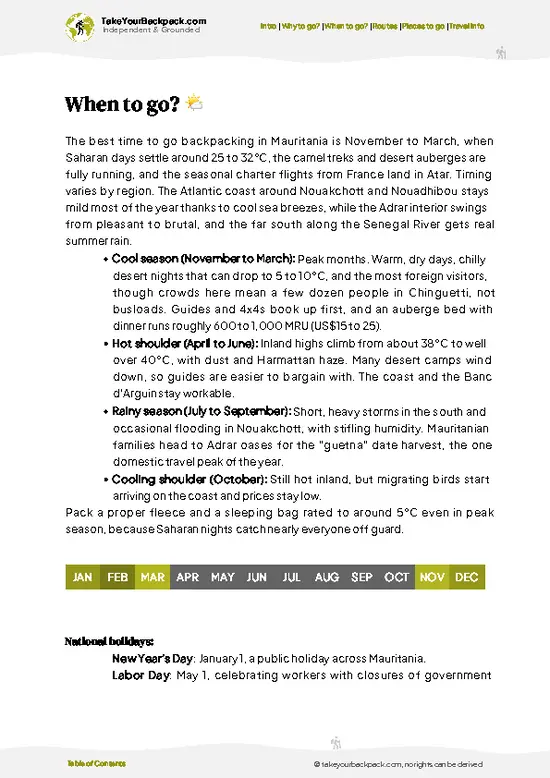
  • Topic: Weather — Oualata’s desert climate means blistering heat in summer, often soaring above 40°C (104°F). The cooler months, from November to February, offer relief with daytime highs around 25°C (77°F), making trekking and exploring far more comfortable.

  • Topic: Temperature — Nights can be surprisingly cold, dropping to near 5°C (41°F) in winter. Pack layers to handle this swing; the dry air sharpens the chill after sunset, turning the desert into a crisp, clear nightscape.

  • Topic: Daylight Hours — Daylight is fairly consistent year-round, roughly 11 to 12 hours. This steady rhythm lets you plan early starts to avoid midday heat and still have time for evening strolls under expansive, starry skies.

  • Topic: Crowds — Oualata is off the beaten path, so crowds are minimal year-round.
read more 👉

  • Topic: Weather — Oualata’s desert climate means blistering heat in summer, often soaring above 40°C (104°F). The cooler months, from November to February, offer relief with daytime highs around 25°C (77°F), making trekking and exploring far more comfortable.

  • Topic: Temperature — Nights can be surprisingly cold, dropping to near 5°C (41°F) in winter. Pack layers to handle this swing; the dry air sharpens the chill after sunset, turning the desert into a crisp, clear nightscape.

  • Topic: Daylight Hours — Daylight is fairly consistent year-round, roughly 11 to 12 hours. This steady rhythm lets you plan early starts to avoid midday heat and still have time for evening strolls under expansive, starry skies.

  • Topic: Crowds — Oualata is off the beaten path, so crowds are minimal year-round. However, visiting during cooler months means you’ll share the space mostly with fellow serious travelers, not tourists escaping heat elsewhere.

  • Topic: Seasonal Activities — The cooler season aligns with local festivals and market days, where the town’s rich cultural heritage comes alive. Timing your visit here means catching the pulse of traditional life without melting in the sun.

  • Topic: Price Fluctuations — Prices for lodging and guides tend to dip in the hotter months due to lower demand. But the trade-off is enduring harsh conditions that can sap your energy and limit your exploration.


Pro-tip: Aim for late November to early February—when the air is crisp, the markets buzz, and the desert’s harshness softens into a landscape you can truly savor.


source: climatestotravel.comJANJanuary: excellent for travelingFEBFebruary: excellent for travelingMARMarch: highly recommended for travelingAPRApril: good for travelingMAYMay: fair for travelingJUNJune: below average for travelingJULJuly: below average for travelingAUGAugust: below average for travelingSEPSeptember: fair for travelingOCTOctober: good for travelingNOVNovember: excellent for travelingDECDecember: excellent for traveling
when-to-go

✈️ The backpacker research shortcutMauritania Travel Guide

An offline-friendly backpacking guide with optimized travel routes, ranked highlights, transport advice, and the best areas to stay.
example page 0 from our offline Travel Guide for Mauritania
example page 1 from our offline Travel Guide for Mauritania
example page 2 from our offline Travel Guide for Mauritania
example page 3 from our offline Travel Guide for Mauritania
example page 4 from our offline Travel Guide for Mauritania
example page 5 from our offline Travel Guide for Mauritania
example page 6 from our offline Travel Guide for Mauritania
example page 7 from our offline Travel Guide for Mauritania
The digital guide (269 pages) contains:
63 highlights, ranked by travel appeal
Optimized 5, 10 & 15-day travel routes
Cities, national parks, landmarks, beaches
How to get around
Offline-friendly for travel without Wi-Fi
👉 Click to see all 30+ guide features

📅 Plan smarter in minutes, not weeks
Month by month travel advice
Festivals & national holidays
Budget expectations

🗺️ Go to the right places, skip the overrated ones
Honest pros & cons of destinations
Top hikes, parks & viewpoints
Lesser-known places most travelers miss
Clear “worth it vs skip it” guidance

🛏️ Travel smoothly without rookie mistakes
Best areas to stay
Transport systems explained simply
Common scams & safety advice
SIM cards, money & practical tips

🌍 Understand the country, not just visit it
Culture & traditions
52 Essential phrases & customs
Festivals worth planning around
Traveler-friendly historical context
Insights that make places more meaningful

📱 Built for real travel conditions
Fully downloadable PDF
Works completely offline
Optimized for phone use
Useful in remote areas & buses
Everything in one place
Save weeks of stressful planning
Get instant access to your full guide. 30‑day money-back guarantee.


By proceeding you agree to our terms.
Sent to your inbox immediately after payment • 100% Secure Checkout
Best Backpacking Travel Advisor 2025 tourism awardBest Backpacking
Travel Advisor
2025
What others say about Take Your Backpack Guides:
⭐⭐⭐⭐⭐
Fantastic, amazing amount of information!
⭐⭐⭐⭐⭐
My goodness this is amazing, it's what I've been looking for hats off too you!
⭐⭐⭐⭐⭐
I think this is absolutely BRILLIANT
⭐⭐⭐⭐
Very complete and informative. It's still missing places, but I gotta to commend you
⭐⭐⭐⭐⭐
This is truly amazing, thank you, can't wait to explore it with my kids!
⭐⭐⭐⭐⭐
Awesome resource, thank you!
⭐⭐⭐⭐⭐
This is amazing! Can't wait to explore the ones I haven't seen
⭐⭐⭐⭐
I love this! Well done, great idea.
⭐⭐⭐⭐⭐
Thanks for taking the time to make this gem!
⭐⭐⭐⭐⭐
This might be the best website I've ever seen.
⭐⭐⭐⭐⭐
Congratulations, and thank you so much for your work; it's incredibly valuable.
⭐⭐⭐⭐
In all seriousness I think you did a great job pointing out the important spots
⭐⭐⭐⭐⭐
10/10 very good
⭐⭐⭐⭐⭐
As someone who's only just starting to visit regularly this is awesome, thank you.
⭐⭐⭐⭐
Thank you very much! I'm going to visit my dad, it's going to be very useful!
⭐⭐⭐⭐⭐
This is really cool! We'll be travelling for the first time and this definitely come in handy.
⭐⭐⭐⭐⭐
You are now our minister of culture, congratulations 👨‍💼
⭐⭐⭐⭐⭐
Just wanted to tell you that this is a pearl! Going to follow your recommendations.
⭐⭐⭐⭐⭐
This is so cool. I'll definitely be using the resource for my travels soon.
⭐⭐⭐⭐⭐
This is very impressive! Good work.
⭐⭐⭐⭐⭐
This is an amazing and informative site. Very well done!

🛏️ Where to stay?Choosing the right base

Oualata’s charm lies in its compact, walkable layout, but where you drop your pack makes all the difference. The best spot for backpackers is the area around the old ksar, the ancient fortified village core. This neighborhood hums with quiet energy—locals weaving through narrow alleys, the scent of dry earth mixed with faint spices from nearby homes. It’s safe because it’s lived-in, not touristy, so you’re not just a visitor but part of the daily rhythm.

Staying here means you’re steps from the town’s cultural heartbeat—mosaics, mudbrick walls, and the occasional call to prayer folding into the … read more 👉
Oualata’s charm lies in its compact, walkable layout, but where you drop your pack makes all the difference. The best spot for backpackers is the area around the old ksar, the ancient fortified village core. This neighborhood hums with quiet energy—locals weaving through narrow alleys, the scent of dry earth mixed with faint spices from nearby homes. It’s safe because it’s lived-in, not touristy, so you’re not just a visitor but part of the daily rhythm.

Staying here means you’re steps from the town’s cultural heartbeat—mosaics, mudbrick walls, and the occasional call to prayer folding into the afternoon heat. It’s social in a low-key way; you’ll find other budget travelers and solo backpackers here, drawn by the authenticity and the chance to swap stories over mint tea in small courtyards. Hostels are sparse but present, often family-run, offering simple, clean rooms that feel like a home base rather than a hotel.

Avoid the newer outskirts where the vibe is quieter but less connected, and where you’ll miss the pulse of Oualata’s history and community. The old ksar area isn’t polished or flashy, but that’s the point—it’s where the town’s soul lives, and where your stay will feel earned, not handed to you.

🚌 Getting aroundHow to get from A to B

Oualata moves at the pace of the desert wind—unhurried, deliberate, and shaped by the sun’s arc across ochre walls and cracked earth. Time here isn’t measured by clocks but by the slow drip of shadows and the rhythm of footsteps on sand. The town’s narrow alleys and open courtyards invite you to slow down, to feel the heat soak into your skin and the faint scent of dry grass and spices carried on the breeze. It’s not a place where schedules rule; instead, intuition and local cues guide your movement. This means your best bet is to embrace the flow, knowing that getting from point A to B is as much about soaking in the atmosphere as it is about efficiency.


  • Walking: The heart of Oualata beats on foot. Streets are compact and mostly unpaved, so walking is not just practical but essential.
read more 👉
Oualata moves at the pace of the desert wind—unhurried, deliberate, and shaped by the sun’s arc across ochre walls and cracked earth. Time here isn’t measured by clocks but by the slow drip of shadows and the rhythm of footsteps on sand. The town’s narrow alleys and open courtyards invite you to slow down, to feel the heat soak into your skin and the faint scent of dry grass and spices carried on the breeze. It’s not a place where schedules rule; instead, intuition and local cues guide your movement. This means your best bet is to embrace the flow, knowing that getting from point A to B is as much about soaking in the atmosphere as it is about efficiency.


  • Walking: The heart of Oualata beats on foot. Streets are compact and mostly unpaved, so walking is not just practical but essential. Expect uneven surfaces and occasional sand patches underfoot, so sturdy shoes are a must. Walking lets you catch the subtle details—the cracked frescoes on walls, the chatter of locals, the faint aroma of cooking fires. No cost, no schedule, just your own pace.


  • Shared Taxis (Bush Taxis): These are the lifeline for longer trips to nearby towns or the regional hub. They don’t run on a strict timetable but tend to leave when full, which means some waiting is inevitable. Prices are low, often negotiable, but comfort is basic—think hard seats and open windows letting in dust and heat. Early morning departures are best to avoid the midday sun and secure a spot.


  • Motorbike Taxis: For quick hops within or just outside town, motorbike taxis offer speed and flexibility. They’re easy to flag down and can navigate narrow paths that cars can’t. Prices are affordable but always agree on the fare upfront. Helmets are rare, so hold on tight and prepare for a bumpy ride over sandy, uneven terrain.


  • Bicycle Rentals: If you want to cover more ground without losing the intimacy of the landscape, renting a bicycle is a smart move. Bikes handle the dusty roads well and give you freedom to explore outskirts and nearby ruins at your own pace. Rentals are cheap, but bring your own repair kit or know a local mechanic—flat tires are common on rough terrain.

👛 Costs (as of 6 June 2025)Money, prices, and spending tips

Backpacking in Oualata, Mauritania, is a raw, slow-paced experience where every expense reflects the town’s remote, desert-edge character. Here’s what you’ll typically spend day-to-day:
  • Dorm Accommodation: Options are extremely limited, mostly basic guesthouses or local homes offering simple rooms. Expect to pay around €5-10 per night. The rooms are sparse—think thin mattresses, shared bathrooms, and the occasional breeze through a cracked window.
  • Meals: Food is straightforward and hearty, often centered on local staples like millet porridge, dates, and grilled meat. Street food or small local eateries will cost about €2-4 per meal. Freshness varies, so sticking to cooked dishes is safer and more satisfying.
  • Local Transport: Oualata is small enough to explore mostly on foot, but if you
read more 👉
Backpacking in Oualata, Mauritania, is a raw, slow-paced experience where every expense reflects the town’s remote, desert-edge character. Here’s what you’ll typically spend day-to-day:
  • Dorm Accommodation: Options are extremely limited, mostly basic guesthouses or local homes offering simple rooms. Expect to pay around €5-10 per night. The rooms are sparse—think thin mattresses, shared bathrooms, and the occasional breeze through a cracked window.
  • Meals: Food is straightforward and hearty, often centered on local staples like millet porridge, dates, and grilled meat. Street food or small local eateries will cost about €2-4 per meal. Freshness varies, so sticking to cooked dishes is safer and more satisfying.
  • Local Transport: Oualata is small enough to explore mostly on foot, but if you need a ride, expect to pay around €1-3 for short local trips by shared taxi or motorbike. The roads are dusty and uneven, so travel is slow and bumpy.
  • Basic Activities/Entry Fees: Visiting the ancient city walls, local markets, or cultural sites usually doesn’t have a formal entry fee, but small donations or tips of €1-2 are appreciated. Guided tours, if available, can cost around €10-15, offering deeper insight into the town’s history and architecture.
  • Miscellaneous Expenses: Water, snacks, and occasional phone credit will add up to about €1-3 daily. Keep cash handy as card payments are rare, and ATMs are nonexistent.

All told, you’re looking at roughly €10-25 per day to cover the essentials in Oualata. The low cost matches the town’s stripped-back vibe, but the trade-off is simplicity and a slower pace that rewards patience with genuine cultural immersion.
⚠️ Prices can change and everyone travels differently, so take this as a rough guide. Hope it helps you plan your adventure!

🚌 Day tripsShort trips worth adding

Oualata, with its sun-baked adobe walls and whispering sands, is a perfect launchpad for day trips that reveal the heart of Mauritania. Each excursion offers a unique blend of culture, history, and the raw beauty of the desert.

Chinguetti
Just a couple of hours from Oualata, Chinguetti is a UNESCO World Heritage site that feels like stepping into a time capsule. The ancient libraries filled with centuries-old manuscripts are a treasure trove for history buffs. The journey is about 100 kilometers, and you can expect to pay around 10,000 ouguiyas for a shared taxi. The best time to visit is between November and February when the temperatures are cooler. A common mistake? Underestimating the desert sun; bring plenty of water and a hat to avoid dehydration.
👉 Explore Chinguetti

Ouadaneread more 👉
Oualata, with its sun-baked adobe walls and whispering sands, is a perfect launchpad for day trips that reveal the heart of Mauritania. Each excursion offers a unique blend of culture, history, and the raw beauty of the desert.

Chinguetti
Just a couple of hours from Oualata, Chinguetti is a UNESCO World Heritage site that feels like stepping into a time capsule. The ancient libraries filled with centuries-old manuscripts are a treasure trove for history buffs. The journey is about 100 kilometers, and you can expect to pay around 10,000 ouguiyas for a shared taxi. The best time to visit is between November and February when the temperatures are cooler. A common mistake? Underestimating the desert sun; bring plenty of water and a hat to avoid dehydration.
👉 Explore Chinguetti

Ouadane
A lesser-known gem, Ouadane is about 120 kilometers from Oualata and offers a glimpse into Mauritania’s past as a trading hub. The ruins of ancient structures are hauntingly beautiful against the backdrop of shifting sands. The trip takes roughly two hours, and costs around 15,000 ouguiyas for transport. Aim for the early morning to catch the sunrise illuminating the ruins. Many first-timers miss the chance to explore the surrounding dunes; don’t just stick to the town—wander a bit to soak in the vastness.
👉 Explore Ouadane

Terjit Oasis
For a refreshing escape, head to Terjit Oasis, about 80 kilometers away. This lush spot is a stark contrast to the arid landscape, with palm trees and cool waters inviting you to relax. The drive takes about an hour and will set you back around 12,000 ouguiyas. Visit in the late afternoon to enjoy the golden light filtering through the palms. A common oversight is not bringing a swimsuit; you’ll want to take a dip in those inviting waters.
👉 Explore Terjit Oasis

Atar
Atar, roughly 150 kilometers from Oualata, is a bustling town that serves as a gateway to the Adrar region. The vibrant market is a sensory overload—spices, textiles, and the chatter of locals fill the air. The trip takes about two and a half hours and costs around 20,000 ouguiyas. Go on a Saturday for the full market experience. Many travelers miss the chance to try local street food; don’t skip the grilled meat skewers—they’re a must!
👉 Explore Atar
Want to know what more Mauritania offers?
The Mauritania Travel Guide describes 63 highlights, from cities to national parks, from beaches to hikes

Get the Travel Guide -

🛡️ SafetyScams, Hazards, and Annoyances

Oualata, with its ancient mud-brick architecture and warm, welcoming locals, is generally safe for travelers. However, staying aware enhances your experience. The narrow alleys can feel intimate, but they also require a bit of caution. Keep your belongings close, especially in crowded markets where distractions can lead to opportunistic theft.

If you’re traveling solo, daytime exploration is ideal. The sun casts a golden hue on the buildings, and the locals are more active, making it easier to blend in. At night, stick to well-lit areas and consider traveling with a companion. The atmosphere shifts after dark, and while it’s not inherently dangerous, it’s wise to be mindful.

Scams are rare, but be cautious of overly eager guides offering unsolicited help. Politely decline and seek out official … read more 👉
Oualata, with its ancient mud-brick architecture and warm, welcoming locals, is generally safe for travelers. However, staying aware enhances your experience. The narrow alleys can feel intimate, but they also require a bit of caution. Keep your belongings close, especially in crowded markets where distractions can lead to opportunistic theft.

If you’re traveling solo, daytime exploration is ideal. The sun casts a golden hue on the buildings, and the locals are more active, making it easier to blend in. At night, stick to well-lit areas and consider traveling with a companion. The atmosphere shifts after dark, and while it’s not inherently dangerous, it’s wise to be mindful.

Scams are rare, but be cautious of overly eager guides offering unsolicited help. Politely decline and seek out official guides if you want assistance. Everyday annoyances might include the occasional stray dog or a persistent vendor, but a friendly smile and firm “no, thank you” usually do the trick. Embrace the quirks; they’re part of Oualata’s charm.

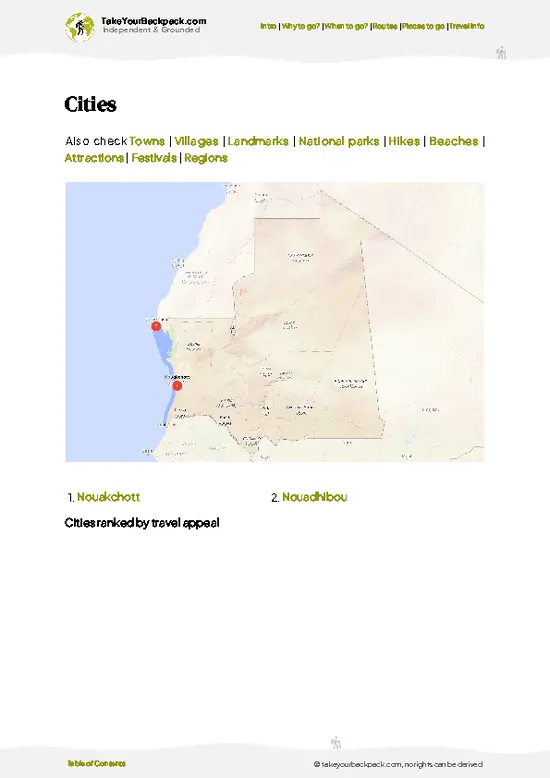
Other Mauritanian towns near Oualata

Explore more nearby:

  • Nema—eastern gateway, military base, regional market| 80 km away
  • Timbedra—transit stop, livestock trading, basic amenities| 170 km away
  • Bassiknou—refugee camps, humanitarian offices, remote location| 196 km away

💡 Not sure where to go next?
Create a personalized itinerary for Mauritania including Oualata and the places that fit your trip.

Generate my itinerary

👉 Discover all towns

Or checkout all Mauritania has to offer (think cities, towns, villages, national parks, hikes, beaches, festivals)
Country photo of Mauritania

We 💚 feedbackFinal thoughts on visiting Oualata

Oualata is a place that breathes history. The sun-soaked mud-brick architecture whispers tales of ancient trade routes. Expect a slow pace; this isn’t a whirlwind stop. The best surprise? The warmth of the locals—sharing stories over sweet mint tea, you’ll feel like family. Just a heads-up: the heat can be relentless, so plan your explorations for early mornings or late afternoons. Embrace the quiet, and let the spirit of the place seep into your bones. It’s worth every step.

✍️ Help improve this page!
The information on this page is based on in-depth research, insights shared by experienced travelers, and feedback from the local travel community in Mauritania. While every effort is made to keep the information accurate and current, conditions can change — so if you spot anything incorrect or outdated, please get in touch.


🙋‍♂️ Give feedback

👋 Meet the founderWho’s Behind Take Your Backpack?

Johan, backpacker and founder of TakeYourBackpackHi, I’m Johan (Netherlands 🇳🇱), the creator of TakeYourBackpack. Over the past decade, I’ve backpacked through 80+ countries across six continents, gaining extensive experience with independent travel, long-term trips, and overland routes.

This site is built on a combination of firsthand travel experience and carefully curated insights from other backpackers. Many guides are based on places I’ve personally visited, while others bring together tips, observations, and practical advice shared by trusted travelers I’ve met along the way.

The goal is to provide realistic, experience-driven guidance — not generic itineraries — so you can explore destinations with better context, clearer expectations, and more confidence.

Get full Mauritania guide •
Instant download • 63 highlights • Full Offline guide