×

Mauritius🇲🇺 | villagesPamplemoussesGiant water lilies, sugar museum, palm avenues, tortoises | things to do and best time to go

Explore Rivière du RempartExplore Blue Penny Museum

Backpacking in Pamplemousses
🌟 Highlightvillage ranked #3
By Johan Kruseman 🇳🇱 | Updated October 22, 2026

Decades ago Pamplemousses was a sleepy sugar-estate village that people drove through on the way to somewhere else. Today it is a proper stop, because the botanical garden draws coach tours and school groups all day. It sits in the north of Mauritius, just inland from the coast road above Port Louis. Beds are scarce here, since the village is small and most visitors leave by afternoon. Sleep in Grand Baie or Port Louis and arrive at opening time, when the paths are empty and the heat hasn’t built. Evenings are silent, the shops shut early, and meeting travelers is a matter of chatting at the garden gate, not in a hostel bar. Buses from Port Louis are frequent, so skip the taxi. You’ll like it if you enjoy plants, history and slow strolling. If you want beaches, nightlife or hostel company, you won’t.

Discover everything you want to know in the 📖 Mauritius Travel Guide.


example page 0 from our offline Travel Guide for Mauritius
example page 1 from our offline Travel Guide for Mauritius
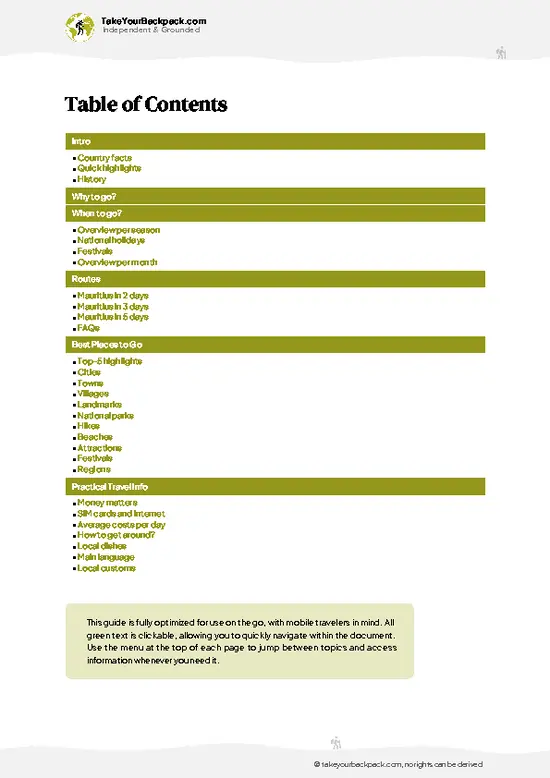
example page 2 from our offline Travel Guide for Mauritius
example page 3 from our offline Travel Guide for Mauritius
example page 4 from our offline Travel Guide for Mauritius
example page 5 from our offline Travel Guide for Mauritius
example page 6 from our offline Travel Guide for Mauritius
example page 7 from our offline Travel Guide for Mauritius
Loading the map 🌍
CLICK TO FILTER
cities
towns
villages
landmarks
national parks
hikes
beaches
attractions
festivals
regions
SHOW COUNTRY’S BESTSHOW ALL

✨ Why go?
Ranked #3 village in Mauritius
Reasons people choose to visit here

Pamplemousses earns its stop because of one thing, the Sir Seewoosagur Ramgoolam Botanical Garden, and it is a good enough thing to organize half a day around. This is a place for slow travelers, couples and plant or history lovers who want a break from beach hopping. Most people stay a few hours, then move on. Few linger overnight, which keeps the village calm and means you won’t find a social scene waiting. The garden’s giant water lilies, towering palms and roaming tortoises make it feel like a different island from the resort coast. The village also carries the memory of French colonial farming, with L’Aventure du Sucre explaining how sugar shaped Mauritius. Solo travelers will find it easy and safe to wander, and the pace is gentle. Pair it with a coastal base nearby and you get a quiet, … read more 👉
Pamplemousses earns its stop because of one thing, the Sir Seewoosagur Ramgoolam Botanical Garden, and it is a good enough thing to organize half a day around. This is a place for slow travelers, couples and plant or history lovers who want a break from beach hopping. Most people stay a few hours, then move on. Few linger overnight, which keeps the village calm and means you won’t find a social scene waiting. The garden’s giant water lilies, towering palms and roaming tortoises make it feel like a different island from the resort coast. The village also carries the memory of French colonial farming, with L’Aventure du Sucre explaining how sugar shaped Mauritius. Solo travelers will find it easy and safe to wander, and the pace is gentle. Pair it with a coastal base nearby and you get a quiet, green morning that breaks up days of sand and sun. If you need a lively atmosphere or a late night, choose elsewhere.

💡 HighlightsKey sights and experiences for travelers

  1. Sir Seewoosagur Ramgoolam Botanical Garden. This is what Pamplemousses is known for, and it is worth the trip. Founded in the 1700s, it holds giant Victoria water lilies with pads that can carry a small child’s weight, avenues of royal palms, spice trees, ebony and the talipot palm, which flowers once and then dies. Aldabra giant tortoises and Java deer wander near the lower paths. Go when it opens, usually around 8:30 am, to beat the heat and the tour buses, and bring water. Foreign visitors pay roughly US$4 to 5. Plan 1.5 to 2 hours, and a little more if you hire a local guide at the gate, who charges a few dollars and points out the best trees.
  2. L’Aventure du Sucre. Set in a restored sugar factory on the old Beau Plan estate, this museum tells the story of sugar, from slavery and indentured
… read more 👉
  1. Sir Seewoosagur Ramgoolam Botanical Garden. This is what Pamplemousses is known for, and it is worth the trip. Founded in the 1700s, it holds giant Victoria water lilies with pads that can carry a small child’s weight, avenues of royal palms, spice trees, ebony and the talipot palm, which flowers once and then dies. Aldabra giant tortoises and Java deer wander near the lower paths. Go when it opens, usually around 8:30 am, to beat the heat and the tour buses, and bring water. Foreign visitors pay roughly US$4 to 5. Plan 1.5 to 2 hours, and a little more if you hire a local guide at the gate, who charges a few dollars and points out the best trees.
  2. L’Aventure du Sucre. Set in a restored sugar factory on the old Beau Plan estate, this museum tells the story of sugar, from slavery and indentured labor to modern milling, with machinery you can walk around. The tasting room at the end lets you try a range of unrefined sugars and rums, and that is the part most people remember. Come in the late morning after the garden, when you want shade. Entry is about US$14 to 16, and the visit takes around 1.5 to 2 hours. The on-site restaurant serves local dishes if you want lunch.
  3. Church of Saint François d’Assise. The parish church stands in the village center, near the road leading toward the garden, and it is a quiet counterpoint to the garden crowds. The Catholic community here dates to the early French colonial period, and the building is simple, airy and still in everyday use. Late afternoon is pleasant, when the heat eases and the village slows, and Sunday mornings bring worshippers. Entry is free and a look inside takes 15 to 20 minutes. Dress modestly with covered shoulders and knees, and keep voices low during services.
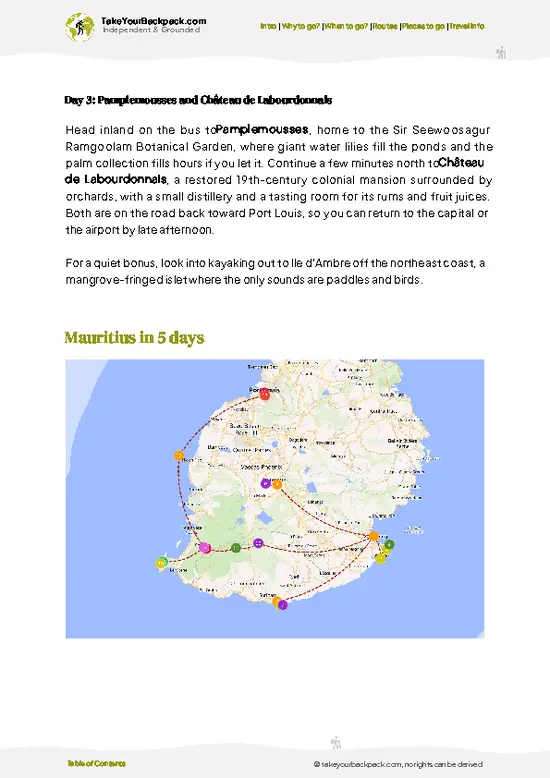
Pamplemousses makes a good base for day trips to Port Louis with its Central Market and Citadel, the resort town of Grand Baie, the sheltered coves around Cap Malheureux and the colonial Château de Labourdonnais. The church costs nothing to enter, and the garden is the cheapest paid sight.
Spotted a mistake or missing something? Contact us.

Things to do around Pamplemousses

Ratings based on Tripadvisor reviews. When you book through this link, you support our work at no extra cost to you.

🏘️ NeighborhoodsKey areas and districts to know

Pamplemousses is a charming town that offers a unique blend of culture and nature, perfect for backpackers seeking an authentic experience in Mauritius.

Botanical Gardens: This area is a must-see for nature lovers. The gardens are expansive and free to enter, making it a budget-friendly spot. Stroll among giant water lilies and fragrant spices. The vibe is tranquil, ideal for a leisurely afternoon. It’s best for short stays, as the gardens can be fully explored in a few hours.

Grand Baie: Just a short bus ride away, this lively area is known for its vibrant nightlife and beach scene. Expect a mix of budget hostels and pricier hotels. The atmosphere buzzes with energy, especially at night, making it perfect for social backpackers. Walkability is excellent, with plenty of bars and restaurants … read more 👉
Pamplemousses is a charming town that offers a unique blend of culture and nature, perfect for backpackers seeking an authentic experience in Mauritius.

Botanical Gardens: This area is a must-see for nature lovers. The gardens are expansive and free to enter, making it a budget-friendly spot. Stroll among giant water lilies and fragrant spices. The vibe is tranquil, ideal for a leisurely afternoon. It’s best for short stays, as the gardens can be fully explored in a few hours.

Grand Baie: Just a short bus ride away, this lively area is known for its vibrant nightlife and beach scene. Expect a mix of budget hostels and pricier hotels. The atmosphere buzzes with energy, especially at night, making it perfect for social backpackers. Walkability is excellent, with plenty of bars and restaurants lining the coast.

Triolet: A quieter neighborhood, Triolet offers a more local experience. It’s less touristy, with affordable accommodations and authentic street food. The area is walkable, but public transport is essential for exploring further. Ideal for longer stays, it allows you to immerse yourself in everyday Mauritian life.

Pamplemousses Village: This central area is the heart of the town. It’s walkable, with local markets and shops that give you a taste of daily life. The vibe is laid-back, making it suitable for both short and longer stays. Transport options are plentiful, connecting you to other parts of the island.

⌛️ 1 dayWhat you can realistically do in a day

Pamplemousses, a charming town in Mauritius, is a delightful blend of lush gardens and rich history. It’s not just a stopover; it’s a place where the scent of tropical flowers mingles with the whispers of colonial pasts.

Start your day at the famous Sir Seewoosagur Ramgoolam Botanical Garden. Arrive early to beat the heat and enjoy the soft morning light filtering through the towering palms. The air is thick with the fragrance of exotic blooms, and you’ll find yourself wandering among giant water lilies and centuries-old trees. Take your time here; the tranquility is a perfect prelude to the day ahead.

After soaking in the garden’s beauty, head to the nearby village of Triolet for lunch. This area is often overlooked by tourists, but it’s a treasure trove of local flavors. Try a plate of … read more 👉
Pamplemousses, a charming town in Mauritius, is a delightful blend of lush gardens and rich history. It’s not just a stopover; it’s a place where the scent of tropical flowers mingles with the whispers of colonial pasts.

Start your day at the famous Sir Seewoosagur Ramgoolam Botanical Garden. Arrive early to beat the heat and enjoy the soft morning light filtering through the towering palms. The air is thick with the fragrance of exotic blooms, and you’ll find yourself wandering among giant water lilies and centuries-old trees. Take your time here; the tranquility is a perfect prelude to the day ahead.

After soaking in the garden’s beauty, head to the nearby village of Triolet for lunch. This area is often overlooked by tourists, but it’s a treasure trove of local flavors. Try a plate of dholl puri from a street vendor—soft, warm, and filled with spiced lentils. It’s a taste of Mauritius that you won’t forget.

In the afternoon, explore the historic Aapravasi Ghat, a UNESCO World Heritage site. The atmosphere here is heavy with stories of indentured laborers who arrived in the 19th century. Walk through the remnants of the immigration depot and let the weight of history sink in.

As evening approaches, make your way to the coastal village of Grand Baie, just a short drive away. The sunset casts a golden hue over the water, and you can unwind at one of the beachside cafés. Sip a local rum cocktail as the sky transforms, and reflect on a day well spent in this vibrant corner of Mauritius.

🌤️ When to go?Seasonal considerations and timing

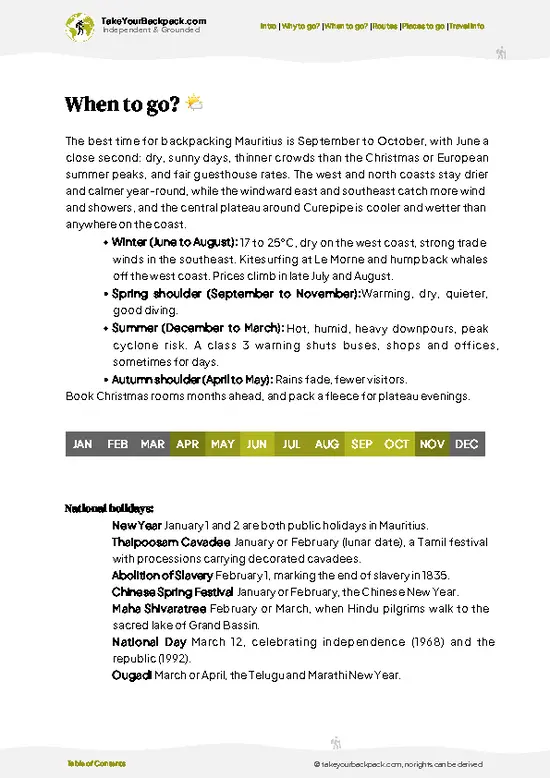
May to December is the easiest window for Pamplemousses, with dry, sunny days and low humidity for walking the botanical garden.
  • Winter (May to October): Days run 19 to 25°C (66 to 77°F), nights dip lower, and rain is light. Daylight lasts about 11 to 12 hours. This is the most comfortable season for the garden’s long paths.
  • Summer (November to April): Expect 25 to 32°C (77 to 90°F), heavy humidity, and afternoon downpours. Daylight stretches to about 13 hours. Cyclones are most likely from January to March, and flights and rooms can disappear or get pricey around Christmas and New Year.
  • Crowds: Tour buses arrive between 10 am and 2 pm, and local families fill the garden on weekends and public holidays.
  • Prices: Rates in nearby Grand Baie rise in July, August and December. Pamplemousses stays steadier.
… read more 👉
May to December is the easiest window for Pamplemousses, with dry, sunny days and low humidity for walking the botanical garden.
  • Winter (May to October): Days run 19 to 25°C (66 to 77°F), nights dip lower, and rain is light. Daylight lasts about 11 to 12 hours. This is the most comfortable season for the garden’s long paths.
  • Summer (November to April): Expect 25 to 32°C (77 to 90°F), heavy humidity, and afternoon downpours. Daylight stretches to about 13 hours. Cyclones are most likely from January to March, and flights and rooms can disappear or get pricey around Christmas and New Year.
  • Crowds: Tour buses arrive between 10 am and 2 pm, and local families fill the garden on weekends and public holidays.
  • Prices: Rates in nearby Grand Baie rise in July, August and December. Pamplemousses stays steadier.
Arrive when the gates open in the morning for cooler air and the quietest paths.


source: climatestotravel.comJANJanuary: fair for travelingFEBFebruary: fair for travelingMARMarch: fair for travelingAPRApril: fair for travelingMAYMay: highly recommended for travelingJUNJune: highly recommended for travelingJULJuly: excellent for travelingAUGAugust: excellent for travelingSEPSeptember: highly recommended for travelingOCTOctober: highly recommended for travelingNOVNovember: good for travelingDECDecember: fair for traveling
mauritius-city-pamplemousses v1
© Google |

✈️ The backpacker research shortcutMauritius Travel Guide

An offline-friendly backpacking guide with optimized travel routes, ranked highlights, transport advice, and the best areas to stay.
example page 0 from our offline Travel Guide for Mauritius
example page 1 from our offline Travel Guide for Mauritius
example page 2 from our offline Travel Guide for Mauritius
example page 3 from our offline Travel Guide for Mauritius
example page 4 from our offline Travel Guide for Mauritius
example page 5 from our offline Travel Guide for Mauritius
example page 6 from our offline Travel Guide for Mauritius
example page 7 from our offline Travel Guide for Mauritius
The digital guide (246 pages) contains:
✅ 65 highlights, ranked by travel appeal
✅ Optimized 2, 3 & 5-day travel routes
✅ Cities, national parks, landmarks, beaches
✅ How to get around
✅ Offline-friendly for travel without Wi-Fi
👉 Click to see all 30+ guide features

📅 Plan smarter in minutes, not weeks
✅ Month by month travel advice
✅ Festivals & national holidays
✅ Budget expectations

🗺️ Go to the right places, skip the overrated ones
✅ Honest pros & cons of destinations
✅ Top hikes, parks & viewpoints
✅ Lesser-known places most travelers miss
✅ Clear “worth it vs skip it” guidance

🛏️ Travel smoothly without rookie mistakes
✅ Best areas to stay
✅ Transport systems explained simply
✅ Common scams & safety advice
✅ SIM cards, money & practical tips

🌍 Understand the country, not just visit it
✅ Culture & traditions
✅ 52 Essential phrases & customs
✅ Festivals worth planning around
✅ Traveler-friendly historical context
✅ Insights that make places more meaningful

📱 Built for real travel conditions
✅ Fully downloadable PDF
✅ Works completely offline
✅ Optimized for phone use
✅ Useful in remote areas & buses
✅ Everything in one place
Stop searching, start planning
Get instant access to your full guide. 30‑day money-back guarantee.
+ Add another guide for just

By proceeding you agree to our terms.
Sent to your inbox immediately after payment • 100% Secure Checkout
Best Backpacking Travel Advisor 2025 tourism awardBest Backpacking
Travel Advisor
2025
What others say about Take Your Backpack Guides:
⭐⭐⭐⭐⭐
Fantastic, amazing amount of information!
⭐⭐⭐⭐⭐
My goodness this is amazing, it's what I've been looking for hats off too you!
⭐⭐⭐⭐⭐
I think this is absolutely BRILLIANT
⭐⭐⭐⭐
Very complete and informative. It's still missing places, but I gotta to commend you
⭐⭐⭐⭐⭐
This is truly amazing, thank you, can't wait to explore it with my kids!
⭐⭐⭐⭐⭐
Awesome resource, thank you!
⭐⭐⭐⭐⭐
This is amazing! Can't wait to explore the ones I haven't seen
⭐⭐⭐⭐
I love this! Well done, great idea.
⭐⭐⭐⭐⭐
Thanks for taking the time to make this gem!
⭐⭐⭐⭐⭐
This might be the best website I've ever seen.
⭐⭐⭐⭐⭐
Congratulations, and thank you so much for your work; it's incredibly valuable.
⭐⭐⭐⭐
In all seriousness I think you did a great job pointing out the important spots
⭐⭐⭐⭐⭐
10/10 very good
⭐⭐⭐⭐⭐
As someone who's only just starting to visit regularly this is awesome, thank you.
⭐⭐⭐⭐
Thank you very much! I'm going to visit my dad, it's going to be very useful!
⭐⭐⭐⭐⭐
This is really cool! We'll be travelling for the first time and this definitely come in handy.
⭐⭐⭐⭐⭐
You are now our minister of culture, congratulations 👨‍💼
⭐⭐⭐⭐⭐
Just wanted to tell you that this is a pearl! Going to follow your recommendations.
⭐⭐⭐⭐⭐
This is so cool. I'll definitely be using the resource for my travels soon.
⭐⭐⭐⭐⭐
This is very impressive! Good work.
⭐⭐⭐⭐⭐
This is an amazing and informative site. Very well done!

🛏️ Where to stay?Best areas to stay in Mauritius

Pamplemousses has only a handful of guesthouses, so most backpackers sleep in Grand Baie, about 15 minutes away by bus, and visit the village by day.
In Pamplemousses itself, expect small family-run guesthouses and self-catering apartments for roughly US$30 to 60 a night. They suit travelers who want quiet streets, a kitchen, and a short walk to the botanical garden. Check that air conditioning or a fan is listed before booking if you visit in summer.
Grand Baie is the practical choice. It has the island’s densest cluster of hostels and budget guesthouses, with dorm beds around US$12 to 22 and private … read more 👉
Pamplemousses has only a handful of guesthouses, so most backpackers sleep in Grand Baie, about 15 minutes away by bus, and visit the village by day.
In Pamplemousses itself, expect small family-run guesthouses and self-catering apartments for roughly US$30 to 60 a night. They suit travelers who want quiet streets, a kitchen, and a short walk to the botanical garden. Check that air conditioning or a fan is listed before booking if you visit in summer.
Grand Baie is the practical choice. It has the island’s densest cluster of hostels and budget guesthouses, with dorm beds around US$12 to 22 and private rooms from US$30 to 55. Buses to Pamplemousses leave from the Grand Baie bus station, so mornings are easy. Evenings bring cheap street food, bars, and dive and boat operators.
Port Louis, about 20 minutes by bus, works if you want city markets and frequent connections around the island, with simple guesthouses from US$25 to 45. It is louder, and quieter after dark in the center.
Book ahead for July, August, and the Christmas weeks, when the cheapest beds go first.

🚌 Getting aroundTransportation options and practical tips

Pamplemousses moves at its own rhythm—think less clockwork precision, more the slow unfolding of a lazy afternoon. The air carries the scent of frangipani and damp earth, and the streets hum with a mix of scooters weaving through traffic and locals chatting under the shade of giant banyan trees. Time here isn’t a strict master; it’s a companion you learn to read by the light shifting through sugarcane fields or the distant call of a market vendor. This isn’t a place where schedules rule; it’s a place where intuition and patience unlock the real flow.

Walking is your best friend in Pamplemousses. The town is compact, and the roads are lined with enough local color—fruit stalls, small temples, and colonial-era houses—to keep your senses engaged. Walking lets you absorb the subtle shifts in … read more 👉
Pamplemousses moves at its own rhythm—think less clockwork precision, more the slow unfolding of a lazy afternoon. The air carries the scent of frangipani and damp earth, and the streets hum with a mix of scooters weaving through traffic and locals chatting under the shade of giant banyan trees. Time here isn’t a strict master; it’s a companion you learn to read by the light shifting through sugarcane fields or the distant call of a market vendor. This isn’t a place where schedules rule; it’s a place where intuition and patience unlock the real flow.

Walking is your best friend in Pamplemousses. The town is compact, and the roads are lined with enough local color—fruit stalls, small temples, and colonial-era houses—to keep your senses engaged. Walking lets you absorb the subtle shifts in light and sound, and it’s free. Just be ready for uneven sidewalks and the occasional stray dog lounging in the sun.

Local Bus offers the cheapest way to get around, with fares usually under 50 MUR (about $1.20). Buses run roughly from 6:00 AM to 7:00 PM but don’t expect strict adherence to timetables—think more “when the bus fills up.” They’re slow and often crowded, but perfect if you want to blend in and catch snippets of everyday life.

Shared Taxis (Taxi Collectifs) are a step up in speed and comfort. These minibuses or cars follow set routes but leave only when full, so timing is flexible but unpredictable. Expect to pay around 100-150 MUR for trips to nearby towns. They’re a good balance between cost and efficiency, especially if you’re heading to Port Louis or the botanical gardens.

Motorbike Rentals give you freedom to explore beyond the town’s edges at your own pace. Daily rates start around 300 MUR, and you’ll feel the wind and smell the sugarcane fields as you ride. Just remember the roads can be narrow and chaotic, so this option suits confident riders.

Bicycle Rentals are less common but worth seeking out if you want a slower, more intimate connection with the landscape. Pamplemousses’ flat terrain makes cycling pleasant, especially early morning or late afternoon when the light softens and the heat eases. Rates hover around 150-200 MUR per day.

Mastering Pamplemousses means embracing its gentle unpredictability. Walk when you want to soak in the atmosphere, hop on a bus or shared taxi when you need to cover ground without fuss, and rent wheels if you crave freedom. Each mode offers a different slice of the town’s character, turning travel from a checklist into a lived experience.

👛 Costs (as of 22 October 2026)Travel costs and budget guide for Pamplemousses

Backpacking in Pamplemousses, Mauritius, offers a mix of laid-back island charm and practical affordability, but knowing where your money goes helps you stretch your stay without skimping on the experience.
  • Dorm Accommodation: Expect to pay around $10 to $20 per night for a bed in a basic guesthouse or hostel dorm. Options are limited compared to bigger cities, so prices can lean toward the higher end during peak season. The rooms are simple but clean, often with a fan rather than air conditioning, which is enough given the coastal breeze.
  • Meals: Local eateries serve up hearty Creole and Indian-influenced dishes for about $3 to $7 per meal. Street food like dholl puri or samosas is cheaper and filling, while a sit-down meal at a modest restaurant might push closer to $10. Fresh fruit and
… read more 👉
Backpacking in Pamplemousses, Mauritius, offers a mix of laid-back island charm and practical affordability, but knowing where your money goes helps you stretch your stay without skimping on the experience.
  • Dorm Accommodation: Expect to pay around $10 to $20 per night for a bed in a basic guesthouse or hostel dorm. Options are limited compared to bigger cities, so prices can lean toward the higher end during peak season. The rooms are simple but clean, often with a fan rather than air conditioning, which is enough given the coastal breeze.
  • Meals: Local eateries serve up hearty Creole and Indian-influenced dishes for about $3 to $7 per meal. Street food like dholl puri or samosas is cheaper and filling, while a sit-down meal at a modest restaurant might push closer to $10. Fresh fruit and snacks from markets are affordable and perfect for quick energy on the go.
  • Local Transport: Public buses are the cheapest way to get around, costing roughly $0.50 to $1 per ride within the area. Taxis are available but can be pricey, around $5 to $10 for short trips, so use them sparingly or negotiate fares upfront. Renting a scooter is an option for about $15 to $20 per day if you want more freedom to explore.
  • Basic Activities/Entry Fees: Visiting the famous Pamplemousses Botanical Garden costs about $5. Other local attractions, like small museums or cultural sites, typically charge under $3. Many natural spots are free, but guided tours or water activities can add $20 to $40 depending on the length and type.
  • Miscellaneous Expenses: Budget around $2 to $5 daily for essentials like bottled water, snacks, or occasional internet access at cafes. Souvenirs and extras can vary widely, but keeping a small buffer here helps avoid surprises.

All told, a realistic daily budget for backpackers in Pamplemousses falls between $20 and $45. This range covers basic comfort without cutting corners, letting you enjoy the island’s unique atmosphere without the stress of overspending.


source: mauritiusnow.com
⚠️ Prices can change and everyone travels differently, so take this as a rough guide. Hope it helps you plan your adventure!

🚌 Day tripsBest day trips from Pamplemousses

Pamplemousses sits on the main bus corridor between Port Louis and Grand Baie, so day trips in the north are simple and cheap, and public buses cover most of them.
Port Louis Markets and Waterfront:
Buses run about 20 to 30 minutes and cost US$0.50 to 1. The Central Market is best before noon, when stalls selling dholl puri, fruit, and spices are busiest. Aapravasi Ghat, a UNESCO site, is a short walk away. Avoid Sundays, when most of the city is shut. Budget US$10 to 15 with lunch.
👉 Explore Port Louis
Grand Baie:
Buses take around 20 minutes for about US$0.50 to 1. Come for the beaches, glass-bottom boat trips, and the evening food scene. First-timers often book boat tours on the beach for the first quoted price, so compare two or three. Allow US$20 to 50 for a shared boat trip. Winter is calmest … read more 👉
Pamplemousses sits on the main bus corridor between Port Louis and Grand Baie, so day trips in the north are simple and cheap, and public buses cover most of them.
Port Louis Markets and Waterfront:
Buses run about 20 to 30 minutes and cost US$0.50 to 1. The Central Market is best before noon, when stalls selling dholl puri, fruit, and spices are busiest. Aapravasi Ghat, a UNESCO site, is a short walk away. Avoid Sundays, when most of the city is shut. Budget US$10 to 15 with lunch.
👉 Explore Port Louis
Grand Baie:
Buses take around 20 minutes for about US$0.50 to 1. Come for the beaches, glass-bottom boat trips, and the evening food scene. First-timers often book boat tours on the beach for the first quoted price, so compare two or three. Allow US$20 to 50 for a shared boat trip. Winter is calmest on the water.
👉 Explore Grand Baie
Cap Malheureux:
The red-roofed Notre Dame Auxiliatrice chapel looks across to Coin de Mire island. Take a bus to Grand Baie, then another toward Cap Malheureux, around 45 to 60 minutes in total and under US$3. Late afternoon light is best for photos. Budget about US$5 to 10 including a drink.
👉 Explore Cap Malheureux
Trou aux Biches:
This calm, shallow beach is a good swimming stop, about 25 to 35 minutes by bus from Pamplemousses, with a change possible at Grand Baie. Sunshades and shade trees help at midday. Snorkeling gear rents for around US$5 to 10. Winter mornings offer the clearest water.
👉 Explore Trou aux Biches

🍲 FoodLocal Flavors for Backpackers

In Pamplemousses, food is a lively crossroads where Indian, Creole, and French flavors collide in every bite. Don’t miss the chance to try dholl puri, a thin flatbread stuffed with spiced yellow split peas, often paired with tangy chutneys and fiery pickles. It’s the kind of street food that grabs you by the senses—earthy, spicy, and utterly satisfying. For drinks, the local alouda is a must: a sweet, milky concoction flavored with basil seeds and rose syrup, perfect for cooling off after a tropical stroll.

Backpackers will find themselves drawn to bustling markets and street stalls, where the air hums with sizzling grills and the chatter of locals. Casual eateries here don’t fuss with fancy menus; they serve hearty plates that fuel your day of exploring without draining your wallet. The … read more 👉
In Pamplemousses, food is a lively crossroads where Indian, Creole, and French flavors collide in every bite. Don’t miss the chance to try dholl puri, a thin flatbread stuffed with spiced yellow split peas, often paired with tangy chutneys and fiery pickles. It’s the kind of street food that grabs you by the senses—earthy, spicy, and utterly satisfying. For drinks, the local alouda is a must: a sweet, milky concoction flavored with basil seeds and rose syrup, perfect for cooling off after a tropical stroll.

Backpackers will find themselves drawn to bustling markets and street stalls, where the air hums with sizzling grills and the chatter of locals. Casual eateries here don’t fuss with fancy menus; they serve hearty plates that fuel your day of exploring without draining your wallet. The vibe is relaxed, often communal, with locals sharing tables and stories.

A quick heads-up: meals are social moments, so don’t rush. It’s polite to wait for everyone to be served before digging in. And if you’re offered a second helping, take it—it’s a sign you’re welcome. In Pamplemousses, eating is less about speed and more about savoring the moment.

🛡️ SafetyStaying Safe: What Travelers Should Know

Pamplemousses is generally safe, but a few practical tips can enhance your experience. Stay alert in crowded markets, where distractions can lead to pickpocketing. Keep your valuables close, ideally in a crossbody bag.

If you’re wandering solo at night, stick to well-lit areas and avoid quiet backstreets. The vibrant local scene is best enjoyed in groups after dark, especially around the botanical gardens, where the scents of tropical blooms fill the air.

Common annoyances include persistent touts at tourist spots. A polite but firm “no, thank you” usually suffices. Embrace the local pace; it’s part of the charm. By being aware and carrying yourself confidently, you’ll unlock a smoother, more enjoyable adventure in this laid-back town.

FAQFrequently asked questions about Pamplemousses

Pamplemousses is reached by public bus from Port Louis (Immigration Square or Victoria Square stations) in roughly 20 to 30 minutes for under US$1, and from Grand Baie in about 20 minutes. From Sir Seewoosagur Ramgoolam International Airport, plan on 50 minutes to 1 hour by taxi, which costs about US$30 to 45, or take buses via Port Louis with a change. Many buses to the north stop on the main road near the garden entrance.
Pamplemousses is worth a half day if you like gardens, history, and plants. The Sir Seewoosagur Ramgoolam Botanical Garden is known for giant water lilies and tall palms, and it has an entry fee of roughly US$7 to 10 for foreigners. Nearby, L’Aventure du Sucre tells the island’s sugar history, with tickets around US$12 to 15. The village has little else, so pair it with the north coast.
Pamplemousses works very well as a day trip from Port Louis or Grand Baie, with buses running frequently through the day for under US$1 each way. Two to four hours covers the garden, and a full half day adds the sugar museum. Start early to avoid midday heat and tour groups, and expect total costs of US$15 to 30 with entry and lunch.
⚠️ Things can change over time, so always validate details locally before you go.

Other Mauritian villages near Pamplemousses

Explore more nearby:

  • Rivière du Rempart—sugar estates, river crossings, rural landscapes, scattered hamlets| 12 km away
  • Chamarel—Seven Coloured Earths, rum distilleries, forested hills, Creole cuisine| 40 km away

💡 Not sure where to go next?
Create a personalized itinerary for Mauritius including Pamplemousses and the places that fit your trip.

Generate my itinerary

👉 Discover all villages

Or checkout all Mauritius has to offer (think cities, towns, villages, national parks, hikes, beaches, festivals)
Country photo of Mauritius

We 💚 feedbackFinal thoughts on visiting Pamplemousses

Pamplemousses is best at opening time on a weekday morning, when the garden gates swing open, the air is cool and you can have the lily pond almost to yourself. By late morning the buses roll in and the shade disappears. I would arrive early, spend the hot hours at the sugar museum, and skip the afternoon, when the paths feel crowded and sticky.

✍️ Help improve this page!
The information on this page is based on in-depth research, insights shared by experienced travelers, and feedback from the local travel community in Mauritius. While every effort is made to keep the information accurate and current, conditions can change — so if you spot anything incorrect or outdated, please get in touch.


🙋‍♂️ Give feedback

👋 Meet the founderWho’s Behind Take Your Backpack?

Johan, backpacker and founder of TakeYourBackpackHi, I’m Johan (Netherlands 🇳🇱), the creator of TakeYourBackpack. Over the past 3 decades, I’ve backpacked through 90+ countries across six continents, gaining extensive experience with independent travel, long-term trips, and overland routes.

This site is built on a combination of firsthand travel experience and carefully curated insights from other backpackers. Many guides are based on places I’ve personally visited, while others bring together tips, observations, and practical advice shared by trusted travelers I’ve met along the way.

The goal is to provide realistic, experience-driven guidance — not generic itineraries — so you can explore destinations with better context, clearer expectations, and more confidence.