Short answer: yes, Moldova is easy enough to backpack independently if you’re comfortable with a bit of improvising. It’s not Western-Europe-slick, but that’s half the charm and also why it’s cheap. English is limited once you leave Chisinau, but Russian and Romanian are common; a few key phrases plus offline translation apps go a long way. People are generally kind and curious, and solo travelers stand out in a good way.
The main adjustment is transport: buses and minibuses (rutieras) are frequent but not always clearly signed, and schedules can feel more like suggestions. You usually just show up at the bus station, ask for your town, and someone will point you to the right minibus. Pay in cash, keep small bills, and expect basic comfort levels. Safety-wise, Moldova is more about petty annoyances than real danger: watch your pockets in markets and on crowded buses, but violent crime against travelers is rare.
Hostel infrastructure exists but is limited outside Chisinau, so you sometimes pivot to guesthouses or simple hotels. Booking ahead for rural areas and wineries is smart, especially on weekends. If you’re the kind of backpacker who likes clear signage, fixed timetables, and lots of hostel social life, Moldova will feel a bit rough around the edges. If you enjoy figuring things out on the fly and chatting with locals, it’s very doable and very rewarding on a budget.
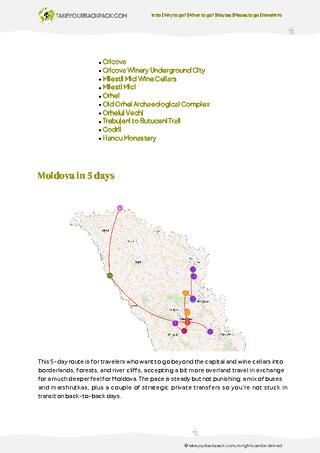
For a tight backpacker-style visit, 3–4 full days is the minimum that feels worthwhile: one or two days in Chisinau, one day for a winery or countryside, and one day for a side trip like Orheiul Vechi or Transnistria. That’s enough to get a feel for the country without just bouncing between bus stations.
If you want to slow down and actually enjoy the pace, 6–8 days is the sweet spot. That gives you time for:
- Chisinau: 2–3 days to wander markets, parks, Soviet-era architecture, and cheap cafes.
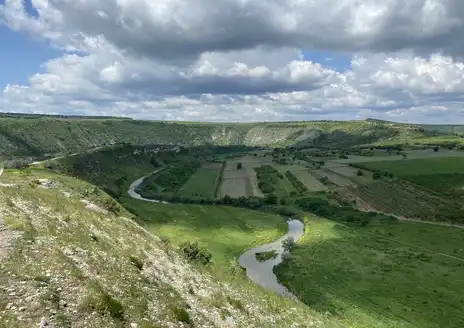
- Orheiul Vechi: 1 day (or overnight) for the cave monastery and rural landscapes.
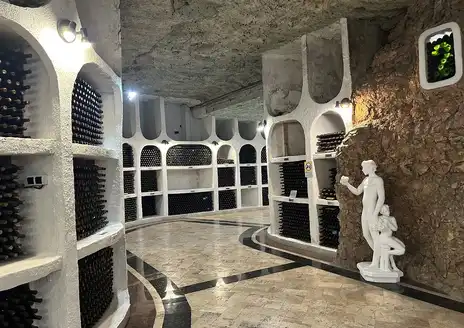
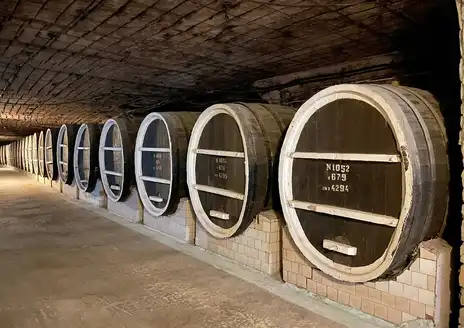
- A winery day: Cricova or Milestii Mici for the big underground cellars, or a smaller estate if you prefer something more low-key.
- One or two extra days for Transnistria (Tiraspol + Bender) or northern/southern villages.
If you’re on a long overland trip through Romania–Ukraine–Balkans, Moldova works well as a 4–7 day detour. More than 10 days only makes sense if you’re really into slow travel, wine, or rural homestays, because the country is small and the main sights are limited. For most budget travelers, a focused week hits the balance between depth and efficiency.
You can absolutely get around Moldova without a car, but you trade comfort and speed for price and local flavor. Public transport is cheap and covers most places you’ll want to see, with Chisinau as the main hub.
Between cities and towns, you’ll mostly use minibuses (rutieras) and regular buses. They leave from Chisinau’s bus stations toward Orhei, Orheiul Vechi area, Soroca, Cahul, Balti, and towards the Transnistria border. They’re usually cash-only, no reservations, and you often pay the driver directly. They can be cramped, but they’re safe and very budget-friendly.
Inside Chisinau, trolleybuses and minibuses are easy to use: routes are numbered, tickets are cheap, and you can usually ask the driver or fellow passengers to tell you where to get off. Offline maps help a lot. Taxis and ride-hailing apps are inexpensive by European standards, useful at night or when you’re tired of figuring out bus stops.
The main limitation without a car is flexibility in rural areas and smaller villages. Orheiul Vechi, for example, is reachable by public transport plus a short walk or local ride, but it takes more time and planning than a direct car trip. Wineries outside the big names may require a taxi or pre-arranged transfer. If you’re okay with longer travel days, occasional confusion, and asking for help, you won’t need a car. If you want to chain together multiple remote spots in one day, then a rental or private driver becomes more attractive.
For a first-time backpacker trip focused on value and character, these are the places that actually earn your time and money:
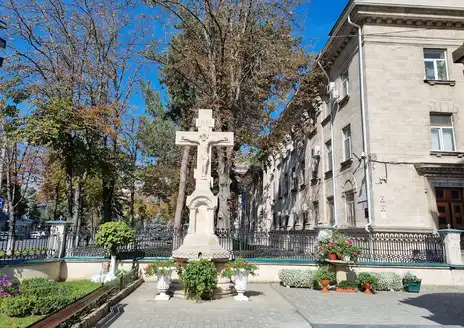
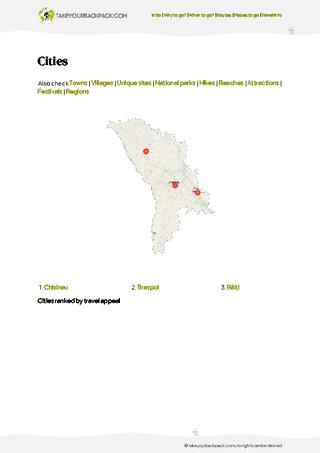
Chisinau – Not a postcard city, but that’s why it’s interesting. You get leafy parks, big Soviet-era blocks, cheap canteens, and a relaxed, slightly scruffy capital vibe. Wander the central market, sit in Stefan cel Mare Park with a snack, and hop between cafes and wine bars. It’s also your transport base.
Orheiul Vechi – The one place in Moldova that feels truly unique on a global scale. A dramatic river valley, cave monastery carved into the cliffs, and villages that still feel properly rural. Go for the landscape and the sense of old-world quiet, not for polished tourism. If you can stay overnight in a guesthouse, do it; the area is much better at sunrise and sunset than in the midday tour-bus window.
A major wine cellar – Cricova or Milestii Mici are the classic choices, with huge underground tunnel networks and very affordable tastings compared to Western Europe. Even if you’re not a wine nerd, the scale and atmosphere are worth the half-day trip from Chisinau. Book ahead, especially on weekends.
Transnistria (Tiraspol + Bender) – For travelers who like political oddities and Soviet-era aesthetics, this is a fascinating side trip. You get a different currency, different flags, and a very different narrative about history, all within a day trip or overnight from Chisinau. It’s safe enough if you’re respectful and keep a low profile; bring your passport and follow current entry rules.
Optional but rewarding if you have extra time:
-
Soroca: For the fortress on the Dniester River and a look at a town with a notable Roma community. Long day trip or overnight.
-
Rural guesthouses in central or southern Moldova: Good if you want home-cooked food, homemade wine, and slow evenings rather than more city time.
If you’re short on time or energy, you can skip anything that’s just a weaker version of what neighboring countries already do better.
Skip extra days in Chisinau beyond 2–3 nights unless you’re working remotely or really into slow city life. The core sights, markets, and parks are easy to cover quickly, and the city is more of a base than a destination that keeps unfolding.
Skip smaller towns that don’t add a new angle if you’re already visiting Orheiul Vechi and one or two other spots. Many Moldovan towns share similar Soviet-era layouts and low-key centers; they’re interesting if you love everyday life photography, but not essential on a tight schedule.
Skip multiple big wineries if you’re on a budget or short on days. Do one major cellar (Cricova or Milestii Mici) properly instead of three rushed tastings. After one underground labyrinth and a few glasses, the wow factor drops and it becomes repetition.
Think twice about long detours to remote corners (far north or deep south) unless you have a specific reason, like visiting friends, a particular festival, or a homestay you’re excited about. The bus time can eat a full day each way, and the payoff is usually more of the same rural scenery you already saw near Orheiul Vechi.
Skip trying to cram everything into 2 days. If you only have a weekend, focus on Chisinau + one side trip (either Orheiul Vechi or a winery). Trying to add Transnistria and multiple towns will just turn your trip into a bus marathon with very little actual enjoyment.
v2.webp)




 Best Backpacking

